

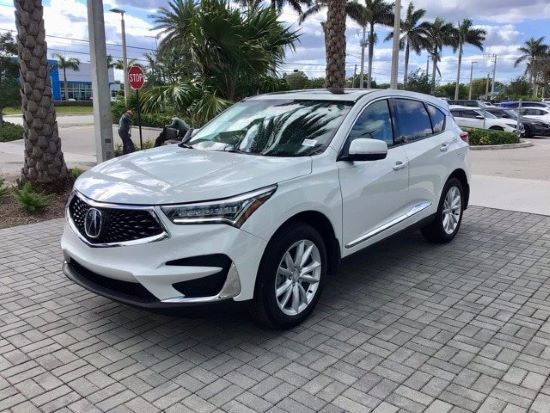
You can often negotiate about 5% to 10% off the asking price of a used car, but there is no percentage that applies to every vehicle. Some dealers may have thousands of dollars of room in a used car. Others may already have it priced close to the lowest amount they are willing to accept.
That's why I wouldn't make your entire strategy about trying to negotiate a certain percentage off one car.
There's a better way.
Instead of trying to convince one dealer to give you a bigger discount, find several comparable cars you would actually buy and make the dealers compete for your business.
And you can do most of this from home by email or text. There's no reason to spend a Saturday driving from dealership to dealership just to find out which one is willing to give you the best price.
As a former auto broker, that's the approach I prefer because it gives you something much more useful than another negotiating trick: leverage.
How Much Can You Negotiate Off a Used Car?
A reasonable starting expectation is that there may be roughly 5% to 10% of negotiating room in a used car's asking price, but the actual discount can be much smaller or considerably larger.
A dealer's asking price doesn't tell you how much negotiating room is built into the car. Two similar vehicles advertised for $25,000 could have completely different situations behind them.
One dealer may have just acquired the car, spent money reconditioning it and priced it aggressively from the beginning. Another dealer may have owned a similar car for 70 days, reduced the price twice and be increasingly motivated to sell it.
The second dealer might accept a price the first dealer wouldn't consider.
That's why I wouldn't get too attached to rules such as "always offer 10% below asking price." The real objective isn't to achieve a particular percentage discount. It's to find out which dealer is willing to give you the best deal.
The Better Question: How Do You Get a Dealer to Lower the Price?
The easiest way to create meaningful negotiating leverage is to have another car and another dealer you can buy from.
If you're negotiating for one specific used car and have already decided it's the one you want, the dealer has an advantage. You can threaten to leave, but if you don't have another realistic option, the threat doesn't mean very much.
Change the situation.
Suppose you're shopping for a three-year-old Honda CR-V. Instead of finding your favorite one and beginning negotiations immediately, find three or four CR-Vs that meet your requirements at different dealerships.
They don't have to be identical. Used cars rarely are. They should simply be similar enough in year, trim, mileage, condition and equipment that you could realistically buy any one of them at the right price.
Then contact the dealers online right through their online listings. Then email or text followups work particularly well because you can communicate with several dealerships at the same time, keep a record of the prices you're being quoted and respond whenever it's convenient.
Now you're no longer asking one dealership:
"How much will you take off this car?"
You're effectively asking several dealerships:
"Which one of you wants my business the most?"
Most buyers negotiate against one car. Smart buyers negotiate against the market.
Start With Several Cars You Would Actually Buy
Find at least three used vehicles you would genuinely consider buying, preferably at three different dealerships.
Don't start by picking your absolute favorite and becoming emotionally committed to it. At this point you're building alternatives.
There are plenty of places to find used cars online. Cars.com, AutoTrader, CarGurus and individual dealer websites can all be useful, and there's certainly nothing wrong with using more than one of them.
I happen to prefer the car site Edmunds.com for this due to their massive dealer participation and ease of use, although the others can likely get the job done as well.
Whichever you may prefer, the important thing is to get multiple dealerships involved. Once you've found each car, then click on the "Check Availability" box or the "Contact Dealer" box, or whatever the site you're using uses, for each vehicle in order to set up the competition.
I'd start by finding at least three. If one stands out as your favorite, that's fine. Just don't make it your only option before the negotiating starts.
How Do You Choose Used Cars to Negotiate Against Each Other?
The vehicles should be comparable enough that you're genuinely willing to choose among them, but they don't have to match perfectly.
Start with the characteristics that matter most to you:
- Model and approximate model year
- Trim level
- Mileage
- Major options or equipment
- Drivetrain
- Condition
- Accident and ownership history
- Certified versus non-certified status
- Asking price
A 2023 vehicle with 22,000 miles obviously isn't identical to a 2022 version with 34,000 miles. That's okay. The purpose isn't to prove that the cars have precisely the same market value.
The purpose is to have credible alternatives that you would actually buy.
If Dealer A knows you're also considering similar cars at Dealers B and C, it becomes much harder to rely on the assumption that you'll eventually give in and buy its car anyway.
Once You've Contacted The Dealers
Let them know you're shopping comparable vehicles and are prepared to buy when you find the right car at the right price.
You don't need an elaborate negotiating script. In fact, I prefer keeping it simple.
Something like:
"I'm interested in your CR-V. I'm also looking at a couple of similar ones at other dealerships. Assuming the car checks out, I'm prepared to buy when I find the best overall deal. What's the best price you can offer?"
That tells the salesperson several useful things:
- You're a serious buyer.
- You haven't committed to their vehicle.
- You have other choices.
- Price will influence where you buy.
- The dealer has an opportunity to earn your business.
If the salesperson simply sends back the advertised price, that's useful information too. There's no need to argue or spend half an hour negotiating with that salesperson.
You have other dealers to talk to.
Let the Dealers Compete for Your Business
This is where the strategy gets interesting.
Suppose you've found three similar vehicles advertised at:
- Dealer A: $27,900
- Dealer B: $28,700
- Dealer C: $26,500
You might naturally assume Dealer C is going to be your best deal. After all, its advertised price is already $2,200 below Dealer B.
But after contacting all three, you discover:
- Dealer A is willing to sell for $26,200.
- Dealer B comes down to $25,900.
- Dealer C won't move below $26,300.
Now the dealer that started with the highest advertised price has offered the lowest selling price.
That's why I wouldn't simply sort the listings from lowest price to highest, contact the cheapest dealer and assume you've found your deal.
You don't know which dealership has the most negotiating room until you ask.
Give the Other Dealers a Chance to Beat the Best Price
Once one dealer gives you a better price, use that legitimate offer to give the others an opportunity to beat it.
There's no need to invent prices or bluff.
If Dealer B has offered $25,900, you can email or text Dealer A:
"I like your car, but another dealer has offered me a comparable one for less. If you'd like to make another offer, I'd certainly consider it."
You can send a similar message to Dealer C.
Perhaps Dealer A comes back at $25,700. Now you have a new lowest price.
You can give Dealer B another opportunity:
"Another dealer has now offered me what I feel is a better value. If you can improve on your price, I'll still consider your car."
Maybe Dealer B drops further. Maybe it tells you $25,900 was already its bottom price.
Either response helps you.
You're not spending hours sitting across a desk from a salesperson while someone repeatedly disappears to "talk to the manager." You're letting several dealers compete while you compare their responses from home.
Why Does the Multiple-Dealer Strategy Work?
Different dealers can have very different reasons for wanting to sell a particular used car.
A dealership may have owned the vehicle longer than it wanted. Management may want to reduce used-car inventory. The car may not fit the dealership's normal customer base. The store may be approaching a sales target. Another similar vehicle may have recently arrived.
Or the dealer may simply have more profit built into its asking price than a competing dealership does.
You generally don't know the dealer's exact cost or motivation—and you don't need to.
When several dealerships are competing for a buyer who's prepared to purchase, their offers reveal which dealership is willing to be most aggressive.
That's much more useful than trying to calculate exactly what a dealer paid for the car.
Why Used-Car Negotiation Is Different From New-Car Negotiation
Used cars are harder to compare because every vehicle is different. Mileage, condition, equipment, accident history, ownership history and reconditioning all affect value.
A dealer may also have expenses tied to a particular used vehicle, including transportation, mechanical repairs, tires, brakes, detailing or certification.
For that reason, there isn't a universal amount of profit built into every used car, and there isn't a universal percentage every dealer can discount.
That's another reason I prefer letting the market do some of the negotiating for you. If you have several realistic alternatives, you don't need to know the dealer's exact cost to discover which seller is willing to offer the most attractive deal.
(Here's where you can see my preferred "new" car negotiation method: New Car Negotiation Price Guide.)
Should You Make an Offer Below the Asking Price?
Of course, but I prefer giving the dealer a reason to lower its price rather than simply picking an arbitrary number.
If similar vehicles are advertised for less, say so. Better yet, if another dealer has actually offered you a lower price on a comparable car, you have something concrete to negotiate with.
For example, you might email:
"I like your car, but I'm looking at another one with similar mileage for about $1,500 less. If you can get closer to that price, yours would be my first choice."
That's very different from simply sending:
"Your car is $27,000, so I'll give you $23,000."
The first message gives the dealer a business reason to reconsider its price. The second may simply look like an arbitrary low offer.
How Do You Know When You've Reached the Best Price?
You'll have a pretty good indication that you've reached the best available price when the dealers stop lowering their prices.
That's one of the nicest things about doing this online.
You don't have to guess whether the salesperson sitting across from you really gave you the dealer's "absolute best price." You can test the price against competing dealerships.
If Dealer A offers $25,700, give Dealers B and C an opportunity to beat it. If Dealer B responds with $25,500, give Dealer A another opportunity.
Eventually the responses stop changing.
Dealer A may tell you $25,700 is as low as it will go. Dealer B may hold at $25,500. Dealer C may have dropped out at $26,000.
When you've given the competing dealers a fair opportunity to beat a lower offer and none of them will go any lower, you've done a very good job of discovering what the market is willing to do.
Could somebody theoretically take another $100 off if you spent another three days negotiating? Perhaps. But that's not really the point.
You've created genuine competition, tested the prices against one another and found the dealer willing to offer the lowest price.
When Should You Walk Away From a Used-Car Negotiation?
Walk away from a dealer when its price no longer makes sense compared with the other realistic choices already sitting in your email or text messages.
You don't have to convince the dealership that its price is too high. You don't have to win an argument with the salesperson. And you certainly don't have to drive back to the dealership to threaten to leave.
If one dealer won't compete and another dealer with a comparable car will, move on.
This is one of the biggest advantages of setting up the negotiation this way. You're never really "walking away" in the traditional sense. You're sitting at home comparing offers and deciding which dealerships deserve to remain in the running.
It also prevents one of the most common mistakes in car buying: becoming so attached to a particular vehicle that getting that specific car becomes more important than getting a good deal.
The Lowest Price Isn't Automatically the Best Car
Once the dealers have stopped lowering their prices, there's one more important decision to make.
You still have to decide which car represents the best purchase.
If the lowest offer is $25,500 and another dealer is at $25,800, I wouldn't automatically choose the first car over $300.
Compare the vehicles themselves. The slightly more expensive car may have better maintenance records, lower mileage, newer tires, a cleaner history, better condition or fewer upcoming repairs.
The dealer competition helps you determine what each seller is willing to accept. It doesn't eliminate the differences between used cars.
The goal is to buy the better car at a price the market tells you is competitive.
Don't Negotiate Only the Monthly Payment
Keep the discussion focused on the vehicle's selling price and eventually the complete deal—not just the monthly payment.
A dealer can lower a monthly payment by extending the loan term, changing the down payment or altering other financing variables without meaningfully reducing the price of the car.
When you're comparing the dealers online, make sure you're comparing the same thing.
Keep the major parts of the transaction clear:
- Vehicle selling price
- Dealer fees and add-ons
- Taxes and registration
- Financing terms and interest rate
- Trade-in value, if applicable
That makes it much harder for an apparently lower price to disappear somewhere else in the transaction.
What If You Have a Trade-In?
Know what your current vehicle is worth before allowing the trade-in to become part of the negotiation. It's good to always know the value of your trade-in while you're evaluating your next possible purchase. Here's a good source for a quick and accurate appraisal: free trade-in appraisal.
A dealer can appear to give you a larger discount on the vehicle you're buying while offering less for your trade—or show you an impressive trade allowance while holding firmer on the selling price.
What matters is the complete transaction.
Get an independent appraisal or value estimate first so you have a reference point when the dealer makes its offer.
When Should You Actually Visit the Dealership?
I would wait until you've narrowed the field and have a strong price before spending time at the dealership.
The online negotiation isn't a substitute for inspecting the car. It's a way to decide which cars and dealerships are worth your time.
Once you've narrowed the choices to the strongest one or two, go see the vehicles. Test-drive them. Check their condition. Review the history and maintenance records. Make sure the car actually lives up to the listing and the salesperson's description.
If your first-choice car disappoints you in person, you haven't wasted the entire process. You already have another dealer and another car waiting in the wings.
That's another reason I like starting with several vehicles rather than one.
Final Verdict: What's the Best Way to Negotiate a Used Car?
Don't make used-car negotiation entirely about how much you can talk one dealer down. Give yourself several cars and several dealers to choose from, then let the dealers compete for your business.
Start online. Find at least three comparable vehicles you would genuinely buy. Contact the dealers by email or text and ask for their best prices. When one dealer improves its offer, give the others an opportunity to beat it.
Keep doing that until the prices stop going down.
At that point, you've accomplished something much more useful than simply negotiating 5% or 10% off an asking price, and often more. You've tested several dealers against one another and discovered what they're actually willing to accept.
Then go inspect and test-drive the strongest candidates and decide which car represents the best overall purchase.
You may ultimately buy the car that originally had the lowest advertised price. You may discover that a dealer asking thousands more was willing to beat everybody else.
You won't know until you make them compete.
If you're ready to try it, I'd start by spending a few minutes finding three or four cars you'd actually be willing to buy. You can use Edmunds.com or any auto website you may prefer. And you'll then discover which dealer wants your business the most.