
 By Josh Rosenberg
We probably bought and sold somewhere in the neighborhood of 2,500 vehicles at wholesale car auctions back in the day. And while you can't get into a Dealer-Only auction, you can go to one of your local open-to-the-public car auctions.
These can be bank and credit union repos, government agency vehicles, seized and police vehicles, personally owned "By-Owner" cars, and so forth.
And like anything in life, there's both good and bad in the mix. The fact is, the prices can indeed be excellent, and frankly, it's unlikely you'll ever get a better buy anywhere else. But there is also the obvious pitfall of not really being sure of what you'll be getting and perhaps overpaying for a real clunker.
So, why are people going to these car auctions?
 Well, first and foremost, there's no doubt that the biggest benefit is "price". Purchasing vehicles at 30% to 50% below retail isn't particularly unusual, leaving extra dollars for other needs. (But forget that "90% off" hype on the internet.)
No more car Dealer stress to contend with. Most people find the process of buying a car about as much fun as root canal. But this way, there's no more stressful negotiating and haggling. Auction buyers have taken over full pricing control.
And some enterprising buyers are reselling these vehicles to make some extra cash.
Still, most car buyers stay away from auctions for two reasons:
 First, they think the vehicles must be all junk.
Second, some local public car auctions can be difficult to locate.
So let's address each of these issues.
First, Many People Believe Auction Vehicles Are All Junk
This simply isn't the case. Is there junk there? Absolutely. But are there really nice vehicles as well. Absolutely.
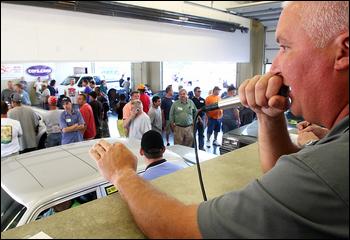
We purchased many low-mileage repossessed vehicles, for example, that were in excellent condition and still under factory warranty. Most of these vehicles had less than 10,000 miles on them.
These cars were simply originally purchased by someone who just couldn't pay, usually due to some unforeseen personal financial situation. Two to ten months later they were repossessed ... and subsequently made some lucky auction buyers very happy.
Some Car Auction Numbers And Facts
According to TitleLoanser:
- Approximately 2.2 million vehicles are repossessed every year
- 5,418 repossessions every day
- 226 repossessions every hour
- The Ford F-150 was the most repossessed truck
- Followed by the Chevy Silverado
- The Honda Civic was the most repossessed car
- Followed by the Honda Accord, then the ...
- Toyota Camry
- Nissan Altima
- Toyota Corolla
- Honda CR-V
- Dodge Ram
With so many vehicles being repossessed, there's always going to be a portion that are late-model, low-milage vehicles. There will also be a full range of all other conditions as well.
There are also many government agency vehicles being turned over every 2 or 3 years. I remember coming across a whole group of them all driven less than 6,000 miles a year. Yes, that's certainly not the norm, but government agencies do have a reputation for being well maintained (they don't want lawsuits).
Related Articles:
- How To Get The Best Price For Your Trade-In
- Buy Any NEW Car At The Lowest Possible Price
- How To Buy A Used Car At The Best Price
And who do the IRS and State governments seize cars from for back taxes? Well, they tend to be people who have nice cars in the driveway. Their resources are better used going after people with assets who owe them a lot rather than those who are so-called small potatoes.
There's a similar situation for cars seized by the police. Although some people don't like the idea of driving around in a drug dealers car, the fact is that many of them drive very nice vehicles.
Steps To Separate The Good From The Bad
Okay, so hopefully the point has been made about there being good cars as well as bad. And here's something else you can do ... inspect the cars before bidding. And you don't have to be an "expert" to do so. More on how to do this in a moment.
These cars are usually sold "as is" (although some auctions may provide warranties or return priviledges for a certain amount of days). This is often why many people are afraid of them. You usually can't test drive them either. But you can start and inspect them prior to the bidding ... and this is very important.

However, if you're buying a later model vehicle, it will come with whatever Manufacturer's Warranty still remains on the vehicle, which is reassuring, unless it is announced the warranty is invalid because of some major defect.
But whether a vehicle is under warranty or not, you still should check it out. The following will take about 10 minutes and is actually no different than what you should do anyway ... even when buying from a Car Dealer or a "By-Owner" seller. Of course, today many public auctions have moved to "online only". In this case, you'll have to check if an inspection report is included.
We did the following to literally thousands of cars and it served us well in helping to avoid the "junk cars". If a car doesn't pass these simple tests with flying colors, we simply moved on.
Start the engine and listen for any unusual sounds or knocking. Make sure the exhaust is clean. Check the air conditioning, heat and all the power options (windows, seats, sunroof, etc.). Then, with your foot on the brake, put the car in drive and reverse several times. Make sure the car doesn't lunge at all or make a clunking sound when you shift into another gear.
Check under the seats, floor mats and rugs to look for dampness (do this in the trunk as well) as well as any signs of rust.
Pull out the oil stick. Check the oil for white bubbles (water present) and feel for grainy fragments. Also absolutely pass on a car when the oil is thick and pasty. We also sometimes passed on a vehicle simply if the oil was just very, very dirty (unless everything else was super great) because it was likely an indication that the owner didn't maintain it.
Also, do the same for the transmission fluid. It should not be dark brown or have a rancid smell. Check for leaking spots and stains under the car. Check the tailpipe for a gummy soot.
Check the exterior for rust, paint bubbles (possibly future rust), welding marks (particularly in the door frames, trunk and engine area that indicate an accident fix). Also look for paint that doesn't quite match, gritty surfaces, paint overspray on bumpers and lights, and body panels out of alignment. Also, check the engine compartment for new bolts or bolts which don't match in color. And check the lights and turn signals.
The good thing is that you don't have to be a mechanic or an "expert" to do these things. As practise, do this a few times to your car and your friends cars and you'll see it isn't very difficult.
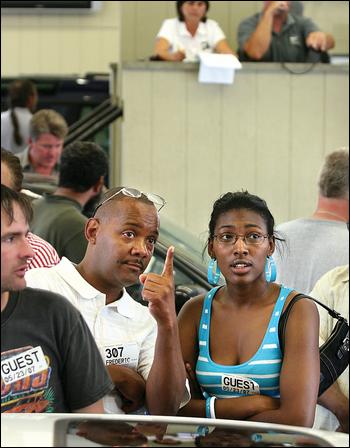
When we got an outstanding price on a car, we also didn't "sweat the small stuff". After buying a car, if it turns out to need brake pads, an alignment, maybe a couple of new tires and so forth, I think you can be fine with that and even expect it. We budgeted $200 to $500 per car for fixups at the time.
I'd also strongly recommend getting the CarFax Or AutoCheck (we prefered Autocheck because it's cheaper and just as good) history report prior to the auction on the cars you're interested in. Cars are usually announced days before the auction so there's plenty of time to do this. Many auctions also supply these free. But if they don't, it's a small price to pay given your likely purchase price.
A "Worst Case" Scenario?
Okay, let's say you've purchased a car with an expired warranty and it seems to be in good shape. You bring it to a garage to be checked over and reconditioned (the $200 to $500 mentioned above) ... and there's surprisingly bad news.
Well, maybe fixing it still makes financial sense because of the price you paid. But maybe you decide you don't want to or the repairs are too expensive.
The worst case scenario is that you bring it back to be resold at the next auction. Perhaps you lose money on it, but it's better than the expense of fixing it. There's always this downside risk, but by taking the above steps you've significantly reduced them.
Also, Be A Smart And Informed Car Auction Bidder
Here's the key to success: Know prices (a lot of bidders seem clueless) and be patient. Then, walk away from the good deal, but try to nail the great ones.
You should go already armed with the trade-in values (the wholesale value) for the cars you're interested in. You can run the VIN# through Edmund's Trade-In Quotes for a more accurate number than most sites. It's free and only takes a couple of minutes.
Your goal should be to buy below these wholesale quotes given the risks. If the bidding gets too high on a particular vehicle, just walk away and wait for the next one. This is how you'll get your vehicle below wholesale prices, and hopefully way below.
"Where The Heck Are The Car Auctions Near Me?"
Yes, public car auctions can be hard to find.
Many small, local public auctions don't have much of a presence and there may be a lot of word of mouth involved. But with some careful web searching for your area (try - public car auction "your area or state") you should be able to track some down, or at least maybe some posts about them.
Also, SCA Auctions has public auctions all over the country, so try their listings.
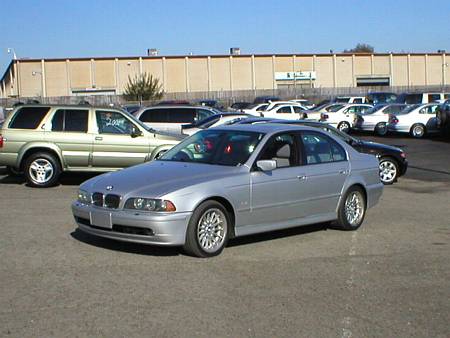
And as times have changed, many auctions, especially the larger ones, are now online and fairly easy to find. I can give you a couple as a good start which have locations throughout the country. Try SalvageSellers (they actually auction the full range of condition vehicles, good and bad, not just salvage). You can also take a look at IAA.
Most of the online auctions are free to join and watch, but may have a fee to actually bid. In-person auctions are usually free to attend but this can vary. Also, not all of the vehicles can be bid on by anyone. Many can be restricted to "Dealer-Only".
So, overall, there are both excellent opportunities and significant risks at public car auctions. Some of the risk can be reduced, however, with research and hard work. Nothing good comes easy, as they say.
I hope this has been helpful. And good luck if you decide to take the plunge.
All the best,
Josh