

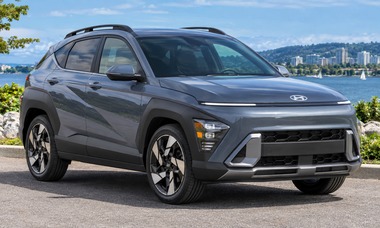
If you're shopping for a new 2027 Hyundai Kona, comparing its MSRP with the dealer invoice price gives you a useful starting point before you begin negotiating.
The 2027 Kona comes in four gasoline trims—SE, SEL Sport, SEL Premium and Limited—each available with front-wheel drive or all-wheel drive. There are also two different engines, so choosing the right trim affects performance and fuel economy as well as price.
But before getting to the numbers ...
Can You Buy a 2027 Hyundai Kona Below Invoice Price?
I get this question all the time. And the answer is, yes. Buying a new Kona below invoice is quite possible, mostly because invoice price isn't necessarily even the dealership's true net cost. Manufacturer programs, dealer incentives, holdback and other financial arrangements may influence what a dealer ultimately has invested in a particular vehicle.
There's also the dealership's individual motivation to consider. A dealer with several similar Konas in inventory may be more flexible than one that has only a single example of a particular trim. End-of-month sales objectives, local competition and the desire to complete one more sale can also influence negotiating decisions.
How to Buy at or Below Invoice
Buying below invoice is definitely doable when you're able to identify the Hyundai dealer in your area most motivated, for whatever specific reason it may have, to make price concessions. Not every dealer will be willing to go that low, but finding one that is isn't particularly unusual. And you don't have to be an expert negotiator to find out. The process is actually quite easy.
Here's the best way to do it: Before you start negotiating, please see the most proven technique used to buy a new car at or below invoice.
What Is the Invoice Price of a 2027 Hyundai Kona?
The 2027 Hyundai Kona has a base MSRP ranging from $25,500 for the SE FWD to $34,035 for the Limited AWD. Published dealer invoice prices range from $24,752 to $32,552.
The table compares all eight gasoline trim and drivetrain combinations using Hyundai's official 2027 starting MSRPs and published 2027 dealer invoice figures.
| 2027 Kona Trim | MSRP | Invoice | Difference |
|---|---|---|---|
| SE FWD | $25,500 | $24,752 | $748 |
| SE AWD | $27,000 | $26,207 | $793 |
| SEL Sport FWD | $26,825 | $25,660 | $1,165 |
| SEL Sport AWD | $28,325 | $27,094 | $1,231 |
| SEL Premium FWD | $28,425 | $27,190 | $1,235 |
| SEL Premium AWD | $29,925 | $28,624 | $1,301 |
| Limited FWD | $32,535 | $31,119 | $1,416 |
| Limited AWD | $34,035 | $32,552 | $1,483 |
Pricing notes: Prices exclude Hyundai's $1,650 freight charge, factory options, premium paint, taxes and dealer fees. FWD means front-wheel drive; AWD means all-wheel drive. The table covers the gasoline-powered 2027 Kona, for which complete U.S. pricing is available. Invoice figures are published third-party reference prices, not manufacturer-certified dealer invoices.
Sources: Hyundai's official 2027 Kona MSRP and specification listings; published 2027 dealer invoice figures from iSeeCars and AutoFinder; and a 2027 Hyundai Kona window sticker confirming the freight charge. Reviewed November 2026.
How Much Is the Difference Between MSRP and Invoice on a 2027 Hyundai Kona?
The difference between MSRP and published dealer invoice ranges from $748 on the SE FWD to $1,483 on the Limited AWD. Generally, the better-equipped trims have a larger dollar difference, although the gap isn't identical across every configuration.
For example, the SEL Sport FWD has a $26,825 MSRP and a $25,660 published invoice, a difference of $1,165. The Limited AWD has a $34,035 MSRP and a $32,552 invoice reference price, a difference of $1,483.
That difference isn't necessarily available dealer profit, and it doesn't establish the lowest price a particular dealership may accept. Manufacturer programs, incentives and individual sales circumstances can change the negotiating picture.
How Much Does AWD Add to the 2027 Hyundai Kona Invoice Price?
All-wheel drive adds $1,500 to the base MSRP of every 2027 gasoline Kona trim. The increase in published invoice price varies slightly: $1,455 on the SE, $1,434 on the SEL Sport and SEL Premium, and $1,433 on the Limited.
For example, the SEL Sport rises from $26,825 MSRP and $25,660 invoice with FWD to $28,325 MSRP and $27,094 invoice with AWD.
There is also a fuel-economy tradeoff. The SE and SEL Sport are EPA-rated at 31 mpg combined with FWD and 27 mpg with AWD. The turbocharged SEL Premium and Limited return 28 mpg combined with FWD and 26 mpg with AWD.
AWD can be useful in snowy or slippery conditions, but if you don't need it, the FWD version saves money at purchase and generally uses less fuel.
How Much More Is the Turbocharged 2027 Hyundai Kona at Invoice?
The Kona SE and SEL Sport have a 147-horsepower 2.0-liter four-cylinder engine paired with Hyundai's Intelligent Variable Transmission, a type of continuously variable automatic transmission. The SEL Premium and Limited move to a 190-horsepower turbocharged 1.6-liter four-cylinder with a conventional eight-speed automatic.
Comparing the two middle trims with FWD, the SEL Premium costs $1,600 more than the SEL Sport at MSRP: $28,425 versus $26,825. The published invoice prices are $27,190 and $25,660, respectively, a difference of $1,530.
That premium buys more than an engine change. The SEL Premium also adds equipment such as 19-inch wheels, upgraded seat upholstery and a power driver's seat. The turbocharged engine delivers considerably stronger acceleration, although its 28-mpg combined EPA rating is lower than the SEL Sport's 31 mpg with FWD.
If performance matters to you, the SEL Premium is worth comparing closely with the SEL Sport. If fuel economy and a lower purchase price matter more, the non-turbo model may be the better fit.
Is the 2027 Hyundai Kona SEL Sport Worth More Than the SE?
The SEL Sport FWD has a $26,825 MSRP and a $25,660 published invoice, compared with $25,500 MSRP and $24,752 invoice for the SE FWD. That's $1,325 more at MSRP and $908 more at invoice.
Both trims use the same 147-horsepower engine, so the price difference is mainly about comfort and appearance. The SEL Sport adds features such as heated front seats, dual-zone automatic climate control, a wireless phone charger, a leather-wrapped steering wheel and 18-inch black wheels.
For buyers who want those everyday conveniences, the SEL Sport is a logical step up. If you're primarily interested in an affordable new SUV, however, the SE already includes a large touchscreen, wireless smartphone integration and a substantial collection of driver-assistance features.
What Is the Invoice Price Difference Between the Kona SEL Premium and Limited?
The Limited FWD has a $32,535 MSRP and a $31,119 published invoice, compared with $28,425 MSRP and $27,190 invoice for the SEL Premium FWD. That's $4,110 more at MSRP and $3,929 more at invoice.
Both share the same 190-horsepower turbocharged engine and eight-speed automatic transmission. The Limited's higher price reflects equipment such as ventilated front seats, a heated steering wheel, a hands-free power liftgate, a surround-view camera system and additional parking assistance features.
Whether those extras are worth the difference depends on your priorities. The SEL Premium already gives you the stronger engine, so shoppers who don't need the Limited's premium conveniences can save several thousand dollars before any negotiation.
Is the 2027 Hyundai Kona Electric Included in These Invoice Prices?
No. These figures cover the gasoline-powered 2027 Kona. Hyundai's current U.S. pricing information does not provide a complete 2027 Kona Electric MSRP and dealer invoice schedule, so including estimated electric-model prices in the same table would be misleading.
The Kona Electric is expected to return for 2027 after skipping the 2026 U.S. model year, but shoppers interested in an electric Kona should wait for confirmed U.S. trim and pricing information rather than comparing it with the gasoline invoice figures above.
What Is a Good Discount From MSRP on a New 2027 Hyundai Kona?
There isn't one discount that represents a good deal on every 2027 Kona. The answer depends on the trim, local inventory, available Hyundai incentives and how motivated the dealership is to make the sale.
Knowing invoice does, however, give you a useful way to evaluate an advertised discount.
Consider the Kona SEL Sport AWD, with a $28,325 MSRP and a $27,094 published invoice. If a dealer discounts the base vehicle by $1,000, the selling price becomes $27,325, or just $231 above that invoice reference figure.
That's more useful than simply knowing the dealer reduced the sticker price by $1,000. Of course, it doesn't mean every dealer will offer that discount, or that a larger one is unavailable.
Individual dealerships can have different inventory pressures and sales objectives. A dealer with several identical Konas may be more interested in making a price concession than one with limited stock of a particular trim or color.
Also be careful when evaluating Hyundai rebates and financing offers. An advertised price may include manufacturer incentives that some shoppers don't qualify for or that cannot be combined with certain financing programs. Ask the dealer to separate its own discount from any Hyundai incentives you're eligible to receive.
When comparing offers, account for the $1,650 freight charge, factory options and dealer-added fees. Make sure you're comparing the same trim, drivetrain and equipment, and judge the total written price rather than the advertised discount alone.
Most importantly, knowing invoice gives you a valuable pricing reference, but it doesn't tell you the lowest price a particular Hyundai dealer may be willing to accept.
Bottom Line
The 2027 Hyundai Kona's published MSRP-to-invoice difference ranges from $748 to $1,483 across eight gasoline configurations. Buyers can choose between a lower-priced 147-horsepower engine and a stronger 190-horsepower turbo, with FWD or AWD available on every trim.
Knowing those invoice figures helps you put dealer offers into perspective. But finding the most motivated Hyundai dealership—and comparing its written offer with competing dealers—is what may ultimately get you the better price.
If you're thinking about buying, take a few minutes to read how I use this information to get the best possible price on a new car.
Before You Agree to a Deal
Keep the price of the car separate from financing and the trade-in. Negotiate the vehicle price first, compare loan terms rather than just monthly payments, and make sure the written numbers match what you were promised.
And it's always good to know what your current car is worth while you're in the market for a new car. If you have a trade-in, you can get a quite accurate free trade-in appraisal here before talking numbers with the dealer.
Remember, online car shoppers have much more leverage than those negotiating in a dealership. The best practice is to offer several businesses the opportunity to make a sale. One of them will often want it a lot more than you expected.