

Most used car buying advice focuses on one thing: negotiating a lower price.
You'll find endless articles explaining how to bargain harder, what to say to the salesperson, when to walk away, and how to squeeze another few hundred dollars out of the deal.
Some of that advice is useful.
But after spending many years as an auto broker, I've come to believe most buyers are concentrating on the wrong part of the process.
Instead of learning how to negotiate harder, learn how to negotiate at the right time.
In other words...
Don't shop for a car. Shop for a dealer who's ready to negotiate.
That simple shift in thinking can completely change the deal you receive.
Over the years I've used this strategy to purchase vehicles at prices that rivaled—and occasionally even beat—dealer wholesale auction prices. More importantly, I've helped friends and family members use the same approach to save thousands of dollars simply by being patient and buying at the right time.
The best part?
You can do almost all of it from home.
Instead of spending every Saturday driving from dealership to dealership, you'll spend just a few minutes each week watching the market, learning how dealers price their inventory, and recognizing when an opportunity begins to develop.
It isn't a strategy for everyone.
If your engine failed yesterday and you need transportation by this weekend, you probably won't have enough time to benefit from it.
But if your current vehicle is still dependable and you can wait one to three months, this may be one of the most effective buying techniques you'll ever use.
What You'll Learn
- Why most buyers begin shopping at the worst possible time.
- Why dealer motivation is often more important than your negotiating skills.
- How to build a simple watch list that takes only a few minutes a week to maintain.
- How to recognize when a dealer is becoming more willing to negotiate.
- Why patience gives you information that other buyers never have.
- How I used this strategy to buy two BMWs for thousands below typical retail prices.
- How to combine this technique with obtaining multiple dealer quotes for even greater savings.
The Biggest Mistake Most Buyers Make
Think about how most people shop for a used car.
Something happens.
Their current vehicle develops an expensive repair.
The lease is ending.
The family needs a larger SUV.
A teenager needs a first car.
Only then do they begin shopping.
Unfortunately, that's usually when buyers have the least amount of leverage.
They need transportation.
They're working against a deadline.
Every day without a replacement vehicle becomes a little more inconvenient.
Dealers recognize this. They know many shoppers are trying to solve an immediate problem, and buyers who need a vehicle right away generally have fewer options than buyers who can afford to wait.
The AutoBrokerMagic Watch List Strategy turns that entire process upside down.
Instead of waiting until you need another vehicle, you begin watching the market while you still have perfectly good transportation.
Now you're under no pressure.
You can ignore overpriced vehicles.
You can pass on average deals.
You can wait for exceptional opportunities.
That's a tremendous advantage because the buyer with patience almost always has more negotiating power than the buyer with urgency.
AutoBrokerMagic Principle #1
Don't shop for a car.
Shop for a dealer who's ready to negotiate.
That may sound like a small distinction, but it's actually the foundation of this entire strategy.
Imagine there are two identical vehicles for sale.
Same year.
Same model.
Similar mileage.
Similar condition.
Most buyers would simply compare prices and drive to whichever dealer advertised the lower number.
But there's another question that's often far more important.
Which dealer is more motivated to sell?
One dealership may have just acquired its vehicle last week.
They're perfectly happy to wait for the right buyer.
Another dealer may have owned a nearly identical vehicle for three months, reduced the price twice, and would like to free up the cash to purchase fresh inventory.
Those two dealers may look identical on the surface.
They're not.
You're no longer simply comparing two cars.
You're comparing two levels of dealer motivation.
And dealer motivation is often where the best opportunities begin.
AutoBrokerMagic Principle #2
Don't negotiate price.
Negotiate dealer motivation.
This doesn't mean your negotiating skills aren't important.
They are.
But even the best negotiator in the world can't consistently persuade an unmotivated dealer to sell a vehicle for less than they're comfortable accepting.
On the other hand, when a dealer has already decided it's time to move a particular vehicle, negotiations often become much easier because your interests and the dealer's interests have finally begun to align.
Your objective isn't to force someone into a deal they don't want to make.
Your objective is to recognize when they're becoming increasingly willing to make it.
Why Dealer Motivation Changes Over Time
To understand why this strategy works, it helps to understand something about the used car business.
Every vehicle on a dealer's lot represents an investment.
The dealer has already purchased it, inspected it, reconditioned it, advertised it, and prepared it for sale before the first customer ever arrives.
Naturally, they hope to sell it quickly.
The sooner it's sold, the sooner they recover their investment, earn a profit, and use that money to purchase another vehicle.
Most successful dealerships don't make their money by owning cars.
They make their money by selling them.
The faster inventory turns over, the healthier the business usually becomes.
When a vehicle remains on the lot longer than expected, carrying costs continue to accumulate.
Those costs may include inventory financing, insurance, advertising, lot expenses, employee salaries, maintenance, and the opportunity cost of having money tied up in a vehicle that isn't producing a return.
None of those costs automatically mean a dealer is losing money.
Nor does every older vehicle become a bargain.
However, as time passes, many dealers become increasingly interested in converting that inventory back into cash so they can purchase fresher inventory that's more likely to sell quickly.
That's where patient buyers can sometimes gain an advantage.
Patience Isn't Waiting
Most people think patience simply means waiting longer before buying.
I don't see it that way.
Patience is really about gathering information.
While most buyers spend a weekend shopping for a vehicle, you're quietly watching the market for several weeks.
Every week you learn something new.
- Which vehicles sell quickly.
- Which dealers regularly reduce prices.
- Which models tend to linger on the market.
- What similar vehicles are actually selling for.
- Which advertised prices are consistently unrealistic.
By the time you're ready to buy, you've developed something many buyers never acquire.
A genuine understanding of the market.
You no longer have to guess whether a vehicle is fairly priced.
You've watched dozens of similar vehicles over several weeks.
You already know.
That knowledge gives you confidence.
It also prevents one of the biggest mistakes buyers make—overpaying simply because they don't know what constitutes a truly competitive price.
Building Your AutoBrokerMagic Watch List
The beauty of this strategy is that it requires very little effort once you get started.
The first step is deciding exactly what you're looking for.
Be specific.
- The make and model.
- Your preferred model years.
- An acceptable mileage range.
- Must-have options.
- Your maximum budget.
- How far you're willing to travel.
The more specific your criteria become, the easier it is to compare similar vehicles.
Next, search several major automotive websites.
- AutoTrader
- Cars.com
- Edmunds
- CarGurus
- Dealer websites
- Facebook Marketplace (for private-party opportunities)
Save every vehicle that meets your requirements.
Don't worry if there are twenty or thirty of them.
That's actually an advantage.
The larger your watch list becomes, the easier it is to recognize exceptional values when they appear.
Watch Dealers, Not Just Cars
Here's where this strategy begins to differ from the way most people shop.
Most buyers are only interested in one question.
"Is this the car I want?"
You're asking a different question.
"What is this dealer doing with the price?"
Every few days—or at least once each week—take a few minutes to review your saved vehicles.
Some will disappear almost immediately.
Those were probably priced competitively from the beginning.
New vehicles will appear.
Some dealers won't change their prices at all.
Others will begin making gradual reductions.
Perhaps $500.
Maybe $1,000.
Sometimes more.
Those price reductions don't automatically mean the vehicle has become a bargain.
But they do tell you something important.
The dealer's pricing strategy is changing.
That change may indicate increasing motivation to sell.
Meanwhile, you're collecting information that someone shopping for the first time this weekend simply doesn't have.
Learning the Market Without Becoming an Expert
One of the most surprising things you'll discover is how quickly your instincts improve.
You don't need twenty years in the automobile business.
You don't need access to dealer-only auction reports.
You don't need to memorize wholesale values.
You simply need repetition.
After watching the same type of vehicle for three or four weeks, patterns begin to emerge.
You'll notice certain colors command a premium.
You'll recognize which option packages buyers value most.
You'll begin to understand how mileage affects asking prices.
You'll also recognize the listings that have remained unchanged week after week.
Without even realizing it, you've trained yourself to identify attractive prices.
That's exactly what happened during my search for a used BMW 325i.
At first, every listing looked different.
A few weeks later, I could glance at a newly listed vehicle and have a pretty good idea whether it represented an average deal, a competitive deal, or an exceptional opportunity.
No special expertise.
Just careful observation.
And that's when the really interesting part of this story begins.
A Real Purchase: How I Found a Dealer Ready to Negotiate
It's one thing to explain the theory.
It's another to see how it actually works.
Rather than using a hypothetical example, let me walk you through one of my own vehicle purchases.
I had decided I wanted a BMW 3-Series.
Specifically, I was looking for a low-mileage, one-owner example in excellent condition.
Like most buyers, I could have found one within a few days.
Instead, I decided to let the market come to me.
I began by searching AutoTrader within about 100 miles of my home. I would gladly drive an hour or two if it meant saving several thousand dollars on the right vehicle.
I saved the search so I could return to it regularly.
Within minutes I had dozens of BMW 3-Series listings to compare.
Some had exceptionally low mileage.
Some had obvious cosmetic issues.
Some were priced far above similar vehicles.
Others immediately caught my attention as being competitively priced.
But I wasn't ready to buy.
I was ready to watch.
The Market Began Teaching Me
Every few days—usually once or twice each week—I spent just a few minutes reviewing my saved search.
Vehicles disappeared.
New ones appeared.
Some prices never changed.
Others slowly began to fall.
After only a few weeks, something interesting happened.
I stopped feeling like a shopper.
I began feeling like I understood the market.
I no longer needed pricing guides to tell me whether a 3-Series looked expensive or competitively priced.
After comparing dozens of nearly identical cars week after week, attractive prices began standing out almost immediately.
No special expertise was required.
No dealer experience.
No wholesale pricing reports.
Just careful observation.
That's one of the hidden benefits of this strategy.
The longer you watch the market, the more difficult it becomes for someone to overcharge you.
The Cars That Didn't Sell
The most interesting vehicles weren't necessarily the cheapest ones.
They were the ones that kept showing up every week.
Some had obviously been sitting on the same dealer's lot for quite a while.
Eventually, many of those listings began receiving price reductions.
$500.
Then another $500.
Sometimes even larger reductions.
Those vehicles became my primary focus.
Not because they were automatically bargains.
But because the dealers had begun demonstrating something extremely important.
Increasing motivation.
Remember, I wasn't shopping for a BMW anymore.
I was shopping for a dealer who was becoming progressively more interested in selling one.
Patience Almost Cost Me the Perfect Car
After several weeks I had identified a handful of excellent candidates.
But sometimes I became a little too patient.
Several outstanding cars that I had been following disappeared before I acted.
But that's to be expected. Other buyers will recognize what good buys they were.
Buet there were more vehicles still on the list and others entering the market.
More dealers would become still more motivated.
The goal wasn't to buy one specific 3-Series.
The goal was to buy the right 3-series at the right time.
That mindset made waiting much easier.
Then It Became Time To Move
A few weeks later I noticed one 3-Series I had been following receive another significant price reduction.
I immediately called the dealership.
I had missed it.
It had sold the previous day.
That was frustrating, but it also confirmed something.
The best values don't stay available very long.
Then, less than two days later, another opportunity appeared.
A different one I had been watching suddenly dropped by $2,000 and was now just below it's actual trade-in value.
It also had become the lowest asking price on my watch list by far, and despite having exceptionally low mileage.
This time I wasn't going to wait. The price was right. And perhaps the dealer was at maximum motivation to sell.
I called immediately.
My First Conversation With the Dealer
One habit I've developed over the years is trying to speak with the person who can actually make decisions.
At smaller independent dealerships, that's often the owner or the general manager.
They're much more likely to know the history of the vehicle, understand how long it's been in inventory, know the financial pressure it's putting on the dealership, and have the authority to approve a deal.
In this case, I was connected with the dealership's Internet Manager, who handled online inquiries and worked closely with the owner.
Before discussing price, I wanted to learn about the vehicle.
I explained that I was a serious buyer and that if everything checked out, I was prepared to purchase the car immediately.
I asked about its condition, ownership history, and whether there was any reason it had remained on the lot longer than expected.
He told me it was a one-owner vehicle in outstanding condition and admitted he couldn't really explain why it hadn't sold.
As we talked, he mentioned something interesting.
They had actually accepted offers on the car twice before.
Both sales had fallen through because the buyers couldn't obtain financing.
Now the 3-Series was still sitting on the lot, and after watching it for weeks, I knew its asking price had already been reduced several times.
I had finally found exactly what I'd been looking for.
Not just the right BMW.
The right dealer.
The Negotiation Was Almost Easy
Before driving to the dealership, I asked one final question.
"If I make the trip today and the car is exactly as you've described it, will you make it worth my while on the price?"
Without hesitation he replied, "Absolutely."
That was exactly what I hoped to hear.
Notice something important.
I hadn't spent thirty minutes trying to negotiate over the phone.
I hadn't made an unrealistic offer.
I hadn't played games.
The negotiation became easier because I had already spent weeks identifying a dealer who was ready to sell.
In many ways, the negotiation had begun long before that phone call.
The Final Purchase
The dealership was about 65 miles from my home, so my wife and I made the drive that afternoon.
The 3-Series was exactly as described.
One owner.
Excellent condition.
Low mileage.
It had obviously been well cared for.
I drove it, inspected it carefully, and decided it was exactly what I'd been looking for.
Now it was simply a matter of agreeing on the final price, which was already outstanding.
I offered $15,000.
The Internet Manager smiled and said he couldn't go that low.
He immediately countered at $16,400.
I raised my offer to $15,600.
After a few moments he came back with $16,000 and said that was the absolute best he could possibly do.
I shook his hand.
Deal done.
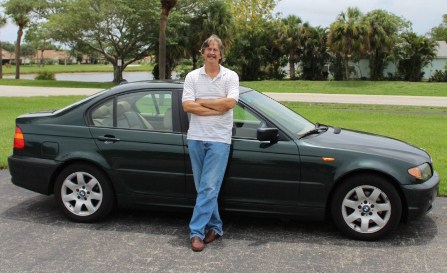
Considering the condition, mileage, and comparable retail prices I had been watching for weeks, I knew I had purchased an exceptional vehicle at an exceptional price.
More importantly, I knew why.
I hadn't out-negotiated the dealer.
I had simply waited until I found one who was extremely ready to negotiate, maybe even desperate to negotiate.
A Quicker Second Example
Not long afterward, my wife decided she'd love to own a BMW Z4 convertible.
So I repeated exactly the same process.
I built another watch list.
I monitored prices each week.
I watched vehicles come and go.
I learned the current used Z4 market.
And eventually another dealer dramatically reduced the price on one that had been on my watch list.
It was now below it's trade-in value.
This time the dealer told me something interesting.
He said he couldn't lower the price another dollar because it was already at rock bottom.
After watching similar Z4s for weeks, I knew he was right.
Not because I trusted his sales pitch.
Because I already knew the market.
But I tried anyway, of course. He then offered me an interesting choice.
One I hadn't heard before or since. He said I could buy it at the current $16,900 listing price, or at his original auction price verified by his auction receipt. My choice.
I chose the $16,900. I'm sure he paid more for it.
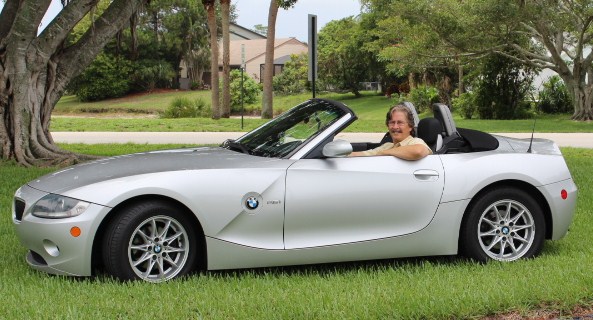
He needed to raise cash and sell the car right now.
So, I purchased the car and it was another outstanding buy, again at a below trade-in value price.
Sometimes the best negotiation isn't negotiating at all.
And many car-buyers can do the same.
When This Strategy Works Best
This Watch List Strategy isn't appropriate for every buyer.
It works best if:
- Your current vehicle is still dependable.
- You can wait one to three months for the right opportunity.
- You're shopping for a relatively common vehicle with plenty of comparable listings.
- You enjoy researching before making major purchases.
It may be less effective if you're shopping for a rare collector vehicle, a limited-production sports car, or any model that's consistently in very high demand.
In those situations, exceptional vehicles often sell before dealer motivation has a chance to increase.
Common Mistakes to Avoid
- Falling in love with one particular vehicle instead of maintaining several good candidates.
- Assuming every older listing represents a bargain.
- Waiting so long that outstanding opportunities disappear.
- Ignoring maintenance history simply because the price looks attractive.
- Believing every dealer will continue lowering the price indefinitely.
Remember, your goal isn't to predict exactly what a dealer will do.
Your goal is simply to recognize improving opportunities when they appear.
Combine This Strategy With Dealer Competition
If you've read other articles on AutoBrokerMagic, you already know that my favorite buying strategy is obtaining multiple dealer quotes and letting dealers compete for your business.
I still believe that's the most effective approach for most buyers.
It's both timely and very effective.
Think of the Watch List Strategy as an advanced technique.
First, identify a dealer whose motivation has increased over time.
Then, if comparable vehicles are available elsewhere, use competitive quotes to determine whether the dealer is truly offering their best price.
The two strategies complement each other beautifully.
One helps you find a motivated seller.
The other encourages dealers to compete for your business.
Final Thoughts
Over the years, I've become convinced that most buyers focus on the wrong part of negotiating.
They spend all their energy trying to become better negotiators.
Instead, I believe it's often more effective to become a better observer.
Observe the market.
Observe pricing trends.
Observe which vehicles sell quickly and which remain on dealer lots.
Observe how dealer motivation changes over time.
Then act when the odds have shifted in your favor.
That's why the central lesson of this entire article is so simple.
Don't shop for a car.
Shop for a dealer who's ready to negotiate.
You may discover that the best deals don't go to the toughest negotiators.
They often go to the most patient buyers.
Happy car hunting!
— Josh
Possibly Buying Soon? Know What the Dealer Knows
Before you sign, learn:
- What you don't know about dealer trade-in offers could cost you - Which dealer fees you must pay, can negotiate, or should avoid - How to avoid giving the dealer the upper hand on a used car price - How to avoid overpaying for a new car