

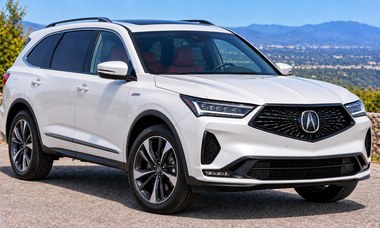
Is a used Acura MDX a reliable SUV? Generally, yes. The MDX has long been one of the more appealing choices for buyers who want three-row seating, luxury features, strong performance, and the potential for many years of dependable ownership without the higher maintenance costs often associated with European luxury SUVs.
Its naturally aspirated V6 engines have a strong history of durability, and a well-maintained MDX can realistically reach 200,000 miles or more. But the best used MDX isn't necessarily the newest or the one with the lowest mileage. Transmission choice, maintenance history, and several important engine-related concerns make some years more attractive than others.
For an older MDX, I particularly like the 2010–2013 models when their oil-consumption history checks out. The 2014–2015 MDX is another strong choice, combining a modern third-generation design with a 3.5-liter V6 and conventional six-speed automatic transmission.
I'd approach the earliest 2001–2005 MDXs more cautiously because of their automatic-transmission history. Certain 2016–2020 models also deserve special attention because of a connecting-rod-bearing safety recall affecting some 3.5-liter V6 engines.
These concerns shouldn't overshadow the MDX's generally favorable reliability record. Most reported problems don't affect every vehicle, and many owners enjoy years of trouble-free service. The goal is to recognize the important differences and choose a well-maintained example rather than assume every MDX has the same strengths and weaknesses.
This guide covers U.S.-market Acura MDXs from 2001 through 2024, including the standard V6 models, SH-AWD, Sport Hybrid, and newer Type S. Acura skipped the 2021 model year before introducing the fourth-generation MDX for 2022.
In This Guide
- How many miles an Acura MDX can last
- The best Acura MDX model years to buy
- Years to avoid or inspect more carefully
- Reliability differences between MDX generations
- What to know about the V6 engines, transmissions, and SH-AWD
- Typical maintenance and repair costs
- Other used luxury SUVs worth considering
Or, Looking For "New"?
If you're also considering a new MDX, you may want to come back to this and take a look at a handy technique that identifies the dealer in your area most ready to make price concessions.
How Many Miles Can an Acura MDX Last?
A well-maintained Acura MDX can realistically last 200,000–250,000 miles, and some examples go considerably farther. The naturally aspirated V6 engines are capable of substantial mileage, but the condition of the transmission, cooling system, suspension, and AWD components becomes increasingly important as the vehicle ages.
At 100,000 miles, I wouldn't consider a properly maintained MDX worn out. However, this is an important point in its maintenance life. The timing belt is generally due around 105,000 miles or seven years under normal service conditions, with the exact schedule depending on the model and operating conditions. Transmission and differential-fluid maintenance also deserve attention.
At 150,000 miles or more, I'd place greater value on complete service records than on a modest difference in odometer readings. A 160,000-mile MDX with documented timing-belt replacement, consistent fluid maintenance, and recent suspension work may be a much better purchase than a neglected 100,000-mile example. By 200,000 miles, the question is often less about whether the V6 can continue running and more about whether the vehicle's remaining repairs make financial sense.
What Are the Best Acura MDX Model Years to Buy?
The best MDX years depend on your budget, but I'd generally begin with the later second generation and the early third generation. These offer a useful combination of proven V6 power, comfortable family transportation, and relatively established automatic transmissions.
| Model Years | Why They're Worth Considering |
|---|---|
| 2009–2010 | Good older choices when condition is strong. The 2010 model introduced a six-speed automatic, while 2009 retained the five-speed. |
| 2011–2013 | Comfortable, capable, and often reasonably priced. Verify oil-consumption history, timing-belt service, and SH-AWD maintenance. |
| 2014–2015 | One of my favorite combinations: redesigned platform, naturally aspirated 3.5-liter V6, and conventional six-speed automatic. |
| 2018–2020 | More modern features and later third-generation refinement. Check the nine-speed transmission and VIN-specific connecting-rod-bearing recall status. |
| 2023–2024 | Appealing newer choices with a 10-speed automatic and updated technology, although long-term high-mileage evidence is still developing. |
The 2014–2015 MDX is particularly interesting because it avoids both the nine-speed automatic introduced for 2016 and the connecting-rod-bearing recall that applies to certain 2016–2020 MDXs. It also offers front-wheel drive for buyers who don't need AWD.
That doesn't make the 2014–2015 models perfect, or every later MDX a poor purchase. A well-maintained 2019 with completed recall work and a smooth transmission may be an excellent choice. The purpose of these recommendations is to identify promising starting points, not replace an inspection of the actual vehicle.
Buyer Tip: If I were shopping for a used MDX primarily for long-term ownership, I'd give the 2014–2015 models serious consideration. Their combination of a naturally aspirated V6 and conventional six-speed automatic is especially appealing.
Bottom Line: The 2010–2015 period contains several of the MDX's strongest used-car values. The 2014–2015 models are my preferred starting point for buyers who want a relatively modern MDX without the later nine-speed transmission.
What Acura MDX Years Should You Avoid or Inspect More Carefully?
There are no MDX generations I'd dismiss entirely, but some model years require more investigation because of recognized mechanical problems or expensive maintenance concerns.
- 2001–2005: Earlier MDXs developed a reputation for automatic-transmission problems. Slipping, delayed engagement, shuddering, or harsh shifting can indicate expensive trouble on a vehicle with relatively little remaining market value.
- 2007–2009: These early second-generation models are generally more appealing than the earliest MDXs, but age, maintenance history, and possible oil consumption deserve attention.
- 2010–2013: Acura issued an oil-consumption warranty extension for certain MDXs after problems involving piston rings. Ask about oil usage and any previous piston-and-ring repairs.
- 2016–2017: The newly introduced nine-speed automatic generated complaints about hesitation and shift quality. Certain vehicles are also included in the connecting-rod-bearing recall.
- 2018–2020: These later third-generation models can be excellent used purchases, but some are included in the engine-bearing recall. Verify the VIN and completed repairs rather than assuming later production eliminates the concern.
The connecting-rod-bearing recall, NHTSA campaign 23V751, involves certain 2016–2020 MDXs. A manufacturing defect can cause premature bearing wear and potentially serious engine damage. Acura's remedy involves inspection and repair or engine replacement when necessary. The recall does not apply to every MDX from those years.
It's also worth knowing that federal safety investigators have examined additional reports of V6 bearing failures outside the original recall population. For that reason, I'd investigate unusual engine knocking or a documented bearing problem even if a particular vehicle isn't listed under the original recall.
For any MDX you're considering, check its 17-digit VIN at NHTSA's recall lookup and ask an Acura dealer to confirm its campaign and repair history.
Bottom Line: I'd be most cautious about an early MDX with questionable transmission behavior or a later model with unresolved engine concerns. A documented repair history and a thorough pre-purchase inspection can make a substantial difference.
Also, evaluating an MDX for a possible purchase is a very important first step. The next step would be learning how to actually get an excellent used MDX price, and I have some important tips on that.
Acura MDX Reliability by Generation
Each MDX generation has its own personality. The original model established the formula, the second generation emphasized performance and all-wheel-drive handling, the third improved efficiency and refinement, and the fourth brought a major technology upgrade. Understanding those changes makes choosing a used MDX much easier.
First Generation: 2001–2006 Acura MDX Reliability

The original MDX was an important vehicle for Acura. It offered three-row seating, a comfortable ride, a strong 3.5-liter V6, and the more car-like handling that helped make luxury crossover SUVs so popular.
The engine itself can be very durable. Unfortunately, the automatic transmission is the biggest reason I'd hesitate before buying an early MDX today. Transmission failures and related shifting problems affected some vehicles, particularly in the earlier years, and repairs can be expensive relative to what these older SUVs are worth.
Later first-generation models benefited from production improvements, but they're now old enough that transmission condition, corrosion, cooling-system maintenance, and suspension wear matter more than their original equipment or luxury features.
I'd want the transmission to engage promptly, shift smoothly, and show no signs of slipping or shuddering. I'd also verify timing-belt replacement and look for evidence of regular drivetrain-fluid service.
Buyer Tip: Don't let a very low asking price distract you from transmission behavior. On an older MDX, one major transmission repair can eliminate the financial advantage of buying it.
Bottom Line: A healthy first-generation MDX can still provide useful transportation, but its age and automatic-transmission history make it the generation I'd approach most cautiously.
Second Generation: 2007–2013 Acura MDX Reliability
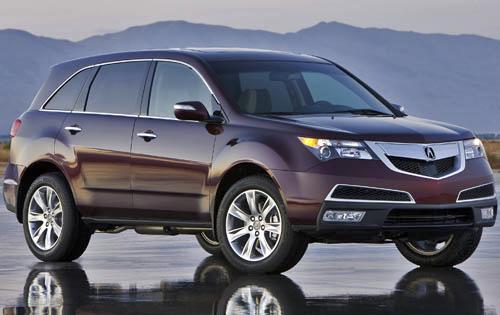
The 2007 redesign gave the MDX a more athletic personality. Acura introduced a larger 3.7-liter V6 and its Super Handling All-Wheel Drive system, commonly called SH-AWD. The result was a surprisingly engaging SUV that combined three-row practicality with confident handling and strong acceleration.
For used buyers, this generation is considerably more appealing than the earliest MDXs. The 3.7-liter engine can provide excellent longevity, and the automatic transmissions are generally a better ownership proposition than those in the first generation. The 2010 model also introduced a six-speed automatic in place of the earlier five-speed.
There is one important engine consideration. Acura issued a warranty extension for excessive oil consumption on certain 2010–2013 MDXs. Deposits affecting the piston oil-control rings could allow an engine to burn more oil than expected. Some vehicles received piston-and-ring repairs under the program.
That doesn't mean every 3.7-liter engine consumes oil. Many have accumulated high mileage without major trouble. But I'd check the oil level, ask whether the owner adds oil between changes, and review any previous engine-repair documentation.
SH-AWD is generally a worthwhile feature rather than something to avoid. It improves traction and handling, but it adds drivetrain components that require proper fluid maintenance. On an older example, I'd want evidence that differential service wasn't neglected.
By now, timing-belt replacement, engine mounts, suspension components, and cooling-system repairs may also have become part of the vehicle's ownership history. A well-maintained example with several of these expenses already addressed can be a particularly good value.
Buyer Tip: The 2010–2013 models are worth a close look, but ask specifically about oil consumption and any piston-and-ring repairs. Also verify timing-belt and SH-AWD fluid service.
Bottom Line: The second-generation MDX offers an excellent combination of performance, comfort, and used-car value. I'd favor the later years, provided maintenance is strong and oil consumption isn't an unresolved issue.
Third Generation: 2014–2020 Acura MDX Reliability
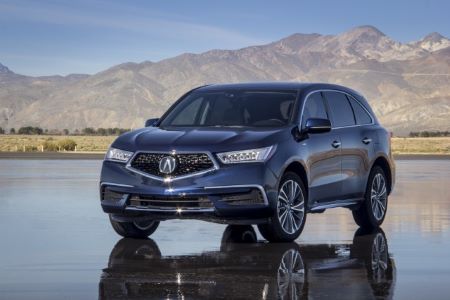
The redesigned 2014 MDX became lighter, more fuel efficient, and more refined. Acura returned to a naturally aspirated 3.5-liter V6 and, for the first time, offered front-wheel drive as an alternative to SH-AWD.
For buyers who don't need all-wheel drive, the front-wheel-drive model is worth considering. It eliminates some drivetrain components while retaining the MDX's comfortable interior and strong V6 performance.
One of the most important differences within this generation is the transmission. The 2014–2015 MDX uses a conventional six-speed automatic, while the 2016–2020 standard models use a nine-speed automatic.
The nine-speed provides more ratios and helps efficiency, but some owners have experienced hesitation, abrupt shifting, or unusual gear changes. Certain concerns have been addressed through software updates and service procedures. I'd test a used nine-speed MDX in stop-and-go traffic, during moderate acceleration, and after it has fully warmed up.
The 3.5-liter V6 remains a strong engine design, but certain 2016–2020 MDXs were included in a safety recall for connecting-rod-bearing wear caused by a manufacturing defect. Because this can lead to serious engine damage, I'd insist on verifying the VIN and any required inspection or repair before purchase.
The MDX Sport Hybrid, offered during the later part of this generation, is mechanically different from the standard model. It combines a 3.0-liter V6 with electric motors and a seven-speed dual-clutch transmission. It delivers impressive performance and improved fuel economy, but I'd want a technician familiar with Acura's hybrid system to evaluate a used example.
Otherwise, this generation offers much of what makes the MDX appealing: a comfortable three-row interior, strong acceleration, good road manners, and generally manageable maintenance costs for a luxury SUV.
Buyer Tip: The 2014–2015 MDX is one of my favorite used combinations. If considering a 2016–2020 model, give equal attention to the nine-speed transmission and engine recall history.
Bottom Line: The third-generation MDX can be an excellent used luxury SUV. I'd favor the earlier six-speed models for simplicity, while remaining open to a later example with documented recall completion and smooth transmission operation.
Fourth Generation: 2022–2024 Acura MDX Reliability
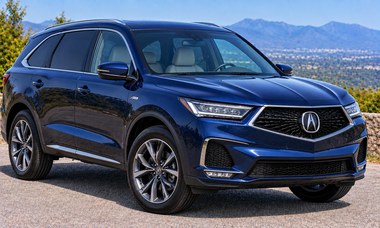
After skipping the 2021 model year, Acura introduced a completely redesigned MDX for 2022. The fourth generation brought a more sophisticated interior, sharper handling, updated safety technology, and a new 10-speed automatic transmission.
The standard MDX retained a naturally aspirated 3.5-liter V6, which is appealing to buyers who prefer an established engine configuration. The 10-speed automatic is designed to deliver smooth performance and improved efficiency, although its ultimate durability at very high mileage is still less established than that of older MDX transmissions.
The Type S adds a turbocharged 3.0-liter V6 and more performance-oriented equipment. It's considerably quicker than the standard MDX, but its added complexity and potentially higher repair costs make it a different ownership proposition.
The newer MDX also contains more sophisticated electronics, driver-assistance features, and infotainment equipment. These make it a much more modern SUV, but I'd test every feature during a pre-purchase inspection and check for applicable software updates, recalls, and previous repairs.
For buyers wanting a newer luxury SUV, the 2023–2024 models are appealing choices. I wouldn't automatically reject a 2022, but when price and condition are comparable, the later years have the modest advantage of additional production experience.
Buyer Tip: If long-term simplicity is your priority, I'd start with the standard 3.5-liter MDX rather than the turbocharged Type S. Choose the Type S because you want its performance, not because you expect lower ownership costs.
Bottom Line: The fourth-generation MDX is an impressive luxury SUV with a promising mechanical foundation. Its main limitation as a long-term reliability recommendation is that 2022–2024 models haven't yet accumulated the high-mileage history available for earlier generations.
Acura MDX Maintenance and Repair Costs
The MDX is generally more affordable to maintain than many European luxury SUVs, but it remains a substantial three-row luxury vehicle with a V6 engine and, in many versions, a sophisticated all-wheel-drive system.
RepairPal gives the Acura MDX a reliability rating of 4.0 out of 5.0 and estimates average annual maintenance and repair costs at approximately $571. That's favorable for its class, although an average doesn't predict the expenses of an individual high-mileage SUV.
| Maintenance or Repair | Estimated Cost |
|---|---|
| Average annual maintenance and repairs | $571 |
| Timing-belt replacement | $1,191–$1,512 |
| Water-pump replacement | $852–$1,253 |
| Brake-pad replacement | $329–$386 |
| Alternator replacement | $1,123–$1,215 |
| Major transmission repair or replacement | Vehicle-specific estimate required; can exceed the value of an older MDX |
These figures are RepairPal model-wide estimates, not guaranteed repair quotes. Brake-pad estimates don't include rotors, and the timing-belt and water-pump figures are separate estimates that shouldn't simply be added together. When both services are performed at the same time, overlapping labor may reduce the combined cost.
Timing-belt maintenance deserves particular attention. On the naturally aspirated V6 engines, Acura generally specifies replacement at approximately 105,000 miles or seven years under normal conditions, with earlier service possible under certain conditions. Many owners replace the water pump and related components during the same service because of the overlapping labor.
On an older MDX, I'd also review transmission-fluid and SH-AWD service records. Neither system should be ignored simply because it appears to operate normally during a brief test drive.
Buyer Tip: A seller who can document recent timing-belt service, proper drivetrain-fluid maintenance, and major wear-item repairs may be offering a much better value than someone selling a lower-mileage MDX with years of deferred maintenance.
Speaking of possible unexpected costs, before agreeing to a dealer's numbers, see which dealer fees are legitimate, which can be negotiated, and which can be avoided.
Acura MDX Alternatives to Consider
The MDX is a strong choice among used luxury SUVs, but I'd compare it with a few alternatives before deciding. The right vehicle depends on whether you need three rows, value maximum comfort, or prefer a more engaging driving experience.
- Lexus RX Reliability Guide — One of the strongest alternatives for long-term dependability and comfort. Most RX models have only two rows, so the MDX offers an advantage for larger families.
- Acura RDX Reliability Guide — A smaller, generally less expensive Acura SUV. Particularly appealing if you don't need the MDX's third row or additional size.
- BMW X5 Reliability Guide — Offers excellent performance and a more sporting character. Certain engines are very durable, although long-term maintenance and repair costs can be higher.
For buyers prioritizing comfort and a strong reliability record without needing three rows, I'd give the Lexus RX serious consideration. If passenger space and family practicality matter more, the MDX has a clear advantage. And if you don't need such a large SUV, the RDX may offer much of the Acura experience at a lower ownership cost.
Considering Other Acura Models? If you're still deciding which Acura to buy, take a look at our Acura Reliability Guide. It compares the reliability, potential problems, and best years of popular Acura sedans and SUVs to help you find the right used Acura.
Final Verdict: Is a Used Acura MDX a Good SUV to Buy?
Yes. The Acura MDX is one of the more appealing used three-row luxury SUVs, combining comfortable transportation, strong V6 performance, good practicality, and generally favorable long-term reliability.
For buyers shopping on a tighter budget, I'd look closely at a well-maintained 2010–2013 MDX with documented timing-belt service and no unresolved oil-consumption concerns. These vehicles can still offer considerable value despite their age.
My favorite all-around used choice is the 2014–2015 MDX. Its naturally aspirated 3.5-liter V6, conventional six-speed automatic, and more modern third-generation design make it particularly appealing for long-term ownership.
The 2016–2020 models can also be good purchases, but I'd investigate the nine-speed automatic and confirm that any applicable connecting-rod-bearing recall work has been completed. The newer 2022–2024 MDXs offer a more sophisticated driving experience, although their very high-mileage reliability remains less established.
Whatever year you choose, I'd prioritize maintenance records, timing-belt history, transmission condition, recall status, and a professional pre-purchase inspection. Those factors can matter far more than finding a vehicle with unusually low mileage.
Bottom Line: A carefully selected Acura MDX can provide 200,000 miles or more of comfortable, dependable service. I'd begin with the 2014–2015 models for their appealing combination of proven mechanical components, modern features, and strong used-car value.
Also, How Much Is Your Car Worth?
It's good to always know the value of your trade-in whether you may trade it, sell it, or are just keeping tract of the value of one of your assets.
I think the two most accurate trade-in appraisal services are Edmunds and Kelley Blue Book.
By averaging the two appraisals you'll have a very good idea of what your car is actually worth. They're both free, of course, and only take a couple minutes.
Some Insider Insights: