

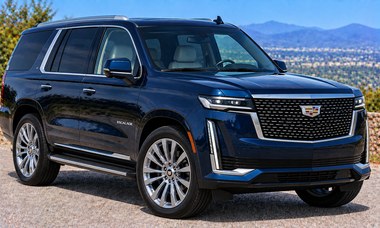
The Cadillac Escalade has always combined full-size SUV capability with considerably more luxury, technology and presence than its Chevrolet and GMC relatives. Its truck-based construction and large V8 engines can also make it a surprisingly durable high-mileage luxury SUV, but reliability varies substantially by generation and powertrain.
A well-maintained Escalade can realistically last 200,000 to 250,000 miles, and exceptionally well-kept examples can go beyond 300,000 miles. The catch is that some years have expensive problems involving transmissions, cylinder-deactivation hardware, lifters, suspension systems and electronics. As Escalades age, maintenance history often matters more than the mileage showing on the odometer.
This guide covers the 2002-2024 Cadillac Escalade sold in the U.S., including the standard Escalade and the mechanically related Escalade ESV where applicable. Because the EXT pickup shares many components but has some different ownership considerations, the focus here is primarily on the SUV versions.
In This Guide You'll Learn
- Which Cadillac Escalade years are generally the best to buy
- Which Escalade years deserve more caution
- How many miles a Cadillac Escalade can realistically last
- Which Escalade generation is most reliable
- How reliable the 6.0-liter and 6.2-liter V8 engines are
- Which Escalade engines use cylinder deactivation
- Why lifter problems matter on some Escalades
- Which transmissions have the strongest reliability records
- What to know about Magnetic Ride Control and air suspension
- Whether a 100,000-mile or 150,000-mile Escalade is a good buy
However, if you're also considering a brand-new Escalade or other new vehicle, you may want to come back to this and take a look at a handy technique that locates the dealer most ready to make concessions.
Cadillac Escalade Reliability Overview
Overall, the Cadillac Escalade has the basic ingredients for a long service life: a body-on-frame platform, proven General Motors V8 engines and heavy-duty drivetrain components shared with other full-size GM trucks and SUVs. That's one reason many older Escalades remain on the road with well over 150,000 miles.
But the Escalade isn't simply a Chevrolet Tahoe with different badges. Cadillac added more sophisticated suspension systems, electronics, interior equipment and increasingly complex powertrains. Those features improve the driving experience but also create additional repair possibilities as the vehicle ages.
The 2002-2006 Escalades are mechanically simpler than later generations and use a 6.0-liter V8 without the cylinder-deactivation systems that became an important reliability consideration on later GM V8s. Age is now their biggest disadvantage.
The 2007-2014 generation brought the 6.2-liter V8 and substantially more luxury and technology. These Escalades can accumulate very high mileage, but suspension, electrical and drivetrain condition deserve careful attention.
The 2015-2020 generation is much more modern and efficient, but its 6.2-liter V8 uses cylinder-deactivation technology, making lifter and related valvetrain problems more important to investigate. Certain transmission behaviors and failures also deserve attention.
The 2021-2024 generation brought independent rear suspension, far more electronics and increasingly sophisticated suspension systems. It also introduced an available 3.0-liter Duramax diesel alongside the 6.2-liter gasoline V8. These Escalades are impressive vehicles, but the newest examples haven't yet accumulated enough age to provide the same long-term reliability history as earlier generations.
Cadillac Escalade Reliability at a Glance
| Category | Assessment |
|---|---|
| Overall Reliability | Average to above average mechanically; varies considerably by year |
| Expected Lifespan | About 200,000-250,000+ miles with good maintenance |
| Exceptional Lifespan | 300,000+ miles is possible with excellent care |
| Strong Older Powertrain | 2002-2006 6.0-liter V8 |
| Major Later Engine Concern | Cylinder-deactivation lifter and valvetrain problems |
| Other Important Concerns | Transmission, suspension and electrical problems |
| High-Mileage Potential | Very good with proper maintenance |
| Most Important Buying Factor | Powertrain history, maintenance and current condition |
How Many Miles Can a Cadillac Escalade Last?
A properly maintained Cadillac Escalade can realistically last 200,000 to 250,000 miles, and some reach 300,000 miles or more. The truck-based chassis and GM V8 engines give the Escalade better high-mileage potential than many luxury SUVs, although keeping all of its luxury equipment working can become increasingly expensive.
At 100,000 miles, a well-maintained Escalade shouldn't automatically be considered high-risk. In fact, 100,000 miles can represent less than half of the useful life of a good example. What matters is whether scheduled maintenance and developing problems were addressed rather than postponed.
At 150,000 miles, I'd pay much closer attention to transmission behavior, suspension condition, oil consumption, cooling-system maintenance and any evidence of valvetrain problems. Service records become increasingly valuable.
At 200,000 miles, overall condition becomes more important than the odometer alone. An Escalade with a healthy engine and transmission can continue for years, but suspension components, electronics, climate-control equipment and other age-related items may require increasing attention.
Reaching 250,000 or even 300,000 miles is possible, particularly with the simpler older powertrains, but I'd expect significant components to have been repaired or replaced along the way.
Buyer comparison: I'd rather buy a 130,000-mile Escalade with extensive service records, smooth transmission operation and documented preventive maintenance than an 80,000-mile example with little history and signs that problems have been ignored.
Cadillac Escalade Reliability by Generation
2002-2006: Second-Generation Cadillac Escalade

The second-generation Escalade, sold for 2002-2006, is mechanically straightforward by modern luxury-SUV standards. Its 6.0-liter V8 belongs to GM's durable small-block V8 family and doesn't use the later cylinder-deactivation hardware that became a concern on some newer engines.
That simplicity is a major reason these Escalades can survive very high mileage. The four-speed automatic transmission is also comparatively straightforward, although at this age its condition depends heavily on previous use, maintenance and whether the vehicle frequently towed heavy loads.
The biggest problem today isn't necessarily the original design. It's age. Every 2002-2006 Escalade is now roughly two decades old, so rubber components, seals, suspension parts, electronics and interior equipment can all require attention even when the engine remains strong.
Common Second-Generation Escalade Problems
- Instrument cluster problems: Gauge and stepper-motor failures are common on GM trucks and SUVs of this era.
- Suspension wear: Shocks, electronic suspension components, bushings and other parts can become expensive as the vehicle ages.
- Oil leaks: Gaskets and seals can begin leaking on higher-mileage engines.
- Transmission wear: High mileage, towing and neglected fluid service can shorten transmission life.
- Electrical accessories: Power seats, climate controls, door equipment and other luxury features can develop age-related faults.
- Rust: Vehicles from snow-belt states deserve a careful frame, brake-line and underbody inspection.
Buyer Tip: Don't dismiss a 2002-2006 Escalade merely because it has 150,000 miles. A rust-free example with a healthy 6.0-liter V8, good transmission and extensive maintenance history can still have substantial useful life remaining.
Bottom Line: For buyers comfortable owning an older SUV, the second-generation Escalade is attractive because of its relatively simple and durable powertrain. Age and previous maintenance are now more important than the basic engine design.
2007-2014: Third-Generation Cadillac Escalade

The third-generation Escalade, sold for 2007-2014, brought a major improvement in refinement and performance. A 6.2-liter V8 and six-speed automatic gave the Escalade considerably stronger acceleration while retaining the durable full-size GM truck architecture underneath.
This generation can be a compelling used buy because it still feels substantially more modern than the 2002-2006 models while remaining less electronically complicated than newer Escalades.
The 6.2-liter V8 is capable of high mileage, but buyers should understand that GM's cylinder-deactivation strategy varied by engine and year. It's better to identify the exact powertrain than to assume every 2007-2014 6.2-liter Escalade has the same valvetrain hardware and reliability concerns.
By now, many examples have well over 100,000 miles, so transmission operation, suspension condition, engine leaks, electronics and maintenance history deserve as much attention as the model year.
Common Third-Generation Escalade Problems
- Suspension problems: Electronic dampers, air-leveling components and related hardware can become expensive with age.
- Transmission issues: Harsh shifting, slipping or delayed engagement should be investigated rather than dismissed as normal high-mileage behavior.
- Engine oil leaks: Higher-mileage V8s can develop leaks from gaskets and seals.
- Engine mounts: Worn mounts can cause excessive vibration.
- Electrical problems: Navigation, entertainment systems, door equipment and other accessories can develop faults.
- Interior deterioration: Heavily used examples may show significant wear to seats, switches and trim.
Buyer Tip: A 2007-2014 Escalade with 120,000 miles and excellent records can be a better purchase than a lower-mileage example that has spent years receiving minimal maintenance. Pay particular attention to transmission behavior and suspension operation during the test drive.
Bottom Line: The third generation offers an appealing balance of traditional Escalade durability, strong V8 performance and modern comfort without the full complexity of the newest generations.
2015-2020: Fourth-Generation Cadillac Escalade
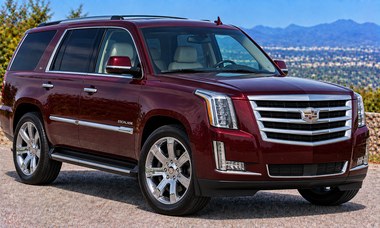
The fourth-generation Escalade, sold for 2015-2020, moved much further into modern luxury-SUV territory. The 6.2-liter V8 remained central to the Escalade's character, but this generation added more sophisticated fuel-saving technology, transmissions and electronics.
The 6.2-liter V8 provides excellent power and can last well beyond 150,000 miles, but cylinder-deactivation hardware becomes a more important reliability consideration. Lifter problems aren't inevitable, but a failed lifter can turn into an expensive valvetrain repair and potentially cause additional engine damage.
Transmission choice also changed during the generation. These vehicles progressed through newer multi-speed automatics, and some owners have experienced shuddering, harsh shifting or other transmission-related symptoms. A thorough test drive is especially important.
Magnetic Ride Control and rear air-leveling equipment contribute to the Escalade's excellent ride and handling for such a large SUV, but replacement suspension components can be considerably more expensive than conventional shocks.
Common Fourth-Generation Escalade Problems
- Lifter and valvetrain problems: Cylinder-deactivation hardware can fail on some 6.2-liter engines.
- Transmission problems: Shuddering, harsh shifts and other symptoms deserve careful investigation.
- Magnetic Ride Control wear: Electronic dampers are effective but expensive when replacement becomes necessary.
- Air-leveling suspension problems: Compressors and related components can fail as mileage accumulates.
- CUE infotainment problems: Touchscreen and infotainment faults can occur.
- Electrical accessories: Cameras, sensors, power equipment and other features increase the number of potential failure points.
Buyer Tip: On a 2015-2020 Escalade, listen carefully for abnormal engine ticking and make sure the transmission behaves properly when cold and fully warmed up. I'd also ask whether any lifter, transmission or suspension work has already been performed.
Bottom Line: The fourth-generation Escalade offers a major step up in luxury and technology, but it also introduces more expensive failure possibilities. Maintenance records and a model-specific inspection become especially important.
2021-2024: Fifth-Generation Cadillac Escalade
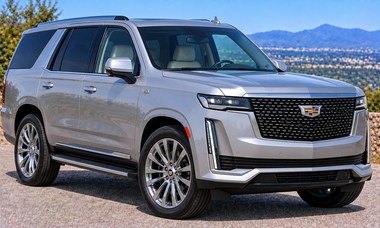
The fifth-generation Escalade began with the 2021 model year and represented one of the largest changes in the model's history. Independent rear suspension dramatically improved passenger space and ride quality, while the interior gained an enormous increase in electronics and display technology.
The familiar 6.2-liter gasoline V8 continued, while Cadillac also offered a 3.0-liter Duramax turbodiesel six-cylinder engine. Later, the high-performance Escalade-V added a supercharged 6.2-liter V8.
The standard 6.2-liter V8 provides effortless performance, but lifter and cylinder-deactivation-related concerns remain important when evaluating used examples. The diesel offers a very different ownership proposition, trading V8 performance for strong low-speed torque and substantially better fuel economy.
Because 2021-2024 models are relatively young, there's less meaningful evidence about what they'll be like at 175,000 or 200,000 miles. Their increased electronic and suspension complexity also means long-term ownership costs can't be judged solely by engine durability.
Common Fifth-Generation Escalade Reliability Concerns
- 6.2-liter V8 lifter problems: Valvetrain failures have occurred on some engines and deserve particular attention.
- Electronic complexity: Extensive displays, cameras, driver-assistance systems and control modules create additional potential trouble points.
- Suspension complexity: Magnetic Ride Control and available air suspension provide excellent ride quality but can be costly outside warranty.
- Diesel emissions equipment: The Duramax adds emissions-system components not found on the gasoline V8.
- Limited long-term history: There still isn't enough high-mileage evidence to assess 200,000-mile durability as confidently as with older Escalades.
Buyer Tip: For a 2021-2024 Escalade, I'd place substantial value on remaining warranty coverage, complete service records and documentation of any engine-related repairs or campaigns. These are extraordinarily complex vehicles compared with the Escalades of 20 years ago.
Bottom Line: The fifth-generation Escalade is the most sophisticated and capable version yet, but it's too early to call it the most reliable. The underlying truck architecture remains encouraging, while the amount of technology increases long-term uncertainty.
Which Cadillac Escalade Generation Is Most Reliable?
If mechanical simplicity and proven high-mileage durability were my priorities, I'd give particular consideration to the 2002-2006 second-generation Escalade. Its naturally aspirated 6.0-liter V8 and comparatively straightforward drivetrain avoid much of the fuel-saving and electronic complexity added later.
The 2007-2014 third generation may provide the better overall compromise for many buyers. It's substantially newer and more refined while retaining a relatively conventional full-size SUV design. A carefully maintained example can still be a very good high-mileage vehicle.
The 2015-2020 generation is more luxurious and modern, but lifter, transmission and suspension concerns increase the importance of choosing the right individual vehicle. The 2021-2024 generation is newer still and doesn't yet have enough long-term history for a confident high-mileage comparison.
Which would I buy? If I wanted a lower-cost Escalade to keep for a long time, I'd seriously consider a rust-free 2002-2006 6.0-liter model or a particularly well-maintained 2007-2014 example. I'd choose a newer Escalade primarily for its additional comfort, technology and safety features rather than because I expected it to be mechanically simpler.
Which Cadillac Escalade Engine Is Most Reliable?
For proven durability and mechanical simplicity, the 6.0-liter naturally aspirated V8 used in the 2002-2006 Escalade is one of the strongest Escalade engines for a high-mileage buyer.
It belongs to GM's LS-based small-block V8 family and combines a robust basic design with the absence of later cylinder-deactivation hardware. I'll mention the technical family designation here because it can be useful when researching these engines, but for shopping purposes the important distinction is simply the early 6.0-liter V8.
The various 6.2-liter V8s used in later Escalades are also capable of very high mileage. They produce substantially more power, but later versions add cylinder-deactivation systems that introduce another potential failure point.
Buyer comparison: If I were choosing an Escalade solely for the simplest route to 200,000-plus miles, I'd favor a healthy early 6.0-liter V8 over a much newer and more complicated powertrain. If performance, fuel economy and newer technology mattered more, the 6.2-liter becomes much easier to justify.
Cadillac Escalade 6.0 vs. 6.2 V8 Reliability
The 6.0-liter V8 found in 2002-2006 Escalades is the simpler engine. It doesn't offer the power of the later 6.2-liter, but its straightforward design and long history make it attractive for buyers who value durability over maximum performance.
The 6.2-liter V8 transformed the Escalade's performance and remains one of the vehicle's defining features. Properly maintained versions can run for 200,000 miles or more, but not every 6.2-liter Escalade uses exactly the same engine technology.
Later 6.2-liter engines use cylinder-deactivation systems designed to improve fuel economy by shutting down cylinders when full power isn't required. Those systems add lifters and related valvetrain hardware that can become a significant repair concern.
Buyer comparison: A buyer prioritizing mechanical simplicity should favor the 6.0-liter. A buyer who wants the stronger acceleration and more modern Escalade experience will probably prefer the 6.2-liter, but should pay much closer attention to the exact year, valvetrain history and maintenance records.
Cadillac Escalade Lifter Problems
Lifter problems are one of the most important issues to understand when shopping for certain later Escalades. The concern centers on the cylinder-deactivation system used on later GM V8 engines.
A failed lifter may initially produce ticking, misfires, a check-engine light or rough running. Continued operation can potentially damage additional valvetrain components, including the camshaft, turning the problem into a substantially more expensive repair.
Not every Escalade with cylinder deactivation will suffer a lifter failure, and the issue shouldn't be used to condemn every 6.2-liter V8. But it does change how I'd inspect and evaluate a used one.
I'd listen carefully during a cold start, check for misfire history and ask specifically whether lifter or camshaft work has already been performed. On an affected model, documentation of a properly completed repair can be more reassuring than a seller simply saying the engine has "never had any problems."
Cadillac Escalade Transmission Reliability
Escalade transmission reliability varies considerably by generation because Cadillac moved from relatively simple four-speed automatics to six-, eight- and eventually ten-speed transmissions.
The older transmissions can last a long time but aren't immune to wear, especially after towing, heavy use or neglected fluid service. A high-mileage Escalade that shifts cleanly and has documented transmission maintenance is much more appealing than one with delayed engagement or slipping.
Later multi-speed transmissions improved acceleration and fuel economy but introduced different concerns. Shuddering, harsh shifts, hesitation or inconsistent behavior should never automatically be dismissed as a normal characteristic.
Buyer comparison: For long-term simplicity, I'd rather have an older Escalade with a healthy conventional transmission and good service history. For everyday driving, the later transmissions provide much better performance and efficiency, but I'd scrutinize their operation more carefully before buying.
Cadillac Escalade Magnetic Ride Control and Air Suspension Reliability
The Escalade's sophisticated suspension is an important part of what separates it from less expensive full-size SUVs. Magnetic Ride Control can adjust damping rapidly, while automatic rear leveling and, on newer models, available air suspension help maintain ride quality and vehicle height.
The downside appears as the vehicle ages. Electronic shocks cost substantially more than conventional dampers, and air compressors, sensors, air springs and related components can eventually fail.
During an inspection, look for suspension warnings, uneven ride height, excessive bouncing and a compressor that seems to run too frequently. On an older Escalade, also ask which suspension components have already been replaced.
Buyer comparison: I wouldn't automatically reject an Escalade because it has already needed expensive suspension work. On a 100,000-mile vehicle, documented replacement of aging shocks or air-suspension components may actually make it more attractive than an otherwise identical example still riding on all of its original equipment.
What Are The Best Cadillac Escalade Years to Buy?
The best Cadillac Escalade years depend partly on what you want from the vehicle. Buyers prioritizing simplicity and high-mileage durability may prefer an older Escalade, while those wanting modern safety, technology and refinement will naturally gravitate toward later generations.
For an older Escalade, the 2004-2006 models are particularly interesting. Their 6.0-liter V8 is powerful, relatively straightforward and free of the cylinder-deactivation hardware found on later engines.
Among third-generation models, 2011-2014 Escalades can provide an appealing combination of refinement, strong V8 performance and proven high-mileage capability. At their current age, however, condition and maintenance history matter more than choosing one particular year.
For buyers wanting a substantially newer Escalade, selected later fourth-generation examples can be worthwhile, but I'd investigate engine, transmission and suspension history much more carefully than I would on the simpler older models.
2004-2006 Escalade: Strong Older Used Choices
The final years of the second generation benefit from the durable 6.0-liter V8 and relatively simple drivetrain. These models are old enough that finding an exceptional example can be difficult, but a rust-free, well-maintained Escalade from this period can still make an excellent high-mileage SUV.
I'd place far more importance on condition than mileage. A documented 150,000-mile 2005 Escalade could easily be preferable to a neglected 100,000-mile example.
2011-2014 Escalade: A Good Balance of Age and Refinement
The later third-generation Escalades remain appealing because they offer substantially more comfort, power and technology than the 2002-2006 vehicles without reaching the complexity of the newest generations.
The 6.2-liter V8 provides effortless performance, and these vehicles can accumulate substantial mileage. Suspension condition, transmission behavior and service history should be major factors in the purchase decision.
Knowing which model years to concentrate on is step 1. Step 2 is knowing how to get a good used Escalade price.
Which Cadillac Escalade Years Should You Avoid Or Approach With More Caution?
There isn't one simple group of Escalade years that every buyer should avoid. Instead, certain periods have specific problems that deserve additional investigation.
Early 2002-2003 Escalades
These Escalades can still be durable, but age is now the dominant concern. At more than two decades old, neglected examples can need suspension work, transmission repairs, electrical repairs, seals, hoses and numerous smaller components at the same time.
An unusually well-preserved example can still be worth considering, but I wouldn't buy one simply because it's inexpensive.
2015-2020 Escalades
The fourth generation deserves more careful inspection because of the combination of cylinder-deactivation valvetrain hardware, increasingly sophisticated transmissions, Magnetic Ride Control and additional electronics.
That doesn't mean 2015-2020 Escalades should automatically be avoided. Many provide excellent service. It does mean I'd be much less comfortable buying one without knowing its engine, transmission and suspension history.
2021-2024 Escalades
These Escalades are still relatively new, so the issue isn't simply that they're unreliable. Instead, the concern is that their long-term durability isn't as well established, while their mechanical and electronic complexity is substantially greater.
On a used example, I'd investigate the service history, any previous engine or valvetrain repairs, suspension faults and unresolved electronic problems. Remaining warranty coverage can also have meaningful value.
Cadillac Escalade AFM and DFM Problems
GM has used cylinder-deactivation technology on later Escalade V8 engines to reduce fuel consumption when full engine power isn't required. Depending on the engine and year, you'll see these systems referred to as Active Fuel Management (AFM) or the later Dynamic Fuel Management (DFM).
The reliability concern isn't simply that cylinders turn off. It's the additional valvetrain hardware required to make that happen. When a specialized lifter fails, symptoms can include ticking, misfires, rough running and a check-engine light.
A lifter problem caught early may remain primarily a valvetrain repair. Continued driving can potentially damage the camshaft or contribute to a much more expensive repair.
I'd therefore take persistent ticking or misfire codes seriously on a later 6.2-liter Escalade. A pre-purchase diagnostic scan is worthwhile even when no warning lights are illuminated during the test drive.
Major Cadillac Escalade Problems and Expensive Repairs
Most Escalades don't experience every problem below, but these are among the areas that can have the greatest effect on long-term ownership costs.
Lifter and Valvetrain Failure
On later cylinder-deactivation-equipped V8 engines, lifter problems can range from an irritating engine tick to a repair involving lifters, camshaft components and substantial labor. This is one of the most important engine-related issues to investigate on a later used Escalade.
Transmission Problems
Symptoms can include shuddering, delayed engagement, slipping or harsh and inconsistent shifts. Because transmission replacement or major internal repair can cost thousands of dollars, any abnormal behavior deserves diagnosis before purchase.
Magnetic Ride Control and Air-Leveling Problems
The Escalade's sophisticated suspension provides an excellent ride when operating correctly. As the vehicle ages, electronic dampers, compressors, sensors and other components can become expensive wear items.
Electrical and Infotainment Problems
Older Escalades can develop problems with gauges, climate controls, seats and other powered accessories, while newer generations add touchscreens, cameras, driver-assistance systems and numerous control modules.
Oil Leaks and Oil Consumption
Higher-mileage V8 engines may develop gasket or seal leaks, and some later engines can consume oil. Regularly checking the oil level is especially important because running a large V8 consistently low on oil can contribute to much more serious problems.
Cadillac Escalade Repair and Maintenance Costs
An Escalade generally costs more to maintain than a Chevrolet Tahoe or similar mainstream SUV because of its additional luxury equipment and sophisticated suspension systems. However, widespread GM mechanical components and the availability of independent repair shops can make an older Escalade considerably easier to maintain than some European luxury SUVs.
| Service or Repair | Approximate Cost |
|---|---|
| Oil and Filter Change | $100-$200+ |
| Brake Service | $500-$1,200+ per axle depending on parts |
| Electronic/Magnetic Shock Replacement | $700-$2,000+ depending on components |
| Air-Leveling Suspension Repair | $500-$1,500+ |
| Lifter/Valvetrain Repair | $2,500-$5,000+ depending on damage |
| Major Transmission Repair or Replacement | $4,000-$7,000+ |
| Major Engine Repair | $5,000-$10,000+ depending on damage |
These are broad estimates rather than repair quotes. Actual costs vary substantially by year, location, labor rate, parts used and whether repairs are performed by a Cadillac dealer or independent shop.
In addition, your trade-in allowance, if you are doing that, will also affect the overall potential cost analysis of moving into an Escalade (KBB versus Edmunds Appraisals - Which Is Better).
Cadillac Escalade Maintenance After 100,000 Miles
An Escalade reaching 100,000 miles shouldn't automatically be viewed as nearing the end of its life. With good maintenance, another 100,000 miles can be realistic. This is also the point where I'd begin looking beyond routine oil changes and evaluating the condition of entire systems.
- Transmission: Check service history and investigate any shuddering, slipping or unusual shifting.
- Engine: Look for oil leaks, abnormal oil consumption, ticking and misfire history.
- Cooling system: Inspect hoses, radiator, water pump and related components for deterioration or leakage.
- Suspension: Check electronic shocks, air-leveling equipment, control arms, bushings and wheel bearings.
- Four-wheel-drive system: Inspect transfer-case and differential operation and review fluid-service history.
- Electrical equipment: Test the infotainment system, cameras, seats, climate controls and other major accessories.
On a 100,000-mile Escalade, evidence that expensive maintenance has already been performed can be a positive rather than a negative. It means the previous owner may have absorbed costs that otherwise would have been waiting for you.
What to Check Before Buying a Used Cadillac Escalade
- Cold-start engine noise: Listen for persistent ticking or other abnormal valvetrain noise, particularly on later 6.2-liter V8s.
- Transmission operation: Test it both cold and fully warmed up for shuddering, delayed engagement or harsh shifts.
- Suspension: Look for warning messages, uneven ride height, leaking shocks and excessive bouncing.
- Diagnostic history: Scan for stored or pending misfire, transmission and suspension codes even if the dashboard currently shows no warning lights.
- Rust: On older Escalades from northern climates, inspect the frame, underbody and brake lines carefully.
- Service records: Verify oil-change history and ask specifically about previous lifter, transmission and suspension repairs.
Cadillac Escalade Pros and Cons
Pros
- Excellent 200,000-mile-plus potential with proper maintenance
- Strong V8 performance
- Spacious and comfortable interior
- Excellent towing and highway capability
- Truck-based construction
- Older 6.0-liter powertrain is relatively straightforward
- Many mechanical components are widely available
- Used examples can provide substantial luxury for the money
Cons
- Lifter and valvetrain problems on some later V8 engines
- Potentially expensive transmission repairs
- Electronic suspension components can be costly
- Fuel economy is poor on gasoline V8 models
- Large wheels and tires can be expensive to replace
- Newer generations contain considerable electronic complexity
- Neglected examples can require several expensive repairs simultaneously
- Luxury features add more potential failure points than on simpler GM SUVs
Cadillac Escalade vs. Other Used Luxury SUVs
The Escalade occupies an unusual position in the used luxury-SUV market. It provides genuine luxury and strong performance while retaining much of the rugged truck architecture and parts availability of GM's mainstream full-size SUVs.
- Lexus RX: The RX is smaller and less capable for towing, but generally offers lower running costs and a simpler path to high-mileage ownership. The Escalade provides substantially more passenger space, cargo capacity and V8 performance.
- BMW X5: The X5 is more car-like and athletic to drive, while the Escalade provides greater interior space and traditional full-size SUV capability. Both require careful powertrain selection as they age.
- Acura MDX: The MDX is easier to maneuver and generally less expensive to operate. The Escalade is considerably larger and better suited to buyers who need maximum passenger space, towing capability and traditional V8 performance.
Buyer comparison: If my priority were predictable operating costs, I'd lean toward the Lexus RX or Acura MDX. If I needed full-size space, substantial towing ability and wanted a luxury SUV capable of 200,000-plus miles, a carefully selected Escalade would make considerably more sense.
Is a 100,000-Mile Cadillac Escalade a Good Buy?
Yes. A 100,000-mile Cadillac Escalade can still be a very good used vehicle when it has been maintained properly. With an expected lifespan around 200,000 to 250,000 miles, 100,000 miles doesn't necessarily represent even half of an Escalade's potential life.
But I'd want to know how those miles were accumulated. An Escalade that spent its life towing heavy trailers, idling extensively or receiving irregular maintenance deserves more scrutiny than a primarily highway-driven vehicle with detailed records.
I'd also investigate which major components are still original. A 105,000-mile Escalade with recent suspension work, good tires, documented transmission maintenance and a clean engine history can be a more attractive purchase than an 80,000-mile example approaching all of those expenses.
Is a 150,000-Mile Cadillac Escalade Too Many Miles?
150,000 miles isn't automatically too many for an Escalade. The engines and truck-based drivetrain can remain healthy well beyond that point.
At this mileage, however, the individual vehicle matters much more than its model-year reputation. I'd want a smooth transmission, stable oil consumption, no persistent valvetrain noise, a properly functioning suspension and evidence that maintenance hasn't been deferred.
An older 6.0-liter Escalade with 150,000 miles and excellent records can still be a reasonable high-mileage purchase. On a later 6.2-liter model, I'd add lifter and cylinder-deactivation history to the list of things I'd investigate carefully.
Can a Cadillac Escalade Last 200,000 Miles?
Yes. 200,000 miles is a realistic target for a properly maintained Cadillac Escalade. The basic truck platform and V8 engines are capable of substantial mileage, and many Escalades remain useful vehicles long after crossing the 200,000-mile mark.
The question at that mileage isn't simply whether the engine will continue running. Suspension components, transmission condition, electronics, cooling-system parts and other age-related items increasingly determine whether continued ownership makes financial sense.
For buyers intending to keep an Escalade for 200,000 miles or beyond, preventive maintenance and repairing small problems before they become large ones are far more important than trying to avoid every repair.
Can a Cadillac Escalade Last 300,000 Miles?
A Cadillac Escalade can reach 300,000 miles, although I wouldn't consider that the normal lifespan of every example. Getting there usually requires excellent maintenance and replacement of significant components along the way.
The mechanically simpler older Escalades are particularly interesting at extreme mileage because their basic V8 powertrains are robust and replacement parts remain widely available.
At 300,000 miles, I'd expect the vehicle to have received considerably more than routine maintenance. Transmission work, suspension components, cooling-system parts, wheel bearings, engine seals and numerous other items may have been replaced during its life.
The important point is that an Escalade doesn't necessarily become mechanically finished when the odometer reaches 200,000 miles. Condition and maintenance determine how much useful life remains.
Is a Used Cadillac Escalade a Good Luxury SUV?
A used Cadillac Escalade can be an excellent luxury SUV for someone who genuinely needs its size and capabilities. Few vehicles combine three-row space, towing ability, highway comfort, V8 performance and luxury features in quite the same way.
It's also one of the luxury SUVs where the underlying mechanical platform can work in the used buyer's favor. Many engine, drivetrain and chassis components are related to high-volume GM trucks and SUVs rather than being unique to a low-production luxury vehicle.
The tradeoff is fuel consumption and the cost of Cadillac-specific technology, suspension equipment and luxury features. A buyer who doesn't need the Escalade's size may find a smaller luxury crossover substantially less expensive to own.
Final Cadillac Escalade Reliability Verdict
The Cadillac Escalade has better high-mileage potential than its luxury image might suggest. A properly maintained example can realistically reach 200,000 to 250,000 miles, and exceptionally well-maintained Escalades can surpass 300,000 miles.
For buyers prioritizing durability and simplicity, the 2002-2006 6.0-liter Escalade remains particularly appealing. The 2007-2014 generation offers a strong compromise between traditional truck durability and more modern luxury, while 2015-and-newer models require greater attention to lifter, transmission, suspension and electronic history.
I wouldn't automatically avoid a 100,000- or even 150,000-mile Escalade. I'd be much more concerned about one with missing maintenance records, abnormal engine noise, poor transmission behavior or evidence that expensive suspension problems have been ignored.
The best used Escalade isn't necessarily the one with the fewest miles. It's the one with the right powertrain, a strong maintenance history and evidence that its previous owners treated it like an expensive vehicle even after depreciation made it a cheap one.
Also, if you may be interested in other Cadillac models, please see our Used Cadillac Reliability Guide which covers the best models and years to buy, potential problems to check, and important differences in ownership costs to help you make a more informed choice.
Your Trade-In
And it's good to always know the value of your trade-in while you're evaluating your next possible purchase. Here's a good source for a quick and accurate appraisal: free trade-in appraisal.