

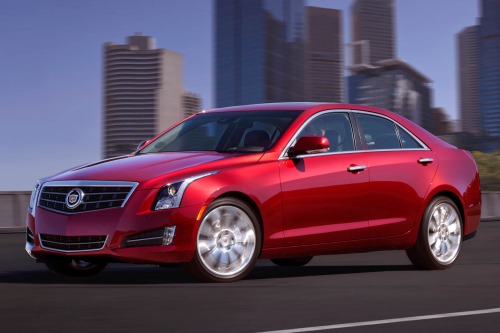
The 2013 Cadillac ATS was one of the most impressive American sport sedans of its time. With sharp handling, responsive steering, a comfortable ride and three engine choices, it was designed to compete directly with the BMW 3-Series and other established European luxury cars.
More than a decade later, the ATS can also be an appealing used-car bargain. Depreciation has made many examples affordable, and a properly maintained car can still deliver the kind of driving experience that made the original ATS so appealing.
But is the 2013 Cadillac ATS reliable? And is this first model year still a good used car to buy?
The short answer: The 2013 ATS has average overall reliability, with some important differences between its three engines. Many examples have provided satisfactory service, but buyers need to investigate certain mechanical and electronic problems before purchasing. The most serious documented concern involves possible piston damage in some cars equipped with the 2.0-liter turbocharged engine.
The good news is that these problems do not affect every ATS. Condition, engine choice, service history and previous repairs matter considerably more than simply finding the lowest-mileage example.
In This Guide
- How reliable the 2013 Cadillac ATS is today
- How many miles can a 2013 ATS last
- Whether 2013 is a good ATS model year to buy
- Reliability differences between the 2.5-liter, 2.0-liter turbo and 3.6-liter V6 engines
- Important engine, transmission and CUE touchscreen problems
- What to inspect before buying a used ATS
- Pros, cons and our final buying recommendation
2013 Cadillac ATS Reliability
The 2013 Cadillac ATS earns a reasonable, although not outstanding, reliability assessment. J.D. Power gives it a Quality and Reliability score of 74 out of 100, which falls in the organization's Average category.
That rating is consistent with the ATS's mixed ownership history. The car has several appealing mechanical and driving characteristics, but some owners have encountered infotainment failures, electrical problems and repairs that can become expensive as the vehicle ages.
It's important to distinguish those concerns from widespread engine or transmission failure across the entire model range. The available evidence does not establish that most 2013 ATS vehicles experience major mechanical trouble.
The 2013 model was also the first year of an entirely new Cadillac platform. Some later ATS years received modestly better reliability scores, although that doesn't automatically make a well-maintained 2013 inferior to a neglected newer car.
2013 Cadillac ATS Reliability at a Glance
- Overall reliability: Average, with important engine-specific concerns
- Best choice for simpler ownership: 2.5-liter naturally aspirated four-cylinder, provided its condition and maintenance history are good
- Best performance alternative: 3.6-liter V6, with appropriate allowance for maintenance and repair costs
- Engine requiring extra investigation: 2.0-liter turbocharged four-cylinder, particularly its piston-damage service history
- Transmission: Six-speed automatic on most cars; six-speed manual available with the 2.0-liter turbo
- Important inspection areas: Turbo engine condition, CUE touchscreen, electrical functions, transmission operation and suspension wear
- Overall buying verdict: Worth considering when well maintained and properly inspected
How Many Miles Can a 2013 Cadillac ATS Last?
A well-maintained 2013 Cadillac ATS can remain useful well beyond 100,000 miles, and some examples may reach 150,000 to 200,000 miles or more. However, there is not enough dependable model-specific longevity data to promise that every ATS will achieve a particular mileage.
For a vehicle of this age, maintenance history becomes increasingly important. Regular oil changes, cooling-system maintenance, timely repairs and proper transmission operation all influence how long an individual car may last.
Engine choice also matters. The 2.5-liter four-cylinder avoids turbocharger-related complexity, while the 2.0-liter turbo deserves additional scrutiny because of the documented piston-damage issue discussed below. The 3.6-liter V6 can provide strong performance, but its larger engine and associated components may increase ownership expenses.
Buyer Tip: When comparing two older ATS sedans, a higher-mileage car with complete service records and a clean professional inspection may be a better purchase than a lower-mileage example with an uncertain history.
Is the 2013 Cadillac ATS a Good Year or One to Avoid?
The 2013 Cadillac ATS is best described as a model year to inspect carefully rather than automatically avoid.
Its first-year status, electronic complaints and certain engine concerns justify additional caution. But the evidence does not support treating every 2013 ATS as an inherently unreliable vehicle.
For shoppers considering a later ATS, a well-maintained 2014 or 2015 model may be worth comparing. However, newer ATS models aren't problem-free, either. The CUE touchscreen concern extended into later years, and some later ATS models introduced different transmission-related problems.
In other words, buying a newer ATS doesn't eliminate the need for careful research and inspection.
Which 2013 Cadillac ATS Engine Is Most Reliable?
The 2013 ATS came with three gasoline engines, each offering a different balance of performance, mechanical complexity and potential ownership costs.
2.5-Liter Four-Cylinder: The Simpler Choice
The standard 202-horsepower 2.5-liter four-cylinder engine is the least powerful ATS engine, but it may be the most practical starting point for someone who values manageable ownership costs over acceleration.
Because it does not use a turbocharger, it avoids some of the additional components and operating stresses associated with the 2.0-liter turbo engine.
That doesn't prove the 2.5-liter has the lowest failure rate. Comparable long-term engine-specific failure statistics are not available. However, its simpler design is a legitimate advantage when evaluating an older luxury car.
Check for oil leaks, abnormal engine noises, rough operation and evidence of neglected maintenance. A documented GM service bulletin also describes possible balancer-shaft-related mechanical problems affecting certain four-cylinder ATS engines, so unusual engine noises should not be dismissed.
The principal tradeoff is performance. The 2.5-liter is adequate for everyday driving but doesn't deliver the acceleration many buyers expect from a sport sedan.
2.0-Liter Turbocharged Four-Cylinder: Excellent Performance, Important Caution
The 272-horsepower turbocharged 2.0-liter four-cylinder makes the ATS a much more entertaining car. Its strong acceleration, responsive handling and available six-speed manual transmission give it considerable appeal to driving enthusiasts.
However, this is also the engine that requires the most careful reliability investigation.
General Motors issued Customer Satisfaction Program 14591 for certain 2013 Cadillac ATS vehicles equipped with the 2.0-liter turbo engine. The program addressed a pre-ignition condition that could damage engine pistons.
Possible symptoms included misfires, poor engine performance, increased oil consumption and an illuminated check-engine light. In severe cases, piston damage could require major engine repairs or replacement.
GM's prescribed correction involved revised engine-control software and different spark plugs. A separate technical bulletin addressed diagnosis and repair of cracked pistons in affected engines.
Not every 2013 ATS turbo was affected, and the service documentation does not establish that piston failure was widespread among all vehicles. Nevertheless, the potential repair cost makes this one of the most important things to investigate before purchasing a 2.0-liter turbo model.
Buyer Tip: Ask a Cadillac dealer to check the vehicle's VIN and service history for GM program 14591 and related engine repairs. Because the original program period has expired, don't assume a repair is still covered. If the car has persistent misfires, unusual oil consumption or rough running, obtain a proper diagnosis before buying.
Also inspect for turbocharger-related oil leaks, cooling problems, abnormal boost behavior and evidence of modifications or aggressive driving.
3.6-Liter V6: Strong Performance Without a Turbocharger
The available 321-horsepower 3.6-liter V6 gives the ATS impressive acceleration and a smooth, energetic character. It is an appealing alternative for buyers who want strong performance without choosing the turbocharged four-cylinder.
The V6 does not share the specific 2.0-liter turbo piston-damage campaign discussed above. However, that doesn't establish that it is categorically more reliable than every four-cylinder ATS.
At this age, buyers should check for oil leaks, cooling-system problems, abnormal engine noises, rough running and evidence of overdue maintenance.
Because the V6 has more cylinders and associated components, some repairs can be more expensive than on the base four-cylinder. Fuel consumption is also generally higher.
Bottom Line: The 2.5-liter is the sensible lower-complexity choice, the 3.6-liter V6 offers a strong performance compromise, and the 2.0-liter turbo is attractive when its service history and mechanical condition have been thoroughly verified.
Common 2013 Cadillac ATS Problems: What Should Buyers Check?
The following issues have been reported by owners or documented in manufacturer service information. Some affect particular engines or equipment rather than every ATS. Others are ordinary inspection concerns for an aging luxury sedan.
In this context, "common problems" means concerns reported often enough, or potentially serious enough, to deserve attention during a used-car inspection. It does not mean most 2013 ATS vehicles will experience them.
Can the 2013 Cadillac ATS 2.0 Turbo Have Piston Failure?
Yes. This is a documented concern on certain 2013 ATS models with the turbocharged 2.0-liter engine.
GM's service information identifies pre-ignition-related piston damage and describes possible symptoms including engine misfires, rough operation, increased oil consumption and loss of performance.
In more serious cases, damaged pistons can lead to extensive internal engine repairs.
For a prospective buyer, the most useful steps are to verify applicable campaign history, review engine repair records and have any suspicious symptoms investigated by a qualified mechanic.
A clean test drive is reassuring, but it isn't a substitute for documentation and a professional inspection.
Why Does the Cadillac ATS CUE Touchscreen Stop Working?
The Cadillac User Experience, or CUE, infotainment system is one of the ATS's better-documented ownership concerns.
Owners have reported touchscreen failures, unresponsive controls, bubbling, delamination and cracking or spider-web-like damage within the display.
The problem was significant enough to be addressed by a limited reimbursement program covering certain Cadillac vehicles, including 2013–2017 ATS models.
That also explains why buying a later ATS does not necessarily eliminate this concern.
During an inspection, operate the touchscreen repeatedly, test the climate and audio controls, check Bluetooth connectivity and examine the display for visible deterioration.
A functioning replacement screen is a positive sign, although buyers should verify the repair and confirm that all functions work properly.
Does the 2013 Cadillac ATS Have Transmission Problems?
Some owners have reported rough shifting, hesitation, delayed engagement or other transmission complaints.
However, the available evidence does not establish a widespread failure pattern affecting every 2013 ATS six-speed automatic transmission.
It's also important not to confuse the 2013 six-speed automatic with the eight-speed automatic introduced on later ATS models. The later transmission's well-known shudder complaints are a separate issue and should not automatically be attributed to the 2013 car.
During a test drive, check that the transmission engages Drive and Reverse promptly, shifts smoothly under light and moderate acceleration, and does not slip, flare or make unusual noises.
For the available six-speed manual, check clutch engagement, shifting quality, synchro operation and evidence of hard use.
What Electrical Problems Can Affect a 2013 Cadillac ATS?
In addition to CUE touchscreen concerns, some owners have reported intermittent warning lights, sensor faults and malfunctions involving convenience features or other electronic systems.
These complaints do not necessarily indicate a major wiring or computer problem. A weak battery, faulty sensor or individual component can sometimes produce similar symptoms.
Still, diagnosis on a luxury vehicle can be time-consuming and expensive.
Before buying, test the power windows, door locks, climate controls, exterior lighting, cameras, parking sensors and any equipped driver-assistance features.
Have a mechanic scan the vehicle for stored diagnostic trouble codes, even if no warning lights are currently illuminated.
Are Suspension and Steering Repairs Expensive on the 2013 ATS?
The ATS's excellent handling comes from a sophisticated chassis and carefully tuned suspension. Those qualities remain appealing, but worn suspension components can affect ride quality, steering precision and repair costs.
On higher-mileage examples, check for worn bushings, ball joints, shock absorbers, wheel bearings and other suspension components.
Listen for clunks over bumps, humming noises that change with road speed, and steering noises during low-speed turns.
Cars equipped with more sophisticated suspension hardware may cost more to repair than basic versions.
Uneven tire wear can also indicate alignment problems or worn components, so examine all four tires closely.
Does the 2013 Cadillac ATS Have Engine Oil Leaks or Cooling Problems?
Oil leaks, coolant leaks and deterioration of hoses, seals or other components become increasingly important as vehicles age.
These are useful inspection concerns for all three ATS engines, but they should not automatically be interpreted as evidence of a model-wide defect.
Look for fluid residue around the engine, low coolant levels, overheating history and signs of previous repairs.
For turbocharged cars, the inspection should also include turbo-related plumbing and oil or coolant connections.
A vehicle with unexplained fluid loss, repeated overheating or persistent warning lights should be diagnosed before purchase.
Are There Recalls on the 2013 Cadillac ATS?
Yes. The 2013 ATS has been included in several safety recalls involving various components and equipment.
Examples include certain rear-defogger electrical components and power sunroof switch arrangements, along with other model-specific safety concerns.
Not every recall applies to every ATS. The proper way to determine whether an individual vehicle has outstanding safety recalls is to check its VIN using the official NHTSA recall lookup.
Ask for documentation that applicable recall repairs have been completed.
What Should You Inspect Before Buying a 2013 Cadillac ATS?
- Engine: Check for misfires, oil consumption, fluid leaks, abnormal noises and relevant service campaigns, especially on the 2.0-liter turbo.
- Transmission: Confirm smooth engagement and shifting, with no slipping or unusual noises.
- CUE and electronics: Test the touchscreen, climate controls, accessories and warning-light functions.
- Suspension and tires: Check for worn components, noises, vibrations and uneven tire wear.
- History: Review maintenance records, previous repairs, accident history and outstanding recalls.
Buyer Tip: Arrange a professional pre-purchase inspection with a mechanic familiar with GM or Cadillac vehicles. On an older luxury sedan, the cost of an inspection is modest compared with the expense of an unexpected engine, transmission or electronic repair.
Also, evaluating an ATS for a possible purchase is a very important first step. The next step would be learning how to actually get an excellent ATS price, and I have some important pointers on that.
2013 Cadillac ATS Pros and Cons: Is It Worth Buying Today?
Reliability is important, but it isn't the only reason to buy or avoid an older luxury sedan. The ATS has several genuine strengths that can make it an attractive purchase, particularly for drivers who value handling and performance.
2013 Cadillac ATS Pros
- Excellent handling: Responsive steering, balanced cornering and an engaging driving character distinguish the ATS from many ordinary sedans.
- Strong engine choices: The 2.0-liter turbo and 3.6-liter V6 provide satisfying acceleration and performance.
- Comfortable ride: The suspension delivers a useful balance between sporty handling and everyday comfort.
- Rear-wheel-drive character: Standard rear-wheel drive gives the ATS traditional sport-sedan dynamics, while all-wheel drive was available with selected engines.
- Available manual transmission: Enthusiasts can find a six-speed manual with the 2.0-liter turbo engine.
- Luxury features: Depending on trim, buyers can find leather seating, upgraded audio, advanced safety equipment and other upscale features.
- Used-car value: Significant depreciation can make a properly maintained ATS affordable compared with many newer luxury sedans.
2013 Cadillac ATS Cons
- Important turbo-engine concern: Certain 2.0-liter turbo engines were subject to GM's piston-damage service program.
- CUE touchscreen reliability: Screen failures and delamination can create inconvenience and repair expenses.
- Limited rear-seat room: Taller passengers may find the back seat cramped.
- Small trunk: Cargo capacity is modest compared with some competing sedans.
- Unexciting base engine: The 2.5-liter four-cylinder lacks the acceleration of the more powerful ATS versions.
- Potential luxury-car repair costs: Electronics, suspension components and major mechanical repairs can be expensive relative to the car's current value.
- Age-related uncertainty: Maintenance history and previous ownership become increasingly important on a vehicle more than a decade old.
2013 Cadillac ATS vs. BMW 3-Series: Which Is the Better Used Car?
The ATS was developed as a direct competitor to the BMW 3-Series, and its responsive steering and excellent handling remain major reasons to consider it.
The BMW offers its own blend of performance, refinement and engine choices, but reliability and repair costs vary considerably by year and powertrain.
Neither badge guarantees trouble-free ownership. At this age, the better purchase is often the car with the stronger maintenance history, healthier mechanical condition and more reasonable price.
For buyers comparing different Cadillacs, our Used Cadillac Reliability Guide covers other models, years and mechanical concerns worth considering.
Final Verdict: Should You Buy a Used 2013 Cadillac ATS?
Yes, a carefully selected 2013 Cadillac ATS can still be a worthwhile used luxury sport sedan. It offers impressive handling, appealing performance and substantial value for buyers who appreciate a driver's car.
But it should not be purchased casually simply because the asking price is low.
The most important distinction is engine choice. The naturally aspirated 2.5-liter four-cylinder offers a relatively straightforward ownership proposition, while the 3.6-liter V6 combines strong performance with the need for careful maintenance. The 2.0-liter turbo is particularly appealing to enthusiasts, but its documented piston-damage concern makes service history and mechanical condition especially important.
Electronic issues, particularly the CUE touchscreen, are also worth investigating. Fortunately, these problems do not mean every 2013 ATS is unreliable, and similar infotainment concerns affected later model years as well.
Bottom Line: Don't automatically reject the 2013 Cadillac ATS because it was the first model year. Instead, concentrate on finding a well-maintained, unmodified example with documented repairs, properly functioning electronics and a clean professional inspection. When those conditions are met, the ATS can still provide an enjoyable and rewarding used-car ownership experience.
By The Way, What's Your Own Car Worth?
Probably more than you think.
Used-car prices are again near record highs. And if there's a bright side to this, it's that your own vehicle may be worth considerably more than you think.
And it's always an advantage to know the value of your current vehicle, whether you plan to trade it or sell it, or just to keep up with the value of one of your assets. Here's a quick and accurate appraisal at Edmunds, known for it's accuracy due to some additional questions asked.
An Insider Insight ...