

With extremely high new and used car prices today, many consumers are looking for "older" vehicles for a way to save significant dollars. And with a well-maintained BMW expected to easily reach 200,000 miles, perhaps the 2010 BMW 5-Series, especially one driven less than average annual miles (and they are out there), represents a lot of performance and luxury for the dollar.
On the downside, an older vehicle is likely to require more frequent maintenance and repairs. This makes it extremely important to get an independent pre-purchase inspection, its vehicle history report and its maintanence records before making any final decision.
A lot also comes down to the previous owners as to how the car was driven and how that may affect its lifespan. If the car has primarily been driven on highways under normal conditions, it may experience less wear and tear than a vehicle that has been subjected to stop-and-go city driving or severe weather conditions or extremely high mileage.
And, of course, the care and maintenance provided by previous owners will also play a significant role in a car's longevity. A well-maintained BMW with consistent servicing is more likely to last longer.
More On Reliability: Also, if you'd like to compare this 5 Series model year to the reliability of other model years, be sure to read BMW 5 Series Reliability & Problems: Best Used Models & Years. This comprehensive guide highlights the best years to buy or avoid, common problems, potential maintenance costs, and more, and will likely help you make the right choice for your needs.
Other BMWs: Also, if you may be looking at other BMW models, visit our BMW Reliability Hub to compare reliability, common problems, and the best years to buy across BMW's most popular cars and SUVs.
Reliability
Overall, the 2010 BMW 5-Series (E60/E61 generation in North America for the 528i / 535i) is generally considered a high-driving-quality but below-average reliability luxury car as it ages. The key theme is: great to drive, expensive and sometimes unpredictable to own.
- Reliability rating: roughly average to slightly below average for luxury sedans
- Typical ownership experience: smooth and enjoyable when maintained, but prone to costly repairs after ~70k–120k miles
- Repair data places it around 3.5/5 reliability with frequent complaint volume compared to non-luxury midsize cars
Most important thing: engine choice matters a LOT
528i (3.0L inline-6, N52 engine)
This is the best reliability option in the 2010 5-Series lineup.
Common issues:
- Electric water pump failure (fairly expensive)
- Oil filter housing gasket leaks
- Valve cover gasket leaks
- Occasional VANOS solenoid issues
Why it’s preferred:
- No turbochargers
- Simpler design than 535i or V8 models
- Many examples reach 150k–200k+ miles with proper maintenance
➡ This is the version most BMW techs consider “livable long-term.”
535i (turbo inline-6, N54 engine)
This is where reliability drops noticeably.
Common issues:
- High-pressure fuel pump (HPFP)
- Carbon buildup on intake valves (direct injection)
- Turbo wastegate wear/rattle
- Injectors, coils, misfires
- Oil leaks (valve cover, oil filter housing)
Owner experience:
- Fast and fun, but maintenance-heavy
- One of the most commonly “expensive to keep running right” BMW engines of that era
550i (V8, N62 engine)
Avoid if reliability is your priority.
Common issues:
- Valve stem seals (very expensive repair)
- Cooling system failures
- Oil consumption
- Valve-train and timing-related wear
Common “all models” issues
Even the good engines share BMW aging problems:
- Electric water pump + thermostat failure
- Oil leaks (gaskets almost guaranteed eventually)
- Suspension wear (control arms, bushings)
- Window regulators and door electronics
- Battery drain / electrical module issues
- iDrive glitches or screen/controller failures
- Sensor faults triggering warning lights
These are not rare. They’re expected maintenance items on older BMWs.
What owners typically experience long-term
- First 60–80k miles: usually fine if maintained
- 80k–120k miles: repair phase begins
- 120k+ miles: depends heavily on history and prior repairs
Common pattern:
“Car drives amazing, but I spent $3k–$6k in a year keeping it right”
Why the 2010 5-Series feels “less reliable than it is”
- Parts are expensive
- Labor is high (tight engine bay, complex systems)
- Multiple small failures stack together over time
So it feels less reliable than mainstream cars even if nothing catastrophic happens.
Bottom line
- Best choice: 528i (N52) → most balanced and durable
- Risky but fun: 535i (fast, but expensive ownership)
- Avoid for reliability: 550i unless you specifically want a V8 project car
Simple ownership expectation
If you buy a well-maintained 2010 5-Series:
- Expect $1k–$3k/year average maintenance
- More if turbo or V8 model
Original 2010 5-Series Overview
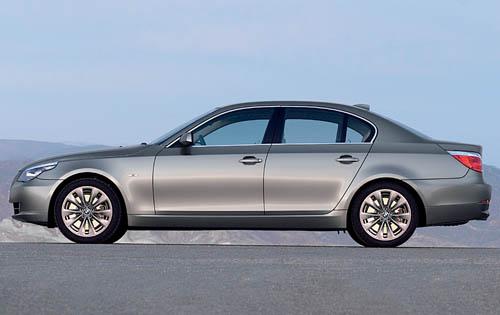
The 2010 BMW 5-Series continued to hold its spot as simply one of the best cars available. With its smooth and robust engines, outstanding handling, premium interior refinement, spaciousness, excellent build quality and strong resale value, the 5-Series sedan or wagon sets the pace in the luxury segment.
Particularly impressive is the 535i model with its twin-turbocharged inline-6 that so efficiently blends power with respectable fuel economy. The 535i can actually accelerate from a standstill to 60 mph in just a few tenths less than the V8 550i, while getting only 1 mpg less (combined city and highway) than the 528i model.
Trims, Standard Features And Options:
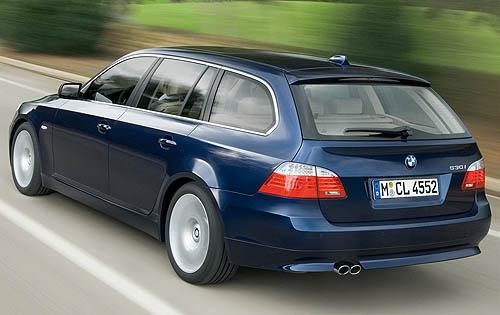
The 2010 5-Series is offered in both sedan and wagon forms. There are three available sedan engines, corresponding to the three trims: 528i, 535i and 550i. All-wheel drive (xDrive) is available on the 528i and 535i sedans, while the wagon is a 535i xDrive only.
Standard features on the BMW 528i include a sunroof, power front seats, driver memory, power headrests, automatic headlights and wipers, leatherette vinyl upholstery, automatic climate control, a power tilt and telescoping steering column, the iDrive electronics interface, a 10-speaker audio system, a CD player, an auxiliary audio jack and 17 inch wheels.
In addition to the above, and the twin-turbo engine, the 535i adds lumbar support and adaptive xenon headlights. The BMW 535i xDrive wagon adds a power tailgate, a panoramic sunroof and fold-down rear seats.
The 550i adds the large V8 engine, leather upholstery, parking assist and an auto-dimming rearview mirror.
Most of the features on uplevel 5-Series models are available as options on the lower trims. Whether as part of packages or stand-alone options, these include active cruise control, a lane-departure warning system, a head-up display, automatic transmission shift paddles, active steering, larger wheels, heated front and rear seats, keyless ignition/entry, front and rear parking assist, an infrared night vision display, fold-down rear seats, rear sunshades, a heated steering wheel, multicontour "Comfort" seats, navigation (in a different iDrive system), HD radio, satellite radio, an iPod interface, and a 13-speaker premium surround-sound system.
There's also several available sport packages. The 528i and 535i Sport Package adds a sport-tuned suspension, 18 inch wheels with performance tires, active roll stabilization, a sport steering wheel and "Comfort" front seats. The Sport Package offered on only xDrive models features just the comfort seats and sport steering wheel.
There's also an M Sport Package for all trims that includes all the regular Sport Package features, plus an aerodynamic body kit, a dark gray headliner and 19 inch wheels on the 550i.
Engines, Powertrain And Gas Mileage:
Powering the BMW 528i is an extremely competent 3.0 liter inline-6 that delivers 230 horsepower and 200 pound-feet of torque. Under the hood of the 535i is the 3.0 liter inline-6 turbo that produces 300 horsepower and 300 lb-ft of torque. Powering the BMW 550i is a 4.8 liter V8 that generates 360 horsepower and 360 lb-ft of torque. All three engines are coupled with a standard six-speed manual transmission or an optional six-speed automatic.
While most drivers will be more than satisfied with the performance of the base 528i, it should be noted that for those seeking still more oomph, a manual transmission 535i can zoom from 0 to 60 mph in a very quick 5.8 seconds, while a manual 550i completes the same feat in just 5.4 seconds.
Given the 528i's power and performance, the EPA-estimated gas mileage is very good, coming in at 18 mpg city and 27 mpg on the highway with the automatic. The 535i sedan is almost the same with estimates of 17 mpg city and 26 mpg highway, and just slightly lower with the xDrive. Fuel economy for the 535i xDrive wagon drops to 16 mpg city and 24 highway while the 550i comes in at 15 and 23, respectively.
Safety:
Standard safety features for all 5-Series models include antilock disc brakes (ABS), stability control, front-seat side airbags and front and rear side curtain airbags. In addition, hill descent control and hill start assist are standard on AWD models. Optional safety features include rear-seat side airbags, a lane-departure warning system and a night vision system.
In government crash testing, the 2010 BMW 5-Series received five out of five stars for front passenger protection and front and rear side protection, but only three stars for driver protection in a frontal impact.
Interior:
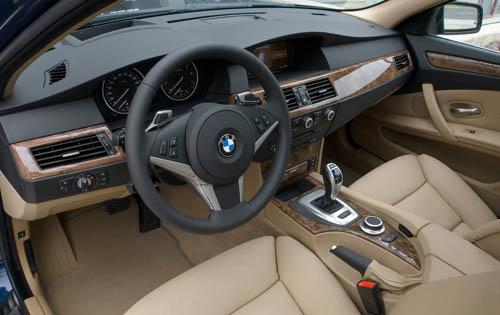
The cabin of the 2010 5-Series is just what you'd expect: attractive, refined and solidly constructed with high quality materials. In addition, the new 5-Series possesses one of the roomiest and comfortable interiors in its class, especially those outfitted with the optional "Comfort" front seats with their myriad of adjustments.
Rear-seat space is also ample and the trunk has a wide opening and a cargo capacity of 14-cubic-feet. The wagon offers 58-cubic-feet of storage space.
Drive:
The 5-Series performs impressively whether tackling twisty back roads or cruising down the highway. There's an excellent balance of power, performance and comfort. And with either of the Sport Packages, the 5-Series can grip in brisk cornering as confidently as some sports cars. Overall, the 5-Series is an athletic yet refined luxury sport sedan.
Your Trade-In
It's good to always know the value of your trade-in while you're evaluating your next possible purchase. Here's a good source for a quick and accurate appraisal: free trade-in appraisal.
What's Next?
If You're Buying Soon
If you may be buying a used car soon, see how to identify the dealerships most motivated to get your sale, and therefore most ready to lower their price more than the rest. This is often the difference between getting a good price and getting a great one.