
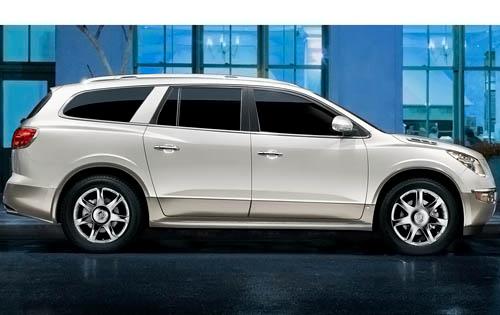
The 2010 Buick Enclave is a comfortable, spacious three-row crossover with a quiet interior and upscale ride, but reliability is mixed and several potentially expensive mechanical problems deserve careful attention. The biggest concerns are the 3.6-liter V6 timing-chain system, six-speed automatic transmission, water pump, and power steering system. A well-maintained Enclave can exceed 200,000 miles, but a neglected example can become expensive very quickly.
Every 2010 Enclave uses GM's naturally aspirated 3.6-liter V6 paired with a six-speed automatic transmission. The engine provides good power for a large family crossover and uses timing chains rather than a timing belt. Unfortunately, timing-chain stretch and wear are among the most important problems associated with early versions of this engine.
Oil maintenance is particularly important. Extended oil-change intervals, low oil levels, and neglected maintenance can accelerate wear of the timing chains, guides, and tensioners. Symptoms can include startup rattling, a check-engine light, rough running, reduced performance, or camshaft/crankshaft correlation codes. Because timing-chain replacement requires substantial labor, repairs can be expensive.
The six-speed automatic transmission is another major area to inspect. Some early Enclaves experience internal transmission problems, including failure of the 3-5-R wave plate. Symptoms can include slipping, harsh shifting, loss of Reverse or certain forward gears, delayed engagement, or eventually complete transmission failure. A transmission that behaves abnormally shouldn't be purchased on the assumption that a fluid change will fix it.
Water pump condition also deserves attention. The 3.6-liter V6 uses an internally mounted water pump driven by the timing chain. A failing pump can be considerably more involved to replace than a conventional external water pump, and coolant contamination of the engine oil can become especially serious if leakage isn't caught promptly.
Power steering problems are another concern on older Enclaves. Steering pumps, racks, hoses, and related components can develop leaks, noise, or reduced assistance. Because the Enclave is a large and heavy vehicle, suspension components, wheel bearings, brakes, and tires can also require substantial maintenance as mileage increases.
Front-wheel drive was standard, while all-wheel drive was optional. AWD is useful in poor weather but adds a transfer case, rear differential, driveshaft, and additional components that should be checked for leaks, vibration, binding, or unusual noises.
Overall, I would rate the 2010 Buick Enclave as below average for long-term reliability. It can still be a good value for someone who wants a comfortable three-row crossover, but maintenance history and evidence of previous major repairs matter far more than finding the lowest-mileage example.
- Overall reliability: Below Average
- Expected lifespan: 150,000 to 200,000+ miles with excellent maintenance, with some well-maintained examples going farther
- Best choice: Well-maintained example with documented oil changes, a quiet timing-chain system, and a smooth-shifting transmission
- Watch for: Timing-chain wear, transmission failure, water pump problems, power steering issues, oil and coolant leaks, wheel bearings, and AWD system problems
Bottom line: The 2010 Buick Enclave can provide a lot of comfort and passenger space for relatively little money, but it isn't a used crossover I'd buy casually. Timing-chain, transmission, and water-pump repairs can each be expensive. A documented Enclave with important repairs already completed may actually be more desirable than a lower-mileage example with an unknown history.
- Why it's a good choice: Quiet interior, comfortable ride, roomy three-row seating, useful cargo capacity, strong V6 performance, and affordable used prices
- Biggest concern: Expensive engine and transmission problems can easily erase the savings from a low purchase price
- Best version: The best-maintained example available; front-wheel drive provides somewhat greater mechanical simplicity if AWD isn't needed
- Buy only if: The engine starts quietly, transmission operates correctly, cooling system is healthy, and the vehicle passes a thorough pre-purchase inspection
Relative Reliability: Also, if you'd like to see which are the most historically reliable cars, trucks, and SUVs, be sure to read our Most Reliable Vehicles Guide: Best Used Models & Years. This comprehensive guide highlights the top-rated models, best years to buy or avoid, common problems, potential maintenance costs, and more, and may help you make the right choice to meet your needs.
Is the 2010 Buick Enclave a Good Year or One to Avoid?
The 2010 Buick Enclave is a year I would approach cautiously rather than broadly recommend. It isn't an automatic vehicle to avoid because well-maintained examples can provide substantial mileage, but there are enough potentially expensive powertrain problems that buying the wrong one can be costly.
Timing-chain condition is one of the most important considerations. An Enclave with documented timing-chain replacement performed correctly may actually be more attractive than a lower-mileage example still running its original components. At this age, evidence of appropriate major repairs can be an advantage.
The same applies to the transmission. If an Enclave has already received a professionally rebuilt or replaced transmission and there is documentation showing what was done, that can substantially change the buying equation. Conversely, any slipping, delayed engagement, loss of gears, or harsh shifting on a supposedly untouched transmission deserves serious caution.
Front-wheel-drive models are somewhat simpler because they eliminate the additional AWD hardware. If you live where all-wheel drive isn't necessary, I'd generally favor a comparable front-wheel-drive Enclave simply because there are fewer aging drivetrain components to maintain.
The Enclave's low used price can make it tempting compared with a Toyota Highlander or Honda Pilot. But purchase price should be considered alongside potential repair costs. Paying more for a better-maintained vehicle can be far less expensive than buying the cheapest Enclave available.
Buyer Takeaway: I would classify the 2010 Enclave as a "buy only after careful inspection" year. It can be an excellent family vehicle when properly maintained, but this is one model where service records, diagnostic scanning, and a professional pre-purchase inspection are particularly valuable.
Possibly Buying Soon? Avoid These Dealer Traps
Before you sign, learn:
- What you don't know about dealer trade-in offers could cost you - Which dealer fees you must pay, can negotiate, or should avoid - How to avoid giving the dealer the upper hand on a used car price - How to avoid overpaying for a new car
2010 Buick Enclave Common Mechanical Problems
The 2010 Enclave has several trouble areas buyers should investigate specifically. Timing-chain and transmission problems receive the most attention because of their potential cost, but cooling-system, steering, suspension, AWD, and electrical problems can also become significant as these vehicles age.
- Timing-chain stretch and wear: The 3.6-liter V6 can develop stretched timing chains or wear involving the guides and tensioners. Symptoms can include startup rattling, a check-engine light, rough running, poor performance, or camshaft/crankshaft correlation codes. Timing-chain replacement is labor-intensive and can be expensive.
- Poor oil maintenance and timing-chain wear: Timing-chain durability is strongly influenced by lubrication. Extended oil-change intervals or repeatedly operating the engine with insufficient oil can accelerate chain, guide, and tensioner wear. Detailed oil-change records are especially valuable on this vehicle.
- 3-5-R wave plate transmission failure: The six-speed automatic used in early Enclaves can suffer internal wave plate failure. Symptoms may include loss of Reverse, loss of certain forward gears, slipping, unusual shifts, or transmission fault codes. Internal damage may ultimately require substantial transmission repair or replacement.
- Harsh or delayed transmission shifting: Even before complete failure, a worn transmission may hesitate when Drive or Reverse is selected, flare between gears, shudder, or shift harshly. Drive the vehicle long enough to evaluate the transmission after it reaches full operating temperature.
- Internal water pump failure: The 3.6-liter V6 uses a timing-chain-driven water pump located inside the engine. Failure can cause coolant loss and, in some cases, coolant contamination of the engine oil. Unexplained coolant loss should be investigated immediately.
- Coolant leaks and overheating: Hoses, radiator components, seals, thermostat-related parts, and other cooling-system components can deteriorate with age. Any history of overheating deserves careful investigation because overheating can lead to much more serious engine damage.
- Engine oil leaks: Gaskets and seals can begin leaking as mileage increases. Minor seepage is different from substantial oil loss, but a low oil level is particularly concerning because proper lubrication is important to timing-chain durability.
- Power steering pump problems: Whining, groaning, increased steering effort, or fluid leakage can indicate a failing power steering pump or related problem. Steering effort should remain consistent throughout the test drive.
- Power steering rack and hose leaks: Leaks can develop elsewhere in the hydraulic steering system. Inspect underneath the vehicle and around steering components for fluid residue and check the reservoir level.
- Wheel bearing and hub wear: The Enclave's weight can contribute to hub and bearing wear. A humming or growling noise that increases with road speed is a common symptom. Several hub replacements can add substantially to immediate ownership costs.
- Front suspension wear: Struts, control arm bushings, ball joints, sway bar links, and related components eventually deteriorate. Clunks over bumps, uneven tire wear, loose steering, or excessive bouncing can indicate that suspension work is needed.
- Engine and transmission mount deterioration: Worn mounts can create excessive vibration at idle or clunking when shifting between Reverse and Drive. Several deteriorated mounts can make the drivetrain feel considerably rougher than it should.
- AWD transfer case problems: All-wheel-drive Enclaves add transfer case and rear driveline components that can develop leaks, bearing wear, or other problems. Listen for whining, grinding, binding, or vibration during acceleration and turns.
- Rear differential and driveline problems: AWD models should be inspected for rear differential leakage and abnormal noises. Driveshaft and CV joint wear can also cause vibration, clicking, or clunking.
- CV axle wear: Torn CV boots, clicking during turns, or vibration during acceleration can indicate axle or joint problems. These become increasingly common as mileage accumulates.
- Brake wear: The Enclave's weight puts substantial demands on its brakes. Check for pulsation, pulling, grinding, uneven wear, or excessive heat from one wheel after the test drive.
- Air conditioning problems: The Enclave's large three-row cabin depends heavily on effective climate control. Compressors, condensers, evaporator components, actuators, and refrigerant leaks can create expensive repairs. Test both front and rear climate-control functions.
- Power liftgate problems: Motors, switches, struts, latches, sensors, and wiring can cause the power liftgate to operate intermittently or stop functioning. Test it several times rather than assuming a single successful cycle means the system is healthy.
- Electrical and accessory problems: Power seats, windows, door locks, audio equipment, sensors, heated-seat components, dashboard electronics, and other luxury features can develop faults. The Enclave has more equipment than many mainstream crossovers, which means more age-related accessories to inspect.
- Rust and underbody corrosion: Enclaves from northern climates should be inspected underneath for corrosion involving brake lines, suspension mounting areas, subframes, exhaust components, and structural sections.
It's important to evaluate the problems collectively. An otherwise excellent Enclave needing a wheel bearing or suspension repair can still be a reasonable purchase. An Enclave simultaneously showing timing-chain noise, transmission hesitation, disappearing coolant, and power steering problems can require repairs worth more than the vehicle itself.
Buyer Tip: Ask the seller not to start the Enclave before you arrive. Listen carefully during a completely cold startup for timing-chain rattling. Check the engine oil and coolant levels, then drive long enough to bring the engine and transmission fully up to temperature. Test Reverse repeatedly, accelerate through every gear, make several tight turns, and listen for transmission, steering, wheel-bearing, and AWD noises. A diagnostic scan should be part of the pre-purchase inspection even if no warning lights are currently illuminated.
2010 Buick Enclave Pros and Cons
The 2010 Enclave still has considerable appeal as an inexpensive family crossover. Buick gave it a quieter, more upscale interior than many mainstream competitors, and its combination of three-row seating, cargo capacity, and comfortable road manners remains useful today. The tradeoff is that several expensive mechanical problems can make ownership considerably less predictable than the low purchase price suggests.
Pros
- Quiet, upscale interior: Buick put considerable effort into noise isolation, giving the Enclave a more refined highway experience than many family crossovers of its era.
- Comfortable ride: The suspension emphasizes comfort and makes the Enclave particularly well suited to longer trips.
- Spacious three-row seating: The Enclave provides genuine family usefulness rather than a tiny third row intended only for occasional use.
- Good cargo capacity: Folding the rear seats creates substantial room for luggage, furniture, recreational equipment, and other large items.
- Strong V6 performance: The 3.6-liter V6 provides adequate power for a vehicle of this size when the engine is healthy.
- Available all-wheel drive: AWD provides useful additional traction for buyers in snowy climates.
- Conventional six-speed automatic: There is no CVT, which some used-car buyers may prefer.
- Affordable used prices: Depreciation means the Enclave can provide a great deal of passenger space, equipment, and comfort for relatively little initial money.
- Excellent parts availability: The Enclave shares many mechanical components with other GM crossovers, and parts and repair knowledge are widely available.
Cons
- Timing-chain problems can be expensive: Chain, guide, and tensioner repairs require substantial labor and are among the biggest concerns when shopping for an older Enclave.
- Transmission failure can be costly: Internal six-speed automatic problems, including wave plate failure, can require major repair or replacement.
- Internal water pump complicates repairs: The water pump's location makes failure more consequential than the straightforward external pump replacement found on many engines.
- Power steering problems add another repair area: Pumps, hoses, racks, and related components can become costly when several items need attention.
- Heavy vehicle accelerates wear: Tires, brakes, wheel bearings, suspension components, and other chassis parts work hard on a vehicle this large.
- AWD adds mechanical complexity: The system provides useful traction but introduces additional components that can leak or fail as the vehicle ages.
- Fuel economy is modest: The Enclave's size, weight, and V6 engine make it substantially more expensive to fuel than a smaller crossover.
- Numerous luxury accessories can age poorly: Power seats, liftgate equipment, climate controls, sensors, and other features create additional potential repair expenses.
- A low purchase price can be deceptive: An inexpensive Enclave isn't a bargain if it immediately needs timing-chain, transmission, water-pump, and suspension repairs.
Buyer Takeaway: The 2010 Buick Enclave can be an appealing choice if you need three rows, substantial cargo room, and a comfortable, quiet highway vehicle without spending much to buy it. But this is a model where I'd strongly favor maintenance and repair history over mileage. A higher-mileage Enclave with documented timing-chain or transmission work and years of careful maintenance may be a much safer purchase than a lower-mileage vehicle that has never had its known trouble areas addressed. Find a mechanically healthy one and it can still provide years of useful family transportation; find one with several developing powertrain problems and the inexpensive purchase price can disappear very quickly.