

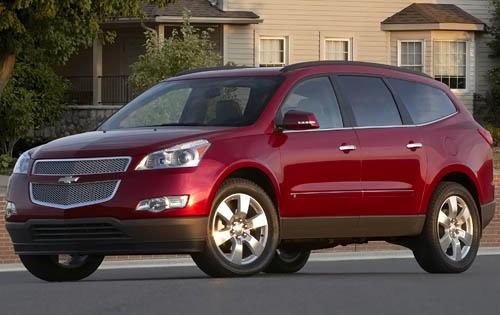
2010 Chevy Traverse Reliability
The 2010 Chevy Traverse offers a spacious three-row interior, comfortable ride, and useful family-hauling capability, but reliability is mixed and there are several potentially expensive problems buyers need to investigate. The biggest concern is the 3.6-liter V6, particularly its timing-chain system. A well-maintained Traverse can exceed 200,000 miles, but neglected examples can develop engine and transmission problems serious enough to overwhelm the vehicle's relatively low used price.
Every 2010 Traverse is powered by a naturally aspirated 3.6-liter V6 paired with a six-speed automatic transmission. The engine provides adequate power for a large crossover and uses a timing chain rather than a timing belt. Unfortunately, timing-chain stretch and related problems are among the most important weaknesses of early Traverse models.
Oil maintenance is especially important. Extended oil-change intervals, low oil levels, and poor maintenance can accelerate wear of the timing chains, guides, and tensioners. Symptoms can include a check-engine light, startup noise, rough running, reduced performance, or camshaft/crankshaft correlation codes. Timing-chain replacement is labor-intensive and can be expensive.
The six-speed automatic transmission is another area that deserves careful inspection. Some higher-mileage Traverses develop slipping, harsh shifting, delayed engagement, or internal transmission failures. Problems involving the transmission's internal wave plate are particularly important on vehicles from this period and can lead to loss of certain gears or more extensive transmission damage.
The Traverse's size and weight also place substantial demands on suspension, steering, wheel bearings, brakes, and tires. By this age, even a vehicle with a healthy engine may require several chassis repairs. All-wheel-drive models add transfer case and rear driveline components that should also be checked for leaks, noises, and proper operation.
Water pump condition is another important consideration because the 3.6-liter V6 uses an internally mounted water pump driven by the timing chain. A failing pump can be considerably more involved to replace than the external water pumps found on many engines, and coolant contamination of the engine oil can become especially serious if a leak isn't caught promptly.
Overall, I would rate the 2010 Traverse as below average for long-term reliability. It can still be a useful and affordable three-row crossover, but this isn't a vehicle I'd recommend buying without a thorough inspection and strong maintenance history.
- Overall reliability: Below Average
- Expected lifespan: 150,000 to 200,000+ miles with excellent maintenance, with some well-maintained examples going farther
- Best choice: Well-maintained example with documented oil changes, smooth transmission operation, and evidence that major engine concerns have been addressed
- Watch for: Timing-chain wear, transmission problems, water pump failure, oil and coolant leaks, steering issues, wheel bearings, and AWD system problems
Bottom line: The 2010 Chevy Traverse can be an inexpensive way to get a roomy three-row crossover, but the potential for timing-chain, transmission, and water-pump repairs makes careful shopping essential. A vehicle with extensive maintenance and repair records can be worth considering; an inexpensive Traverse with an unknown history can become very expensive very quickly.
- Why it's a good choice: Spacious three-row interior, comfortable highway ride, good cargo capacity, available AWD, and affordable used prices
- Biggest concern: Expensive engine and transmission repairs can exceed a substantial portion of the vehicle's current value
- Best version: The best-maintained example available with documented powertrain service and minimal deferred maintenance
- Buy only if: The engine starts quietly, transmission shifts correctly, cooling system is healthy, and the vehicle passes a comprehensive pre-purchase inspection
Possibly Buying Soon? Avoid These Dealer Traps
Before you sign, learn:
- What you don't know about dealer trade-in offers could cost you - Which dealer fees you must pay, can negotiate, or should avoid - How to avoid giving the dealer the upper hand on a used car price - How to avoid overpaying for a new car
Is the 2010 Chevy Traverse a Good Year or One to Avoid?
The 2010 Chevy Traverse is a year I would approach cautiously. It isn't an automatic avoid because there are well-maintained examples that have accumulated substantial mileage, but early Traverse models have enough potentially expensive powertrain problems that I wouldn't consider one without detailed service records and a professional inspection.
The timing-chain system is one of the biggest concerns. A Traverse with documented timing-chain replacement or evidence that the system has been professionally evaluated may actually be more attractive than a lower-mileage example still operating with its original components. With a vehicle this old, appropriate repairs aren't necessarily a negative.
Transmission history is equally important. A Traverse that hesitates, slips, shifts harshly, or loses a gear isn't something I'd buy hoping that a fluid change will solve the problem. Internal transmission repairs can easily turn a low-priced vehicle into a poor financial decision.
The 2010 Traverse can make sense when the price is attractive and the individual vehicle has an unusually strong maintenance history. If reliability is the overriding priority and similarly priced alternatives are available, however, I would be selective rather than assuming every Traverse is a bargain simply because it offers a lot of vehicle for the money.
Buyer Takeaway: I would classify the 2010 Traverse as a "buy only after careful inspection" year. Look for extensive records, a quiet engine, smooth transmission operation, stable coolant and oil levels, and evidence that the previous owner didn't postpone expensive repairs. Condition matters far more than finding the lowest mileage or lowest asking price.
More On Chevy Traverse Reliability
For more detailed information on the reliability of the Traverse, visit our Used Chevy Traverse Reliability Guide, a comprehensive look at the model years, engines, common problems, maintenance costs, expected lifespan, and the best years to buy or those to avoid.
2010 Chevy Traverse Common Mechanical Problems
The 2010 Traverse has several problems that deserve specific investigation before purchase. Timing-chain and transmission problems receive the most attention because of their potential repair costs, but cooling-system, steering, suspension, and AWD repairs can also become significant on an older example.
- Timing-chain stretch and wear: The 3.6-liter V6 can develop stretched timing chains or wear in the guides and tensioners. Poor oil maintenance can increase the risk. Symptoms include a check-engine light, startup rattling, rough running, reduced performance, or camshaft/crankshaft correlation codes. Repair is labor-intensive and should be factored carefully into the value of the vehicle.
- Oil-change neglect: The timing-chain system depends heavily on clean oil at the proper level. A Traverse that received infrequent oil changes or repeatedly operated with low oil is a much greater risk. Service records showing consistent oil maintenance are particularly valuable.
- Automatic transmission wave plate failure: The six-speed automatic used in early Traverses can experience internal wave plate failure. Symptoms may include loss of particular gears, slipping, unusual shifting, or transmission fault codes. Once internal damage occurs, substantial transmission repair or replacement may be required.
- Harsh or delayed transmission shifting: Even when the transmission hasn't completely failed, some vehicles develop delayed engagement, flare between gears, harsh shifts, or shuddering. Test the Traverse from a cold start through full operating temperature and make sure every gear engages normally.
- Water pump failure: The 3.6-liter V6 uses an internally mounted, timing-chain-driven water pump. Leakage can be particularly concerning because coolant may contaminate the engine oil. Check for unexplained coolant loss, overheating, unusual oil appearance, or evidence of previous cooling-system repairs.
- Coolant leaks and overheating: Beyond the water pump, hoses, radiator components, thermostat-related parts, and seals can develop leaks with age. Any history of overheating deserves serious attention because excessive heat can damage an otherwise repairable engine.
- Engine oil leaks: Gaskets and seals can begin leaking as mileage increases. Minor seepage isn't unusual, but significant leakage combined with a low oil level is more concerning because of the timing-chain system's dependence on adequate lubrication.
- Power steering problems: Steering pumps, racks, hoses, and related components can develop leaks, noises, or reduced assistance. Listen for whining during turns and check for heavy steering, visible fluid leakage, or inconsistent assistance.
- Front wheel bearing wear: The Traverse's weight can contribute to hub and bearing wear. A humming or growling noise that becomes louder with vehicle speed is a common symptom. Replacement is routine, but several worn hubs can add significantly to immediate repair costs.
- Suspension wear: Struts, control arm bushings, sway bar links, ball joints, and other suspension components can wear substantially on a heavy, high-mileage crossover. Clunks, uneven tire wear, loose steering, or excessive bouncing suggest that chassis repairs may be needed.
- Engine and transmission mount deterioration: Worn mounts can cause vibration at idle or clunking when shifting between Reverse and Drive. Several failed mounts can make the vehicle feel much rougher than a properly functioning Traverse should.
- AWD transfer case and driveline problems: All-wheel-drive models add additional components that can leak, wear, or develop noise. Listen for whining, binding, vibration, or clunking and inspect the transfer case and rear driveline for fluid leakage.
- CV joint and axle wear: Clicking during turns, vibration under acceleration, or torn CV boots can indicate axle or joint problems. These become increasingly common as mileage accumulates.
- Brake wear: The Traverse is heavy, and brake components can wear relatively quickly depending on driving conditions. Pulsation, pulling, grinding, or excessive wheel heat should be investigated before purchase.
- Air conditioning problems: A three-row family crossover depends heavily on effective climate control. Compressors, condensers, evaporator components, actuators, and refrigerant leaks can create expensive repairs. Test both front and rear climate-control operation where equipped.
- Electrical and accessory problems: Power windows, door locks, liftgate components, sensors, audio equipment, seat controls, and other electronics can develop faults with age. Test every feature rather than assuming small problems will be inexpensive.
- Rust and underbody corrosion: Vehicles from northern climates should be inspected for corrosion affecting brake lines, suspension mounting points, subframes, exhaust components, and other underbody areas.
The 2010 Traverse is a vehicle where several moderate problems can be just as important as one catastrophic failure. A low-priced example needing wheel bearings, suspension work, brakes, air conditioning repairs, and an AWD service may require thousands of dollars even if the engine and transmission are still healthy.
Buyer Tip: Start the Traverse completely cold and listen carefully for timing-chain noise. Check both engine oil and coolant levels before driving. During the test drive, operate the transmission under light and heavier acceleration and verify that every gear engages properly. Because the potential repairs are expensive, a diagnostic scan and pre-purchase inspection by a shop familiar with GM's 3.6-liter V6 and six-speed automatic are particularly worthwhile.
2010 Chevy Traverse Pros and Cons
The 2010 Traverse's greatest advantage is practicality. It provides genuine three-row passenger capacity and substantial cargo room while driving more like a large car than a traditional truck-based SUV. Depreciation has also made these vehicles inexpensive. Unfortunately, their low used prices partly reflect the potential cost of keeping an aging example mechanically healthy.
Pros
- Spacious three-row interior: The Traverse can accommodate a larger family much more comfortably than most compact and midsize two-row crossovers.
- Useful third row: The rear seating is more practical than the cramped occasional-use third rows found in many smaller SUVs.
- Large cargo capacity: Folding the rear seats creates substantial room for luggage, furniture, recreational equipment, and other bulky items.
- Comfortable ride: The Traverse is tuned for family transportation and highway comfort rather than truck-like handling.
- Reasonable V6 performance: The 3.6-liter engine provides adequate acceleration for a vehicle of this size when operating properly.
- Available all-wheel drive: AWD can provide useful additional traction in snow and poor weather.
- Conventional six-speed automatic: Buyers who prefer a traditional geared transmission won't find a CVT here.
- Affordable purchase price: Used Traverses can provide an enormous amount of passenger and cargo space for relatively little initial money.
- Excellent parts availability: GM parts are widely available, and most independent repair shops are familiar with the basic platform.
Cons
- Timing-chain problems can be expensive: Chain, guide, and tensioner repairs involve substantial labor and are among the most important concerns on an older Traverse.
- Transmission failure is a significant risk: Internal six-speed automatic problems, including wave plate failure, can require major repair or replacement.
- Internal water pump complicates repairs: The water pump's location makes failure considerably more consequential than a simple external pump replacement.
- Below-average overall reliability: The Traverse can last a long time, but its powertrain record isn't strong enough to recommend buying one without careful inspection.
- Heavy vehicle means substantial wear: Brakes, tires, suspension components, wheel bearings, and other chassis parts work hard and can create significant ongoing expenses.
- AWD adds complexity: All-wheel-drive models provide useful traction but introduce additional components that can eventually require repair.
- Fuel economy is modest: The Traverse's size and weight mean fuel costs can be significant, particularly in city driving.
- Low purchase prices can be deceptive: Saving several thousand dollars on the purchase doesn't help if the vehicle immediately needs timing-chain or transmission work.
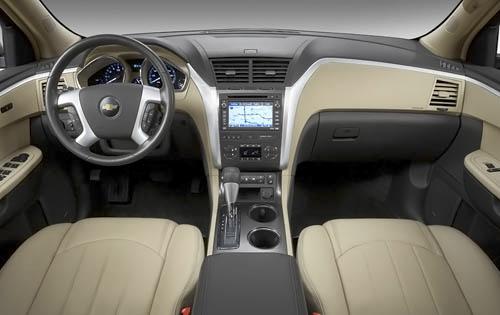
Buyer Takeaway: The 2010 Chevy Traverse can be appealing to someone who needs three rows of seating and substantial cargo capacity on a limited budget, but I wouldn't buy one simply because it appears to be a lot of SUV for the money. The ideal example has extensive oil-change records, a quiet timing-chain system, stable coolant level, smooth-shifting transmission, and evidence that previous owners addressed repairs as they arose. A well-maintained Traverse can still have plenty of useful life remaining, but one with an uncertain maintenance history and early signs of engine or transmission trouble is a vehicle I'd pass on.
>Also, More On Chevrolet Reliability
If you'd like to compare different Chevy models, or years, including the Traverse, be sure to read our Chevrolet Reliability & Problems: Best Used Chevys & Years Guide. It highlights the models, best years to buy, common problems, and helps identify the best overall choices.