

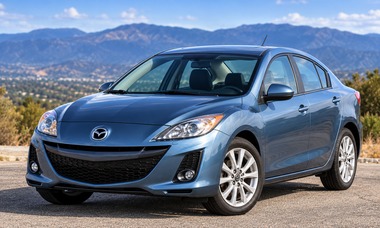
The 2010 Mazda3 is generally a reliable older compact car and can still be a very good used-car choice if you find one that has been maintained and hasn't suffered serious rust. It was also an important model year because 2010 introduced the second-generation Mazda3, bringing new styling, a revised interior, and a new 2.5-liter four-cylinder engine as the more powerful alternative to the familiar 2.0-liter four-cylinder.
For most used-car buyers today, the basic engines are not what worry me most about a 2010 Mazda3. Both naturally aspirated four-cylinders have good durability records and use timing chains rather than scheduled-replacement timing belts. At this age, I'd pay at least as much attention to the clutch or automatic transmission, rust, suspension condition, motor mounts, air conditioning, dashboard deterioration, and the car's overall maintenance history.
The Mazda3 i models use a 2.0-liter naturally aspirated four-cylinder producing about 148 horsepower. It's not especially fast, but it is economical, mechanically straightforward, and capable of high mileage. For someone looking primarily for inexpensive transportation, this is probably the version I'd favor.
Mazda3 s models received a 2.5-liter naturally aspirated four-cylinder producing about 167 horsepower. It gives the car noticeably better low-speed torque and suits the Mazda3's sporty personality. The engine itself is generally durable, but manual-transmission 2.5-liter cars deserve additional scrutiny because premature clutch failure generated enough complaints that Mazda eventually established a clutch reimbursement program covering certain 2010–2013 Mazda3 2.5L vehicles.
Transmission choices depend on engine and trim. Manual-transmission Mazda3s can be enjoyable and durable, but clutch condition is particularly important on a 2.5-liter car. Automatics can also last a long time, although an older Mazda3 that shifts harshly, hesitates, slips, or illuminates the AT warning light needs diagnosis before purchase rather than an assumption that a fluid change will solve the problem.
The other big consideration is simply age. A 2010 Mazda3 is now an old car. Even an inherently reliable design can need struts, control arms, wheel bearings, engine mounts, air-conditioning repairs, hoses, seals, brakes, and other wear items after this many years. In snow-belt states, corrosion can become more important than engine mileage.
- Overall reliability: Above average for an older compact car
- Expected lifespan: Approximately 200,000 to 250,000+ miles is realistic for a well-maintained example
- Best engine for economy: 2.0-liter naturally aspirated four-cylinder
- Best engine for performance: 2.5-liter naturally aspirated four-cylinder
- Biggest concerns: Clutch condition on 2.5-liter manuals, transmission behavior, rust, suspension wear, dashboard deterioration, and age-related repairs
- Best buy: A rust-free, mostly stock car with documented maintenance and a smooth drivetrain
Bottom line: The 2010 Mazda3 has aged well mechanically. I wouldn't hesitate to consider one because of the model year alone, but at this age condition matters tremendously. A rust-free 150,000-mile Mazda3 with good records could easily be preferable to a neglected 90,000-mile example.
Also, for more detailed information on the reliability of the Mazda3, visit our Used Mazda3 Reliability Guide, a more comprehensive look at the model years, engines, common problems, maintenance costs, expected lifespan, the best years to buy, or those to avoid.
How Many Miles Can a 2010 Mazda3 Last?
A properly maintained 2010 Mazda3 can reasonably last 200,000 to 250,000 miles, and some examples go beyond that. The 2.0-liter and 2.5-liter naturally aspirated engines are both capable of substantial mileage, so reaching 150,000 miles doesn't automatically make a Mazda3 worn out.
There is also real-world evidence that Mazda3s reach high mileage in meaningful numbers. Current CARFAX longevity data shows a substantial portion of Mazda3s reaching 150,000 miles and a smaller but still significant share reaching 200,000 miles. That doesn't mean every 2010 Mazda3 will reach those numbers, but it supports treating 200,000 miles as a realistic possibility rather than an exceptional event.
Is 100,000 Miles High for a 2010 Mazda3?
No. A 2010 Mazda3 with 100,000 miles can still have a considerable amount of useful life remaining. At this point, however, I'd care more about maintenance history and age-related deterioration than the odometer alone.
A 100,000-mile car should be checked for fluid leaks, motor-mount deterioration, worn suspension components, wheel-bearing noise, brake condition, cooling-system condition, and clutch or automatic-transmission behavior. Tires and brakes are ordinary wear items; evidence of neglected fluids, severe rust, or drivetrain problems is more important.
Is 150,000 Miles Too Much for a Used 2010 Mazda3?
Not necessarily. At 150,000 miles, I'd buy strictly on condition. A Mazda3 that has been serviced consistently and driven mostly highway miles can still be a reasonable inexpensive car.
At this mileage, expect that some suspension, mounts, bearings, cooling-system components, air-conditioning parts, or other wear items may already have been replaced—or soon will be. That's not necessarily a reason to reject the car. In fact, documentation showing that expensive wear items have recently been replaced can make a high-mileage example more attractive.
Can a 2010 Mazda3 Reach 200,000 Miles?
Yes. A 200,000-mile lifespan is quite achievable with either naturally aspirated engine when the car has been maintained. The larger question by that point is usually whether the rest of the vehicle remains worth maintaining.
Rust, transmission condition, suspension repairs, air conditioning, interior deterioration, and accumulated age-related repairs can determine whether keeping a 200,000-mile Mazda3 makes economic sense even when the engine itself remains healthy.
Is the 2010 Mazda3 a Good Year or One to Avoid?
The 2010 Mazda3 is a good year to consider, but I'd call it a year to buy selectively rather than blindly. It was the first year of the second-generation Mazda3, and first-year redesigns always deserve a little additional scrutiny.
The encouraging part is that the major naturally aspirated engines proved durable. This isn't a situation where I'd warn shoppers away because of a fundamentally troublesome engine design or an inherently fragile CVT.
There are nevertheless several 2010-specific issues worth knowing about. Manual-transmission 2.5-liter cars accumulated complaints involving premature clutch failure. Certain 2010 cars developed sticky or deteriorating dashboard surfaces in hot and humid climates, and Mazda later extended warranty coverage for that condition. Certain 2010 Mazda3s were also recalled because the driver's manual seat-height-adjustment lifter links could crack or detach.
Rust is another major dividing line among surviving cars. A Mazda3 that spent 16 years in a dry climate can be a very different purchase from one exposed repeatedly to road salt.
Buyer Takeaway: I wouldn't avoid the 2010 Mazda3. The basic mechanical package is good enough that I'd happily consider one, particularly as inexpensive transportation. But I'd be considerably more interested in a well-negotiated rust-free model with a strong service history than in simply finding the lowest-mileage example.
How Reliable Is the 2010 Mazda3 2.0-Liter Engine?
The 2.0-liter naturally aspirated four-cylinder is generally a durable engine and is arguably the most sensible choice for a buyer primarily interested in low-cost transportation.
The engine produces roughly 148 horsepower in standard form, so performance is adequate rather than exciting. Its advantages today are simplicity, reasonable fuel economy, widespread parts availability, and a good chance of reaching high mileage when oil changes and cooling-system maintenance haven't been neglected.
The 2.0 uses a timing chain rather than a timing belt, so there isn't a routine timing-belt replacement interval waiting for a used-car buyer. A timing chain isn't maintenance-free forever, however. Abnormal rattling at startup or persistent timing-related noise still deserves investigation.
At this age I'd look primarily for oil or coolant leaks, rough running, ignition misfires, excessive vibration from deteriorated mounts, cooling-system problems, and evidence that the engine has been allowed to run low on oil.
Does the 2010 Mazda3 2.0 Have Serious Engine Problems?
There isn't a single widespread catastrophic engine defect that would make me avoid the 2.0-liter 2010 Mazda3. Most concerns today are more likely to involve accumulated mileage, maintenance history, leaks, ignition components, mounts, sensors, or cooling-system parts than an inherently bad engine.
That's one reason I particularly like the 2.0 for someone shopping for an inexpensive older commuter. You give up some performance compared with the 2.5, but the basic engine has proven capable of long service.
How Reliable Is the 2010 Mazda3 2.5-Liter Engine?
The 2.5-liter naturally aspirated four-cylinder is also generally reliable and gives the Mazda3 considerably better performance without adding a turbocharger.
The 2.5-liter engine produces roughly 167 horsepower and was offered in the Mazda3 s models. It provides more torque than the 2.0 and makes the car feel stronger in everyday driving.
I wouldn't avoid the 2.5 because of the engine itself. The more important distinction is what is attached to it. If you're considering a 2.5-liter car with a manual transmission, clutch history deserves special attention.
As with the 2.0, check for leaks, cooling-system condition, ignition misfires, unusual timing-chain noise, excessive vibration, and signs of poor oil-change history. A smooth, quiet 2.5 with good maintenance records can be a very durable engine.
Does the 2010 Mazda3 Have Clutch Problems?
Yes, premature clutch failure is a legitimate concern on some 2010 Mazda3s, particularly 2.5-liter manual-transmission cars. This isn't simply an internet rumor. Mazda eventually established a customer reimbursement program concerning clutch repairs on certain 2010–2013 Mazda3 2.5L vehicles.
Owner complaints also repeatedly describe clutches failing at relatively modest mileage. That doesn't mean every original clutch is defective or that a manual Mazda3 should be avoided. Clutches are wear components and lifespan varies dramatically with driver technique, traffic, modifications, and previous ownership.
But it does mean I wouldn't treat a slipping or poorly engaging clutch on a 2010 2.5 as a trivial issue.
How Can You Tell if a 2010 Mazda3 Clutch Is Worn?
During the test drive, watch for engine speed rising without a corresponding increase in vehicle speed, particularly under heavy acceleration in a higher gear. That's a classic sign of clutch slip.
Also check for clutch chatter when pulling away, difficulty selecting gears, grinding during shifts, an unusually high engagement point, pedal abnormalities, or a clutch that behaves differently after the drivetrain gets hot.
If the seller says the clutch has already been replaced, that's not necessarily bad news. On a 16-year-old car, a documented replacement using quality components can actually be a positive—provided there isn't evidence that the car has repeatedly destroyed clutches through abuse.
Does the 2010 Mazda3 Have Transmission Problems?
Some 2010 Mazda3s have experienced transmission problems, but I wouldn't characterize every automatic or manual transmission in this model year as troublesome. The important thing is to distinguish a healthy high-mileage transmission from one already showing symptoms.
Manual cars can develop grinding or difficulty shifting, and clutch problems can sometimes be mistaken for internal transmission problems. Complaints involving second-gear grinding or difficult engagement deserve attention during a test drive.
On an automatic car, look for delayed engagement when shifting into Drive or Reverse, harsh shifts, slipping, flaring engine speed between gears, shuddering, or an AT warning light. A transmission that behaves normally when cold should still be driven until fully warmed up.
Does an AT Warning Light Mean the Automatic Transmission Is Bad?
Not necessarily. A control or electrical problem can sometimes cause abnormal shifting even when the transmission's internal mechanical components aren't the root cause.
That distinction matters because transmission-control problems can mimic a failing transmission. But a seller's claim that an AT light is “probably just a sensor” shouldn't be accepted without a proper scan and diagnosis. Retrieve the transmission codes before deciding what the car is worth.
What Are the Most Common 2010 Mazda3 Problems?
The 2010 Mazda3's major used-car concerns are a mixture of several model-specific issues and the normal deterioration you'd expect on a vehicle this old. These are the areas I'd pay the most attention to.
- Premature clutch wear or failure: This deserves particular attention on 2.5-liter manual-transmission cars. Symptoms include slipping, chatter, difficult engagement, or inability to transfer engine power properly.
- Manual-transmission shifting problems: Grinding or difficulty engaging gears, particularly second gear, has been reported. The clutch and hydraulic system should be ruled out before assuming the gearbox itself requires major repair.
- Automatic-transmission shifting problems: Some cars develop harsh or erratic shifting, hesitation, slipping, or warning lights. A diagnostic scan is worthwhile if there is any abnormal behavior.
- Transmission control problems: Electronic control faults can produce abnormal automatic-transmission behavior. Don't automatically condemn the entire transmission—or automatically assume the problem is inexpensive—without diagnosis.
- Sticky or deteriorating dashboard: Certain 2010 Mazda3 dashboards can become sticky after prolonged exposure to high heat and humidity. Mazda acknowledged the condition and extended dashboard warranty coverage on eligible vehicles.
- Dashboard warping: Some second-generation Mazda3 dashboards can warp around the information display, creating a visible gap. Inspect the top of the dashboard carefully, especially on cars that have spent years in hot climates.
- Driver-seat lifter problem: Certain 2010–2011 Mazda3s equipped with a manual driver-seat height adjuster were recalled because lifter links could crack or detach. Check the VIN for recall completion.
- Engine-mount deterioration: Worn mounts can produce excessive vibration at idle or a clunk when accelerating or shifting between Drive and Reverse. This can make an otherwise healthy engine feel rough.
- Suspension wear: Struts, shocks, control arms, bushings, links, and mounts can require replacement as mileage accumulates. Clunks over bumps, poor tire wear, looseness, or excessive bouncing warrant inspection.
- Rear shock-mount corrosion or failure: Corrosion around suspension mounting areas deserves particular attention on cars from regions that use road salt. Inspect rather than relying solely on an exterior body check.
- Wheel-bearing noise: A humming or growling sound that changes with vehicle speed can indicate bearing wear. Tire noise can sound similar, so diagnosis matters.
- Air-conditioning problems: Compressor, condenser, refrigerant leakage, blower, and other climate-control complaints appear as these cars age. Make sure the A/C becomes properly cold rather than merely confirming that the fan works.
- Rust and corrosion: Inspect rocker panels, wheel openings, suspension mounting areas, subframe areas, brake and fuel lines, and the underside. Severe structural corrosion can turn an otherwise mechanically good Mazda3 into a poor purchase.
- Brake wear: Pads and rotors are routine maintenance, but pulsation, pulling, seized components, corroded lines, or uneven braking can indicate that the car needs more than a simple brake job.
- Interior deterioration and rattles: A sticky dashboard is the distinctive 2010 issue, but worn upholstery, trim deterioration, rattles, switches, and other interior problems are also increasingly relevant simply because of age.
Why Does the 2010 Mazda3 Dashboard Get Sticky or Melt?
Heat and humidity can cause the dashboard material in certain 2010 Mazda3s to deteriorate and develop a sticky surface. Mazda formally acknowledged the condition and extended warranty coverage for eligible cars.
This is particularly worth checking on vehicles that have spent their lives in hot climates. The surface can become tacky and shiny, and reflected glare on the windshield can make the problem more than merely cosmetic.
The original warranty extension was limited by time, so a 2010 vehicle is now well beyond that original coverage period. What matters to today's buyer is whether the dashboard was previously replaced or whether deterioration is present now.
Look across the top of the dash in bright daylight. Don't just touch one small area. Check for tackiness, shiny patches, deformation, cracking, and a gap or lifting around the information display.
Does the 2010 Mazda3 Have a Timing Belt or Timing Chain?
The 2010 Mazda3's naturally aspirated 2.0-liter and 2.5-liter four-cylinder engines use timing chains rather than scheduled-replacement timing belts.
That's a useful ownership advantage because there isn't a routine 90,000- or 100,000-mile timing-belt replacement waiting for the next owner. But “timing chain” shouldn't be interpreted as “can never wear.” Good oil maintenance remains important to chains, guides, tensioners, and variable valve-timing components.
If an engine makes significant rattling at startup or persistent mechanical noise from the timing area, I'd have it diagnosed before buying rather than assuming that all timing-chain noise is harmless.
Is Rust a Serious Problem on a 2010 Mazda3?
Rust can be one of the most important reasons to reject a 2010 Mazda3, especially one that has spent many winters on salted roads. By 2026, geographic history matters enormously.
Surface rust underneath an old car isn't automatically alarming. What matters is corrosion affecting structural areas, suspension attachment points, brake or fuel lines, subframes, rocker areas, or other components whose failure could be expensive or unsafe.
This is one situation where I'd strongly prefer putting the car on a lift. A shiny exterior and clean interior tell you very little about what 16 winters may have done underneath.
2010 Mazda3 Maintenance and Repair Costs
The 2010 Mazda3 is generally inexpensive to maintain compared with many newer or more complicated vehicles. Parts are widely available, and most independent repair shops are familiar with the car. However, at this age, several repairs arriving at once can quickly change the economics of an inexpensive Mazda3.
The estimates below are approximate parts-and-labor costs at an independent repair shop. Actual prices vary considerably by location, labor rate, parts used, and whether additional related components need replacement.
| Service or Repair | Typical Estimated Cost | What to Know |
|---|---|---|
| Oil and filter change | $60–$100 | Routine oil changes are important for engine and timing-chain longevity. |
| Spark plug replacement | $150–$250 | A normal maintenance item that can help correct or prevent misfires caused by worn plugs. |
| Front brake pads and rotors | $350–$600 | Normal wear rather than a Mazda3-specific reliability problem. |
| Engine mount replacement | $250–$600 | Cost depends on which mount has failed and whether more than one needs replacement. |
| Front strut replacement | $500–$900 per pair | Older Mazda3s may also need mounts, links, bushings, or other suspension components. |
| Wheel bearing/hub replacement | $300–$550 per wheel | A worn bearing commonly produces humming or growling that increases with road speed. |
| Manual clutch replacement | $1,200–$2,000 | One of the more important potential expenses on a 2.5-liter manual-transmission car. |
| Automatic transmission replacement | $3,500–$5,500+ | A major reason not to ignore slipping, harsh shifting, delayed engagement, or warning lights before purchase. |
| A/C compressor replacement | $800–$1,300 | The actual cost depends on what failed and whether the system requires additional components or flushing. |
| Alternator replacement | $500–$800 | A possible age-related repair rather than a major Mazda3-specific weakness. |
These numbers also put a cheap 2010 Mazda3 into perspective. A $4,000 car that immediately needs a clutch, front struts, brakes, and tires may be considerably more expensive than a better-maintained example priced $1,500 higher.
In addition, your trade-in allowance, if you are doing that, will also affect the overall potential cost analysis of moving into a Mazda3 (KBB versus Edmunds Appraisals - Which Is Better).
Buyer Takeaway: Routine Mazda3 maintenance is relatively affordable, but a failing clutch or automatic transmission can represent a substantial percentage of the car's value. That's why I'd pay more for a well-maintained example with recent service records rather than automatically choosing the cheapest one.
What Should You Check Before Buying a 2010 Mazda3?
A normal pre-purchase inspection is worthwhile, but I'd make sure these Mazda3-specific checks are included:
- Inspect underneath for rust: Pay particular attention to structural and suspension areas rather than judging corrosion only by the visible body panels.
- Test a manual clutch under load: Accelerate in a higher gear and watch for engine rpm increasing without matching acceleration. Check for chatter, grinding, and difficult gear engagement.
- Drive an automatic until fully warm: Test Drive, Reverse, gentle shifts, harder acceleration, and highway operation. Watch for slipping, flare, hesitation, harsh shifts, and warning lights.
- Inspect the dashboard in daylight: Look and feel for a sticky surface, glare-producing deterioration, warping, and separation around the information display.
- Check for excessive engine vibration: Significant vibration at idle or clunking when loading the drivetrain can point toward deteriorated mounts.
- Check the VIN for open recalls: In particular, verify whether applicable seat-lifter and other recall work has been completed. Recall applicability and completion should always be checked by VIN.
I'd also scan every control module accessible with a suitable diagnostic scanner even if the check-engine light is off. Stored or pending engine and transmission codes can reveal problems that a short test drive doesn't.
2010 Mazda3 Pros and Cons
Pros
- Strong basic reliability: The naturally aspirated engines have proven capable of substantial mileage.
- 200,000-mile potential: A well-maintained Mazda3 can realistically remain useful beyond 200,000 miles.
- Timing-chain engines: Neither naturally aspirated engine requires scheduled timing-belt replacement.
- Choice of two good engines: The 2.0 emphasizes economy while the 2.5 adds useful power and torque.
- Enjoyable handling: The Mazda3 was one of the more engaging compact cars of its era and still feels relatively lively today.
- Available hatchback: The hatchback combines compact exterior dimensions with considerably greater cargo versatility.
- Conventional powertrains: There is no CVT in these early second-generation cars, and the naturally aspirated engines avoid turbocharger complexity.
- Good parts availability: Routine mechanical parts are readily available and independent shops are familiar with the car.
- Affordable purchase prices: Good examples can provide a lot of transportation for relatively little money.
- Simple enough to keep: Compared with many much newer cars, there are fewer expensive high-tech systems that can turn a minor malfunction into a major repair bill.
Cons
- 2.5-liter clutch concerns: Manual-transmission buyers need to take clutch condition seriously.
- Some transmission complaints: Grinding manuals and poorly behaving automatics need diagnosis before purchase.
- Rust can determine whether the car is worth buying: Northern cars deserve a thorough underbody inspection.
- Sticky dashboard: Heat-related dashboard deterioration is a genuine 2010-specific problem.
- Dashboard warping: Separation around the information display is another known interior issue.
- Suspension wear: Struts, shocks, control arms, bushings, and related components may require investment simply because of age.
- Road noise: The Mazda3 isn't as quiet as some buyers may expect from a modern compact car.
- Firm ride: The sporty suspension tuning that makes the car enjoyable can also make it feel less compliant over poor pavement.
- Rear-seat space is only average: Buyers prioritizing maximum passenger room may prefer some competing compact sedans.
- Age now matters enormously: Even a fundamentally reliable Mazda3 can become expensive if several 16-year-old components need replacement simultaneously.
Should You Buy a 2010 Mazda3 Today?
Yes, a good 2010 Mazda3 can still be an excellent inexpensive used car, but I'd buy entirely on condition. The naturally aspirated 2.0-liter and 2.5-liter engines are fundamentally strong, and neither engine gives me a compelling reason to avoid the model year.
For basic transportation, I'd have a slight preference for a clean 2.0-liter because it provides enough performance while keeping the package simple and economical. A 2.5-liter is the more enjoyable choice, but I'd inspect a manual-transmission example especially carefully because of the clutch history.
I wouldn't be frightened by 120,000 or even 150,000 miles if the maintenance history, underbody, drivetrain, and inspection were convincing. Conversely, I wouldn't pay a premium merely because a car has unusually low mileage. Sixteen years of corrosion, deteriorating rubber components, short-trip driving, and deferred maintenance can matter more than the number on the odometer.
The cars I'd walk away from are those with significant structural rust, a slipping clutch, an automatic transmission showing obvious problems, evidence of overheating or poor oil maintenance, or a collection of deferred repairs that makes the low purchase price misleading.
Final Buyer Takeaway: The 2010 Mazda3 remains one of the more appealing inexpensive compact cars from its era. Find a rust-free example with a smooth drivetrain, good maintenance history, and no collection of neglected problems, and 200,000 miles or more is a realistic goal. At this age, however, you're buying the individual car much more than you're buying the reputation of the Mazda3 name.
If you'd like to compare different Mazda models, or years, be sure to read our Mazda Reliability & Problems: Best Used Mazdas & Years Guide. It compares the Mazda3, Mazda6, CX-5, CX-30, CX-50, CX-9, MX-5 Miata, and other popular Mazda models, highlights the best years to buy, common problems, and helps you choose the right Mazda for your needs.
Whether you're exploring the market or getting ready to buy, it's usually best to visit one of the major online car listing sites and contact dealers about two or three specific vehicles that interest you. Once they respond, you'll get a better feel for how flexible their prices really are. And if you're closer to buying, it's an excellent way to create competition among dealers for your business, which can then lead to an even better price.
I happen to like Edmunds for this, but any of the major car listing websites can work.
Your Trade-In
It's good to always know the value of your trade-in while you're evaluating your next possible purchase. Here's a good source for a quick and accurate appraisal: free trade-in appraisal.
Some Insider Insights: