

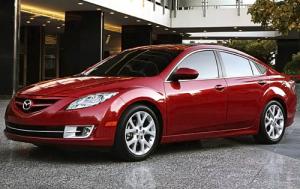
The 2010 Mazda6 is a generally reliable midsize sedan that combines good handling, a comfortable interior, and relatively affordable ownership costs. It doesn't have quite the reputation of a Toyota Camry or Honda Accord, but a properly maintained Mazda6 can still provide well over 200,000 miles of dependable service. For used-car buyers, overall condition and maintenance history are more important than simply finding the lowest-mileage example.
Two engines were available for 2010. The standard engine is a naturally aspirated 2.5-liter four-cylinder, while higher trims could be equipped with a more powerful 3.7-liter V6. Both engines are capable of good longevity, but the 2.5-liter four-cylinder is generally the better choice for buyers primarily concerned with reliability, fuel economy, and lower long-term repair costs.
The 2.5-liter four-cylinder uses a timing chain rather than a timing belt and has relatively few major inherent weaknesses. Regular oil changes and cooling system maintenance are the keys to long engine life. The 3.7-liter V6 provides substantially stronger acceleration and is also generally durable, but it uses more fuel and places additional demands on the transmission, cooling system, tires, and other components.
Transmission reliability is generally good. Four-cylinder models were available with a six-speed manual or five-speed automatic transmission, while V6 models use a six-speed automatic. None has the widespread failure reputation associated with some problematic transmissions from this era, although periodic fluid changes remain worthwhile, especially as mileage climbs beyond 100,000 miles.
Most problems that develop on an older Mazda6 involve suspension components, wheel bearings, engine mounts, air conditioning equipment, electrical accessories, oil leaks, or corrosion rather than catastrophic engine or transmission failures. This makes a well-maintained example relatively straightforward to own, particularly when compared with more mechanically complicated sedans.
Rust deserves special attention, however, particularly on cars that have spent their lives in northern states where road salt is heavily used. An otherwise mechanically excellent Mazda6 can become a poor purchase if structural or underbody corrosion has progressed significantly.
- Overall reliability: Above Average
- Expected lifespan: 200,000 to 250,000+ miles with proper maintenance
- Best choice: 2.5-liter four-cylinder with documented maintenance records
- Watch for: Rust, suspension wear, oil leaks, wheel bearings, transmission maintenance, and complete service history
Bottom line: The 2010 Mazda6 is a solid used midsize sedan with durable powertrains and relatively few serious mechanical weaknesses. The 2.5-liter four-cylinder is the best choice for buyers prioritizing reliability and low ownership costs, while the V6 is better suited to someone willing to trade fuel economy for stronger performance.
- Why it's a good choice: Durable engines, enjoyable handling, reasonable repair costs, good fuel economy with the four-cylinder, and attractive used-car pricing
- Biggest concern: Rust on vehicles from northern climates and accumulated age-related repairs on neglected examples
- Best version: 2.5-liter four-cylinder with complete service records and minimal corrosion
- Buy only if: The body and undercarriage are structurally sound, the transmission operates smoothly, and the vehicle passes a thorough pre-purchase inspection
For more detailed information on the reliability of the Mazda6, visit our Used Mazda6 Reliability Guide, a more comprehensive look at the model years, engines, common problems, maintenance costs, expected lifespan, and the best years to buy or those to avoid.
Is the 2010 Mazda6 a Good Year or One to Avoid?
The 2010 Mazda6 is generally a good year to consider rather than one to avoid. It was the second model year of the redesigned second-generation Mazda6 sold in North America, and its basic powertrains have proven reasonably durable. There is no single widespread engine or transmission defect that makes the 2010 model an automatic reject.
For most used-car shoppers, I would favor the 2.5-liter four-cylinder. It provides adequate performance while keeping fuel and maintenance costs relatively low. The V6 is appealing if performance matters, but a buyer looking primarily for inexpensive transportation doesn't gain much from the additional power.
The biggest qualifier is corrosion. A rust-free 2010 Mazda6 from a dry or warm climate can be a considerably more attractive purchase than a similar car that spent 15 winters exposed to road salt. At this age, inspecting underneath the vehicle is every bit as important as checking the engine.
Buyer Takeaway: The 2010 Mazda6 is a good used-car candidate, particularly with the 2.5-liter four-cylinder. Favor vehicles with strong maintenance records and minimal corrosion, and don't be afraid of somewhat higher mileage if the car has clearly been cared for.
If you may be buying soon, I'd recommend reading my most effective negotiation method for used cars. It explains a quick way to identify the dealerships most motivated to deal, no matter how busy they may seem, and how to follow up once you've found them. That can be the difference between getting a good price and getting a great one.
And, if you'd consider buying a brand-new vehicle if you could get a lower-than-expected price, learn how to shop the dealer, not just the car.
2010 Mazda6 Common Mechanical Problems
The 2010 Mazda6 has relatively few catastrophic mechanical weaknesses, but several problems become increasingly common as these cars age. Most are normal higher-mileage repairs, although corrosion can be substantially more serious depending on where the vehicle has spent its life.
- Underbody and suspension corrosion: Rust is one of the most important things to inspect on a 2010 Mazda6 from a northern climate. Surface corrosion isn't unusual on a vehicle this old, but heavy rust around structural areas, suspension mounting points, subframes, brake lines, or fuel lines can become a safety concern. A professional underbody inspection is worthwhile before purchasing a car with a history in the Rust Belt.
- Suspension wear: Control arm bushings, sway bar links, ball joints, struts, and rear suspension components eventually wear as mileage increases. Symptoms include clunking over bumps, vague steering, excessive bouncing, or uneven tire wear. Individual repairs aren't necessarily expensive, but rebuilding several parts of an aging suspension can add up quickly.
- Wheel bearing wear: Higher-mileage Mazda6 models can develop noisy wheel bearings. A humming or growling sound that becomes louder with road speed is a common symptom. The noise may change when gently steering from side to side.
- Engine mount deterioration: Worn mounts can produce excessive vibration at idle, especially with an automatic transmission in Drive. Some vibration is easy to mistake for an engine problem, so the mounts should be inspected before assuming something more serious is wrong.
- Oil leaks: Valve cover gaskets and other engine seals can begin leaking as the vehicle ages. Minor seepage isn't unusual, but significant leakage should be repaired. Check underneath the engine and look for oil residue or a burning-oil smell after the test drive.
- Automatic transmission shift concerns: The automatic transmissions are generally durable, but neglected fluid can eventually contribute to harsh shifts, hesitation, or delayed engagement. Test the transmission both cold and after the vehicle has been driven long enough to reach full operating temperature.
- Manual transmission clutch wear: Manual-transmission cars are mechanically straightforward, but the clutch is a normal wear item. A clutch that slips under hard acceleration, engages very high in the pedal travel, or chatters when pulling away may be approaching replacement.
- Power steering problems: Steering components can develop leaks, noise, or wear with age. Check for consistent steering effort, fluid leakage where applicable, unusual noises during low-speed turns, and excessive play in the steering.
- Air conditioning problems: Compressors, condensers, relays, and refrigerant leaks can eventually reduce cooling performance. Run the system throughout the test drive and verify that it continues blowing cold rather than testing it for only a few seconds.
- Brake caliper and rotor wear: Older vehicles can develop sticking calipers, uneven pad wear, or warped and corroded rotors. Pulling while braking, steering-wheel vibration, excessive brake dust on one wheel, or unusual heat after driving can indicate a problem.
- Electrical accessory failures: Door lock actuators, window regulators, switches, audio equipment, sensors, and other electrical components can fail with age. These problems are generally more annoying than serious, but multiple small repairs can affect the value of an inexpensive used car.
- Cooling system wear: Thermostats, hoses, radiators, and water pumps eventually require attention on higher-mileage vehicles. Check coolant condition and level and look for evidence of dried coolant around the engine compartment. Any history of overheating should be investigated carefully.
Most of these problems should be considered in the context of the vehicle's asking price. A clean Mazda6 that needs a wheel bearing or set of struts may still be an excellent purchase. A car needing suspension work, brakes, tires, air conditioning repairs, and significant rust remediation may no longer be a bargain even if the engine runs perfectly.
Buyer Tip: Put the Mazda6 on a lift before buying if it has spent significant time in a road-salt state. Inspect the subframes, suspension mounting areas, brake and fuel lines, and underside of the body carefully. Then evaluate the transmission, suspension, air conditioning, and engine for normal higher-mileage wear. On this particular model, a clean underbody can be just as valuable as a clean service history.
2010 Mazda6 Pros and Cons
The 2010 Mazda6 is appealing because it offers much of the practicality of a mainstream midsize sedan while being noticeably more enjoyable to drive than many competitors. Its relatively simple mechanical design also makes it an interesting alternative for buyers who don't want the complexity of a newer turbocharged or CVT-equipped vehicle.
Pros
- Good overall reliability: Neither the four-cylinder nor V6 is known for widespread catastrophic failures when properly maintained.
- Excellent 2.5-liter four-cylinder: The standard engine offers a strong combination of durability, reasonable performance, fuel economy, and relatively simple maintenance.
- No CVT: Conventional automatic and manual transmissions may appeal to buyers who prefer traditional transmission designs over continuously variable transmissions found in some competing cars.
- Enjoyable handling: Mazda gave the Mazda6 responsive steering and a well-controlled chassis, making it one of the more entertaining mainstream midsize sedans of its period.
- Comfortable and spacious: The second-generation Mazda6 provides useful passenger and trunk space without feeling excessively large from behind the wheel.
- Reasonable repair costs: Most routine mechanical repairs are straightforward, and the Mazda6 doesn't carry luxury-brand labor or parts pricing.
- Good used-car value: Mazda6 models often sell for less than comparable Camrys and Accords, potentially allowing buyers to get a newer or better-maintained car for the same money.
- Available V6 performance: Buyers who want stronger acceleration can choose the 3.7-liter V6 without moving to a turbocharged engine.
Cons
- Rust can be a major concern: Corrosion deserves careful inspection on vehicles from climates that use road salt and can be much more important than minor mechanical problems.
- Resale value trails Toyota and Honda: Lower resale values help when purchasing but mean the Mazda6 may be worth less when it's eventually time to sell.
- V6 fuel economy: The additional performance of the 3.7-liter V6 comes with noticeably higher fuel consumption than the four-cylinder.
- Age-related suspension repairs: Bushings, links, struts, wheel bearings, and other chassis components may require replacement as mileage accumulates.
- Interior isn't especially luxurious: The cabin is functional and comfortable, but some materials and design details don't feel as upscale as those in certain competitors.
- Road noise: Depending on tires and road surface, the Mazda6 can allow more tire and road noise into the cabin than softer, more isolation-focused midsize sedans.
- Lower market recognition: Buyers often overlook the Mazda6 in favor of Camry and Accord, which can make finding specific trims or exceptionally well-maintained examples more difficult.
- Condition varies widely: Because values have become relatively low, some examples have received minimal maintenance in recent years. A cheap Mazda6 with several deferred repairs can easily cost more than buying a better example initially.
And another con ... even a good price on the vehicle doesn't necessarily mean you're getting a good deal.
There are other numbers besides price that can significantly affect the final out-the-door cost. A well-negotiated selling price can quickly lose its advantage if the dealer makes up for the concession with a below-market trade-in offer. Also, dealer fees and add-ons can further increase the final cost, making it important to learn which fees you must pay, can negotiate, or should avoid.
To become better informed about these important but often-confusing parts of the deal, be sure to see my articles on trade-ins and dealer fees.
Buyer Takeaway: The 2010 Mazda6 is a good choice for someone who wants a dependable and affordable midsize sedan but doesn't necessarily want to pay the used-car premium often attached to a comparable Camry or Accord. For most buyers, the 2.5-liter four-cylinder is the sweet spot. Prioritize maintenance history and, particularly in northern climates, rust condition. A clean, well-maintained example can provide many additional years of dependable transportation while being more enjoyable to drive than many similarly priced alternatives.
More On Mazda Reliability
If you'd like to compare different Mazda models, or years (including the Mazda6), be sure to read our Mazda Reliability & Problems: Best Used Mazdas & Years Guide. It compares the Mazda3, Mazda6, CX-5, CX-30, CX-50, CX-9, MX-5 Miata, and other popular Mazda models, highlights the best years to buy, common problems, and helps you choose the right vehicle for your needs.
Some Insider Insights:
Learn How to Negotiate For Lower Prices