

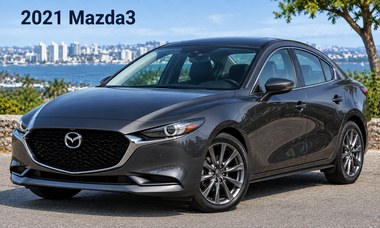
The Mazda3 has earned a strong reputation as one of the more enjoyable compact cars to drive, but reliability varies by generation, engine, transmission, and model year. The good news is that the Mazda3 has generally avoided some of the expensive drivetrain problems that have hurt several competing compact cars.
For used-car buyers, the strongest choices tend to be well-maintained examples with Mazda's naturally aspirated engines and conventional automatic or manual transmissions. Later Skyactiv-powered Mazda3s are especially attractive because they combine good fuel economy, relatively simple powertrains, and strong long-term durability.
Older Mazda3s can also be dependable, but age, rust, suspension wear, and maintenance history become increasingly important. Some early models are mechanically durable enough to remain worthwhile purchases, but a neglected 15- or 20-year-old Mazda3 can quickly erase the savings of its low purchase price.
In This Guide You'll Learn
- Which Mazda3 years are generally the most reliable
- Which Mazda3 years deserve more caution
- How reliability changed across the four generations
- Which Mazda3 engines and transmissions are the better choices
- The most common Mazda3 mechanical problems
- How many miles a Mazda3 can realistically last
- What high-mileage Mazda3 buyers should inspect before purchasing
Mazda3 Reliability Overview
Overall, the Mazda3 has above-average reliability for a compact car. It isn't completely trouble-free, but its better years can provide 150,000 to 200,000 miles of relatively economical transportation, and well-maintained examples can travel considerably farther.
One of the Mazda3's biggest reliability advantages is its drivetrain strategy. Mazda largely avoided the widespread use of continuously variable transmissions (CVTs) that became a major source of concern in some competing compact cars. Most automatic Mazda3s instead use conventional geared automatic transmissions, while manual transmissions have also remained available through much of the model's history.
The introduction of Mazda's Skyactiv powertrains was another important turning point. The naturally aspirated 2.0-liter and 2.5-liter Skyactiv four-cylinder engines used in later Mazda3s have generally developed good durability records when properly maintained.
That doesn't mean every Mazda3 should be treated equally. Early cars can suffer from rust and age-related suspension deterioration. Certain years have more complaints involving engine mounts, transmissions, electronics, infotainment systems, and interior components. Turbocharged versions introduced in the fourth generation also add complexity compared with the naturally aspirated models.
Mazda3 Reliability at a Glance
| Category | Mazda3 Reliability |
|---|---|
| Overall Reliability | Above average |
| Expected Lifespan | About 200,000 miles; 250,000+ possible with excellent care |
| Strong Older Choice | Later first-generation cars in good, rust-free condition |
| Strong Value Choice | 2012-2013 Skyactiv models |
| Strong Modern Choice | 2016-2018 third generation |
| Preferred Engines | Naturally aspirated 2.0L and 2.5L Skyactiv four-cylinders |
| Transmission Advantage | Conventional automatic or manual rather than a CVT |
| Biggest Older-Car Concern | Rust, age-related suspension wear, neglected maintenance |
| Later-Car Concerns | Electronics, infotainment, cylinder deactivation on some models, added turbo/AWD complexity |
If you may be buying soon, I'd recommend reading my most effective negotiation method for used cars. It explains a quick way to identify the dealerships most motivated to deal, no matter how busy they may seem, and how to follow up once you've found them. That can be the difference between getting a good price and getting a great one.
And, if you'd consider buying a brand-new Mazda3 if you could get a lower-than-expected price, learn how to shop the dealer, not just the car.
How Many Miles Can a Mazda3 Last?
A properly maintained Mazda3 can reasonably be expected to last around 200,000 miles, while particularly well-maintained examples can reach 250,000 miles or more. How easily a particular Mazda3 reaches those numbers depends heavily on its generation, engine, maintenance history, climate, and previous use.
At 100,000 miles, a good Mazda3 should not automatically be considered near the end of its useful life. In fact, a well-maintained Skyactiv-powered car with 100,000 miles can still have many years of useful service remaining.
Between 150,000 and 200,000 miles, maintenance history becomes more important than the number on the odometer. Suspension components, wheel bearings, engine mounts, cooling-system parts, air-conditioning components, and other wear items may require attention even when the engine and transmission remain healthy.
Beyond 200,000 miles, the naturally aspirated Skyactiv engines are among the Mazda3 powertrains I'd be most comfortable owning, provided oil changes and cooling-system maintenance have been consistent. The conventional automatic transmissions can also last well, although fluid maintenance and previous driving conditions matter.
For an older first- or second-generation Mazda3, I would pay particularly close attention to corrosion. A mechanically healthy engine doesn't make a badly rusted car a good high-mileage purchase.
Buyer comparison: Given similar condition and maintenance history, I would generally rather buy a 120,000-mile naturally aspirated Skyactiv Mazda3 with good service records than an older 80,000-mile example showing significant rust, neglected maintenance, or evidence of long-term deterioration. Mileage alone doesn't determine which Mazda3 is the safer purchase.
Mazda3 Reliability by Generation
2004-2009 Mazda3: First Generation
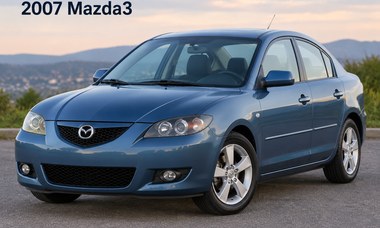
The first-generation Mazda3 established the formula that made the car popular: relatively simple four-cylinder engines, sharp handling, practical sedan and hatchback body styles, and reasonable ownership costs. Mechanically, a well-kept example can still be surprisingly durable.
U.S. buyers primarily encountered 2.0-liter and 2.3-liter four-cylinder engines. Neither is inherently a reason to avoid the car, and both can accumulate substantial mileage with proper maintenance. Manual and conventional automatic transmissions were offered.
Today, however, the biggest issue isn't necessarily the original drivetrain design. It's age and corrosion. Rust can be a serious concern on first-generation cars from areas that use road salt, particularly around wheel arches, rocker panels, underbody components, suspension mounting areas, and other exposed metal.
Common 2004-2009 Mazda3 Problems
- Rust and corrosion: One of the most important concerns, especially on cars from road-salt regions.
- Engine mounts: Worn mounts can produce excessive vibration at idle and noticeable engine movement.
- Suspension wear: Bushings, links, struts, and other components may require replacement as these cars age.
- Wheel bearings: Humming or growling noises that increase with road speed deserve investigation.
- Age-related leaks and accessories: Cooling-system parts, air-conditioning components, seals, and electrical equipment become increasingly important simply because of vehicle age.
Buyer Tip: Don't buy a first-generation Mazda3 simply because it has unusually low mileage. A higher-mileage rust-free car that has been maintained and regularly driven can be the much better purchase. Inspect the underside carefully before becoming concerned with relatively minor cosmetic or interior issues.
Bottom Line: A good first-generation Mazda3 can still make an inexpensive and enjoyable used car, but condition now matters much more than choosing one particular model year.
2010-2013 Mazda3: Second Generation
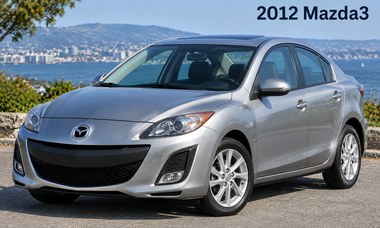
The second-generation Mazda3 is particularly interesting because it spans two different approaches to the powertrain. Earlier versions continued with more conventional Mazda four-cylinder engines, while the 2012 model year introduced Skyactiv technology to the Mazda3 lineup.
The 2.0-liter Skyactiv four-cylinder is especially noteworthy for used-car buyers. It delivered substantially better fuel economy without requiring a turbocharger or CVT, and it has developed a good reputation for long-term durability. Mazda paired it with either a six-speed manual or six-speed conventional automatic transmission.
That makes a well-maintained 2012-2013 Skyactiv Mazda3 an appealing older used-car choice today. It provides much of the drivetrain philosophy found in later Mazda3s without their higher purchase price.
Earlier second-generation cars aren't necessarily bad choices. However, if two otherwise comparable examples were sitting in front of me, I would generally favor the later Skyactiv car because of its combination of fuel economy, drivetrain durability, and conventional transmission.
Common 2010-2013 Mazda3 Problems
- Rust and corrosion: Still worth inspecting carefully, particularly underneath cars from northern climates.
- Engine mounts and vibration: Deteriorated mounts can become noticeable with age and mileage.
- Suspension and wheel-bearing wear: Increasingly relevant as these cars pass 100,000 miles.
- Electrical and accessory issues: Usually less concerning than major drivetrain failure, but still worth checking during an inspection.
- Age-related maintenance: Cooling-system components, belts, hoses, seals, and other wear items increasingly matter on cars now well over a decade old.
Buyer Tip: When shopping this generation, determine whether the car actually has the Skyactiv powertrain rather than assuming every 2012-2013 Mazda3 does. The Skyactiv-equipped versions are particularly attractive if your priorities are fuel economy and long-term ownership.
Bottom Line: The 2012-2013 Skyactiv Mazda3 is one of the more interesting inexpensive Mazda3 choices because it combines an older-car purchase price with a drivetrain that points toward the stronger later models.
2014-2018 Mazda3: Third Generation
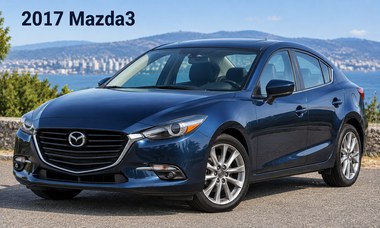
The third-generation Mazda3 is one of the strongest overall periods for the model and would be near the top of my list for someone looking for a dependable used compact car without spending late-model money.
U.S. models used naturally aspirated Skyactiv four-cylinder engines, primarily the 2.0-liter and 2.5-liter. Both are good choices. The 2.0 provides better fuel economy and adequate performance, while the 2.5 gives the Mazda3 noticeably stronger acceleration without introducing a turbocharger.
For a buyer focused almost entirely on minimizing long-term operating risk, the 2.0-liter naturally aspirated engine is difficult to fault. For someone who values stronger performance, however, I wouldn't avoid the 2.5 merely for reliability reasons. It offers a useful increase in power while retaining a relatively straightforward naturally aspirated design.
The six-speed automatic is also an important advantage. Rather than following much of the compact-car market toward a CVT, Mazda continued using a conventional geared automatic. Six-speed manuals were available as well.
Common 2014-2018 Mazda3 Problems
- Infotainment problems: Screen malfunction, unwanted inputs, or "ghost touch" behavior can occur on some cars.
- Suspension noises: Clunks or rattles should be investigated rather than dismissed as normal.
- Battery and electrical issues: A weak battery can sometimes produce seemingly unrelated electronic symptoms.
- Brake wear: Inspect rotor and pad condition, particularly on cars driven primarily in stop-and-go traffic.
- Normal high-mileage wear: Mounts, bearings, suspension components, and seals become more relevant as mileage climbs.
Importantly, these problems generally don't define the generation in the way that serious engine or transmission failures define some competing compact cars. That's a major reason the third-generation Mazda3 remains such an attractive used-car choice.
Buyer Tip: If choosing between a similarly maintained 2014-2015 and 2016-2018 Mazda3, I'd generally lean toward the later car. By that point the generation was more mature, and a 2016-2018 naturally aspirated Mazda3 represents one of the better combinations of reliability, efficiency, driving enjoyment, and purchase price in the entire model's history.
Bottom Line: For many used-car buyers, 2016-2018 may be the Mazda3 sweet spot. These cars are modern enough to feel contemporary but retain the relatively simple naturally aspirated Skyactiv powertrains that have helped give the Mazda3 its strong reliability reputation.
2019-2024 Mazda3: Fourth Generation
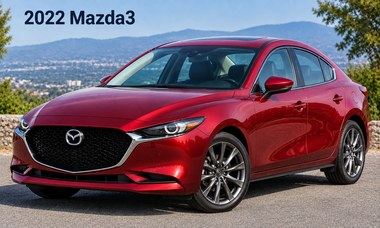
The fourth-generation Mazda3 moved noticeably upscale, with a more refined interior, improved noise isolation, available all-wheel drive, and increasingly sophisticated technology. The core naturally aspirated Skyactiv engine remains a strong point, although later versions introduce more mechanical complexity than earlier cars.
The naturally aspirated 2.5-liter four-cylinder is the version I'd generally favor for a buyer whose primary goal is long-term reliability. Depending on year and configuration, Mazda also offered cylinder-deactivation technology, all-wheel drive, and eventually a turbocharged 2.5-liter engine.
The 2.5 Turbo makes the Mazda3 considerably quicker, but it isn't the version I'd choose purely to minimize long-term ownership risk. The turbocharger, additional heat, and higher output add complexity. That doesn't make the turbo Mazda3 unreliable; it simply means a naturally aspirated model has fewer expensive components and is the more conservative high-mileage choice.
Likewise, all-wheel drive can be worthwhile for someone who actually benefits from the additional traction. But a front-wheel-drive Mazda3 is mechanically simpler and avoids the additional drivetrain components associated with AWD.
Common 2019-2024 Mazda3 Problems
- Electronics and infotainment: Check every display, camera, control, driver-assistance feature, and connectivity function.
- Cylinder-deactivation-related concerns: On applicable naturally aspirated models, verify recall and service history and make sure the system operates normally.
- AWD complexity: Inspect for drivetrain noise or leaks and confirm that all four tires are the correct size with reasonably similar wear.
- Turbo models: Maintenance history becomes especially important because the turbocharged engine operates under greater heat and load.
- Early-generation issues: A 2019 model deserves somewhat more scrutiny than a later example because it was the first year of a major redesign.
Buyer Tip: For the lowest-risk long-term combination, I'd start with a later fourth-generation Mazda3 using the naturally aspirated engine and front-wheel drive. Choose AWD because you need the traction and choose the turbo because you want the performance—not because either makes the car inherently better.
Bottom Line: The 2019-2024 Mazda3 remains a strong reliability prospect, particularly in naturally aspirated form. It's more sophisticated than the previous generation, though, so the exceptionally simple 2016-2018 cars still have an argument as the better choice for someone primarily interested in long-term value and minimal complexity.
Which Mazda3 Engine Is Most Reliable?
For most used-car buyers, Mazda's naturally aspirated 2.0-liter and 2.5-liter Skyactiv four-cylinder engines are the powertrains I'd favor. They combine good fuel economy, respectable performance, and a strong reliability record without relying on turbocharging.
2.0-liter Skyactiv: This is arguably the best Mazda3 engine for someone whose priorities are fuel economy, simplicity, and long-term durability. It isn't the quickest option, but that matters considerably less to someone looking for dependable transportation.
2.5-liter naturally aspirated Skyactiv: This is my preferred compromise for buyers who want stronger performance without stepping up to the turbo. It provides noticeably more power while retaining the basic advantages of a naturally aspirated engine.
2.5-liter turbo: The turbocharged engine is the performance choice. It can still be a perfectly reasonable purchase, but I'd want excellent maintenance records and would not choose it over the naturally aspirated engine if my only objective were maximizing long-term reliability and minimizing repair exposure.
The older 2.0-liter and 2.3-liter engines used before widespread Skyactiv adoption can also last a long time. At their current age, however, the condition of the individual vehicle is more important than debating small differences in original engine durability.
Which would I buy? For an inexpensive older Mazda3, I'd look hard at a 2012-2013 2.0-liter Skyactiv. For the best balance of age, reliability, and value, I'd favor a 2016-2018 naturally aspirated Skyactiv model. Among newer cars, I'd choose a naturally aspirated fourth-generation Mazda3 unless the additional performance of the turbo were important enough to justify its extra complexity.
Mazda3 Transmission Reliability
Transmission choice is one of the Mazda3's quiet advantages over several competitors. Mazda has generally relied on conventional geared automatic transmissions rather than CVTs, and that makes the Mazda3 particularly interesting to shoppers concerned about long-term transmission durability.
The later six-speed Skyactiv automatic has generally proven to be a solid transmission. Smooth operation during a test drive is still important, and on a high-mileage car I'd much rather see evidence of sensible transmission-fluid maintenance than hear that the fluid was supposedly intended to remain untouched forever.
Manual-transmission Mazda3s can also be durable, although clutch life depends heavily on the previous driver's habits. A worn clutch isn't necessarily evidence of a bad transmission, but clutch replacement should be factored into the purchase price.
Older automatic Mazda3s deserve a careful test drive simply because of their age. Delayed engagement, slipping, harsh shifts, warning lights, or obvious transmission-fluid neglect are much more important than the model's general reputation.
Buyer comparison: If transmission longevity is a major concern, I would generally be more comfortable with a well-maintained Mazda3 six-speed conventional automatic than with an otherwise comparable compact car whose long-term reputation depends heavily on a problematic CVT. That doesn't guarantee the Mazda transmission will never fail, but it removes one major concern found in some competing used cars.
Best Mazda3 Years to Buy
The Mazda3 has several strong periods, but the best year for a particular buyer depends on budget and how much age-related maintenance they're willing to accept. If reliability is the primary goal, I generally favor naturally aspirated Skyactiv models with good maintenance histories.
2012-2013 Mazda3: Strong Budget Choices
The 2012-2013 Mazda3 equipped with the 2.0-liter Skyactiv engine is one of my favorite inexpensive choices. These cars introduced much of Mazda's later powertrain philosophy while retaining relatively simple mechanicals and a conventional six-speed automatic or manual transmission.
At this age, however, condition matters enormously. I'd rather buy a carefully maintained 130,000-mile example with minimal rust than a neglected 80,000-mile car simply because its odometer looks better.
2016-2018 Mazda3: The Sweet Spot
For many buyers, 2016-2018 are the Mazda3 years I'd shop first. These later third-generation cars combine proven naturally aspirated Skyactiv engines, conventional transmissions, good fuel economy, modern safety and convenience features, and fewer years of accumulated wear than the older cars.
The 2.0-liter engine is particularly attractive for economical transportation, while the naturally aspirated 2.5-liter is a good choice for buyers who want stronger acceleration without adding turbocharger complexity.
2020-2024 Mazda3: Strong Newer Choices
Later fourth-generation Mazda3s are also appealing, particularly with the naturally aspirated engine. They offer a noticeably more upscale cabin and greater refinement than earlier cars.
I wouldn't automatically call them more reliable than a 2016-2018 Mazda3 simply because they're newer. They contain more electronics and can add AWD, cylinder deactivation, or turbocharging depending on configuration. They also haven't accumulated the same long-term mileage history as the third generation.
Best overall used choice: If I wanted a Mazda3 to keep for many years without spending late-model money, I'd start with a 2016-2018 naturally aspirated model. If my budget were lower, I'd look for a clean 2012-2013 Skyactiv car.
Mazda3 Years to Approach With More Caution
There isn't one long stretch of Mazda3 production that I'd tell every buyer to avoid. The model's history is more nuanced than that. Certain periods simply require more careful inspection or involve compromises that make other years more attractive.
2004-2009: Buy on Condition, Not Reputation
First-generation Mazda3s can be mechanically durable, but they're now old enough that rust and deterioration can overwhelm their original reliability advantages. I wouldn't automatically avoid one, but I also wouldn't buy one without a thorough underside inspection.
A rust-free, maintained example can still make sense as inexpensive transportation. A heavily corroded one usually isn't worth rescuing merely because the engine runs well.
2010-2011: Not Bad, But Later Cars Are More Appealing
The 2010-2011 Mazda3 isn't necessarily unreliable. The problem is that the 2012-2013 Skyactiv cars provide a compelling alternative with better fuel economy and a powertrain that became the foundation for later Mazda3s.
If prices and condition are similar, I'd generally choose the later Skyactiv car.
2019: First-Year Fourth Generation
The 2019 Mazda3 represented a substantial redesign. As with many first-year vehicles, it deserves a little more scrutiny for electronic, software, and early-production issues than later examples from the same generation.
That doesn't make every 2019 Mazda3 a bad purchase. A well-maintained example with completed recalls and updates can still be worthwhile, particularly if its price reflects the model year.
Which Mazda3 Generation Is Most Reliable?
For the best combination of proven reliability, reasonable age, drivetrain simplicity, and modern usability, I give the advantage to the 2014-2018 third-generation Mazda3, particularly the later 2016-2018 cars.
The naturally aspirated Skyactiv engines are well suited to high-mileage ownership, and Mazda's six-speed automatic avoids the CVT concerns found in some competitors. These cars are also new enough that finding a well-maintained example without severe corrosion or age-related deterioration is still realistic.
The second-generation 2012-2013 Skyactiv models deserve honorable mention for buyers on tighter budgets. Fourth-generation cars may ultimately prove equally durable, but they contain more technology and haven't yet accumulated as much long-term ownership history.
Which would I choose? Between a similarly priced 2018 Mazda3 and 2019 Mazda3 in comparable condition, I'd generally choose the 2018 if reliability and simplicity were my priorities. Between a 2018 and a newer 2022-2024 naturally aspirated Mazda3, however, I'd consider the newer car if the price difference were reasonable because several additional years of vehicle age also matter.
Is the Mazda3 Automatic Transmission Reliable?
Generally, yes. Mazda's six-speed Skyactiv automatic has developed a good reputation and is one reason the Mazda3 is attractive as a long-term used-car purchase.
The important distinction is that this is a conventional geared automatic transmission rather than a CVT. That doesn't make it immune to problems, but Mazda avoided one of the drivetrain choices that has created expensive concerns in several competing compact cars.
During a test drive, the transmission should engage Drive and Reverse promptly and shift smoothly without slipping, flaring engine speed, harsh engagement, or warning lights. On a high-mileage example, documented maintenance is an advantage.
If choosing between manual and automatic, I wouldn't select the manual solely because I was afraid of the Mazda automatic. Both can be durable. With a manual car, clutch condition and the habits of previous drivers become additional considerations.
Major Mazda3 Problems and Expensive Repairs
Rust and Corrosion
Rust is one of the most important issues on older Mazda3s, especially first-generation cars that spent years in regions where road salt is heavily used.
Surface rust isn't necessarily a reason to reject an inexpensive older car, but structural corrosion is different. Severe deterioration around rocker panels, suspension mounting points, subframes, or other important structural areas can make an otherwise mechanically healthy Mazda3 a poor purchase.
Engine Mounts
Worn engine mounts are relatively common as Mazda3s age. Symptoms can include excessive vibration at idle, clunks when shifting between Drive and Reverse, or noticeable engine movement.
Mount replacement is normally far less frightening than an internal engine problem, but multiple deteriorated mounts can add meaningful expense to an inexpensive used car.
Infotainment Screen Problems
Some third-generation Mazda3s can develop infotainment screen problems, including unwanted or phantom inputs sometimes described as "ghost touch." A malfunctioning screen can be irritating even though it doesn't affect the basic mechanical reliability of the car.
Operate the infotainment system thoroughly during a test drive rather than assuming a display that lights up is functioning correctly.
Suspension and Wheel-Bearing Wear
Clunks, rattles, uneven tire wear, looseness, or humming noises can indicate worn suspension components or wheel bearings. These become increasingly normal possibilities as mileage rises.
A Mazda3 needing several suspension components at once can still be mechanically sound, but the accumulated repair bill should be reflected in what you pay.
Fourth-Generation Electronics and Added Complexity
The 2019-2024 Mazda3 contains more electronic systems than earlier generations. Check cameras, displays, driver-assistance features, keyless functions, warning lights, and infotainment operation.
AWD and turbocharged versions also add mechanical components that aren't present on a basic front-wheel-drive naturally aspirated Mazda3. Neither should automatically be avoided, but they change the long-term risk equation.
Mazda3 Repair and Maintenance Costs
Routine Mazda3 maintenance is generally affordable, although repair costs rise as the vehicle ages and newer models become more technologically complex. Prices vary considerably by location, labor rate, parts quality, and exactly what needs replacement.
| Service or Repair | Approximate Cost |
|---|---|
| Oil and filter change | $60-$120+ |
| Front or rear brake service | $350-$800+ per axle |
| Battery replacement | $180-$350+ |
| Engine mount replacement | $300-$800+ depending on mount |
| Wheel bearing/hub | $350-$700+ each |
| Struts/shocks and related suspension work | $600-$1,500+ |
| Air-conditioning repair | $300-$1,500+ depending on failure |
| Clutch replacement | $1,000-$1,800+ |
| Major automatic transmission repair/replacement | $3,000-$6,000+ |
| Turbocharger-related major repair | $1,500-$3,500+ depending on failure |
These figures are broad estimates rather than quotes. The important point for a used Mazda3 buyer is that routine ownership costs are usually reasonable, while neglecting several smaller items can create a surprisingly expensive catch-up bill immediately after purchase.
Mazda3 Maintenance After 100,000 Miles
A Mazda3 with more than 100,000 miles can still be an excellent purchase, but this is where documented maintenance becomes increasingly valuable.
- Engine oil: Consistent oil changes are particularly important on any high-mileage engine and even more important on turbocharged models.
- Transmission fluid: Ask whether the automatic transmission has received sensible fluid service and inspect for abnormal shifting.
- Coolant: Verify that cooling-system maintenance hasn't been ignored.
- Spark plugs: Check whether scheduled plug replacement has been completed.
- Belts and hoses: Inspect aging rubber components rather than waiting for a failure.
- Suspension and steering: Struts, bushings, links, bearings, and related components may need attention as mileage increases.
- Brakes and tires: These ordinary wear items can substantially change the real cost of buying an otherwise inexpensive used car.
At 150,000 miles and beyond, I would be less concerned about whether the odometer reads 155,000 or 175,000 than I would be about oil consumption, transmission behavior, corrosion, cooling-system condition, suspension wear, and maintenance history.
What to Check Before Buying a Used Mazda3
- Inspect carefully for rust on older cars. Pay particular attention to first-generation and other Mazda3s that spent their lives in road-salt regions.
- Test the transmission from cold. Look for delayed engagement, slipping, harsh shifting, or unusual noises rather than relying solely on Mazda3's generally good transmission reputation.
- Check for excessive engine vibration. This can reveal deteriorated engine mounts, particularly on older examples.
- Operate the infotainment system thoroughly. On applicable third-generation cars, make sure the screen isn't producing unwanted inputs or other abnormal behavior.
- On AWD cars, inspect all four tires. They should be the proper size and reasonably similar in tread depth, and the drivetrain shouldn't produce unusual vibration or noise.
- Give turbocharged cars extra scrutiny. Maintenance history, oil-change intervals, modifications, and evidence of hard use matter more when buying the higher-output version.
Mazda3 Pros and Cons
Pros
- Above-average overall reliability
- Durable naturally aspirated Skyactiv engines
- Conventional automatic transmission rather than a CVT
- Good fuel economy
- More enjoyable handling than many compact-car competitors
- Sedan and hatchback choices
- 2016-2018 models offer an especially good reliability/value balance
Cons
- Rust can be a major concern on older examples
- Rear-seat and cargo priorities may favor some competitors
- Infotainment problems occur on some third-generation cars
- Ride quality can be firmer than some compact-car buyers prefer
- Turbo and AWD versions add complexity
- Older inexpensive cars may need substantial suspension and age-related maintenance
And another con ... even a good price on the vehicle doesn't necessarily mean you're getting a good deal.
There are other numbers besides price that can significantly affect the final out-the-door cost. A well-negotiated selling price can quickly lose its advantage if the dealer makes up for the concession with a below-market trade-in offer. Also, dealer fees and add-ons can further increase the final cost, making it important to learn which fees you must pay, can negotiate, or should avoid.
To become better informed about these important but often-confusing parts of the deal, be sure to see my articles on trade-ins and dealer fees.
Mazda3 vs. Its Main Rivals
Mazda3 vs. Toyota Corolla: If maximum simplicity, resale value, and a long history of low-risk ownership are the priorities, the Corolla is extremely difficult to beat. The Mazda3 is generally the more engaging car to drive and can still provide excellent longevity. I'd lean Corolla for the buyer who views a car primarily as transportation and Mazda3 for someone who also values steering, handling, and driving feel.
Mazda3 vs. Honda Civic: Both can be excellent long-term choices, but exact year and powertrain matter. One Mazda3 advantage for used-car shoppers is its widespread use of a conventional six-speed automatic instead of a CVT. The Civic offers excellent efficiency, practicality, and resale value, while the Mazda3 often feels more upscale and driver-focused.
Mazda3 vs. Hyundai Elantra: The Elantra can offer a lot of features for the money, particularly as a newer used car. For a buyer planning to keep the vehicle deep into six-figure mileage, however, I'd generally have more confidence in a proven naturally aspirated Skyactiv Mazda3 with a conventional automatic.
Mazda3 vs. Volkswagen Jetta: The Jetta can provide good highway comfort, turbocharged torque, and a roomy cabin. The Mazda3's naturally aspirated powertrains are generally the simpler choice for someone whose main objective is minimizing long-term mechanical complexity.
Which would I buy? Reliability alone could push me toward an especially good Corolla, while practicality and efficiency can make the Civic equally compelling. But a 2016-2018 Mazda3 is one of the few compact cars that combines strong reliability, a conventional automatic transmission, good fuel economy, and genuinely enjoyable driving dynamics. That's why it would remain very high on my used-car shopping list.
Final Mazda3 Reliability Verdict
The Mazda3 is one of the better used compact cars for buyers who want reliability without giving up enjoyable driving characteristics. Its strongest naturally aspirated Skyactiv powertrains have proven capable of high mileage, and Mazda's continued use of conventional automatic transmissions is an important advantage for long-term used-car shoppers.
And another con ... even a good price on the vehicle doesn't necessarily mean you're getting a good deal.
There are other numbers besides price that can significantly affect the final out-the-door cost. A well-negotiated selling price can quickly lose its advantage if the dealer makes up for the concession with a below-market trade-in offer. Also, dealer fees and add-ons can further increase the final cost, making it important to learn which fees you must pay, can negotiate, or should avoid.
To become better informed about these important but often-confusing parts of the deal, be sure to see my articles on trade-ins and dealer fees.
For a lower-priced Mazda3, I'd look closely at a clean 2012-2013 Skyactiv model. For the best overall balance of proven reliability, age, features, and price, 2016-2018 would be my first shopping target. Newer naturally aspirated fourth-generation cars are also strong choices, particularly for buyers willing to pay more for their improved refinement and technology.
I wouldn't automatically reject the oldest Mazda3s, a 2019 model, AWD, or the turbocharged version. I'd simply evaluate them differently. An older car needs especially careful rust and age-related inspection, while AWD and turbo models should be purchased because their additional capability or performance matters enough to justify the extra complexity.
The larger lesson is that condition, powertrain, and maintenance history matter more than choosing a Mazda3 solely by model year. A carefully maintained 120,000-mile Skyactiv Mazda3 can be a much safer purchase than a lower-mileage example with poor service history, corrosion, modifications, or obvious neglect.
Late-model Mazda3s also tend to retain their value reasonably well. A lightly used example can sometimes cost surprisingly close to a properly negotiated new Mazda3 purchase, so it's often a good idea to compare both alternatives rather than assume the used vehicle automatically represents the better value.