


The Hyundai Tiburon has become an unusual used-car proposition. It was once an inexpensive and fairly common sporty coupe, but today the newest examples are approaching 20 years old, clean original cars are increasingly difficult to find, and condition can vary enormously from one Tiburon to another.
Mechanically, however, the Tiburon is simpler than many newer sporty cars. Its naturally aspirated four-cylinder and V6 engines can both provide good service when properly maintained, replacement parts are generally inexpensive, and there are no turbochargers or highly complicated modern drivetrains to worry about.
This guide covers the 1997-2008 Hyundai Tiburon sold in the U.S., including the first-generation cars, the substantially redesigned 2003 model, the GT and SE versions, four-cylinder and V6 engines, and both manual and automatic transmissions. There was no 2002 Tiburon in the U.S. between the two generations.
Overall, I'd rate the Tiburon as having average to above-average reliability for an older sporty coupe. The engines themselves can be durable, but neglected timing-belt maintenance, clutch problems, aging suspension components, oil leaks and years of previous-owner modifications can turn a cheap Tiburon into an expensive one surprisingly quickly.
In This Guide You'll Learn
- Which Hyundai Tiburon years are generally the best to buy
- Which Tiburon years deserve more caution
- How many miles a Hyundai Tiburon can last
- Whether the four-cylinder or V6 Tiburon is more reliable
- How reliable the 2.7-liter V6 is at high mileage
- Why timing-belt maintenance is so important
- What to know about Tiburon clutch and manual-transmission problems
- How the GT and SE models differ as used cars
- Which problems become more important as Tiburons age
- Why condition and previous modifications now matter more than model year alone
Hyundai Tiburon Reliability Overview
The Tiburon was sold in two distinct generations in the U.S., and the second generation is generally the one I'd concentrate on today. The 1997-2001 first-generation cars are mechanically straightforward, but their age and increasing scarcity make finding a genuinely well-preserved example difficult.
The redesigned 2003-2008 Tiburon was a more substantial car and offered buyers a choice between a four-cylinder engine and a 2.7-liter V6. It also looked considerably more expensive than it was, which helped make the second-generation Tiburon popular with younger buyers when new.
That history matters today. Many Tiburons were inexpensive enough to pass through multiple owners, and some were modified with aftermarket intakes, exhaust systems, suspension components, wheels, stereos and cosmetic changes. I'd rather buy a higher-mileage original Tiburon with maintenance records than a lower-mileage example that has been repeatedly modified and poorly maintained.
The engines themselves aren't usually the biggest concern. Timing-belt history is critical. A seller who can't document when the belt was last replaced should not be given the benefit of the doubt. On an older interference engine, a broken timing belt can turn an overdue maintenance item into major engine damage.
Manual-transmission cars also deserve careful inspection. Clutch wear is normal on an old sporty coupe, but some Tiburons developed clutch-related complaints at relatively low mileage, and aggressive previous driving can accelerate wear substantially.
Hyundai Tiburon Reliability at a Glance
| Category | Assessment |
|---|---|
| Overall Reliability | Average to above average for an older sporty coupe |
| Expected Lifespan | About 150,000-200,000+ miles with good maintenance |
| Best Overall Years | 2005-2008 |
| Best Simple Powertrain | 2.0-liter four-cylinder with good maintenance history |
| Best Performance Choice | 2.7-liter V6 with documented timing-belt service |
| Major Maintenance Concern | Timing-belt replacement history |
| Manual-Transmission Concern | Clutch wear and previous hard use |
| Biggest Buying Concern Today | Age, neglect and previous modifications |
Finding the right used Hyundai Tiburon can present another challenge: good original examples are becoming increasingly difficult to find. Buyers looking for a particular year, GT or SE trim, V6, manual transmission, low mileage or unusually original condition may need to search well beyond their local area. Before traveling for one, ask detailed questions, request extensive photos and maintenance records, and find out about modifications, rust, accident history and timing-belt service before you go.
How Many Miles Can a Hyundai Tiburon Last?
A well-maintained Hyundai Tiburon can realistically last 150,000 to 200,000 miles or more, and the engines are capable of outlasting many of the age-related components surrounding them.
At 100,000 miles, I wouldn't consider a Tiburon particularly high mileage if it has been properly maintained. What matters much more is whether the timing belt has been replaced on schedule, whether the engine has been allowed to overheat, and whether oil and other fluids have been changed consistently.
At 150,000 miles, expect suspension components, engine mounts, wheel bearings, cooling-system parts, seals and other wear items to become part of the ownership equation. A manual car may already have received a clutch replacement, and that's not necessarily a negative if the work was done properly.
A Tiburon reaching 200,000 miles isn't extraordinary mechanically, but finding one at that mileage that has also avoided rust, accidents, neglect and poor modifications becomes more difficult.
Buyer comparison: I'd rather own a stock 140,000-mile Tiburon with documented timing-belt replacements and years of maintenance records than an 80,000-mile car with an unknown timing belt, aftermarket modifications and no useful service history.
Hyundai Tiburon Reliability by Generation
1997-2001: First-Generation Hyundai Tiburon
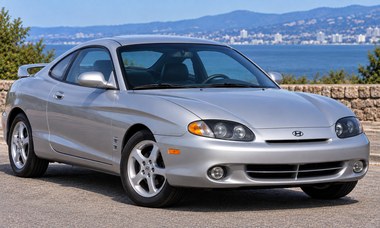
The first-generation Tiburon was sold in the U.S. from 1997 through 2001. These cars are mechanically simple by modern standards, which can be an advantage, but age now dominates almost every reliability discussion.
The U.S. cars used naturally aspirated four-cylinder engines rather than the V6 offered in the later generation. The drivetrain can be durable when maintained, but even a low-mileage first-generation Tiburon is now old enough for rubber components, seals, hoses, suspension bushings and electrical parts to deteriorate simply from time.
Rust and previous accident repairs also deserve attention. These cars were inexpensive transportation for much of their lives, so preservation wasn't necessarily a priority for previous owners.
Common 1997-2001 Hyundai Tiburon Problems
- Timing-belt neglect: Missing replacement history is one of the most important reasons to approach an otherwise inexpensive car cautiously.
- Oil leaks: Aging seals and gaskets can allow seepage or more substantial leakage.
- Cooling-system deterioration: Radiators, hoses, thermostats and related components can require replacement simply because of age.
- Suspension wear: Bushings, struts, ball joints and wheel bearings can cause noise, looseness or uneven tire wear.
- Manual clutch wear: Clutch condition depends heavily on previous driving style and maintenance.
- Age-related electrical problems: Sensors, switches, window mechanisms and other electrical components may require attention.
Buyer Tip: Don't buy a first-generation Tiburon simply because the asking price is extremely low. A comprehensive inspection is particularly important because several overdue age-related repairs can easily exceed the value of the car.
Bottom Line: A good 1997-2001 Tiburon can still be enjoyable and mechanically straightforward, but today I'd buy one primarily because I'd found an unusually well-preserved example rather than because this generation offers a reliability advantage.
2003-2006: Second-Generation Hyundai Tiburon
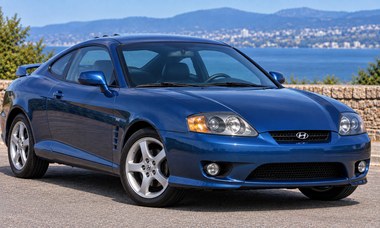
The redesigned 2003-2006 Tiburon is where the model became substantially more interesting to performance-oriented buyers. Hyundai offered a 2.0-liter four-cylinder as well as a 2.7-liter V6, with the V6 powering the GT and other performance-oriented versions.
The four-cylinder is the simpler choice. It doesn't provide the V6's torque or sound, but a properly maintained example can make an inexpensive and relatively uncomplicated commuter coupe.
The 2.7-liter V6 is also capable of good longevity. I'd be comfortable with a high-mileage V6 if maintenance records were strong, particularly if they clearly documented timing-belt service.
The manual transmission is appealing in a sporty car like this, but clutch condition deserves additional scrutiny on early second-generation examples. A clutch that engages poorly, slips under acceleration or behaves abnormally shouldn't be dismissed as a minor inconvenience.
Common 2003-2006 Hyundai Tiburon Problems
- Clutch problems: Some manual-transmission cars experienced premature clutch wear or related complaints, making a careful test drive important.
- Timing-belt maintenance: Both four-cylinder and V6 buyers should verify replacement history rather than assuming it was done.
- Oil leaks: Valve-cover and other gasket leaks become increasingly common as the cars age.
- Engine mounts: Worn mounts can cause excessive vibration or movement.
- Suspension wear: Struts, bushings, control-arm components and wheel bearings can require replacement.
- Modified cars: Aftermarket intakes, exhaust systems, suspension changes and cosmetic modifications are common and vary greatly in quality.
Buyer Tip: If you're choosing between the four-cylinder and V6, don't automatically assume the smaller engine is the only reliable choice. I'd buy whichever car has the better maintenance history and condition. The 2.7-liter V6 can be quite durable when properly maintained.
Bottom Line: The 2003-2006 Tiburon offers a good combination of simple mechanicals, distinctive styling and inexpensive used-car performance, but clutch condition and timing-belt history deserve particular attention.
2007-2008: Final Hyundai Tiburon
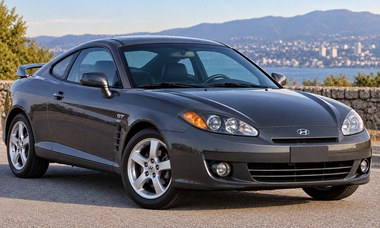
The 2007-2008 Tiburon represents the final version of Hyundai's sporty coupe. These cars received updated styling but retained the familiar basic powertrain choices, including the 2.0-liter four-cylinder and 2.7-liter V6.
For someone who wants a Tiburon primarily as an inexpensive older sporty car, this is the group I'd investigate first. They're the newest examples available, the basic mechanical package was mature, and they avoid some of the additional age affecting earlier cars.
The GT and SE are particularly interesting for buyers who want the V6 and a more performance-oriented driving experience. But trim level shouldn't override condition. An exceptionally maintained four-cylinder GS can be a much better purchase than a neglected V6 GT or SE.
Because even the final Tiburons are now old cars, maintenance history remains essential. A low odometer reading doesn't prove that the timing belt, cooling system, suspension or rubber components are in good condition.
Common 2007-2008 Hyundai Tiburon Problems
- Timing-belt neglect: Still the maintenance item I'd most want documented before purchase.
- Oil leaks: Aging gaskets and seals can produce leaks even on relatively low-mileage cars.
- Clutch wear: Particularly important on manual GT and SE models that may have been driven aggressively.
- Suspension deterioration: Struts, bushings, links and wheel bearings can require attention.
- Engine mounts: Worn mounts can cause vibration and harshness.
- Interior and electrical aging: Switchgear, window mechanisms and other components may need repair as the cars get older.
Buyer Tip: I'd start my Tiburon search with 2007-2008 cars but wouldn't reject an excellent 2005 or 2006 to obtain one. At this age, documented maintenance and condition outweigh a difference of only a few model years.
Bottom Line: The 2007-2008 models are generally the Tiburons I'd choose today. They combine the mature second-generation design with the least age, although the condition of the individual car remains more important than the year on the title.
Which Hyundai Tiburon Engine Is Most Reliable?
For pure simplicity, the 2.0-liter four-cylinder is the lower-risk choice. In the second-generation Tiburon this engine is known as the Beta II (G4GC), while the 2.7-liter V6 is the Delta (G6BA). Those codes are useful when researching parts, but buyers really only need to think of them as the 2.0 four-cylinder and 2.7 V6.
The four-cylinder has fewer cylinders, less heat and lower performance demands, and it's generally inexpensive to repair. Its disadvantage is performance: the Tiburon is not particularly light, so the four-cylinder version isn't especially quick.
The 2.7-liter V6 is the engine I'd prefer if the reason for buying a Tiburon is to enjoy it as a sporty coupe. It produces noticeably better low-rpm torque and makes the car feel more appropriate to its styling.
I wouldn't avoid the V6 because of reliability. A well-maintained 2.7-liter can exceed 150,000 miles and potentially reach 200,000 miles or more. The key is documented maintenance, particularly the timing belt.
Buyer comparison: If I wanted the lowest-cost Tiburon for commuting, I'd choose a well-maintained 2.0-liter. If I wanted the car because I liked the Tiburon as an inexpensive sporty coupe, I'd accept the modest additional complexity and choose a good 2.7-liter V6.
Is the Hyundai Tiburon 2.7 V6 Reliable?
Yes. The 2.7-liter V6 is generally a durable engine when properly maintained, and high mileage alone wouldn't prevent me from buying one.
The critical issue is maintenance rather than an inherent weakness in the basic engine. Timing-belt replacement needs to be treated seriously. If a seller can't document when the belt and related components were serviced, I'd budget for the work immediately rather than assume it was performed.
Oil leaks also become more common as these engines age. Some seepage on a nearly 20-year-old engine isn't surprising, but substantial leakage should be diagnosed before purchase.
Cooling-system condition matters as well. A V6 that has been consistently maintained can last a long time; one that has been repeatedly overheated or run low on coolant is a very different proposition.
Buyer comparison: Between an 80,000-mile V6 with no timing-belt records and a 125,000-mile V6 with documented belt, water-pump and cooling-system maintenance, I'd strongly favor the higher-mileage car if everything else checked out.
Hyundai Tiburon Manual vs. Automatic Reliability
The Tiburon was available with both manual and automatic transmissions, and neither choice should automatically disqualify an otherwise good car.
The manual transmission suits the Tiburon's character, particularly with the V6. The transmission itself can provide long service, but clutch condition is a separate issue. Previous driving style has a major influence on clutch life, and some second-generation cars experienced clutch complaints earlier than buyers might expect.
During a test drive, pay attention to clutch engagement, slipping under heavy acceleration, difficulty selecting gears and unusual noises. On a car this old, a properly documented clutch replacement can actually be an advantage.
The automatic transmission sacrifices some of the involvement that makes the Tiburon appealing, but it can be a sensible choice for everyday driving. Fluid condition, shift quality and maintenance history matter more than theoretical arguments about which transmission is inherently better.
Which would I buy? For an enthusiast-owned V6 Tiburon, I'd prefer the manual if the clutch and transmission were healthy. For inexpensive everyday transportation, I wouldn't hesitate to buy a smooth-shifting automatic with strong maintenance records.
What Are The Best Hyundai Tiburon Years to Buy?
For most buyers today, I'd concentrate on the 2005-2008 Hyundai Tiburon. These later second-generation cars retain the Tiburon's relatively simple mechanical design while avoiding some of the additional age and early-production concerns of older examples.
That doesn't mean I'd automatically reject a 2003 or 2004. With cars this old, a well-maintained earlier Tiburon can be a substantially better purchase than a neglected final-year car.
2005-2006: Strong Value Choices
The 2005-2006 Tiburons are particularly appealing because the second-generation design had been in production for several years, yet these cars can still be inexpensive. Both the 2.0-liter four-cylinder and 2.7-liter V6 can provide good service.
For an enthusiast, I'd look closely at a clean V6 GT with a manual transmission. For someone primarily interested in inexpensive transportation with sporty styling, the four-cylinder can be the more economical choice.
2007-2008: Best Overall Years
The final 2007-2008 cars are generally my first choice. They're the newest Tiburons available, received updated styling and retained familiar powertrains rather than introducing an unproven new mechanical package.
GT and SE versions are particularly attractive to enthusiasts, but originality matters. I'd rather buy an exceptionally maintained stock GT than a more desirable trim that has passed through several owners and accumulated questionable modifications.
Which Hyundai Tiburon Years Should You Avoid Or Approach With More Caution?
There isn't one Tiburon year I'd universally tell buyers to avoid. At this age, condition and maintenance history have become more important than small differences in model-year reliability.
1997-2001 Tiburons
The first-generation cars deserve additional caution primarily because of age. Even a mechanically sound engine can be surrounded by deteriorated suspension components, hoses, seals, mounts, cooling-system parts and electrical equipment.
I'd consider one if it were unusually well preserved, but I wouldn't choose an average first-generation Tiburon over a comparably maintained later car merely because the asking price was lower.
2003-2004 Tiburons
The first years of the second generation deserve a little more scrutiny, particularly with manual-transmission cars. Clutch condition should be carefully evaluated, and timing-belt history remains essential.
These aren't automatic avoid years. A 2003 or 2004 with excellent records and evidence of careful ownership can still be a very good inexpensive coupe.
Also, Know Your Trade-In Value
While you're narrowing down your next vehicle choice, it's also highly recommended that you know the value of your trade-in. Having a realistic appraisal is necessary to establish your budget as well as negotiate a better overall deal. Here's a good source for a quick and accurate appraisal: free trade-in appraisal.
What Is the Most Reliable Hyundai Tiburon?
If reliability and low operating costs were my primary considerations, I'd look for a 2005-2008 Tiburon with the 2.0-liter four-cylinder. It's mechanically straightforward and avoids the additional components and somewhat higher maintenance costs of the V6.
But that's not necessarily the Tiburon I'd personally choose. If I were buying one because I wanted an inexpensive sporty coupe, I'd look for a 2005-2008 V6 with excellent maintenance records. The 2.7-liter provides better performance without creating an unreasonable reliability penalty.
That's an important distinction with the Tiburon: the simplest version may be the lowest-risk choice, but a properly maintained V6 can still be a durable car and better delivers the experience many Tiburon buyers actually want.
Common Hyundai Tiburon Problems and Expensive Repairs
The Tiburon doesn't have an unusually long list of catastrophic mechanical problems. Today, the greater risk is buying an old car with several years of deferred maintenance. A handful of moderate repairs can quickly erase the advantage of a very low purchase price.
Timing-Belt Failure
This is the maintenance issue I'd take most seriously. The Tiburon's engines use timing belts, and allowing one to remain in service beyond its replacement interval creates unnecessary risk.
I'd want documentation showing when the belt was replaced and what additional components were changed during the service. If the history is unknown, I'd treat timing-belt replacement as immediate maintenance rather than hoping the previous owner took care of it.
The cost of preventive timing-belt service is much easier to absorb than the potential engine damage that can result if an overdue belt fails.
Clutch Problems
Manual-transmission Tiburons can develop clutch problems, and some second-generation cars experienced clutch complaints earlier than owners expected.
Today, however, age and previous use complicate the picture. A 20-year-old sporty coupe may have had several clutches, several owners and widely varying driving styles.
Check for slipping under acceleration, an unusually high engagement point, chatter, difficulty shifting and abnormal noises. Don't assume a recently replaced clutch is bad news; documented replacement with quality parts can make an older manual Tiburon more attractive.
Oil Leaks
Valve-cover gaskets and other seals can begin leaking as Tiburons age. Minor seepage isn't surprising on a car approaching or exceeding 20 years old, but significant leakage should be diagnosed.
Also check the engine oil level. Evidence that an owner has repeatedly allowed the engine to run low on oil would concern me much more than a gasket that simply needs replacement.
Cooling-System Problems
Radiators, hoses, thermostats, water pumps and other cooling-system components eventually deteriorate. Some of these parts may already have been replaced simply because of the age of surviving Tiburons.
Any evidence of repeated overheating deserves additional investigation. An inexpensive cooling-system repair is one thing; buying an engine that has been severely overheated is another.
Suspension and Wheel-Bearing Wear
Struts, bushings, control-arm components, links and wheel bearings can wear enough to cause clunks, vibration, wandering or uneven tire wear.
Lowered Tiburons deserve additional scrutiny. An aftermarket suspension isn't automatically a problem, but poorly chosen components or excessive lowering can affect ride quality, tire wear and suspension geometry.
Engine Mounts
Worn engine or transmission mounts can create noticeable vibration, particularly at idle or when shifting between drive and reverse on an automatic car.
Mount replacement isn't normally a reason to walk away from an otherwise good Tiburon, but it's another example of the age-related repairs that should be considered when evaluating an unusually cheap car.
Hyundai Tiburon Maintenance and Repair Costs
One of the Tiburon's advantages is that routine maintenance and many repairs remain relatively affordable compared with European sporty coupes of the same era. The car's low market value, however, means even ordinary repairs can represent a significant percentage of what you paid for it.
| Service or Repair | Approximate Cost |
|---|---|
| Oil and Filter Change | $60-$120+ |
| Timing Belt Service | $700-$1,300+ |
| Water Pump | $500-$1,000+ depending on related work |
| Valve-Cover Gasket | $250-$600+ |
| Engine Mount Replacement | $300-$900+ depending on mounts |
| Brake Pads and Rotors | $400-$900+ per axle |
| Front Suspension Repairs | $500-$1,500+ depending on components |
| Wheel Bearing | $300-$600+ each |
| Clutch Replacement | $1,200-$2,200+ |
| Major Automatic Transmission Repair | $2,000-$4,000+ depending on problem |
Actual prices vary considerably by location, labor rate and parts used. On an inexpensive Tiburon, I'd concentrate less on whether a particular repair costs $700 or $900 and more on whether the car needs three or four significant repairs immediately after purchase.
Hyundai Tiburon Maintenance After 100,000 Miles
A 100,000-mile Tiburon can still have plenty of useful life remaining, but this is the point where maintenance documentation becomes especially valuable.
- Verify timing-belt service: This is the first maintenance record I'd look for.
- Inspect the cooling system: Check the radiator, hoses, thermostat, water pump and coolant condition.
- Look for oil leaks: Inspect valve covers and other common sealing points.
- Check engine and transmission mounts: Excessive vibration can indicate deterioration.
- Inspect the suspension: Struts, bushings, links and wheel bearings may already need replacement.
- Evaluate clutch condition: Particularly important on V6 manual cars that may have been driven enthusiastically.
If You May Be Buying Soon
If you may be buying a used car soon, see how to identify the dealerships most motivated to get your sale, and therefore most ready to lower their price more than the rest. This is often the difference between getting a good price and getting a great one.
What to Check Before Buying a Used Hyundai Tiburon
- Ask for timing-belt records: Don't rely on a seller saying it was "probably done." A receipt or maintenance record is much more useful.
- Look carefully for modifications: Pay particular attention to wiring, suspension work, engine modifications and anything that appears homemade or poorly installed.
- Test the clutch: On manual cars, check for slipping, chatter, unusual engagement and difficulty shifting.
- Inspect underneath for rust: This is increasingly important because even the newest Tiburons are now old cars.
- Check for accident repairs: Look for inconsistent panel gaps, paint differences and evidence of structural repair.
- Check the cooling system and engine temperature: I'd be cautious about any Tiburon showing evidence of previous overheating.
Hyundai Tiburon Pros and Cons
Pros
- Simple naturally aspirated engines
- 2.0-liter four-cylinder can be inexpensive to own
- 2.7-liter V6 offers better performance without excessive complexity
- Manual transmission available
- Generally affordable replacement parts
- Distinctive coupe styling
- Good 150,000-200,000+ mile potential with proper maintenance
- Later GT and SE models remain interesting inexpensive enthusiast cars
Cons
- Even the newest examples are approaching 20 years old
- Timing-belt history is critical
- Manual-transmission cars can have clutch problems
- Many surviving examples have been modified
- Age-related suspension, cooling and electrical repairs are increasingly common
- Clean original examples are becoming harder to find
- Four-cylinder performance is modest
- Low purchase prices can encourage previous owners to defer maintenance
Hyundai Tiburon vs. Other Sporty Used Cars
The Tiburon occupied an interesting position between inexpensive economy-based coupes and more serious sports cars. Today, its biggest advantages are simplicity, distinctive styling and relatively low purchase prices.
- Toyota Celica: One of the Tiburon's closest period rivals. The Celica generally has the stronger reliability reputation and the GT-S provides a more high-revving character, while the V6 Tiburon offers substantially more low-rpm torque.
- Mitsubishi Eclipse: Another natural comparison for buyers looking for an affordable sporty coupe. Reliability varies considerably by Eclipse generation and powertrain, while the naturally aspirated Tiburon is mechanically straightforward.
- Mazda MX-5 Miata: A true rear-wheel-drive sports car rather than a front-wheel-drive sporty coupe. The Miata is much more focused on handling and driver involvement, while the Tiburon provides greater practicality and available V6 power.
- Honda Civic: Less exotic-looking in ordinary trims but generally easier to find, more practical and supported by an enormous parts network. Sportier Civic versions are natural alternatives for buyers who value reliability but don't require the Tiburon's coupe styling.
Buyer comparison: If reliability and parts availability were my only priorities, I'd probably start with the Civic or Celica. If pure driving involvement mattered most, I'd choose the Miata. The Tiburon becomes interesting when you want an inexpensive, distinctive coupe — particularly one with a V6 and manual transmission.
Are Hyundai Tiburons Rare?
Hyundai sold enough Tiburons that they weren't rare when new, but good surviving examples have become noticeably uncommon. Production ended after the 2008 model year, and years of depreciation, accidents, modifications and ordinary vehicle attrition have reduced the number of desirable cars.
That doesn't automatically make every Tiburon collectible or valuable. A worn automatic four-cylinder with substantial mileage and deferred maintenance isn't suddenly worth a premium simply because fewer Tiburons remain on the road.
What is becoming harder to replace is an original, well-maintained GT or SE — particularly a V6 manual car. Buyers interested in that combination may discover that condition and configuration matter much more than finding the closest car for sale.
I wouldn't buy a Tiburon today primarily as an investment. But I would think twice before heavily modifying an unusually clean original example, because originality is becoming one of the characteristics that separates the better surviving cars from the rest.
Is a High-Mileage Hyundai Tiburon a Good Buy?
A high-mileage Tiburon can be a good inexpensive used car if its maintenance history supports the mileage. I'd be much more comfortable with 130,000 or 150,000 documented miles than with a suspiciously low-mileage car that has spent years neglected.
Timing-belt history comes first. After that, I'd look at cooling-system maintenance, oil consumption or leakage, clutch condition, suspension wear and whether the car has been modified.
At this age, unusually low mileage creates its own questions. A 60,000-mile 2005 Tiburon has averaged only a few thousand miles per year, so I'd want to know how long it sat unused and whether age-sensitive maintenance was performed despite the low mileage.
Buyer comparison: Between a stock 145,000-mile V6 with extensive records and an 85,000-mile V6 with no timing-belt documentation and questionable modifications, I'd take the 145,000-mile car if a good inspection supported its history.
Is a Hyundai Tiburon GT a Good Used Car?
A well-maintained Tiburon GT can still make an appealing inexpensive enthusiast car. The 2.7-liter V6 doesn't turn the Tiburon into a genuinely fast modern performance car, but its additional torque gives the coupe a much stronger personality than the four-cylinder version.
The GT also illustrates why I'd avoid shopping by specification alone. A V6 badge doesn't compensate for an overdue timing belt, worn clutch, neglected suspension or years of questionable modifications.
If I found a largely stock GT with good records, a healthy drivetrain and no serious rust or accident damage, I wouldn't be concerned simply because the odometer had passed 100,000 miles.
Is a Hyundai Tiburon SE Worth Looking For?
The SE is one of the more interesting later Tiburons for an enthusiast because it combines the V6 with a more performance-oriented specification. As surviving Tiburons become less common, clean original examples can also be more difficult to replace.
I'd still resist paying a large premium solely for the trim badge. The best Tiburon is ultimately the one with the best combination of maintenance, condition and originality.
Given an equally clean GT and SE, I'd prefer the SE if the price difference were reasonable. Given a neglected SE and an exceptionally maintained GT, I'd buy the GT without hesitation.
Final Hyundai Tiburon Reliability Verdict
The 1997-2008 Hyundai Tiburon has average to above-average reliability for an aging sporty coupe, with the potential to reach approximately 150,000-200,000 miles or more when properly maintained.
The first-generation cars can still be dependable, but age now makes them much more condition-dependent. For most buyers, I'd concentrate on the second generation and particularly the 2005-2008 model years.
The 2.0-liter four-cylinder is the simpler and lower-cost choice. The 2.7-liter V6 is the one I'd choose for an enthusiast, provided its timing-belt history and overall maintenance were well documented.
More than almost any difference between individual Tiburon years, I'd focus on how the particular car has survived the past two decades. Timing-belt maintenance, clutch condition, rust, accident history, suspension condition and previous modifications now matter enormously.
A clean, mostly original Tiburon with good records can still be an enjoyable and relatively inexpensive used coupe. A neglected bargain can easily cost more to put right than it was worth saving on the purchase price.
What's Next?
Your Trade-In
Getting a strong trade-in allowance will have the biggest impact on your final price. See KBB versus Edmunds Appraisals - Which Is Better to learn about getting accurate and fair trade-in values before negotiating with a dealer.
Understand Dealer Fees
Before agreeing to a dealer's numbers, see which dealer fees are legitimate, which can be negotiated, and which can be avoided.