

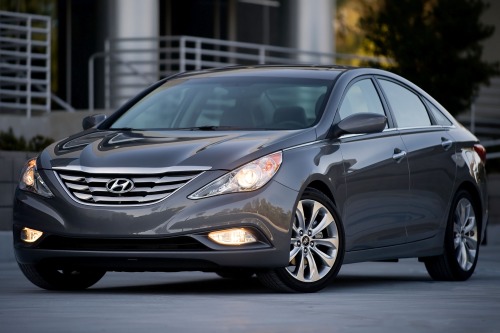
Is the Hyundai Sonata a reliable used car? Many are, and the Sonata can be an excellent value for buyers looking for a comfortable, roomy midsize sedan without paying Toyota Camry or Honda Accord prices.
Sonata reliability depends considerably on the model year and engine. Older models offer relatively straightforward four-cylinder and V6 powertrains, while newer generations deliver better fuel economy, modern technology, and more sophisticated engines.
The biggest qualification involves certain 2011–2019 four-cylinder engines associated with serious mechanical problems. These deserve extra investigation, but their history shouldn't overshadow the many other Sonata models that can provide dependable transportation.
Here's how to identify the best Hyundai Sonata years, understand the important engine and transmission differences, and find a used example worth buying.
In This Guide
- Hyundai Sonata reliability and overall ownership expectations
- The best model years and engines to buy
- Years and powertrains requiring closer inspection
- How many miles a Sonata can last
- Reliability differences between generations
- Maintenance costs and buying advice
Or, Looking For "New"?
If you're also considering a new Sonata, you may want to come back to this and take a look at a handy technique that locates the dealer in your area most ready to make concessions.
Hyundai Sonata Reliability Overview
The Hyundai Sonata has a generally favorable reputation for comfort, value, and everyday practicality. Many examples provide years of dependable service, and properly maintained cars can reach 150,000–200,000 miles or more.
However, reliability varies more between engines than it does with some competing midsize sedans.
The 2006–2010 Sonata is particularly appealing as an inexpensive older car. Its naturally aspirated 2.4-liter four-cylinder and 3.3-liter V6 engines are relatively straightforward, and the conventional automatic transmissions generally have good durability records.
The 2011–2019 models require more selective shopping. Certain 2.4-liter naturally aspirated and 2.0-liter turbocharged engines have experienced connecting-rod bearing damage, oil consumption, and engine failure. Many cars from these years have nevertheless provided substantial service, and some have received replacement engines.
The redesigned 2020–2023 Sonata introduced different engines and transmissions. These newer models offer an encouraging reliability outlook, particularly the naturally aspirated 2.5-liter four-cylinder paired with a conventional eight-speed automatic.
Overall Assessment: The Sonata can be a very good used-car purchase. Concentrate on the stronger powertrains, verify maintenance history, and give extra attention to the specific engine concerns associated with certain model years.
Reliability at a Glance
- Overall Reliability: Good, with meaningful differences between engines and generations.
- Best Older Years: 2009–2010, particularly with the 3.3-liter naturally aspirated V6.
- Best Newer Years: 2021–2023, particularly with the 2.5-liter naturally aspirated four-cylinder.
- Years Needing Extra Inspection: 2011–2019 models equipped with certain 2.4-liter naturally aspirated and 2.0-liter turbocharged engines.
- Transmission Preference: Conventional automatic transmissions for buyers prioritizing simplicity.
- Hybrid Models: Worth considering with documented maintenance and a healthy hybrid system.
- Expected Lifespan: Approximately 150,000–200,000 miles, with higher mileage possible.
- Ownership Costs: Generally reasonable for a midsize sedan, although major engine or transmission repairs can be expensive.
What Are the Best Hyundai Sonata Model Years to Buy?
The best Sonata years depend on your budget and whether you're shopping for an inexpensive older sedan or a newer vehicle with modern safety and convenience features.
| Model Years | Why They're Good Choices |
|---|---|
| 2009–2010 | Mature fifth-generation design with straightforward naturally aspirated engines and conventional transmissions. |
| 2021–2023 2.5L | Modern naturally aspirated four-cylinder engine, conventional eight-speed automatic, and good everyday performance. |
| 2021–2023 1.6T | Good fuel economy and low-speed torque, paired with a conventional eight-speed automatic. |
| 2021–2023 Hybrid | Excellent fuel economy and comfortable driving, provided the hybrid system checks out. |
For an inexpensive older Sonata, the 2009–2010 models are especially appealing. The available 3.3-liter V6 is a strong engine choice, although it uses more fuel than the four-cylinder.
For a newer used Sonata, we'd begin with the 2021–2023 models equipped with the naturally aspirated 2.5-liter engine. The turbocharged 1.6-liter and Hybrid versions also deserve consideration, depending on your priorities.
What Hyundai Sonata Model Years Should You Avoid or Inspect More Carefully?
There are several model-year groups where engine or transmission history deserves additional attention.
- 2011–2014: The 2.4-liter naturally aspirated and 2.0-liter turbocharged Theta II engines have documented bearing-related failure concerns. Investigate maintenance, oil consumption, engine replacement, and applicable recalls.
- 2015–2019 2.4L and 2.0T: Certain applications continued to experience engine-related problems. A newer model year doesn't automatically eliminate the need for careful inspection.
- 2015–2017 Sonata Eco: The turbocharged 1.6-liter engine is paired with a seven-speed dry dual-clutch transmission. Check for excessive shuddering, hesitation, and clutch engagement problems.
- 2002–2005: Age is now the primary concern. Timing-belt history, corrosion, cooling-system condition, and deferred maintenance matter more than original reliability ratings.
These recommendations aren't intended to condemn every Sonata from those years. A properly maintained vehicle with documented repairs or an engine replacement may still be worth considering.
The important distinction is between a car with a known, well-documented history and one whose mechanical condition is uncertain.
Pricing
Knowing which Sonata model years to concentrate on is step 1. Step 2 is knowing how to actually get an excellent used Sonata price.
Also, getting a strong trade-in allowance often has the biggest impact on your final price. See KBB versus Edmunds Appraisals - Which Is Better to learn about getting accurate and fair trade-in values before negotiating with a dealer.
How Many Miles Can a Hyundai Sonata Last?
A properly maintained Hyundai Sonata can realistically last 150,000–200,000 miles, and some examples exceed 250,000 miles. Engine choice, maintenance history, and overall condition are important factors.
- 100,000 miles: Not unusually high for a healthy Sonata. Review maintenance records and inspect for developing wear.
- 150,000 miles: Many Sonatas remain useful, although suspension, cooling-system, and other repairs may become necessary.
- 200,000 miles: Achievable with a healthy powertrain and consistent maintenance.
- 250,000 miles and beyond: Possible, but increasingly dependent on previous repairs and overall mechanical condition.
A well-maintained 2009 Sonata with 160,000 miles may be a better purchase than a lower-mileage car with poor maintenance or unresolved engine problems.
For the 2011–2019 four-cylinder models, engine condition and repair history are particularly important. Mileage alone cannot tell you whether a vehicle is a good investment.
Hyundai Sonata Reliability by Generation
Fourth-Generation Hyundai Sonata (2002–2005)
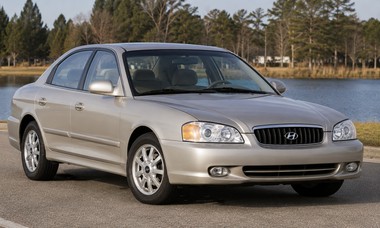
The 2002–2005 Sonata is a relatively simple midsize sedan by modern standards. U.S. buyers could choose a naturally aspirated 2.4-liter four-cylinder or a smoother 2.7-liter V6, with conventional manual or automatic transmissions depending on configuration.
Both engines can provide dependable service when maintained properly. Neither has the turbocharger or gasoline direct-injection complexity found in many later Sonatas.
However, these vehicles are now more than 20 years old. Their present condition is considerably more important than their original reliability reputation.
Potential Problems to Check on 2002–2005 Hyundai Sonatas
- Timing-belt maintenance: Both engine choices require documented timing-belt service.
- Cooling-system deterioration: Inspect the radiator, hoses, water pump, and signs of previous overheating.
- Oil leaks: Aging seals and gaskets may require replacement.
- Suspension and steering wear: Check struts, bushings, power-steering components, and wheel bearings.
- Age-related repairs: Air conditioning, electrical accessories, motor mounts, and corrosion deserve attention.
Buyer Tip: Look for an unusually well-maintained example with documented timing-belt and cooling-system service.
Bottom Line: These older Sonatas can still provide inexpensive transportation, but buy primarily on condition rather than model year.
Fifth-Generation Hyundai Sonata (2006–2010)
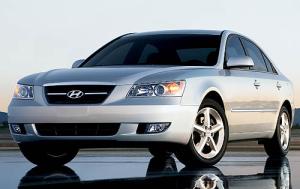
The 2006–2010 Sonata is one of our preferred older generations. It offers comfortable transportation, generous interior space, and relatively straightforward mechanical systems.
The naturally aspirated 2.4-liter four-cylinder provides good fuel economy and generally dependable performance. This earlier port-injected engine is mechanically different from the later direct-injected 2.4-liter engines associated with more serious reliability concerns.
The available naturally aspirated 3.3-liter V6 engine (Lambda) is particularly appealing. It delivers stronger acceleration and has a generally favorable durability record, although fuel economy is lower.
The 2009 refresh brought styling and interior improvements, making the 2009–2010 models particularly attractive within this generation.
Potential Problems to Check on 2006–2010 Hyundai Sonatas
- Oil leaks and consumption: Inspect older, higher-mileage engines for leakage and abnormal oil use.
- Cooling-system repairs: Radiators, hoses, thermostats, and water pumps may require attention.
- Suspension wear: Check struts, bushings, and wheel bearings.
- Engine mounts: Worn mounts can cause excessive vibration or clunking.
- Automatic transmission: Verify smooth shifting and investigate any delayed engagement or slipping.
Buyer Tip: A well-maintained 2009–2010 Sonata is worth considering for inexpensive transportation. The 3.3-liter V6 is especially appealing if fuel economy isn't your top priority.
Bottom Line: One of the stronger older Sonata generations, with straightforward engines and good potential longevity.
Sixth-Generation Hyundai Sonata (2011–2014)
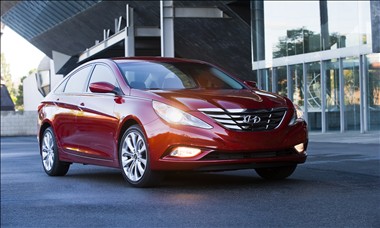
The redesigned 2011 Sonata brought dramatic styling, improved fuel economy, and a more modern driving experience. It was a major step forward in comfort and equipment.
Unfortunately, this generation also introduced the Sonata's most significant engine reliability concerns.
The mainstream naturally aspirated 2.4-liter four-cylinder and performance-oriented turbocharged 2.0-liter four-cylinder belong to the Theta II gasoline direct-injected engine family. Certain engines experienced connecting-rod bearing deterioration, abnormal knocking, oil consumption, and serious internal damage.
These problems led to extensive recalls, service campaigns, and warranty-related actions affecting qualifying vehicles. Coverage depends on the individual VIN and applicable program requirements.
Importantly, many 2011–2014 Sonatas have provided substantial service, and some have received replacement engines. The history of the individual car can therefore make a major difference.
Potential Problems to Check on 2011–2014 Hyundai Sonatas
- Engine bearing damage: Listen for abnormal knocking, particularly during a genuine cold start.
- Oil consumption: Check the oil level and ask whether oil must be added between changes.
- Engine replacement history: Verify whether the original engine remains installed and obtain documentation of previous repairs.
- Turbocharger condition: On 2.0-liter turbo models, check for unusual noises, smoke, and performance problems.
- Steering, suspension, and electrical issues: Inspect these systems as the vehicle ages.
Buyer Tip: Before buying, check the VIN for applicable recalls and service campaigns. A documented replacement engine and strong subsequent maintenance history can materially improve a vehicle's appeal.
Bottom Line: These Sonatas offer comfort and value, but engine history deserves careful investigation. We'd be selective rather than automatically dismissing every example.
Seventh-Generation Hyundai Sonata (2015–2019)
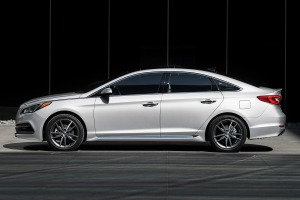
The 2015 redesign brought a more refined interior, improved ride quality, and a broader selection of engines and transmissions.
The mainstream naturally aspirated 2.4-liter four-cylinder and turbocharged 2.0-liter four-cylinder continued into this generation. Although Hyundai made ongoing improvements, certain applications still warrant careful investigation for engine-related concerns.
The 2015–2017 Sonata Eco used a turbocharged 1.6-liter four-cylinder paired with a seven-speed dry dual-clutch transmission. It offers good fuel economy but has different ownership considerations, particularly at low speeds.
The Sonata Hybrid and Plug-in Hybrid provide additional choices. Their gasoline-electric powertrains can deliver excellent fuel economy, although battery condition and hybrid-system operation become important as the vehicles age.
The 2018 refresh improved styling and equipment, but engine selection and maintenance history remain more important than the facelift itself.
Potential Problems to Check on 2015–2019 Hyundai Sonatas
- Engine condition: On certain 2.4-liter and 2.0-liter turbo models, investigate knocking, oil consumption, and previous engine repairs.
- Seven-speed dry dual-clutch transmission: On Eco models, check for excessive hesitation, shuddering, and slipping.
- Turbocharger operation: Inspect for abnormal noise, smoke, or reduced performance.
- Hybrid-system condition: Evaluate battery operation, warning messages, and electrical-system performance.
- Normal aging items: Inspect suspension, engine mounts, air conditioning, and electrical accessories.
Buyer Tip: Identify the exact powertrain before making a decision. The 2.4-liter, 2.0-liter turbo, Eco, Hybrid, and Plug-in Hybrid have meaningfully different maintenance considerations.
Bottom Line: This generation can provide excellent used-car value, but careful engine and transmission selection is essential.
Eighth-Generation Hyundai Sonata (2020–2023)
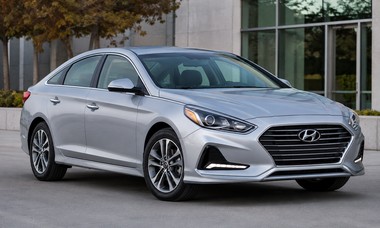
The completely redesigned 2020 Sonata introduced a fresh appearance, advanced safety features, and substantially different mainstream engines.
For reliability-focused buyers, the naturally aspirated 2.5-liter four-cylinder is particularly appealing. It avoids turbocharger complexity and uses a conventional eight-speed automatic transmission.
The turbocharged 1.6-liter four-cylinder also uses a conventional eight-speed automatic, providing good fuel economy and stronger low-speed torque.
The Sonata Hybrid combines a naturally aspirated 2.0-liter four-cylinder with electric assistance and a high-voltage battery. It offers excellent efficiency and is worth considering with a healthy hybrid system.
The performance-oriented Sonata N Line, introduced for 2021, uses a turbocharged 2.5-liter four-cylinder paired with an eight-speed wet dual-clutch transmission. This is a different design from the older Sonata Eco's seven-speed dry dual-clutch unit.
These newer powertrains shouldn't automatically inherit the reputation of the older Theta II engines. However, long-term high-mileage durability is still developing, so we'd describe their outlook as encouraging rather than fully proven.
Potential Problems to Check on 2020–2023 Hyundai Sonatas
- Engine and transmission operation: Verify smooth acceleration, shifting, and consistent performance.
- Electronic systems: Test infotainment, cameras, sensors, and driver-assistance features.
- Turbocharged models: Check oil-change history, turbocharger operation, and evidence of modifications.
- N Line transmission: Evaluate low-speed engagement, shifting, and any previous transmission-related repairs or campaigns.
- Hybrid models: Check hybrid-system warnings, battery condition, and transitions between gasoline and electric operation.
Buyer Tip: We'd begin with a 2021–2023 Sonata equipped with the naturally aspirated 2.5-liter engine for straightforward everyday transportation. The 1.6-liter turbo and Hybrid are also worthwhile alternatives.
Bottom Line: The 2020–2023 Sonata is an encouraging newer used-car choice, offering comfort, technology, and several appealing powertrains.
Which Hyundai Sonata Engine Is Most Reliable?
For an older Sonata, the naturally aspirated 3.3-liter V6 used in the 2006–2010 generation is one of our preferred choices. It offers strong performance, relatively straightforward construction, and a generally favorable durability record.
The naturally aspirated 2.4-liter four-cylinder from the same generation is also worth considering. Its earlier port-injected design should not be confused with the later direct-injected engines associated with more serious problems.
For a newer Sonata, we'd begin with the 2020–2023 naturally aspirated 2.5-liter four-cylinder. It combines good performance with a conventional automatic transmission and avoids turbocharger complexity.
The newer turbocharged 1.6-liter four-cylinder is another reasonable choice, particularly for buyers who appreciate stronger low-speed response.
Ultimately, the best engine is one with a favorable design, a documented maintenance history, and no evidence of developing mechanical problems.
How Reliable Is the Hyundai Sonata Hybrid?
The Sonata Hybrid can be a good used-car choice, particularly for buyers seeking excellent fuel economy and comfortable highway transportation.
Unlike some competing hybrids, the Sonata Hybrid uses a conventional-style automatic transmission adapted for gasoline-electric operation rather than a typical power-split continuously variable transmission.
The additional electric motor, high-voltage battery, and power electronics do introduce components that should be evaluated before purchase, but they don't automatically make the car unreliable.
How Long Does a Hyundai Sonata Hybrid Battery Last?
There is no fixed mileage at which a Sonata Hybrid battery requires replacement. Many hybrid batteries remain functional beyond 100,000 miles, and considerably greater mileage is possible.
Battery life depends on age, mileage, climate, and individual condition. On an older or high-mileage Sonata Hybrid, a technician familiar with Hyundai hybrid systems should evaluate battery operation and check for stored diagnostic faults.
For a Sonata Plug-in Hybrid, also verify that the charging system works correctly and that the vehicle provides reasonable electric-driving capability for its age.
Buyer Tip: A well-maintained Sonata Hybrid with 100,000 miles can still be worth buying. Have the gasoline engine, transmission, and hybrid system inspected rather than judging the car by mileage alone.
Hyundai Sonata Maintenance & Repair Costs
Routine Sonata maintenance is generally reasonable for a midsize sedan. Oil changes, brakes, spark plugs, and ordinary suspension repairs are typically manageable.
The largest potential expenses involve major engine, transmission, turbocharger, or hybrid-system repairs. These are not routine maintenance items, but they're important considerations when evaluating an inexpensive used vehicle.
| Maintenance or Repair | Approximate Cost |
|---|---|
| Oil and filter change | $50–$110 |
| Brake pads and rotors, one axle | $400–$850 |
| Spark plug replacement | $150–$400 |
| Timing-belt service on applicable older engines | $650–$1,200 |
| Wheel bearing replacement | $350–$750 |
| Motor mount replacement | $350–$1,000 |
| Significant suspension work | $750–$1,700 |
| Air-conditioning repair | $300–$1,600 |
| Turbocharger replacement | $1,500–$3,500+ |
| Major transmission repair | $3,000–$6,500+ |
| Engine replacement | $4,500–$9,000+ |
These are broad estimates rather than repair quotes. Actual costs vary by model year, engine, location, labor rates, and parts availability.
A well-maintained Sonata can be economical to own, especially when compared with many luxury sedans. The key is avoiding a vehicle with expensive unresolved mechanical problems.
What Should You Check Before Buying a Used Hyundai Sonata?
In addition to the normal used-car inspection items, pay particular attention to these potential Sonata-specific trouble spots.
- Engine identification: Determine the exact engine and transmission installed.
- Recall and campaign history: Check the VIN for applicable Hyundai recalls, service campaigns, and warranty-related programs.
- Engine condition: Check the oil level, listen during a cold start, and investigate abnormal knocking or oil consumption.
- Previous engine replacement: Obtain documentation showing when, why, and where the work was performed.
- Transmission operation: Test shifting cold and warm, including low-speed driving on dual-clutch models.
- Older models: Verify timing-belt service where applicable and inspect cooling-system condition.
- Hybrid models: Have the hybrid system and high-voltage battery evaluated.
- General condition: Inspect suspension, steering, air conditioning, electrical equipment, brakes, and tires.
A pre-purchase inspection by a qualified independent mechanic is a worthwhile investment, particularly for Sonatas from the engine-problem years.
Hyundai Sonata Alternatives to Consider
Toyota Camry: Generally has a stronger long-term reliability reputation and excellent resale value. Used examples often cost more than comparable Sonatas.
Honda Accord: Offers a particularly good combination of reliability, comfort, fuel economy, and enjoyable driving dynamics.
Kia Optima: Shares some platforms and powertrains with the Sonata, making careful engine selection equally important on certain model years.
Ford Fusion: Comfortable, attractive, and often competitively priced. Reliability varies by engine and transmission.
Final Verdict: Is a Used Hyundai Sonata a Good Car to Buy?
Yes. A carefully selected Hyundai Sonata can be an excellent used-car value. It offers a comfortable ride, roomy interior, good fuel economy, and often a lower purchase price than its best-known Japanese competitors.
For buyers seeking inexpensive older transportation, the 2009–2010 Sonata stands out, particularly with the naturally aspirated 3.3-liter V6. These cars have relatively straightforward mechanical systems and can provide substantial service when maintained properly.
We'd approach certain 2011–2019 four-cylinder models more selectively because of their engine histories. However, a well-maintained example with documented repairs or a replacement engine may still be worth considering.
For a newer used Sonata, the 2021–2023 models are especially appealing. We'd start with the naturally aspirated 2.5-liter engine, while also considering the 1.6-liter turbo and Hybrid versions according to your needs.
The Sonata's strongest advantage remains its value. Choose the right engine, verify the vehicle's history, and have it inspected carefully, and you may find a comfortable, well-equipped sedan that costs considerably less than a comparable Camry or Accord.
And still comparing Hyundai models? See our Hyundai reliability guide for the best used Hyundai models and years, years to avoid, potential problems to watch for, and more.
Your Trade-In
It's good to always know the value of your trade-in while you're evaluating your next possible purchase. Here's a good source for a quick and accurate appraisal: free trade-in appraisal.
What's Next?
Understand Questionable Dealer Fees
Beware of "dealer fees". Before agreeing to a dealer's numbers, see which dealer fees are legitimate, which can be negotiated, and which can be avoided.