

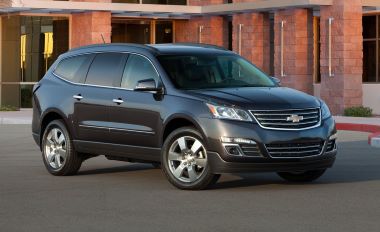
Which Chevy Traverse years are the most reliable? Which years should you avoid? And if you're shopping for a used Traverse, which engines and transmissions offer the best chance of dependable long-term ownership?
The Chevrolet Traverse has been one of GM's most important three-row family crossovers since it arrived for 2009. It offers substantially more interior room than many midsize SUVs and, on the used market, often costs less than comparable Toyota Highlanders and Honda Pilots.
But Traverse reliability varies considerably by generation and model year.
The earliest 2009-2017 models use GM's 3.6-liter V6 and six-speed automatic, a combination known for several expensive potential problems, including timing-chain wear, oil-related engine damage, transmission trouble, power-steering issues, and cooling-system repairs.
The redesigned 2018-2023 Traverse improved in several areas and moved to a nine-speed automatic, while certain early second-generation versions also used a turbocharged 2.0-liter four-cylinder.
Then Chevrolet redesigned the Traverse again for 2024, replacing the naturally aspirated V6 with a new turbocharged 2.5-liter four-cylinder and eight-speed automatic.
That means the question isn't simply whether the Chevy Traverse is reliable. A better question is: which Traverse year, engine, and transmission are you considering?
This guide covers Chevrolet Traverse model years from 2009 through 2024, including reliability by generation, engine and transmission differences, common problems, the best Traverse years to buy, years requiring extra inspection, high-mileage ownership, repair costs, and expected lifespan.
In This Guide You'll Learn
- How reliable the Chevy Traverse is overall
- Which Chevy Traverse years are the best to buy
- Which Traverse years require extra inspection
- Which Traverse generation is the most reliable
- How reliable the 3.6L V6 is
- What to know about Traverse timing-chain problems
- Which years are more vulnerable to oil-consumption-related engine damage
- How reliable the 2.0L turbo Traverse is
- What to know about the 2.5L turbo in the 2024 Traverse
- How reliable the six-speed automatic is
- What problems affect the Traverse nine-speed automatic
- What to know about the newer eight-speed automatic
- Whether a Traverse with 150,000 miles is worth buying
- Whether a Chevy Traverse can last 200,000 miles
- What commonly needs attention after 100,000 miles
- How much common Traverse repairs can cost
Also, More On Chevrolet Reliability
If you'd like to compare different Chevy models, or years, be sure to read our Chevrolet Reliability & Problems: Best Used Chevys & Years Guide. It highlights the models, best years to buy or those to avoid, common problems, and helps you identify the better choices.
Is the Chevy Traverse Reliable?
Overall, we'd rate Chevrolet Traverse reliability as mixed to average, with some years significantly better than others.
The Traverse can absolutely be a good used family SUV, particularly when purchased at the right price. Many examples have reached 150,000 miles, and 200,000 miles is possible with good maintenance.
But we'd shop more selectively than we would for some competing three-row crossovers.
The first-generation Traverse is the biggest reason.
Early versions can suffer from timing-chain wear, oil consumption, transmission problems, steering-system failures, water-pump issues, and other expensive repairs.
Some of those problems are closely tied to maintenance history.
The 3.6-liter V6, in particular, depends heavily on consistent oil changes and maintaining the correct oil level. Engines that were operated low on oil or subjected to extended oil-change intervals can develop timing-chain and internal wear much earlier than well-maintained examples.
The second-generation 2018-2023 Traverse is generally the more appealing place to start for many used buyers because it is newer, more refined, and benefits from a more mature version of GM's 3.6L V6.
Even then, we'd still inspect transmission behavior, electronics, cooling systems, and maintenance records carefully.
The 2024 Traverse is too new to judge conclusively for long-term durability. Its 2.5-liter turbocharged engine and eight-speed automatic represent a major departure from the earlier V6 formula, so we'd avoid making strong claims about 150,000- or 200,000-mile reliability until more real-world history accumulates.
Bottom Line: The Chevy Traverse can be a good used SUV, but reliability varies sharply by generation. We'd be most cautious with early first-generation models and generally prefer later-production examples with excellent maintenance history.
Chevy Traverse Reliability at a Glance
| Category | Our Assessment |
|---|---|
| Overall Reliability | Mixed to Average; improves significantly with careful year selection |
| Most Important Engine | 3.6L naturally aspirated V6 |
| Major First-Generation Concern | Timing-chain wear and oil-related engine damage |
| Other Major Concerns | Transmission problems, power steering, water pumps, electrical and A/C issues |
| Preferred General Direction | Later first-generation or second-generation models with strong maintenance records |
| Second-Generation Transmission | Nine-speed automatic; inspect for shift quality and hesitation |
| 2024 Powertrain | 2.5L turbo four-cylinder with eight-speed automatic |
| Typical Lifespan | 150,000-200,000 miles possible with good maintenance |
Buyer Tip: A Traverse with a strong maintenance history is far more desirable than one with a spotless-looking interior but little evidence of regular oil changes. On this model, service history can directly affect engine longevity.
Also, if you're serious about buying soon, I'd highly recommend reading my most effective negotiation method for used cars, which details a quick way to identify the dealerships most motivated to "deal", no matter how busy they may seem, and how to follow up once you've found them. This can be the difference between getting a good price and getting a great one. And a variation of it is my top method for new cars, if you are also exploring that market.
You can see them here at used cars and new cars.
Chevy Traverse Reliability by Generation
2009-2017 Chevy Traverse: First Generation
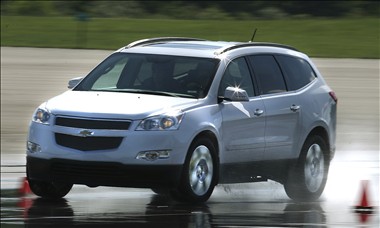
The first-generation Traverse is the most important period to understand if you're concerned about reliability.
These models use a 3.6-liter DOHC V6 paired with a six-speed automatic transmission.
The Traverse shares much of its underlying engineering with the Buick Enclave and GMC Acadia, so many of the same engine, transmission, steering, and cooling-system issues appear across all three models.
The earliest years deserve the most caution.
That doesn't mean every 2009-2012 Traverse is unreliable, but we'd inspect these vehicles very carefully before buying because several expensive problems became well known during this period.
2009-2012 Traverse 3.6L V6 Reliability
The 3.6-liter V6 provides strong power for a large crossover, but early versions developed a reputation for timing-chain problems.
The engine uses chains rather than a scheduled-replacement timing belt.
In theory, that sounds like a maintenance advantage.
In practice, chain life depends heavily on lubrication.
If oil-change intervals are too long, oil quality deteriorates, or the engine is repeatedly operated with insufficient oil, the timing chains and related components can wear prematurely.
Symptoms may include a check-engine light, rough running, poor performance, rattling, camshaft/crankshaft correlation codes, or difficulty starting.
Ignoring the problem can lead to much more expensive internal engine damage.
Why Traverse Timing Chains Fail
Timing-chain problems aren't usually the result of one single component failing for no reason.
Lubrication history is a major part of the story.
The 3.6L V6 uses multiple chains, guides, tensioners, and camshaft actuators. These components rely on clean oil and proper oil pressure.
Extended oil-change intervals can accelerate wear, and low oil levels can make the problem worse.
That's why a used Traverse with complete oil-change records is considerably more attractive than one with no maintenance history.
We'd also check the oil level before starting the vehicle. An engine being offered for sale with oil already below the full mark deserves additional questions.
2009-2012 Traverse Oil Consumption
Some 3.6L engines can consume oil between changes.
Oil consumption itself isn't always catastrophic if the owner checks the level frequently and keeps it full.
The danger comes when the engine consumes oil and the owner doesn't monitor it.
Repeatedly running low on oil can accelerate timing-chain wear and internal engine damage.
If the seller says the engine "uses a little oil," we'd want to know exactly how much and how frequently oil must be added.
2009-2012 Traverse Six-Speed Transmission Reliability
The six-speed automatic is another major area to inspect on early Traverses.
Some units can develop slipping, harsh shifting, delayed engagement, flare between gears, or internal transmission failure.
High-mileage examples should be driven long enough for the transmission to become fully warm.
A transmission that seems acceptable during the first five minutes of a test drive may behave differently after 20 or 30 minutes.
We'd also inspect transmission fluid condition and review any history of rebuilding or replacement.
A properly rebuilt transmission can actually be a positive on an otherwise excellent high-mileage Traverse.
2009-2012 Traverse Power-Steering Problems
Power-steering problems are another important first-generation concern.
Drivers may experience heavy steering, noise, fluid leakage, inconsistent assist, or difficulty turning at low speeds.
Repairs can involve pumps, hoses, racks, or related steering components.
Because the Traverse is a large and heavy vehicle, any steering problem deserves immediate attention rather than being dismissed as normal wear.
2009-2012 Traverse Water Pump and Cooling-System Problems
Cooling-system condition is especially important on older high-mileage Traverses.
Water-pump failures, coolant leaks, thermostats, hoses, radiators, and related components can require attention as the vehicle ages.
Any evidence of overheating should be taken seriously.
Repeated overheating can damage cylinder heads, gaskets, and other internal engine components.
Common 2009-2012 Chevy Traverse Problems
- Timing-chain wear and timing-related fault codes
- Oil consumption
- Low-oil-related engine damage
- Six-speed automatic transmission problems
- Power-steering pump and rack problems
- Water-pump failures and coolant leaks
- Engine overheating
- Ignition coil and misfire problems
- Motor mount deterioration
- Wheel bearing failures
- Suspension wear
- Air-conditioning problems
- Electrical accessory problems
- Power window and lock issues
Buyer Tip: If you're considering a 2009-2012 Traverse, we'd make maintenance records almost mandatory. A cheap example with no evidence of regular oil changes can become very expensive very quickly.
Bottom Line: The 2009-2012 Traverse can still provide useful transportation, but these are the years we'd approach most carefully. Timing-chain condition, oil history, transmission behavior, steering, and cooling-system condition should all be thoroughly inspected before purchase.
2013-2017 Chevy Traverse Reliability
The later years of the first generation are generally more appealing than the earliest models.
Chevrolet continued refining the Traverse, and by 2013 the platform had already been in production for several years.
These models still use the 3.6-liter V6 and six-speed automatic, so the basic reliability concerns don't disappear.
But when comparing otherwise similar vehicles, we'd generally give 2013-2017 some preference over 2009-2012.
2013-2017 Traverse 3.6L V6 Reliability
The 3.6-liter V6 can provide good service when oil changes have been frequent and the engine hasn't been allowed to run low on oil.
We'd still listen carefully for timing-related noise and scan for cam/crank correlation codes.
Oil level and oil-consumption history remain important.
A quiet engine with consistent oil pressure and detailed maintenance records is considerably more reassuring than one with no service documentation.
2013-2017 Traverse Transmission Reliability
The six-speed automatic remains a major component to evaluate.
Look for delayed engagement, slipping, hard shifts, flare between gears, shuddering, or inconsistent behavior after the transmission is warm.
Because many Traverses are used as family vehicles, towing history also matters.
A vehicle that spent years pulling heavy trailers or carrying maximum loads may have experienced more drivetrain stress than one used primarily for ordinary commuting.
2013-2017 Traverse Steering and Suspension
As these vehicles age, steering and suspension wear becomes increasingly important.
Wheel bearings, struts, bushings, control-arm components, tie rods, and steering-system components can all require attention.
Listen for humming, clunking, looseness, or uneven tire wear.
Common 2013-2017 Chevy Traverse Problems
- Timing-chain wear on poorly maintained engines
- Oil consumption
- Transmission shift-quality problems
- Steering-system repairs
- Water-pump and cooling-system failures
- Motor mount wear
- Wheel bearing failures
- Strut and suspension wear
- Air-conditioning problems
- Electrical and infotainment issues
- Door lock and window problems
- Rear climate-control problems
Buyer Tip: If you're shopping the first-generation Traverse, we'd generally start with 2013-2017 rather than 2009-2012. But maintenance history is still more important than model year alone.
Bottom Line: Later first-generation Traverses are generally the better used-car candidates, especially when the 3.6L V6 has excellent oil-change history and the six-speed automatic operates smoothly.
2018-2023 Chevy Traverse: Second Generation
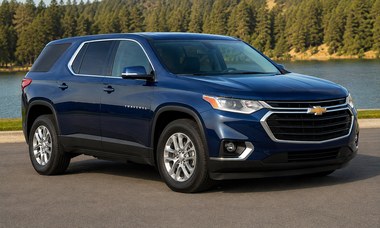
The redesigned 2018 Traverse was a major change.
It became lighter, roomier, more efficient, and substantially more modern inside.
The 3.6-liter V6 remained the primary engine, but the transmission changed to a nine-speed automatic.
Certain early second-generation versions also offered a turbocharged 2.0-liter four-cylinder.
Overall, we'd generally consider the second generation a better starting point for buyers who want a newer Traverse and are trying to reduce the risk associated with the earliest first-generation models.
That said, first-year redesigns always deserve some additional scrutiny.
2018 Traverse Reliability
The 2018 model was the first year of the redesign.
It introduced a new body, updated electronics, revised chassis, new transmission, and different interior systems simultaneously.
We wouldn't automatically avoid a 2018 Traverse, but we'd inspect it more carefully than a later-production example.
Electrical problems, infotainment issues, shift behavior, cooling-system condition, and warning messages all deserve attention.
2018-2023 Traverse 3.6L V6 Reliability
The 3.6-liter V6 remained the mainstream engine and is generally a better-known quantity by this point in its development.
It provides strong acceleration and is well suited to the Traverse's size.
Oil-change history remains important, but the later engine doesn't carry quite the same reputation for timing-chain trouble as the earliest first-generation versions.
We'd still check oil level, listen for abnormal startup noise, look for misfires, and scan for stored codes.
Cooling-system maintenance and water-pump condition remain relevant as mileage increases.
2018-2019 Traverse 2.0 Turbo Reliability
Certain early second-generation Traverse models were available with a turbocharged 2.0-liter four-cylinder.
This engine provides adequate performance and can offer good fuel economy, but it is mechanically more complex than the naturally aspirated 3.6L V6.
Turbocharging adds heat and additional components, so consistent oil maintenance is especially important.
Check for smoke, unusual turbocharger noise, oil leakage, hesitation, reduced power, and any evidence of aftermarket tuning.
If simplicity is the priority, we'd generally lean toward a well-maintained 3.6L V6 rather than choosing the turbo four-cylinder solely for fuel economy.
2018-2023 Traverse Nine-Speed Automatic Reliability
The nine-speed automatic is one of the most important reliability differences between first- and second-generation Traverses.
A healthy nine-speed should shift smoothly and respond consistently.
Potential warning signs include harsh engagement, hesitation, flare between gears, repeated hunting between ratios, delayed acceleration, shuddering, or warning messages.
Don't assume unusual behavior is normal simply because the transmission has nine gears.
Transmission software can affect shift behavior, but persistent mechanical symptoms still deserve diagnosis.
2019-2020 Traverse Reliability
The 2019 and 2020 models benefit from some additional production maturity compared with the first-year 2018.
When mileage and condition are comparable, we'd generally give them some preference over the first-year redesign.
That doesn't make every 2019 or 2020 trouble-free.
Transmission behavior, electrical systems, A/C performance, and engine maintenance should still be evaluated carefully.
2021-2023 Traverse Reliability
The later years of the second generation are among the most interesting used Traverse candidates.
They are newer, benefit from several years of production refinement, and retain the familiar 3.6L V6.
Age-related deterioration is also less significant than on first-generation vehicles.
For buyers trying to balance purchase price, modern features, and reliability, we'd give these later second-generation models serious consideration.
We'd still want evidence of regular oil changes, smooth nine-speed transmission operation, healthy cooling-system performance, and no unresolved electrical warning messages.
Common 2018-2023 Chevy Traverse Problems and Concerns
- Nine-speed automatic shift-quality problems
- Transmission hesitation or harsh engagement
- Engine oil leaks
- Water-pump and cooling-system repairs
- Ignition and misfire problems
- Electrical and infotainment issues
- Battery and charging-system problems
- Start-stop system concerns
- Air-conditioning problems
- Sensor and driver-assistance faults
- Wheel bearing and suspension wear
- Turbocharger-related concerns on 2.0T models
Buyer Tip: If you're shopping a second-generation Traverse, we'd generally favor a later 2021-2023 example over the first-year 2018 when price, mileage, and maintenance are comparable.
Bottom Line: The 2018-2023 Traverse is generally the stronger used-car generation. The 3.6L V6 is familiar and capable, while the nine-speed automatic deserves careful testing. Later-production 2021-2023 examples are especially worth investigating.
2024 Chevy Traverse: Third Generation
The 2024 Traverse begins an entirely new generation and represents one of the biggest powertrain changes in the model's history.
The naturally aspirated 3.6-liter V6 is gone.
In its place is a turbocharged 2.5-liter four-cylinder paired with an eight-speed automatic transmission.
The new powertrain produces strong torque and gives the Traverse more modern performance and efficiency characteristics.
But from a reliability standpoint, 2024 is too new to judge with the same confidence as older generations.
2024 Traverse 2.5 Turbo Reliability
The 2.5-liter turbo is a major departure from the long-running V6 formula.
Turbocharging allows strong output from a smaller engine, but it also adds heat, boost-control components, additional oil-system demands, and more complex engine-management hardware.
That doesn't mean the engine is unreliable.
It simply means there isn't yet enough high-mileage evidence to know how the typical engine will behave at 150,000 or 200,000 miles.
Consistent oil changes will be especially important.
Buyers should also monitor for unusual turbocharger noise, oil leakage, hesitation, misfires, warning lights, or reduced power.
2024 Traverse Eight-Speed Automatic Reliability
The new eight-speed automatic should be evaluated on its own rather than lumped together with the earlier six-speed or nine-speed transmissions.
During a test drive, look for smooth engagement, consistent shifts, no flare between gears, no harsh downshifts, and no transmission warning messages.
Because 2024 is the first year of both a new generation and a new powertrain combination, we'd be especially interested in software updates, technical service bulletins, and documented warranty repairs.
Should You Buy a 2024 Traverse?
We wouldn't automatically avoid the 2024 Traverse.
It's roomier, more modern, and offers a substantially different driving experience from the previous generation.
But if your top priority is proven long-term reliability rather than having the newest design, we'd generally prefer a well-maintained late second-generation Traverse with an established track record.
The 2024 model simply hasn't been on the road long enough for anyone to make confident claims about 200,000-mile durability.
Common 2024 Chevy Traverse Reliability Considerations
- First-year redesign uncertainty
- New 2.5L turbo engine with limited long-term history
- New eight-speed automatic combination
- Turbocharger and boost-control complexity
- Direct-injection fuel-system complexity
- Electronic and infotainment systems
- Driver-assistance sensors and modules
- Software updates and early-production refinements
Buyer Tip: If you're considering a 2024 Traverse, we'd view warranty coverage and documented dealer service as particularly valuable. Early ownership history matters more when the vehicle uses a new engine, transmission, and electrical architecture.
Bottom Line: The 2024 Traverse may ultimately prove durable, but it's too early to know. Buyers who prioritize established long-term reliability may be more comfortable with a well-maintained 2021-2023 Traverse while the new 2.5T/8-speed powertrain builds a longer track record.
Best Chevy Traverse Years to Buy
The best Chevy Traverse years depend on your budget and how much mechanical risk you're willing to accept.
For buyers shopping the first generation, we'd generally start with the later 2013-2017 models rather than the earliest 2009-2012 examples.
For buyers who can spend more, the second-generation 2021-2023 Traverse is usually our preferred direction because those years benefit from several years of production maturity while retaining the familiar 3.6-liter V6.
| Model Years | Why We Like Them |
|---|---|
| 2013-2017 | Later first-generation years with better production maturity than 2009-2012; still require careful timing-chain, oil and transmission inspection |
| 2019-2020 | Second-generation models beyond the first-year 2018 redesign; generally a more appealing starting point than early first-generation vehicles |
| 2021-2023 | Among our preferred Traverse years for balancing age, refinement, established 3.6L V6 experience and later-generation production maturity |
Buyer Tip: A "best year" Traverse can still be a bad purchase if the previous owner neglected oil changes or the transmission is already showing symptoms. Use model year to narrow the field, then let maintenance history and a professional inspection decide between individual vehicles.
Bottom Line: We'd generally start with 2013-2017 if shopping on a tighter budget and look hardest at 2021-2023 if you want a newer Traverse with a more established reliability record.
Chevy Traverse Years to Avoid or Inspect Carefully
We wouldn't reject every Traverse from a particular year, but some periods deserve considerably more caution than others.
| Model Years | Why Extra Inspection Is Important |
|---|---|
| 2009-2012 | Highest concern for timing-chain wear, oil-related engine damage, six-speed transmission problems, power steering and cooling-system issues |
| 2013-2017 | Generally preferable to earlier years but still require attention to oil history, timing components and six-speed transmission condition |
| 2018 | First year of the second-generation redesign; inspect transmission, electronics, cooling system and infotainment carefully |
| 2019-2020 | Usually more appealing than 2018, but nine-speed transmission behavior and electrical systems still deserve inspection |
| 2024 | First year of a complete redesign with a new 2.5L turbo engine and eight-speed automatic; long-term reliability is not yet established |
Bottom Line: The 2009-2012 period is where we'd exercise the most caution. We'd also inspect any first-year redesign, particularly 2018 and 2024, more carefully than a comparable later-production model.
Which Chevy Traverse Generation Is Most Reliable?
Based on the evidence available so far, we'd generally give the advantage to the 2018-2023 second-generation Traverse, particularly the later 2021-2023 models.
The first-generation 2009-2017 Traverse can last a long time, but the earliest years are burdened by a more troublesome history involving timing chains, oil consumption, transmission failures, steering problems and cooling-system repairs.
The second generation doesn't eliminate every potential problem, but it represents a more mature overall package.
The 3.6L V6 had already been in production for years, the vehicle itself was substantially redesigned, and later 2021-2023 examples benefit from several years of production refinement.
The 2024 third generation is too new to rank fairly against either older generation because there simply isn't enough long-term data yet.
Buyer Takeaway: If we were shopping for the best balance of reliability, modern safety features, interior space and remaining service life, we'd start with 2021-2023. If budget matters more, a well-maintained 2013-2017 can still make sense.
Which Chevy Traverse Engine Is Most Reliable?
The Traverse hasn't used as many engines as some Chevrolet models, which makes the comparison relatively straightforward.
The naturally aspirated 3.6-liter V6 dominates most of the model's history.
3.6L V6 Reliability
The 3.6L V6 can be a durable engine, but its reputation depends heavily on which version and model year you're considering.
Early first-generation engines developed a reputation for timing-chain wear, particularly when oil-change intervals were extended or the engine was allowed to run low on oil.
Later versions are generally more reassuring, particularly when maintenance has been consistent.
Because the engine uses multiple timing chains, guides, tensioners and camshaft-control components, oil quality and oil level are especially important.
We'd much rather buy a 130,000-mile 3.6L Traverse with detailed oil-change records than a 90,000-mile example whose service history is unknown.
When healthy, the 3.6L offers strong performance, smooth operation and enough power for a fully loaded three-row crossover.
2.0L Turbo Reliability
The turbocharged 2.0-liter four-cylinder appeared in a limited number of early second-generation Traverses.
It can provide decent performance and fuel economy, but it adds turbocharger complexity without offering enough advantage for us to prefer it over the naturally aspirated V6 for a reliability-focused used-car shopper.
Consistent oil changes are critical.
Check for oil leakage, smoke, turbocharger noise, hesitation, misfires, reduced power and any evidence of aftermarket tuning.
2.5L Turbo Reliability
The 2.5-liter turbo introduced for 2024 is too new to evaluate confidently for long-term durability.
It produces strong torque and allows Chevrolet to replace the older V6 with a smaller, more efficient engine.
But turbocharging, direct injection and newer engine-management systems add complexity, and there is not yet enough high-mileage evidence to know how the engine will perform at 150,000 or 200,000 miles.
Bottom Line: For a used Traverse, we'd generally prefer a well-maintained later-version 3.6L V6 over the less common 2.0T. The 2.5T may ultimately prove very good, but it's simply too new for a strong long-term reliability verdict.
Chevy Traverse Timing-Chain Problems
Timing-chain problems are one of the most important subjects for first-generation Traverse shoppers.
Which Traverse Years Have Timing-Chain Problems?
The concern is greatest on early first-generation models, particularly 2009-2012.
Later 3.6L engines can still develop timing-related problems, but the earliest years are where we'd be most cautious.
Symptoms can include:
- Check-engine light
- Camshaft/crankshaft correlation codes
- Rattling during startup
- Rough idle
- Poor acceleration
- Hard starting
- Misfires
- Reduced fuel economy
Timing-chain problems can become expensive because the engine uses multiple chains and the repair requires substantial labor.
Can Regular Oil Changes Prevent Traverse Timing-Chain Problems?
Regular oil changes substantially reduce risk, although they can't guarantee that a timing component will never fail.
Clean oil helps lubricate the chains, tensioners, guides and camshaft-control components.
Equally important, owners need to maintain the correct oil level between changes.
If an engine consumes oil and repeatedly runs low, even frequent scheduled oil changes won't fully protect it.
Buyer Tip: If a first-generation Traverse has no maintenance records, we'd assume greater risk rather than assuming the oil was changed properly.
Chevy Traverse Transmission Reliability
The Traverse used three major automatic-transmission configurations during the years covered here: a six-speed automatic, a nine-speed automatic and the newer eight-speed automatic.
2009-2017 Six-Speed Automatic
The six-speed automatic used in the first generation deserves careful inspection, particularly at higher mileage.
Potential symptoms include:
- Slipping
- Delayed engagement
- Harsh shifts
- Flare between gears
- Shuddering
- Failure to shift properly
- Transmission warning messages
Drive the vehicle long enough for the transmission to reach full operating temperature.
A five-minute test drive is not enough.
2018-2023 Nine-Speed Automatic
The nine-speed automatic is generally more sophisticated and offers closer ratios than the earlier six-speed.
A healthy unit should operate smoothly, but some drivers report hesitation, harsh engagement, awkward shift behavior or gear hunting.
Software updates can influence shift quality, but persistent slipping, shuddering or delayed engagement should still be diagnosed mechanically.
We'd review transmission service history and ask whether any software updates or repairs have already been performed.
2024 Eight-Speed Automatic
The eight-speed automatic introduced with the third-generation Traverse is too new for a meaningful long-term durability record.
Because it arrives alongside a new turbocharged engine and an entirely redesigned vehicle, we'd place particular value on warranty history, software updates and documented dealer service.
Buyer Takeaway: No Traverse transmission should be judged solely by its number of gears. The actual condition of the transmission you're buying matters much more.
How Long Does a Chevy Traverse Last?
A well-maintained Chevy Traverse can realistically last 150,000-200,000 miles.
Some examples exceed 200,000 miles, particularly when the engine has received frequent oil changes and major problems have been addressed promptly.
We wouldn't assume every Traverse will reach 200,000 miles economically, however.
An engine requiring timing-chain work, a failing transmission, or several major repairs at once can make an older vehicle uneconomical even if the basic platform could theoretically continue much farther.
Is 100,000 Miles High for a Chevy Traverse?
No. A well-maintained Traverse with 100,000 miles can still have substantial useful life remaining.
At this mileage we'd review oil-change history, transmission service, cooling-system condition, spark plugs, suspension, motor mounts, wheel bearings, brakes and air conditioning.
On an early first-generation model, we'd add timing-chain history to the top of the list.
Should You Buy a Traverse With 150,000 Miles?
A Traverse with 150,000 miles can be worth buying, but the exact year and maintenance history become increasingly important.
A later 3.6L model with excellent service records and a smooth transmission may still provide years of useful service.
An early 2009-2012 model with unknown oil history and questionable transmission behavior would be a much riskier purchase at the same mileage.
Can a Chevy Traverse Last 200,000 Miles?
Yes. A Chevy Traverse can reach 200,000 miles.
We'd consider that a realistic outcome for a well-maintained example rather than something every Traverse should automatically achieve.
- 100,000 miles: Normal territory for a properly maintained Traverse
- 150,000 miles: Still viable when engine and transmission condition are strong
- 200,000 miles: Achievable with consistent maintenance and timely repairs
- 250,000+ miles: Possible, but increasingly dependent on extensive maintenance and major component replacement
Bottom Line: We wouldn't reject a Traverse solely because it has crossed 100,000 or 150,000 miles. At higher mileage, service history tells you far more than the odometer alone.
Common Chevy Traverse Problems
The specific problems vary by generation, but several issues deserve attention across the Traverse lineup.
1. Timing-Chain Wear
This is one of the biggest concerns on early first-generation 3.6L engines.
Startup rattle, timing-related fault codes, rough operation or poor performance deserve immediate investigation.
2. Oil Consumption
Some 3.6L engines can use oil between changes.
The bigger danger is allowing the engine to run low, which can accelerate timing-system and internal engine wear.
3. Six-Speed Transmission Problems
Early Traverses can experience slipping, hard shifts, delayed engagement or internal transmission failures.
High-mileage examples should be road-tested thoroughly.
4. Nine-Speed Transmission Shift Problems
Second-generation models can exhibit hesitation, harsh engagement or unusual shift behavior.
Software can play a role, but persistent symptoms deserve diagnosis.
5. Power-Steering Problems
First-generation Traverses can develop power-steering pump, hose, rack or related problems.
Heavy steering at parking-lot speeds isn't something we'd ignore.
6. Water-Pump and Cooling-System Problems
Water pumps, thermostats, hoses, radiators and other cooling components can fail as mileage increases.
Any history of repeated overheating deserves particular caution.
7. Air-Conditioning Problems
The Traverse has a large cabin and often includes rear climate controls.
Compressors, condensers, refrigerant leaks, blend-door actuators and rear A/C components can all become expensive with age.
8. Wheel Bearings and Suspension Wear
Wheel bearings, struts, bushings, control-arm components and steering parts can wear on high-mileage vehicles.
Listen for humming, clunking and looseness and inspect the tires for uneven wear.
9. Motor Mounts
Worn engine mounts can cause excessive vibration at idle and clunking during acceleration or gear engagement.
10. Electrical and Infotainment Problems
Later Traverses rely increasingly on electronic modules, touchscreens, cameras, sensors and driver-assistance systems.
Test every feature before buying rather than assuming a warning message or failed screen will be inexpensive to repair.
Chevy Traverse Maintenance & Repair Costs
Routine Traverse maintenance is generally reasonable for a three-row crossover, but timing-chain, transmission and major engine repairs can become expensive.
| Maintenance or Repair | Typical Cost |
|---|---|
| Oil change | $60-$120 |
| Brake pads and rotors | $500-$1,000+ |
| Spark plug replacement | $250-$500+ |
| Wheel bearing replacement | $400-$800+ each |
| Water pump replacement | $700-$1,500+ |
| Motor mount repair | $450-$1,200+ |
| Major suspension work | $900-$2,000+ |
| Timing-chain repair | $2,000-$4,000+ depending on damage and labor |
| Turbocharger replacement | $1,500-$3,500+ on applicable engines |
| Automatic transmission replacement | $4,000-$7,000+ depending on year and replacement source |
| Major engine repair or replacement | $5,000-$9,000+ depending on engine and parts source |
These are broad budgeting ranges rather than repair quotes. Actual costs vary by model year, labor rates, parts source, geographic location and whether the work is performed by a Chevrolet dealer or independent shop.
Buyer Tip: A Traverse that appears inexpensive can become very costly if it needs timing-chain work and transmission repair at the same time. A pre-purchase inspection is especially valuable on older high-mileage examples.
What Usually Needs Attention After 100,000 Miles?
A Traverse crossing 100,000 miles is not automatically nearing the end of its useful life, but maintenance history becomes increasingly important.
- Review oil-change history
- Check oil level and oil-consumption history
- Listen for timing-chain or abnormal engine noise
- Scan for timing and misfire codes
- Review transmission service history
- Evaluate transmission operation fully warmed
- Inspect coolant and cooling-system components
- Check water-pump condition
- Review spark-plug replacement history
- Inspect ignition components
- Inspect engine and transmission mounts
- Check wheel bearings
- Inspect struts, bushings and steering components
- Inspect brakes and tires
- Test front and rear climate control
- Test all electrical accessories
- On turbocharged models, inspect for oil leakage and turbocharger problems
What to Look for Before Buying a Used Chevy Traverse
A professional pre-purchase inspection can save a Traverse buyer thousands of dollars because several known problems are expensive once they become severe.
Used Chevy Traverse Pre-Purchase Checklist
- Identify the exact model year and engine
- Check the VIN for outstanding recalls
- Review oil-change and maintenance records
- Check engine oil level before starting
- Ask whether the engine consumes oil
- Start the engine cold whenever possible
- Listen for timing-chain rattle or abnormal ticking
- Scan for stored and pending fault codes
- Look for camshaft/crankshaft correlation codes
- Check for misfire history
- Inspect for oil and coolant leaks
- Check for evidence of previous overheating
- Test the transmission cold and fully warmed
- Check for slipping, shuddering, harsh shifts and delayed engagement
- Test power steering carefully on first-generation models
- Inspect wheel bearings and suspension components
- Check tires for uneven wear
- Test brakes
- Test front and rear air conditioning
- Test windows, locks, seats, cameras, infotainment and other electronics
- On turbocharged models, inspect for smoke, oil leakage and abnormal turbo noise
- Have an independent mechanic perform a complete pre-purchase inspection
Buyer Tip: On a 2009-2012 Traverse, specifically ask the mechanic to evaluate timing-chain condition and oil history. On a 2018-2023 model, specifically ask for a careful nine-speed transmission road test.
Pros & Cons of Buying a Used Chevy Traverse
Pros
- Excellent passenger space
- Usable third-row seating
- Large cargo area
- Comfortable highway ride
- Strong 3.6L V6 performance
- Often costs less than comparable Highlander or Pilot models
- Large used-car supply
- Later second-generation models are attractive family SUVs
- Routine maintenance is generally affordable
- 150,000-200,000 miles is possible with good maintenance
Cons
- Early first-generation timing-chain problems can be expensive
- Some 3.6L engines can consume oil
- Six-speed transmission failures can make older models uneconomical
- Power-steering problems affect some first-generation vehicles
- Water-pump and cooling-system repairs can be expensive
- Nine-speed transmission behavior should be checked carefully
- Air-conditioning repairs can be costly
- Large tires, brakes and suspension components cost more than compact-SUV parts
- The 2024 turbo powertrain doesn't yet have a long-term reliability record
And another con ... even a good price on the vehicle doesn't necessarily mean you're getting a good deal.
There are other numbers besides price that can significantly affect the final out-the-door cost. A well-negotiated selling price can quickly lose its advantage if the dealer makes up for the concession with a below-market trade-in offer. Also, dealer fees and add-ons can further increase the final cost, making it important to learn which fees you must pay, can negotiate, or should avoid.
To become better informed about these important but often-confusing parts of the deal, be sure to see my articles on trade-ins and dealer fees.
Final Buyer Summary
The Chevrolet Traverse can be a useful and comfortable three-row SUV, but reliability varies enough by year that we'd shop it selectively.
The 2009-2012 Traverse is the period we'd approach most cautiously. Timing-chain wear, oil consumption, transmission problems, power-steering failures and cooling-system repairs can make a neglected example very expensive.
We wouldn't automatically reject one with excellent records, but the purchase price should reflect the additional risk.
The 2013-2017 Traverse is generally the more appealing first-generation choice.
These later-production years still use the 3.6L V6 and six-speed automatic, so timing-chain and transmission condition remain important. But we'd generally start here rather than with the earliest 2009-2012 models if shopping for an inexpensive Traverse.
The 2018-2023 second generation is our preferred overall generation for most used buyers.
The redesigned Traverse is more refined, more modern and benefits from a later version of the 3.6L V6. The nine-speed automatic should still be tested carefully, and we'd give some preference to models beyond the first-year 2018 redesign.
Among these, 2021-2023 are particularly appealing because they combine later production maturity with relatively young age.
The 2024 Traverse starts a completely new chapter.
The old 3.6L V6 is replaced by a turbocharged 2.5L four-cylinder, and the nine-speed gives way to an eight-speed automatic.
That powertrain may prove durable, but there simply isn't enough long-term evidence yet to rank it alongside engines that have been on the road for many years.
If you're specifically looking for the most reliable Traverse generation, we'd start with the 2018-2023 generation and lean toward 2021-2023.
If you're looking for an inexpensive older Traverse, we'd generally favor a well-maintained 2013-2017 over a 2009-2012.
And if you're considering a high-mileage example, don't let the odometer make the decision by itself.
A 150,000-mile Traverse with excellent oil-change records, a quiet 3.6L engine, healthy cooling system and smooth transmission can be a better purchase than a lower-mileage example with no maintenance history.
Our overall recommendation: For the lowest-cost first-generation option, we'd investigate 2013-2017 carefully. For the best overall balance of reliability, modern features and remaining service life, we'd look hardest at 2021-2023. We'd be considerably more selective with 2009-2012, and we'd treat 2024 as promising but still unproven for long-term durability.
A properly maintained Chevy Traverse can realistically provide 150,000-200,000 miles of service. The key is recognizing that the engine, transmission and maintenance history matter far more than the Traverse name alone.