

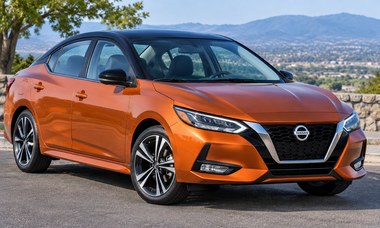
The Nissan Sentra can be a reliable and inexpensive used compact car, but reliability varies considerably by generation, engine and especially transmission. Some older Sentras are mechanically simple cars capable of very high mileage, while certain later models developed a much less favorable reputation because of Nissan's continuously variable transmission (CVT).
The biggest dividing line for used Sentra shoppers is the introduction of widespread CVT use. The engines in many Sentras are reasonably durable, but on certain years—particularly during the 2013-2019 generation—the transmission can become the component that determines whether an otherwise affordable used car is a good buy or an expensive mistake.
This guide covers 2000 through 2024 U.S.-market Nissan Sentras, including the older 1.8L and 2.0L engines, performance-oriented SE-R models, later 1.8L and 2.0L four-cylinders, manual transmissions, conventional automatics and Nissan's Xtronic CVT.
In This Guide You'll Learn
- Which Nissan Sentra years are generally the most reliable
- Which Sentra years deserve extra caution
- How reliability changed from one generation to another
- Which Sentra engines have the strongest durability record
- Why CVT condition is so important on many later Sentras
- How long a Nissan Sentra can realistically last
- Whether 100,000, 150,000 or 200,000 miles is too much for a used Sentra
- The most common engine, transmission, suspension and electrical problems
- What repairs and maintenance can cost as mileage increases
Nissan Sentra Reliability Overview
The Sentra has been sold in the United States for decades, but the cars carrying the Sentra name have changed substantially. A 2002 Sentra and a 2022 Sentra have very little mechanically in common beyond being front-wheel-drive compact sedans.
That matters when discussing reliability. It's misleading to give every Sentra one blanket reliability rating.
Older 2000-2006 Sentras are relatively simple cars. They use conventional manual or automatic transmissions and don't carry the CVT concerns associated with many later Nissans. Age, rust and neglected maintenance are now their biggest disadvantages.
The 2007-2012 generation introduced a CVT on many Sentras, although conventional transmission choices remained available depending on engine and trim. These cars can accumulate substantial mileage, but transmission condition becomes increasingly important.
The 2013-2019 Sentra is the generation that requires the most careful shopping. Its 1.8L engine itself is generally not the primary concern. Instead, CVT hesitation, juddering, slipping, overheating and premature failure account for much of this generation's poor reliability reputation.
The redesigned 2020-2024 Sentra uses a 2.0L four-cylinder and is a considerably more modern car. It still uses a CVT on most versions, so transmission maintenance and behavior remain worth checking, but these newer cars shouldn't automatically be assumed to have exactly the same reliability profile as the troubled earlier generation.
Bottom Line: A Sentra can make an economical high-mileage commuter, but engine durability is only half the story on CVT-equipped cars. The specific year, transmission condition and maintenance history matter more than the Sentra badge itself.
Nissan Sentra Reliability at a Glance
| Category | What Used-Car Buyers Should Know |
|---|---|
| Overall Reliability | Varies significantly by generation; many engines are durable, while CVT reliability is the major concern on certain later models |
| Best Older Sentras | Later 2000-2006 examples can be appealing for their simpler conventional transmissions |
| Years Requiring Extra Inspection | 2007 first-year redesign and especially many 2013-2019 CVT-equipped cars |
| Most Important Problem | CVT deterioration or failure on affected models |
| Engine Reliability | Generally better than the transmission reputation suggests; maintenance and individual engine family still matter |
| Transmission Choice | A good manual or conventional automatic avoids the principal CVT concern on older applicable models |
| Expected Lifespan | About 150,000-200,000 miles is realistic for a well-maintained Sentra; some exceed 200,000 miles |
| High-Mileage Priority | Transmission history, oil consumption, cooling system, suspension condition and rust |
How Many Miles Can a Nissan Sentra Last?
A well-maintained Nissan Sentra can realistically last 150,000 to 200,000 miles, and some examples exceed 200,000 miles. The important qualification is that on many CVT-equipped Sentras, the engine may be capable of lasting longer than the transmission.
Older Sentras with a healthy conventional automatic or manual transmission can be particularly attractive for high-mileage ownership because they avoid the CVT entirely. Their challenge today is simply age: seals, hoses, mounts, suspension components, cooling-system parts and electrical equipment can deteriorate even when the engine remains healthy.
Later Sentras can also reach high mileage, but a CVT-equipped car deserves more scrutiny. A 150,000-mile Sentra with documented maintenance and a smooth transmission can be a better purchase than a 90,000-mile car that shudders, hesitates or has no transmission-service history.
Is 100,000 Miles a Lot for a Nissan Sentra?
100,000 miles is not unusually high for a properly maintained Sentra. At this mileage, the condition and maintenance history are much more important than the odometer reading alone.
On a CVT-equipped Sentra, I'd want to know how the transmission has been maintained and how it behaves after a thorough test drive. On an older Sentra, I'd also look closely at oil leaks, cooling-system condition, engine mounts, suspension wear and rust.
Can a Nissan Sentra Last 150,000 Miles?
Yes. 150,000 miles is a realistic lifespan for a Sentra that has received reasonable maintenance. Many engines are capable of considerably more.
The risk on certain later models is reaching 150,000 miles without an expensive CVT repair. That's why transmission history becomes increasingly important when comparing high-mileage Sentras.
Can a Nissan Sentra Last 200,000 Miles?
A Nissan Sentra can reach 200,000 miles, and there are well-maintained examples that travel farther. Older mechanically simple cars and later cars that have received consistent maintenance have the best chance.
At this mileage, however, expect normal age-related repairs. Suspension components, wheel bearings, engine mounts, cooling-system parts, air-conditioning components and other accessories may require attention even if the engine remains strong.
What About 250,000 Miles or More?
250,000 miles is possible but should be considered exceptional rather than expected. At that point, previous maintenance and repair history matter enormously. A car that has already received major suspension, cooling-system and transmission work may actually be a more sensible purchase than an apparently untouched example approaching the same mileage.
Nissan Sentra Reliability by Generation
2000-2006 Nissan Sentra: Simple Transmissions and Durable Engines
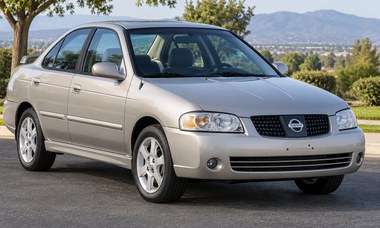
The 2000-2006 Sentra is now old enough that condition varies enormously, but it has one major reliability advantage over many later Sentras: it predates widespread CVT use.
Mainstream models commonly used a 1.8L four-cylinder, while the performance-oriented SE-R introduced larger 2.5L power. Depending on version, buyers could get manual or conventional automatic transmissions.
The 1.8L can provide good service when maintained, although high-mileage examples should be checked for oil consumption, leaks, ignition-related problems and cooling-system deterioration.
The SE-R and SE-R Spec V deserve separate consideration rather than being treated like ordinary Sentras. Their 2.5L QR25DE provides considerably more performance, but early versions developed concerns involving oil consumption and pre-catalytic-converter deterioration that could contribute to engine damage. Hard driving and modifications can add another layer of risk on surviving performance models.
By now, age is often a greater concern than the original design. Motor mounts, struts, control-arm bushings, wheel bearings, sensors, air-conditioning components, exhaust parts and rubber components may all need attention.
Common 2000-2006 Sentra Problems
- Oil consumption on some engines
- Oil and coolant leaks as mileage increases
- Ignition coils and sensors
- Engine and transmission mount deterioration
- Cooling-system problems
- Suspension and wheel-bearing wear
- Air-conditioning problems
- Rust and corrosion in northern climates
- 2.5L SE-R/Spec V pre-catalytic-converter and engine concerns
- Wear or abuse on performance-oriented models
Buyer Tip: A clean later example with a conventional transmission can still make inexpensive transportation, but buy on condition rather than mileage alone. On an SE-R or Spec V, investigate modification history and oil consumption carefully.
Bottom Line: 2000-2006 is one of the more mechanically straightforward Sentra generations, but these cars are now old enough that maintenance history and corrosion can matter more than their original reliability.
2007-2012 Nissan Sentra: The CVT Era Begins
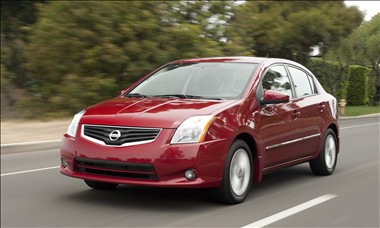
Nissan redesigned the Sentra for 2007. Mainstream versions moved to a 2.0L four-cylinder, while SE-R models continued to provide a more powerful 2.5L alternative.
This generation is particularly important in Sentra reliability history because CVT use became widespread. A six-speed manual was available on some versions, but most used examples shoppers encounter are likely to have Nissan's CVT.
The 2.0L engine itself can accumulate substantial mileage. As these cars age, however, transmission condition becomes one of the most important factors in deciding whether one is worth buying.
Potential CVT symptoms include whining, hesitation, shuddering, delayed response and abnormal behavior after the transmission becomes hot. Not every 2007-2012 Sentra experiences transmission failure, but a high-mileage example deserves a long test drive rather than a quick trip around the block.
The 2007 model deserves some additional caution simply because it was the first year of the redesign and the beginning of widespread CVT use. Later examples benefit from additional production maturity, although they should still be evaluated individually.
Common 2007-2012 Sentra Problems
- CVT whining, hesitation or shuddering
- CVT overheating or premature failure on some cars
- Engine and transmission mount wear
- Wheel-bearing noise
- Suspension wear and clunks
- Oil leaks and consumption as mileage increases
- Air-conditioning problems
- Electrical and sensor issues
- Interior and power-accessory wear
- Rust on cars exposed to road salt
Buyer Tip: Drive a CVT-equipped Sentra long enough for the transmission to reach normal operating temperature. A car that feels acceptable when cold can sometimes behave differently after sustained driving.
Bottom Line: The 2.0L engine can be quite durable, but CVT history separates the better 2007-2012 Sentras from the ones I'd avoid.
2013-2019 Nissan Sentra: The Generation to Inspect Most Carefully
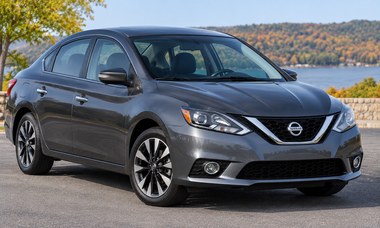
The redesigned 2013 Sentra became more spacious and fuel efficient, but this is also the generation that created many of the reliability concerns used-Sentra shoppers encounter today.
Most models use a 1.8L naturally aspirated four-cylinder paired with a CVT. A manual transmission was available in limited configurations. Later in the generation, Nissan also offered the Sentra SR Turbo and Sentra NISMO with a turbocharged 1.6L engine, adding another distinct powertrain to the lineup.
The mainstream 1.8L engine is generally not what worries me most about these cars. The CVT is the central concern.
Owners have reported symptoms including hesitation when accelerating, juddering or shuddering, surging, transmission noise, overheating and outright failure. Nissan's CVT issues during this period became significant enough that transmission history should be considered a major part of the car's value.
The 2013 model deserves particular caution because it combines the first year of a major redesign with the early years of this transmission application. The 2014 and 2015 models also deserve careful inspection.
Later 2016-2019 examples benefited from additional production experience and revisions, but I wouldn't describe the CVT concern as disappearing. A later model with good records and a smooth transmission is preferable to an earlier example, but the test drive remains critical.
The SR Turbo and NISMO are different propositions. Their turbocharged 1.6L engine provides much better performance, and manual-transmission versions avoid the mainstream CVT concern entirely. On the other hand, performance models are more likely to have been driven aggressively or modified, so previous-owner history matters.
Common 2013-2019 Sentra Problems
- CVT juddering or shuddering
- Hesitation or delayed acceleration
- CVT overheating and transmission noise
- Premature CVT failure on some vehicles
- Engine and transmission mount wear
- Suspension and wheel-bearing problems
- Air-conditioning concerns
- Electrical and infotainment problems
- Battery and charging-system issues
- Interior trim and power-accessory problems
Buyer Tip: On a 2013-2019 Sentra, I'd place CVT condition and service history ahead of unusually low mileage. A bargain price doesn't compensate for a transmission approaching a multi-thousand-dollar repair.
Bottom Line: This is the Sentra generation I'd shop most selectively. Later years can be reasonable buys when well maintained, but a questionable CVT is reason enough to look for another car.
2020-2024 Nissan Sentra: Improved, More Modern and Still CVT-Dependent
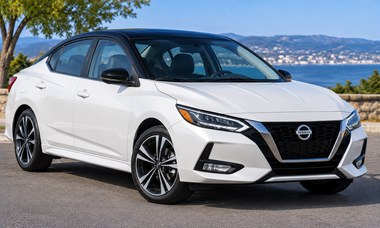
The eighth-generation Sentra arrived for 2020 with a much more modern design, improved interior and a new 2.0L naturally aspirated four-cylinder. Most versions pair that engine with Nissan's Xtronic CVT.
The naturally aspirated 2.0L is relatively straightforward compared with the increasingly complicated turbocharged engines used in some competitors. For a buyer planning to keep a compact sedan for many years, that simplicity is appealing.
However, I wouldn't ignore the transmission simply because these cars are newer. The CVT remains an important part of the drivetrain, and fluid maintenance, operating behavior and previous treatment should still be considered when buying one used.
The 2020 Sentra deserves some first-year caution because it introduced a completely redesigned vehicle. By 2021 and 2022, the generation had additional production maturity, making these particularly interesting years for shoppers who want a newer Sentra without buying nearly new.
The 2023 and 2024 models can also be attractive used cars, but they're still too young to make strong claims about eventual 200,000-mile reliability. Lack of long-term failure data shouldn't be confused with proof of exceptional durability.
Common 2020-2024 Sentra Concerns
- CVT behavior and long-term durability remain worth monitoring
- Battery and charging-system issues
- Infotainment and connectivity glitches
- Driver-assistance warning or sensor issues
- Occasional electrical problems
- Suspension noise or premature wear on some vehicles
- Air-conditioning and climate-control concerns
Buyer Tip: Among newer Sentras, I'd generally favor a 2021-2024 car with documented maintenance over a first-year 2020 example when condition and price are otherwise similar.
Bottom Line: The 2020-2024 Sentra is a more appealing used-car proposition than the troublesome reputation of the previous generation might suggest, but the CVT still deserves careful maintenance and evaluation.
How Nissan Sentra Reliability Changed Over the Years
The Sentra's reliability story becomes much easier to understand when the generations are compared directly.
| Generation | Main Reliability Consideration |
|---|---|
| 2000-2006 | Mechanically simpler and no widespread CVT; age, rust and 2.5L SE-R concerns now matter most |
| 2007-2012 | Durable 2.0L engine possible, but CVT condition becomes a major buying consideration |
| 2013-2019 | Most concerning generation for CVT-related reliability; shop very selectively |
| 2020-2024 | Improved newer generation with straightforward 2.0L engine; CVT remains important but long-term data is still developing |
For buyers primarily interested in longevity, this creates an interesting tradeoff. Older Sentras can offer simpler transmissions but much greater age-related deterioration. Newer Sentras avoid many problems caused simply by age but retain a CVT that needs proper maintenance and careful evaluation.
Nissan Sentra Engine Reliability
Engine reliability is generally one of the stronger parts of the Sentra story, but there are meaningful differences among the engines.
1.8L Four-Cylinder Reliability
Nissan used 1.8L four-cylinder engines extensively in the Sentra, including both older cars and the 2013-2019 generation.
These engines can accumulate substantial mileage when oil changes and cooling-system maintenance aren't neglected. On older examples, watch for oil consumption, leaks, ignition problems and worn mounts.
On a 2013-2019 Sentra, the 1.8L engine is generally less concerning than the CVT attached to it. A healthy engine doesn't make a car a good purchase if the transmission is already showing signs of deterioration.
2.0L Four-Cylinder Reliability
The naturally aspirated 2.0L is an important Sentra engine because versions of it power both the 2007-2012 generation and the redesigned 2020-2024 cars.
Although these aren't identical applications, both demonstrate why it's useful to separate engine reliability from overall vehicle reliability. A fundamentally durable engine can still be part of a car that develops expensive transmission problems.
For a newer used Sentra, the 2020-2024 2.0L naturally aspirated engine is an appealing choice because it avoids turbocharging and the additional complexity associated with some modern small-displacement engines.
2.5L SE-R and Spec V Reliability
The 2.5L QR25DE used in performance-oriented Sentras can provide strong performance and good longevity, but early applications deserve more caution than the mainstream engines.
Oil consumption and pre-catalytic-converter deterioration are particularly important concerns on early cars. Because SE-R and Spec V models may also have been modified or driven hard, a completely stock example with maintenance records is especially desirable.
1.6L Turbo Sentra Reliability
The turbocharged 1.6L used in later SR Turbo and NISMO models makes these cars much quicker than a normal Sentra.
For a buyer focused exclusively on inexpensive long-term transportation, however, the naturally aspirated engines are simpler. Turbocharged performance cars also deserve inspection for modifications, aggressive driving and deferred maintenance.
A manual-transmission SR Turbo or NISMO has one noteworthy advantage for a reliability-minded enthusiast: it avoids the conventional Sentra CVT entirely.
Which Nissan Sentra Powertrain Is Best for Long-Term Reliability?
If long-term simplicity is the priority, an older Sentra with a healthy manual or conventional automatic transmission has an obvious advantage because it eliminates the CVT from the equation.
Among newer Sentras, the naturally aspirated 2.0L four-cylinder is the combination I'd favor. It's relatively simple, economical and doesn't rely on turbocharging.
That doesn't mean every CVT-equipped Sentra should be avoided. It means the transmission deserves disproportionate attention compared with many competing used cars.
Buyer Takeaway: The Sentra's basic engines are often capable of the 150,000-200,000-mile service buyers expect from an economical compact car. The key is choosing the right generation and making sure the transmission is capable of lasting along with the engine.
What Are The Best Nissan Sentra Years to Buy?
The best Nissan Sentra years depend partly on whether you want an older mechanically simple car or a newer model with modern safety and convenience features. Because transmission design changed so much over the years, I wouldn't choose a Sentra based on model year alone.
| Sentra Years | Why They Stand Out |
|---|---|
| 2004-2006 | Later years of a relatively simple generation with conventional transmissions; condition and rust now matter greatly |
| 2010-2012 | Later sixth-generation cars; 2.0L engine can be durable, although CVT condition remains important |
| 2017-2019 | Later examples of the seventh generation, but only worth considering with a healthy, well-maintained CVT |
| 2021-2022 | Strong newer-used targets with the naturally aspirated 2.0L and additional production maturity after the 2020 redesign |
| 2023-2024 | Later eighth-generation cars with modern features, but still too new for firm long-term durability conclusions |
Best Older Sentras: I'd look closely at 2004-2006 models if mechanical simplicity matters most. They avoid the CVT entirely, although finding one today without significant age-related deterioration may be difficult.
Best Mid-Priced Sentras: A well-maintained 2017-2019 can be inexpensive transportation, but I would buy one only after carefully evaluating its CVT. The later model year doesn't eliminate the transmission risk.
Best Newer Sentras: The 2021-2022 Sentra is where I'd begin shopping for a newer used example. These cars avoid the first year of the eighth-generation redesign while retaining the relatively straightforward naturally aspirated 2.0L engine.
Which Nissan Sentra Years Should You Avoid or Approach With Caution?
There isn't a Sentra year that should automatically be rejected regardless of condition. However, several groups deserve substantially more scrutiny than others.
| Sentra Years | Why Use More Caution |
|---|---|
| 2000-2003 | Oldest cars in this guide; early 2.5L SE-R models have additional engine concerns, while age and rust are increasingly important |
| 2007 | First year of a redesign and widespread Sentra CVT use |
| 2013-2015 | Early seventh-generation cars with significant CVT concerns |
| 2016-2019 | Later seventh-generation cars can be better choices, but CVT history still deserves careful investigation |
| 2020 | First year of a complete redesign; I'd generally favor a later eighth-generation example at a similar price |
Years I'd Be Most Careful With: For an ordinary used-car shopper, 2013-2015 CVT-equipped Sentras would be near the top of my caution list. A low purchase price isn't particularly attractive if the transmission is approaching a major repair.
Which Nissan Sentra Generation Is Most Reliable?
The answer depends on whether we're judging proven mechanical simplicity or the best Sentra to buy today.
The 2000-2006 generation has a significant mechanical advantage because mainstream versions use conventional transmissions rather than CVTs. A well-maintained example can be remarkably durable, but these cars are now roughly two decades old or more. Rust, deteriorated rubber components, suspension wear and previous-owner neglect can outweigh the advantages of the simpler design.
The 2007-2012 generation has a generally durable 2.0L engine, but widespread CVT use introduced the transmission concern that would follow the Sentra for years.
The 2013-2019 generation is the one I'd rank lowest overall for a reliability-focused buyer because CVT problems can overwhelm the otherwise economical nature of the car.
For someone buying a Sentra today, I'd give the advantage to the 2020-2024 eighth generation, particularly 2021 and later. Its naturally aspirated 2.0L engine is appealingly straightforward, and these cars are young enough to avoid much of the age-related deterioration affecting older Sentras.
Most Reliable Sentra Generation to Buy Today: I'd favor a well-maintained 2021-2024 eighth-generation Sentra, while recognizing that these cars haven't yet established the same 15- or 20-year high-mileage history as older generations.
Which Nissan Sentra Engine Is Most Reliable?
The Sentra's naturally aspirated four-cylinder engines generally make more sense for long-term economical ownership than its performance-oriented alternatives.
The 2.0L four-cylinder deserves particular consideration. The 2007-2012 version can accumulate high mileage, and the newer 2020-2024 2.0L offers a relatively simple naturally aspirated design at a time when many competing compact cars increasingly rely on small turbocharged engines.
The 1.8L engine used in mainstream 2013-2019 Sentras can also provide good engine life. Unfortunately, the reputation of these cars is often determined by the CVT rather than the engine itself.
The performance-oriented 2.5L SE-R/Spec V and later 1.6L turbo engines can be enjoyable, but neither would be my first recommendation for someone whose only objective is inexpensive, uncomplicated high-mileage transportation.
Most Reliable Sentra Engine: For the typical used-car buyer, I'd give the edge to a well-maintained naturally aspirated 2.0L four-cylinder, particularly in the newer generation. Just remember that a durable engine doesn't compensate for a deteriorating CVT.
Nissan Sentra CVT Reliability
The CVT is the single most important mechanical issue to understand when shopping for many 2007 and newer Sentras.
A CVT doesn't shift through a conventional set of fixed gears. When operating properly, it can keep the engine near an efficient operating speed and help deliver good fuel economy. The driving sensation is different from a traditional automatic, so some engine-speed changes that initially seem unusual are normal.
What isn't normal is pronounced shuddering, hesitation, delayed acceleration, persistent whining, slipping-like behavior, overheating or warning lights.
The 2013-2019 generation deserves the greatest CVT scrutiny. Later Sentras shouldn't automatically be assumed to have the same failure rate as those earlier cars, but transmission condition and maintenance remain important on any used CVT-equipped Sentra.
How Long Does a Nissan Sentra CVT Last?
There is no fixed mileage at which a Nissan Sentra CVT fails. Some provide well over 150,000 miles of service, while problematic transmissions can fail much earlier.
That's why mileage alone isn't enough to evaluate one. A 120,000-mile car with documented transmission maintenance and smooth operation may be much more appealing than a 70,000-mile Sentra that already hesitates or shudders.
If a high-mileage Sentra has already received a replacement CVT, don't automatically consider that a negative. Find out when the replacement was installed, who performed the work and whether documentation is available. A relatively recent properly installed transmission may reduce one of the biggest uncertainties associated with the car.
Sentra CVT Warning Signs
- Shuddering or juddering during acceleration
- Hesitation when pulling away from a stop
- Delayed engagement into Drive or Reverse
- Pronounced whining or humming
- Engine speed increasing without corresponding acceleration
- Surging or inconsistent power delivery
- Reduced acceleration after extended driving
- Transmission overheating warnings
- Check-engine or transmission warning lights
- Stored CVT-related diagnostic trouble codes
Buyer Tip: Don't judge a Sentra CVT after a five-minute neighborhood drive. Some transmission problems become easier to detect after the drivetrain is fully warm.
Most Common Nissan Sentra Problems
1. CVT Transmission Problems
CVT trouble is the biggest potential expense on many later Sentras, particularly during the 2013-2019 generation.
Symptoms can begin with intermittent hesitation or shuddering and progress to poor acceleration, overheating or complete transmission failure. Because replacement can cost several thousand dollars, transmission condition can dramatically change what an older Sentra is actually worth.
2. Engine Oil Consumption and Oil Leaks
Older Sentras may consume oil or develop leaks as mileage increases. This is particularly important because a manageable oil-consumption problem can become serious engine damage if the owner repeatedly allows the oil level to become too low.
Check the dipstick before buying an older Sentra and ask whether oil needs to be added between changes.
3. Early SE-R and Spec V Engine Problems
Performance-oriented early 2.5L Sentras require separate consideration from ordinary 1.8L cars.
Pre-catalytic-converter deterioration and oil-consumption concerns are important on early QR25DE applications. Modification and aggressive driving can also affect surviving SE-R and Spec V models, so maintenance history and current mechanical condition matter greatly.
4. Engine and Transmission Mounts
Worn mounts can cause excessive vibration at idle, clunks when selecting Drive or Reverse, or increased drivetrain movement during acceleration.
This is especially common as inexpensive compact cars accumulate both age and mileage. Mount replacement is normally much less serious than transmission failure, but replacing several mounts can still add considerably to the cost of an older Sentra.
5. Wheel Bearings and Suspension Wear
Wheel bearings, struts, control-arm bushings and other suspension components eventually wear on high-mileage Sentras.
A worn wheel bearing may produce humming or growling that increases with road speed. Because transmission noise is such an important Sentra concern, it's worth determining exactly where a suspicious sound originates rather than assuming it's the CVT.
6. Air-Conditioning Problems
Aging Sentras can develop compressor, condenser and other climate-control problems.
Test the A/C throughout the test drive. A system that initially blows cool but loses performance after several minutes deserves further investigation.
7. Electrical, Battery and Infotainment Problems
Newer Sentras have far more electronic equipment than earlier generations, including touchscreens, cameras and driver-assistance systems.
Battery problems, intermittent warning messages, connectivity issues and sensor faults aren't necessarily catastrophic, but they can create frustrating ownership problems and sometimes require diagnostic work to identify correctly.
8. Rust and Age-Related Deterioration
On 2000-2012 Sentras, corrosion can now matter more than many of the problems the cars experienced when they were newer.
Cars from regions that use road salt deserve an underside inspection, particularly around suspension mounting areas and other structural components. A mechanically healthy engine isn't enough reason to buy a severely corroded car.
Nissan Sentra Maintenance and Repair Costs
One of the Sentra's traditional advantages is relatively inexpensive routine maintenance. Oil changes, brakes, spark plugs and most normal wear items are generally affordable.
The exception is a major transmission or engine failure. On an older Sentra worth only several thousand dollars, a CVT replacement can easily determine whether the car is economically worth repairing.
| Repair or Service | Typical Cost Range |
|---|---|
| Oil and filter change | $60-$120+ |
| CVT fluid service | $200-$400+ |
| Spark plugs | $200-$450+ |
| Brake service per axle | $350-$750+ |
| Wheel bearing/hub | $350-$700+ |
| Engine mount replacement | $300-$850+ |
| Alternator | $500-$1,000+ |
| Air-conditioning repair | $300-$1,500+ |
| Struts/shocks | $650-$1,400+ |
| Cooling-system repair | $350-$1,100+ |
| CVT replacement | $4,000-$7,000+ |
| Major engine repair/replacement | $4,500-$8,000+ |
These are broad estimates rather than repair quotes. Labor rates, location, model year and the choice between new, remanufactured and aftermarket parts can substantially change the final cost.
Maintenance to Expect After 100,000 Miles
A Sentra with 100,000 miles can have plenty of useful life remaining. At this point, however, preventive maintenance becomes increasingly important if the goal is to reach 150,000 or 200,000 miles.
- Continue regular engine oil and filter changes
- Maintain the CVT with the correct fluid on applicable models
- Replace spark plugs when due
- Service engine coolant as required
- Inspect the serpentine belt and tensioner
- Check engine and transmission mounts
- Inspect struts, shocks, bushings and wheel bearings
- Monitor older engines for oil consumption and leaks
- Inspect the cooling system for leaks and deteriorated hoses
- Maintain brakes, tires and wheel alignment
- Test the battery and charging system as the car ages
On a CVT-equipped Sentra, I'd put transmission maintenance near the top of the high-mileage priority list. Ignoring the component that represents one of the car's largest potential repair bills doesn't make sense when trying to extend its useful life.
What to Check Before Buying a Used Nissan Sentra
Beyond a normal pre-purchase inspection, concentrate on the problems that are particularly important to the Sentra you're considering:
- Warm up the CVT thoroughly: On CVT-equipped cars, check for hesitation, juddering, whining or reduced acceleration after an extended drive.
- Investigate transmission history: Ask about CVT fluid service and whether the transmission has ever been repaired or replaced.
- Check early SE-R and Spec V models carefully: Look for oil consumption, engine problems, modifications and evidence of hard use.
- Listen closely to drivetrain noise: Determine whether humming comes from a wheel bearing or the transmission.
- Inspect older Sentras for corrosion: Rust can be a deciding factor on otherwise durable 2000-2012 cars.
Buyer Tip: Sentras are plentiful on the used market. If a CVT-equipped example shudders, hesitates or whines after warming up, there's usually little reason to gamble on it when another Sentra is likely available.
Nissan Sentra Pros and Cons
Pros
- Usually affordable on the used-car market
- Good fuel economy from mainstream four-cylinder engines
- Routine maintenance is generally inexpensive
- Naturally aspirated engines are relatively straightforward
- Many Sentra engines are capable of 150,000-200,000 miles
- Older manual and conventional-automatic models avoid CVT concerns
- Large used-car supply makes it easier to reject questionable examples
- 2020-2024 models are much more modern than earlier Sentras
- Newer 2.0L engine avoids the complexity of turbocharging
Cons
- CVT reliability is a major concern on certain generations
- 2013-2019 models require particularly careful transmission evaluation
- CVT replacement can exceed the economic value of an older car
- Early 2.5L SE-R/Spec V models have additional engine concerns
- Older examples may have substantial rust and age-related deterioration
- A short test drive may not expose a heat-related CVT problem
- Performance models may have been modified or driven aggressively
- Newest Sentras don't yet have extensive 200,000-mile history
Final Buyer Summary: Is the Nissan Sentra Reliable?
The Nissan Sentra can be a reliable and inexpensive used car, but this is one model where the year and transmission make an enormous difference.
The 2000-2006 Sentra offers mechanical simplicity and avoids the CVT concerns that dominate discussions of later models. A clean 2004-2006 example can still make sense as inexpensive transportation, although age, rust and previous maintenance now matter enormously. Early 2.5L SE-R and Spec V cars deserve additional engine scrutiny.
The 2007-2012 generation has a generally durable 2.0L engine, but CVT condition becomes a central buying consideration. I'd favor a later well-maintained example over a 2007 when everything else is equal.
The 2013-2019 Sentra is the generation I'd approach most cautiously. The 1.8L engine can last a long time, but CVT problems can turn an inexpensive used car into an expensive one. I'd be particularly selective with 2013-2015 models and wouldn't buy any year from this generation with suspicious transmission behavior.
The redesigned 2020-2024 Sentra is more appealing. Its naturally aspirated 2.0L engine is relatively straightforward, and I'd generally start with 2021-2022 when looking for the best balance between age, price and production maturity. The 2023-2024 models are also promising, but they haven't been on the road long enough to prove 200,000-mile durability.
If long-term reliability is the goal, don't assume the lowest-mileage Sentra is automatically the best one. A documented maintenance history and a healthy transmission are more valuable than an attractive odometer reading on a poorly maintained car.
Buyer Takeaway: The Sentra's engines are often capable of the 150,000 to 200,000 miles many buyers hope to get from an economical compact car. Choose the generation carefully, pay particular attention to the CVT on 2007 and newer cars, and be especially selective with 2013-2019 models. A good Sentra can be inexpensive transportation for years; the wrong one can erase its low purchase price with a single major transmission repair.
Your Trade-In
Also, it's good to always know the value of your trade-in while you're evaluating your next possible purchase. Here's a good source for a quick and accurate appraisal: free trade-in appraisal.
What's Next?
Buying Used?
If you may be buying a used car soon, see how to identify the dealerships most motivated to get your sale, and therefore most ready to lower their price more than the rest. This is often the difference between getting a good price and getting a great one.
You'd Consider A New Car If ...
Would "new" be worth a look if you could buy close to or even below invoice, or at least at the best possible price even when demand is high?
And for more Nissan model reliability information, see our Nissan Reliability and Problems Guide. This comprehensive guide details the best used Nissan models and years, common problems to watch for, the best years to buy or those to avoid, and more.