

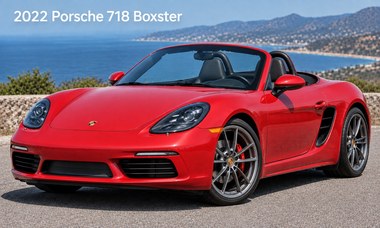
The Porsche Boxster is one of the most tempting used sports cars on the market. Older examples can sometimes be purchased for surprisingly modest prices, yet even the earliest Boxsters deliver the mid-engine balance, steering and driving experience that made the car a genuine Porsche rather than simply a less-expensive alternative to the 911.
But there's an important distinction between a cheap Boxster and a cheap Boxster to own. A well-maintained example can be remarkably durable, while a neglected one can quickly produce repair bills that seem completely out of proportion to its purchase price.
This guide covers 1997-2024 U.S.-market Porsche Boxsters, from the original first-generation cars through the later 718 Boxster. Porsche introduced the Boxster in the U.S. for 1997, and the four generations differ substantially in engines, transmissions, reliability concerns and ownership costs.
Overall, I'd rate the Boxster as having average to above-average reliability for a European sports car, but with a much wider financial risk range than something like a Mazda Miata or Honda S2000. The basic cars can last a long time. The important question is whether the particular Boxster you're considering has the engine, maintenance history and condition that make it a sensible one to own.
In This Guide You'll Learn
- Which Porsche Boxster years are generally the best to buy
- Which years deserve more caution
- How many miles a Porsche Boxster can last
- Which Boxsters have IMS bearing concerns
- Why the 2009 engine redesign is important
- Which Boxsters can be vulnerable to bore scoring
- How Boxster and Boxster S reliability compares
- Whether manual, Tiptronic or PDK is the better transmission choice
- How the flat-six Boxsters compare with the turbocharged four-cylinder 718
- What to look for when buying a high-mileage Boxster
Porsche Boxster Reliability Overview
The Boxster has never had one simple reliability story. There are some very durable versions, some expensive known failure modes, and major mechanical changes that make certain year groups considerably more attractive than others.
The 1997-2004 first-generation cars can provide tremendous sports-car value, but they're also where the famous intermediate-shaft bearing — usually shortened to IMS bearing — receives the most attention. A bearing failure can cause catastrophic engine damage, which means documentation of preventive work can materially affect the desirability of an older Boxster.
The 2005-2008 second-generation cars improved the Boxster substantially but didn't completely eliminate intermediate-shaft concerns. These cars can also raise questions about cylinder condition and bore scoring, particularly when evaluating certain higher-displacement engines.
The major reliability dividing line is 2009. Porsche introduced a redesigned engine family that eliminated the previous intermediate-shaft arrangement entirely. :contentReference[oaicite:0]{index=0} That makes 2009 and later cars especially interesting to buyers who like the Boxster but don't want the IMS issue hanging over the purchase.
The 2013-2016 third generation continued with naturally aspirated flat-six engines and is one of my favorite used Boxster groups. The 2017-2024 718 Boxster introduced turbocharged four-cylinder engines in the mainstream models, while later GTS 4.0 and Spyder versions brought naturally aspirated six-cylinder power back to the lineup. :contentReference[oaicite:1]{index=1}
Porsche Boxster Reliability at a Glance
| Category | Assessment |
|---|---|
| Overall Reliability | Average to above average for a European sports car |
| Expected Lifespan | About 150,000-200,000+ miles with excellent maintenance |
| Best Reliability Turning Point | 2009 engine redesign |
| Strong Used Choices | 2009-2012 and 2013-2016 |
| Older-Car Concern | IMS bearing and age-related repairs |
| Other Engine Concern | Bore scoring on certain earlier flat-six engines |
| Best Value Strategy | Buy condition and maintenance history rather than the cheapest car |
| High-Mileage Potential | Good when maintenance has been consistent |
How Many Miles Can a Porsche Boxster Last?
A well-maintained Porsche Boxster can realistically last 150,000 to 200,000 miles or more, but maintenance history becomes increasingly important as mileage rises. I'd rather own a documented 120,000-mile Boxster that received proper servicing than a neglected 60,000-mile car purchased primarily because its odometer looked attractive.
At 100,000 miles, a good Boxster shouldn't automatically be considered worn out. The engine may have considerable life remaining, but suspension components, engine mounts, cooling-system parts, convertible-top mechanisms, clutches and other wear items can begin adding significantly to ownership costs.
Between 120,000 and 150,000 miles, I'd want especially good records. Cooling-system maintenance matters because the Boxster uses a complex mid-engine cooling arrangement with considerable plumbing between the engine and front-mounted radiators.
At 200,000 miles, condition becomes very individual. Some Boxsters reach this mileage with their original engines, while another car may have required major engine work much earlier because of a specific mechanical failure or poor maintenance.
Would I buy a 120,000-mile Boxster? Absolutely, if it were the right one. A documented 2009-or-newer car with 120,000 miles could be a substantially lower-risk purchase than a much lower-mileage early Boxster with an uncertain service history and unresolved engine concerns.
And I can't stress this enough:
Multiple dealers → compete for your business → you save
If you may be buying a vehicle soon, I'd recommend reading my most effective negotiation methods for either new cars or used cars. Each explains a quick way to identify the dealerships most motivated to deal, no matter how busy they may seem, and how to follow up once you've found them. That can be the difference between getting a good price and getting a great one.
Porsche Boxster Reliability by Generation
1997-2004: First-Generation Porsche Boxster
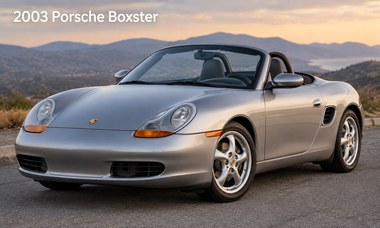
The first-generation Boxster established the formula that still defines the car: two seats, a convertible roof, a horizontally opposed engine mounted behind the occupants and excellent mid-engine balance. Porsche's U.S. cars initially used a 2.5-liter six-cylinder, followed by a 2.7-liter engine and the more powerful 3.2-liter Boxster S. :contentReference[oaicite:2]{index=2}
These cars can be remarkably enjoyable for what they now cost, but the purchase price can be deceptive. They're old Porsches, and deferred maintenance can easily consume several thousand dollars after purchase.
The most famous issue is the IMS bearing. Failure isn't inevitable, but the potential consequence is severe because a failed bearing can damage the engine. Bearing design also changed during production, so I'd want documentation showing exactly what has been done rather than accepting a seller's vague statement that "the IMS was taken care of."
Other concerns include cooling-system components, oil leaks, air-oil separator problems, aging suspension components, convertible-top mechanisms and normal deterioration associated with a sports car now more than two decades old.
Common 1997-2004 Porsche Boxster Problems
- IMS bearing failure: The best-known potential engine problem and one that deserves specific investigation before purchase.
- Rear main seal leaks: Oil leakage around the rear of the engine is a familiar issue on older cars.
- Air-oil separator problems: Failure can cause excessive smoke and poor running.
- Cooling-system deterioration: Water pumps, expansion tanks, radiators, hoses and related components become important with age.
- Convertible-top problems: Motors, transmissions, cables, microswitches and aging top materials can require attention.
- Suspension wear: Control arms, bushings, mounts and shocks can significantly affect how an older Boxster drives.
Buyer Tip: Don't buy the cheapest first-generation Boxster you can find. I'd gladly pay considerably more for a car with extensive maintenance records, documented IMS work where appropriate and evidence that the previous owner repaired problems as they appeared.
Bottom Line: The first Boxster can be one of the great inexpensive sports-car experiences, but only when purchased carefully. The low market value of some cars doesn't make Porsche-level repairs inexpensive.
2005-2012: Second-Generation Porsche Boxster
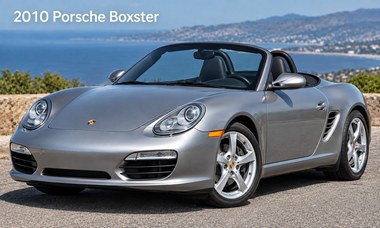
The second-generation Boxster brought a more refined interior, updated styling and numerous chassis improvements. Porsche eventually offered 2.9-liter and 3.4-liter engines, and PDK dual-clutch transmission replaced the earlier Tiptronic automatic late in the generation. :contentReference[oaicite:3]{index=3}
But from a reliability standpoint, I would divide this generation into 2005-2008 and 2009-2012.
The 2005-2008 cars still use the earlier engine architecture. The IMS design was revised, and 2006-2008 Boxsters received a larger bearing, but that bearing isn't externally serviceable in the same manner as earlier versions without engine disassembly. :contentReference[oaicite:4]{index=4}
Then came 2009. The redesigned engine eliminated the intermediate shaft and therefore eliminated the traditional IMS bearing issue. :contentReference[oaicite:5]{index=5} This is why I consider 2009 one of the most important dividing lines for someone shopping for a used Boxster.
That doesn't make every 2009-2012 car trouble-free. Cooling systems, water pumps, suspension components, PDK servicing and normal Porsche maintenance still matter. But removing one of the older Boxster's most feared potential engine failures changes the ownership equation considerably.
Common 2005-2012 Porsche Boxster Problems
- IMS concerns on earlier cars: The issue wasn't fully removed until the 2009 engine redesign.
- Bore scoring: Cylinder-wall condition deserves particular attention on susceptible earlier engines, especially when symptoms such as abnormal oil consumption or persistent exhaust smoke are present.
- Water-pump and cooling-system problems: Preventive cooling-system maintenance remains important.
- Oil leaks: Seals and gaskets can develop leaks as the cars age.
- Suspension wear: Control arms, bushings and dampers can require replacement as mileage rises.
- PDK maintenance: Later cars with the dual-clutch transmission need proper servicing rather than being treated as maintenance-free.
Buyer Tip: If two second-generation Boxsters were otherwise comparable, I'd generally pay more for the 2009-2012 car. The engine redesign makes the later version particularly attractive as an older Porsche that can still be driven frequently.
Bottom Line: The second generation contains both cars that retain some of the earlier engine concerns and some of the most appealing used Boxsters. The 2009-2012 cars are the sweet spot I'd investigate first.
2013-2016: Third-Generation Porsche Boxster
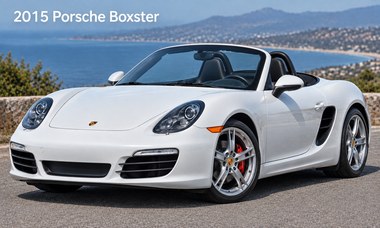
The third-generation Boxster received a substantially redesigned body and chassis while retaining naturally aspirated six-cylinder engines. The standard Boxster used a 2.7-liter flat-six, the Boxster S used a 3.4-liter, and Porsche later added the GTS and the especially desirable 3.8-liter Boxster Spyder. :contentReference[oaicite:6]{index=6}
This generation is one of the easiest Boxsters for me to recommend. It avoids the old IMS issue, retains the naturally aspirated six-cylinder character many Porsche enthusiasts prefer, and is modern enough that age-related deterioration generally isn't as overwhelming as it can be on the earliest cars.
That's not the same as saying ownership is inexpensive. Porsche parts and labor remain Porsche parts and labor. Cooling-system components, water pumps, ignition components, suspension wear and electronic equipment can still produce significant bills.
PDK-equipped cars can be excellent, but I would want evidence that maintenance hasn't been ignored. Manual cars eliminate some dual-clutch complexity, although clutch condition and previous driving habits still matter.
Common 2013-2016 Porsche Boxster Problems
- Water-pump and cooling-system repairs: These remain important maintenance items.
- Ignition coils and spark plugs: Age and heat can eventually require ignition-system service.
- Engine and transmission mounts: Worn mounts can affect refinement and drivetrain movement.
- Suspension wear: Bushings, control arms and dampers become increasingly relevant as mileage accumulates.
- Convertible-top and electronic issues: More complex equipment means more systems that can eventually require repair.
- Deferred maintenance: Even a mechanically strong Boxster can become expensive when several overdue services arrive at once.
Buyer Tip: If you want the traditional naturally aspirated flat-six Boxster experience without the early-car IMS concern, the 2013-2016 generation deserves to be near the top of your shopping list.
Bottom Line: This is one of the strongest all-around Boxster generations, combining modern usability, excellent performance and generally favorable engine reliability with the sound and character of a naturally aspirated six-cylinder.
2017-2024: Fourth-Generation Porsche 718 Boxster
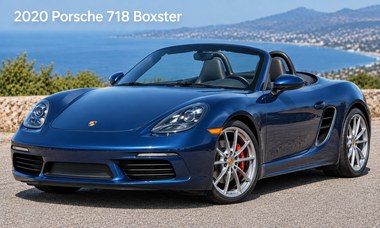
The fourth generation brought a major philosophical change. Porsche added the historic 718 name and replaced the naturally aspirated six-cylinder engines in the mainstream Boxster and Boxster S with turbocharged four-cylinder engines. Later performance versions brought naturally aspirated six-cylinder power back to portions of the lineup. :contentReference[oaicite:7]{index=7}
The four-cylinder 718 isn't inherently an unreliable Boxster. In fact, the newer platform avoids the famous engine issues that dominate discussions of much older cars. The bigger buyer question is often preference rather than reliability: some enthusiasts simply prefer the sound and response of the earlier naturally aspirated flat-six.
Turbocharging adds its own hardware and complexity, but these cars are also considerably newer. Maintenance history, correct oil servicing, cooling-system condition and evidence of modifications remain important.
The later six-cylinder GTS 4.0 and Spyder models occupy a different part of the market. They're substantially more expensive and increasingly purchased as enthusiast or collector cars rather than inexpensive used Boxsters. Porsche's 2021 Boxster 25 Years, for example, was based on the naturally aspirated GTS 4.0. :contentReference[oaicite:8]{index=8}
Common 2017-2024 Porsche 718 Boxster Problems
- Cooling-system repairs: Water pumps, thermostats and related components remain worth monitoring.
- Turbocharged-engine complexity: Additional boost-control, intake and cooling hardware means more components than on an older naturally aspirated engine.
- PDK servicing: Proper maintenance remains important on dual-clutch cars.
- Electronic equipment: Newer Boxsters contain substantially more electronics and convenience systems than early cars.
- Modified cars: Aftermarket tunes can increase performance but also complicate reliability and warranty history.
Buyer Tip: Don't reject the four-cylinder 718 because it isn't a flat-six. Drive one. If you like its character, it can be an excellent modern Boxster. If engine sound and naturally aspirated response are central to why you want a Porsche, I'd compare it directly with a good 2013-2016 car before buying.
Bottom Line: The 718 is a strong modern sports car with generally favorable reliability potential. Choosing it over the previous generation is often more about engine character, price and driving preference than a simple reliability advantage.
Which Porsche Boxster Engine Is Most Reliable?
For a used-car buyer focused primarily on minimizing major engine risk, I'd start with the 2009-and-later engines. The 2009 redesign eliminated the intermediate-shaft system responsible for the older IMS bearing concern, creating a clean mechanical dividing line between earlier and later Boxsters. :contentReference[oaicite:9]{index=9}
Within that group, the naturally aspirated six-cylinder engines in the 2013-2016 Boxster are particularly appealing because they combine a more mature engine architecture with the sound and throttle response enthusiasts associate with the traditional Boxster.
For technical identification, the 2009-and-later second-generation cars introduced the 9A1 engine family. That's the engine-code distinction worth knowing because it marks the move away from the earlier intermediate-shaft design. I wouldn't expect an ordinary buyer to memorize Porsche engine codes beyond that.
The 2017-2024 turbocharged four-cylinder engines are also legitimate choices. They deliver substantially more low-rpm torque than earlier base Boxsters, but buyers sometimes prefer the older six-cylinder cars for reasons that have little to do with reliability.
Buyer comparison: Given a similarly maintained 2007 Boxster S and 2010 Boxster with comparable mileage, I'd generally favor the 2010 if reliability risk were my priority. If comparing a 2015 flat-six Boxster with a 2018 four-cylinder 718, however, I'd make the decision much more on condition, maintenance history and which engine I enjoyed driving.
Manual vs. Tiptronic vs. PDK: Which Boxster Transmission Is Most Reliable?
Manual-transmission Boxsters are generally durable when driven and maintained properly. The main wear item is the clutch, and replacement can be expensive enough that I'd want to know how much life remains before buying a higher-mileage car.
Early automatic Boxsters used Porsche's Tiptronic transmission. It doesn't provide the same driving experience as a manual or later PDK, but a properly maintained Tiptronic isn't automatically a reason to reject an otherwise excellent older Boxster.
The later PDK dual-clutch transmission is much quicker and transforms the performance of the car. Porsche introduced PDK into the second-generation Boxster as the replacement for Tiptronic. :contentReference[oaicite:10]{index=10} These transmissions can be durable, but repair or replacement costs can be substantial, so service history matters.
Which would I buy? For a weekend sports car, I'd personally favor the manual because it is simpler mechanically and adds driver involvement. For frequent driving or heavy traffic, PDK is exceptionally effective. I wouldn't choose between two used Boxsters on transmission alone; I'd choose the better-maintained car and then make transmission preference the deciding factor.
Best Porsche Boxster Years to Buy
The best Boxster years depend on whether your priority is minimizing mechanical risk, getting the traditional naturally aspirated flat-six experience, or buying the most modern car your budget allows. For most used-car buyers, however, 2009 is the most important dividing line.
2009-2012 Boxster: Excellent Value and Lower Engine Risk
The 2009-2012 cars are among my favorite Boxsters for someone who wants an older Porsche without taking on some of the best-known engine concerns associated with earlier cars. The redesigned engine eliminated the traditional IMS bearing arrangement, while these cars still retain the compact dimensions and relatively simple character of the second generation.
They aren't maintenance-free. Direct injection introduces the possibility of intake-valve carbon buildup, and timing components, cooling-system parts, suspension and normal age-related repairs still deserve attention. But as an overall used-car proposition, these later second-generation cars are especially appealing.
2013-2016 Boxster: Best Naturally Aspirated All-Around Choice
If budget allows, the 2013-2016 generation may be the best overall combination of reliability, modern usability and traditional Boxster character. It avoids the older IMS issue while retaining naturally aspirated six-cylinder engines.
These cars can still experience water-pump, ignition, fuel-system, oil-leak and suspension problems, but there are relatively few inherent mechanical issues that would discourage me from buying a properly inspected example. :contentReference[oaicite:0]{index=0}
2017-2024 718 Boxster: Strong Modern Choice
The 718 Boxster is considerably newer and generally a strong choice for someone who wants a sports car that can be used frequently. The mainstream turbocharged four-cylinder cars don't have the traditional flat-six sound, but that is primarily a preference issue rather than a reason to consider them unreliable.
Later six-cylinder versions are especially desirable enthusiast cars but operate in a substantially higher price range.
Porsche Boxster Years to Approach With More Caution
I wouldn't automatically label every early Boxster a year to avoid. Many have accumulated high mileage successfully, and a properly maintained early car can be an excellent purchase. But the potential financial consequences of certain engine problems make some years more dependent on documentation and a knowledgeable pre-purchase inspection.
1997-2004 Boxster: Buy on History and Condition
The first-generation cars require the most caution because of age and the potential for expensive engine problems. IMS bearing condition or documented replacement deserves attention, as do oil leaks, the air-oil separator, cooling-system condition and signs of cylinder problems.
The IMS issue also shouldn't be oversimplified. Bearing design changed during production, and failure hasn't affected every car. But because a failure can cause catastrophic engine damage, it remains an important part of evaluating an early Boxster. :contentReference[oaicite:1]{index=1}
2005-2008 Boxster: Better Car, But Still Inspect Carefully
These are excellent sports cars and can be good purchases, but they're caught between the original Boxster and the important 2009 engine redesign. The earlier engine architecture remained, and bore scoring deserves particular attention on a car showing suspicious oil consumption, exhaust soot or engine noise. :contentReference[oaicite:2]{index=2}
I wouldn't avoid a documented 2005-2008 car merely because of its model year. I would, however, want a Porsche specialist to inspect it before purchase.
What Is the Most Reliable Porsche Boxster Generation?
For the best combination of reliability and traditional Boxster character, I'd give the edge to the 2013-2016 third generation. It avoids the early IMS concern, uses naturally aspirated six-cylinder engines and has relatively few widespread mechanical problems that should prevent someone from considering a well-maintained example. :contentReference[oaicite:3]{index=3}
The 2009-2012 cars are arguably the better value. They're older and generally less expensive but already benefit from the major engine redesign.
The newer 718 naturally has an age advantage, but I'd separate reliability from desirability. Someone specifically wanting the sound and character of a naturally aspirated flat-six may happily accept an older 2013-2016 car rather than choose a newer four-cylinder 718.
Which would I buy? For a used Boxster I planned to keep and drive regularly, I'd look very seriously at a well-maintained 2013-2016 car. On a tighter budget, I'd search for a particularly good 2009-2012 example rather than automatically moving backward to the cheapest early Boxster.
Major Porsche Boxster Problems and Expensive Repairs
Most Boxster problems are manageable. What makes careful selection important is that a few engine failures can cost more than an inexpensive older Boxster is worth.
IMS Bearing Failure
The intermediate-shaft bearing is the problem most closely associated with early Boxsters. Failure can contaminate the engine with metal debris and result in major internal damage.
But "Boxster IMS problem" covers several different bearing designs and production periods rather than one identical component used throughout every early car. If you're considering an older Boxster, determine which design the particular car has and whether any preventive work has been documented. :contentReference[oaicite:4]{index=4}
The concern ends with the 2009 engine redesign, which eliminated the previous intermediate-shaft arrangement.
Cylinder Bore Scoring
Bore scoring is potentially more expensive than many buyers realize. Damage to the cylinder walls can lead to increased oil consumption, soot at the exhaust, knocking noises and ultimately the need for an engine rebuild. Earlier engines are the primary concern. :contentReference[oaicite:5]{index=5}
If a susceptible Boxster displays warning signs, I'd want a Porsche specialist involved before purchase. A borescope inspection can provide useful information, but the results need to be interpreted by someone familiar with these engines because ordinary cylinder markings can be mistaken for serious scoring. :contentReference[oaicite:6]{index=6}
Air-Oil Separator Failure
A failing air-oil separator can cause smoke, rough running and abnormal crankcase vacuum. Heavy smoke can look frightening enough to suggest catastrophic engine trouble even when the separator is the actual problem.
It's a well-known issue on older Boxsters and one worth distinguishing from more serious internal engine problems. :contentReference[oaicite:7]{index=7}
Cooling-System Problems
Water pumps, expansion tanks, radiators, thermostats and hoses all become potential maintenance items as Boxsters age. The mid-engine layout also means the cooling system extends through much of the car.
A documented cooling-system refresh on an older Boxster can therefore be a positive rather than something that should concern you.
Rear Main Seal and Oil Leaks
Oil leakage around the rear main seal is familiar on older Boxsters. The repair itself requires transmission removal, and on a manual car it can make sense to coordinate the work with clutch replacement when appropriate. :contentReference[oaicite:8]{index=8}
PDK Problems
PDK is an excellent transmission and shouldn't be considered inherently troublesome. But it is sophisticated and potentially expensive, so warning messages, hesitation, abnormal engagement or poor shifting deserve investigation rather than being dismissed as normal Porsche behavior.
Proper fluid servicing matters. Porsche describes PDK as a dual-clutch transmission, and maintenance schedules for Boxsters include transmission and clutch-fluid service intervals. :contentReference[oaicite:9]{index=9}
Porsche Boxster Maintenance and Repair Costs
A Boxster can be inexpensive to buy without being inexpensive to maintain. Routine work at a good independent Porsche specialist can keep costs manageable, but major engine or transmission repairs can quickly change the economics of an older car.
Actual costs vary considerably by generation, location, parts and labor rates, but approximate independent-shop ranges can include:
| Service or Repair | Approximate Cost |
|---|---|
| Oil and Filter Change | $150-$300+ |
| Brake Pads and Rotors | $700-$1,500+ per axle |
| Water Pump | $900-$1,600+ |
| Air-Oil Separator | $700-$1,500+ |
| Clutch Replacement | $1,800-$3,500+ |
| Suspension Repairs | $800-$2,500+ depending on components |
| IMS Retrofit Where Applicable | $2,000-$4,000+ depending on related work |
| Major Engine Repair/Rebuild | Potentially $15,000-$25,000+ |
| Major PDK Repair | Potentially several thousand dollars |
This is why I wouldn't spend my entire Boxster budget on the purchase price. Keeping several thousand dollars available for initial maintenance and repairs is much more sensible than stretching to buy a car and having nothing left when it needs Porsche-level service.
Porsche Boxster Maintenance After 100,000 Miles
A 100,000-mile Boxster can still have substantial useful life remaining, but this is where maintenance history becomes far more valuable than an impressive-looking odometer reading.
- Review the cooling system: Determine the age of the water pump, thermostat, expansion tank, radiators and hoses.
- Check engine-specific risks: On early cars, establish IMS history and investigate any signs that could indicate cylinder problems.
- Inspect the suspension: Control arms, bushings, dampers and mounts can substantially affect how the car feels.
- Check clutch or transmission history: A high-mileage manual may need a clutch, while PDK-equipped cars should have appropriate service documentation.
- Look for oil leaks: Don't assume every leak is catastrophic, but determine its source and likely repair cost.
- Service by time as well as mileage: Older Boxsters may accumulate very few miles annually, but fluids, belts and other components still age.
What to Check Before Buying a Used Porsche Boxster
A knowledgeable Porsche pre-purchase inspection is particularly valuable on a Boxster because a conventional used-car inspection may not adequately evaluate its model-specific engine risks.
- Identify the exact engine and its known risks: IMS and bore-scoring concerns vary significantly by year and engine.
- Review the maintenance history: A thick file of Porsche-specialist invoices can be worth more than unusually low mileage.
- Investigate smoke and oil consumption: Determine whether symptoms point toward an air-oil separator, ordinary leakage or something more serious.
- Inspect the cooling system: Look for coolant leakage and determine which major components have already been replaced.
- Test the convertible roof completely: Operate it several times and inspect the top, mechanism, drains and seals.
- Evaluate over-rev history on appropriate cars: A specialist can retrieve operating data on many Boxsters, providing additional information about how a manual-transmission car may have been driven.
Porsche Boxster Pros and Cons
Pros
- Exceptional mid-engine handling and balance
- Some older examples offer tremendous performance for the purchase price
- 2009 and later cars avoid the traditional IMS bearing issue
- 2013-2016 cars combine naturally aspirated flat-six character with generally strong reliability
- Manual and PDK transmissions are both excellent in different ways
- Strong enthusiast and specialist support
- Two luggage compartments make it surprisingly practical for a two-seat sports car
- Well-maintained examples can exceed 150,000 miles
Cons
- Major engine repairs can exceed the value of an inexpensive older Boxster
- IMS concerns complicate shopping for early cars
- Bore scoring can be extremely expensive where it occurs
- Porsche parts and specialist labor cost more than mainstream sports-car maintenance
- Cheap examples often have expensive deferred maintenance
- Convertible-top and cooling-system repairs become more likely with age
- PDK repairs can be costly
- A poor pre-purchase decision can erase the apparent bargain very quickly
And several others ... There are also other numbers that can significantly affect the final out-the-door cost. A well-negotiated selling price can quickly lose its advantage if the dealer makes up for the concession with a below-market trade-in offer. Also, dealer fees and add-ons can further increase the final cost, making it important to learn which fees you must pay, can negotiate, or should avoid.
To become better informed about these important but often-confusing parts of the deal, be sure to see my articles on trade-ins and dealer fees.
In addition, used-car interest rates are typically higher than new-car rates, and can leave you owing much more than the vehicle is worth. Before buying, it's a good idea to review how car-loan rates affect your total cost and your alternative choices for substantial savings.
Porsche Boxster vs. Other Sports Cars
The Boxster's mid-engine layout gives it a character that differs from many similarly priced roadsters and coupes. Which alternative makes the most sense depends on whether you prioritize low ownership costs, straight-line performance, luxury or the Porsche driving experience.
- Mazda MX-5 Miata: Much less expensive to maintain and one of the safest choices for someone who wants a lightweight roadster. The Boxster provides considerably more power, refinement and exotic mechanical character, but at substantially greater potential repair cost.
- Honda S2000: Simpler mechanically and famous for its high-revving engine and manual transmission. The Boxster offers mid-engine balance, more engine choices and a more upscale cabin, while clean S2000s have become increasingly expensive.
- BMW Z4: Another strong European roadster choice and often less intimidating to maintain. The Boxster generally delivers the more dedicated mid-engine sports-car experience.
- Audi TT: More practical and available with all-wheel drive in many versions. The Boxster is more focused on traditional rear-wheel-drive sports-car handling.
- Chevrolet Corvette: Offers considerably more V8 power and often lower drivetrain repair costs, while the Boxster emphasizes compact dimensions, mid-engine balance and precision rather than outright horsepower.
Buyer comparison: If minimizing ownership costs were my priority, I'd choose the Miata. If I wanted the most distinctive combination of handling, engine character and premium sports-car feel, I'd accept the Boxster's higher maintenance budget — but only after finding the right car.
Is an Older Porsche Boxster a Bargain or a Money Pit?
It can be either, and that's what makes the Boxster such an interesting used car.
A $10,000-$15,000 Boxster can provide an extraordinary amount of sports-car experience for the money. But its repair costs aren't calculated as a percentage of its depreciated value. It remains a Porsche when it needs a clutch, cooling-system repair, suspension overhaul or engine work.
That's why I wouldn't necessarily buy the least expensive Boxster even if it passed a basic test drive. Paying several thousand dollars more for a car with extensive service history, recent maintenance and no unresolved engine questions can easily be cheaper over the first few years of ownership.
Which would I buy? Given a choice between an $11,000 Boxster with little documentation and a comparable $15,000 example with excellent records and thousands of dollars of recent appropriate maintenance, I'd strongly favor the more expensive car. With an older Porsche, buying the previous owner's maintenance can be one of the best bargains available.
Is a High-Mileage Porsche Boxster a Good Buy?
A high-mileage Boxster can be an excellent driver's car because mileage sometimes reduces the collector-style premium without making the car mechanically worn out. The key is distinguishing a car that accumulated mileage while being properly maintained from one whose owner simply postponed expensive repairs.
I wouldn't automatically reject a 120,000- or even 150,000-mile Boxster. On a 2009-or-newer car with excellent service records, good compression, a healthy cooling system and no significant drivetrain problems, the mileage itself wouldn't frighten me.
On an early car, I'd want much more information. Engine history, IMS status where applicable, oil consumption and evidence of cylinder condition become increasingly important because the potential cost of getting the decision wrong is so high.
Buyer comparison: I'd generally choose a documented 120,000-mile 2010 Boxster over a 60,000-mile early car with little history and unanswered engine questions. Low mileage doesn't compensate for uncertainty about expensive mechanical risks.
Final Porsche Boxster Reliability Verdict
The Porsche Boxster can be a reliable high-mileage sports car, but it rewards careful shopping more than many of its competitors. The biggest mistake is assuming that a low purchase price makes an older Boxster inexpensive to own.
The 1997-2008 cars can still be excellent purchases, but engine history and a Porsche-specific pre-purchase inspection are particularly important. IMS bearing concerns and the possibility of bore scoring mean I'd rather miss a seemingly attractive car than gamble on one with unanswered questions.
The 2009-2012 Boxster is one of the most interesting value choices because the redesigned engine eliminates the traditional IMS issue while prices can remain accessible. The 2013-2016 generation is my favorite overall for someone who wants a naturally aspirated flat-six Boxster with modern usability and generally favorable reliability.
The 2017-2024 718 is newer and can be an excellent choice as well. For many buyers, the decision between a 718 and the previous generation comes down less to reliability than to whether they prefer the turbocharged four-cylinder's performance or the sound and response of the earlier naturally aspirated six-cylinder.
Whichever generation you choose, I'd put maintenance history, condition and a Porsche-specialist inspection ahead of mileage alone. A carefully maintained Boxster can provide an extraordinary driving experience for the money. A neglected bargain can very quickly demonstrate why the cheapest Porsche isn't always the least expensive one.