

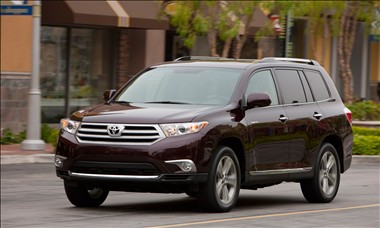
Which Toyota Highlander years are the most reliable? Which years should you avoid? And if you're shopping for a used Highlander, which engine and generation offer the best combination of reliability, comfort, and long-term value?
Overall, the Toyota Highlander has an excellent reliability record and is one of the stronger used three-row SUVs to consider. The naturally aspirated V6 engines used through 2022 are particularly well proven, and Highlanders that receive regular maintenance can commonly reach 200,000 miles and beyond.
But there are meaningful differences between model years. Early Highlanders are now old enough that condition matters enormously. Certain second-generation V6 models deserve attention for oil-line issues. The 2017 redesign of the V6 powertrain introduced an eight-speed automatic that deserves additional inspection, while the fourth generation brought a new platform and eventually replaced the longstanding V6 with a turbocharged four-cylinder for 2023.
This guide covers U.S.-market Toyota Highlander model years from 2001 through 2023, including reliability by generation, common problems, engine differences, Highlander Hybrid reliability, years to avoid or inspect carefully, repair costs, expected lifespan, and the best years to buy.
In This Guide You'll Learn
- How reliable the Toyota Highlander is over the long term
- Which Toyota Highlander years are the best choices
- Which Highlander years require extra inspection
- The most common problems by generation
- Which Highlander engines are the most reliable
- What to know about the 3.5-liter V6
- Whether the Highlander Hybrid is reliable
- What changed with the 2017 eight-speed automatic
- What changed when Toyota introduced the 2.4-liter turbocharged engine for 2023
- How much common Highlander repairs can cost
- How long a Toyota Highlander can realistically last
However, if you're also considering a brand-new Highlander or other new vehicle, you may want to come back to this and take a look at a handy technique that locates the dealer most ready to make concessions.
Is the Toyota Highlander Reliable?
Yes. The Toyota Highlander is generally an above-average to excellent choice for long-term reliability.
One reason is that Toyota has traditionally taken a relatively conservative approach to the Highlander's mechanical components. Many model years use naturally aspirated engines paired with conventional automatic transmissions, and several Highlander powertrains were used extensively across Toyota and Lexus vehicles.
The Highlander's crossover construction also distinguishes it from the Toyota 4Runner. The Highlander is designed primarily as a comfortable family vehicle rather than a body-on-frame off-road SUV. That generally means a smoother ride, better fuel economy, easier everyday driving, and less likelihood that a used example has experienced serious off-road use.
The first-generation Highlander can still be durable, but these vehicles are now old enough that age-related deterioration often matters more than the original design. Oil leaks, suspension wear, cooling-system components, rubber parts, electrical accessories, and rust should all be considered.
The second generation introduced widespread use of Toyota's 3.5-liter V6, an engine capable of very high mileage. Some earlier V6 models, however, used an oil supply hose with a rubber section that could deteriorate and leak. Buyers should verify that applicable vehicles received the updated component.
The third-generation Highlander continued the strong reliability story, particularly with the 2014-2016 V6 models. For 2017, Toyota updated the V6 and introduced an eight-speed automatic transmission. The new transmission improved efficiency but also generated enough complaints and service attention that we'd inspect 2017 and some later V6 examples more carefully than the earlier six-speed versions.
The fourth generation arrived for 2020 with a newer platform, additional safety technology, and continued availability of the 3.5-liter V6 through 2022. For 2023, Toyota replaced the V6 in non-hybrid Highlanders with a 2.4-liter turbocharged inline-four.
Bottom Line: The Highlander is one of the better long-term used-SUV choices. If maximum mechanical simplicity and a long-established reliability record are priorities, the naturally aspirated V6 models are especially attractive.
Reliability at a Glance
| Category | Our Assessment |
|---|---|
| Overall Reliability | Above Average to Excellent |
| Strong Older Years | 2009, 2012-2013 |
| Strong Mid-Generation Years | 2014-2016 |
| Strong Newer Years | 2020-2022, with normal newer-generation inspection considerations |
| Years Requiring Extra Inspection | 2008 and 2017-2019 V6 models |
| Most Proven Engine | 3.5-liter naturally aspirated V6 |
| Expected Lifespan | 200,000-250,000+ miles with excellent maintenance |
| Hybrid Reliability | Generally Very Good |
Buyer Tip: Don't automatically choose the lowest-mileage Highlander. A well-maintained 140,000-mile V6 with extensive service records may be a better purchase than an 80,000-mile example that has received little more than occasional oil changes.
Reliability by Generation
2001-2007: First-Generation Toyota Highlander
The original Highlander arrived for the 2001 model year and helped establish the modern midsize crossover formula. Unlike the truck-based 4Runner, the Highlander used car-based construction designed primarily for comfort, everyday driving, and family use.
Depending on model year, buyers could find four-cylinder or V6 power. The V6 is generally our preferred choice today because it provides considerably better performance with a strong durability record.
The biggest concern with first-generation Highlanders in today's used market is simply age.
Even a well-built Toyota eventually needs suspension components, engine mounts, cooling-system parts, seals, hoses, wheel bearings, air-conditioning repairs, and electrical components. A 20-year-old Highlander shouldn't be evaluated as though Toyota's reliability reputation makes those components immune to aging.
3.0-Liter and 3.3-Liter V6 Engines
First-generation Highlanders were available with naturally aspirated V6 engines that can provide excellent longevity when properly maintained.
These engines use timing belts rather than timing chains, making timing-belt service history important when buying an older example.
If the seller cannot document when the timing belt was last replaced, we'd budget for the service rather than assume it was completed.
Oil leaks can also become more common as these engines age. Minor seepage isn't unusual on a vehicle this old, but significant leaks should be diagnosed before purchase.
Four-Cylinder Highlanders
Four-cylinder Highlanders can also be durable, but we'd generally favor the V6 unless fuel economy or purchase price is the overriding concern.
The Highlander is a relatively substantial vehicle, particularly when carrying passengers and cargo, and the V6 provides more relaxed acceleration.
At this age, however, we'd choose a meticulously maintained four-cylinder over a neglected V6 without hesitation.
Common 2001-2007 Highlander Problems
- Timing-belt maintenance on V6 engines
- Engine oil leaks and seepage
- Suspension and steering wear
- Wheel bearing wear
- Engine and transmission mount deterioration
- Cooling-system component failures
- Air-conditioning problems
- Electrical and accessory failures associated with age
- Rust and underbody corrosion in salt-heavy climates
Buyer Tip: On a first-generation Highlander, maintenance documentation is more valuable than a small mileage difference. Timing-belt history, cooling-system maintenance, transmission operation, and overall condition should heavily influence what you're willing to pay.
Bottom Line: The 2001-2007 Highlander can still be dependable inexpensive transportation, but these vehicles should now be purchased primarily on condition rather than model-year reputation.
2008-2013: Second-Generation Toyota Highlander
The Highlander was redesigned for 2008, becoming larger and more family-oriented while retaining the basic formula that had made the original successful.
The naturally aspirated 3.5-liter V6 became the engine we'd most strongly consider in this generation. It provides good power, smooth operation, and excellent long-term durability when properly maintained.
This generation also continued the Highlander Hybrid, giving buyers a more fuel-efficient alternative without abandoning the practicality of the conventional Highlander.
3.5-Liter V6
Toyota's 3.5-liter naturally aspirated V6 is one of the biggest reasons we'd consider a second-generation Highlander.
These engines can accumulate very high mileage, but certain earlier versions deserve attention for an important oil-line issue.
Some V6 engines used a VVT-i oil supply line containing a rubber section. Over time, that portion could deteriorate and leak, potentially resulting in rapid engine-oil loss.
Toyota addressed affected vehicles through a service campaign and updated the component. When considering an early second-generation V6, we'd want to verify whether the updated line has been installed.
This is particularly important on a 2008 Highlander. An inexpensive component can become an expensive engine problem if substantial oil loss goes unnoticed.
Buyer Tip: When inspecting an early 3.5-liter V6 Highlander, ask a Toyota-experienced mechanic to identify whether the updated oil line is present. Don't rely solely on the seller knowing the vehicle's service history.
2008: A Year We'd Inspect More Carefully
The 2008 Highlander was the first year of a complete redesign, and we'd generally prefer a later second-generation example if price and condition are comparable.
That doesn't make every 2008 a bad vehicle. Many have accumulated substantial mileage successfully. But the combination of first-year production, the V6 oil-line concern on applicable vehicles, and the vehicle's advancing age makes a thorough inspection especially worthwhile.
A well-maintained 2008 with the updated oil line can still be a perfectly reasonable purchase. We simply wouldn't choose one automatically when an equally good 2009-2013 example is available for similar money.
2009-2013: Mature Second-Generation Models
The later second-generation Highlanders are among the more attractive older examples.
By this point, the basic vehicle was well established, and the 3.5-liter V6 had developed a strong reputation for longevity.
These vehicles are also new enough to provide considerably more modern comfort and safety than the earliest Highlanders while often costing much less than third-generation examples.
Age still matters. A 2010 Highlander may have a durable engine and transmission but still need suspension components, wheel bearings, cooling-system work, brakes, or other accumulated maintenance.
Common 2008-2013 Highlander Problems
- VVT-i oil-line leakage on applicable early 3.5-liter V6 models
- Oil cooler line seepage or leakage on some vehicles
- Water pump and cooling-system repairs at higher mileage
- Wheel bearing wear
- Suspension component wear
- Brake and caliper problems
- Power liftgate and other electrical accessory issues
- Air-conditioning repairs as vehicles age
- Normal oil leaks and gasket seepage at higher mileage
Buyer Tip: A 2009-2013 Highlander with 150,000 miles shouldn't automatically scare you. We'd be more interested in whether the owner changed fluids, maintained the cooling system, addressed leaks promptly, and repaired suspension wear as it developed.
Bottom Line: The second-generation Highlander is a strong used choice, particularly from 2009 onward. We'd approach the 2008 model with additional scrutiny, but a properly maintained example can still provide excellent service.
2014-2019: Third-Generation Toyota Highlander
The Highlander was redesigned again for 2014 with more contemporary styling, improved interior packaging, additional technology, and seating for up to eight passengers depending on configuration.
For used buyers, this generation is particularly interesting because there is a meaningful mechanical dividing line between 2014-2016 and 2017-2019 V6 models.
2014-2016: A Particularly Attractive Used Highlander
The 2014-2016 Highlander represents one of our favorite periods in the model's history.
These years offer a modern-enough vehicle while retaining the established 3.5-liter naturally aspirated V6 paired with a conventional six-speed automatic transmission.
For a buyer whose priority is long-term reliability rather than having the newest possible technology, that combination is appealing.
The engine has an extensive reliability history, and the six-speed automatic was already a mature design. These years also avoid the first-year 2008 concerns of the previous generation and the eight-speed transmission questions introduced for 2017.
That doesn't mean 2014-2016 Highlanders are trouble-free. Water pumps, wheel bearings, suspension components, power liftgates, electronics, and normal wear items can still require attention as mileage increases.
But as a complete used-vehicle package, these years deserve serious consideration.
Buyer Tip: If your primary goal is proven mechanical durability, a clean 2014-2016 V6 Highlander may be more appealing than paying substantially more for a later third-generation example.
2017-2019: Updated V6 and Eight-Speed Automatic
Toyota made an important powertrain change for 2017.
The 3.5-liter V6 was updated, and V6 models received a new eight-speed automatic transmission. The changes improved performance and fuel efficiency, but they also introduced additional considerations for used buyers.
Some 2017 vehicles experienced hesitation, unusual shift behavior, or other drivability concerns. Toyota issued technical guidance addressing certain 2017 Highlanders that could exhibit lack of power, high-RPM shifting, or hesitation in lower gears.
There have also been reports of more serious transmission problems among some 2017-2019 vehicles. These issues don't mean every eight-speed Highlander should be avoided, but we'd test-drive these years more carefully than the earlier six-speed versions.
What to Check on a 2017-2019 Highlander
- Hesitation from a stop
- Harsh or delayed shifts
- Unusually high engine speed before shifting
- Whining or abnormal transmission noises
- Delayed engagement into Drive or Reverse
- Transmission or AWD warning messages
- Evidence of previous transmission software updates or repairs
- Complete maintenance and dealer service history when available
A normal test drive should include both cold and fully warmed operation, stop-and-go driving, moderate acceleration, and highway speeds.
Buyer Tip: Don't reject every 2017-2019 Highlander. Many have been reliable. But if maximum drivetrain simplicity is your goal, the 2014-2016 V6 with the six-speed automatic is particularly appealing.
Common 2014-2019 Highlander Problems
- Eight-speed transmission hesitation or shift concerns on some 2017-2019 V6 models
- Water pump leakage at higher mileage
- Wheel bearing wear
- Suspension component wear
- Power liftgate problems
- Door-lock actuator failures
- Infotainment and electrical issues
- Air-conditioning repairs
- Normal gasket and seal leakage as mileage accumulates
Bottom Line: The 2014-2016 Highlander is one of our favorite used ranges because of its combination of the proven 3.5-liter V6 and six-speed automatic. The 2017-2019 models remain worthwhile, but we'd pay closer attention to transmission operation and service history.
2020-2023: Fourth-Generation Toyota Highlander
The fourth-generation Highlander arrived for 2020 on a newer platform with updated styling, additional driver-assistance technology, improved interior design, and revised powertrain choices.
For 2020-2022, the conventional gasoline Highlander continued using a naturally aspirated 3.5-liter V6 with an eight-speed automatic transmission.
These vehicles are newer than most Highlanders covered in this guide, so age-related deterioration is less of a concern. Their additional electronics and safety systems, however, mean there are more sensors, cameras, displays, and modules than in an older Highlander.
2020-2022 V6 Models
For buyers who specifically want a newer Highlander with a naturally aspirated V6, 2020-2022 represents the end of an era.
The 3.5-liter V6 provides strong acceleration and has a much longer track record than the turbocharged engine that replaced it.
These years can therefore be particularly attractive to buyers planning to keep the vehicle for a very long time.
As always, we'd still inspect transmission behavior, electronics, AWD operation, maintenance history, and accident history rather than buying purely on reputation.
2023: 2.4-Liter Turbocharged Four-Cylinder
For 2023, Toyota replaced the conventional Highlander's longstanding naturally aspirated V6 with a 2.4-liter turbocharged inline-four.
The new engine provides strong low-speed torque and improved efficiency in some driving conditions, but it changes the long-term reliability equation.
Turbocharging isn't inherently unreliable, and the 2023 Highlander shouldn't automatically be considered a year to avoid. The issue is simply that the 2.4-liter turbo doesn't yet have the same long-term, high-mileage record in the Highlander as the naturally aspirated 3.5-liter V6.
If we were choosing a Highlander specifically with the goal of keeping it for 200,000 miles or more, the established 2020-2022 V6 models would currently give us more historical evidence to work with.
Buyer Tip: Don't assume a 2023 Highlander is less reliable because it has a turbocharged four-cylinder. Instead, recognize that its long-term durability is less established than the V6 it replaced.
Highlander Hybrid Reliability
The Highlander Hybrid deserves separate consideration because Toyota has been building hybrid vehicles for decades, and the hybrid system itself has generally developed a strong durability record.
As with the Prius, buyers sometimes focus almost entirely on the high-voltage battery while overlooking the rest of the vehicle.
Hybrid batteries do deteriorate eventually, but age, mileage, climate, usage, and battery condition all influence lifespan. A battery replacement during a vehicle's lifetime doesn't necessarily mean the entire hybrid system is unreliable.
Older Highlander Hybrids should receive a hybrid-system diagnostic as part of a pre-purchase inspection. On newer examples, battery age is less immediately concerning, although diagnostic scanning and maintenance history remain worthwhile.
The fourth-generation Highlander Hybrid is especially interesting because it uses a 2.5-liter four-cylinder-based hybrid system rather than the V6-based hybrid arrangement found in earlier versions. Fuel economy improved substantially, while performance characteristics changed accordingly.
What to Check on a Used Highlander Hybrid
- Hybrid battery health and diagnostic codes
- Hybrid-system warning lights
- Cooling-system condition
- 12-volt battery condition
- Brake-system operation
- Unusual changes in battery charge level
- Fuel economy substantially below expectations
- Complete maintenance and repair history
Buyer Tip: If an older Highlander Hybrid is advertised as having a replacement hybrid battery, ask for documentation showing exactly what was installed and when. A complete new battery and a limited module repair aren't the same thing.
Bottom Line: Highlander Hybrid reliability is generally very good. We'd be comfortable considering one, but an older hybrid deserves a battery-health evaluation in addition to the conventional mechanical inspection we'd perform on any used Highlander.
What Are The Best Toyota Highlander Years to Buy?
The best Toyota Highlander years depend on your budget, how much technology you want, and whether you prefer the long-established naturally aspirated V6 or one of Toyota's hybrid powertrains.
If reliability is the primary goal, there are several especially attractive periods. Later second-generation Highlanders offer excellent value, 2014-2016 models combine a proven 3.5-liter V6 with a six-speed automatic, and 2020-2022 models give buyers a much newer Highlander while retaining the naturally aspirated V6.
| Model Years | Why We Recommend Them |
|---|---|
| 2009, 2012-2013 | Strong choices for buyers seeking an older and less expensive Highlander. The 3.5-liter V6 is well proven, but age and maintenance history now matter considerably. |
| 2014-2016 | Among our favorite Highlander years. Proven 3.5-liter V6, six-speed automatic, modern enough design, and fewer transmission concerns than some later third-generation models. |
| 2018-2019 | Worth considering when transmission operation and service history check out. These benefit from later third-generation updates but use the eight-speed automatic. |
| 2020-2022 | Excellent newer choices and the final Highlanders with the naturally aspirated 3.5-liter V6. Particularly appealing for long-term owners who prefer a proven non-turbocharged engine. |
Buyer Tip: We'd give the 2014-2016 Highlander special consideration if you're looking for value and long-term mechanical simplicity. These years are new enough to provide a modern family SUV but retain a particularly well-proven V6 and six-speed automatic combination.
Bottom Line: For an older value purchase, look closely at well-maintained later second-generation models. For our favorite combination of price and proven reliability, consider 2014-2016. If your budget allows a substantially newer vehicle, 2020-2022 V6 models are particularly attractive.
Knowing which model years to concentrate on is step 1. Step 2 is knowing how to get a good used Highlander price.
Which Toyota Highlander Years Should You Avoid or Inspect Carefully?
There aren't many Highlander years we'd automatically eliminate from consideration. The better approach is identifying years that deserve additional inspection or where we'd choose a different year if two otherwise comparable vehicles were available.
With older Highlanders, condition can easily outweigh model year. A meticulously maintained 2008 can be a better vehicle than a neglected 2013, while a properly operating 2018 can be an excellent purchase despite our preference for the earlier six-speed transmission.
| Model Years | Why Extra Inspection Is Important |
|---|---|
| 2001-2007 | Not necessarily poor years, but age now makes timing-belt history on V6 models, leaks, cooling systems, suspension, rust, and other deterioration increasingly important. |
| 2008 | First year of the second generation. Inspect applicable V6 models carefully for the updated VVT-i oil supply line and evaluate overall age-related condition. |
| 2017 | Important V6 and transmission changes. Inspect carefully for hesitation, abnormal shifting, transmission noise, or evidence of previous transmission-related repairs. |
| 2018-2019 | Generally worth considering, but we'd still pay particular attention to operation of the eight-speed automatic. |
| 2023 | Not a year we'd automatically avoid, but it introduced the 2.4-liter turbocharged engine and doesn't have the same long-term Highlander history as the outgoing V6. |
Buyer Tip: "Years to avoid" shouldn't mean rejecting an otherwise excellent Highlander solely because of the number on its registration. Use the model year to identify what needs additional inspection, then judge the individual vehicle.
Bottom Line: We'd be most cautious about a poorly documented 2008 or a 2017 with questionable transmission behavior. The 2023 is different: our hesitation is based more on limited long-term history than evidence that it should automatically be avoided.
Which Toyota Highlander Engine Is Most Reliable?
For buyers prioritizing a proven long-term record, our choice is the naturally aspirated 3.5-liter V6 used extensively across multiple Highlander generations.
It's powerful enough for a loaded family SUV, widely understood by Toyota repair specialists, and capable of very high mileage when properly maintained.
3.5-Liter V6
The 3.5-liter naturally aspirated V6 is the standout conventional Highlander engine for long-term used ownership.
It doesn't depend on turbocharging to produce adequate power, and millions of miles of accumulated use across Toyota and Lexus vehicles have established the basic engine family's durability.
That doesn't mean every component attached to the engine lasts forever. Water pumps, ignition components, seals, hoses, sensors, and other parts can require replacement as mileage accumulates.
Earlier applications should also be checked for the updated VVT-i oil supply line where applicable.
But internal engine durability is generally excellent, making a well-maintained V6 Highlander with 150,000 miles far less intimidating than the odometer reading might suggest.
Older 3.0-Liter and 3.3-Liter V6 Engines
The naturally aspirated 3.0-liter and 3.3-liter V6 engines found in earlier Highlanders can also be very durable.
The main consideration today is age and maintenance. Unlike the later 3.5-liter V6, these engines use timing belts that require scheduled replacement.
If you're buying one, documentation showing timing-belt service can add meaningful value. If there is no documentation, we'd factor the cost of that service into the purchase price.
2.4-Liter Turbocharged Four-Cylinder
The 2.4-liter turbocharged inline-four introduced in the conventional Highlander for 2023 provides considerably more low-speed torque than buyers might expect from a four-cylinder engine.
However, it's too new in this application to put ahead of the naturally aspirated V6 on proven long-term reliability.
That distinction is important. We're not saying the turbocharged engine is unreliable. We're saying the older V6 has a much longer record of reaching 150,000, 200,000, and even 250,000 miles in Highlanders and related Toyota vehicles.
Buyer Tip: If you're choosing specifically for a decade or more of ownership and value an established track record over newer technology, a 2020-2022 V6 Highlander deserves serious consideration.
Bottom Line: The 3.5-liter naturally aspirated V6 is our most proven conventional Highlander engine. The older V6 engines are also durable when timing-belt maintenance has been performed, while the 2023 turbocharged four-cylinder simply needs more time to establish an equivalent high-mileage record.
Is the Toyota Highlander Hybrid Reliable?
Generally, yes. Toyota's extensive hybrid experience makes the Highlander Hybrid one of the more appealing choices for buyers who want a three-row SUV with significantly better fuel economy.
The hybrid system itself shouldn't automatically scare a used-car buyer. Toyota has been producing high-volume hybrid vehicles for decades, and the electric motors and hybrid transaxle can be remarkably durable.
The component most buyers worry about is the high-voltage battery.
Hybrid batteries deteriorate over time, but there is no specific mileage at which every battery fails. Age, climate, temperature, usage patterns, mileage, and individual battery condition all influence lifespan.
On a newer Highlander Hybrid, battery deterioration is less likely to dominate the buying decision. On an older hybrid, particularly an early model still using its original battery, battery condition should be incorporated into what you're willing to pay.
Highlander Hybrid Battery Warning Signs
- Hybrid-system warning messages
- Stored battery-related diagnostic codes
- Unusual or rapid changes in indicated battery charge
- Noticeably declining fuel economy
- Gasoline engine running more frequently than expected
- Reduced hybrid assistance
- Unusual battery cooling-fan operation
Buyer Tip: Don't rely solely on a short test drive to evaluate an older Highlander Hybrid battery. A diagnostic battery-health evaluation can provide information that isn't obvious from the driver's seat.
Bottom Line: We wouldn't avoid a Highlander simply because it's a hybrid. We'd simply add hybrid battery condition and hybrid-system diagnostics to the normal pre-purchase inspection.
Toyota Highlander Repair & Maintenance Costs
The Highlander generally has reasonable maintenance costs for a midsize SUV, especially considering its potential lifespan.
Routine maintenance is straightforward, and Toyota's popularity means parts and qualified independent repair shops are widely available.
Costs increase as vehicles age. Suspension work, wheel bearings, cooling-system components, brakes, air conditioning, electrical accessories, and oil leaks can all accumulate on a 150,000-mile Highlander even when the engine and transmission remain excellent.
| Maintenance or Repair | Typical Cost |
|---|---|
| Oil change | $60-$120 |
| Brake pads and rotors | $450-$900 |
| Wheel bearing replacement | $400-$800 |
| Older V6 timing belt and water pump service | $800-$1,400+ |
| Water pump replacement | $700-$1,500+ |
| Suspension repairs | $500-$1,500+ |
| Alternator replacement | $500-$900+ |
| Major transmission repair or replacement | $3,500-$7,000+ |
These are general budgeting ranges rather than repair quotes. Actual costs vary by model year, engine, location, labor rates, parts selection, and whether work is performed by a Toyota dealer or independent repair shop.
Buyer Tip: Reliability doesn't mean maintenance-free. When buying a Highlander with 100,000-150,000 miles, leave room in your budget for the suspension, cooling system, brakes, tires, fluids, and other components that naturally wear as a vehicle ages.
In addition, your trade-in allowance, if you are doing that, will also affect the overall potential cost analysis of moving into a Highlander (KBB versus Edmunds Appraisals - Which Is Better).
How Long Does a Toyota Highlander Last?
A properly maintained Toyota Highlander can realistically last 200,000-250,000 miles, and 300,000 miles is possible for exceptionally well-maintained examples.
That means 100,000 miles shouldn't automatically be considered high mileage for a Highlander with a strong service history.
Even 150,000 miles can represent a reasonable used purchase if the price reflects the mileage and the previous owner has maintained the vehicle consistently.
Typical Highlander Lifespan
- 100,000 miles: Relatively routine for a properly maintained Highlander.
- 150,000 miles: Still a reasonable used purchase when maintenance and condition are strong.
- 200,000 miles: A realistic expectation for a good example.
- 250,000 miles: Achievable with consistent maintenance and timely repairs.
- 300,000+ miles: Possible for exceptionally well-maintained vehicles.
As with any high-mileage vehicle, reaching 250,000 miles doesn't mean doing nothing beyond oil changes.
Wheel bearings, struts, control-arm bushings, cooling-system parts, alternators, starters, engine mounts, air-conditioning components, and other wear items may need replacement along the way.
The difference is that the Highlander's basic engine and drivetrain can often remain viable long enough to make those repairs worthwhile.
Bottom Line: We'd consider 200,000-250,000 miles a realistic lifespan for a well-maintained Highlander. A particularly good example can go considerably farther.
What Usually Needs Attention After 100,000 Miles?
Once a Highlander passes 100,000 miles, maintenance history becomes increasingly important. This is the point where two apparently similar vehicles can have dramatically different future repair needs.
One Highlander may have already received major fluid services, brakes, tires, suspension work, and cooling-system maintenance. Another may still be running nearly every original wear component.
- Review engine oil-change history.
- Check transmission fluid service history.
- Inspect coolant and cooling-system components.
- Check spark-plug replacement history.
- Inspect the water pump for leakage.
- Check wheel bearings for noise or play.
- Inspect shocks, struts, bushings, and control arms.
- Check brake pads, rotors, calipers, and brake fluid.
- Inspect engine and transmission mounts.
- Check CV boots and axle components on AWD models.
- Inspect for engine oil and coolant leaks.
- Verify timing-belt history on applicable older V6 engines.
- Test AWD operation where equipped.
- Evaluate hybrid battery condition on older Highlander Hybrids.
Buyer Tip: Don't penalize a high-mileage Highlander because it has a long list of replacement parts in its service history. New struts, wheel bearings, brakes, water pump, tires, and other wear components can actually make it a more attractive purchase than a lower-mileage vehicle still running all of its original parts.
Buying a Used Toyota Highlander: What Matters Most?
The Highlander's strong reputation can work against buyers in one important way: sellers often expect a premium simply because the vehicle has a Toyota badge.
Reliability reputation doesn't make every individual Highlander worth buying.
Previous maintenance, accident history, engine condition, transmission behavior, rust, suspension wear, and how the vehicle was used should determine whether the asking price is justified.
Before You Buy
- Review maintenance and repair records.
- Check engine oil level and condition.
- Inspect for oil and coolant leaks.
- Check cooling-system condition.
- Verify timing-belt history on applicable older V6 engines.
- Verify the updated VVT-i oil line on applicable early 3.5-liter V6 models.
- Test the transmission from a completely cold start.
- Check for hesitation, harsh shifts, or delayed engagement on 2017-2019 V6 models.
- Test AWD operation where equipped.
- Check wheel bearings for humming or growling noises.
- Inspect shocks, struts, bushings, and suspension components.
- Test the power liftgate and other electrical accessories.
- Check all climate-control functions.
- Evaluate hybrid battery health on older Highlander Hybrids.
- Inspect the underbody for corrosion in salt-heavy climates.
- Check accident and ownership history.
- Check the VIN for outstanding recalls.
- Have an independent mechanic perform a pre-purchase inspection.
Buyer Tip: A pre-purchase inspection becomes especially valuable on an expensive used Highlander. Spending a relatively small amount before buying can reveal thousands of dollars in deferred maintenance or help confirm that a higher-priced vehicle is actually worth the premium.
Pros & Cons of Buying a Used Toyota Highlander
Pros
- Excellent overall reliability
- 200,000-250,000+ miles possible with good maintenance
- Excellent 3.5-liter V6 durability
- Comfortable ride and family-friendly interior
- Available three-row seating
- Available all-wheel drive
- Strong Highlander Hybrid options
- Good parts availability
- Large number of Toyota-experienced independent repair shops
- Strong resale value
- 2014-2016 models offer an appealing proven drivetrain
- 2020-2022 models provide a newer SUV with the longstanding V6
Cons
- Used prices can be higher than competing midsize SUVs
- Third-row space is limited compared with some larger competitors
- Older V6 models require timing-belt maintenance
- Applicable early 3.5-liter V6 models need the updated oil supply line
- Some 2017-2019 models deserve extra transmission scrutiny
- Hybrid battery condition becomes important on older hybrids
- Suspension and wheel-bearing repairs accumulate at high mileage
- Strong resale values can lead sellers to overprice poorly maintained vehicles
Final Verdict
The Toyota Highlander is one of the stronger choices for buyers who want a reliable used family SUV without moving into a larger body-on-frame vehicle.
Its greatest strength is consistency. Across more than two decades, Toyota generally used durable engines and relatively proven drivetrain technology, while the Highlander's crossover construction provided the comfort and practicality most families actually need.
For an inexpensive older Highlander, we'd look closely at well-maintained later second-generation examples. The 3.5-liter V6 has an excellent durability record, although maintenance history and age-related repairs become increasingly important.
The 2014-2016 Highlander is arguably the sweet spot of the entire 2001-2023 range. These models combine a modern body and interior with the proven naturally aspirated 3.5-liter V6 and six-speed automatic transmission. For a buyer prioritizing established mechanical reliability, that combination is difficult to overlook.
The 2017-2019 Highlanders can also be excellent vehicles, but we'd pay closer attention to the eight-speed automatic. A smooth-shifting example with strong service history shouldn't automatically be rejected simply because it falls within this period.
For buyers with a larger budget, the 2020-2022 Highlander deserves serious consideration. These are the final model years with the naturally aspirated 3.5-liter V6 and provide newer safety, comfort, and technology without requiring the buyer to move to the turbocharged gasoline engine introduced for 2023.
The 2023 Highlander isn't automatically a year to avoid. Its 2.4-liter turbocharged inline-four simply hasn't accumulated the same long-term Highlander history as the outgoing V6, so buyers focused primarily on proven 200,000-mile durability may understandably prefer the older engine.
Highlander Hybrids are also worth considering. Toyota's hybrid technology has a strong track record, but battery condition should become part of the inspection process as older hybrids age.
Most importantly, don't buy a Highlander based on reputation alone. A Toyota badge doesn't compensate for neglected maintenance, poor transmission behavior, serious rust, accident damage, or years of deferred repairs.
Choose the individual vehicle carefully, and a Toyota Highlander can realistically provide 200,000-250,000 miles or more of service, making it one of the better long-term used family SUVs available.
Your Trade-In
Also, it's good to always know the value of your trade-in while you're evaluating your next possible purchase. Here's a good source for a quick and accurate appraisal: free trade-in appraisal.
What's Next?
Beware of "Dealer Fees": Before agreeing to a dealer's numbers, see which dealer fees are legitimate, which can be negotiated, and which can be avoided.
Lastly, still comparing Toyota models? See our Toyota reliability guide for the best used Toyota models and years, common problems to watch for, and how the major Toyota models compare.
Some Insider Insights:
My Recommended Way To Buy A New Toyota