

The Toyota RAV4 has become one of the most trusted used compact SUVs on the market, and that reputation is not accidental. Across multiple generations, it has proven to be durable, inexpensive to maintain, and capable of very high mileage when properly cared for. It is the kind of vehicle that tends to quietly accumulate 200,000 to 300,000 miles without attracting much attention along the way.
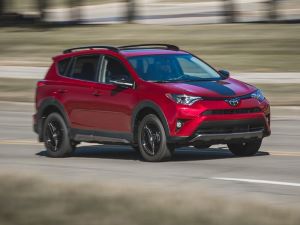
That said, not every RAV4 from 2006 through 2022 tells the same story. Some model years are extremely solid long-term buys. Others are still decent vehicles, but they require closer inspection or more careful engine selection to avoid known issues. The difference is not usually dramatic, but it is meaningful enough to matter when you are spending used-car money in today’s market.
The strongest overall pattern is that Toyota improved the RAV4 gradually and consistently rather than reinventing it. Each generation tended to refine the previous one, fixing earlier weaknesses instead of introducing major new ones. That is a big reason why the RAV4 has remained near the top of reliability rankings for so long.
There are still exceptions. The early 2.4-liter four-cylinder engines used in the 2006–2008 models can develop oil consumption issues in some cases. First-year redesigns such as 2013 and 2019 also brought a handful of early-production quirks. But beyond those specific areas, most RAV4s are straightforward, predictable vehicles with relatively low ownership risk compared to many rivals.
In practical terms, this means the RAV4 is less about “avoiding the model entirely” and more about choosing the right year, engine, and condition. A well-chosen used RAV4 is often one of the safer long-term purchases in the entire compact SUV segment.
In this guide, you’ll learn:
- Which Toyota RAV4 model years from 2006–2022 are the best used buys
- Which years deserve closer inspection and why
- How reliability changed across each generation
- Which engines have the strongest long-term track record
- The most common problems to be aware of
- Which model years offer the best value on today’s used market
- How the RAV4 compares to key competitors like the CR-V, CX-5, and Forester
- What kind of maintenance to expect as mileage increases
Or, Looking For "New"?
If you're also considering a new RAV4, you may want to come back to this and take a look at a handy technique that locates the dealer in your area most ready to make price concessions.
Overall Reliability Overview
The Toyota RAV4’s reliability story is best described as consistently strong with a few specific weak points rather than widespread systemic issues. Most model years fall into the “safe buy” category as long as they have been maintained properly.
The biggest advantage the RAV4 has over many competitors is mechanical simplicity. Toyota avoided many of the trends that created long-term reliability problems in other SUVs, such as small turbocharged engines, overly complex transmission systems, and aggressive early adoption of unproven technology. Instead, most of the RAV4 lineup during this period relies on naturally aspirated four-cylinder engines and conventional automatic transmissions.
That does not make it perfect. There are known issues, especially in earlier models. But compared to many compact SUVs from the same era, the RAV4’s problems are generally more predictable, more documented, and often less catastrophic.
The result is a vehicle that rarely surprises owners in a bad way. When issues do occur, they tend to be gradual wear items rather than sudden failures.
Third Generation (2006–2012)
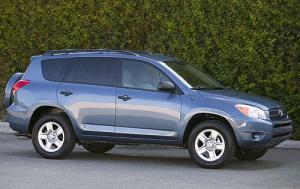
The third-generation RAV4 marked a significant shift in size and capability. It became larger, more practical, and more family-oriented than earlier versions. Toyota also introduced a V6 option during this period, which gave the RAV4 unexpectedly strong performance for a compact SUV.
From a reliability standpoint, this generation is solid overall, but it is the most “engine-dependent” of the entire lineup. Choosing the right powertrain makes a noticeable difference in long-term ownership experience.
Generation Snapshot
- Overall reliability: Good to very good
- Best years: 2010–2012
- Most reliable engine: 3.5L V6
- Key concern: Oil consumption on early 2.4L engines
The V6 models are the standout choice here. They are smooth, durable, and have proven capable of very high mileage with relatively few major issues beyond normal maintenance. They also make the RAV4 feel much more powerful than most competitors of the same era.
The four-cylinder models are more mixed. The 2.4-liter engine used in earlier years is the main concern due to potential oil consumption in some vehicles. Not every engine is affected, but the issue is significant enough that inspection history matters more than mileage alone.
Which Toyota RAV4 Years Have the Worst Oil Consumption Issues?
The 2006–2008 Toyota RAV4 model years have the greatest risk of excessive oil consumption, specifically when equipped with the 2.4-liter 2AZ-FE four-cylinder engine. Toyota acknowledged that some engines could consume excessive oil and established a warranty-enhancement program covering affected vehicles. The problem is associated with the piston and piston-ring design, which can allow increasing amounts of oil to enter the combustion chambers as the engine accumulates mileage.
Warning signs include a falling dipstick level between oil changes, blue exhaust smoke, oil-fouled spark plugs, an illuminated oil-pressure warning light, or a history of frequent oil additions. A recently topped-off crankcase can make the problem difficult to identify during a brief inspection, so ask specifically how much oil the vehicle uses between changes and review its maintenance records. The available V6 does not share this particular 2AZ-FE oil-consumption problem, and the RAV4 received a different 2.5-liter four-cylinder engine beginning in 2009.
Later in the generation, Toyota improved the four-cylinder with a 2.5-liter unit that is generally much more dependable and easier to recommend.
Bottom line: This generation is worth considering, but it rewards careful selection. The best choices are 2010–2012 models, especially V6 versions or later 2.5-liter four-cylinder examples.
Fourth Generation (2013–2018)
The fourth-generation RAV4 is where the model became fully refined as a long-term ownership product. Toyota removed the V6, simplified the lineup, and focused heavily on efficiency, safety, and everyday usability.
While it may not be the most exciting version of the RAV4, it is widely considered one of the most dependable. This is the generation that most used-car buyers end up gravitating toward once they compare price, age, and reliability together.
Generation Snapshot
- Overall reliability: Excellent
- Best years: 2016–2018
- Engine: 2.5L four-cylinder
- Transmission: 6-speed automatic
The 2.5-liter engine in this generation is one of Toyota’s most consistently reliable modern four-cylinders. It avoids the oil consumption concerns of earlier engines and has a strong track record of reaching high mileage with standard maintenance.
The transmission choice is also important. Toyota avoided CVTs in this generation and instead used a conventional automatic, which tends to age more predictably over time compared to many competitors.
Most issues that do appear are minor and age-related: water pumps, suspension wear, liftgate struts, and occasional infotainment glitches. None of these are typically deal-breakers.
Bottom line: If you want the safest all-around used RAV4 recommendation, this generation—especially 2016–2018—is usually the starting point.
Fifth Generation (2019–2022)
The fifth-generation RAV4 brought a more modern design, improved fuel economy, and a stronger focus on hybrid technology. It is more refined than previous generations and feels noticeably more advanced inside and out.
This generation is also where the RAV4 Hybrid becomes a standout option. Toyota’s hybrid systems are no longer experimental technology—they are mature, widely used, and among the most proven electrified drivetrains in the industry.
Generation Snapshot
- Overall reliability: Very good to excellent
- Best years: 2020–2022
- Best powertrain: 2.5L Hybrid
- Key early issue: Minor first-year problems in 2019
The gasoline engine is strong and simple, avoiding turbocharging in favor of a naturally aspirated design. The automatic transmission is also generally well regarded and has not shown widespread long-term issues so far.
Bottom line: The 2020–2022 RAV4 Hybrid is arguably the most complete version of the RAV4 Toyota has built during this entire period. For more details, see: Toyota RAV4 Hybrid Reliability Guide.
Reliability By Engine
Engine choice is one of the most important factors when evaluating a used Toyota RAV4. While most options are strong, long-term reliability and ownership risk still vary depending on generation and configuration.
Here’s how each engine performs in real-world use:
- 2.4L four-cylinder (2006–2008): Generally durable, but the weakest option due to documented oil consumption issues in some vehicles. Best approached only with strong service history.
- 2.5L four-cylinder (2009–2018): One of Toyota’s most dependable modern engines. Widely proven, low-maintenance, and capable of very high mileage.
- 3.5L V6 (2006–2012): Exceptionally durable and noticeably stronger in performance. One of the standout engines in the entire RAV4 lineup.
- 2.5L Dynamic Force (2019–2022 gas): Modern and efficient naturally aspirated engine with strong early reliability results and no major widespread issues so far.
- 2.5L Hybrid (2019–2022): One of the most reliable powertrains Toyota offers. Combines long-term durability with excellent efficiency and low running costs.
Final note: The safest long-term bets are the 2.5L (2009–2018), the 3.5L V6 (2006–2012), and the 2.5L Hybrid (2019–2022). The early 2.4L engine requires the most caution.
Possible Problems Across RAV4 Model Years
Across the 2006–2022 range, the Toyota RAV4 does not suffer from many widespread catastrophic failures, but there are a handful of recurring issues that show up often enough to be worth understanding before buying.
The important thing to understand is that these problems are not evenly distributed. In most cases, they are tied to specific engines or early production years rather than the entire lineup.
Here are the main issues to know before buying:
- Oil consumption (2006–2008 2.4L engines): Some early four-cylinder engines can consume oil at higher mileage. Not every vehicle is affected, but it should always be checked during inspection.
- Water pump seepage: A relatively common aging issue on higher-mileage four-cylinder models. Usually a slow leak rather than sudden failure.
- Suspension wear: Struts, sway bar links, and control arm bushings wear in a predictable way over time, leading to clunks, uneven tire wear, or a looser ride.
- Liftgate struts (4th generation): Gradual weakening over time. More of a convenience issue than a mechanical concern.
- Roof rail leaks (early 5th generation): Some 2019–2020 models experienced minor water intrusion issues, typically addressed through service updates or repairs.
- Infotainment glitches (5th generation): Occasional software freezes or Bluetooth issues. Annoying, but not mechanically serious.
Overall takeaway: The RAV4’s problems tend to be predictable, well-documented, and mostly tied to wear or specific production periods rather than systemic drivetrain failures.
Maintenance Cost Outlook
The Toyota RAV4 is generally inexpensive to own over the long term, especially compared to European SUVs or more complex turbocharged competitors. Most costs come from predictable maintenance rather than major mechanical failures.
Typical ownership costs break down like this:
- Routine maintenance: Oil changes, filters, tires, and brake service form the bulk of expenses and are relatively low compared to class averages.
- Engine and transmission repairs: Rare when the vehicle is maintained properly. Most RAV4s avoid major drivetrain costs entirely.
- Suspension and wear items: Struts, bushings, and wheel bearings are the most common mid- to high-mileage expenses.
- Hybrid models: Often lower brake wear due to regenerative braking, with generally strong long-term durability of hybrid components.
Bottom line: The RAV4 is not the cheapest SUV to buy, but it is consistently one of the least expensive to keep on the road over time.
Which Toyota RAV4 Years Should You Avoid?
The Toyota RAV4 years requiring the most caution are 2006–2008 models with the 2.4-liter engine, along with the first-year 2013 and 2019 redesigns. None of these years is automatically a bad purchase, but each has a specific concern that makes its condition, repair history, and pre-purchase inspection especially important.
- 2006–2008: The 2.4-liter four-cylinder engine can develop excessive oil consumption as mileage increases. The available V6 does not share this particular problem.
- 2013: As the first year of the fourth generation, the 2013 RAV4 accumulated more complaints than later versions, including torque-converter shudder on some vehicles. Confirm that the transmission operates smoothly during light acceleration.
- 2019: The first fifth-generation model can exhibit hesitation when accelerating from a slow roll, and some vehicles also experienced fuel-tank filling complaints, roof-rail water leaks, or other early-production issues. Hybrid AWD models additionally deserve inspection for high-voltage rear-motor cable corrosion.
Bottom line: These RAV4 years should be inspected more carefully, not rejected automatically. A 2006–2008 four-cylinder that consumes oil or a 2019 with unresolved problems is best avoided, but a properly repaired and well-maintained example can still be a reasonable purchase.
What Are the Best Used Toyota RAV4 Model Years to Buy?
The best used Toyota RAV4 years include 2016–2018 for the strongest overall balance of reliability and value, 2020–2022 Hybrid models for efficiency and refinement, and 2010–2012 models for buyers seeking an older, more affordable RAV4. The right choice depends on budget, desired fuel economy, and whether the buyer prefers a conventional gasoline powertrain or Toyota’s hybrid system.
- 2016–2018: These later fourth-generation models offer an excellent combination of proven engines, dependable transmissions, modern safety equipment, and reasonable used prices. The 2018 model is especially appealing as the final and most mature year of the generation.
- 2020–2022 Hybrid: These models combine excellent fuel economy with Toyota’s durable hybrid system and smooth eCVT. On AWD versions, inspect the rear-motor high-voltage cable for corrosion and verify whether applicable Toyota support-program work has been completed.
- 2010–2012 V6: These are excellent choices for buyers who want stronger acceleration and towing ability. The 3.5-liter V6 has a strong durability record, although fuel economy is lower than with four-cylinder and hybrid models.
- 2009–2012 four-cylinder: Toyota’s 2.5-liter engine avoids the specific oil-consumption concern associated with the earlier 2.4-liter engine. These years can provide good value when maintenance and condition are strong.
Overall takeaway: The 2016–2018 RAV4 is the safest general recommendation for most used buyers. The 2020–2022 Hybrid is the better choice for fuel economy and newer technology, while a well-maintained 2010–2012 model remains a strong lower-cost alternative.
It should also be noted that older versions of the RAV4 have earned a place on our list of the 10 Most Reliable Older SUVs to Buy. See how they compare with other dependable used SUVs.
Pricing
Knowing which RAV4 model years to concentrate on is step 1. Step 2 is knowing how to actually get an excellent used RAV4 price.
Also, getting a strong trade-in allowance often has the biggest impact on your final price. See KBB versus Edmunds Appraisals - Which Is Better to learn about getting accurate and fair trade-in values before negotiating with a dealer.
How Long Does A Toyota RAV4 Last?
A well-maintained Toyota RAV4 commonly reaches 200,000 to 300,000 miles, and some exceed that range. Longevity is primarily determined by maintenance consistency rather than model year alone.
Regular oil changes, cooling system care, and timely replacement of wear items are the biggest factors in long-term durability. Most RAV4s that fail early do so because of neglect or accident damage rather than inherent mechanical weakness.
Pre-Purchase Inspection Checklist
A careful inspection is still important even with a reliable vehicle like the RAV4. Condition and maintenance history matter more than almost anything else in determining long-term ownership experience.
- Check engine oil level and condition before starting the vehicle
- Review maintenance records for regular oil changes and service history
- Inspect underneath for oil or coolant leaks
- Listen for suspension noise over bumps or rough roads
- Test transmission smoothness under light and moderate acceleration
- Check tires for uneven wear patterns
- Test all electronics, including infotainment and backup camera
- Inspect for signs of water intrusion in newer models (especially 2019–2022)
- Look for accident repair indicators or mismatched panels
- Confirm recall completion where applicable
A thorough inspection often reveals more about a RAV4 than the model year itself.
Pros And Cons
Pros
- Strong long-term reliability across most model years
- Low to moderate maintenance costs
- Excellent resale value
- Widely available parts and service support
- Many examples exceed 200,000 miles
- Hybrid models offer excellent fuel economy and durability
Cons
- Early 2.4L engines require careful inspection
- Not as engaging to drive as some competitors
- Used prices can be higher than rivals
- Some model years have minor first-year issues
- Cabin noise is higher in older generations
Competitor Comparison
The RAV4 competes directly with several strong compact SUVs, and each has its own strengths depending on what the buyer prioritizes.
The Honda CR-V is the closest rival and matches the RAV4 closely in long-term reliability and practicality. Both are considered top-tier used SUV choices.
The Mazda CX-5 offers a more engaging driving experience and a more premium interior feel, but does not yet match the same long-term reliability track record as the RAV4 and CR-V.
The Subaru Forester provides standard all-wheel drive and strong visibility, but tends to have slightly higher long-term maintenance costs in some ownership scenarios.
The Ford Escape and Nissan Rogue are often cheaper on the used market, but that lower price can reflect higher long-term risk depending on engine and model year.
Bottom line: The RAV4 and CR-V remain the safest overall choices for buyers prioritizing long-term dependability.
Final Verdict
The Toyota RAV4 stands out as one of the most consistently dependable compact SUVs you can buy in the used market. Across the 2006–2022 range, it avoids the kinds of widespread engine, transmission, or electrical failures that affect many competitors, and instead delivers long-term reliability built on simple, proven engineering.
That does not mean every model year is equal. The early 2.4-liter engines in 2006–2008 models require careful inspection, and first-year redesigns like 2013 and 2019 bring a few minor issues that should not be ignored. But these are exceptions in an otherwise very stable ownership record.
The strongest overall choices remain the same across most ownership scenarios. The 2013–2018 generation offers the best balance of price, reliability, and modern features. The 2020–2022 Hybrid models represent the most refined and efficient version of the RAV4 to date. And the 2010–2012 V6 models remain a standout for buyers who value performance alongside durability.
What defines the RAV4 is not perfection, but predictability. It is the kind of vehicle that tends to age in a straightforward way, with maintenance needs that are generally easy to anticipate and manage. For most buyers, that predictability matters more than performance figures or luxury features.
Final takeaway: If you choose the right year and confirm a solid maintenance history, a used Toyota RAV4 is one of the lowest-risk long-term SUV purchases you can make in this segment.
Also, still comparing Toyota models? See our Toyota reliability guide for the best used Toyota models and years, common problems to watch for, and how the major Toyota models compare.
Your Trade-In
It's good to always know the value of your trade-in while you're evaluating your next possible purchase. Here's a good source for a quick and accurate appraisal: free trade-in appraisal.
What's Next?
Understand Dealer Fees
Before agreeing to a dealer's numbers, see which dealer fees are legitimate, which can be negotiated, and which can be avoided.