

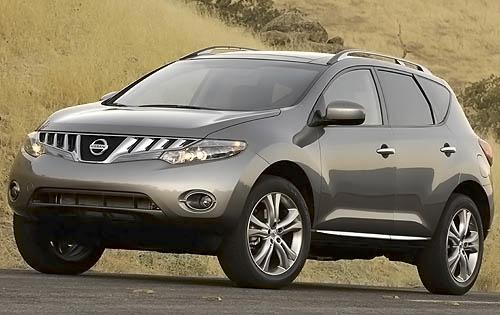
The 2010 Nissan Murano can be a comfortable and surprisingly enjoyable older crossover, but its long-term reliability comes with one major qualification: the continuously variable transmission. The 3.5-liter V6 itself is generally a strong and durable engine, and a well-maintained Murano can exceed 200,000 miles. However, CVT problems can be expensive enough to determine whether an individual Murano is worth buying.
Every 2010 Murano is powered by Nissan's naturally aspirated 3.5-liter V6. This VQ-series engine has a long history in Nissan and Infiniti vehicles and is generally capable of substantial mileage with proper maintenance. It uses a timing chain rather than a timing belt, so there is no routine timing-belt replacement interval.
The V6 is paired with Nissan's Xtronic continuously variable transmission. When operating properly, the CVT provides smooth acceleration and keeps the engine within an efficient operating range. Unfortunately, transmission wear and failure are among the most important concerns when shopping for an older Murano. Shuddering, whining, delayed engagement, hesitation, slipping sensations, or poor acceleration should never be ignored.
Transmission condition becomes especially important because a 2010 Murano is now inexpensive enough that a major CVT repair can represent a substantial percentage of the vehicle's value. An otherwise excellent Murano with a failing transmission can therefore be a much worse purchase than a higher-mileage example whose CVT has been properly maintained and operates perfectly.
Front-wheel drive and all-wheel drive were available. Front-wheel-drive models offer somewhat greater mechanical simplicity, while AWD versions add a transfer unit, driveshaft, rear differential, and related components. The AWD system is useful in poor weather but introduces additional potential repair areas as the vehicle ages.
Beyond the CVT, buyers should inspect for oil leaks, engine mount deterioration, suspension and wheel-bearing wear, steering problems, cooling-system issues, and electrical accessory failures. These aren't necessarily reasons to reject the vehicle, but several age-related repairs occurring simultaneously can make a cheap Murano expensive to bring back into good condition.
Overall, I would rate the 2010 Nissan Murano as average for reliability, largely because the durable V6 is offset by uncertainty surrounding the CVT. A well-maintained Murano with a healthy transmission can still be a very usable crossover. One already showing CVT symptoms is a vehicle I'd avoid.
- Overall reliability: Average, with CVT condition being the biggest variable
- Expected lifespan: 175,000 to 225,000+ miles with proper maintenance and a durable transmission
- Best choice: Well-maintained example with documented service history and a smooth, quiet CVT; FWD offers somewhat greater mechanical simplicity
- Watch for: CVT shuddering or whining, delayed acceleration, transfer case or AWD problems, oil leaks, engine mounts, wheel bearings, suspension wear, and electrical issues
Bottom line: The 2010 Murano's 3.5-liter V6 is one of its strongest attributes, but I'd never buy one without carefully evaluating the CVT. If the transmission performs properly both cold and fully warmed up and the vehicle has been well maintained, a 2010 Murano can still provide substantial useful life.
- Why it's a good choice: Strong V6 engine, comfortable ride, upscale interior for its era, roomy seating, useful cargo capacity, and relatively inexpensive used prices
- Biggest concern: CVT problems can be expensive enough to overwhelm the value of an older Murano
- Best version: The best-maintained example available; FWD if you don't need AWD and want fewer drivetrain components
- Buy only if: The CVT operates normally after an extended test drive, the engine is healthy, and the vehicle passes a thorough pre-purchase inspection
Is the 2010 Nissan Murano a Good Year or One to Avoid?
The 2010 Nissan Murano is best described as a "buy selectively" year rather than one I'd automatically avoid. Its basic engine is strong, the second-generation Murano is comfortable and practical, and good examples can accumulate substantial mileage. The problem is that transmission condition can dramatically change the ownership experience.
If the Murano used a conventional automatic transmission, I'd be considerably more enthusiastic about it as an older used crossover. Nissan's 3.5-liter V6 is generally durable and provides much stronger acceleration than the four-cylinder engines found in many similarly priced crossovers. The CVT is what introduces the largest financial risk.
Don't judge the transmission solely by whether the vehicle moves normally during a short drive around the block. Some problems become more noticeable as the drivetrain warms up or during sustained acceleration and highway driving. A longer test drive is particularly important.
Service history can also influence the decision. Evidence that the correct CVT fluid was serviced appropriately is a positive sign. If a replacement transmission has been installed, find out when it was replaced, whether it was new or remanufactured, who performed the work, and whether documentation is available.
I'd also give some preference to a front-wheel-drive Murano if AWD isn't necessary. It doesn't eliminate the CVT concern, but removing the additional AWD hardware reduces the number of aging drivetrain components that may eventually require attention.
Buyer Takeaway: I wouldn't automatically avoid a 2010 Murano, but I would reject one quickly if the CVT shows questionable behavior. A healthy, documented Murano can be an attractive value. A bargain-priced one with transmission symptoms can become a very expensive bargain.
For more on the Murano's reliability, including best years to buy, years to avoid, common problems, and much more, be sure to see our comprehensive Nissan Murano Reliability Guide.
2010 Nissan Murano Common Mechanical Problems
The CVT deserves the most attention when evaluating a 2010 Murano, but it isn't the only potential trouble area. At this age, buyers should evaluate the complete drivetrain, suspension, steering, cooling system, and electrical equipment rather than focusing exclusively on mileage.
- CVT failure: The continuously variable transmission is the biggest mechanical concern. Internal wear can eventually cause shuddering, hesitation, poor acceleration, unusual noises, or complete failure. Major transmission work can be difficult to justify financially on an inexpensive older Murano.
- CVT shuddering: Vibration or shuddering during acceleration can indicate transmission trouble. Engine mounts, tires, and ignition problems can cause similar sensations, so proper diagnosis is important.
- CVT whining: A pronounced whine that changes with acceleration or vehicle speed deserves attention. Some operating sound is inherent to a CVT, but unusually loud or worsening noise can indicate transmission wear or excessive operating temperature.
- Delayed acceleration: Hesitation after pressing the accelerator or an increase in engine speed without corresponding vehicle acceleration can indicate a developing CVT problem.
- Delayed Drive or Reverse engagement: The transmission should engage promptly when shifting out of Park. A noticeable delay, harsh engagement, or repeated need to increase engine speed before the vehicle moves warrants further investigation.
- CVT overheating: Transmission behavior can deteriorate as temperature increases. Extended highway driving, hot weather, hills, and other demanding conditions can reveal symptoms that aren't apparent during a brief test drive.
- CVT fluid maintenance: Correct fluid is critical in a continuously variable transmission. Service records showing appropriate CVT maintenance are valuable. I'd be cautious about a vehicle whose transmission history is completely unknown.
- Transfer case or transfer unit leaks: AWD models add additional drivetrain components that can develop fluid leaks or internal wear. Inspect underneath the vehicle and investigate any signs of leaking fluid around the AWD hardware.
- AWD driveline noise: Whining, grinding, binding, vibration, or clunking can indicate problems involving the transfer unit, driveshaft, rear differential, CV joints, or related components.
- Engine oil leaks: Nissan's 3.5-liter V6 is durable, but gaskets and seals can begin leaking as mileage increases. Check the oil level before startup and inspect the engine and underside for significant leakage.
- Valve cover gasket leaks: Aging valve cover gaskets can allow oil to seep down the engine. Minor leakage may be manageable, but significant leaks should be repaired, particularly if oil reaches other components.
- Timing-chain and tensioner noise: The V6 uses timing chains designed for long service. Persistent rattling or abnormal mechanical noise during startup or operation should still be investigated, particularly when maintenance history is poor.
- Engine mount deterioration: Worn mounts can create considerable vibration at idle or a clunk when shifting between Reverse and Drive. Mount deterioration can sometimes make a healthy engine and transmission feel much rougher than they really are.
- Wheel bearing wear: A humming or growling noise that becomes louder with road speed can indicate a worn hub or bearing. This is a relatively normal higher-mileage repair but should be included when calculating immediate ownership costs.
- Front suspension wear: Struts, control arm bushings, ball joints, sway bar links, and related components can deteriorate. Clunks, loose steering, uneven tire wear, or excessive bouncing indicate that suspension work may be approaching.
- Steering problems: Inspect for abnormal steering effort, noises, looseness, or fluid leakage where applicable. A Murano should track smoothly and shouldn't require constant correction on a level road.
- CV axle and joint wear: Clicking during turns, torn CV boots, or vibration during acceleration can indicate worn axle joints. AWD models have additional driveline components to inspect.
- Cooling-system problems: Radiator components, hoses, thermostats, seals, and other cooling-system parts can deteriorate with age. Check coolant level and look for dried residue or evidence of previous overheating.
- Brake wear: The Murano is relatively heavy, and worn pads, rotors, calipers, or hydraulic components can create pulsation, pulling, grinding, or uneven braking.
- Air conditioning problems: Compressor, refrigerant, condenser, actuator, and electrical problems can reduce cooling performance. Test the air conditioning throughout the drive rather than simply checking whether cold air appears initially.
- Power seat and interior electrical problems: Seat motors, windows, door locks, switches, keyless-entry components, audio equipment, and other accessories can fail as the vehicle ages. Test every feature before buying.
- Power liftgate problems: On equipped models, liftgate motors, struts, switches, sensors, latches, and wiring can cause intermittent or failed operation.
- Rust and underbody corrosion: Muranos from road-salt regions should be inspected underneath for corrosion affecting suspension mounting areas, brake and fuel lines, exhaust components, subframes, and structural sections.
The key is separating ordinary old-car repairs from problems that can determine whether the vehicle is worth owning. A Murano needing struts, an engine mount, or a wheel bearing may still be a reasonable purchase. A Murano with a shuddering CVT, leaking AWD components, and several thousand dollars of deferred maintenance is a different proposition.
Buyer Tip: Drive the Murano considerably longer than you might drive an ordinary used car. Start with the drivetrain cold, then continue until everything reaches normal operating temperature. Include stop-and-go driving, moderate acceleration, and highway speeds if possible. Pay particular attention to CVT whine, shuddering, delayed response, unusual changes in engine speed, or behavior that worsens as the transmission gets hot. A diagnostic scan and professional pre-purchase inspection are particularly worthwhile.
2010 Nissan Murano Pros and Cons
The 2010 Murano still has several qualities that make it appealing today. Nissan gave it a more upscale interior and stronger performance than many mainstream crossovers of its era, and depreciation has made it inexpensive. The drawback is that the low purchase price needs to be weighed against the possibility of an expensive transmission or AWD repair.
Pros
- Strong 3.5-liter V6: The naturally aspirated VQ-series engine provides good acceleration and has demonstrated the ability to accumulate substantial mileage.
- No timing belt: The V6 uses timing chains, eliminating routine timing-belt replacement.
- Comfortable ride: The Murano is tuned more for everyday comfort than aggressive handling and works particularly well as a highway cruiser.
- Upscale interior: Cabin design and materials gave the Murano a more premium feel than many mainstream crossovers when new.
- Comfortable seating: Front and rear passenger accommodations are generous for a two-row crossover.
- Useful cargo capacity: The rear seats can be folded to create substantial room for luggage and other large items.
- Available all-wheel drive: AWD provides additional traction for buyers who regularly encounter snow or poor weather.
- Good performance for its era: The V6 makes the Murano considerably quicker than many four-cylinder compact crossovers.
- Affordable used prices: Depreciation means a clean Murano can provide a lot of comfort, equipment, and performance for relatively little initial money.
- Good parts availability: Nissan sold large numbers of Muranos and used the VQ engine family extensively, so routine mechanical parts and service knowledge are widely available.
Cons
- CVT is the biggest reliability concern: An expensive transmission failure can determine whether an older Murano is economically worth repairing.
- CVT problems may not appear immediately: A short test drive may miss symptoms that develop after the transmission reaches operating temperature.
- AWD adds complexity: Transfer case, driveshaft, differential, axle, and related components provide useful capability but introduce additional repair possibilities.
- Fuel economy is only moderate: The powerful V6 and substantial vehicle weight mean fuel costs are higher than with many four-cylinder crossovers.
- Age-related suspension costs: Struts, bushings, wheel bearings, mounts, and steering components may now need attention regardless of mileage.
- Numerous convenience features can create small repairs: Power seats, liftgate equipment, climate controls, sensors, and other accessories add potential age-related failures.
- Transmission history can be difficult to establish: Older Muranos may have passed through several owners without complete CVT service records.
- A cheap Murano can be a false bargain: A low purchase price doesn't compensate for a failing CVT or several thousand dollars of accumulated repairs.
Buyer Takeaway: The 2010 Nissan Murano can still be a good older crossover if you find the right one. I have considerably more confidence in the 3.5-liter V6 than I do in an unknown-history CVT, so transmission condition should dominate your inspection. I'd rather buy a well-maintained 150,000-mile Murano with a perfectly functioning, documented drivetrain than a neglected 90,000-mile example showing early transmission symptoms. If the CVT performs properly after a long test drive, the engine is healthy, and the rest of the vehicle has been maintained, the 2010 Murano can still offer a lot of comfortable transportation for the money.
Your Trade-In
It's good to always know the value of your trade-in while you're evaluating your next possible purchase. Here's a good source for a quick and accurate appraisal: free trade-in appraisal.
What's Next?
If You May Be Buying Soon
If you may be buying a used car soon, see how to identify the dealerships most motivated to get your sale, and therefore most ready to lower their price more than the rest. This is often the difference between getting a good price and getting a great one.
Also, More On Nissan Reliability
If you'd like to compare different Nissan models, or model years, including the Murano, be sure to read our Nissan Reliability & Problems: Best Used Nissans & Years Guide. It highlights the models, best years to buy, common problems, and may help you choose the right vehicle for you.
Some Insider Insights: