

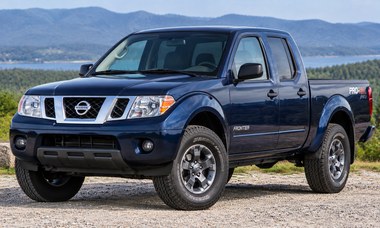
The Nissan Frontier can be an exceptionally durable midsize pickup, and a well-maintained example can realistically reach 200,000 miles or more. Some Frontiers make it well beyond 250,000 miles. But reliability varies considerably by year, engine and transmission, particularly among early versions of the long-running second generation.
The Frontier's history is unusual because Nissan kept its second-generation truck in production for an exceptionally long time. That gave Nissan years to improve many early problems, making a late second-generation Frontier a very different used-truck proposition from an early 2005 model.
This guide covers 1998 through 2024 U.S.-market Nissan Frontiers, including the 2.4L four-cylinder, 3.3L V6, supercharged 3.3L V6, 4.0L VQ40DE V6 and newer 3.8L V6. It also covers manual transmissions, conventional automatics, two-wheel drive, four-wheel drive and PRO-4X models.
In This Guide You'll Learn
- Which Nissan Frontier years are generally the most reliable
- Which Frontier years deserve extra caution
- How long a Nissan Frontier can realistically last
- Whether a Frontier can reach 200,000 or 250,000 miles
- Which Frontier engine is most reliable
- Why certain 2005-2010 Frontiers can develop serious radiator and transmission problems
- Which 4.0L V6 Frontiers have timing-chain concerns
- How the 3.8L V6 and nine-speed automatic compare with the older 4.0L drivetrain
- Whether a manual or automatic Frontier is better for long-term reliability
- What to check when buying a high-mileage Frontier
However, if you're also considering a brand-new Frontier or other new vehicle, you may want to come back to this and take a look at a handy technique that locates the dealer most ready to make concessions.
Nissan Frontier Reliability Overview
Overall, the Nissan Frontier has a strong reliability record, especially when the right years are selected. Its reputation for durability is helped by relatively straightforward naturally aspirated engines, conventional transmissions and a long period during which Nissan made relatively few fundamental changes to the truck.
The 1998-2004 first-generation Frontier is mechanically simple by modern standards. The 2.4L four-cylinder and naturally aspirated 3.3L V6 aren't particularly powerful, but both can provide substantial mileage. Age, rust and previous truck use now matter more than minor differences between individual years.
The 2005-2021 second generation is the heart of the used Frontier market. Its 4.0L VQ40DE V6 is powerful and capable of very high mileage, but early trucks have two important concerns: timing-chain-related problems and the possibility of radiator failure allowing coolant and automatic-transmission fluid to mix.
Later second-generation trucks are much more attractive. By the 2010s, the Frontier had become an unusually mature design, and 2012-2019 models are among the years I'd look at first for proven long-term durability.
For 2020, Nissan introduced its newer 3.8L V6 and nine-speed automatic while retaining the old second-generation body. The completely redesigned third-generation Frontier arrived for 2022 using essentially the same basic powertrain.
Bottom Line: The Frontier can be one of the better high-mileage midsize pickups to buy used. The biggest distinction is between early second-generation trucks with known radiator and timing-chain concerns and the much more mature later trucks.
Nissan Frontier Reliability at a Glance
| Category | What Used-Truck Buyers Should Know |
|---|---|
| Overall Reliability | Generally very good, particularly on later 4.0L second-generation trucks |
| Best Proven Used Years | 2012-2019 are strong starting points for buyers seeking established durability |
| Years Requiring Extra Inspection | 2005-2010, especially for radiator/transmission contamination and early 4.0L timing-chain concerns |
| Most Proven Engine | 4.0L VQ40DE V6, particularly in later second-generation trucks |
| Major Early Second-Generation Concern | Radiator failure allowing coolant and automatic-transmission fluid to mix on affected trucks |
| 2020-2021 Difference | Old second-generation body with newer 3.8L V6 and nine-speed automatic |
| 2022-2024 | Redesigned third generation using the 3.8L V6 and nine-speed automatic |
| Expected Lifespan | Approximately 200,000-250,000 miles with good maintenance; exceptional examples can go farther |
How Many Miles Can a Nissan Frontier Last?
A properly maintained Nissan Frontier can realistically last 200,000 to 250,000 miles, and some well-cared-for trucks exceed 300,000 miles. The Frontier is one vehicle where 200,000 miles doesn't necessarily represent the end of useful life.
The 4.0L VQ40DE V6 deserves much of the credit for the Frontier's high-mileage reputation. Once the concerns affecting some early engines and cooling systems are accounted for, the 4.0L can provide impressive longevity.
The older 2.4L four-cylinder and 3.3L V6 can also accumulate substantial mileage. At this point, however, trucks using those engines are old enough that rust, previous maintenance and how the truck was used become more important than the engine design itself.
The newer 3.8L V6 is promising and has now been in Frontiers since 2020, but it doesn't yet have the enormous high-mileage history of the 4.0L. The same applies to the nine-speed automatic paired with it.
Is 100,000 Miles a Lot for a Nissan Frontier?
No. 100,000 miles isn't unusually high for a well-maintained Frontier. A good 4.0L truck with 100,000 miles can potentially have many years and another 100,000 miles or more of useful service remaining.
Condition matters more than simply choosing the lowest odometer reading. A 130,000-mile Frontier with documented maintenance and mostly highway use may be a better truck than an 80,000-mile example that has towed heavily, been driven off road or received minimal maintenance.
Can a Nissan Frontier Last 200,000 Miles?
Yes. 200,000 miles is a realistic lifespan for a Nissan Frontier, particularly for the long-running second generation.
That doesn't mean the truck will reach 200,000 miles without repairs. Wheel bearings, suspension components, engine mounts, cooling-system parts, sensors, seals and driveline components may need attention along the way.
The key distinction is that the engine itself can often remain serviceable long after these supporting components begin requiring replacement.
Can a Nissan Frontier Last 250,000 Miles or More?
Yes. 250,000 miles is achievable for a good Frontier, and particularly strong examples can exceed 300,000 miles. At that point, however, maintenance history becomes far more important than the truck's general reliability reputation.
A high-mileage Frontier with documented transmission service, cooling-system maintenance, suspension repairs and regular oil changes can be a better purchase than a substantially lower-mileage truck with an unknown history.
Nissan Frontier Reliability by Generation
1998-2004 Nissan Frontier: Simple and Durable, but Age Matters
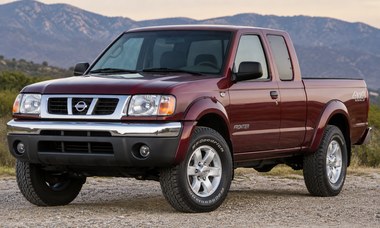
The first-generation Frontier is a relatively simple compact pickup compared with today's larger and more complicated midsize trucks.
Early trucks commonly use Nissan's 2.4L KA24DE four-cylinder, while V6 models use the 3.3L VG33E. Nissan also offered a supercharged version of the 3.3L V6 on certain later first-generation models.
The naturally aspirated engines are generally durable when maintained. The 2.4L is slow by modern pickup standards but mechanically straightforward. The 3.3L V6 provides better truck performance without being particularly stressed.
The supercharged 3.3L adds useful power, but I'd favor a naturally aspirated engine if maximum simplicity and lowest long-term repair risk were my priorities.
Both manual and conventional automatic transmissions were available. These trucks predate the CVT concerns associated with some Nissan passenger vehicles.
The biggest issue today is simply age. Even the newest examples are now old enough for seals, hoses, suspension bushings, steering components, cooling-system parts and electrical components to deteriorate.
Common 1998-2004 Frontier Problems
- Oil leaks as engines age
- Cooling-system deterioration
- Engine and transmission mount wear
- Suspension and steering wear
- Wheel-bearing and driveline noise
- Air-conditioning problems
- Electrical and power-accessory problems
- Exhaust-system deterioration
- Four-wheel-drive component wear
- Rust and frame corrosion
Buyer Tip: On a first-generation Frontier, I'd put frame condition and previous use ahead of mileage. A rust-free 180,000-mile truck may be a much better purchase than a 100,000-mile example with serious corrosion underneath.
Bottom Line: The 1998-2004 Frontier can be a remarkably durable little truck, but you're now buying the condition and maintenance history of an individual 20-plus-year-old vehicle rather than simply buying the Frontier's reputation.
2005-2021 Nissan Frontier: The Generation That Built Its High-Mileage Reputation
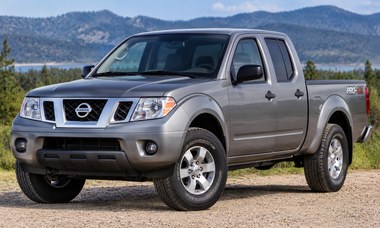
Nissan redesigned the Frontier for 2005, creating a larger and considerably more powerful truck. This second generation remained in production through 2021, making it one of the longest-running pickup designs of its era.
Most of the attention goes to Nissan's 4.0L VQ40DE V6. It produces substantially more power than the previous 3.3L and is capable of excellent longevity. A 2.5L four-cylinder was also available on less expensive two-wheel-drive trucks for much of the generation.
The Frontier's long production run is important for reliability. Early trucks had several meaningful problems, but Nissan had years to refine the design. As a result, a 2015 Frontier shouldn't be evaluated as though it has exactly the same reliability risks as a 2005 Frontier.
2005-2010 Frontier Radiator and Transmission Problem
The most serious concern on certain early automatic-transmission Frontiers involves the radiator's internal transmission-fluid cooler.
An internal failure can allow engine coolant and automatic-transmission fluid to mix. The resulting pink, milky fluid led to the problem's informal "strawberry milkshake" nickname.
The nickname sounds almost harmless; the consequences aren't. Coolant contamination can severely damage the automatic transmission and turn what begins as a radiator problem into a repair costing thousands of dollars.
This issue is associated primarily with earlier second-generation trucks, particularly 2005-2010 models. When considering one today, find out whether the original radiator was replaced with an updated unit or whether the vulnerability was otherwise properly addressed.
A documented radiator replacement can therefore be a meaningful positive rather than something that automatically makes the truck undesirable.
Frontier 4.0L Timing-Chain Problems
Some early VQ40DE 4.0L V6 engines developed timing-chain guide or tensioner-related wear. One warning sign is a whining or buzzing sound from the engine that changes with rpm.
The issue is most relevant to earlier second-generation trucks and shouldn't be interpreted as evidence that the VQ40DE itself is a poor engine. Once past the early weaknesses, the 4.0L developed an excellent high-mileage reputation.
2011-2019 Frontier Reliability
The later years of this generation are where the Frontier becomes especially attractive as a used truck.
By the 2010s, buyers were getting a mature platform with a proven naturally aspirated V6, conventional automatic or manual transmission, relatively simple electronics and years of production experience behind it.
2012-2019 Frontiers are among my favorite years for someone whose priority is proven long-term reliability. They aren't the most sophisticated midsize trucks, and their interiors and fuel economy can feel dated, but mechanical simplicity is part of their appeal.
PRO-4X models add desirable off-road equipment, but the badge doesn't inherently make the truck more or less reliable. What matters is how the truck was used. A heavily modified or frequently off-roaded PRO-4X deserves more scrutiny than a stock truck with an easier history.
2020-2021 Frontier: New Powertrain in the Old Truck
The 2020 and 2021 Frontiers are unusual. Nissan retained the old second-generation body but replaced the long-running 4.0L V6 and five-speed automatic with the 3.8L V6 and nine-speed automatic that would power the next-generation Frontier.
These two years therefore combine an extremely mature chassis with a substantially newer powertrain.
The 3.8L produces more power than the old 4.0L and doesn't rely on turbocharging. That's appealing for long-term simplicity, although the nine-speed automatic is more complex than the older five-speed.
For buyers specifically seeking the enormously proven 4.0L drivetrain, I'd stop at 2019. For someone who wants the newer powertrain without paying for the redesigned 2022 body, a 2020-2021 Frontier can be an interesting alternative.
Common 2005-2021 Frontier Problems
- Radiator/transmission-fluid contamination on affected early automatic trucks
- Transmission damage resulting from coolant contamination
- Timing-chain guide/tensioner wear on some early 4.0L V6 engines
- Oil leaks as mileage increases
- Engine and transmission mount wear
- Wheel-bearing problems
- Suspension bushing and shock wear
- Rear differential or axle-related noise on some trucks
- Fuel-level sending-unit problems
- Air-conditioning and electrical problems
- Four-wheel-drive and driveline wear
- Rust and frame corrosion, especially in northern climates
Buyer Tip: On a 2005-2010 automatic Frontier, verifying the radiator history is critical. On later trucks, concentrate more heavily on maintenance, rust, previous towing, modifications and evidence of hard off-road use.
Bottom Line: A later 2012-2019 Frontier with the 4.0L V6 is one of the most compelling choices in the model's history for a buyer who values proven durability over the latest technology.
2022-2024 Nissan Frontier: Redesigned Truck With the 3.8L V6
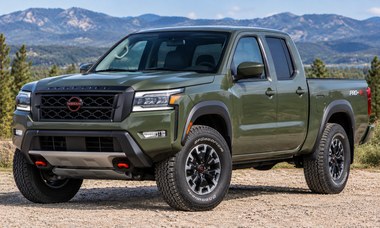
The Frontier finally received a complete redesign for 2022. The new truck looks dramatically different from its predecessor, but the basic powertrain wasn't entirely new: Nissan had already introduced the 3.8L V6 and nine-speed automatic in the 2020 Frontier.
That two-year head start is useful. It means the redesigned truck didn't introduce a completely new engine and transmission at exactly the same time as every other major component.
The 3.8L V6 remains naturally aspirated, which will appeal to buyers who prefer avoiding the turbocharged engines increasingly common in newer pickups. It provides strong power without the additional turbocharger hardware found in some competitors.
The 2022 Frontier deserves normal first-year-redesign caution. That doesn't make it a bad truck, but 2023-2024 models benefit from additional production experience.
It's still too early to say that the 3.8L/nine-speed combination will match the 4.0L's established 200,000- to 250,000-mile record. The older drivetrain has simply had far more time to prove itself.
Common 2022-2024 Frontier Concerns
- Occasional nine-speed transmission shift-quality complaints
- Infotainment and connectivity glitches
- Driver-assistance sensor and warning issues
- Battery and electrical problems
- Interior rattles or trim concerns
- Suspension or steering complaints on some trucks
- Long-term 3.8L and nine-speed durability is still developing
Buyer Tip: I'd generally prefer a 2023-2024 Frontier over an otherwise comparable 2022 because the latter was the first year of the redesigned truck.
Bottom Line: The newest Frontier has a promising naturally aspirated V6 powertrain and is far more modern than the truck it replaced. But buyers primarily interested in proven 200,000-mile durability still have more evidence supporting the later 4.0L second-generation trucks.
How Nissan Frontier Reliability Changed Over the Years
| Frontier Years | Main Reliability Consideration |
|---|---|
| 1998-2004 | Simple engines and conventional transmissions; age, rust and previous use now dominate the buying decision |
| 2005-2010 | Strong 4.0L V6 but radiator/transmission contamination and early timing-chain concerns require investigation |
| 2011-2019 | Mature second-generation trucks; later years are among the strongest choices for proven durability |
| 2020-2021 | Old body combined with newer 3.8L V6 and nine-speed automatic |
| 2022 | First year of completely redesigned third-generation Frontier |
| 2023-2024 | Promising newer trucks with more production maturity, but limited very-high-mileage history |
Nissan Frontier Engine Reliability
2.4L Four-Cylinder Reliability
The 2.4L KA24DE used in early Frontiers is a relatively simple and durable engine. It won't provide the acceleration or towing performance of the V6 models, but its lack of complexity can be appealing to buyers seeking an inexpensive older pickup.
Today, rust, maintenance history and general deterioration matter much more than the engine's original reliability reputation.
3.3L V6 Reliability
The naturally aspirated 3.3L VG33E V6 is another durable older Nissan engine. It's not particularly powerful or fuel efficient, but properly maintained examples can accumulate substantial mileage.
The supercharged 3.3L provides additional performance but adds complexity. For maximum long-term simplicity, I'd favor the naturally aspirated version.
4.0L V6 Reliability
The VQ40DE 4.0L V6 is the engine most closely associated with the Frontier's modern reputation for longevity.
Early examples deserve attention for timing-chain-related problems, but later versions can be exceptionally durable. With regular oil changes and cooling-system maintenance, 200,000 to 250,000 miles is entirely realistic, and some engines go considerably farther.
It's also worth separating engine reliability from the radiator problem. The notorious coolant/transmission-fluid contamination issue can destroy the automatic transmission, but it doesn't mean the 4.0L engine itself is fundamentally unreliable.
3.8L V6 Reliability
The 3.8L V6 arrived for 2020 and continues in the redesigned Frontier. Its naturally aspirated design is appealing for buyers interested in avoiding turbocharger complexity.
So far, it provides a sensible foundation for long-term ownership, but it doesn't yet have the enormous population of 200,000-mile examples that exists for the 4.0L.
That's an important distinction between promising reliability and proven high-mileage reliability.
Which Nissan Frontier Engine Is Most Reliable?
For proven longevity, I'd choose the 4.0L VQ40DE V6 in a later second-generation Frontier. It has years of real-world high-mileage history behind it, parts and service knowledge are widespread, and later trucks avoid much of the uncertainty associated with the earliest versions.
The newer 3.8L may eventually establish an equally strong record, but there isn't enough long-term evidence yet to put it ahead of the 4.0L.
Which Nissan Frontier Powertrain Is Best for Long-Term Reliability?
For a used buyer whose main goal is long-term durability, a 2012-2019 Frontier with the 4.0L V6 is difficult to overlook.
A manual-transmission truck eliminates the automatic transmission and radiator-cooler issue entirely, although manual Frontiers are relatively uncommon and clutch condition becomes important.
Later five-speed automatic trucks can also be excellent. The conventional automatic is well understood, and by this point in the production run the notorious early radiator issue is much less central to the buying decision.
The 2020-2024 3.8L/nine-speed combination is more modern, more powerful and promising, but the older 4.0L drivetrain remains the more proven choice for someone specifically shopping for 200,000- to 250,000-mile potential.
What Are The Best Nissan Frontier Years to Buy?
The best Nissan Frontier years depend somewhat on whether you want the older 4.0L drivetrain with its extensive high-mileage history or the newer 3.8L truck. For buyers primarily concerned with proven reliability, the mature years of the second generation are particularly compelling.
| Frontier Years | Why They Stand Out |
|---|---|
| 2002-2004 | Simple first-generation trucks with proven engines and conventional transmissions; condition and rust are now the major concerns |
| 2012-2019 | Mature second-generation trucks with the proven 4.0L V6; among the best choices for long-term durability |
| 2020-2021 | Extremely mature second-generation chassis combined with newer 3.8L V6 and nine-speed automatic |
| 2023-2024 | Later examples of the redesigned Frontier; promising but not yet as proven at very high mileage as the 4.0L trucks |
Best Older Frontiers: A clean 2002-2004 truck can still make an inexpensive and durable pickup. At this age, however, I'd buy almost entirely on condition, maintenance and corrosion rather than searching for one particular year.
Best Years for Proven Reliability: The 2012-2019 Frontier is the sweet spot for me. These trucks combine the mature second-generation platform with the well-established 4.0L V6 and avoid much of the concern surrounding the earliest years.
Interesting Transitional Years: The 2020-2021 Frontier gives you the old truck's mature chassis with the newer 3.8L V6 and nine-speed automatic. They're unusual enough that buyers specifically interested in the old 4.0L should remember that it disappeared after 2019.
Best Newer Choices: I'd generally favor a 2023-2024 Frontier over an otherwise comparable 2022 because 2022 was the first year of the complete redesign.
Knowing which model years to concentrate on is step 1. Step 2 is knowing how to get a good used Frontier price.
Which Nissan Frontier Years Should You Avoid or Approach With Caution?
No Frontier year needs to be rejected automatically. A truck with documented preventive repairs and excellent maintenance can be a better purchase than a supposedly superior year that has been neglected. But certain years deserve considerably more investigation.
| Frontier Years | Why Use More Caution |
|---|---|
| 1998-2001 | Potentially durable but now very old; corrosion and accumulated mechanical wear can dominate reliability |
| 2005-2010 | Radiator/transmission contamination risk on affected automatic trucks; early 4.0L timing-chain concerns |
| 2011 | Generally preferable to the earliest second-generation trucks, but I'd still investigate radiator history carefully |
| 2020 | First year for the 3.8L V6 and nine-speed automatic |
| 2022 | First year of the completely redesigned third-generation Frontier |
Years I'd Be Most Careful With: The 2005-2010 automatic-transmission Frontiers deserve the greatest scrutiny because a failure involving the radiator's internal transmission cooler can lead to severe transmission damage. Early 4.0L timing-chain concerns add another reason to inspect these trucks carefully.
Which Nissan Frontier Generation Is Most Reliable?
For a buyer shopping today, I'd give the later second-generation Frontier the advantage for proven reliability.
The first generation is mechanically simple and can be extremely durable, but age increasingly works against it. Even a fundamentally sound engine and transmission don't eliminate problems caused by rust, deteriorated rubber components, old cooling systems and decades of previous use.
The second generation had meaningful early problems, but its exceptionally long production run eventually became an advantage. Nissan had years to refine the truck, while the basic 4.0L V6 and conventional transmission remained familiar and well understood.
That's why 2012-2019 models stand out. They aren't technologically advanced compared with newer pickups, but for someone looking for a Frontier that could potentially provide another 100,000 miles after already accumulating substantial mileage, that simplicity has considerable appeal.
The 2022-2024 generation may eventually establish an equally good record. It simply hasn't been on the road long enough to compete with the enormous amount of high-mileage experience available for the older 4.0L trucks.
Nissan Frontier Manual vs. Automatic Transmission Reliability
The Frontier is one of the increasingly uncommon pickups that was available with a manual transmission for much of its history.
A manual Frontier can be attractive for long-term ownership because it eliminates several automatic-transmission components and, importantly, avoids the early second-generation radiator/transmission-fluid contamination scenario that affects automatic trucks.
That doesn't make every manual Frontier automatically better. A worn clutch, damaged synchronizers or evidence of abusive driving can still lead to substantial repair costs. Modified and heavily off-roaded manual trucks deserve particular scrutiny.
The later five-speed automatic paired with the 4.0L V6 can also be very durable. Once you move beyond the early radiator-related concern, there is no reason I'd reject a well-maintained automatic Frontier simply because it isn't a manual.
The nine-speed automatic introduced for 2020 provides more ratios and better performance with the 3.8L V6, but it's a considerably newer design in Frontier service and doesn't yet have the five-speed's long high-mileage history.
Most Common Nissan Frontier Problems
1. Radiator and Transmission-Fluid Contamination
This is the most important problem to understand when shopping an early second-generation automatic Frontier.
On affected trucks, an internal failure in the radiator can allow coolant and automatic-transmission fluid to mix. Once contamination reaches the transmission, internal damage can become severe and expensive.
The issue is associated particularly with 2005-2010 Frontiers. Documentation showing that the vulnerable radiator was replaced with an appropriate updated unit can substantially improve the attractiveness of an otherwise good truck.
2. 4.0L V6 Timing-Chain Problems
Some early VQ40DE engines developed timing-chain guide or tensioner-related wear.
A whining or buzzing noise that rises and falls with engine speed deserves investigation. Timing-chain repair can be expensive, but this problem shouldn't overshadow the excellent durability record of properly sorted later 4.0L engines.
3. Fuel-Gauge and Sending-Unit Problems
Some Frontiers can develop inaccurate fuel-level readings caused by the fuel sending unit or related components.
This isn't remotely as serious as a transmission problem, but an unreliable fuel gauge can create obvious inconvenience and should be corrected.
4. Wheel Bearings and Suspension Wear
Frontiers used for towing, hauling or off-road driving can wear suspension and wheel-bearing components more quickly than lightly used trucks.
Listen for humming or growling that changes with road speed and for clunks over uneven pavement. Uneven tire wear can also point toward suspension or alignment problems.
5. Rear Axle and Differential Problems
Rear differential, axle-seal and related driveline problems can occur on some higher-mileage trucks.
Whining, humming, vibration or fluid leakage from the axle deserves investigation. Previous towing, oversized tires and off-road use can place additional stress on these components.
6. Engine and Transmission Mount Wear
High-mileage Frontiers can develop deteriorated engine or transmission mounts. Excessive vibration at idle, clunks when shifting between drive and reverse, or noticeable drivetrain movement can indicate worn mounts.
7. Oil and Coolant Leaks
Older Frontiers can develop oil seepage and cooling-system leaks as seals, hoses and gaskets age.
Minor seepage on a high-mileage truck isn't necessarily a reason to walk away, but substantial leakage or evidence that the engine has repeatedly operated low on oil or coolant is much more concerning.
8. Rust and Frame Corrosion
Rust can become one of the most important reliability issues on older Frontiers, particularly trucks that have spent years in areas where road salt is heavily used.
Surface rust and serious structural corrosion aren't the same thing. Inspect the frame, suspension mounting points, brake and fuel lines, bed supports and other structural areas rather than judging the truck by how clean the body looks.
9. Electrical and Infotainment Problems
Older trucks can develop problems with switches, windows, locks and other accessories. Newer Frontiers introduce considerably more electronic equipment and can experience infotainment, connectivity, camera or driver-assistance glitches.
These problems are generally less concerning than major drivetrain failures, but checking every electrical feature before purchase is still worthwhile.
Nissan Frontier Maintenance and Repair Costs
One advantage of the Frontier is that routine maintenance is generally straightforward for a pickup. Major engine, transmission or differential repairs can still be expensive, however, so a cheap purchase price doesn't necessarily make a neglected truck inexpensive to own.
| Repair or Service | Typical Cost Range |
|---|---|
| Oil and filter change | $60-$130+ |
| Automatic transmission fluid service | $200-$450+ |
| Spark plugs | $250-$550+ |
| Brake service per axle | $400-$850+ |
| Wheel bearing/hub | $400-$800+ |
| Engine or transmission mount | $350-$900+ |
| Radiator replacement | $650-$1,200+ |
| Alternator | $550-$1,100+ |
| Shock/strut or suspension work | $700-$1,600+ |
| Clutch replacement | $1,200-$2,200+ |
| Timing-chain repair | $1,500-$3,000+ |
| Differential/axle repair | $1,000-$3,000+ |
| Automatic transmission replacement | $4,000-$7,000+ |
| Major engine repair/replacement | $5,000-$9,000+ |
These are broad estimates rather than repair quotes. Labor rates, model year, drivetrain and parts choices can change the actual cost substantially.
In addition, your trade-in allowance, if you are doing that, will also affect the overall potential cost analysis of moving into a Frontier (KBB versus Edmunds Appraisals - Which Is Better).
Maintenance to Expect After 100,000 Miles
A Frontier with 100,000 miles can still be relatively young mechanically, particularly if it has received consistent maintenance. But this is also the point where I'd want to know what has already been serviced rather than assuming everything can wait.
- Continue regular engine oil and filter changes
- Service automatic transmission fluid with the correct fluid and procedure
- Inspect clutch operation on manual-transmission trucks
- Replace spark plugs when due
- Maintain coolant and inspect the radiator, hoses and cooling system
- Check differential and transfer-case fluids on applicable trucks
- Inspect driveshafts, U-joints, CV joints and axle components
- Check wheel bearings, shocks and suspension bushings
- Inspect engine and transmission mounts
- Check for oil, coolant and differential leaks
- Inspect brakes and tires carefully on trucks used for towing
- Inspect the frame and underbody for corrosion
What to Check Before Buying a Used Nissan Frontier
Beyond a normal pre-purchase inspection, I'd concentrate on a handful of problems that are particularly important to the Frontier you're considering:
- 2005-2010 automatic trucks: Determine whether the radiator/transmission contamination risk was properly addressed and look for any evidence of past fluid contamination.
- Early 4.0L V6 trucks: Listen carefully for timing-chain whine or buzzing that changes with engine speed.
- All 4WD and PRO-4X models: Verify four-wheel-drive operation and listen for differential, transfer-case or driveline noise.
- Older trucks: Inspect the frame and structural mounting points carefully for corrosion rather than judging rust from the exterior.
- Modified trucks: Look closely for oversized tires, suspension lifts, off-road damage and other evidence that drivetrain or suspension components may have been subjected to unusually hard use.
Buyer Tip: A Frontier's reputation for toughness shouldn't replace a pre-purchase inspection. Pickups often live much harder lives than passenger cars, and two trucks with identical mileage can have dramatically different amounts of mechanical wear.
Nissan Frontier Pros and Cons
Pros
- Excellent high-mileage potential in well-maintained trucks
- 200,000-250,000 miles is realistic for many examples
- Later 4.0L V6 trucks have an especially strong durability record
- Conventional automatic transmissions rather than CVTs
- Manual transmissions available on many older models
- Long second-generation production run resulted in a very mature design
- Naturally aspirated engines throughout the years covered here
- Good towing and four-wheel-drive capability
- PRO-4X provides useful factory off-road equipment
- Newer 3.8L V6 provides strong performance without turbocharging
Cons
- 2005-2010 trucks can have serious radiator/transmission contamination problems
- Some early 4.0L V6 engines have timing-chain concerns
- Older trucks can suffer significant frame corrosion
- Pickups may have hidden wear from towing, hauling or off-road use
- 4.0L V6 fuel economy is modest
- Second-generation interior and technology became dated long before production ended
- 2020-2024 3.8L/nine-speed powertrain has less high-mileage history
- 2022 was the first year of a complete redesign
Final Buyer Summary: Is the Nissan Frontier Reliable?
Yes. The Nissan Frontier is generally a reliable pickup and can be an excellent high-mileage used-truck choice, but its reputation becomes much more useful once you separate the early problem years from the mature later trucks.
The 1998-2004 Frontier is mechanically straightforward and can be extremely durable. Today, however, age and corrosion are bigger considerations than the original engine or transmission design. I'd buy one almost entirely on individual condition.
The 2005-2021 second generation is where the Frontier built much of its modern durability reputation. Its 4.0L VQ40DE V6 can easily be a 200,000-mile engine and frequently goes considerably farther. But early trucks deserve careful inspection for the radiator/transmission contamination problem and timing-chain concerns.
For that reason, 2012-2019 Frontiers are my favorite years for buyers prioritizing proven long-term reliability. They're relatively simple, extremely mature mechanically and backed by years of high-mileage experience.
The 2020-2021 trucks are interesting hybrids of old and new: the proven second-generation chassis combined with the newer 3.8L V6 and nine-speed automatic. They're worth considering, but buyers specifically seeking the famous 4.0L drivetrain need to shop 2019 or earlier.
The redesigned 2022-2024 Frontier is more refined, safer and technologically far more modern. The naturally aspirated 3.8L V6 is encouraging from a long-term simplicity standpoint, and I'd favor 2023-2024 over the first-year 2022. But these trucks haven't yet established the same 200,000- to 250,000-mile history as the mature 4.0L generation.
If I were shopping primarily for durability and value, I'd start with a well-maintained 2012-2019 4.0L Frontier. I'd rather have a documented 120,000-mile truck with little rust and a good maintenance history than a neglected 70,000-mile example purchased solely because its odometer looks better.
Buyer Takeaway: A good Nissan Frontier can realistically provide 200,000 to 250,000 miles, and exceptional trucks can exceed 300,000 miles. Avoid assuming every year is equally dependable: investigate radiator history on early second-generation automatics, timing-chain condition on early 4.0L trucks, rust on older examples and evidence of hard towing or off-road use on any Frontier.
For more Nissan model reliability information, see our Nissan Reliability and Problems Guide. This comprehensive guide details the best used Nissan models and years, common problems to watch for, the best years to buy or those to avoid, and more.
Also, Your Trade-In
It's good to always know the value of your trade-in while you're evaluating your next possible purchase. Here's a good source for a quick and accurate appraisal: free trade-in appraisal.