

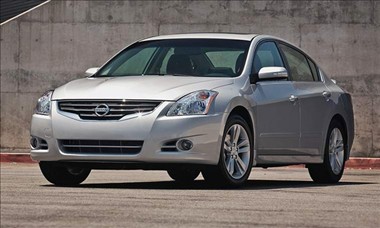
The 2012 Nissan Altima can be a comfortable, economical, and relatively inexpensive used midsize car, but reliability depends heavily on which version you buy and the condition of its continuously variable transmission. The engines themselves are generally durable, and the 2012 model has an advantage over some later Altimas because it was the final year of the established fourth-generation design. However, Nissan's CVT remains the single biggest mechanical concern.
Most 2012 Altimas use Nissan's naturally aspirated 2.5-liter four-cylinder engine. It is a proven engine capable of substantial mileage with routine maintenance and provides a good combination of fuel economy and adequate performance. The engine uses a timing chain rather than a timing belt, eliminating scheduled timing belt replacement.
The available naturally aspirated 3.5-liter V6 is considerably more powerful. Nissan's VQ-series V6 has a strong reputation for durability and can easily exceed 200,000 miles when maintained properly. From a purely engine-reliability standpoint, the V6 is arguably the strongest part of the 2012 Altima lineup.
Unfortunately, most Altimas are equipped with Nissan's Xtronic continuously variable transmission. The CVT can last a long time, particularly when it has been maintained and hasn't been subjected to excessive heat, but failures do occur and replacement can be expensive relative to the value of a 2012 car. Shuddering, whining, hesitation, slipping sensations, delayed engagement, or unusually high engine speed without corresponding acceleration should all be treated seriously.
A six-speed manual transmission was available on some four-cylinder Altimas and is an interesting choice for a buyer primarily concerned about long-term drivetrain reliability. These cars are uncommon, but eliminating the CVT removes the most significant mechanical concern associated with the model.
Outside the transmission, the 2012 Altima's problems are generally more typical of an aging midsize sedan. Engine mounts, suspension components, wheel bearings, oil leaks, air conditioning equipment, electrical accessories, and exhaust components may require attention as mileage increases.
Overall, I would rate the 2012 Altima as average for reliability, with an important qualification: the engine can substantially outlast the CVT. A well-maintained car with a healthy transmission can provide excellent service, while an otherwise clean Altima showing early CVT problems can quickly become uneconomical to repair.
- Overall reliability: Average, with CVT condition being the biggest variable
- Expected lifespan: 175,000 to 225,000+ miles with proper maintenance and a durable transmission
- Best choice: Rare four-cylinder six-speed manual for maximum drivetrain simplicity, or a carefully maintained CVT-equipped car with excellent service history
- Watch for: CVT shuddering, whining or hesitation, transmission overheating, engine mount wear, oil leaks, suspension wear, and neglected maintenance
Bottom line: The 2012 Nissan Altima can still be a good inexpensive used sedan, and its 2.5-liter and 3.5-liter engines are generally capable of high mileage. The CVT is what prevents me from giving the car a stronger overall reliability rating. If the transmission operates perfectly and has been properly maintained, a 2012 Altima can be worth considering. If there are any signs of CVT trouble, I'd keep shopping.
- Why it's a good choice: Durable engines, comfortable ride, good fuel economy, roomy interior, strong available V6, and affordable used prices
- Biggest concern: CVT failure can cost enough to make an inexpensive older Altima uneconomical to repair
- Best version: Six-speed manual if you can find one; otherwise a well-maintained example with a smooth, quiet CVT and documented service history
- Buy only if: The transmission performs normally both cold and fully warmed up and the car passes a thorough pre-purchase inspection
More On The Altima's Reliability
For more detailed information on the reliability of the Altima, visit our Used Nissan Altima Reliability Guide, a more comprehensive look at the model years, engines, common problems, maintenance costs, expected lifespan, and the best years to buy or those to avoid.
Is the 2012 Nissan Altima a Good Year or One to Avoid?
The 2012 Nissan Altima is best described as a "buy selectively" year rather than one that should automatically be avoided. There is a lot to like about it. The basic fourth-generation design was mature by 2012, both available engines are fundamentally strong, and used prices can be considerably lower than those of comparable Toyota Camry and Honda Accord models.
The problem is that transmission condition can determine whether an individual Altima is a good buy or a financial mistake. A 150,000-mile Altima with a healthy, properly maintained CVT may have plenty of useful life remaining. A 90,000-mile example already shuddering or whining from the transmission may be the much worse purchase.
The 2.5-liter four-cylinder is the sensible choice for fuel economy and everyday transportation. The 3.5-liter V6 is an excellent engine and gives the Altima surprisingly strong performance, but the additional power also makes CVT condition particularly important. Buyers shouldn't assume that choosing the V6 eliminates the model's primary reliability concern.
If you happen to find a clean six-speed manual four-cylinder car, it deserves serious consideration. The manual has conventional clutch-related wear to consider, but it avoids the CVT issue that dominates the reliability discussion on automatic Altimas.
Buyer Takeaway: I wouldn't avoid the 2012 Altima automatically. In fact, the strong engines and relatively low used prices can make a good example an excellent value. But I would never buy one with questionable CVT behavior hoping that a fluid change will fix it. The transmission should operate properly before you buy the car.
Also, Know Your Trade-In Value
While you're narrowing down your next vehicle choice, it's also highly recommended that you know the value of your trade-in. Having a realistic appraisal is necessary to establish your budget as well as negotiate a better overall deal. Here's a good source for a quick and accurate appraisal: free trade-in appraisal.
2012 Nissan Altima Common Mechanical Problems
The 2012 Altima's mechanical trouble areas are dominated by the CVT, but buyers should also inspect the engine mounts, suspension, steering, cooling system, electrical equipment, and other components that commonly require attention as these cars age.
- CVT failure: The continuously variable transmission is the most important mechanical concern. Internal wear can eventually cause poor acceleration, shuddering, slipping sensations, unusual noises, or complete failure. Because major CVT repair or replacement can be expensive, even relatively subtle symptoms deserve investigation before purchase.
- CVT shuddering: Vibration or shuddering during acceleration can indicate transmission problems. Don't automatically assume the sensation comes from tires, engine mounts, or an engine misfire. A technician familiar with Nissan CVTs should evaluate persistent shuddering.
- CVT whining: A pronounced whining sound that changes with vehicle speed or acceleration can indicate transmission wear or excessive operating temperature. Some CVT operating noise is normal, but a loud or increasing whine should not be dismissed.
- Delayed acceleration: A noticeable delay between pressing the accelerator and the car responding can indicate a CVT problem, particularly if engine speed rises without corresponding vehicle acceleration.
- CVT overheating: Excessive transmission temperature can cause reduced performance or protective operating modes, particularly after extended highway driving, steep grades, or hot-weather operation. A short neighborhood test drive may not reveal heat-related transmission problems.
- CVT fluid maintenance: Service history matters. Using the correct Nissan-specified CVT fluid is important because a continuously variable transmission has different lubrication and friction requirements than a conventional automatic. Documentation of appropriate maintenance is a positive sign.
- Valve body and transmission control problems: Some transmission symptoms may involve hydraulic or electronic control components rather than complete mechanical failure. Diagnosis is important because replacing parts without identifying the actual fault can become expensive quickly.
- Engine mount failure: Worn mounts are relatively common as Altimas age and can produce substantial vibration at idle, particularly when the transmission is placed in Drive. Mount problems can sometimes make an otherwise healthy engine and transmission feel much rougher than they actually are.
- 2.5-liter engine oil leaks: Gaskets and seals can begin leaking with age and mileage. Check the oil level before startup and inspect underneath the engine for leakage. Minor seepage may be manageable, but substantial oil loss shouldn't be ignored.
- 3.5-liter V6 oil leaks: The VQ-series V6 is fundamentally durable but can also develop gasket and seal leakage as it ages. A well-maintained engine should still maintain the proper oil level between services.
- Timing-chain noise: Both engines use timing chains designed for long service life. Persistent rattling during startup or while running deserves investigation because poor oil maintenance can accelerate wear of chains, guides, or tensioners.
- Ignition coil and spark plug problems: Worn spark plugs or failing ignition coils can cause misfires, hesitation, rough running, or a check-engine light. These are generally manageable repairs, but persistent misfires should be properly diagnosed.
- Wheel bearing wear: A humming or growling noise that becomes louder as road speed increases can indicate a worn wheel bearing. This is a relatively routine higher-mileage repair.
- Suspension wear: Struts, control arm bushings, sway bar links, ball joints, and related components can deteriorate. Clunking over bumps, uneven tire wear, excessive bouncing, or vague steering can indicate upcoming suspension work.
- Power steering leaks and problems: Check steering effort and inspect for leakage or abnormal noises while turning. Age-related hose, pump, or steering component problems can occur on higher-mileage cars.
- Exhaust system deterioration: Exhaust components, heat shields, hangers, and catalytic converter-related parts can deteriorate with age, particularly on cars from road-salt regions. Rattling underneath the car should be investigated.
- Air conditioning problems: Compressors, refrigerant leaks, electrical controls, and related components can cause weak or intermittent cooling. Run the system throughout the test drive rather than checking it only briefly.
- Electrical and accessory problems: Power windows, door locks, switches, sensors, audio equipment, keyless-entry components, and other accessories can fail as the car ages. Test everything before buying.
- Rust and underbody corrosion: Altimas that have spent years in northern climates should be inspected underneath for corrosion affecting suspension components, brake lines, exhaust hardware, subframes, and structural areas.
Of all these problems, transmission condition should carry the greatest weight in your buying decision. An Altima needing struts, an engine mount, or a wheel bearing can still be a perfectly reasonable purchase if the price reflects those repairs. An Altima with a failing CVT is a much different proposition.
Buyer Tip: Don't evaluate the CVT with a five-minute test drive. Drive the Altima long enough for the transmission to reach normal operating temperature. Include city traffic, steady highway speeds, and moderate acceleration if possible. Pay attention to shuddering, whining, delayed response, unusual changes in engine speed, warning lights, or deterioration in performance as the car warms up. A diagnostic scan and pre-purchase inspection are particularly worthwhile.
2012 Nissan Altima Pros and Cons
The 2012 Altima's appeal is easy to understand. It provides a comfortable midsize sedan, good fuel economy, strong engines, and plenty of interior space at prices that can be substantially lower than comparable Camrys and Accords. Its biggest disadvantage is equally clear: an expensive CVT problem can erase the savings very quickly.
Pros
- Durable 2.5-liter engine: The four-cylinder is fundamentally a strong, proven engine and can accumulate substantial mileage with proper maintenance.
- Excellent available V6: Nissan's 3.5-liter VQ-series V6 provides strong acceleration and has a well-established reputation for durability.
- Good fuel economy: The four-cylinder Altima remains economical for commuting and highway travel.
- Comfortable ride: The suspension provides a good balance between comfort and responsive handling for an everyday midsize sedan.
- Roomy interior: Passenger space is generous enough to make the Altima practical for families and longer trips.
- Timing chains on both engines: There is no routine timing belt replacement interval.
- Rare manual transmission option: A six-speed manual four-cylinder eliminates the CVT, making it an especially interesting choice for a reliability-focused buyer who doesn't mind shifting.
- Affordable used prices: Altimas frequently cost less than comparable Camrys and Accords, creating potentially strong value when the individual car is mechanically sound.
- Excellent parts availability: The Altima sold in enormous numbers, so replacement parts are readily available and most independent repair shops are familiar with the car.
Cons
- CVT is the major reliability concern: Transmission problems can become expensive enough to determine whether the vehicle is economically worth repairing.
- CVT symptoms may appear after warming up: A car that seems fine during a short test drive can behave differently after extended driving.
- Transmission history may be difficult to verify: Many older Altimas have changed owners several times, and documentation of proper CVT maintenance may be incomplete.
- Engine durability can create false confidence: A strong-running engine doesn't necessarily mean the entire powertrain is healthy. The transmission needs to be evaluated separately.
- Age-related suspension repairs: Struts, bushings, links, wheel bearings, and mounts may now need replacement regardless of how dependable the engine has been.
- Interior materials show age: Heavily used examples can develop worn upholstery, trim, switches, and other cosmetic deterioration.
- V6 uses considerably more fuel: The additional performance is enjoyable, but buyers prioritizing economy will generally be better served by the four-cylinder.
- A cheap Altima can be a false bargain: Saving money compared with a Camry or Accord isn't worthwhile if the Nissan immediately requires a major transmission repair.
Buyer Takeaway: The 2012 Nissan Altima can be a surprisingly good value if you find the right one. I like both engines, and the 3.5-liter V6 is particularly impressive from a durability and performance standpoint. The CVT is what changes the equation. If you can find the rare six-speed manual in good condition, it eliminates the model's biggest reliability concern. Otherwise, insist on a CVT that performs perfectly both cold and fully warmed up, preferably with documented maintenance. A healthy 2012 Altima can still provide many miles of useful service, but one already showing transmission symptoms is a car I'd pass on regardless of how attractive the price looks.
Pricing
Knowing which Altima you want is step 1. Step 2 is knowing how to actually get an excellent used Altima price.
2012 Altima Features As Originally Released
Those who place a high value on "sportiness" in a family sedan will likely find the 2012 Nissan Altima to be an appealling choice. Also available as a coupe, this Altima offers impressive driving dynamics, a quiet ride and lots of available high tech features.
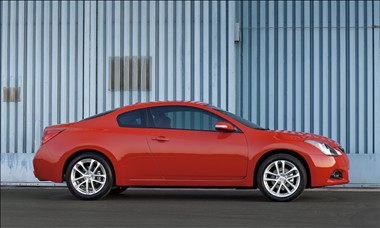
Even those outfitted with the base 2.5-liter four-cylinder engine demonstrate a capable driving demeanor that easily surpasses the usual for this segment. And by opting for the 3.5 SR model with its V6 engine, output is boosted to a healthy 270-horsepower. This, combined with its firmer suspension, transforms the Altima into something much closer to a "sport sedan".
Tack on its attractive design, nice looking interior and generous feature availability, and the 2012 Altima has quite a bit going for it.
Trims, Standard Features And Options:
The 2012 Nissan Altima is available in coupe and sedan forms in three trims: 2.5, 2.5 S and 3.5 SR.
The base Altima 2.5 is sedan-only with standard features which include a push-button ignition, power windows, power door locks, power mirrors, 16-inch steel wheels, dual exhaust chrome tips, air-conditioning, cruise control, keyless entry, a tilt/telescoping steering wheel, a vehicle immobilizer system, a vehicle security system, a rear window defroster w/timer, a trip computer, chrome interior door handles, halogen headlights and a full array of safety features (see below).
Standard features on the 2.5 S sedan and coupe add keyless entry/ignition, a 6-speaker audio system, a CD player, an auxiliary audio jack and 17-inch alloy wheels on the coupe.
Optional packages that may be found in the 2.5 S include the Value package which adds a leather-wrapped steering wheel with audio controls, Bluetooth, an auto-dimming rearview mirror and automatic headlights. The Special Edition package includes foglights, alloy wheels on the sedan, a rear spoiler, automatic headlights and the leather-wrapped steering wheel with audio controls.
The Convenience package can be found only on the sedan and adds a power driver seat to the Value package. Also sedan-only, the Convenience Plus package includes dual-zone automatic climate control, a sunroof and mirror-mounted turn-signal repeaters, while the Premium Audio package (again sedan-only) features a rearview camera and a 9-speaker Bose audio system with an iPod interface and satellite radio. The Premium package is available only on the coupe and includes all of the previous packages.
There's also a 2.5 SL package for the sedan that includes leather upholstery, heated front seats, rear air-conditioning vents and an auto-dimming rearview mirror, while on the coupe this package is called the Leather package and also adds xenon headlights, but drops the rear A/C vents.
Moving up to the Altima 3.5 SR adds the V6 engine, a sport-tuned suspension, heated side mirrors, 17-inch alloy wheels on the sedan, 18-inch alloys on the coupe and and everything in the 2.5 S Convenience package.
The sedan-only 3.5 SR Sport package includes dual-zone climate control, a sunroof, foglights and xenon headlights, while the 3.5 SR Premium package, available on both the sedan and coupe, adds all features from the S coupe's Premium package, the Premium Audio package as well as the SL package.
Finally, there's a Technology package that can be found on some coupes and sedans which adds a navigation system, Bluetooth streaming audio capability and digital music storage.
Engines, Powertrain And Gas Mileage:
A choice of two engines power the front-wheel-drive 2012 Altima. Under the hood of all 2.5 models is a 2.5-liter four-cylinder engine that produces 175 horsepower and 180 pound-feet of torque. Standard on the sedan is a continuously variable automatic transmission (CVT), while the coupe comes with a 6-speed manual or an optional CVT.
The EPA-estimated gas mileage for this engine is is 23 mpg city and 32 mpg on the highway with the CVT. Fuel economy for the manual comes in at a near identical 23 mpg city and 31 highway.
The more sport-oriented 3.5 SR is outfitted with a 3.5-liter V6 engine that's good for a robust 270 horsepower and 258 pound-feet. The 3.5 comes with the same transmission choices as the 2.5. The EPA-estimated gas mileage for this engine stands at 20 mpg city and 27 mpg highway with the CVT, while the manual is rated at 18 and 27, respectively.
In performance tests, an Altima 3.5 sedan was timed from a standstill to 60 mph in a very quick 7 seconds. The 3.5 coupe did it in just 6.7 seconds with the CVT and an even quicker 6.5 seconds with the manual. In comparison, the 2.5 S sedan covers the same sprint in a still respectable 8.5 seconds.
Safety:
Standard safety features across all 2012 Altimas include traction control, stability control, antilock brakes (ABS), front seat side-impact airbags and side curtain airbags that extend to both rows.
In government crash testing, the Altima sedan was given an overall rating of four out of five stars, consisting of four stars for frontal impact protection and five stars for side impact protection.
Interior:
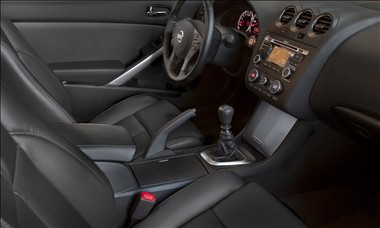
The Altima's cabin is attractive, solidly constructed, and user-friendly. The seating is supportive and comfortable both front and rear (the coupe comes with very well-bolstered front sport seats as opposed to the sedan's front bucket seats), however, both body styles are somewhat tight when it comes to rear headroom and legroom. This is more of an issue in the coupe where adult passengers might find the going uncomfortable on longer trips.
The cargo capacity in the sedan's trunk is a quite ample 15.3 cubic feet, while that of the coupe is a much smaller 8.2 cubes.
Drive:
The 2012 Altima is a capable performer on the road. Even the four-cylinder models provide enough liveliness to satisfy most drivers. The performance of the CVT is also smooth and seamless and the vehicle's overall handling is confident and secure. And all the while, the Altima's suspension maintains a comfortable ride quality while also limiting road and wind noise in the cabin.
For buyers who place a higher value on driving dynamics, the Altima's V6-powered 3.5 SR is particularly impressive, especially for a "family sedan". It's certainly not boring with its sport-tuned suspension, responsive steering and smooth CVT combined with plenty of gusto under the hood.
If you'd like to compare different Nissan models, or years, be sure to read our Nissan Reliability & Problems: Best Used Nissans & Years Guide. It highlights the models, best years to buy or avoid, common problems, and helps you focus in on the right vehicle for you.
What's Next?
Your Trade-In
Getting a strong trade-in allowance will have the biggest impact on your final price. See KBB versus Edmunds Appraisals - Which Is Better to learn about getting accurate and fair trade-in values before negotiating with a dealer.
Understand Dealer Fees
Before agreeing to a dealer's numbers, see which dealer fees are legitimate, which can be negotiated, and which can be avoided.
Some Inside Insights:
How Some Buyers Are Getting Higher Trade-In Values