
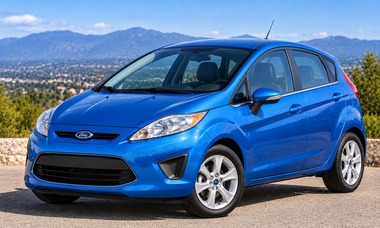
2011 Ford Fiesta Reliability
The 2011 Ford Fiesta has mixed reliability, and the transmission makes an enormous difference in whether I would consider buying one. A Fiesta with the five-speed manual transmission can be a reasonably durable and economical older subcompact. A Fiesta with the six-speed PowerShift automatic requires much more caution.
The 2011 model marked the Fiesta's return to the U.S. market after a long absence. It was offered as a four-door sedan or five-door hatchback, with both versions using a 1.6-liter naturally aspirated four-cylinder engine producing about 120 horsepower.
The engine is not the part of the car that worries me most. With regular oil changes, proper cooling-system maintenance and replacement of its timing belt when due, the 1.6-liter engine can provide substantial service life.
The major problem is the optional DPS6 PowerShift six-speed dual-clutch automatic transmission. Although Ford marketed it as an automatic, internally it operates more like an electronically controlled manual transmission with two dry clutches. That design became associated with clutch shudder, hesitation, rough engagement, transmission-control-module failures and other drivability complaints.
- Overall reliability: Below average with the PowerShift automatic; considerably more appealing with the manual transmission
- Expected lifespan: Approximately 150,000–200,000+ miles is possible with good maintenance
- Engine: The 1.6-liter four-cylinder is generally the stronger part of the car
- Biggest concern: DPS6 PowerShift automatic transmission
- Timing system: Timing belt with a scheduled replacement interval
- Also check: Door latches, engine mounts, cooling system, suspension and electrical equipment
- Best buy: A well-maintained five-speed manual with documented timing-belt service
Bottom line: I would evaluate a manual-transmission 2011 Fiesta very differently from an automatic. The manual can make sense as an inexpensive economy car. With the PowerShift automatic, I would buy only after a very careful inspection and with a clear understanding of the transmission's history and behavior.
How Many Miles Can a 2011 Ford Fiesta Last?
A well-maintained 2011 Ford Fiesta can reach 150,000 to 200,000 miles, and some can go beyond 200,000 miles. The 1.6-liter engine is capable of substantial mileage, but the transmission and overall condition of the car can determine whether keeping it that long makes economic sense.
On a manual-transmission Fiesta, normal age-related repairs may ultimately be more important than the engine itself. Suspension components, engine mounts, wheel bearings, cooling-system parts, alternators and air-conditioning components eventually wear.
On a PowerShift-equipped Fiesta, transmission repairs can change the equation much earlier.
Is 100,000 Miles High for a 2011 Ford Fiesta?
No, 100,000 miles is not automatically too high for a 2011 Fiesta. At its current age, that is actually fairly modest annual mileage.
I would rather buy a 110,000-mile manual Fiesta with maintenance records than an 80,000-mile automatic that shudders badly and has an uncertain repair history.
Is 150,000 Miles Too Much for a 2011 Ford Fiesta?
Not necessarily, but 150,000 miles is an important maintenance point. Ford's original maintenance schedule calls for replacement of the Fiesta's timing belt at 150,000 miles.
If I were considering a car near or beyond that mileage, I would want documentation showing that the timing belt had been replaced. If there is no proof, I would budget for the job immediately rather than assuming a previous owner did it.
Can a 2011 Ford Fiesta Reach 200,000 Miles?
Yes, but I would be much more confident about reaching 200,000 miles with a well-maintained manual-transmission Fiesta. The engine can last that long, but an expensive automatic-transmission problem can make an older Fiesta uneconomical to repair before the engine reaches the end of its useful life.
Is the 2011 Ford Fiesta a Good Year or One to Avoid?
The 2011 Fiesta is a year I would approach selectively rather than treating every version the same. It was the first model year of this Fiesta generation in the United States, and the PowerShift automatic became its defining reliability problem.
If the car has the five-speed manual, much of the biggest reliability concern disappears. You still have an aging first-year subcompact that needs careful inspection, but you are not taking on the same transmission design.
With an automatic, I would be considerably more cautious. Shuddering or unusual low-speed behavior should not automatically be dismissed as simply the way a dual-clutch transmission operates. Some unusual feel compared with a conventional torque-converter automatic is inherent in the design, but excessive shudder, delayed engagement, loss of drive or transmission warnings can indicate genuine problems.
Buyer takeaway: If two otherwise similar 2011 Fiestas were available and one had the manual transmission, that is the one I would investigate first.
How Reliable Is the 2011 Ford Fiesta 1.6-Liter Engine?
The 1.6-liter naturally aspirated four-cylinder is generally one of the better aspects of the 2011 Fiesta. It does not have a turbocharger, and widespread catastrophic internal engine failure is not the primary issue associated with this model year.
That doesn't mean the engine can be ignored. These cars are now old enough that cooling-system condition, oil leaks, ignition components, sensors and engine mounts all deserve inspection.
Listen to the engine from a cold start. It should settle into a reasonably smooth idle without persistent knocking, heavy smoke or warning lights. Once warm, verify that the temperature remains stable and that the cooling fan operates normally.
Maintenance history matters considerably more now than it did when these cars were five years old. A neglected cooling-system problem or an engine repeatedly driven low on oil can ruin an otherwise durable design.
Does the 2011 Ford Fiesta Have a Timing Belt or Timing Chain?
The 2011 Ford Fiesta 1.6-liter engine has a timing belt, not a timing chain.
This is an important distinction for used-car buyers because the belt is a scheduled maintenance item. Ford's original maintenance schedule specifies timing-belt replacement at 150,000 miles and warns that failure to replace it can result in internal engine damage.
Many 2011 Fiestas have now reached either that mileage or an age where I would want to know whether the original belt is still installed.
If a seller says the timing belt has been replaced, ask for a receipt. Without documentation, I would treat the service as unverified and factor replacement into the purchase price.
Does the 2011 Ford Fiesta Have Transmission Problems?
Yes. The DPS6 PowerShift automatic transmission is the most important reliability problem associated with the 2011 Ford Fiesta.
The PowerShift is a six-speed dual-clutch transmission. Instead of using a traditional automatic transmission's torque converter, it uses electronically controlled dry clutches to engage and change gears.
In theory, the design combines the efficiency of a manual transmission with automatic operation. In practice, many Fiesta owners reported shuddering, hesitation, rough engagement and other problems.
Ford subsequently established extended-warranty programs covering specific PowerShift components and conditions, including clutch shudder/input-shaft-seal problems and transmission control module failures.
What Are the Symptoms of 2011 Fiesta PowerShift Problems?
Common warning signs include shuddering when pulling away, hesitation, jerking, delayed engagement and inconsistent acceleration.
Other symptoms can include:
- Strong vibration or shudder during light acceleration
- Hesitation when pulling into traffic
- Harsh or erratic gear changes
- Delayed engagement of Drive or Reverse
- Transmission warning messages
- Loss of transmission engagement
- Failure to select certain gears
- No-start conditions associated with transmission-control electronics
A slight difference in low-speed feel compared with a conventional automatic is possible because of the dual-clutch design. Repeated or severe shuddering is another matter.
Why Does the 2011 Fiesta Automatic Shudder When Accelerating?
Clutch engagement is one of the principal reasons a PowerShift Fiesta can shudder during acceleration. Ford issued service information and extended coverage addressing excessive clutch shudder and transmission input-shaft-seal issues on affected vehicles.
Oil contamination of the dry clutch assembly from leaking transmission seals could contribute to poor clutch engagement. Clutch wear itself and transmission calibration could also affect drivability.
This is why I would test-drive an automatic Fiesta from a complete stop repeatedly rather than simply taking it on the highway. Low-speed acceleration is where many PowerShift complaints become easiest to detect.
What Does the Fiesta Transmission Control Module Do?
The transmission control module, or TCM, electronically controls operation of the PowerShift transmission. A failing module can cause much more than an unpleasant shift.
Ford's extended TCM coverage specifically addressed symptoms including intermittent loss of transmission engagement, no-start conditions and lack of power.
On a car this old, the original extended-coverage periods may already have expired depending on the vehicle's warranty-start date and mileage. A buyer should therefore evaluate the car based on its present condition rather than assuming Ford will pay for a future transmission repair.
Is the 2011 Ford Fiesta Manual Transmission More Reliable?
Yes, the five-speed manual is generally the transmission I would prefer in a 2011 Fiesta. It eliminates the troublesome PowerShift clutch-control system and transmission control module.
A manual transmission can still wear out. The clutch is a consumable component, and a badly driven car can need clutch replacement much earlier than a carefully driven one.
During a test drive, accelerate firmly in a higher gear and watch for engine speed rising without a matching increase in vehicle speed. That can indicate clutch slip. Also check for grinding during shifts, difficulty selecting gears and clutch chatter when moving away from a stop.
A Fiesta with a worn conventional clutch may still be worth buying if the price reflects the needed repair. That is a much easier risk for me to quantify than an automatic PowerShift car with intermittent electronic or clutch-related symptoms.
What Are the Most Common 2011 Ford Fiesta Problems?
The PowerShift transmission dominates discussion of the 2011 Fiesta, but it is not the only area worth inspecting.
1. PowerShift Clutch Shudder
Automatic-equipped cars can shudder or vibrate when accelerating from a stop. Severe or repeated shudder should be investigated rather than accepted as normal.
2. Transmission Control Module Failure
A failing TCM can cause loss of engagement, lack of power, warning messages or a no-start condition. Previous TCM replacement is useful history to know, but it does not eliminate the need for a thorough test drive.
3. Transmission Input-Shaft Seal Leakage
Seal leakage became important because fluid contamination could affect the PowerShift's dry clutch assembly. Evidence of previous clutch or seal repairs should be documented if possible.
4. Complete Transmission Failure
Some owners have reported failures requiring major transmission repair or replacement. Because the market value of a 2011 Fiesta is now relatively low, a several-thousand-dollar transmission repair can exceed what makes economic sense.
5. Door-Latch Problems
The 2011 Fiesta was included in Ford door-latch recall campaigns. A defective latch could prevent a door from closing securely or potentially allow it to open while driving.
Check every door individually and verify recall status by VIN.
6. Engine-Mount Wear
Worn mounts can produce vibration at idle or a thump as the drivetrain moves under acceleration. Some vibration complaints that initially feel like engine trouble may actually be mount related.
7. Cooling-System Leaks
At this age, inspect the coolant reservoir, hoses, thermostat housing area and surrounding components for dried coolant residue or active leakage. Overheating can turn a manageable cooling-system repair into serious engine damage.
8. Suspension Noise and Wear
Struts, sway-bar links, bushings and other suspension parts can produce clunks or rattles as they age. Uneven tire wear may provide another clue.
9. Wheel Bearings
A worn bearing typically produces humming or growling that increases with vehicle speed and can change as the vehicle turns.
10. Electrical and Infotainment Problems
Older Fiestas can develop electrical annoyances involving switches, locks, audio equipment or other accessories. Test every power feature rather than assuming small items will be inexpensive to repair.
11. Air-Conditioning Problems
Verify that the A/C gets properly cold. Compressor, refrigerant-leak and related climate-control repairs can be disproportionately expensive relative to the value of an older Fiesta.
12. Timing-Belt Service
The belt itself is maintenance rather than a defect, but a 2011 Fiesta with no record of timing-belt replacement deserves attention once it reaches the scheduled replacement mileage.
Were There Recalls on the 2011 Ford Fiesta?
Yes. The 2011 Fiesta has had safety recalls, and VIN-specific recall status should be checked before purchase.
One important recall involved door latches that could fail to secure the door properly. Ford later issued another campaign involving certain vehicles that had previously received latch repairs because some replacement latches could potentially have been installed incorrectly.
There was also a recall involving side-curtain-airbag protection for a specific rear seating position under certain occupancy conditions.
It is important to distinguish these safety recalls from Ford's PowerShift extended-warranty and customer-satisfaction programs. The existence of a transmission service program does not mean the entire PowerShift transmission was subject to a conventional safety recall.
For any individual Fiesta, check the VIN rather than assuming every campaign applies or has been completed.
2011 Ford Fiesta Maintenance and Repair Costs
Routine maintenance on a 2011 Fiesta can be inexpensive, but PowerShift repairs can completely change the ownership economics.
The following are approximate parts-and-labor prices at an independent repair shop. Actual costs vary by location, labor rate, parts used and the exact repair required.
| Service or Repair | Approximate Cost |
|---|---|
| Oil and filter change | $60–$100 |
| Spark plug replacement | $150–$250 |
| Front brake pads and rotors | $300–$550 |
| Engine mount replacement | $250–$600 |
| Wheel bearing/hub | $300–$550 per wheel |
| Pair of front struts | $500–$900 |
| Timing belt service | $700–$1,200 |
| Conventional manual clutch replacement | $900–$1,500 |
| PowerShift clutch assembly repair/replacement | $1,500–$2,500+ |
| Transmission control module replacement | $800–$1,500+ |
| Major PowerShift transmission replacement | $3,500–$5,500+ |
| A/C compressor replacement | $800–$1,300 |
The important point is not that every automatic Fiesta will need a $4,000 transmission. Many will not. The problem is that the potential repair can be very large compared with the current value of the car.
A $900 suspension repair on an otherwise good inexpensive car may be perfectly reasonable. A $4,000 transmission problem on the same car can effectively total it economically.
What Should You Check Before Buying a 2011 Ford Fiesta?
I would tailor the inspection heavily around which transmission the car has.
- Identify the transmission first. Do not evaluate the five-speed manual and PowerShift automatic as though they carry the same risk.
- Test an automatic repeatedly from a stop. Look for shuddering, hesitation, jerking or delayed acceleration.
- Test Reverse and Drive engagement. Significant delay, harsh engagement or failure to engage deserves diagnosis.
- Ask for PowerShift repair records. Clutch, input-shaft-seal and TCM history can be particularly useful.
- Check timing-belt history. If the car is near or beyond 150,000 miles and there is no documentation, budget for replacement.
- Check all four doors. Make sure every latch operates securely and verify recall completion by VIN.
- Inspect the cooling system. Look for leakage and confirm stable operating temperature.
- Check for excessive engine vibration. Worn mounts are common enough on an aging small car to deserve attention.
- Scan every control module possible. On a PowerShift car in particular, stored or pending transmission codes can reveal problems not obvious during a short drive.
For an automatic Fiesta, I would insist on a longer test drive that includes stop-and-go traffic. A five-minute drive around the block is not enough.
2011 Ford Fiesta Pros and Cons
Pros
- Generally durable 1.6-liter engine: The basic engine is not the Fiesta's principal reliability weakness.
- Manual version avoids the biggest problem: Choosing the five-speed manual eliminates the DPS6 PowerShift system.
- Good fuel economy: The Fiesta remains inexpensive to fuel compared with many larger older cars.
- Small exterior dimensions: It is easy to maneuver and park in crowded areas.
- Available hatchback: The hatch provides useful cargo versatility for such a small vehicle.
- Low purchase price: Surviving examples can be very inexpensive.
- Simple non-turbo engine: There is no turbocharger adding another expensive high-mileage component.
- Enjoyable handling: The Fiesta's light weight and responsive chassis make it more engaging than many economy cars.
- Parts availability: The Fiesta was sold in substantial numbers, and routine service parts remain widely available.
Cons
- PowerShift automatic is a major liability: Shudder, clutch and TCM problems substantially change the risk of buying the car.
- First U.S. model year: The 2011 car did not benefit from later production revisions when it first reached buyers.
- Timing belt requires replacement: Unlike a timing-chain engine, it has a scheduled major belt service.
- Very small rear seat: Adult rear-seat space is limited.
- Road and wind noise: The Fiesta does not have the isolation of a larger midsize sedan.
- Aging interior components: Switches, trim and electronics may now show substantial wear.
- Door-latch recall history: Recall completion needs verification.
- Low vehicle value magnifies major repair costs: One expensive transmission repair can exceed the car's economic value.
- Automatic drivability can be difficult to evaluate: Buyers may be told that significant shudder or hesitation is simply normal dual-clutch behavior when it may warrant further diagnosis.
Should You Buy a 2011 Ford Fiesta Today?
I would consider a well-maintained 2011 Ford Fiesta with the five-speed manual transmission, but I would be much more reluctant to buy one with the PowerShift automatic.
The distinction matters because the car's basic 1.6-liter engine can be quite serviceable. A manual Fiesta with a healthy engine, solid clutch, documented timing-belt service and no significant rust or accident damage can still function as an inexpensive commuter.
The automatic is harder to recommend. A car that drives perfectly, has extensive service documentation and is priced appropriately may provide useful service, but the history of the DPS6 transmission creates a financial risk that does not exist to the same degree with the manual.
I would walk away from an automatic that shudders heavily, hesitates when pulling away, intermittently loses engagement, displays transmission warnings or has a seller who dismisses obvious drivability problems as "normal."
For this particular model year, the transmission choice matters more to me than a modest difference in mileage. I would take a properly maintained 120,000-mile manual Fiesta over a questionable 70,000-mile PowerShift car.
Your Trade-In
It's good to always know the value of your trade-in while you're evaluating your next possible purchase. Here's a good source for a quick and accurate appraisal: free trade-in appraisal.
What's Next?
If You May Be Buying Soon
If you may be buying a used car soon, see how to identify the dealerships most motivated to get your sale, and therefore most ready to lower their price more than the rest. This is often the difference between getting a good price and getting a great one.
Also, More On Ford Reliability
If you'd like to compare different Ford models, or years (including the Fiesta), be sure to read our Ford Reliability & Problems: Best Used Fords & Years Guide. It highlights the models, best years to buy, common problems, and helps you choose the right vehicle.
Some Insider Insights ...
The Best Older Used Cars For Gas Mileage