

Due to extremely high new and used car prices, as well as high interest rate loans, many shoppers are now looking for "older" models to better fit their budgets.
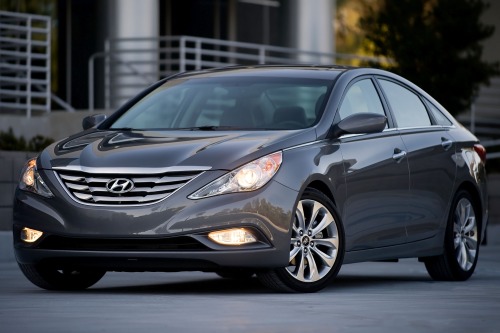
And it turns out a 2013 Sonata might fit the bill. When it comes to longevity, the Sonata is estimated to last in the 180,000 to 250,000 mile range with regular maintenance. But while there have been many good examples, there are others with more serious issues.
So here, we will look at its reliability history, its possible mechanical problems to check for, its overall pros and cons, and its likely price negotiation scenarios today.
At the time, the 2013 Sonata was a serious contender among midsize sedans thanks to a major redesign for the 2011 model year. With its sleek looks, lively engines and upgraded cabin, the Sonata comfortably settled in among the segment's best at the time.
More On The Sonata's Reliability
To learn about the Sonata's reliability over different model years, be sure to see our Used Hyundai Sonata Reliability Guide. This comprehensive guide will help you identify its best years as well as those to be avoided, and much more.
2013 Hyundai Sonata Reliability
This model offers a comfortable ride, good fuel economy, and plenty of standard features, but its long-term reliability is more mixed than many competitors. While some owners enjoy years of trouble-free ownership, this model year is best known for serious engine concerns involving the 2.4-liter and 2.0-liter turbo engines. As a result, maintenance history and recall documentation are especially important when shopping for one.
The standard 2.4-liter four-cylinder and optional 2.0-liter turbo both deliver good performance, but both have been associated with premature engine bearing wear that can lead to engine failure. Hyundai extended warranty coverage and replaced many affected engines under warranty, so buyers should verify whether the engine has already been replaced and confirm that all applicable recalls and service campaigns have been completed.
Beyond the engine concerns, the Sonata is generally inexpensive to maintain and doesn't suffer from many widespread transmission problems. Buyers should still inspect for suspension wear, electrical issues, and signs of neglected maintenance, particularly on higher-mileage vehicles.
- Overall reliability: Average
- Expected lifespan: 180,000 to 250,000+ miles if properly maintained and engine issues have been addressed
- Best choice: A well-maintained vehicle with documented engine replacement or complete recall history
- Watch for: Engine knock, excessive oil consumption, recall completion, suspension wear, and maintenance records
Bottom line: The 2013 Sonata can be a good value, but it requires much more careful shopping than a comparable Honda Accord or Toyota Camry. Verify the engine history before purchasing, as it is by far the most important factor affecting long-term reliability.
Is the 2013 Hyundai Sonata a Good Year or One to Avoid?
Not necessarily, but it is a model year that deserves careful inspection.
If the engine has already been replaced under Hyundai's warranty program and the vehicle has been well maintained, the Sonata can provide many years of dependable service at an attractive purchase price. However, examples with incomplete service histories or unresolved engine issues should be avoided.
- Why it's a good choice: Comfortable, fuel-efficient, well-equipped, and often priced below Japanese competitors
- Biggest concern: Engine failure risk on the 2.4-liter and 2.0T engines—verify recall and replacement history
- Best version: A vehicle with documented engine replacement and complete maintenance records
- Buy only if: The engine history is verified and the vehicle passes a thorough pre-purchase inspection
Bottom line: The 2013 Hyundai Sonata is not automatically a year to avoid, but it is one of those vehicles where documentation matters more than mileage. Buy a well-documented example, and avoid any car with questionable engine history.
Mechanical Problem Watchlist:
Transmission Issues: Some owners reported problems with the automatic transmission, such as rough shifting, hesitation, or slipping. In some cases, this led to the need for transmission repairs or replacements.
Engine Problems: There have been reports of engine-related issues, including oil leaks, engine knocking, and in some cases, engine failure at around 80,000 miles.
This issue led to a class action lawsuit where Hyundai paid a 2016 settlement of $8.5 million. The settlement covered engine repair and replacement, towing expenses, and rental fees of the replacement cars for the owners of affected 2011-2014 Sonatas with 2.0- or 2.4-liter Theta II engines.
Steering and Suspension: Some drivers have noted issues with the steering system, such as problems with the power steering pump and occasional vibrations. Suspension components like struts and shock absorbers may wear out over time, affecting ride quality.
Electrical Problems: Electrical issues, such as problems with the vehicle's electronics, can occur. These may include malfunctions in the infotainment system, power windows, or various sensors.
Brake Problems: While not widespread, there have been reports of brake issues, such as premature wear of brake pads and rotors.
Air Conditioning and Heating: Some owners have experienced issues with the air conditioning system, such as the compressor failing or problems with the heating system.
Exhaust and Emissions: A few Sonata owners have reported issues related to the exhaust system and emissions components.
It's important to emphasize that not all 2013 Hyundai Sonatas will experience these problems, and many owners have had trouble-free experiences with their vehicles. Regular maintenance and proper care can go a long way in preventing or addressing these issues.
2013 Sonata Pros
Abundance of Features for the Dollar: The 2013 Sonata was simply less expensive than its rivals, while even the base GLS model came standard with features such as remote power door locks, power mirrors, heated mirrors, one-touch power windows, air-conditioning, cruise control, keyless entry, Bluetooth, steering-wheel mounted audio controls, wheel locks, four-wheel antilock brakes (ABS), stability control, traction control, and more.
You can also find some with options such as leather upholstery, 18-inch alloy wheels,, a sunroof, navigation with a touchscreen display, a sport-tuned suspension, foglights, a rearview camera, dark chrome grille, keyless ignition/entry, and steering-wheel-mounted paddle shifters.
Good Fuel Economy: Fuel economy for the Sonata is another plus. The 2.4-liter engine, coupled with either the automatic or manual transmission, was EPA-rated at a respectable 24 mpg city and 35 mpg on the highway. With the 2.0-liter turbo, it came in at 22 mpg city and 34 highway.
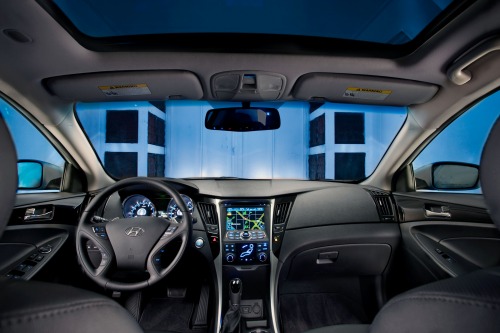
Comfortable and Attractive Interior: Even though the Sonata is a midsize sedan, its interior is so big that the EPA classifies it as a "large" car. Its generous passenger space puts it second in the class to only the Honda Accord, while its seats are also comfortable and supportive. Its large trunk has a cargo capacity of 16.4 cubic feet, making it another convenient plus.
The cabin's actual design also compares very well for the class with its modern looks combined with upscale and user-friendly features. Build and materials quality was also above average with an overall look and feel one would expect from a more expensive car.
Good Safety Scores: In government crash tests, the Sonata was awarded a top five-star rating for overall crash protection, consisting of four stars for front-impact occupant protection and five for side-impact protection.
2013 Sonata Cons
Limited Rear Headroom: While the 2013 Sonata offers generally roomy passenger accommodations and the ability to stretch out on longer trips, the car's interior design does come with a possible comfort sacrifice for some occupants. It's the sloping roof line that results in only an adequate amount of headroom, both front and rear. Six-foot-plusers in back will be especially challenged.
Harsher SE Model Ride: The sporty SE model offers more agile handling abilities and driver engagement along with its 18-inch alloy wheels and sport-tuned suspension. Those potentially interested in this model, however, should be aware that the increased performance comes at the price of a harsher and bumpier ride quality.
Limited Rear Visibility: The Sonata's sloping roofline and rear window design can impede rear visibility, which may be a concern for some drivers.
Steering Feel: The electric power steering has been criticized by some for lacking feedback and a connected feel, making it less engaging for some drivers.
How Much Can You Negotiate on a 2013 Sonata?
The negotiating room is usually larger than average because buyers are generally aware of the model's engine reputation. Even clean examples often have more negotiating room than comparable Honda Accords or Toyota Camrys.
Here's what I'd consider realistic:
| Seller Type | Typical Negotiating Room |
|---|---|
| Private seller | 5–10% |
| Independent used-car dealer | 5–10% |
| Franchised Hyundai dealership | 4–8% |
| Low-mileage example with replacement engine | 2–5% |
| High-mileage or uncertain engine history | 8–15% |
Example
If a dealer is asking $9,995:
- Excellent deal: $8,800–$9,200
- Typical purchase price: $9,200–$9,700
- Paying full asking price: Only if the vehicle has a documented replacement engine, low mileage, and an excellent maintenance history.
If you follow my preferred negotiating method, detailed in my Used Car Negotiation Price Guide, you'll often do better.
(For "new" cars, see my "New" Car Negotiation Price Guide.)
What Creates Negotiating Room?
You may be able to negotiate substantially more if the vehicle:
- Has no documentation showing recall completion or engine replacement
- Needs new tires ($600–$1,000)
- Needs brake work ($300–$800)
- Has suspension wear or steering noises
- Shows cosmetic damage or windshield chips
- Has multiple previous owners or an accident history
- Has been on the dealer's lot for 45–60 days or longer
My rule of thumb: For a typical 2013 Hyundai Sonata priced between $7,500 and $11,000, I'd usually expect a successful buyer to negotiate about $700 to $1,500 off at a dealership. Vehicles with uncertain engine history may justify even larger discounts—or simply walking away.
Unlike the Accord or Camry, the Sonata's engine reputation gives buyers considerably more leverage during negotiations. Compare several similar vehicles, verify engine history on every one, and let dealers compete for your business. That's usually the most effective way to secure both the best price and the lowest risk.
Your Trade-In
Also, it's good to always know the value of your trade-in while you're evaluating your next possible purchase. Here's a good source for a quick and accurate appraisal: free trade-in appraisal.
What's Next?
If you may be buying soon, you may want to take a look at my most effective negotiation method for used cars. It explains a quick way to identify the dealerships most motivated to deal, no matter how busy they may seem, and how to follow up once you've found them. This can be the difference between getting a good price and getting a great one.