

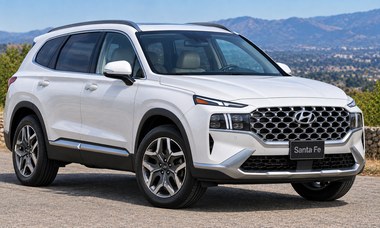
The Hyundai Santa Fe has been sold in the United States for more than two decades, and its reliability record varies considerably depending on the year, engine and transmission. Some Santa Fe generations are durable, relatively inexpensive used SUVs capable of accumulating well over 200,000 miles. Others require much more careful shopping because of engine problems, transmission concerns or recall histories.
That makes the Santa Fe a vehicle where choosing the right year and powertrain can matter more than simply finding the newest or lowest-mileage example. Earlier Santa Fes used relatively conventional V6 and four-cylinder engines, while later generations introduced direct injection, turbocharging, dual-clutch transmissions, hybrids and increasingly sophisticated electronics.
This guide covers 2001 through 2023 U.S.-market Hyundai Santa Fe models, including the Santa Fe Sport and the larger three-row Santa Fe sold during the 2013–2018 period.
In This Guide You'll Learn
- Which Hyundai Santa Fe years are the most reliable
- Which Santa Fe years deserve extra caution or may be better avoided
- How long a Hyundai Santa Fe can realistically last
- Which Santa Fe engines and transmissions have the best reliability records
- Why the 2013–2018 Santa Fe Sport deserves especially careful powertrain research
- The most important problems to check before buying a used Santa Fe
- How Santa Fe reliability compares across generations
- What higher-mileage Santa Fe ownership may cost
Or, Looking For "New"?
If you're also considering a new Santa Fe, you may want to come back to this and take a look at a handy technique that identifies the dealer in your area most ready to make concessions.
Hyundai Santa Fe Reliability Overview
Overall, the Hyundai Santa Fe has a mixed-to-good long-term reliability record. The strongest examples can provide many years of dependable service, but the model's history includes several periods where a particular engine or transmission deserves considerably more scrutiny.
Some of the earlier Santa Fes are surprisingly durable. The first-generation 2.7-liter V6 and particularly the later 3.3-liter V6 used in the second generation can accumulate substantial mileage when properly maintained. Age, timing-belt service on applicable engines, oil leaks, cooling-system condition and general wear are now bigger concerns on many of these vehicles than any single design flaw.
The more complicated period begins with the 2013 redesign. Hyundai offered both the two-row Santa Fe Sport and a longer three-row model called simply the Santa Fe. They should not be treated as mechanically identical. The Santa Fe Sport used 2.4-liter naturally aspirated and 2.0-liter turbocharged four-cylinder engines, while the larger Santa Fe primarily used Hyundai's 3.3-liter V6.
That distinction matters because certain Santa Fe Sport models equipped with Theta II GDI engines were included in major engine-related recall actions involving connecting-rod bearing wear. A used 2013–2018 Santa Fe Sport therefore deserves careful verification of its exact engine, service history and completed recall or campaign work rather than a blanket assumption that every Santa Fe from those years has the same risk.
Later Santa Fes improved in several respects, although they introduced new considerations of their own. The 2021 redesign brought 2.5-liter naturally aspirated and turbocharged engines, and turbo models use an eight-speed wet dual-clutch transmission. Certain 2021–2022 turbo Santa Fes were subsequently included in a transmission recall, making VIN-specific history important on those vehicles as well.
Bottom Line: A well-negotiated Santa Fe can be a very good used SUV, but this is not a model we would shop for by mileage alone. The exact year, engine, transmission and maintenance history should drive the buying decision.
Hyundai Santa Fe Reliability at a Glance
| Category | What Buyers Should Know |
|---|---|
| Overall Reliability | Good in stronger years, but highly dependent on generation and powertrain |
| Better Used Years | 2007–2009, 2011–2012, 2017–2018 V6 models, and selected 2019–2023 examples with good histories |
| Years Requiring Extra Inspection | 2013–2018 Santa Fe Sport models, especially those with Theta II four-cylinder engines; first-year redesigned models deserve additional scrutiny |
| Most Interesting Older Powertrain | 3.3-liter V6 with a conventional automatic transmission |
| Major Used-Buyer Concerns | Engine history, oil consumption, connecting-rod bearing concerns on applicable engines, transmission behavior, recall completion and maintenance history |
| Expected Lifespan | Approximately 180,000–220,000 miles is realistic for a well-maintained example; stronger vehicles can exceed 250,000 miles |
How Many Miles Can a Hyundai Santa Fe Last?
A well-maintained Hyundai Santa Fe can realistically last 180,000 to 220,000 miles, and particularly good examples can exceed 250,000 miles. The important qualification is that Santa Fe longevity varies substantially by engine and generation.
At 100,000 miles: A Santa Fe with a documented maintenance history may still have a large portion of its useful life remaining. At this mileage, maintenance history is generally more important than the odometer itself.
At 150,000 miles: Powertrain choice becomes increasingly important. A properly maintained V6 with no overheating or oil-consumption history can still be an attractive vehicle, while a four-cylinder model with uncertain oil consumption, engine repairs or incomplete service records deserves considerably more caution.
At 200,000 miles: A Santa Fe that has reached this point without serious engine or transmission problems has already demonstrated meaningful durability. Expect suspension, wheel bearings, cooling-system components, engine mounts, air-conditioning components and other age-related repairs to become part of normal ownership.
At 250,000 miles and beyond: Condition matters far more than model-year reputation. Santa Fes can reach this mileage, but buyers should evaluate the individual vehicle rather than assuming that another 50,000 or 100,000 miles will be inexpensive simply because the engine still runs well.
The older V6 Santa Fes can be especially interesting for high-mileage buyers because they combine relatively conventional engines with traditional automatic transmissions. Conversely, some later four-cylinder Santa Fes require more careful investigation of engine history before we'd consider them at very high mileage.
What Are The Best Hyundai Santa Fe Years to Buy?
The best Santa Fe years depend partly on whether you're shopping for an inexpensive older SUV, a three-row V6 model or a newer two-row Santa Fe. Because the powertrains changed so much over the years, we would not choose one broad range and assume every engine within it is equally desirable.
2007–2009 Santa Fe
These are among the better choices for buyers who want an inexpensive older Santa Fe. The second-generation design was more refined than the original, and the available V6 engines provide a relatively conventional powertrain without the turbocharging, direct injection and more complicated transmissions found in some later models.
Age is now the primary concern. A well-maintained example can still be worthwhile, but we'd want evidence of cooling-system maintenance, smooth transmission operation and attention to normal suspension and drivetrain wear.
2011–2012 Santa Fe
The final years of the second generation are also worth considering. By this point the basic vehicle was mature, and these models predate the more complicated Santa Fe/Santa Fe Sport split introduced for 2013.
As with any Santa Fe this old, maintenance history matters more than a small difference in mileage. We'd rather buy a documented 2012 with 130,000 miles than a neglected 90,000-mile example.
2017–2018 Three-Row Santa Fe With the 3.3-Liter V6
These deserve to be distinguished from the four-cylinder Santa Fe Sport. The larger three-row Santa Fe's naturally aspirated 3.3-liter V6 and conventional automatic make it an interesting alternative for buyers who want this generation without choosing one of the Theta II four-cylinder Santa Fe Sport powertrains.
They still need a thorough inspection and VIN-specific recall check, but the V6 configuration would be high on our shopping list within the 2013–2018 Santa Fe family.
2019–2020 Santa Fe
These can provide an attractive compromise between age, price and modern features. Both the naturally aspirated 2.4-liter and turbocharged 2.0-liter engines use conventional automatic transmissions rather than the DCT subsequently paired with the 2.5-liter turbo.
We'd still investigate engine history carefully, particularly on a high-mileage example, but a documented 2019 or 2020 can make sense at the right price.
2021–2023 Hyundai Santa Fe: Newer Powertrains, More Choices
The newer Santa Fe can also be a good choice, particularly with the naturally aspirated 2.5-liter engine and conventional eight-speed automatic. These vehicles offer substantially newer safety, comfort and technology features while avoiding the turbo model's dual-clutch transmission.
The 2.5T is much quicker and may appeal to buyers who value performance, but applicable 2021–2022 examples should have their transmission recall history verified. We'd also give a slight preference to a later example over the first vehicles built with the revised 2021 powertrain lineup when condition and price are similar.
Which Hyundai Santa Fe Years Should You Avoid Or Require Extra Caution?
Calling every Santa Fe from a particular year "bad" would oversimplify the model's history. In several periods, the engine and transmission matter more than the model year itself.
2001–2006: Buy on Condition
These aren't automatically years to avoid, but they're now roughly two decades old. Deferred timing-belt service on applicable engines, cooling-system neglect, leaks, rust and accumulated suspension or drivetrain repairs can easily turn a cheap Santa Fe into an expensive one.
2013–2018 Santa Fe Sport: Research the Engine Carefully
This is the range where we'd exercise the most powertrain-specific caution. The 2.4-liter and 2.0-liter turbo Theta II engines have an engine-recall history that makes oil-change records, oil consumption, unusual engine noise and previous engine replacement especially important.
A Santa Fe Sport from this period is not automatically a vehicle to reject. Some have provided long service lives, and an example with a documented replacement engine and excellent subsequent maintenance may actually present less uncertainty than one with its original engine and incomplete records.
However, we'd be reluctant to pay a premium for a high-mileage Santa Fe Sport with one of these engines if its history cannot be established.
2021–2022 Santa Fe 2.5T: Verify DCT Recall History
The turbocharged 2.5-liter Santa Fe uses an eight-speed wet dual-clutch transmission rather than the conventional automatic fitted to the naturally aspirated 2.5. Applicable 2021–2022 vehicles were included in a transmission recall, so buyers should verify completion by VIN and pay particular attention to transmission operation during the test drive.
Bottom Line: If minimizing mechanical risk is the priority, we'd generally favor a well-maintained older V6 Santa Fe or a newer naturally aspirated 2.5-liter model with its conventional automatic over a questionable Theta II Santa Fe Sport or an early turbo/DCT example with incomplete history.
Pricing
Knowing which Santa Fe model years to concentrate on is step 1. Step 2 is knowing how to actually get an excellent used Santa Fe price.
Also, getting a strong trade-in allowance usually has the biggest impact on your final price. See KBB versus Edmunds Appraisals - Which Is Better to get accurate and fair trade-in values before negotiating with a dealer.
Hyundai Santa Fe Reliability by Generation
2001–2006 Hyundai Santa Fe: First Generation
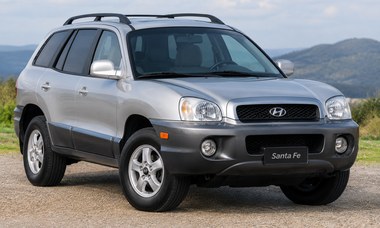
The first-generation Santa Fe helped establish Hyundai in the American SUV market. These vehicles were relatively simple by modern standards and were offered with four-cylinder and V6 engines, including Hyundai's 2.7-liter V6 and, in later years, a 3.5-liter V6.
At this age, condition is more important than finding a theoretically perfect model year. A well-maintained first-generation Santa Fe can still be dependable transportation, but neglected examples can quickly become uneconomical because several moderate repairs may be needed at once.
Timing-belt maintenance is particularly important on applicable engines. Buyers should also inspect for oil leaks, cooling-system deterioration, worn engine mounts, suspension wear, wheel bearings and corrosion in vehicles from northern climates.
The automatic transmissions are generally less controversial than some of Hyundai's later powertrains, but a 20-plus-year-old transmission still needs to shift smoothly both cold and fully warmed up.
Buyer Tip: Don't buy a first-generation Santa Fe simply because it has unusually low mileage. At this age, documented maintenance and evidence that the vehicle has been driven and serviced regularly are usually more valuable than an exceptionally low odometer reading.
2007–2012 Hyundai Santa Fe: Second Generation
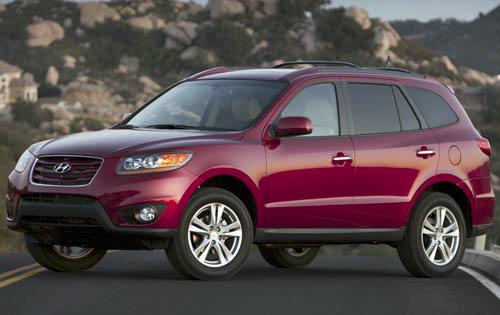
The 2007 redesign produced a more refined Santa Fe and includes some of the most appealing older examples on today's used market. Engine choices changed during this generation, but the 3.3-liter V6 is particularly noteworthy for buyers seeking a conventional, naturally aspirated powertrain.
These Santa Fes can accumulate substantial mileage, and the combination of a V6 engine and conventional automatic transmission makes a properly maintained example attractive to buyers who would rather avoid the turbochargers, direct-injection concerns and dual-clutch transmissions found in some newer vehicles.
Later vehicles in this generation received revised powertrains, including a 2.4-liter four-cylinder and 3.5-liter V6. They can also be good purchases, although exact engine identification remains worthwhile when comparing vehicles.
Age-related issues now include suspension wear, wheel bearings, engine mounts, oil leaks and cooling-system components. Certain vehicles also have recall histories that should be checked by VIN before purchase rather than assumed from model year alone.
Buyer Tip: A documented 2007–2012 V6 Santa Fe with 140,000 miles can be a better purchase than a lower-mileage example with an unknown maintenance history. These are old enough that evidence of consistent care should carry considerable weight.
2013–2018 Hyundai Santa Fe and Santa Fe Sport: Third Generation
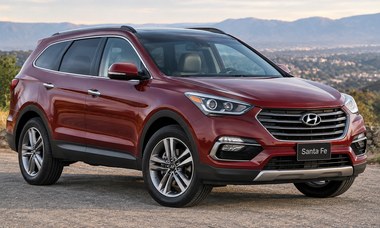
This generation requires more explanation than any other because Hyundai effectively sold two different Santa Fe models. The shorter two-row vehicle was called the Santa Fe Sport, while the longer Santa Fe offered three-row seating and replaced the previous Veracruz in Hyundai's lineup.
The Santa Fe Sport was available with a 2.4-liter naturally aspirated four-cylinder and a 2.0-liter turbocharged four-cylinder. The larger three-row Santa Fe primarily used Hyundai's 3.3-liter V6. That difference is extremely important when evaluating reliability.
The four-cylinder Santa Fe Sport is where buyers need to pay particular attention to engine history. Certain 2013–2014 Santa Fe Sport vehicles equipped with 2.4-liter and 2.0-liter Theta II GDI engines were recalled for connecting-rod bearing concerns. Hyundai's broader Theta II history makes documentation especially valuable when shopping these vehicles.
Listen for abnormal knocking, verify oil level and oil-change history, determine whether the engine has ever been replaced, and check the VIN for applicable recall and campaign completion. An engine replacement is not automatically a reason to reject the vehicle; properly documented replacement history can actually remove some uncertainty about what is currently under the hood.
The 3.3-liter V6 three-row Santa Fe has a different reliability profile and should not simply be lumped together with the four-cylinder Santa Fe Sport. For buyers who want this generation and can accept the V6's greater fuel consumption, a well-maintained V6 can be one of the more appealing configurations.
Certain Santa Fes from this period were also involved in ABS-related fire-risk recalls. Recall applicability is VIN-specific, so buyers should verify completion rather than assuming that every vehicle from a particular model year was affected.
Buyer Tip: On a 2013–2018 Santa Fe, start by determining whether you're looking at a Santa Fe Sport or the larger three-row Santa Fe and then identify the exact engine. That information changes the reliability assessment substantially.
2019–2020 Hyundai Santa Fe: Fourth Generation, Early Years
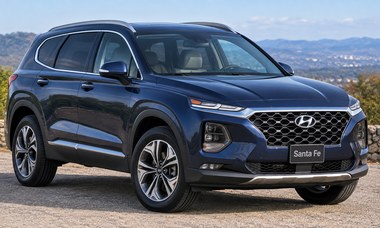
Hyundai redesigned the two-row Santa Fe for 2019, while the previous three-row Santa Fe was eventually replaced by the Palisade. The new Santa Fe offered a 2.4-liter naturally aspirated four-cylinder and an optional 2.0-liter turbocharged four-cylinder, both paired with conventional eight-speed automatic transmissions.
The conventional automatic is a useful distinction because these vehicles do not use the eight-speed wet dual-clutch transmission later paired with the 2.5-liter turbo engine. For a buyer who wants a relatively recent Santa Fe without the DCT, the 2019–2020 models can therefore be worth considering.
Engine history still matters, however. Buyers should verify oil level, maintenance records, recall or campaign history and any previous engine work. The naturally aspirated 2.4 is mechanically less complicated than the 2.0 turbo, while the turbo provides substantially stronger performance at the cost of additional complexity.
Buyer Tip: Between two otherwise comparable vehicles, we'd favor the Santa Fe with the clearest maintenance and engine history over one that is merely cheaper or has slightly lower mileage.
2021–2023 Hyundai Santa Fe: Newer Powertrains, More Choices
The extensively revised 2021 Santa Fe introduced Hyundai's newer 2.5-liter four-cylinder engine family. Naturally aspirated versions use a conventional eight-speed automatic, while the more powerful 2.5-liter turbo is paired with an eight-speed wet dual-clutch transmission. Hybrid and plug-in hybrid versions also joined the lineup.
For buyers who prioritize mechanical simplicity, the naturally aspirated 2.5-liter engine with the conventional automatic is arguably the most straightforward configuration. The turbo is substantially quicker and enjoyable to drive, but its turbocharger and DCT add complexity.
Certain 2021–2022 Santa Fe 2.5T models were included in a recall involving the eight-speed dual-clutch transmission. The issue could cause drivability problems or loss of motive power, and affected vehicles received a transmission-control software update, with transmission replacement required in certain cases. This does not mean every turbo Santa Fe has a bad transmission, but it makes VIN and repair-history verification important.
The hybrid deserves separate consideration because its 1.6-liter turbocharged engine, electric motor and six-speed automatic constitute a very different powertrain from either gasoline-only Santa Fe. Early ownership history is encouraging enough to keep these vehicles in consideration, but they still do not have the decades of high-mileage evidence available for older conventional Santa Fe powertrains.
Buyer Tip: For a 2021–2023 Santa Fe, identify the transmission as carefully as the engine. The naturally aspirated 2.5, turbo 2.5 and hybrid are sufficiently different that they should be evaluated as separate powertrain choices.
Hyundai Santa Fe Reliability by Engine
Older 2.7-Liter, 3.3-Liter and 3.5-Liter V6 Engines
The older naturally aspirated V6 engines are an important part of the Santa Fe's longevity reputation. They lack much of the complexity of Hyundai's later turbocharged and direct-injected four-cylinder powertrains, and well-maintained examples can accumulate very high mileage.
That doesn't make them maintenance-free. Timing-belt service is critical on applicable engines, while oil leaks, cooling-system deterioration, ignition components and age-related seals and hoses become increasingly important as these SUVs approach 15 or 20 years old.
3.3-Liter Lambda V6
The 3.3-liter V6 deserves particular consideration from used Santa Fe buyers. It appeared in the second generation and later powered the larger three-row Santa Fe. It provides strong performance without turbocharging and is generally paired with a conventional automatic transmission.
For someone seeking a high-mileage used Santa Fe and willing to accept lower fuel economy, a well-maintained 3.3-liter V6 is one of the powertrains we'd be most interested in finding.
2.4-Liter and 2.0-Liter Turbo Theta II Four-Cylinders
These engines require more careful discussion. Certain Theta II GDI applications were subject to major engine-related recalls involving connecting-rod bearing wear, including applicable Santa Fe Sport vehicles. Buyers should not assume that every Theta II engine will fail, nor should they assume that every Santa Fe from the affected era has the same engine.
The right approach is vehicle-specific: identify the engine, inspect the maintenance history, check oil level and consumption history, determine whether an engine replacement has already occurred, and verify applicable recall or campaign work by VIN.
2.5-Liter Naturally Aspirated Engine
The newer 2.5-liter naturally aspirated four-cylinder offers less performance than the turbo but has the advantage of avoiding a turbocharger and the turbo model's dual-clutch transmission. For buyers who intend to keep a newer Santa Fe for many years, that relative simplicity makes it an appealing configuration.
2.5-Liter Turbo Engine
The 2.5-liter turbo transforms the Santa Fe's performance and is considerably stronger than the naturally aspirated engine. The engine itself should not automatically discourage a buyer, but the entire powertrain must be considered because the turbo engine is paired with Hyundai's eight-speed wet DCT.
On applicable 2021–2022 vehicles, verify that transmission recall work was completed. During a test drive, pay attention to hesitation, abnormal shifting, warning messages or inconsistent engagement.
Which Hyundai Santa Fe Engine Is Most Reliable?
There isn't one engine that wins across all 23 model years, but for an older used Santa Fe, the 3.3-liter naturally aspirated V6 is one of the powertrains we'd most actively seek out. Its combination of durability, strong performance and a conventional automatic makes it particularly appealing when maintenance history is good.
Among newer Santa Fes, the 2.5-liter naturally aspirated engine with the conventional eight-speed automatic is an attractive choice for buyers who value simplicity over maximum acceleration.
The Theta II four-cylinder engines require more careful vehicle-specific research, while turbocharged and hybrid models should be evaluated with their additional powertrain components in mind.
Hyundai Santa Fe Transmission Reliability
Transmission reliability also varies substantially across the Santa Fe's history. Many older Santa Fes use conventional automatic transmissions that can last a long time when maintained and not overheated. At high mileage, however, shift quality should always be evaluated both cold and after a lengthy test drive.
The conventional six- and eight-speed automatics used in many later Santa Fes are also fundamentally different from the eight-speed wet DCT fitted to the 2.5T beginning with the revised 2021 model.
A dual-clutch transmission operates differently from a traditional torque-converter automatic, so some low-speed behavior may feel different even when the transmission is operating normally. Persistent hesitation, warning messages, abnormal noises, harsh engagement or inconsistent power delivery deserve investigation.
On an applicable 2021–2022 2.5T, confirm the transmission recall work by VIN rather than relying solely on a seller's statement that "all recalls were done."
Possible Hyundai Santa Fe Problems by Generation
1. Theta II Engine and Connecting-Rod Bearing Concerns
This is one of the most important issues for a used Santa Fe Sport buyer. Applicable vehicles equipped with certain 2.4-liter and 2.0-liter turbo GDI engines were involved in engine-related recall actions associated with connecting-rod bearing wear.
Warning signs can include abnormal knocking, an engine warning light, reduced power or evidence that the vehicle has been operated with insufficient oil. Before purchasing one, determine the exact engine and VIN history and ask specifically whether the engine has ever been repaired or replaced.
Buyer Tip: Don't rely on a seller simply saying that the engine "runs great." A cold startup, service records and documented Hyundai repair history tell you considerably more.
2. Oil Consumption
Oil consumption deserves attention on several four-cylinder Santa Fe powertrains. An engine that consumes oil can remain usable if the owner checks and replenishes it consistently, but a vehicle repeatedly operated below its proper oil level can suffer accelerated internal wear.
Check the dipstick before the engine is started, ask how much oil is added between changes and look for unusually long oil-change intervals in the service history.
3. Eight-Speed Dual-Clutch Transmission Concerns
The 2.5T's eight-speed wet DCT provides quick shifts and helps make the turbo Santa Fe substantially more responsive, but applicable 2021–2022 vehicles have a recall history that buyers should verify.
Drive the vehicle in stop-and-go traffic as well as at highway speed. Make sure engagement from a stop is consistent and that no transmission or powertrain warnings appear.
4. ABS Module and Fire-Risk Recall History
Certain Santa Fe and Santa Fe Sport vehicles have been involved in Hyundai ABS-related recalls involving the possibility of an electrical short and engine-compartment fire. Applicability varies by model and VIN.
This is another reason we recommend checking the VIN through the official recall system before buying rather than relying on generalized lists of "bad Santa Fe years."
5. Cooling-System Problems
Cooling-system maintenance becomes increasingly important on older Santa Fes. Aging hoses, radiators, thermostats and other components can eventually lead to coolant loss or overheating.
Any history of serious overheating deserves caution because an otherwise durable engine can be permanently damaged if operated excessively hot.
6. Wheel Bearings and Suspension Wear
Higher-mileage Santa Fes can develop wheel-bearing noise and wear in struts, control-arm bushings, sway-bar links and other suspension components. These are normal aging-vehicle repairs rather than reasons to avoid the model, but several worn components at once can add substantially to the cost of a supposedly inexpensive SUV.
7. Engine Mounts and Vibration
Worn engine or transmission mounts can produce vibration at idle, clunks when shifting between Drive and Reverse or excessive powertrain movement. Mount deterioration becomes more likely as vehicles age and mileage accumulates.
8. Turbocharger and Related Components
Turbocharged Santa Fes offer much stronger acceleration, but turbocharging adds heat and mechanical complexity. Oil-change history becomes especially important, and buyers should investigate unusual turbo noise, smoke, oil leakage or unexplained loss of power.
A turbo Santa Fe isn't necessarily unreliable, but we'd want stronger documentation before buying a high-mileage turbo model than we would for an otherwise comparable naturally aspirated vehicle.
Hyundai Santa Fe Maintenance and Repair Costs
Routine Santa Fe maintenance is generally affordable for a midsize SUV. The larger financial risk comes from buying the wrong used example and inheriting a major engine or transmission problem.
| Repair or Service | Typical Cost Range |
|---|---|
| Oil and filter service | $60–$120+ |
| Brake pads and rotors | $400–$900+ per axle |
| Battery replacement | $180–$350+ |
| Wheel bearing | $400–$800+ |
| Engine or transmission mount | $400–$1,000+ |
| Cooling-system repair | $400–$1,200+ |
| Struts or significant suspension work | $700–$1,600+ |
| Timing-belt service on applicable older engines | $800–$1,500+ |
| Turbocharger-related major repair | $1,500–$3,500+ |
| Major engine replacement | $5,000–$10,000+ if not covered by applicable warranty or campaign |
| Major transmission replacement | $4,500–$8,000+ |
These figures are broad estimates rather than quotes. Labor rates, powertrain, parts selection and location can change repair costs substantially.
Speaking of possible unexpected costs, before agreeing to a dealer's numbers, see which dealer fees are legitimate, which can be negotiated, and which can be avoided.
What to Check Before Buying a Used Hyundai Santa Fe
Rather than running through a generic used-car checklist, concentrate on the Santa Fe issues that can materially change whether a particular vehicle is worth buying.
- Identify the exact engine and transmission. This is especially important on 2013–2018 and 2021–2024 models because outwardly similar Santa Fes can have substantially different powertrains.
- Check engine history on applicable four-cylinder models. Look for oil-consumption records, abnormal engine noise, engine replacement documentation and evidence of regular oil changes.
- Verify recalls by VIN. Engine, ABS and transmission recall applicability varies, so don't rely solely on model-year generalizations.
- Test the transmission fully warmed up. Include low-speed traffic, stop-and-go operation, moderate acceleration and highway driving.
- Inspect older V6 models for age-related maintenance. Confirm timing-belt history where applicable and examine the cooling system, leaks, mounts and suspension rather than assuming the V6's good reputation makes the rest of the SUV irrelevant.
Want to compare Hyunda models? See our Hyundai reliability guide for the best used Hyundai models and years, years to avoid, common problems to watch for, and more.
Final Buyer Summary: Is a Used Hyundai Santa Fe Reliable?
Yes, the Hyundai Santa Fe can be a reliable used SUV, but choosing the right year and powertrain is unusually important. A well-maintained Santa Fe can reasonably reach 180,000 to 220,000 miles, while particularly durable examples can exceed 250,000 miles.
For an inexpensive older Santa Fe, we'd give serious consideration to a well-maintained 2007–2012 V6. These vehicles are old enough that condition and service history now matter enormously, but their relatively conventional powertrains can make them appealing high-mileage choices.
Within the 2013–2018 generation, don't treat the Santa Fe Sport and three-row Santa Fe as the same vehicle. We'd be considerably more cautious with a high-mileage 2.4-liter or 2.0T Santa Fe Sport whose engine history is unknown, while a documented 3.3-liter V6 Santa Fe can be a much more attractive proposition.
The 2019–2020 Santa Fe can offer a useful middle ground between price and modern features. For 2021–2024 models, buyers seeking the simplest conventional powertrain should take a close look at the naturally aspirated 2.5-liter engine with the eight-speed automatic. The 2.5T provides much stronger performance, but its DCT and applicable recall history deserve additional attention.
Our buying strategy: Don't shop for a Santa Fe by year or mileage alone. First identify the exact engine and transmission, then investigate its maintenance, engine, recall and repair history. Finding the right powertrain with excellent documentation is much more important than saving a few hundred dollars on a questionable example.
Also, it's good to always know the value of your trade-in while you're evaluating your next possible purchase. Here's a good source for a quick and accurate appraisal: free trade-in appraisal.
Some Insider Insights:
Learn to Negotiate Lower Car Prices