

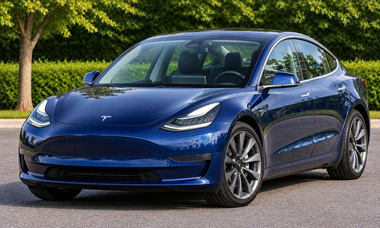
The Tesla Model 3 can be an excellent used electric car, especially for buyers who want low routine maintenance costs, strong performance, and an easy-to-use charging network. Its electric motors and battery packs have demonstrated encouraging durability, but build quality, suspension components, electronics, and previous accident repairs deserve attention.
For most buyers, I'd start with a 2021–2023 Model 3, which offers useful improvements without necessarily costing as much as the extensively refreshed 2024. But a carefully maintained 2019–2020 Model 3 can also be an excellent lower-priced choice, especially when its battery health, warranty status, and asking price make sense.
The Model 3 isn't maintenance-free or immune to expensive repairs. The important distinction is that a squeaking suspension joint or troublesome window seal is different from a failed high-voltage battery. This guide focuses on the issues that actually affect a used-car buying decision, covering U.S.-market Model 3 sedans from 2017 through 2025.
Or, Are You Considering "New" as Well?
If you're also considering a new Model 3, you may want to come back to this and take a look at a handy technique that identifies the dealer in your area most ready to make price concessions.
Overall Reliability: Is the Tesla Model 3 Dependable?
Generally, yes, although its reliability record is more mixed than its simple electric drivetrain might suggest. The Model 3 eliminates gasoline-engine oil changes, spark plugs, exhaust-system repairs, and conventional automatic-transmission servicing. Regenerative braking can also reduce brake-pad wear. Those are real advantages for owners who drive substantial miles.
The more familiar complaints involve squeaks or rattles, paint or trim quality, window seals, front-suspension noises, and occasional electrical or display issues. Consumer Reports' owner surveys have also varied by model year: its assessment of the 2023 car is about average, while the 2024 model performs better than comparable cars from that year. That's a reason to inspect the particular vehicle, not to dismiss the Model 3.
Tesla's software updates can correct some issues without a service visit, but mechanical repairs still require proper diagnosis. I'd check the availability of Tesla or qualified electric-vehicle service locally, especially if buying a car outside its basic warranty. Home charging also makes a major difference to how convenient and economical a Model 3 is to own.
The battery is understandably the biggest worry for first-time electric-car buyers. Fortunately, normal capacity loss is not the same as battery failure. A battery with reduced range may continue to function for years, although a severely degraded or faulty pack can be very expensive to replace outside warranty. Its actual condition is more important than an alarming estimate of what every battery replacement might cost.
How Many Miles Can a Tesla Model 3 Last?
I'd regard 200,000 miles as a realistic long-term target for a well-maintained Model 3, with some cars capable of going considerably farther. The motors have relatively few moving parts, and the battery doesn't ordinarily need replacement simply because the odometer reaches 100,000 or 150,000 miles.
In its 2024 Impact Report, Tesla estimated that Model 3 and Model Y battery packs retained about 80% of their original capacity after 200,000 miles, on average. That's encouraging fleet-wide evidence, not a promise about an individual used car. Climate, charging habits, age, battery chemistry, and previous use can all affect degradation.
Tesla's original battery-and-drive-unit warranties generally provide eight years or 100,000 miles for Standard Range/RWD versions and eight years or 120,000 miles for Long Range and Performance versions, whichever comes first, with a minimum 70% battery-capacity guarantee under the applicable terms. Confirm the precise coverage and original in-service date for the vehicle; the warranty doesn't restart when a used car changes hands.

Before buying, ask the seller to show the battery-health information available through the car's touchscreen and arrange an appropriate inspection if the condition is unclear. Some vehicles support a more detailed battery-health test, but it can take up to 24 hours and isn't always practical during a purchase. The miles of range displayed at a given charge level are not, by themselves, a reliable battery-health test.
Even if the battery and drive motors remain healthy, tires, suspension, air-conditioning components, glass, and other wear items will need attention over time. Tesla recommends tire rotation at approximately 6,250-mile intervals, along with periodic brake-fluid and cabin-filter service. Low maintenance isn't the same as no maintenance.
What Are the Best Tesla Model 3 Years to Buy?
2019–2020 Tesla Model 3: Best Lower-Priced Options
The 2020 is my first choice among pre-2021 Model 3s. It offers much of the same quick, efficient electric driving experience at a potentially lower price. A good 2019 is worth considering too, particularly with documented maintenance and a significant discount compared with newer cars. By 2019, Tesla had gained more production experience, although build quality still varies from car to car.
These models generally lack the heat pump and cabin refinements introduced with the 2021 refresh. I'd check battery health, remaining battery warranty, suspension condition, and recall completion carefully. A well-kept 2020 can be a better buy than a neglected 2021.
2021–2022 Tesla Model 3: Best Overall Used Value
These are my preferred starting points. The 2021 refresh introduced a more efficient heat-pump heating system, a power-operated trunk, improved window insulation, and other useful changes. Those improvements make the Model 3 more pleasant to live with, particularly in colder climates.
The 2022 model is similarly appealing, with some cars also receiving updated infotainment hardware. But Tesla often changed equipment during a production year, so verify the individual car rather than assuming every 2021 or 2022 has identical features. A well-maintained Rear-Wheel Drive model should satisfy most commuters; Long Range AWD is worth considering if extra range and traction matter.
2023 Tesla Model 3: A Strong Later-Production Choice
The 2023 is the final model year before the major exterior and interior refresh. It's worth comparing with a 2021–2022 because it offers the familiar cabin controls and a mature version of the earlier design. I'd choose based on battery health, remaining warranty, tire and suspension condition, and price rather than pay a large premium for one additional model year.
2024 Tesla Model 3: Best for a Quieter, More Refined Ride
The refreshed 2024 Model 3 brought improved sound insulation, a more comfortable ride, updated seats, and a revised cabin. It's a particularly good choice if you disliked the road noise or firm suspension of earlier cars. One trade-off is the removal of the traditional turn-signal and gear-selector stalks, so I'd try the controls before deciding. The 2025 model is similar, but its shorter ownership history and certain recalls warrant a separate VIN check.
Which Tesla Model 3 Years Should You Avoid?
There isn't a Model 3 year I'd reject automatically. However, these are the versions where I'd be especially careful before committing to a purchase.
2017–2018: Earliest Production and Warranty Age
The earliest Model 3s can be attractively priced, but build quality and previous repair history deserve a close look. Check panel alignment, paint, window seals, and suspension noise. Tesla documented front upper control-arm noise on some early vehicles. More importantly, an early car may have little or no battery warranty remaining because the coverage is limited by both time and mileage.
2017–2020: Rearview Camera Wiring Recall
Tesla recalled 2017–2020 Model 3s because repeated trunk opening could damage a camera cable and cause the rearview image to disappear. Verify that the specific car received the necessary inspection and repair. Also test the trunk, camera, central screen, windows, and climate control during the inspection.
2021–2024: Software-Related Safety Recalls
Certain cars were recalled because software could fail to warn the driver about an unlatched hood. Other Model 3 recalls have involved rearview-camera operation or driver-assistance software. Many remedies are delivered over the air, but don't assume that the presence of an updated-looking screen proves every recall has been resolved. Check the VIN and installed software version.
2024–2025: Rearview Camera Computer and 2025 Battery Contactor
Some 2024–2025 vehicles were recalled because a car-computer circuit-board problem could disable the rearview camera; affected computers may require replacement even after a protective software update. Separately, certain 2025 Model 3s were recalled for high-voltage battery contactors that could cause a sudden loss of drive power. Confirm that any required physical repair—not just a software update—has been completed.
Whatever the model year, I'd also check for previous collision or flood damage, unusual battery or charging warnings, excessive tire wear, and suspension creaks. Have a Tesla-capable technician inspect the car, and verify recalls using NHTSA's VIN lookup.
Also, evaluating a Model 3 for a possible purchase is a very important first step. The next step would be learning how to actually get an excellent used Model 3 price, and I have some important pointers on that.
Final Verdict: Is a Used Tesla Model 3 a Good Car to Buy?
Yes. A carefully selected Tesla Model 3 can be an enjoyable, dependable used electric sedan with low routine maintenance needs and impressive long-term battery potential. Its biggest ownership advantages are efficiency, performance, and convenience for drivers who can charge regularly at home.
I'd start with a 2021–2023 Model 3 for overall value, or a 2024 if its quieter cabin and revised ride justify the price. On a tighter budget, I'd look for a well-maintained 2020, with a good 2019 also worth considering. Check battery health, warranty remaining, suspension, and recall history regardless of year.
As with any used car, the best purchase isn't necessarily the newest or lowest-mileage example. Choose the Model 3 with the strongest documented condition, a healthy battery, completed recalls, and a price that leaves room for future repairs.
Also, Your Current Vehicle
It's good to always know the value of your present vehicle, whether you may trade it, sell it, or simply keep track of its value as an asset.
I think the two most accurate trade-in appraisal services are Edmunds and Kelley Blue Book.
By averaging the two appraisals, you'll have a good idea of what your car is actually worth. They're both free, of course, and only take a couple of minutes.