

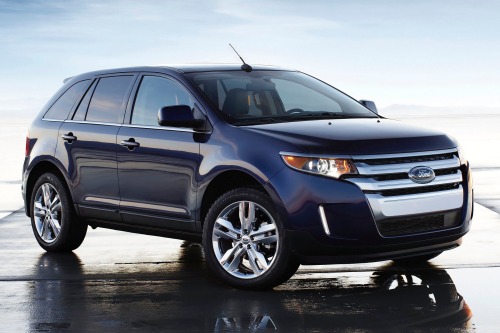
Which Ford Edge years are the most reliable? Which years should you avoid? And if you're shopping for a used Edge, which engine and generation offer the best combination of reliability, performance, and long-term value?
The Ford Edge has been a popular two-row midsize crossover since its introduction for the 2007 model year. It offers more passenger and cargo space than many compact SUVs without the size and third-row seating of the Ford Explorer. Over the years, Ford offered several naturally aspirated V6 and turbocharged EcoBoost engines, and those powertrain differences play an important role in long-term reliability.
Some Ford Edge models can exceed 200,000 miles with relatively routine maintenance, while certain years and engines have expensive problems involving coolant intrusion, transmissions, power transfer units, and other drivetrain components.
This guide covers every Ford Edge model year from 2007 through 2022, including reliability by generation, common problems, engine differences, years to avoid or inspect carefully, maintenance costs, expected lifespan, and the best years to buy.
In This Guide You'll Learn
- How reliable the Ford Edge is over the long term
- Which Ford Edge years are the best choices
- Which years require extra inspection
- The most common problems by generation
- Which Ford Edge engines are the most reliable
- Which engines have potentially expensive problems
- How long a Ford Edge can last
Or, Looking For "New"?
If you're also considering a new Edge, you may want to come back to this and take a look at a handy technique that locates the dealer in your area most ready to make price concessions.
Is the Ford Edge Reliable?
Overall, Ford Edge reliability is best described as average to above average, but the specific engine, drivetrain, and model year can make a substantial difference.
The first-generation Edge sold from 2007 through 2014 primarily used naturally aspirated V6 engines. These engines can be durable, but the 3.5-liter and 3.7-liter V6 engines use an internally mounted water pump. If the water pump fails internally and coolant enters the engine oil, severe engine damage can result.
All-wheel-drive models introduce another potential expense: the power transfer unit, commonly called the PTU. Fluid deterioration and heat can eventually contribute to leaks or failure, particularly on vehicles that received little drivetrain maintenance.
The redesigned 2015 Edge introduced wider use of Ford's turbocharged EcoBoost engines. The 2.0-liter EcoBoost offers an appealing combination of performance and fuel economy, but certain versions deserve careful inspection for coolant intrusion and other cooling-system-related problems.
Later Edge models benefited from ongoing improvements, but the switch to an eight-speed automatic transmission for 2019 introduced another area buyers should evaluate carefully. Rough shifting, hesitation, or abnormal transmission behavior shouldn't be dismissed during a test drive.
Despite these concerns, there are many high-mileage Ford Edges still providing dependable transportation. The key is understanding the vulnerabilities of the particular engine and drivetrain you're considering.
Reliability at a Glance
| Category | Our Assessment |
|---|---|
| Overall Reliability | Average to Above Average |
| Best Used Years | 2013-2014, 2020-2022 with a strong maintenance history |
| Years Requiring Extra Inspection | 2007-2008, 2015-2018, and some 2019 models |
| Important Engine Concern | Internal water pump on 3.5-liter and 3.7-liter V6 engines |
| Important EcoBoost Concern | Coolant intrusion on certain 2.0-liter engines |
| Expected Lifespan | 200,000-250,000 miles with excellent maintenance |
| Maintenance Costs | Moderate |
Buyer Tip: Before shopping for a Ford Edge, determine which engine and drivetrain you're considering. Two Edges from the same model year can have different reliability concerns depending on their powertrain.
How Long Does a Ford Edge Last?
A well-maintained Ford Edge can commonly reach 200,000 miles, while particularly good examples can exceed 250,000 miles. Whether reaching that mileage remains economical depends on the engine, drivetrain, maintenance history, and how quickly developing problems are addressed.
Many Edge engines are mechanically capable of very high mileage. As these vehicles age, however, the cost of transmission repairs, water pump replacement, AWD components, suspension work, electronics, and other accumulated repairs can become more important than engine longevity alone.
Typical Lifespan
- 150,000 miles: Reasonable for virtually any properly maintained Edge.
- 200,000 miles: Commonly achievable with consistent maintenance.
- 250,000 miles: Realistic for a particularly well-maintained example.
- 300,000+ miles: Possible, but maintenance history and previous major repairs become extremely important.
Regular engine oil changes are essential, particularly on turbocharged models. Long-term owners should also pay attention to transmission fluid, coolant, PTU or AWD fluids where applicable, brake fluid, and suspension wear.
Bottom Line: Around 200,000 miles is a reasonable expectation for a good Ford Edge, while 250,000 miles or more is achievable when the vehicle has received excellent maintenance.
What Are The Best Ford Edge Years to Buy?
The best Ford Edge years depend partly on whether you prefer the simpler naturally aspirated engines of the first generation or the newer technology and efficiency of the second generation.
For buyers primarily concerned with long-term reliability, later production years within each generation generally make the most sense.
| Model Year | Why We Recommend It |
|---|---|
| 2013-2014 | Mature first-generation models with proven drivetrains and fewer early-production concerns. V6 water pump condition still requires attention. |
| 2020 | Later second-generation model with updated safety technology and several years of platform refinement. |
| 2021-2022 | Among the strongest newer choices, combining a mature platform, modern safety features, and improved powertrain development. |
Buyer Tip: A later model year isn't automatically the better purchase. A documented 2014 Edge with excellent maintenance can be a safer financial choice than a poorly maintained 2020.
Which Ford Edge Years Should You Perhaps Avoid or Inspect Carefully?
We don't consider every Ford Edge from the following years a vehicle that should automatically be avoided. Instead, these are the years where engine, drivetrain, age, or first-year design concerns make a thorough inspection particularly important.
| Model Year | Why Extra Inspection Is Important |
|---|---|
| 2007-2008 | Early production years are now very old, making transmission condition, water pump risk, AWD components, and deferred maintenance important concerns. |
| 2015-2018 | Some 2.0-liter EcoBoost engines deserve careful evaluation for coolant intrusion, while V6 models retain the internal water pump concern. |
| 2019 | First year of the major refresh and new eight-speed automatic transmission; pay particular attention to shifting quality. |
Bottom Line: If you're trying to minimize risk, 2013-2014 and properly maintained 2020-2022 models are among the years we'd investigate first.
Pricing
Knowing which Edge model years to concentrate on is step 1. Step 2 is knowing how to actually get an excellent used Edge price.
Also, getting a strong trade-in allowance often has the biggest impact on your final price. See KBB versus Edmunds Appraisals - Which Is Better to learn about getting accurate and fair trade-in values before negotiating with a dealer.
Reliability by Generation
2007-2014: First Generation
The original Ford Edge arrived for 2007 as a five-passenger crossover positioned between Ford's smaller SUVs and the larger Explorer. Its car-based platform provided a comfortable ride and more refined road manners than traditional truck-based SUVs.
Most first-generation Edges use a 3.5-liter naturally aspirated V6. A 3.7-liter V6 became available in the Edge Sport later in the generation. Both engines can deliver strong longevity, but both belong to Ford's Cyclone V6 family and share an important design consideration: the water pump is mounted internally and driven by the timing chain.
An internal water pump isn't automatically a reliability problem. Many last well beyond 100,000 miles. The concern is what can happen when one eventually fails.
Depending on the nature of the failure, coolant can potentially contaminate the engine oil. If the driver doesn't recognize the problem quickly, inadequate lubrication can cause severe internal engine damage.
Replacing the water pump is also labor-intensive because accessing it requires considerably more disassembly than replacing a conventional externally mounted pump.
For that reason, a high-mileage first-generation Edge with documentation showing professional water pump replacement can actually be more attractive than an otherwise similar vehicle still operating with its original pump.
Common Problems
- Internal water pump failure on V6 engines
- PTU leaks or failures on some all-wheel-drive models
- Wheel bearing wear
- Brake booster problems on some vehicles
- Suspension component wear
- Door-ajar sensor and electrical problems
- Air conditioning and HVAC repairs as vehicles age
Buyer Tip: On a V6 Edge, check the coolant level and engine oil carefully. Unexplained coolant loss deserves investigation even if the engine currently appears to run normally.
Bottom Line: The first-generation Edge can be a durable used crossover, but the internal water pump and AWD system deserve careful attention as mileage increases.
2007-2010: Early First-Generation Models
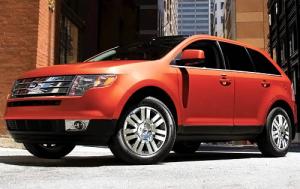
The earliest Edges deserve slightly more scrutiny simply because they're now approaching twenty years old and were the first versions of an entirely new model.
The 3.5-liter V6 itself is capable of substantial mileage, but buyers should evaluate transmission behavior, cooling system condition, suspension wear, wheel bearings, and AWD operation where equipped.
At this age, deferred maintenance is usually a greater concern than the original engineering. A low purchase price can quickly lose its appeal if the vehicle immediately requires several major repairs.
Buyer Tip: Don't buy an early Edge simply because it's inexpensive. A professional inspection is particularly valuable on a vehicle approaching two decades of service.
2011-2014: Later First-Generation Models
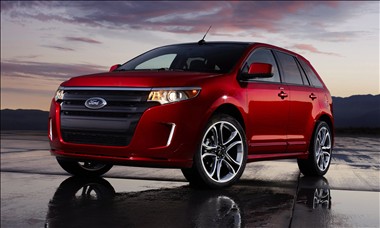
The Edge received a significant refresh for 2011, including updated styling, interior improvements, new technology, and additional powertrain choices.
The familiar 3.5-liter V6 continued, while the Edge Sport used the larger 3.7-liter V6. Ford also introduced a 2.0-liter EcoBoost inline-four during this period, providing better fuel economy than the V6 engines.
The later 2013 and 2014 models are among the more appealing first-generation choices because Ford had several years to refine the platform. They still require attention to the V6 water pump and AWD PTU where applicable, but overall build quality and reliability can be quite good.
Buyer Tip: A documented 2013 or 2014 Edge with a naturally aspirated V6 can be an attractive used SUV if the cooling system, transmission, and AWD components have been maintained carefully.
Bottom Line: The final first-generation years provide a good balance of affordability, proven engineering, and relatively straightforward technology.
2015-2022: Second Generation

Ford completely redesigned the Edge for 2015, introducing more modern styling, improved interior quality, additional safety technology, and greater use of turbocharged engines.
The 2.0-liter EcoBoost inline-four became the primary engine for many models. A naturally aspirated 3.5-liter V6 remained available during the earlier portion of the generation, while the Edge Sport and later ST models used powerful twin-turbocharged V6 engines.
The redesigned Edge is quieter, more refined, and more fuel efficient than its predecessor, but the increased mechanical and electronic complexity creates additional considerations for long-term ownership.
2.0-Liter EcoBoost Inline-Four
The 2.0-liter turbocharged inline-four is one of the most common engines in second-generation Edges. It provides good low-speed torque and respectable fuel economy while delivering enough performance for normal family use.
Many 2.0-liter EcoBoost engines provide dependable service, but certain versions have developed a reputation for coolant intrusion. Coolant can enter one or more cylinders, resulting in misfires, rough cold starts, white exhaust smoke, unexplained coolant loss, or a check-engine light.
Severe cases can require major engine repairs or replacement, making these symptoms especially important during a pre-purchase inspection.
Ford revised the engine design over time, so later examples don't necessarily carry the same level of risk as earlier versions.
Buyer Tip: On any used 2.0-liter EcoBoost Edge, check the coolant reservoir before the test drive and look for evidence of unexplained coolant loss, repeated misfire repairs, or engine replacement.
3.5-Liter Naturally Aspirated V6
The familiar 3.5-liter V6 continued into the second generation for buyers who preferred a naturally aspirated engine. It offers smooth power and avoids the turbocharger used on EcoBoost engines.
However, it retains the internal water pump design. Buyers therefore shouldn't assume that choosing the naturally aspirated engine automatically eliminates expensive engine-related risk.
The 3.5-liter V6 can exceed 200,000 miles, but cooling system condition and water pump history become increasingly important as mileage climbs.
2.7-Liter Twin-Turbocharged EcoBoost V6
The performance-oriented Edge Sport and later Edge ST use a 2.7-liter twin-turbocharged EcoBoost V6. This engine delivers substantially more power than the standard four-cylinder and gives the Edge surprisingly strong acceleration.
The 2.7-liter EcoBoost has generally developed a respectable durability reputation when maintained properly, but its twin turbochargers and additional hardware make it more complex than a naturally aspirated engine.
Regular oil changes with the correct specification are particularly important for turbocharger and engine longevity.
Buyer Tip: A used Edge Sport or ST should be evaluated not only for maintenance but also for how it was driven. Performance models are more likely to have experienced aggressive use.
2015-2018: Early Second-Generation Models
The 2015-2018 period deserves additional scrutiny because these vehicles combine the early years of the redesign with some of the engine and drivetrain concerns that matter most to used Edge buyers.
Not every Edge from these years is problematic. Many have accumulated substantial mileage without major repairs. However, service records and a thorough pre-purchase inspection become especially important.
Common Problems
- Coolant intrusion on certain 2.0-liter EcoBoost engines
- Internal water pump concerns on 3.5-liter V6 models
- PTU problems on some all-wheel-drive vehicles
- Electronic and infotainment glitches
- Door latch and door-ajar sensor problems
- Suspension wear on higher-mileage vehicles
Bottom Line: The 2015-2018 Edge can be a good used crossover, but engine selection and maintenance history should drive the buying decision.
2019-2022: Updated Second Generation
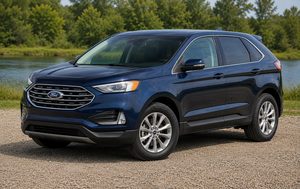
The Edge received another substantial update for 2019, including revised styling, additional safety technology, and a new eight-speed automatic transmission. The performance-oriented Edge ST also replaced the previous Sport model.
The later models benefit from continued development of the platform and are generally attractive used choices, but transmission behavior deserves attention. Some owners have reported rough, hesitant, or inconsistent shifting from the eight-speed automatic.
By 2020-2022, the Edge represented a mature version of the second-generation platform, making these years among the models we'd consider first when shopping for a newer used Edge.
Common Problems
- Rough or hesitant shifting on some eight-speed transmissions
- Electronic and infotainment problems
- Battery and charging system issues
- Turbocharged engine components requiring careful maintenance
- Normal suspension and wheel bearing wear
Buyer Tip: During a test drive of a 2019-2022 Edge, evaluate transmission behavior at low speeds, during moderate acceleration, and after the vehicle is fully warmed up.
Bottom Line: The 2020-2022 models are among the strongest newer Edge choices, provided the transmission operates properly and the vehicle has a documented maintenance history.
Which Ford Edge Engine Is Most Reliable?
There isn't one Ford Edge engine that is clearly superior in every respect. The naturally aspirated V6 engines avoid turbocharger complexity but have the internal water pump design, while the 2.0-liter EcoBoost avoids that particular issue but certain versions have their own coolant intrusion concerns.
3.5-Liter V6
The 3.5-liter naturally aspirated V6 can be a durable engine capable of exceeding 200,000 miles. It provides smooth power and doesn't rely on turbocharging.
Its major drawback is the internally mounted water pump. Because replacement is labor-intensive and internal failure can potentially damage the engine, water pump history becomes increasingly important on higher-mileage examples.
3.7-Liter V6
The 3.7-liter naturally aspirated V6 used in certain Edge Sport models provides stronger performance and shares much of its basic architecture with the 3.5-liter engine.
It can also provide excellent longevity but shares the internal water pump concern. Buyers should therefore apply the same cooling-system scrutiny to both V6 engines.
2.0-Liter EcoBoost Inline-Four
The 2.0-liter turbocharged inline-four is economical, powerful for its size, and extremely common in later Edges. Many have accumulated high mileage successfully.
However, certain versions deserve additional scrutiny for coolant intrusion. A vehicle with unexplained coolant loss, rough cold starts, repeated misfire codes, or white exhaust smoke should receive a professional diagnosis before purchase.
2.7-Liter EcoBoost V6
The 2.7-liter twin-turbocharged V6 found in Edge Sport and ST models combines strong performance with generally respectable durability when maintained properly.
Its additional complexity means maintenance shouldn't be neglected. Regular oil changes are especially important for turbocharger longevity, and buyers should look for evidence that previous owners followed appropriate service intervals.
Buyer Tip: Instead of searching for a supposedly problem-free Edge engine, look for the best-maintained example of a powertrain whose known weaknesses you understand.
Maintenance & Repair Costs
Routine Ford Edge maintenance costs are generally reasonable for a midsize crossover. Parts are widely available, and most independent repair facilities are familiar with Ford powertrains.
The larger financial risks involve known repairs such as an internal V6 water pump, PTU replacement, major EcoBoost engine work, or transmission repairs.
| Maintenance or Repair | Typical Cost |
|---|---|
| Oil change | $70-$130 |
| Brake pads and rotors | $450-$900 |
| Transmission service | $250-$500 |
| Wheel bearing replacement | $400-$800 |
| Internal V6 water pump replacement | $1,500-$2,500+ |
| PTU repair or replacement | $1,000-$2,000+ |
| Major suspension work | $800-$1,800+ |
Actual costs vary by model year, drivetrain, labor rates, geographic area, and whether original-equipment or aftermarket parts are used.
Buyer Tip: Don't let a slightly lower asking price outweigh evidence of deferred maintenance. One major water pump, PTU, transmission, or engine repair can easily exceed the savings.
Buying a Used Ford Edge: What Matters Most?
The Ford Edge can offer excellent used-car value because it provides much of the passenger room and comfort of a larger SUV without a third row or the higher purchase price that often accompanies one.
But the Edge is also a vehicle where knowing exactly which engine and drivetrain you're buying can prevent an expensive mistake.
On a V6 Edge, cooling system and water pump history deserve special attention. On a 2.0-liter EcoBoost, investigate any evidence of coolant loss or repeated misfires. On a 2019-2022 model, evaluate the eight-speed transmission carefully during the test drive.
Ultimately, the best used Ford Edge isn't simply the newest or lowest-mileage example. It's the vehicle with the right powertrain for your needs, a documented maintenance history, and a thorough inspection showing that expensive known problems aren't waiting for the next owner.
Choose carefully, and a Ford Edge can provide 200,000 to 250,000 miles or more of comfortable and practical transportation.
If you'd like to compare different Ford models, or years, be sure to read our Ford Reliability & Problems: Best Used Fords & Years Guide. It highlights the models, best years to buy, common problems, and helps you choose the right vehicle.
Your Trade-In
It's good to always know the value of your trade-in while you're evaluating your next possible purchase. Here's a good source for a quick and accurate appraisal: free trade-in appraisal.
What's Next?
Understand Questionable Dealer Fees
Beware of "dealer fees". Before agreeing to a dealer's numbers, see which dealer fees are legitimate, which can be negotiated, and which can be avoided.