


Which Kia Sedona years are the most reliable? Which years should you avoid? And if you're shopping for a used Sedona, which generation offers the best combination of reliability, safety, and long-term value?
The Kia Sedona has evolved from an inexpensive alternative to the Honda Odyssey and Toyota Sienna into a genuinely competitive family minivan. Later models offer comfortable interiors, strong V6 engines, impressive safety features, and surprisingly good long-term reliability. However, not every model year performs equally well, and some early generations are far more dependable than others.
This guide covers every Kia Sedona model year sold in the United States from 2002 through 2021, including reliability, common problems, maintenance costs, expected lifespan, and the best years to buy.
In This Guide You'll Learn
- How reliable the Kia Sedona is over the long term
- Which model years are the best choices
- The most common problems by generation
- Typical maintenance and repair costs
- How many miles a Sedona can last
- What to inspect before buying a used Sedona
However, if you are also considering the purchase of a brand new Sedona or other vehicle, before you start negotiating you may want to take a look at how I approach buying a new car near or even below invoice, or at least at the best possible price during a period of high demand.
Is the Kia Sedona Reliable?
Overall, the Kia Sedona has earned an average-to-above-average reliability reputation, especially in its later years. While early models experienced more mechanical problems than many Japanese competitors, Kia steadily improved quality through each redesign. By the final generation, the Sedona had become a dependable family vehicle capable of providing many years of service with proper maintenance.
The biggest improvements came after the complete redesign for 2015. Interior quality improved dramatically, the 3.3-liter V6 proved durable, and overall fit and finish approached the class leaders. Owners who kept up with routine maintenance frequently report well over 200,000 miles without major drivetrain repairs.
Like any aging minivan, however, reliability depends heavily on maintenance history. Family vehicles often accumulate high mileage, making service records more important than the number shown on the odometer.
Strengths
- Durable V6 engines in most model years
- Comfortable ride quality
- Generally lower ownership costs than many competitors
- Strong safety ratings on later generations
- Good parts availability
- Excellent value on the used market
Potential Weaknesses
- Automatic transmission issues on some early models
- Power sliding door repairs as vehicles age
- Suspension wear on higher-mileage vans
- Air conditioning component failures
- Electrical accessories becoming less reliable with age
Bottom Line: The Kia Sedona became significantly more reliable as it evolved. Later third-generation models compare surprisingly well with more expensive competitors.
Reliability at a Glance
| Category | Our Assessment |
|---|---|
| Overall Reliability | Average to Above Average |
| Best Used Years | 2018-2021 |
| Years Requiring Extra Inspection | 2002-2005 and some 2015-2016 models |
| Most Reliable Engine | 3.3-liter V6 (Lambda II) |
| Expected Lifespan | 200,000-250,000 miles |
| Maintenance Costs | Moderate |
Buyer Tip: A well-maintained Sedona with complete service records is usually a better purchase than a lower-mileage example that has skipped routine maintenance.
Reliability by Generation
2002-2005: First Generation
The original Kia Sedona entered the U.S. market as an affordable alternative to established minivans. While it offered generous interior space and an attractive price, early reliability lagged behind competitors like the Honda Odyssey and Toyota Sienna.
The 3.5-liter V6 engine itself generally proved dependable, but automatic transmission durability became the biggest concern as mileage accumulated. Cooling system issues, suspension wear, and electrical problems also became increasingly common as these vans aged.
Most surviving examples now have well over 150,000 miles, making condition and maintenance history far more important than the specific model year.
Common Problems
- Automatic transmission failures
- Power steering leaks
- Cooling system component failures
- Suspension wear
- Wheel bearing failures
- Electrical accessory problems
Buyer Tip: Verify smooth transmission operation during both cold and fully warmed-up driving. Harsh shifting or delayed engagement may indicate expensive repairs ahead.
Bottom Line: These early Sedonas can provide inexpensive transportation, but buyers should budget for more repairs than with later generations.
2006-2014: Second Generation
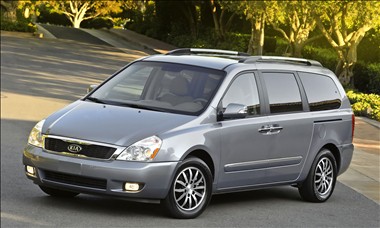
The completely redesigned 2006 Sedona represented a major improvement in nearly every area. Interior quality increased, crash safety improved, and overall refinement was significantly upgraded.
It also added power (an additional 50 horsepower) and shed 400 pounds compared to the earlier model. The result was a Sedona that could keep up with worthy competitors such as the Honda Odyssey and Toyota Sienna, while offering similar amenities, comfort, and safety ratings.
The available V6 engines generally developed solid reliability records, although normal age-related repairs become increasingly common on higher-mileage examples. Suspension components, steering parts, wheel bearings, and air conditioning systems often require attention after 150,000 miles.
The automatic transmission also proved more durable than the first generation, although regular fluid changes remain important for maximizing longevity.
Common Problems
- Power sliding door motor failures
- Air conditioning compressor issues
- Suspension bushing wear
- Wheel bearing replacement
- Valve cover gasket oil leaks
- Alternator failures on higher-mileage vans
Buyer Tip: Test both power sliding doors several times during your inspection. Repairs can be costly, and slow or noisy operation often signals future problems.
Bottom Line: The second generation marked a significant step forward in reliability and remains a solid value for families shopping on a budget.
2015-2021: Third Generation
The third-generation Sedona introduced for 2015 transformed Kia's minivan into a much more refined family vehicle. The cabin became quieter, interior materials improved substantially, and safety technology expanded throughout the production run.
Powered by Kia's 3.3-liter V6 engine, these models generally developed an excellent reputation for durability. While some early production years experienced isolated issues, later examples from 2018 through 2021 rank among the most dependable Sedonas ever built.
Regular maintenance—including oil changes, transmission service, cooling system care, and brake inspections—allows many of these vans to exceed 200,000 miles with relatively few major mechanical repairs.
Common Problems
- Power sliding door actuator failures
- Occasional air conditioning compressor replacement
- Suspension bushings and stabilizer links wearing with age
- Battery and charging system repairs on older vehicles
- Infotainment and backup camera glitches on some models
- Normal brake and tire wear on heavily used family vans
Buyer Tip: Models built from 2018 through 2021 generally offer the best combination of reliability, modern safety technology, and lower long-term ownership costs.
Bottom Line: The final generation transformed the Sedona into a genuinely competitive and dependable family minivan.
Best & Worst Kia Sedona Years
What Kia Sedona Years Are The Best to Buy?
If long-term reliability is your top priority, these model years stand out.
| Model Year | Why We Recommend It |
|---|---|
| 2018 | Mature third-generation model with strong reliability and updated safety features. |
| 2019 | Excellent balance of reliability, technology, and value on the used market. |
| 2020 | Few widespread mechanical concerns and modern driver-assistance features. |
| 2021 | Final production year with the most refined version of the Sedona. |
Which Kia Sedona Years Should You Avoid?
| Model Year | Reason |
|---|---|
| 2002-2005 | Higher likelihood of transmission, suspension, and electrical repairs. |
| 2015-2016 | Inspect carefully for complete maintenance history and proper operation of power doors and electronics. |
Bottom Line: While every used vehicle should be inspected carefully, the 2018-2021 Sedonas are generally the easiest years to recommend.
Maintenance & Repair Costs
The Kia Sedona is generally less expensive to maintain than many competing minivans. Parts are widely available, independent repair shops are familiar with the platform, and routine maintenance costs remain reasonable.
As with any family vehicle, however, high mileage and years of daily use eventually lead to repairs involving suspension components, brakes, cooling systems, and power sliding doors.
| Maintenance Item | Typical Cost |
|---|---|
| Oil change | $70-$120 |
| Brake pads and rotors | $350-$800 |
| Transmission service | $250-$450 |
| Power sliding door repair | $500-$1,200 |
| Air conditioning compressor | $900-$1,500 |
| Suspension refresh | $800-$2,000+ |
Keeping up with scheduled maintenance is usually far less expensive than delaying repairs until multiple components fail at once.
Buyer Tip: Ask whether the transmission has been serviced regularly. Fresh transmission fluid can significantly improve long-term durability on high-mileage minivans.
How Long Does a Kia Sedona Last?
A well-maintained Kia Sedona can often provide between 200,000 and 250,000 miles of dependable service. Many owners have exceeded those figures by following the factory maintenance schedule and addressing minor repairs before they become major problems.
The engines themselves are generally capable of very high mileage. Most long-term ownership costs involve normal wear items rather than catastrophic engine failures.
Typical Lifespan
- 150,000 miles: Easily achievable with routine maintenance.
- 200,000 miles: Common for well-maintained examples.
- 250,000 miles: Realistic for owners who stay current on preventative maintenance.
Vehicles that have received regular oil changes, cooling system service, transmission maintenance, and suspension repairs often continue providing dependable family transportation for many years.
Bottom Line: Mileage is only part of the story. Maintenance history remains the best predictor of how much life a used Sedona has remaining.
Buying a Used Kia Sedona: What Matters Most?
Most Kia Sedonas spend their lives transporting families, which means they often accumulate mileage quickly. Fortunately, highway miles are generally easier on a vehicle than repeated short trips, so don't dismiss a higher-mileage van that has been maintained properly.
Instead, focus on overall condition, maintenance records, and evidence that previous owners repaired problems promptly rather than postponing them.
Before You Buy
- Review maintenance records carefully.
- Test both power sliding doors several times.
- Verify smooth transmission operation.
- Inspect the suspension for clunks or excessive wear.
- Confirm the air conditioning blows cold from all vents.
- Check for coolant or oil leaks.
- Inspect tire wear for signs of alignment or suspension issues.
- Test all electrical accessories, including the backup camera and infotainment system.
- Look underneath for rust if the vehicle spent time in northern climates.
- Have an independent mechanic perform a pre-purchase inspection.
Because many Sedonas served as family vehicles, cosmetic wear is common and usually less important than mechanical condition. A clean maintenance history should carry more weight than a perfect-looking interior.
Buyer Tip: Spending a little more for a one-owner Sedona with documented service records is often far less expensive than buying the cheapest example available.
Final Verdict
The Kia Sedona improved dramatically over its two decades of production. While the earliest models struggled to match the long-term reliability of the Honda Odyssey and Toyota Sienna, each redesign narrowed the gap. By its final years, the Sedona had become a comfortable, dependable, and affordable family minivan.
The 2018-2021 models are the clear standouts, offering the strongest combination of reliability, modern safety equipment, and overall value. Earlier second-generation models can also be excellent buys for budget-conscious families when they have been maintained properly.
Regardless of model year, maintenance history matters far more than mileage alone. A thoroughly inspected Sedona with complete service records can provide many years of dependable transportation while costing thousands less than many competing minivans.
If you're shopping for an affordable used minivan with a spacious interior, solid V6 performance, and the potential to exceed 200,000 miles, the Kia Sedona deserves a place on your shortlist.
Your Trade-In
Also, it's good to always know the value of your trade-in while you're evaluating your next possible purchase. Here's a good source for a quick and accurate appraisal: free trade-in appraisal.
What's Next?
If you may be buying soon, you may want to take a look at my most effective negotiation method for used cars. It explains a quick way to identify the dealerships most motivated to deal, no matter how busy they may seem, and how to follow up once you've found them. This can be the difference between getting a good price and getting a great one.
And beware of "Dealer Fees": Before agreeing to a dealer's numbers, see which dealer fees are legitimate, which can be negotiated, and which can be avoided.
And still comparing Kia models? See our Kia reliability guide for the best used Kia models and years, common problems to watch for, and how the major Kia models compare.
Knowledge Is Leverage ...