

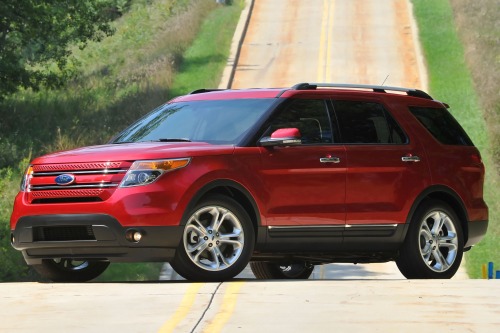
In today's high-priced car market, many car shoppers have been buying "older" vehicles that have aged well as a way to save money. Should the 2013 Explorer be on that list? Well, a lot of it will come down to its history of reliability.
Way back when, the Ford Explorer was one of the key players in earning the SUV a special place in the hearts of American drivers and families. And its immense popularity has continued thanks to its very capable road manners, upscale cabin and excellent safety ratings. Very simply, it has long resided among the top choices in its segment.
And what was new for the 2013 model was a Sport model outfitted with a turbocharged engine and sport-tuned suspension. Also new were standard front passenger knee airbags for all models, while new available features for the Limited model included a power tilt-and-telescoping steering column, a heated steering wheel and a lane-departure warning system. In addition, the optional xenon headlights added automatic high-beam control.
While those are some of its appealing features, what's more important all these years later is how it has stood up over time. Is it still a good SUV today?
So here, ...
- We'll take a look at its now established reliability track record.
- Then we'll review the mechanical problems that some owners have experienced that should be checked before buying.
- And then we'll take a look at this model year's overall pros and cons.
Also, More On Ford Reliability
If you'd like to compare different Ford models, or years, be sure to read our Ford Reliability & Problems: Best Used Fords & Years Guide. It highlights the models, best years to buy, common problems, and helps you choose the right vehicle.
2013 Ford Explorer Reliability
The 2013 Ford Explorer is a comfortable and capable midsize SUV that offers three rows of seating, a refined ride, and available four-wheel drive. Overall reliability is average to above average, with most examples providing many years of dependable service when properly maintained. While there are a few well-known trouble spots, the Explorer's engines and transmissions generally have solid long-term durability.
Three engines were available for 2013: a naturally aspirated 3.5-liter V6, a turbocharged 2.0-liter EcoBoost four-cylinder, and the high-performance 3.5-liter twin-turbo EcoBoost V6 found in the Explorer Sport. For buyers focused on long-term reliability, the standard 3.5-liter V6 is the best choice. It has a proven track record and typically requires fewer expensive repairs than the turbocharged alternatives.
The six-speed automatic transmission is generally dependable, although regular fluid changes can help extend its life. Four-wheel-drive models should also have documented maintenance of the transfer case and rear differential to help prevent premature drivetrain wear.
Overall, the 2013 Explorer remains one of the better used midsize SUVs for families needing three rows of seating. Routine maintenance, cooling system inspections, and suspension repairs as the vehicle ages are usually far less expensive than major engine or transmission work.
- Overall reliability: Average to Above Average
- Expected lifespan: 200,000 to 250,000+ miles with proper maintenance
- Best choice: 3.5-liter V6 with documented maintenance records
- Watch for: Water pump condition, suspension wear, power steering operation, and maintenance history
Bottom line: The 2013 Ford Explorer is a dependable family SUV when equipped with the naturally aspirated 3.5-liter V6 and maintained properly. Buyers should prioritize service records and overall condition over mileage alone.
- Why it's a good choice: Spacious interior, comfortable ride, capable V6 engine, and solid long-term durability
- Biggest concern: Expensive internal water pump repairs if maintenance has been neglected
- Best version: XLT or Limited with the naturally aspirated 3.5-liter V6
- Buy only if: The vehicle has complete maintenance records and passes a thorough pre-purchase inspection
Multiple dealers → compete for your business → you save
A well-maintained 2013 Explorer can provide many additional years of dependable family transportation while offering a comfortable ride and excellent highway capability.
2013 Ford Explorer Common Mechanical Problems
The 2013 Ford Explorer has several well-known mechanical issues that buyers should inspect before purchasing. Most are age-related wear items, but one potential repair—the internal water pump on the 3.5-liter V6—can be particularly expensive if ignored.
- Internal water pump failure (3.5-liter V6): The engine's water pump is driven by the timing chain and mounted inside the engine. If it fails, coolant can leak into the engine oil, potentially causing catastrophic engine damage. Watch for coolant loss, overheating, milky engine oil, or unexplained coolant consumption.
- Electric power steering failures: Some Explorers experience electric power steering assist problems, resulting in heavy steering or warning messages. Verify the steering operates smoothly throughout the entire test drive.
- Suspension wear: Front and rear control arm bushings, sway bar links, ball joints, and struts commonly wear after 100,000 miles. Listen for clunking noises over bumps and inspect tires for uneven wear.
- Wheel bearing failures: Higher-mileage Explorers may develop worn wheel bearings that produce a humming or growling noise that increases with road speed.
- Automatic transmission concerns: The six-speed automatic transmission is generally reliable, but some vehicles develop harsh shifting or hesitation if fluid has never been changed. A smooth test drive is essential.
- Air conditioning problems: Blend door actuators, compressors, and refrigerant leaks can reduce cooling performance as the vehicle ages. Confirm that both front and rear climate control systems operate properly.
- MyFord Touch electronics: Vehicles equipped with the MyFord Touch infotainment system may experience frozen screens, slow response times, Bluetooth connectivity issues, or software glitches. Verify that all electronic features function correctly.
- Exhaust and underbody rust: In northern climates, inspect the exhaust system, suspension components, and underbody for corrosion caused by road salt exposure.
Fortunately, the standard 3.5-liter V6 engine itself has an excellent reputation for longevity. Most expensive repairs can be avoided by identifying problems early and following the recommended maintenance schedule.
Buyer Tip: Before purchasing a 2013 Explorer, inspect the cooling system carefully and ask whether the water pump has ever been replaced. During the test drive, pay close attention to steering feel, transmission operation, suspension noise, and the performance of all electronic features. A pre-purchase inspection by a qualified mechanic is well worth the investment.
If you may be buying a vehicle soon, I'd recommend reading my most effective negotiation methods for either new cars or used cars. Each explains a quick way to identify the dealerships most motivated to deal, no matter how busy they may seem, and how to follow up once you've found them. That can be the difference between getting a good price and getting a great one.
2013 Explorer Pros
Cost Savings: Older models like the 2013 Explorer can be significantly cheaper than buying a newer vehicle in the current high-priced market. However, while this may save a substantial amount upfront, the savings have to be weighed against the risk for increased maintenance and repair costs going forward.
Features vs. Cost: The 2013 Explorer, despite being an older model, might still offer several modern features such as Bluetooth connectivity, touchscreen infotainment, and advanced safety features. You could get these features at a lower price compared to newer models with similar functionalities.
Depreciation: Older cars have already undergone the steepest part of their depreciation curve, so buyers won't experience the same rapid depreciation as with a later model vehicle.
Spacious Interior: It offers a roomy cabin with ample space for passengers and cargo, making it great for families or those needing extra room.
Upscale Cabin: The interior is attractively designed and solidly contructed with high quality materials. The overall look and feel creates an overall upscale ambience. The cabin's quietness is on a par with many luxury-level models, while a fully loaded Explorer is quite comparable as well.
Good Towing Capacity: It has a respectable towing capacity for its class, making it suitable for hauling trailers or boats. It can handle 5,000 pounds with the larger engine, while the four-cylinder can tow up to 2,000 pounds.
Available All-Wheel Drive: All-wheel-drive models provide good traction and stability, especially in adverse weather conditions.
Solid Performance: The V6 engine provides decent power and acceleration, while still maintaining reasonable fuel efficiency for its size.
Ride Quality: There's a strong balance of handling and ride quality. The Explorer's handling is secure and confident, while its electric powering steering (which also improves fuel economy and enables the automatic parking system) is impressively precise and responsive. It's capable road manners do not come at the sacrifice of ride quality, however, as the suspension does a fine job absorbing most road bumps and rough spots.
Four-Cylinder Turbocharged Version: While the standard engine is a 290-horsepower V6, the optional turbocharged 2.0-liter "EcoBoost" four-cylinder for front-wheel-drive models offers best-in-class gas mileage.
Also mated with a 6-speed automatic transmission, it still produces a healthy 240-horsepower and 270-pound-feet of torque. Although not as fast as the V6, it adequately accelerates the Explorer during daily use while getting 20 mpg city and 28 mpg highway.
Excellent Crash Test Scores: In government crash testing, the 2013 Explorer was awarded the top score of five out of five stars for overall occupant crash protection, consisting of five stars for overall frontal-impact protection as well as five stars for overall side-impact protection.
2013 Explorer Cons
Fuel Efficiency: While not the worst in its class, the Explorer's fuel efficiency might be lower than some of its competitors, especially if it's driven in the city or with heavy loads. Also, as cars age, their fuel efficiency might decrease due to wear on the engine and other components. The 2013 Explorer might not have the same fuel efficiency it did when new.
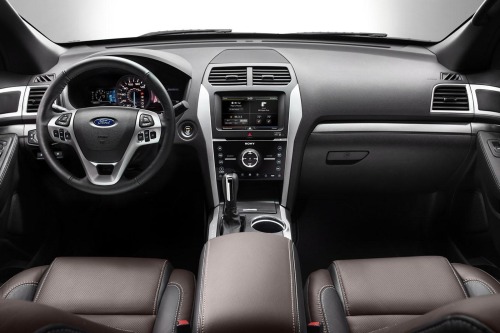
Potentially Outdated Technology: While the 2013 Explorer has some modern features, they might not be as advanced as what you'd find in newer models. If having the latest tech is essential, this might be a downside.
Third-Row Space: The third row might feel cramped for taller passengers, and it might not be as comfortable for long journeys.
Limited Visibility: The vehicle's design might restrict visibility, especially towards the rear, which could make parking or maneuvering more challenging.
Handling: Some drivers find the handling to be less nimble compared to other SUVs in its class, feeling more like a truck than a crossover.
Third-Row And Cargo Space: While overall interior roominess is not really an issue, its maximum cargo capacity of 80 cubic feet is a bit less than rivals such as the Chevy Traverse, Dodge Durango, Ford Flex and GM Acadia. The third row is also somewhat more cramped than its rivals.
No V8 Model: Those looking for extra power will find there isn't an available V8 model. While that may be missed in some circumstances, it should be noted that most drivers will likely find that the V6 does a satisfying job of bearing the load.
MyFord Touch Not Always User-Friendly: While it certainly offers some great features, especially when combined with the Sync voice-activation system, it also is a bit unwieldy with initially hard to identify buttons that are also too easy to press accidentally. There's definitely a learning curve with this system.
And several others ... There are also other numbers that can significantly affect the final out-the-door cost. A well-negotiated selling price can quickly lose its advantage if the dealer makes up for the concession with a below-market trade-in offer. Also, dealer fees and add-ons can further increase the final cost, making it important to learn which fees you must pay, can negotiate, or should avoid.
To become better informed about these important but often-confusing parts of the deal, be sure to see my articles on trade-ins and dealer fees.
In addition, used-car interest rates are typically higher than new-car rates, and can leave you owing much more than the vehicle is worth. Before buying, it's a good idea to review how car-loan rates affect your total cost and your alternative choices for substantial savings.
Relative Reliability:
If you'd like to see which are the most historically reliable cars, trucks, and SUVs from this time, be sure to read our Most Reliable Vehicles Guide: Best Used Models & Years. This comprehensive guide highlights the top-rated models, best years to buy or avoid, common problems, potential maintenance costs, and more, and may help you make the right choice to meet your needs.
Some Inside Insights: