

With both very high new and used car prices, many carbuyers are looking for "older" vehicles as a way to save some significant dollars. And due to the overall popularity of the Ford Edge, the 2013 model has been getting a second look by many buyers. But, of course, now reliability becomes a key issue.
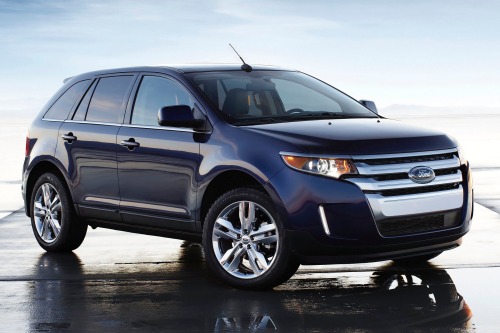
Overall, the 2013 Edge has a fairly reliability reputation with many owners having very positive experiences with normal and expected maintenance and repairs. Others, however, have had above average problems. Generally, a well-maintained 2013 Edge is expected to reach 150,000 to 200,000 miles, which while perhaps acceptable, is about half of the expected duration of a Toyota SUV, for example.
So here, we'll cover this older Edge's reliability history, common problems, and overall pros and cons.
Relative Reliability: Also, if you'd like to see which are the most historically reliable cars, trucks, and SUVs, be sure to read our Most Reliable Vehicles Guide: Best Used Models & Years. This comprehensive guide highlights the top-rated models, best years to buy or avoid, common problems, potential maintenance costs, and more, and may help you make the right choice to meet your needs.
2013 Ford Edge Reliability
The 2013 Ford Edge is generally considered one of the more reliable midsize SUVs of its generation. It offers a comfortable ride, a quiet cabin, and a choice of capable engines that can routinely exceed 200,000 miles when properly maintained. Compared with many competing crossovers from the same era, the 2013 Edge has fewer widespread mechanical problems and enjoys a solid reputation for long-term durability.
The most dependable choice is the naturally aspirated 3.5-liter V6, which has proven to be a durable engine with relatively few serious design flaws. The available 2.0-liter EcoBoost four-cylinder delivers excellent fuel economy, while the 3.7-liter V6 found in the Sport model provides stronger performance. Both can be reliable, but they generally require closer attention to maintenance than the 3.5-liter V6.
As with any vehicle now more than a decade old, reliability depends more on maintenance history than mileage alone. Regular oil changes, cooling system service, transmission fluid changes, and prompt attention to minor repairs can significantly extend the life of the vehicle.
Overall, the 2013 Edge remains one of the better used midsize SUV values available today. Buyers who find a well-maintained example with complete service records can reasonably expect many more years of dependable family transportation.
Buyer Tip: Don't automatically reject an Edge with 130,000 or even 160,000 miles if it has complete maintenance records. A well-cared-for example is often a much safer purchase than a lower-mileage SUV that has been neglected.
If you may be buying soon, I'd recommend reading my most effective negotiation methods for either new cars or used cars. Each explains a quick way to identify the dealerships most motivated to deal, no matter how busy they may seem, and how to follow up once you've found them. That can be the difference between getting a good price and getting a great one.
2013 Ford Edge Common Problems
Although the 2013 Ford Edge has a good reliability record overall, there are several common issues that buyers should inspect before making a purchase.
- Brake booster failure: One of the better-known issues involves the brake booster, which can cause a hard brake pedal and increased stopping distances. Some vehicles were covered by extended warranty programs, so verify whether any repairs have already been completed.
- Power Transfer Unit (AWD models): All-wheel-drive models can develop leaks or bearing wear in the Power Transfer Unit (PTU), particularly if the fluid has never been changed. Listen for whining or grinding noises during the test drive and inspect underneath for fluid leaks.
- Engine Problems: There have been reports of engine-related issues, such as coolant leaks, oil leaks, and problems with the engine's timing components. Engine repairs can be expensive, and these issues might affect performance and reliability.
- Water pump leaks (V6 engines): The internal water pump on the 3.5-liter and 3.7-liter V6 can eventually fail. Because the pump is driven by the timing chain, replacement is labor-intensive and expensive. Watch for coolant loss, overheating, or milky engine oil that could indicate coolant contamination.
- MyFord Touch electronics: Some vehicles experience slow or unresponsive touchscreens, Bluetooth connectivity problems, or navigation glitches. Confirm that all infotainment functions operate normally.
- Wheel bearing wear: Higher-mileage Edges may develop noisy front or rear wheel bearings, usually heard as a humming sound that increases with road speed.
- Suspension wear: Struts, sway-bar links, and control arm bushings may begin wearing after 100,000 miles, causing clunks over bumps and less precise handling.
- Minor oil and coolant leaks: Valve cover gaskets, cooling hoses, and other seals can begin leaking as the vehicle ages. These are generally manageable repairs if caught early.
Fortunately, most of these problems develop gradually rather than suddenly. A careful inspection and thorough test drive can often reveal warning signs before they become expensive repairs.
And I can't stress this enough:
Multiple dealers → compete for your business → you save
Buyer Tip: If you're considering an all-wheel-drive Edge, ask whether the PTU fluid has ever been serviced. Also inspect the service history for cooling system work, especially on V6 models. Spending a few hundred dollars on a professional pre-purchase inspection can prevent thousands in unexpected repair costs.
2013 Ford Edge Pros
The 2013 Ford Edge represents an appealing middle ground for those seeking SUV functionality but who also value maneuverability and decent gas mileage over three-row accommodations. The Edge offers an attractive and well-equipped cabin as well.
Quiet Cabin and Comfortable Ride: Front seating in the Edge is comfortable and supportive, even on long trips, while the reclining rear seats are shaped well and offer adequate headroom and satisfactory legroom. The cabin is also super quiet due to abundant sound insulation, while the well-tuned suspension provides a very composed and pleasant driving experience.
Long List of Features: Even the base SE model is well-equipped with standard features such as full power accessories, cruise control, air-conditioning, a power driver seat, a tire pressure monitor, 17-inch alloy wheels, antilock disc brakes, traction control, stability control, front-seat side airbags, full-length side curtain airbags, and a 6-speaker audio system with a CD player and an auxiliary audio jack.
Moving up to higher trims adds features such as 8-way power front seats, leather upholstery, dual zone climate controls, heated mirrors, 18-inch chrome wheels and a 12-speaker Sony audio system with HD radio.
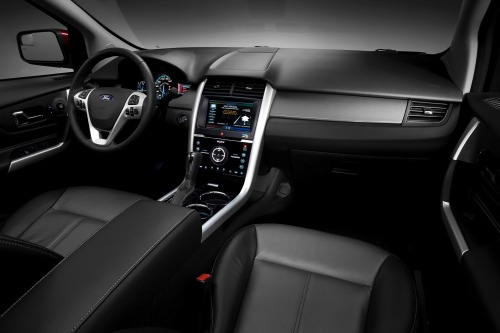
In addition, the Driver Entry package adds remote start, keyless entry/ignition, adaptive cruise control, a power liftgate, xenon headlamps and a collision warning system.
Other available options include uplevel features such as voice-activated navigation, a rear entertainment system with dual headrest screens and a panoramic sunroof.
Confident and Capable Handling: The Edge's powertrain offers capable and solid-feeling handling that seems more 'European' in nature, while still remaining smooth and quiet. It really doesn't feel like the typical SUV around corners or maneuvering in parking lots.
The Sport model in particular, with its higher powered V6 engine, sport-tuned suspension and 22-inch wheels, is the most agile and athletic (also see its downside below).
Optional Turbocharged Four-Cylinder Engine: An optional 2.0-liter turbocharged four-cylinder (the EcoBoost) was available on all models except the Sport and pumps out a healthy 240-horsepower and 270-lb-ft of torque. Like the other engines, it's mated with a 6-speed automatic transmission but is offered only with front-wheel drive versions.
This engine not only generates more torque than the base V6, but also gets better gas mileage while doing so. Models with this engine are EPA-rated at 21 mpg city and 30 mpg on the highway, while the base V6 comes in at 19 mpg city and 27 mpg highway and the larger V6 at 19 and 26, respectively.
Buyers should bear in mind, however, that the EcoBoost gas savings could take an average of about four years to pay for the added cost of the motor.
Stylish Design: This Edge has a sleek and modern exterior design that appealed to many buyers.
2013 Ford Edge Cons
Five-Passenger Capacity: There is no third-row option on the Edge, so there is a sacrifice for larger families attracted to its better maneuverability and fuel economy. And while the overall cabin space is generally adequate and comfortable with ample legroom, it does have some drawbacks. The rear middle seat's hard seatback makes for rough accommodations on longer trips. In addition, headroom becomes more of an issue on those models equipped with the optional dual-pane "Vista Roof".
Optional MyFord Touch System: The MyFord Touch system was not particularly user-friendly at this time. It's an interface with three display screens that allows input of commands for various audio, phone and navigation functions using voice controls, touch controls or steering-wheel buttons. While it's theoretically a great feature, it can be a bit cumbersome to learn and easy to press the wrong buttons, making it possibly necessary to take your eyes off the road to get it right.
Slow Shifting Transmission: The 6-speed automatic transmission has been tuned for driving comfort and fuel economy. While these are popular attributes, it can also produce slow downshifting at some speeds.
Fuel Economy: The V6 engine offered good power but didn't deliver the best fuel economy, which might be a consideration for those looking for a more efficient vehicle.
Harsher Ride in the Sport Model: Prospective buyer's should also note a potential problem due to the Sport's very large 22-inch wheels which produce a harsher ride that could be unacceptable to some. That said, most drivers who prefer the Sport's other more athletic qualities usually don't mind the more rugged feel of its drive.
Limited Cargo Space: While the Edge provides a spacious interior, it has less cargo space than some competitors in its class, particularly when compared to larger SUVs.
And another con ... even a good price on the vehicle doesn't necessarily mean you're getting a good deal.
There are other numbers besides price that can significantly affect the final out-the-door cost. A well-negotiated selling price can quickly lose its advantage if the dealer makes up for the concession with a below-market trade-in offer. Also, dealer fees and add-ons can further increase the final cost, making it important to learn which fees you must pay, can negotiate, or should avoid.
To become better informed about these important but often-confusing parts of the deal, be sure to see my articles on trade-ins and dealer fees.
Also, More On Ford Model Reliability
If you'd like to compare different Ford models, or years, be sure to read our Ford Reliability & Problems: Best Used Fords & Years Guide. It highlights the models, best years to buy, common problems, and helps you choose the right vehicle.