

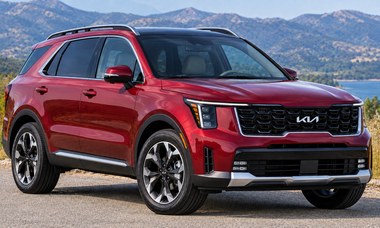
The Kia Sorento has changed dramatically since it arrived in the U.S. for the 2003 model year. Early Sorentos were truck-like SUVs with V6 engines and traditional four-wheel drive, while later generations evolved into more efficient family crossovers with four-cylinder, V6, turbocharged, hybrid and plug-in hybrid powertrains.
Reliability has varied just as much. Some Sorentos can make very good high-mileage used SUVs, but others require considerably more caution because of engine bearing failures, all-wheel-drive problems, transmission issues or expensive modern drivetrain components.
This guide covers 2003–2024 U.S.-market Kia Sorentos, with particular attention to the engines, transmissions and model years that matter most when you're shopping for a used one.
In This Guide You'll Learn
- Which Kia Sorento years are generally the best used-car choices
- Which Sorento years deserve additional caution
- How long a Kia Sorento can realistically last
- Which Sorento engines and transmissions have the strongest reliability records
- Why some Sorentos develop engine knock or the P1326 trouble code
- What can cause the AWD system to stop working
- Which Sorentos have the 8-speed dual-clutch transmission
- What to check before buying a high-mileage Sorento
However, if you're also considering a brand-new Sorento or another new vehicle, before you start negotiating you may want to take a look at how I approach getting a new car close to or even below invoice, or at least at the best price possible when demand is high.
Kia Sorento Reliability Overview
Overall, the Kia Sorento has a mixed reliability history. The best examples can provide well over 150,000 miles of useful service, and some reach 200,000 miles or more. However, reliability depends heavily on the generation, engine and maintenance history.
The first-generation Sorento is mechanically very different from everything that followed. Its body-on-frame construction and conventional V6 powertrains avoid some of the later four-cylinder engine concerns, but age, drivetrain wear, cooling-system problems and chassis deterioration now matter considerably.
The 2011–2015 Sorento became a crossover and brought better fuel economy and road manners, but certain four-cylinder engines require substantially more scrutiny. These years also have documented AWD coupling and actuator problems, while panoramic sunroof breakage became the subject of a lengthy federal investigation on 2011–2013 models equipped with that roof.
The redesigned 2016–2020 Sorento offers an important choice for used buyers: four-cylinder engines or a naturally aspirated 3.3-liter V6. For a buyer primarily interested in long-term powertrain simplicity, the V6 is often the version I would investigate first, although no used Sorento should be purchased solely on engine reputation without checking its individual history.
The 2021 redesign brought another major change. The naturally aspirated V6 disappeared, and buyers could choose among a conventional 2.5-liter four-cylinder, a much stronger 2.5-liter turbo paired with an 8-speed wet dual-clutch transmission, and electrified versions. The turbo/DCT combination performs well, but certain 2021–2022 examples were recalled because an electric transmission oil-pump fault could result in loss of drive power.
Kia Sorento Reliability at a Glance
| Model Years | General Reliability | Main Used-Buyer Concerns |
|---|---|---|
| 2003–2009 | Fair to Good | Age-related wear, cooling system, drivetrain and 4WD condition |
| 2011–2015 | Mixed | Four-cylinder engine concerns, AWD coupling/actuator, recalls, panoramic roof on applicable years |
| 2016–2020 | Mixed to Good | Four-cylinder engine history, P1326/KSDS concerns, AWD condition; V6 generally attractive |
| 2021–2024 | Too Powertrain-Dependent for One Rating | 2.5T DCT recall/history, electronics, recalls and added drivetrain complexity |
How Many Miles Can a Kia Sorento Last?
A well-maintained Kia Sorento can realistically last 150,000 to 200,000 miles, and carefully maintained examples can exceed 200,000 miles. The important qualification is that mileage alone tells you very little about a used Sorento.
At 100,000 miles, a Sorento with documented oil changes and no unresolved engine, transmission or AWD problems can still have plenty of useful life remaining. This is also the point where neglected maintenance and developing suspension, cooling and drivetrain problems become increasingly important.
At 150,000 miles, I would put considerably more weight on the particular engine and maintenance history. A well-documented V6 Sorento with 150,000 miles can be a more attractive purchase than a lower-mileage four-cylinder Sorento with an uncertain engine history.
At 200,000 miles, condition becomes a whole-vehicle question. Engine and transmission health matter, but so do the AWD system, wheel bearings, suspension, cooling system, air conditioning, electronics and evidence of rust or accident repairs.
250,000 miles or more is possible, but I would treat that as evidence of an exceptionally well-maintained individual vehicle rather than the mileage every Sorento should be expected to reach.
Kia Sorento Reliability by Generation
First Generation: 2003–2009 Kia Sorento
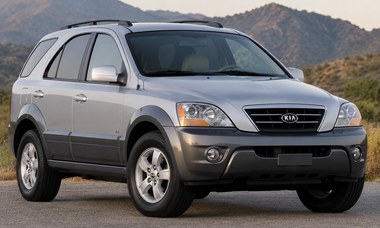
The 2003–2009 Sorento is the outlier in the Sorento family. Instead of the car-based crossover design used by later models, this generation uses body-on-frame construction and was designed more like a traditional SUV.
Early models used a 3.5-liter V6, while later versions offered updated V6 powertrains, including a 3.3-liter and 3.8-liter. These engines do not share the later Sorento four-cylinder bearing-failure story that concerns many used shoppers.
That doesn't automatically make an old Sorento trouble-free. These vehicles are now old enough that maintenance history is more important than their original reliability reputation. Cooling-system deterioration, oil leaks, worn suspension components, wheel bearings, driveline vibration, 4WD problems and neglected fluids can turn a cheap Sorento into an expensive project.
Common Problems on 2003–2009 Kia Sorentos
- Cooling-system problems: Inspect the radiator, hoses, coolant condition and evidence of overheating or past cooling-system repairs.
- Oil leaks: Age-hardened seals and gaskets become increasingly relevant as these SUVs approach or exceed 20 years old.
- Suspension and steering wear: Bushings, ball joints, wheel bearings and other chassis components should be evaluated carefully on higher-mileage examples.
- 4WD and driveline problems: Test the system rather than assuming it works because no warning light is illuminated.
- Rust: On vehicles from snow-belt areas, underbody corrosion can matter more than a relatively small difference in mileage.
Is a First-Generation Kia Sorento Still Worth Buying?
It can be, but at this age I would buy entirely on condition rather than model-year reputation. A clean, rust-free Sorento with extensive maintenance records can still be useful as an inexpensive SUV, while a neglected one can quickly consume more money in repairs than it is worth.
Buyer Tip: Don't evaluate one of these like a newer crossover. Get underneath it, check for structural corrosion and leaks, test the 4WD system and look closely at cooling-system and driveline condition.
Bottom Line: The first-generation Sorento avoids some of the engine concerns associated with later four-cylinder models, but age is now its biggest reliability problem. Buy the individual vehicle, not simply the year.
Second Generation: 2011–2015 Kia Sorento
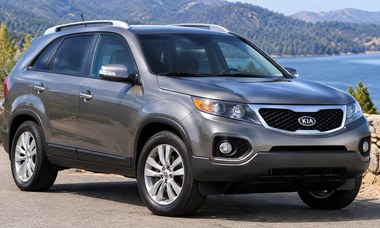
The 2011–2015 Sorento was a fundamental redesign. Kia abandoned the earlier truck-style architecture for a unibody crossover that was lighter, more comfortable and more efficient.
Depending on year, buyers will encounter four-cylinder and V6 engines. The four-cylinder versions deserve particular research because Kia conducted engine-related recalls and product-improvement campaigns affecting specific Sorento engines and model years. This is one area where it's important not to assume that every Sorento—or even every four-cylinder Sorento—has exactly the same history.
AWD models add another component worth checking. Kia issued service information covering Sorento 4WD coupling assemblies, pressure sensors, actuator motors and related wiring for symptoms including oil leakage, warning lights, abnormal noise and vibration. Earlier service information also addressed hydraulic actuator failures on certain 2011–2015 AWD Sorentos.
Common Problems on 2011–2015 Kia Sorentos
- Engine bearing problems on affected four-cylinder models: Engine knock, warning lights and eventual internal engine damage require careful investigation.
- P1326 and KSDS-related concerns: Certain Sorentos received Knock Sensor Detection System updates intended to identify vibrations associated with developing connecting-rod bearing damage.
- AWD coupling and actuator problems: Symptoms can include an inoperative AWD system, warning lights, noise, vibration or coupling leakage.
- Panoramic sunroof breakage: NHTSA investigated reports involving 2011–2013 Sorentos equipped with panoramic roofs.
- ABS-module fire recall: Certain 2011–2014 Sorentos were among Kia vehicles recalled because an internal ABS-module electrical short could increase the risk of an engine-compartment fire.
- Age-related suspension and accessory problems: By now, mileage and previous maintenance significantly affect overall condition.
Why Does a Kia Sorento Have a P1326 Code or Flashing Check-Engine Light?
P1326 can indicate that Kia's Knock Sensor Detection System has identified vibration consistent with excessive connecting-rod bearing wear on an affected engine. When the system detects a potentially serious condition, the vehicle may enter a reduced-power or "limp" mode intended to limit additional engine damage.
This is important because P1326 should not simply be treated as an ordinary check-engine-light code and cleared without diagnosis. Kia has issued detailed procedures for testing affected engines and determining whether further repair or engine replacement is required.
The exact campaign and warranty coverage depend on the Sorento's model year, engine and VIN. For example, Kia separately conducted a KSDS product-improvement campaign for certain 2011 Sorentos with the 2.4-liter MPI engine, while other Sorento four-cylinder applications were covered under different campaigns.
Why Does the AWD Stop Working on Some Kia Sorentos?
On some AWD Sorentos, the problem can be in the rear 4WD coupling system rather than the transmission itself. Kia service information identifies possible faults involving the coupling assembly, hydraulic actuator, pressure sensor, actuator motor and wiring.
Symptoms can include a 4WD warning light, loss of AWD operation, abnormal noise or vibration and, in some cases, fluid leakage from the coupling assembly. A used AWD Sorento should therefore be driven far enough to check the system under different speeds and loads rather than simply driven around a dealer's parking lot.
Why Do Panoramic Sunroofs Shatter on Some Kia Sorentos?
Reports of sudden panoramic-glass breakage were significant enough for NHTSA to conduct an engineering investigation focused on 2011–2013 Kia Sorentos. Owners reported roof glass breaking while vehicles were moving or stationary, sometimes accompanied by a very loud noise.
The federal investigation was eventually closed without a safety recall being ordered for the investigated condition. For a used 2011–2013 Sorento with a panoramic roof, however, I would still inspect the glass, roof opening and surrounding structure carefully and ask whether the roof has ever been replaced.
Buyer Tip: On a 2011–2015 Sorento, identify the engine before making a reliability judgment. On an AWD model, confirm that the AWD system actually operates, and check the VIN for completed recalls and campaigns rather than relying solely on the seller's description.
Bottom Line: The second-generation Sorento can be inexpensive and practical, but powertrain selection matters. A clean vehicle with a documented history can be worthwhile; an unknown-history four-cylinder or malfunctioning AWD example deserves much more caution.
Third Generation: 2016–2020 Kia Sorento

The 2016–2020 Sorento became larger and more refined, and it is one of the most interesting generations for used buyers because its powertrain choices have meaningfully different reliability considerations.
Depending on year and trim, Sorento buyers could find a 2.4-liter four-cylinder, a turbocharged four-cylinder or a naturally aspirated 3.3-liter V6. For a buyer planning to keep the vehicle well beyond 100,000 miles, I would not treat these engines as interchangeable.
The naturally aspirated 3.3-liter V6 is the powertrain I would investigate first when comparing otherwise similar examples. It provides good performance without a turbocharger and avoids the specific Theta II four-cylinder bearing concerns that make service history especially important on affected four-cylinder versions.
That doesn't make every V6 Sorento automatically better. Maintenance, oil leaks, cooling-system condition, transmission behavior and AWD operation still matter, and a neglected V6 can easily be a worse purchase than a well-maintained four-cylinder with a documented repair history.
Common Problems on 2016–2020 Kia Sorentos
- Four-cylinder engine concerns: Certain applications require careful investigation for engine-bearing history, KSDS updates, P1326 events and previous engine replacement.
- Oil consumption: Check the oil level and ask whether the owner has needed to add oil between changes.
- AWD coupling problems: Kia service information covering Sorento AWD systems includes coupling, actuator, sensor, wiring, leakage, noise and vibration concerns.
- Suspension wear: Listen for clunks and inspect bushings, links and other wear items on higher-mileage examples.
- Electronic and accessory failures: As equipment levels increased, there were simply more powered features to evaluate on a used vehicle.
Is the Kia Sorento V6 More Reliable Than the Four-Cylinder?
For a 2016–2020 used Sorento, I would generally investigate the naturally aspirated 3.3-liter V6 before an otherwise comparable four-cylinder if long-term powertrain reliability were my priority. The reason isn't that every four-cylinder will fail; it's that the four-cylinder engine history creates an additional layer of risk that should be researched by VIN and maintenance record.
A V6 also has disadvantages. Fuel economy is lower, access for some repairs can be more difficult, and age or poor maintenance can create expensive problems regardless of engine choice. But for a buyer comparing two well-maintained, similar-mileage Sorentos, the V6's simpler naturally aspirated design is appealing.
What Does P1326 Mean on a 2016–2020 Kia Sorento?
On an affected four-cylinder Sorento, P1326 means the engine-management system has detected a knock-signal pattern that requires diagnosis for possible connecting-rod bearing damage. Kia issued procedures covering diagnosis and, when testing confirms the need, engine replacement on affected vehicles after installation of the Knock Sensor Detection System.
If you're shopping for one of these Sorentos and discover a past P1326 event, don't automatically walk away—but don't accept "the code was cleared" as an adequate explanation either. Find out what Kia diagnosed, whether the engine passed its testing, whether an engine was replaced and what documentation exists.
Buyer Tip: When comparing similar 2016–2020 Sorentos, I'd rather have a slightly higher-mileage V6 with excellent records than choose a lower-mileage four-cylinder simply because the odometer looks better. On any four-cylinder candidate, research the VIN and engine history carefully.
Bottom Line: The third-generation Sorento can be a very useful used three-row crossover, but this is a generation where the engine under the hood can materially change the buying decision.
Fourth Generation: 2021–2024 Kia Sorento

The 2021–2024 Sorento introduced a completely different powertrain lineup. The old V6 disappeared, while gasoline models used either a naturally aspirated 2.5-liter four-cylinder or a much more powerful turbocharged 2.5-liter four-cylinder. Hybrid and plug-in hybrid versions added still more choices.
The distinction that matters most for gasoline used-car shoppers is the transmission. The naturally aspirated 2.5-liter uses a conventional automatic transmission, while the 2.5-liter turbo is paired with an 8-speed wet dual-clutch transmission (DCT).
The turbo/DCT combination is substantially quicker, but buyers should understand that it is mechanically different from a conventional torque-converter automatic. Certain 2021–2022 Sorentos with the 2.5-liter turbo and 8-speed DCT were also included in Kia safety recall SC250 involving the transmission's electric oil pump.
Common Problems and Concerns on 2021–2024 Kia Sorentos
- 8-speed DCT electric oil-pump recall: Certain 2021–2022 2.5-liter turbo Sorentos were recalled because an internal oil-pump fault could lead to loss of motive power.
- DCT behavior: Low-speed operation can feel different from a conventional automatic, so unusual shuddering, hesitation or warning messages deserve investigation rather than being dismissed as normal.
- Electronics: Test the infotainment system, cameras, driver-assistance equipment and other powered features individually.
- Recall history: Because these are newer and electronically complex vehicles, checking the individual VIN for completed and outstanding campaigns is especially important.
- Hybrid complexity: Hybrid and plug-in hybrid versions have additional powertrain components and should be evaluated separately rather than assumed to have the same reliability profile as gasoline models.
Why Does the Kia Sorento 2.5L Turbo Display a "Stop Safely Immediately" Transmission Warning?
On certain 2021–2022 Sorentos with the 2.5-liter turbo and 8-speed wet DCT, the warning can be associated with the electric transmission oil-pump defect covered by Kia recall SC250. An internal fault in the electric oil pump could trigger a diagnostic code, illuminate the warning light and display the "Stop Safely Immediately" message.
Kia's recall documentation explains that after the fault occurs, the vehicle may initially continue driving normally but can subsequently lose motive power when the transmission drive gears disengage. The recall remedy included inspection, transmission replacement when necessary and updated transmission-control software.
For a used 2021–2022 Sorento 2.5T, this is therefore something that can be checked rather than guessed about: verify the VIN's recall status and obtain documentation showing what work was performed.
Is the 2.5L Turbo DCT or 2.5L Non-Turbo Sorento Better for Long-Term Ownership?
If maximum long-term mechanical simplicity were my priority, I would investigate the naturally aspirated 2.5-liter with its conventional automatic first. The 2.5-liter turbo/DCT combination is considerably stronger and may be preferable for drivers who value acceleration, towing performance or the higher trims in which it appears, but it adds both turbocharging and a dual-clutch transmission.
That isn't a prediction that the non-turbo will necessarily last longer. The fourth generation is still relatively young, and there isn't yet the same high-mileage history available for it that exists for older Sorentos. It's simply a useful distinction for buyers deciding whether the turbo model's additional performance is worth its additional mechanical complexity.
Buyer Tip: On a 2021–2024 Sorento, identify the exact powertrain before researching reliability. A non-turbo 2.5-liter, 2.5-liter turbo/DCT, hybrid and plug-in hybrid are different enough that a generic statement about "Sorento reliability" isn't very useful.
Bottom Line: The fourth-generation Sorento is more sophisticated and offers a much wider range of powertrains, but that makes powertrain-specific research more important than ever. The 2.5-liter non-turbo is the simpler gasoline choice; turbo buyers should pay particular attention to DCT operation and recall history.
Which Kia Sorento Powertrain Would I Choose for a High-Mileage Used SUV?
Among used Sorentos with enough age to judge meaningfully, a well-maintained 2016–2020 Sorento with the naturally aspirated 3.3-liter V6 would be one of the first combinations I'd investigate. It avoids the specific four-cylinder bearing concerns that complicate some Sorento purchases and doesn't add turbocharging or a dual-clutch transmission.
For a newer Sorento, I'd also investigate the naturally aspirated 2.5-liter/conventional-automatic combination if simplicity mattered more than acceleration. The 2.5-liter turbo is much quicker, but I would want documentation that any applicable DCT recall work had been completed and would pay close attention to transmission behavior during the test drive.
The larger point is that I would choose a Sorento by powertrain and history, not simply by mileage or model year. A 120,000-mile Sorento with the right engine and excellent records can be a much better used-car bet than an 80,000-mile example with an uncertain maintenance, engine or transmission history.
What Are the Best Kia Sorento Model Years to Buy?
For a traditional gasoline Sorento, some of the later 2016–2020 V6 models are among the used versions I would investigate first. They combine the more refined third-generation chassis with the naturally aspirated 3.3-liter V6 and a conventional automatic transmission.
The 2018–2020 V6 Sorentos are particularly interesting because they are late in the generation, but condition and maintenance history still matter more than choosing one particular year. A well-maintained earlier V6 can easily be a better purchase than a neglected 2020.
Among newer Sorentos, the 2021–2024 naturally aspirated 2.5-liter models are worth considering if mechanical simplicity is more important than acceleration. They avoid the turbocharger and 8-speed dual-clutch transmission used with the 2.5-liter turbo.
The hybrid versions may also appeal to buyers prioritizing fuel economy, but they should be evaluated as their own powertrain rather than assumed to share the same long-term reliability characteristics as the conventional gasoline Sorento. They are also newer, so there is less high-mileage evidence available.
Which Kia Sorento Model Years Should You Avoid?
I would be most cautious with Sorentos whose particular engine or drivetrain falls within a known problem group rather than automatically rejecting every vehicle from one model year. The Sorento's reliability history is too powertrain-dependent for a simple list of universally bad years.
2011–2015 four-cylinder Sorentos deserve especially careful investigation because of the engine-bearing history associated with certain applications. Verify the engine, VIN, recall and campaign history, KSDS status and any previous engine replacement rather than relying on a seller's statement that "the recall was done."
2016–2020 four-cylinder Sorentos also warrant additional research for applicable engine campaigns, P1326 history and previous engine work. I would generally prefer a comparable 3.3-liter V6 when long-term powertrain risk is the deciding factor.
2021–2022 2.5-liter turbo models aren't vehicles I would automatically avoid, but I would verify completion of the 8-speed DCT oil-pump recall and pay close attention to transmission operation and warning-message history.
Finally, a 2003–2009 Sorento should no longer be selected primarily because a particular year once had a good reliability reputation. At this age, corrosion, overheating history, 4WD operation, leaks and decades of previous maintenance are more important.
Which Kia Sorento Engine Is the Most Reliable?
For used Sorentos with an established ownership history, the naturally aspirated V6 engines are among the powertrains I would investigate first, particularly the 3.3-liter V6 used in the 2016–2020 generation. It avoids the specific connecting-rod-bearing concerns that complicate the history of certain Sorento four-cylinder engines.
Earlier V6 Sorentos can also be durable, although age now creates its own reliability issues. On newer 2021–2024 models, the naturally aspirated 2.5-liter four-cylinder is mechanically simpler than the 2.5-liter turbo/DCT combination, but these vehicles are still too young to make the same high-mileage comparisons possible with older generations.
The important point is that "Kia Sorento engine reliability" cannot accurately be answered without identifying the engine and model year. Two Sorentos sitting next to each other on a used-car lot can have substantially different powertrain histories.
Which Kia Sorento Engines Have Connecting-Rod Bearing Problems?
Connecting-rod-bearing concerns primarily involve specific Sorento four-cylinder engines and production periods, not every Sorento engine. Kia has conducted recalls, product-improvement campaigns and warranty-related programs covering particular vehicles after problems involving bearing wear and engine damage.
A developing bearing problem may initially produce knocking or abnormal engine noise. Kia's Knock Sensor Detection System was designed to identify characteristic vibrations that can indicate excessive connecting-rod-bearing wear before the condition progresses further.
For a used buyer, the most useful approach is not memorizing a broad range such as "all 2011–2020 Sorentos." Instead, identify the exact engine, model year and VIN, then determine which recalls, product-improvement campaigns or warranty extensions applied to that particular vehicle.
Does a Replacement Engine Make a Used Kia Sorento a Bad Buy?
Not necessarily. A properly documented replacement engine can actually remove some uncertainty if the work was performed correctly and the vehicle has been maintained well since the replacement.
Ask for the repair invoice, determine why the engine was replaced, record the mileage at replacement and find out whether Kia installed a complete engine assembly or performed a more limited repair. A vague statement that the Sorento "got a new motor" isn't enough.
I would rather consider a clean Sorento with a documented factory-authorized engine replacement than an otherwise identical vehicle with an unknown engine history and no records.
How Reliable Is the Kia Sorento Transmission?
Most Sorento transmission questions need to be separated by generation because Kia has used several very different transmission designs. Older Sorentos and most naturally aspirated models use conventional automatic transmissions, while the fourth-generation 2.5-liter turbo uses an 8-speed wet dual-clutch transmission.
A conventional automatic should shift smoothly without delayed engagement, severe flaring between gears, repeated harsh shifts or obvious slipping. On an AWD Sorento, don't automatically assume a vibration or drivetrain warning originates inside the transmission; the AWD coupling and related components can also create problems.
The 8-speed wet DCT in the 2021–2024 2.5-liter turbo deserves separate treatment because a dual-clutch transmission behaves differently at very low speeds and because certain 2021–2022 vehicles were included in the electric oil-pump recall discussed earlier.
Is the Kia Sorento 8-Speed DCT Reliable?
The 8-speed wet DCT shouldn't automatically disqualify a 2.5-liter turbo Sorento, but I would inspect and test it more carefully than the conventional automatic in the non-turbo model. It offers quick shifts and helps make the turbo Sorento considerably more responsive, but it is also a more complicated transmission.
Some difference in low-speed feel compared with a torque-converter automatic can be inherent to a dual-clutch design. Persistent shuddering, repeated hesitation, abnormal noises, warning messages or obvious difficulty engaging drive or reverse should not simply be dismissed as "that's how DCTs drive."
On a 2021–2022 2.5T, verify the SC250 recall status by VIN. A test drive should include stop-and-go operation, parking-lot maneuvering, moderate acceleration and sustained higher-speed driving rather than a quick trip around the block.
What Are the Most Expensive Kia Sorento Problems?
Engine and transmission failures are the problems most likely to turn an inexpensive used Sorento into a very expensive purchase. AWD repairs and modern electronic problems can also become significant, particularly as newer generations age.
Engine Failure
A minor ignition or sensor problem may cost only a few hundred dollars, while internal engine damage can result in a repair costing several thousand dollars. On an affected four-cylinder Sorento, determine whether a knocking engine or P1326 condition qualifies for applicable Kia coverage before authorizing major repairs.
Transmission Failure
Minor transmission-related repairs may involve software, sensors or external components, but internal transmission replacement can easily become a several-thousand-dollar repair. This makes previous transmission service and a thorough test drive particularly important on a high-mileage Sorento.
AWD Coupling Problems
A Sorento that drives normally in everyday front-wheel-drive conditions can still have a problem preventing the AWD system from operating correctly. Depending on the failed component, repairs can involve the coupling assembly, actuator, sensor or related wiring rather than the main transmission.
Panoramic Roof and Power Accessories
Panoramic roofs, power seats, cameras, infotainment systems and other convenience equipment add useful features but also create additional repair possibilities. Test everything before buying rather than discovering an expensive electrical or roof problem afterward.
Typical Kia Sorento Maintenance and Repair Costs
Costs vary by model year, engine, labor rates and the parts required, but these approximate ranges illustrate the difference between routine ownership expenses and the repairs that can materially change the economics of a used Sorento.
| Service or Repair | Approximate Cost |
|---|---|
| Oil and filter change | $60–$120 |
| Spark plugs | $200–$500+ |
| Brake pads and rotors | $450–$900 per axle |
| Battery | $180–$350+ |
| Wheel bearing | $400–$800+ |
| Suspension/control-arm repairs | $500–$1,500+ |
| AWD coupling/related drivetrain repair | $700–$2,000+ |
| Air-conditioning repair | $500–$2,000+ |
| Major engine repair/replacement | $3,000–$8,000+ |
| Transmission replacement | $3,500–$7,000+ |
These aren't quotes for a particular Sorento. They are useful budgeting ranges; an actual repair can be substantially higher or lower depending on what failed and whether new, remanufactured or used components are installed.
What Maintenance Does a Kia Sorento Need After 100,000 Miles?
After 100,000 miles, maintenance history becomes one of the best predictors of whether a Sorento will be an economical vehicle or a repair project. Start with the factory maintenance schedule for the specific year and powertrain rather than assuming every Sorento requires identical service.
- Engine oil: Verify regular oil changes, particularly on engines with known bearing concerns or turbocharged applications.
- Transmission: Check service history and fluid condition where applicable, and investigate any delayed, harsh or inconsistent shifting.
- Cooling system: Inspect coolant condition, hoses, radiator and evidence of previous overheating.
- AWD system: On AWD models, check drivetrain fluids and verify that the system operates without warning lights, binding, vibration or abnormal noise.
- Spark plugs and ignition: Confirm scheduled plug replacement and investigate any misfire rather than assuming it simply needs another set of plugs.
- Suspension and wheel bearings: Higher-mileage Sorentos commonly need ordinary chassis wear items even when the powertrain remains healthy.
- Oil level: Check it physically. A vehicle can run normally during a short test drive while still consuming significant oil between changes.
Is a Kia Sorento With 100,000 Miles a Good Buy?
Yes, a 100,000-mile Sorento can still be a good used SUV, but the engine and maintenance history matter more than the six-digit odometer reading. I wouldn't reject a documented V6 Sorento simply because it has crossed 100,000 miles, nor would I automatically prefer a 70,000-mile four-cylinder with an unknown history.
At this mileage, ask for records, check the VIN for recalls and campaigns, inspect for leaks and oil consumption, test the transmission thoroughly and verify AWD operation if equipped.
Is 150,000 Miles Too Much for a Kia Sorento?
150,000 miles isn't automatically too much for a Sorento, but by this point I would buy almost entirely on condition, powertrain and documentation. A vehicle that has reached 150,000 miles with regular maintenance and no unresolved engine or drivetrain symptoms may still have substantial useful life.
Conversely, a neglected Sorento can become expensive well before 150,000 miles. At this stage, an independent inspection is particularly valuable because you're evaluating not only the engine but an entire aging vehicle.
Can a Kia Sorento Last 200,000 Miles?
Yes. A well-maintained Sorento can reach 200,000 miles, although not every engine and drivetrain combination has the same probability of doing so economically. Older V6 examples provide plenty of evidence that the basic vehicle can cover high mileage, while the newest fourth-generation powertrains simply haven't had as much time to establish a comparable high-mileage record.
The goal shouldn't be finding a Sorento guaranteed to reach a particular number. It should be finding one whose maintenance history, powertrain and current mechanical condition give it the best chance of reaching that mileage without a repair exceeding the vehicle's value.
What Should You Check Before Buying a Used Kia Sorento?
A generic used-car inspection is always worthwhile, but these checks are particularly relevant to the Sorento:
- Identify the engine: Don't research only by model year. Determine exactly which engine the vehicle has.
- Check the VIN: Verify completed and outstanding recalls, campaigns and applicable engine-related programs.
- Listen at cold start: Pay attention to knocking, rattling, excessive valvetrain noise and warning lights.
- Check the oil: A low oil level, sludge or evidence of repeated topping-off deserves an explanation.
- Test the transmission thoroughly: Include cold operation, low-speed maneuvering, moderate acceleration and highway driving when possible.
- Test AWD: On an AWD Sorento, look for warning lights, binding, vibration, leaks or evidence that the system isn't functioning.
- Document engine replacement: If the engine has been replaced, obtain paperwork showing when, why and what was installed.
- Inspect panoramic-roof models: Check the glass, tracks, seals, operation and evidence of previous roof repairs.
Kia Sorento Pros and Cons
Pros
- Three-row seating available in a relatively manageable-size SUV
- Later models offer attractive interiors and extensive features
- V6 versions can be appealing high-mileage used choices
- Available AWD
- Often costs less used than comparable Toyota or Honda SUVs
- Fourth-generation models offer gasoline, turbo, hybrid and plug-in hybrid choices
Cons
- Certain four-cylinder engines have a complicated bearing-failure history
- P1326 and engine campaign history can make used-car research more complicated
- AWD coupling and actuator problems occur on some older models
- 2021–2022 turbo/DCT models require recall verification
- Long-term reliability varies considerably by engine and generation
- Feature-heavy newer models have more electronic systems that can eventually require repair
Buyer Takeaway: The Sorento makes the most sense when you shop for a specific powertrain rather than simply shopping for a Sorento. A documented V6 third-generation model is particularly appealing to me as a conventional used SUV, while newer buyers should decide whether the 2.5T's additional performance justifies the added turbo/DCT complexity.
Kia Sorento vs. Other Used Three-Row SUVs
Toyota Highlander: The Highlander is often the first alternative for buyers emphasizing long-term ownership and resale value. Used prices can be higher, however, which can make a well-maintained Sorento attractive when purchase price matters.
Honda Pilot: The Honda Pilot provides a roomy three-row interior and naturally aspirated V6 power in many used model years. Like the Sorento, the particular generation and transmission matter, so neither should be chosen by nameplate alone.
Hyundai Santa Fe: The Hyundai Santa Fe shares some corporate engineering and powertrain history with the Sorento. Comparing the exact engine and year is more useful than assuming one Korean brand is inherently more reliable than the other.
Nissan Pathfinder: The Nissan Pathfinder is another practical family-SUV alternative, but its reliability story also changes substantially by generation and transmission.
Final Kia Sorento Reliability and Buyer Summary
The Kia Sorento can be a good used SUV, but it is one of those vehicles where choosing the right powertrain matters as much as choosing the right model year. There is too much mechanical variation across more than two decades of Sorentos to label the entire nameplate either reliable or unreliable.
For an older inexpensive Sorento, the 2003–2009 generation can still work if condition and corrosion are carefully evaluated. Among 2011–2015 models, four-cylinder engine history and AWD operation deserve extra scrutiny.
For many traditional used-SUV buyers, I would put a well-maintained 2016–2020 3.3-liter V6 Sorento high on the list of versions to investigate. It combines a relatively modern vehicle with a naturally aspirated V6 and conventional automatic transmission while avoiding some of the specific four-cylinder engine concerns.
The 2021–2024 Sorento is a different proposition. The naturally aspirated 2.5-liter offers the simpler gasoline drivetrain, while the 2.5-liter turbo provides substantially stronger performance but adds turbocharging and the 8-speed wet DCT. On applicable 2021–2022 turbo models, verify that the transmission oil-pump recall was completed.
Whichever Sorento you're considering, don't let mileage alone make the decision. Engine choice, recall and campaign history, maintenance records, AWD operation and current mechanical condition can tell you far more about whether a particular Sorento is likely to be a good purchase.
Your Trade-In
Also, it's good to always know the value of your trade-in while you're evaluating your next possible purchase. Here's a good source for a quick and accurate appraisal: free trade-in appraisal.
What's Next?
If you may be buying soon, you may want to take a look at my most effective negotiation method for used cars. It explains a quick way to identify the dealerships most motivated to deal, no matter how busy they may seem, and how to follow up once you've found them. This can be the difference between getting a good price and getting a great one.
And beware of "Dealer Fees": Before agreeing to a dealer's numbers, see which dealer fees are legitimate, which can be negotiated, and which can be avoided.
And still comparing Kia models? See our Kia reliability guide for the best used Kia models and years, common problems to watch for, and how the major Kia models compare.
Some Insider Insights:
Money-Saving Guide To New Car Negotiation
All About The Best Trade-In Practices