


The Honda Odyssey has been one of America's most popular minivans for decades, and many have accumulated 150,000, 200,000, or even more miles. But the Odyssey's reputation for Honda reliability needs an important qualification: some generations and powertrains have had expensive problems that used buyers should understand before assuming every Odyssey is equally dependable.
The biggest concerns have changed substantially over time. Early Odysseys became notorious for automatic-transmission failures. Later vans introduced Honda's Variable Cylinder Management system and experienced oil-fouled spark plugs and misfires on some engines. The newest generation added direct injection, 9- and 10-speed transmissions, extensive electronics, infotainment networking, and more complicated power sliding-door systems.
This guide covers U.S.-market Honda Odysseys from 1999 through 2024. The Odyssey has used a 3.5-liter V6 throughout this period, but the engine, transmission, cylinder-deactivation system, electronics, and other major components changed considerably between generations.
In This Guide You'll Learn
- Which Honda Odyssey years are the most reliable
- Which Odyssey years deserve extra caution
- How many miles a Honda Odyssey can last
- Why older Odysseys developed serious transmission problems
- What Honda VCM is and why it has been associated with misfires and oil-fouled spark plugs
- Which Odysseys use the 9-speed and 10-speed automatic transmissions
- What to know about Odyssey timing-belt maintenance
- Why some newer Odysseys have infotainment and backup-camera problems
- What causes common power sliding-door problems
- What to inspect before buying a high-mileage Odyssey
However, if you are also considering the purchase of a brand new Odyssey or other vehicle, before you start negotiating you may want to take a look at how I approach buying a new car near or even below invoice, or at least at the best possible price during a period of high demand.
Honda Odyssey Reliability Overview
The Honda Odyssey can be an excellent long-term minivan, but reliability varies enough by generation that I would never buy one based solely on Honda's overall reputation. Some of the most important problems are concentrated in particular years and powertrains.
The 1999-2004 generation is the clearest example. The 3.5-liter V6 itself can be durable, but automatic-transmission problems can overwhelm the value of an otherwise good van. Honda even recalled certain 2002-2004 Odysseys because inadequate transmission lubrication under particular operating conditions could damage second gear.
Later generations received improved transmissions, but Honda introduced Variable Cylinder Management (VCM) on certain Odyssey versions. VCM shuts down cylinders under light loads to improve fuel economy. On some vans, piston-ring and oil-fouling problems contributed to spark-plug fouling, misfires, and check-engine lights.
The 2018 redesign brought another major mechanical change. The Odyssey received a direct-injected 3.5-liter V6 and initially used two different automatic transmissions depending on trim. That distinction is important because a 2018 Odyssey LX and a 2018 Odyssey Elite do not have the same transmission.
Honda Odyssey Reliability at a Glance
| Years | Overall Assessment | Main Things to Watch |
|---|---|---|
| 1999-2004 | Engine can last; transmission is major concern | Automatic transmission, timing belt, sliding doors, age-related wear |
| 2005-2010 | Improved, but mixed | VCM-related misfires on applicable models, engine mounts, power doors, timing belt |
| 2011-2017 | Generally good with important exceptions | VCM/piston-ring misfires, oil fouling, engine mounts, sliding doors, timing belt |
| 2018-2024 | Capable but more complex | 9-speed vs. 10-speed transmission, infotainment/MOST issues, sliding doors, electronics, recalls |
How Many Miles Can a Honda Odyssey Last?
A well-maintained Honda Odyssey can realistically last 200,000 miles, and some reach 250,000 miles or more. The 3.5-liter V6 can be a long-lived engine, but getting the entire minivan to very high mileage economically depends on transmission condition, timing-belt maintenance, oil consumption, cooling-system condition, suspension wear, power-door operation, and the maintenance history of the individual van.
At 100,000 miles, a properly maintained Odyssey can still have a large portion of its useful life remaining. This is also approximately the mileage range where timing-belt history becomes particularly important. A seller with no evidence of timing-belt service may effectively be passing an expensive maintenance job to the next owner.
At 150,000 miles, I would care considerably more about service records than whether the van has unusually low mileage for its age. Transmission behavior, oil consumption, previous misfire repairs, engine mounts, suspension, cooling-system condition, and sliding-door operation all deserve attention.
At 200,000 miles, the question becomes less about whether a Honda V6 can continue running and more about the condition of the complete vehicle. A 200,000-mile Odyssey with a healthy transmission, documented timing-belt services, no serious oil consumption, and well-maintained doors and suspension can remain useful. A neglected one can require repairs worth more than the van.
Buyer comparison: I would rather investigate a 140,000-mile Odyssey with extensive maintenance records than an 85,000-mile van whose owner cannot document timing-belt service, transmission maintenance, or previous engine problems.
Honda Odyssey Reliability by Generation and Year
1999-2004 Honda Odyssey: Durable V6, Troubled Automatic Transmission
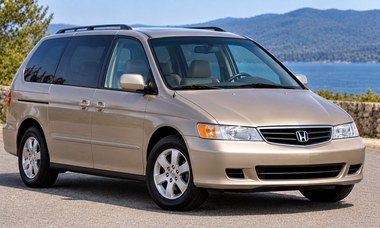
The redesigned 1999 Odyssey established the basic formula Honda would use for decades: a powerful 3.5-liter V6, front-wheel drive, dual sliding doors, and substantially more passenger and cargo space than the smaller Odyssey it replaced.
The V6 itself can be impressively durable. Unfortunately, the automatic transmission became the defining reliability problem of this generation, particularly on early-2000s vans. Transmission failures were common enough that they should be treated as a primary buying consideration rather than an ordinary high-mileage repair possibility.
Honda also recalled all 2002-2003 Odysseys and certain early-production 2004 vans because insufficient lubrication under particular conditions could cause excessive heat at second gear, potentially leading to gear damage. That recall is only part of the broader transmission history, however. A completed recall does not guarantee that an old Odyssey's transmission is healthy today.
Age is now equally important. Even a mechanically sound 1999-2004 Odyssey is more than 20 years old, so rubber components, suspension parts, motor mounts, cooling-system components, air-conditioning equipment, power doors, electrical hardware, and interior mechanisms can all need attention.
Common Problems on 1999-2004 Honda Odysseys
- Automatic-transmission failure: Slipping, harsh shifts, delayed engagement, abnormal noises, or a flashing transmission indicator deserve immediate attention.
- Second-gear lubrication problem: Certain 2002-2004 vans were recalled because excessive heat could damage transmission gearing.
- Power sliding-door problems: Motors, rollers, latches, cables, switches, and electrical components can become troublesome with age.
- Engine and transmission mounts: Worn mounts can cause excessive vibration or clunking when shifting between Drive and Reverse.
- Timing-belt maintenance: Missing evidence of replacement should be treated as an important unfinished maintenance item.
- Oil leaks: Aging seals and gaskets become increasingly relevant on a 20-plus-year-old V6.
- Suspension wear: Struts, bushings, ball joints, wheel bearings, and other chassis components may need replacement at high mileage.
- Air-conditioning problems: A minivan with multiple climate zones can be costly to restore if the system has been neglected.
Why Do 1999-2004 Honda Odysseys Have So Many Transmission Problems?
The automatic transmission is the major mechanical weakness of the 1999-2004 Odyssey generation. These transmissions were asked to handle substantial vehicle weight and V6 torque, and lubrication, heat, and internal durability problems contributed to failures.
The 2004 safety recall illustrates one specific problem: under certain operating conditions, insufficient oil flow could allow excessive heat to develop around second gear. Prolonged operation could weaken the gear and eventually cause chipping or, in rare cases, breakage and transmission lockup.
For today's used buyer, however, the larger question is the condition and history of the transmission currently in the van. Some Odysseys have already received replacement or rebuilt transmissions, and even those repairs may have occurred many years ago.
During a test drive, check engagement from Park into Reverse and Drive, light-throttle shifts, harder acceleration, downshifts, and operation after the transmission is fully warm. Slipping, delayed engagement, flare between gears, harsh shifts, unusual whining, or a flashing transmission warning should not be dismissed because the van otherwise drives well.
Buyer Tip: An exceptionally cheap 2001 or 2002 Odyssey with an unknown transmission history would not tempt me simply because the engine sounds excellent. On this generation, transmission history can matter more than engine mileage.
Bottom Line: The 1999-2004 Odyssey can still be useful transportation, and the V6 can last a very long time, but this is the generation where I would be most cautious about automatic-transmission risk. At today's age, I'd want both a healthy transmission and evidence that the rest of the van has not been neglected.
2005-2010 Honda Odyssey: Better Transmission, New VCM Concerns
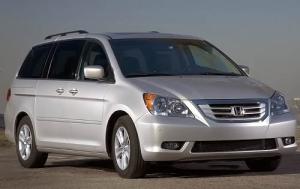
The third-generation Odyssey arrived for 2005 with more refinement, additional safety equipment, a stronger 3.5-liter V6, and an improved overall design. Transmission reliability was better than on the previous generation, which makes these vans much more interesting as inexpensive used transportation today.
But this generation introduced another issue that would become central to Odyssey reliability discussions: Variable Cylinder Management. Depending on year and trim, Honda used VCM to deactivate cylinders during light-load driving in an effort to improve fuel economy. Not every 2005-2010 Odyssey uses exactly the same VCM configuration, so the system should not be treated as one identical problem across every van.
On affected engines, Honda documented cases in which piston-ring behavior could contribute to oil-fouled spark plugs and misfires. Symptoms can include a check-engine light, rough running, vibration, oil consumption, and misfire codes.
These vans also rely on active engine-mount technology on VCM-equipped applications to help control vibration as the engine changes cylinder modes. Those mounts can be considerably more expensive than simple conventional motor mounts when they fail.
Common Problems on 2005-2010 Honda Odysseys
- VCM-related oil fouling and misfires on applicable models: Oil-fouled spark plugs can cause rough running, a check-engine light, and cylinder-misfire codes.
- Engine-mount failures: Failed mounts can cause substantial vibration, especially at idle or when shifting into gear.
- Power sliding-door problems: Worn rollers, motors, latches, cables, switches, and alignment problems become common as mileage increases.
- Automatic-transmission concerns: This generation improved substantially over the earlier vans, but harsh shifting, shuddering, or poor maintenance history still deserves investigation.
- Timing-belt maintenance: The 3.5-liter V6 uses a timing belt, making documented replacement important as mileage accumulates.
- Power-steering problems: Pump noise, leaks, heavy steering, and aging hoses can appear on higher-mileage vans.
- Oil leaks: Valve-cover and other engine leaks become increasingly common with age.
- Suspension wear: A heavily used family minivan can need struts, control-arm bushings, wheel bearings, and other chassis work.
What Is Honda VCM and Can It Cause Odyssey Misfires?
Honda's Variable Cylinder Management system deactivates cylinders when full engine power isn't needed, but some VCM-equipped Odysseys developed oil-fouled spark plugs and recurring misfires associated with piston-ring problems.
This is more specific than simply saying that VCM "causes engine failure." Honda documented conditions in which piston rings on certain cylinders could rotate and align, allowing enough oil into the combustion chamber to foul spark plugs. The resulting symptoms can include rough running, a check-engine light, and misfire codes such as P0301 through P0304.
That distinction matters to a used buyer. Replacing a fouled spark plug may temporarily eliminate the misfire without addressing why that plug became oil-fouled in the first place.
Owners sometimes discuss aftermarket devices commonly called VCM disablers or "muzzlers" that attempt to prevent cylinder deactivation. Their popularity in owner communities demonstrates how much attention VCM receives, but an aftermarket device should not be confused with a Honda repair procedure or proof that an engine is mechanically healthy.
Why Does a Honda Odyssey Vibrate When the Engine Mounts Go Bad?
Worn or failed engine mounts can allow substantially more V6 vibration to reach the Odyssey's body and cabin. The problem can be particularly noticeable while stopped in Drive, when shifting between Reverse and Drive, or as engine load changes.
VCM-equipped Odysseys can use active engine mounts designed to help cancel vibration while cylinders are being deactivated. That makes mount condition particularly relevant on these vans and can make replacement more expensive than buyers expect from what sounds like a simple motor-mount repair.
A strong vibration shouldn't automatically be blamed on the mounts, however. Engine misfires, transmission problems, damaged suspension components, and other faults can produce overlapping symptoms. Diagnose the cause rather than buying mounts based solely on vibration.
Buyer Tip: A 2005-2010 Odyssey can be a substantially better bet than a neglected 1999-2004 van, but I would still test it from a cold start through a fully warmed drive. Check for misfires, excessive vibration, smooth transmission operation, power-door function, and documentation of timing-belt service.
Bottom Line: The 2005-2010 generation moved the Odyssey beyond the worst early transmission years, but VCM-equipped versions introduced another reliability issue worth understanding. A well-maintained example without oil-fouling, transmission, mount, or sliding-door problems can still make an inexpensive and very practical used minivan.
2011-2017 Honda Odyssey: Improved Minivan With Important VCM History
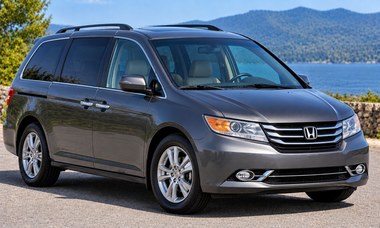
The redesigned 2011 Odyssey became larger, quieter, more fuel-efficient, and more refined. It retained the 3.5-liter V6 and Variable Cylinder Management, and this generation is now one of the most common choices for families shopping for a moderately priced used Odyssey.
Overall, these vans can be very durable. They also provide a good example of why an otherwise strong Honda engine should not be described as problem-free. Honda issued warranty extensions addressing misfires on affected Odysseys after piston-ring problems caused spark-plug fouling.
Honda's earlier warranty program covered certain 2011-2013 Odysseys for this condition. More recently, Honda issued another limited warranty extension covering eligible 2013-2017 Odysseys with P0301-P0304 misfires associated with ring wear and sticking from sludge. That makes the misfire history relevant across much more of this generation than a buyer might assume from reading about only the original settlement.
The transmission is not burdened with the same reputation as the 1999-2004 units, but transmission condition and maintenance still matter. This is also a heavy family vehicle that may have spent years making short trips, carrying passengers, sitting in school pickup lines, and operating its power doors dozens of times per day.
Common Problems on 2011-2017 Honda Odysseys
- Oil-fouled spark plugs and misfires: Piston-ring problems can cause recurring P0301-P0304 misfire codes on affected vans.
- Oil consumption: An Odyssey that regularly needs oil between changes deserves investigation, particularly if it also has a misfire history.
- Engine-mount wear: Excessive vibration can become an expensive repair on VCM-equipped vans.
- Power sliding-door problems: Rollers, cables, motors, latches, sensors, and alignment can cause doors to operate slowly, reverse direction, or stop working.
- Transmission shudder or shift-quality complaints: Any repeated shuddering or abnormal shifting should be properly diagnosed before purchase.
- Timing-belt maintenance: Documentation becomes especially important as these vans move beyond 100,000 miles.
- Oil leaks: Higher-mileage V6 engines can develop leaks that range from minor seepage to problems that deserve prompt repair.
- Suspension and wheel-bearing wear: Clunks, humming, poor tire wear, or loose handling can indicate accumulated chassis work.
Why Does an Odyssey Misfire Again After the Spark Plugs Were Replaced?
If an Odyssey repeatedly fouls a spark plug and sets P0301, P0302, P0303, or P0304 after the plugs have already been replaced, the underlying problem may involve piston-ring wear or sticking rather than the spark plug itself.
Honda's service information is particularly useful here because it documents the mechanism: oil from the crankcase can reach the spark plug, create carbon fouling, and cause a cylinder misfire. Simply installing another plug does not necessarily correct the underlying condition.
For a used buyer, a seller who says the van "just needs plugs" deserves a follow-up question: Why does it need them? Ask whether the Odyssey has had recurring misfire codes, excessive oil consumption, piston-ring work, or previous repairs under a Honda warranty extension.
Does Honda Odyssey VCM Cause Engine Failure?
VCM itself does not mean that an Odyssey engine is destined to fail, but VCM-equipped engines have a documented history of piston-ring, oil-fouling, and misfire problems on certain vehicles. Many VCM-equipped Odysseys also reach high mileage without requiring major internal engine work.
The useful buying question isn't simply whether the van has VCM. It's whether that particular Odyssey consumes excessive oil, repeatedly fouls spark plugs, has stored misfire codes, vibrates abnormally, or has a repair history involving piston rings or related components.
This is another reason a diagnostic scan is worthwhile even when the check-engine light is off. Recently cleared or pending misfire codes can tell a very different story from a dashboard with no warning lights during a short test drive.
When Does a Honda Odyssey Need a Timing Belt?
The Odyssey's 3.5-liter V6 uses a timing belt, and timing-belt service becomes a major maintenance consideration around the 100,000-mile range. The exact maintenance interval should be confirmed for the particular model year and operating conditions rather than relying on one universal number for every Odyssey.
The important used-car lesson is simpler: if you're considering an Odyssey around or beyond 100,000 miles, ask for documentation showing when the timing belt was replaced. A verbal claim that "the previous owner probably did it" isn't documentation.
Timing-belt service commonly includes related components such as the tensioner and often the water pump because much of the labor overlaps. If a seller cannot document the job, I would factor the cost of performing it into the purchase decision.
A failed timing belt can cause major internal engine damage, so this is preventive maintenance I would not postpone merely because the engine currently runs perfectly.
Buyer Tip: For a 2011-2017 Odyssey, I'd specifically ask about three things before becoming interested in the rest of the van: timing-belt history, oil consumption/misfire history, and transmission behavior. Then I'd test every power door and major electrical feature.
Bottom Line: A well-maintained 2011-2017 Odyssey can be an excellent high-mileage family vehicle, but this generation deserves more VCM scrutiny than a generic Honda reliability reputation suggests. The best examples have documented timing-belt service, no recurring oil-fouling or misfire problem, a smooth transmission, and fully functional power doors.
2018-2024 Honda Odyssey: More Technology and Two Very Different Early Transmissions

The fifth-generation Odyssey arrived for 2018 with a significantly updated 3.5-liter direct-injected V6 producing 280 horsepower, more safety technology, Magic Slide second-row seating, additional infotainment features, and substantially more electronic complexity.
The biggest powertrain distinction for used buyers is the transmission. For 2018 and 2019, LX, EX, and EX-L versions used a 9-speed automatic, while Touring and Elite models received Honda's 10-speed automatic. Beginning with 2020, Honda standardized the 10-speed automatic across the Odyssey lineup.
That makes trim level unusually important when evaluating a 2018 or 2019 Odyssey. Two vans from the same model year can have the same 3.5-liter V6 but completely different transmissions.
The fifth generation also introduced reliability concerns that have little to do with traditional engine durability. Networked infotainment components, cameras, electronic modules, power doors, wiring, sensors, and driver-assistance equipment create many more potential failure points than you'll find in an early-2000s Odyssey.
Common Problems on 2018-2024 Honda Odysseys
- 9-speed transmission complaints: Some 2018-2019 lower-trim vans can exhibit abrupt, hesitant, or unusual shifting that deserves careful evaluation.
- 10-speed transmission concerns: The Honda 10-speed is a different transmission and should be evaluated separately rather than lumped together with the 9-speed.
- Infotainment and MOST-network failures: Communication problems can cause popping audio, screen failures, reboots, or loss of the rearview-camera image on affected vans.
- Power sliding-door problems: Latches, cables, motors, sensors, water intrusion, and alignment can interfere with proper operation.
- Electrical problems: Battery condition, modules, sensors, cameras, entertainment equipment, and other electronics deserve a complete functional test.
- Engine and drivability issues: Misfires, warning lights, oil or coolant loss, and abnormal noises should still be investigated even on newer vans.
- Timing-belt maintenance: The newer 3.5-liter V6 still requires attention to timing-belt service as mileage accumulates.
- Recall history: Several significant recalls affect portions of this generation, making a VIN-specific recall check particularly important.
Which 2018-2019 Honda Odyssey Has the 9-Speed or 10-Speed Transmission?
For 2018 and 2019, the Odyssey LX, EX, and EX-L used the 9-speed automatic, while Touring and Elite models used Honda's 10-speed automatic. From 2020 onward, the Odyssey uses the 10-speed across the lineup.
This is one of the most useful distinctions for someone shopping the early fifth-generation Odyssey because owner reports about transmission behavior often make little sense until you know which transmission is being discussed.
The 9-speed can exhibit shift characteristics that some drivers find abrupt or hesitant, particularly at lower speeds. That doesn't mean every unusual shift indicates imminent failure, but repeated harsh engagement, severe hesitation, warning messages, or obviously abnormal behavior deserves diagnosis.
The 10-speed should not automatically be declared trouble-free simply because many buyers prefer its operation. It is a separate Honda-designed transmission with its own service requirements and potential problems. The important point is to stop treating all 2018-2019 Odyssey transmission complaints as though they involve the same hardware.
Why Does the Infotainment Screen Go Black on a 2018-2023 Honda Odyssey?
On affected 2018-2023 Odysseys, faulty connections in the MOST communication network can interrupt communication between audio and display components and can cause the rearview-camera image to disappear.
This issue became significant enough to result in a federal safety recall covering certain Honda and Acura vehicles. The problem involves communication through the Media Oriented Systems Transport network rather than simply a defective touchscreen.
Symptoms can include a black or intermittently blank display, audio interruptions or popping, system reboots, and loss of the rearview-camera image. Because the problem can be intermittent, a system that works perfectly during a short test drive isn't proof that the van never experienced it.
For a used 2018-2023 Odyssey, check the VIN to determine whether applicable recall work was completed and test the audio, touchscreen, rear entertainment equipment where fitted, Bluetooth functions, and backup camera.
Why Won't a Honda Odyssey Power Sliding Door Close or Latch?
On newer Odysseys, a power sliding door that won't close properly can involve the latch, outer-handle cable, motor, sensors, alignment, or other door hardware. Honda issued multiple recalls addressing specific sliding-door problems on portions of the 2018-2020 model range.
Certain 2018-2019 Odysseys were recalled because components in the power sliding-door latch mechanism could stick and prevent the door from fully latching. Another recall covered certain 2018-2020 vans because water could enter the outer-handle cables and freeze in cold weather, potentially preventing the doors from securely latching.
Those documented defects are more specific than the generic power-door problems found on older high-mileage Odysseys. When inspecting a newer van, operate both doors repeatedly from the exterior handles, interior switches, dashboard controls, and remote if available. Make sure each door closes completely and doesn't unexpectedly reverse or report that it remains open.
What Is the Honda Odyssey Third-Row Wiring Fire Recall?
Certain 2018-2020 Odyssey EX-L, Touring, and Elite models were recalled because wiring for the third-row accessory power outlet could become pinched and potentially short-circuit, creating a fire risk.
This is a good example of why checking recalls by VIN is more useful than simply asking whether a particular model year "has recalls." The affected equipment and production range matter, and not every Odyssey from those years is necessarily involved.
A completed recall is not a reason to reject an otherwise good van. What matters is verifying that applicable safety-recall work was actually performed.
Buyer Tip: When shopping a 2018 or 2019 Odyssey, identify the trim before evaluating transmission complaints because that tells you whether you're dealing with the 9-speed or 10-speed. Then check recall completion, operate both sliding doors repeatedly, and thoroughly test the infotainment system and backup camera.
Bottom Line: The 2018-2024 Odyssey is powerful, spacious, comfortable, and far more technologically sophisticated than earlier generations. That sophistication also means reliability is no longer just about the V6 and transmission. The best used example is one with a clean powertrain history, completed recalls, properly operating doors, stable infotainment and camera systems, and documented maintenance.
Which Honda Odyssey Generation Would I Choose for a High-Mileage Used Van?
If I were buying an Odyssey primarily for long-term, high-mileage family transportation, I would start by investigating well-maintained later examples from the 2011-2017 generation and carefully selected 2018-2024 vans. I would not make the decision from model year alone.
A 2011-2017 Odyssey offers a useful middle ground: newer and generally less transmission-troubled than the oldest vans, but mechanically and electronically simpler than the newest generation. The tradeoff is that I would investigate VCM-related misfire and oil-consumption history very carefully.
The 2018-2024 generation gives you much newer safety technology and a more powerful direct-injected V6, but there are more electronic systems to evaluate. For 2018-2019 specifically, I would also want to know which transmission the van has before comparing two otherwise similar examples.
I would be considerably more cautious with a 1999-2004 Odyssey unless its transmission history were unusually convincing. A beautiful interior and a smooth-running V6 wouldn't be enough to overcome an uncertain transmission on one of those vans.
Regardless of generation, the Odyssey I would choose is the one with documented timing-belt maintenance, a healthy transmission, no unresolved misfire or oil-consumption problem, fully functioning sliding doors, and evidence that previous owners repaired problems rather than postponing them.
What Are the Best Honda Odyssey Model Years to Buy?
The best Honda Odyssey years depend on your budget, but I would generally investigate well-maintained later 2011-2017 vans and carefully selected 2020-2024 models first. The 2005-2010 generation can also provide excellent value, while the transmission history makes 1999-2004 vans harder to recommend without unusually good documentation.
2014-2017: These later fourth-generation vans are among the first Odysseys I would investigate if you want a relatively affordable used minivan. They still require careful attention to VCM-related misfires, oil consumption, timing-belt history, engine mounts, transmission behavior, and sliding doors, but they avoid the notorious early-2000s transmission era.
2020-2024: These are particularly interesting among newer Odysseys because Honda had standardized the 10-speed automatic across the lineup by 2020. They also provide newer safety and convenience technology, although infotainment, electronics, power doors, recall history, and the added complexity of the fifth generation still deserve inspection.
2009-2010: A well-maintained late third-generation Odyssey can be a good lower-cost choice. At this age, however, condition matters more than choosing one particular year. Timing-belt history, VCM-related symptoms on applicable vans, engine mounts, transmission operation, and power-door condition all need attention.
I wouldn't reject a good Odyssey merely because it falls outside those groups. A meticulously maintained 2012 can be a much better purchase than a neglected 2017, and an excellent 2019 Touring with the 10-speed can be more attractive than a poorly maintained 2020.
Which Honda Odyssey Model Years Should You Avoid?
The 1999-2004 Odysseys deserve the greatest transmission-related caution, while certain later VCM-equipped vans require careful investigation for recurring misfires and oil-fouled spark plugs. I would treat these as higher-scrutiny years rather than declaring every van from them unusable.
1999-2004: Automatic-transmission history is the major concern. These vans are now inexpensive enough that a major transmission repair can approach or exceed the value of the vehicle.
2011-2013: These years deserve additional attention because of the documented piston-ring and spark-plug-fouling misfire problem. A van with excellent maintenance and no recurring misfire or oil-consumption history can still be worthwhile.
2018-2019: I wouldn't automatically avoid these years, but I would identify the trim and transmission before buying. LX, EX, and EX-L versions used the 9-speed, while Touring and Elite models received the 10-speed. These years also sit near the beginning of a much more electronically complex Odyssey generation.
Any Odyssey with recurring misfires, significant oil consumption, abnormal transmission behavior, an overdue timing belt, or malfunctioning sliding doors deserves caution regardless of model year. Several unresolved problems can turn an apparently inexpensive minivan into a very expensive one.
Which Honda Odyssey Years Have Transmission Problems?
The most serious Odyssey transmission reputation belongs to the 1999-2004 generation, but transmission complaints did not disappear completely from later vans. The type of problem and the transmission involved changed substantially over time.
On 1999-2004 vans, I would be concerned about actual internal transmission durability. Slipping, delayed engagement, gear flare, harsh shifts, unusual noises, or a flashing transmission indicator can indicate a potentially expensive problem.
The 2005-2017 transmissions generally represent an improvement, but age, fluid maintenance, torque-converter behavior, and individual transmission condition still matter. A high-mileage Odyssey that shudders or shifts abnormally needs diagnosis rather than reassurance that Honda fixed its transmission problems years earlier.
For 2018-2019, the discussion changes again because Honda used two different transmissions. Lower trims received the ZF-supplied 9-speed, while Touring and Elite versions used Honda's 10-speed. From 2020 onward, the 10-speed became standard.
Is the Honda Odyssey 9-Speed or 10-Speed Transmission More Reliable?
If I were choosing between otherwise comparable 2018-2019 Odysseys, I would investigate a 10-speed Touring or Elite before a 9-speed LX, EX, or EX-L. That doesn't mean every 9-speed is unreliable or every 10-speed is trouble-free.
The ZF 9-speed's shift strategy can produce behavior that feels unusual to drivers accustomed to a conventional Honda automatic, including hesitation or abruptness in some situations. Severe hesitation, repeated hard shifts, warning lights, or obviously abnormal operation should still be diagnosed rather than dismissed as a characteristic of the transmission.
Honda's 10-speed generally provides smoother and more conventional operation, and Honda expanded it to every Odyssey trim beginning in 2020. When comparing used vans, however, maintenance history and the behavior of the individual transmission remain more important than simply counting gears.
What Are the Most Expensive Honda Odyssey Problems?
The Odyssey's potentially expensive problems include automatic-transmission failure, internal engine repairs associated with piston-ring problems, timing-belt failure, air-conditioning repairs, power sliding-door systems, and increasingly complex electronic problems on newer vans.
How Expensive Is a Honda Odyssey Transmission Replacement?
A major Odyssey transmission repair or replacement can easily cost several thousand dollars, with approximately $3,000-$6,000 or more being a reasonable range for major work depending on the year, transmission, parts source, and labor rate.
That cost is especially important when considering a 1999-2004 Odyssey. Spending several thousand dollars on a transmission may make little economic sense if the van itself is worth only a few thousand dollars.
On a newer Odyssey, the economics are different because the vehicle may still be worth enough to justify a major repair. But abnormal transmission behavior should still affect what you're willing to pay for the van.
How Expensive Are Honda Odyssey VCM and Piston-Ring Problems?
A simple misfire repair may cost only a few hundred dollars, but internal engine work involving piston rings can run into several thousand dollars. That's why identifying the cause of a recurring misfire matters so much.
If an oil-fouled plug is replaced and the same cylinder fouls another plug, continuing to replace plugs is not equivalent to repairing the underlying problem. Review previous diagnostic codes and repair records and determine whether the van was eligible for or received piston-ring-related repairs under Honda's applicable warranty programs.
Can a Bad Engine Mount Be Expensive on a Honda Odyssey?
Yes. Replacing multiple Odyssey engine mounts can become a four-figure repair, particularly on VCM-equipped vans using more sophisticated active mounts. A strong vibration therefore deserves diagnosis before purchase.
Don't assume every vibration is a failed mount. A misfiring engine, transmission problem, damaged exhaust component, or other mechanical fault can feel similar from the driver's seat.
Honda Odyssey Maintenance and Repair Costs
Routine Odyssey maintenance is generally manageable, but the combination of a V6 engine, large body, power doors, multiple climate zones, and extensive electronics means neglected vans can accumulate expensive work. These are broad repair ranges rather than quotes for a particular Odyssey.
| Service or Repair | Approximate Cost |
|---|---|
| Oil and filter change | $60-$120 |
| Spark plugs | $250-$500+ |
| Brake pads and rotors | $450-$900 per axle |
| Timing belt / water pump service | $900-$1,600+ |
| Engine mount replacement | $500-$1,500+ |
| Power sliding-door repair | $300-$1,500+ |
| Suspension / control-arm repairs | $500-$1,500+ |
| Air-conditioning repair | $500-$2,000+ |
| Piston-ring / internal engine repair | $2,000-$4,500+ |
| Major transmission repair / replacement | $3,000-$6,000+ |
| Major engine repair / replacement | $4,000-$8,000+ |
Repair costs vary considerably by region and whether the work is performed by a Honda dealer or independent specialist. On an older Odyssey, finding a good independent Honda repair shop can make a substantial difference in long-term ownership cost.
What Maintenance Does a Honda Odyssey Need After 100,000 Miles?
Timing-belt history is one of the first things I would verify on an Odyssey around or beyond 100,000 miles, but it isn't the only high-mileage concern. The entire van should be evaluated according to its age, maintenance history, and generation-specific problems.
- Verify timing-belt replacement and related tensioner and water-pump service where appropriate.
- Review transmission-fluid maintenance and check for abnormal shifting, shuddering, or delayed engagement.
- Check engine-oil level and ask how much oil is added between changes.
- Scan for stored or pending misfire codes, especially on VCM-equipped vans.
- Inspect engine mounts if the van vibrates excessively at idle or while shifting into gear.
- Operate both sliding doors repeatedly and listen for strained motors, grinding, binding, or incomplete latching.
- Inspect suspension, wheel bearings, steering components, brakes, and tires.
- Check the cooling system for leaks and review water-pump history.
- Test front and rear air conditioning rather than assuming both systems work because the dashboard vents are cold.
- On newer vans, test cameras, infotainment, driver-assistance features, entertainment equipment, and all electrical accessories.
What Should You Check Before Buying a Used Honda Odyssey?
An Odyssey deserves an inspection that reflects how minivans are actually used. Many spend years carrying children, operating sliding doors constantly, making short trips, idling with the air conditioning running, and accumulating interior wear that doesn't necessarily show on the odometer.
- Transmission: Drive long enough to get it fully warm and check engagement, shifts, acceleration, and low-speed operation.
- Misfire and oil history: Ask about oil consumption, fouled spark plugs, check-engine lights, piston-ring repairs, and recurring misfire codes.
- Timing belt: Ask for an invoice or other documentation rather than accepting a guess about when it was replaced.
- Sliding doors: Operate each door from every available control and make sure it opens, closes, and latches consistently.
- Engine mounts: Check for excessive vibration in Drive and Reverse with the van stopped.
- Recall completion: Check the VIN for open safety recalls, particularly on newer electronically complex vans.
Is a Honda Odyssey With 100,000 Miles a Good Buy?
Yes. A 100,000-mile Honda Odyssey can still be an excellent used minivan and may have another 100,000 miles of useful life remaining. But this is approximately where maintenance history becomes far more important than Honda's reputation alone.
I would want evidence of timing-belt maintenance or budget to have the service performed. I'd also check transmission behavior, oil consumption, previous misfire codes, engine mounts, sliding doors, suspension, and air conditioning.
A well-maintained 100,000-mile Odyssey doesn't concern me simply because the odometer has reached six figures. A poorly maintained 70,000-mile Odyssey with several unresolved problems concerns me much more.
Is 150,000 Miles Too Much for a Honda Odyssey?
No. 150,000 miles is not automatically too much for a Honda Odyssey, but by this mileage I would buy entirely on condition and maintenance history.
A van at 150,000 miles may already have received its timing-belt service, engine mounts, suspension work, brakes, wheel bearings, sliding-door repairs, and other expensive maintenance. Another Odyssey with the same mileage may still need all of those things.
Transmission condition becomes especially important. On a high-mileage family vehicle, a healthy engine doesn't compensate for a transmission that is beginning to slip or shudder.
Can a Honda Odyssey Last 250,000 Miles?
Yes. A Honda Odyssey can reach 250,000 miles, but doing so economically usually requires consistent maintenance and avoiding or properly repairing the generation-specific problems discussed in this guide.
The 3.5-liter V6 is capable of very high mileage. The harder challenge is keeping the transmission, cooling system, suspension, air conditioning, power doors, electronics, and other components healthy enough that continued repairs remain worthwhile.
A high-mileage Odyssey can therefore be an excellent vehicle for the right owner, but I wouldn't buy one because someone else's Odyssey reached 300,000 miles. Buy the maintenance history and condition of the van in front of you.
Honda Odyssey Pros and Cons
Pros
- 3.5-liter V6 can provide excellent long-term durability
- 200,000-mile lifespan is realistic with proper maintenance
- Excellent passenger and cargo flexibility
- Comfortable highway ride
- Strong V6 performance, especially in later generations
- Widely available parts and Honda service expertise
- Later generations offer extensive family-friendly safety and convenience equipment
- Well-maintained older vans can provide substantial utility for relatively little money
Cons
- 1999-2004 automatic transmissions have a troubling failure history
- VCM-equipped engines have documented oil-fouling and misfire concerns on certain vans
- Timing-belt service adds an important recurring maintenance expense
- Active engine mounts can be costly
- Power sliding doors become troublesome as vans age
- Newer models contain considerably more electronic complexity
- Some 2018-2019 trims use the less desirable 9-speed automatic
- A neglected Odyssey can accumulate several expensive repairs simultaneously
Honda Odyssey vs. Other Used Minivans
The Toyota Sienna is the Odyssey's most obvious alternative. It also has an excellent reputation for long-term family use, and older Siennas don't share the Odyssey's notorious early-2000s Honda transmission history. Individual Sienna years still have their own issues, so condition and maintenance history remain important.
The Chrysler Pacifica offers a more modern-feeling interior and, in newer models, features and powertrain choices the Odyssey doesn't offer. Its reliability history is different from Honda's, and buyers should investigate electrical, transmission, and powertrain issues by model year.
The Kia Sedona can be an appealing value because used prices are often lower than comparable Honda or Toyota minivans. A carefully chosen Sedona may provide a lot of vehicle for the money, particularly when Honda and Toyota resale values are unusually strong.
The Dodge Grand Caravan is plentiful and inexpensive and offers exceptionally useful Stow 'n Go seating on many versions. It generally doesn't match the Odyssey's resale value, but its low purchase price and huge parts supply can make it attractive to a budget-focused buyer.
Is the Honda Odyssey a Reliable Used Minivan?
Yes, the Honda Odyssey can be a very reliable used minivan, but its long-term reputation shouldn't hide the significant differences between generations. The 3.5-liter V6 can last an extremely long time, while transmissions, VCM-related engine problems, timing-belt maintenance, sliding doors, and newer electronic systems determine whether the complete van remains economical to own.
I would be most cautious with 1999-2004 vans because of their transmission history. The 2005-2010 generation improved substantially but introduced VCM concerns on applicable versions. The 2011-2017 generation can be an excellent used choice, provided you investigate misfire and oil-consumption history. The 2018-2024 generation provides the newest safety and convenience technology but requires more attention to transmission configuration, recalls, infotainment, doors, and electronics.
For 2018-2019 specifically, remember the distinction: LX, EX, and EX-L received the 9-speed automatic, while Touring and Elite received the 10-speed. From 2020 onward, the 10-speed became standard throughout the lineup.
Final Buyer Summary: A good Odyssey is one of the few family vehicles I would comfortably consider with well over 100,000 miles, but I'd buy the maintenance history rather than the Honda badge. Verify the timing belt, evaluate the transmission, investigate any oil consumption or recurring misfires, test both sliding doors, check recall completion, and have the van inspected before purchase. Do that, and the right Odyssey can remain useful long after many families would normally have replaced it.
Your Trade-In
Also, it's good to always know the value of your trade-in while you're evaluating your next possible purchase. Here's a good source for a quick and accurate appraisal: free trade-in appraisal.
What's Next?
If you may be buying soon, I'd recommend reading my most effective negotiation method for used cars. It explains a quick way to identify the dealerships most motivated to deal, no matter how busy they may seem, and how to follow up once you've found them. That can be the difference between getting a good price and getting a great one.
And beware of "Dealer Fees": Before agreeing to a dealer's numbers, see which dealer fees are legitimate, which can be negotiated, and which can be avoided.
Also, more on Honda reliability: If you are interested in the reliability of other Honda models and years, be sure to read our Used Honda Reliability & Problems: Best Used Models & Years Guide. This comprehensive guide highlights the best years to buy or avoid, common problems, potential maintenance costs, and more, and will likely help you make the right choice for your needs.
Some Insider Insights: