

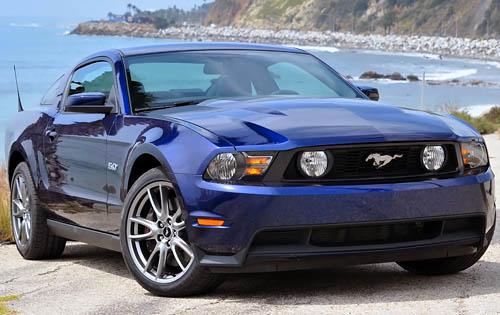
The 2011 Ford Mustang is generally a good year for reliability and an especially important model year because Ford introduced two substantially upgraded engines: the naturally aspirated 3.7-liter V6 and the 5.0-liter Coyote V8 in the Mustang GT. Both engines have proven capable of high mileage, and neither has a widespread fundamental defect that makes the 2011 Mustang a year I'd recommend avoiding.
The standard 3.7-liter V6 was a major improvement over the older 4.0-liter V6. It produces considerably more power while remaining relatively simple and durable. With regular oil changes and proper cooling-system maintenance, the 3.7-liter can exceed 200,000 miles. For someone who wants Mustang styling and performance without the purchase price and fuel consumption of a GT, it's a strong choice.
The Mustang GT received Ford's new naturally aspirated 5.0-liter Coyote V8. This engine became one of Ford's most successful modern performance engines and is capable of substantial mileage when maintained properly. The first-generation Coyote is powerful without relying on turbochargers or superchargers, and the basic engine architecture has proven robust.
Transmission choice deserves more attention. Both engines could be paired with a six-speed manual or six-speed automatic. The Getrag MT82 six-speed manual introduced for 2011 developed a mixed reputation for difficult shifting, grinding, notchiness, and other shift-quality problems. Many cars operate normally, but the manual transmission needs a careful test drive.
The six-speed automatic is generally a solid choice and can be particularly attractive to someone who prioritizes long-term dependability over having a manual performance car. It should still be checked for harsh shifting, slipping, delayed engagement, or evidence of neglect.
Another major consideration is previous ownership. Mustangs are frequently modified, tuned, raced, launched hard, or driven aggressively. A stock 120,000-mile Mustang that has received consistent maintenance can easily be a better purchase than a modified 70,000-mile example with an unknown tune and evidence of repeated hard use.
Overall, I would rate the 2011 Ford Mustang as above average for reliability among performance-oriented cars of its age. Both engines are fundamentally strong, parts availability is excellent, and major repairs are generally well understood by independent shops and Mustang specialists.
More On The Ford Mustang's Reliability
If you'd like to compare different Mustang model years, or engines, etc., be sure to read our Ford Mustang Reliability & Problems: Best Used Mustangs & Years Guide. It highlights the models, best years to buy, common problems and more, and helps you choose the right vehicle for you.
- Overall reliability: Above Average for a performance car
- Expected lifespan: 175,000 to 225,000+ miles with proper maintenance, with well-maintained engines capable of going farther
- Best choice: Stock or lightly modified example with excellent maintenance history; automatic transmission is attractive for buyers prioritizing drivetrain reliability
- Watch for: MT82 manual transmission problems, clutch wear, differential noise, engine ticks or leaks, suspension wear, and evidence of racing or poor-quality modifications
Bottom line: The 2011 Mustang is generally a good year to buy. The 3.7-liter V6 is durable and provides surprisingly strong performance, while the 5.0-liter Coyote V8 gives the GT excellent performance and long-term potential. I'd focus less on choosing between the two engines and more on finding a Mustang that hasn't been abused or poorly modified.
- Why it's a good choice: Strong naturally aspirated engines, available V8, conventional automatic transmission, excellent parts availability, and relatively straightforward mechanicals
- Biggest concern: MT82 manual transmission behavior and the possibility of previous hard use or questionable modifications
- Best version: Depends on priorities—the 3.7-liter V6 is an excellent economical choice, while the 5.0-liter GT provides considerably stronger performance without sacrificing fundamentally good engine durability
- Buy only if: The drivetrain operates properly, modifications are professionally executed, and the car passes a thorough pre-purchase inspection
Is the 2011 Ford Mustang a Good Year or One to Avoid?
The 2011 Ford Mustang is generally a good year and one I would consider buying. It introduced two engines that substantially improved the Mustang lineup and have since developed good reputations for durability. There are specific issues to investigate, particularly with the manual transmission, but there isn't one universal mechanical defect that makes the 2011 Mustang a year to avoid.
The 3.7-liter V6 is sometimes overlooked because so much attention goes to the GT, but it is a very capable engine. It provides more than 300 horsepower while offering better fuel economy and usually lower purchase prices than the V8. For a buyer primarily interested in reliable everyday transportation with Mustang styling and performance, the V6 deserves serious consideration.
The 5.0-liter GT is the enthusiast favorite and for good reason. The first-generation Coyote provides substantially stronger acceleration and has proven capable of high mileage. A stock, carefully maintained GT can be a very good long-term performance-car purchase.
The biggest mechanical qualification involves the MT82 manual transmission. Some owners experience perfectly acceptable service, while others encounter difficult shifts, grinding, lockout, noise, or premature clutch and transmission-related problems. I'd evaluate an MT82-equipped Mustang much more carefully than simply checking whether it can be shifted through all six gears.
The six-speed automatic avoids the MT82 concerns and is generally a good transmission. Buyers who don't specifically want a manual shouldn't assume the automatic is somehow the inferior reliability choice simply because this is a performance car.
Buyer Takeaway: The 2011 Mustang is a good year to consider, but the history of the individual car matters enormously. I'd rather buy a stock, documented Mustang with somewhat higher mileage than a low-mileage car carrying an unknown tune, aggressive drivetrain modifications, and signs that it has spent years being driven hard.
2011 Ford Mustang Common Mechanical Problems
The 2011 Mustang's basic engines are strong, so many of the most important buying concerns involve the transmission, clutch, driveline, suspension, and the effects of previous modifications or aggressive driving. The V6 and V8 also have several engine-specific areas worth checking.
- MT82 manual transmission shifting problems: The six-speed manual can develop difficult or notchy shifting, grinding, gear engagement problems, or high-rpm shift issues. Test every gear repeatedly at different engine speeds rather than evaluating the transmission only during gentle driving.
- Manual transmission gear lockout: Some drivers experience difficulty engaging a gear during quick or high-rpm shifts. A Mustang that is unusually difficult to shift shouldn't automatically be dismissed as normal MT82 behavior.
- Clutch wear: Hard launches, aggressive driving, and inexperienced manual-transmission drivers can shorten clutch life substantially. Check for slipping under heavy acceleration, chatter, unusual pedal feel, or an engagement point near the top of pedal travel.
- Clutch hydraulic problems: The hydraulic clutch system can contribute to poor disengagement or difficult shifting. This is important because symptoms that appear to originate inside the transmission may sometimes involve clutch release components.
- Six-speed automatic transmission problems: The automatic is generally durable but isn't immune to age or neglect. Check for harsh shifts, delayed Drive or Reverse engagement, slipping, shuddering, or unusual behavior after the transmission warms up.
- 3.7-liter V6 water pump and cooling-system concerns: Cooling-system components should be inspected for leakage, noise, or signs of overheating. Check coolant level before the test drive and look for dried coolant residue around the engine compartment.
- 3.7-liter V6 oil leaks: Gaskets and seals can begin leaking as mileage increases. Minor seepage may be manageable, but significant leakage or evidence that the engine has repeatedly operated with low oil deserves attention.
- 5.0-liter Coyote ticking or valvetrain noise: Some engine ticking may not indicate a serious problem, but persistent or unusually loud mechanical noise should be evaluated rather than automatically dismissed as characteristic Coyote sound.
- 5.0-liter oil leaks: Valve cover areas, seals, and other components can develop leakage with age and mileage. Check the dipstick and inspect underneath the engine for fresh oil.
- Ignition coil and spark plug problems: Misfires, hesitation, rough running, or a check-engine light can result from ignition components on either engine. These are usually manageable repairs but deserve proper diagnosis.
- Throttle body and electronic throttle problems: Hesitation, inconsistent throttle response, reduced-power conditions, or warning lights can involve the electronic throttle system or related sensors.
- Differential noise: Hard launches and aggressive driving place additional stress on the rear differential. Listen for whining, clunking, or unusual noise during acceleration, steady-speed driving, and deceleration.
- Driveshaft and driveline vibration: Vibration at particular speeds can originate from tires or wheels but may also involve the driveshaft, universal joints, differential, or modified driveline components.
- Rear axle seal leaks: Inspect the differential and axle areas for fluid leakage. A low differential fluid level can eventually lead to much more expensive internal wear.
- Wheel bearing wear: A humming or growling noise that increases with vehicle speed can indicate a worn wheel bearing. Aggressive driving and oversized aftermarket wheels can accelerate wear.
- Front suspension wear: Struts, control arm components, sway bar links, bushings, and related parts can deteriorate with mileage. Clunks, loose steering, uneven tire wear, or excessive bouncing indicate that repairs may be approaching.
- Rear suspension bushing wear: The Mustang's solid rear axle is robust, but bushings and related locating components can deteriorate or may have been replaced with aggressive aftermarket parts that increase noise and vibration.
- Brake wear: Performance driving can consume brake pads and rotors rapidly. Check for pulsation, pulling, scoring, cracks, or evidence that inexpensive replacement parts were installed on an otherwise heavily driven car.
- Air conditioning problems: Compressors, condensers, actuators, electrical controls, and refrigerant leaks can develop as the car ages. Test the system throughout the drive.
- Electrical and accessory problems: Power windows, locks, seat controls, sensors, audio equipment, lighting, and other accessories can develop age-related faults. Test every feature before buying.
- Water leaks into the interior: Check carpeting and interior areas for dampness, staining, mildew odors, or evidence of previous water intrusion. Drainage or sealing problems can lead to recurring leaks and electrical issues.
- Aftermarket engine tuning: Computer tunes can alter ignition timing, fueling, transmission behavior, rev limits, and other parameters. A professionally tuned car isn't automatically unreliable, but an unknown tune introduces uncertainty that a stock vehicle doesn't have.
- Performance modifications: Cold-air intakes, exhaust systems, headers, suspension changes, gears, superchargers, and other modifications vary enormously in quality. Inspect the workmanship and ask for receipts and tuning documentation.
- Evidence of drag racing or repeated hard launches: Look for unusually worn rear tires, aftermarket launch-related equipment, driveline modifications, differential noise, clutch wear, or other signs that the car has experienced repeated hard use.
One of the Mustang's advantages is that its major mechanical systems are well understood and there is an enormous supply of replacement and performance parts. The downside is that this also makes the Mustang extremely easy to modify. A car can look nearly stock today even though previous owners have installed and later removed substantial performance equipment.
Buyer Tip: Put the Mustang on a lift before buying it. Look for non-factory suspension and exhaust components, differential leaks, damaged underbody areas, mismatched hardware, evidence of removed modifications, and unusually worn rear tires. Scan the computer for current, pending, and stored diagnostic codes. On a manual-transmission car, make sure the inspection includes the clutch and MT82 rather than concentrating only on engine condition.
2011 Ford Mustang Pros and Cons
The 2011 Mustang offers an unusual combination today: modern levels of performance with relatively straightforward mechanical systems. Both engines are naturally aspirated, there is no CVT or dual-clutch automatic, and the car enjoys enormous aftermarket and repair support. Its biggest disadvantages involve the MT82 manual transmission, limited practicality, and uncertainty about how previous owners treated the car.
Pros
- Excellent 3.7-liter V6: The V6 provides more than enough power for everyday driving while offering good durability and better fuel economy than the GT.
- Outstanding 5.0-liter Coyote V8: The GT's engine combines strong performance with a fundamentally durable design and excellent parts support.
- Naturally aspirated engines: Neither standard engine relies on a turbocharger, eliminating an expensive component and associated boost-control hardware.
- Timing chains: Both engines use timing chains rather than scheduled-replacement timing belts.
- Conventional six-speed automatic: The automatic avoids CVT and dual-clutch complexity and is generally a solid long-term choice.
- Strong performance: Even the V6 delivers acceleration that would have been V8 territory in earlier Mustangs, while the GT provides genuine high-performance capability.
- Excellent parts availability: Ford sold large numbers of Mustangs, and factory, aftermarket, used, and performance parts are widely available.
- Easy access to specialist knowledge: Mustang specialists and knowledgeable independent shops are common, and virtually every mechanical issue has been extensively documented.
- Good long-term potential: Properly maintained examples can exceed 200,000 miles, particularly when they haven't been heavily modified or abused.
- Strong enthusiast appeal: The 2011 GT was the return of the 5.0-liter Mustang, giving clean examples lasting enthusiast interest beyond their value as ordinary transportation.
Cons
- MT82 manual transmission is the biggest mechanical concern: Shift quality and durability are less consistently strong than the engines themselves.
- Previous abuse can be difficult to detect: Burnouts, drag racing, repeated hard launches, and aggressive shifting may not leave obvious evidence during a casual inspection.
- Modified cars require extra scrutiny: The huge aftermarket makes modification easy, but workmanship and tuning quality vary enormously.
- Rear seat is cramped: The Mustang is technically a four-seater, but rear passenger space is limited.
- V8 fuel consumption: The GT's performance comes with considerably greater fuel costs, particularly when driven aggressively.
- Performance tires aren't cheap: Quality tires, especially for a GT or modified car with larger wheels, can represent a substantial expense.
- Insurance may be higher: Performance, driver history, location, and trim level can make insurance more expensive than for an ordinary sedan.
- Age-related suspension and accessory repairs: Even a low-mileage Mustang is now old enough for bushings, mounts, seals, climate-control components, and electrical accessories to deteriorate.
Buyer Takeaway: The 2011 Ford Mustang is a year I like overall. The 3.7-liter V6 makes a strong case for buyers who want inexpensive performance and reasonable operating costs, while the 5.0-liter Coyote GT is the obvious choice for someone who wants the full V8 Mustang experience. Both engines have good long-term potential. I'd be more selective about the transmission and the individual car's history than about the engine. A stock, documented Mustang with 100,000-plus miles can be a better purchase than a much lower-mileage example that has been raced, heavily modified, or poorly maintained. Find the right one, and a 2011 Mustang can still provide many years of reliable and genuinely entertaining driving.
Your Trade-In
It's good to always know the value of your trade-in while you're evaluating your next possible purchase. Here's a good source for a quick and accurate appraisal: free trade-in appraisal.
What's Next?
If You're Buying Used
If you may be buying a used car soon, see how to identify the dealerships most motivated to get your sale, and therefore most ready to lower their price more than the rest. This is often the difference between getting a good price and getting a great one.
Some Insider Insights:
The Keys To Higher Trade-In Values