

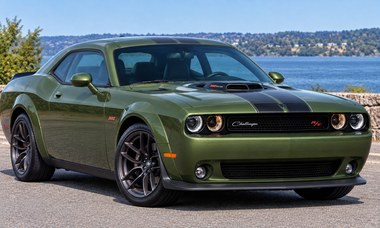
The Dodge Challenger is one of those used cars where the engine badge on the fender tells only part of the reliability story. A V6 Challenger driven as an everyday commuter, a 5.7-liter R/T, a 6.4-liter Scat Pack and a supercharged Hellcat may share the same basic body, but they can present very different ownership risks.
The good news is that the modern Challenger can be a durable car. The later 3.6-liter V6 is capable of high mileage, the 5.7-liter Hemi can last a long time with proper maintenance, and even the more powerful versions can be dependable when they haven't been abused or heavily modified. The challenge is finding the right one.
This guide covers 2008-2023 Dodge Challengers, the complete modern production run before Dodge ended this version of the Challenger after 2023. :contentReference[oaicite:0]{index=0}
Overall, I'd rate the modern Challenger as having average reliability, with later V6 models generally presenting the lowest ownership risk. V8 reliability can also be good, but maintenance history, modifications and previous-owner treatment become increasingly important as horsepower rises.
In This Guide You'll Learn
- Which Dodge Challenger years are generally the best to buy
- Which Challenger years deserve more caution
- How many miles a Dodge Challenger can last
- How the early 3.5-liter V6 compares with the later 3.6-liter Pentastar
- Whether the 5.7-liter Hemi is reliable at high mileage
- What to know about Hemi lifter and camshaft problems
- How the 6.1-liter and 6.4-liter V8s compare
- What changes when shopping for a Hellcat
- Whether the manual or automatic transmission is the better used-car choice
- Why modifications and previous abuse matter so much on performance Challengers
Dodge Challenger Reliability Overview
The Challenger's long production run is helpful to used-car buyers because its major engines and drivetrains have accumulated years of real-world experience. It also means you shouldn't treat every 2008-2023 Challenger as mechanically equivalent.
The 2008-2010 cars are now the oldest of the group. The mainstream V6 was the 3.5-liter, while R/T models used the 5.7-liter Hemi and the SRT8 used a 6.1-liter Hemi. At this age, condition and maintenance history can matter more than relatively small differences between model years.
For 2011, the 3.6-liter Pentastar replaced the 3.5-liter V6. That's an important dividing line for ordinary used-car shoppers because the newer V6 brought substantially stronger performance and became the mainstream Challenger engine for the remainder of production.
The early 3.6-liter engine isn't perfect. Some early Pentastar applications experienced cylinder-head and valvetrain problems, while oil-filter/oil-cooler housing leaks became one of the better-known long-term repair items. Later examples are generally the V6 Challengers I'd rather own.
The 5.7-liter Hemi can be impressively durable, but lifter and camshaft wear deserves attention. A persistent engine tick shouldn't simply be dismissed as something all Hemis do, because some ticking comes from relatively minor exhaust-manifold problems while other noises can indicate much more expensive internal valvetrain trouble.
The 6.4-liter Scat Pack/SRT cars and supercharged Hellcats need to be evaluated partly as performance cars. Dodge eventually offered Challenger power levels ranging from the ordinary Pentastar V6 to Hellcat variants producing well over 700 horsepower. :contentReference[oaicite:1]{index=1} At that point, previous use, tuning, tires, driveline condition and modifications can matter as much as the model year.
Dodge Challenger Reliability at a Glance
| Category | Assessment |
|---|---|
| Overall Reliability | Average; strongly affected by engine and previous use |
| Expected Lifespan | About 150,000-200,000+ miles with good maintenance |
| Best Mainstream Engine | Later 3.6-liter Pentastar V6 |
| Best Everyday V8 | 5.7-liter Hemi with good maintenance history |
| Strong Used-Year Group | 2015-2023 |
| Major Hemi Concern | Lifter and camshaft wear |
| Performance-Car Concern | Modifications and previous hard use |
| High-Mileage Potential | Good, particularly with documented maintenance |
And I can't stress this enough:
Multiple dealers → compete for your business → you save
How Many Miles Can a Dodge Challenger Last?
A properly maintained Dodge Challenger can realistically last 150,000 to 200,000 miles or more. The mileage itself isn't what would worry me most; I'd be more interested in the engine, maintenance history and how the car accumulated those miles.
At 100,000 miles, a good Challenger can still have substantial life remaining. On a V6, I'd inspect for oil leaks, cooling-system condition, suspension wear and transmission maintenance. On a Hemi, I'd add a careful check for abnormal valvetrain noise, misfires and evidence of previous modifications.
At 150,000 miles, maintenance history becomes increasingly important. A Challenger that accumulated mostly highway mileage and received regular service may be a much better purchase than a lower-mileage car that spent years making short trips or being driven aggressively.
Reaching 200,000 miles is realistic, particularly with the V6 and 5.7-liter Hemi, but expect normal aging components such as suspension parts, engine mounts, cooling-system components, wheel bearings and electronics to become part of the ownership equation.
Buyer comparison: I'd rather buy a documented 120,000-mile 3.6-liter Challenger that had spent its life as an ordinary commuter than an 80,000-mile Hemi with questionable modifications, worn rear tires and no useful maintenance records. Challenger mileage needs context.
Dodge Challenger Reliability by Year Group
2008-2010: Early Modern Dodge Challenger

The first years of the modern Challenger established the retro muscle-car formula that Dodge would retain throughout production. These cars were available with the 3.5-liter V6, 5.7-liter Hemi V8 and high-performance 6.1-liter Hemi in the SRT8.
At this point, their biggest disadvantage is simply age. A 2009 Challenger is approaching two decades old, so suspension bushings, cooling-system parts, engine mounts, seals, electrical components and interior equipment can require attention even when the engine itself remains healthy.
The 3.5-liter V6 is reasonably durable but isn't the Challenger engine I'd specifically seek out. The later 3.6-liter provides substantially better performance and efficiency, making it difficult to justify an early V6 unless the car's price and condition are unusually attractive.
The 5.7-liter R/T is much more interesting. A good one provides the V8 character buyers expect from a Challenger without the higher costs of the SRT models. Engine noise and maintenance history still deserve close attention.
Common 2008-2010 Dodge Challenger Problems
- Front suspension wear: Control arms, bushings, ball joints and related components can produce clunks and loose handling.
- Cooling-system repairs: Water pumps, thermostats, radiators and hoses become increasingly relevant with age.
- Hemi ticking: Exhaust-manifold problems can cause ticking, while valvetrain noise may indicate a more expensive lifter or camshaft problem.
- Oil leaks: Aging seals and gaskets deserve inspection.
- Transmission and driveline wear: Previous use and maintenance matter greatly on older V8 cars.
- Age-related electrical problems: Sensors, switches and other electronic components can fail even on relatively low-mileage cars.
Buyer Tip: I wouldn't buy an early Challenger merely because it's the cheapest way into the model. Compare its price with a 2011-or-newer car before deciding. The later 3.6-liter makes a much stronger V6 purchase, while an early R/T can still make sense if the V8 is specifically what you want.
Bottom Line: The 2008-2010 Challenger can still be a worthwhile enthusiast car, particularly with a Hemi, but age and condition now matter at least as much as its original reliability.
2011-2014: Pentastar V6 and Expanded Performance Choices
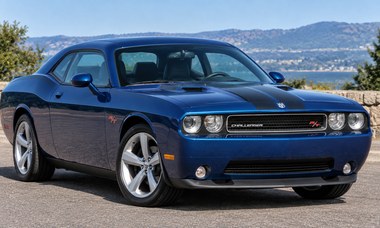
The 2011-2014 period is important because the 3.6-liter Pentastar V6 replaced the previous 3.5-liter engine. That made the base Challenger substantially more appealing as an everyday used car.
The 5.7-liter Hemi remained the R/T engine, while the SRT8 moved to a larger 6.4-liter Hemi. This created a lineup with much clearer separation between economical V6 transportation, traditional V8 muscle and serious performance models.
For reliability, I'd pay additional attention to the earliest 3.6-liter cars. Early Pentastar engines across Chrysler products experienced some cylinder-head problems, and the oil-filter/oil-cooler housing became another familiar leak point as these engines aged.
The Hemi engines remain capable of high mileage, but lifter and camshaft concerns mean that persistent ticking, misfires or abnormal valvetrain noise deserve diagnosis before purchase.
Common 2011-2014 Dodge Challenger Problems
- Early Pentastar cylinder-head issues: Some early 3.6-liter engines required cylinder-head or related valvetrain repairs.
- 3.6-liter oil-cooler/filter-housing leaks: Oil can accumulate in the engine valley and eventually spread down the engine.
- Hemi lifter and camshaft wear: A potentially expensive issue that makes engine noise worth investigating.
- Cooling-system problems: Water pumps and thermostats are common areas to inspect as mileage increases.
- Suspension wear: These are large, heavy cars, and bushings, control arms and wheel bearings eventually show the effects.
- Modified performance cars: Tunes, exhaust systems, suspension modifications and evidence of repeated hard use deserve additional scrutiny.
Buyer Tip: If you're considering a 2011-2014 V6 Challenger, ask specifically about cylinder-head work and oil-cooler housing replacement. A documented repair isn't necessarily a negative; knowing that a recognized problem was properly corrected can be preferable to buying a car with no history at all.
Bottom Line: The arrival of the 3.6-liter engine makes these cars much more attractive than the early V6 Challengers, while the 5.7- and 6.4-liter V8s provide increasingly serious performance for buyers willing to accept higher running costs.
2015-2023: Updated Dodge Challenger
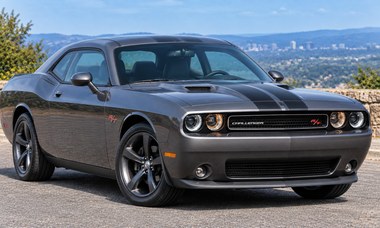
The 2015 update is another important dividing line for used Challenger shoppers. Dodge significantly modernized the interior and electronics, and the eight-speed automatic became available throughout the lineup. FCA reported that its TorqueFlite eight-speed had expanded to all versions of the Challenger by this period. :contentReference[oaicite:2]{index=2}
For an ordinary daily driver, a 2015-2023 3.6-liter V6 with the eight-speed automatic is probably the Challenger combination I'd recommend most often. It isn't the version enthusiasts dream about, but it's powerful enough for normal driving, relatively economical and avoids the additional Hemi-specific concerns.
The 5.7-liter R/T remains an excellent middle ground for buyers who specifically want V8 sound and torque. The 6.4-liter Scat Pack provides substantially more performance, while the supercharged Hellcat family moves the Challenger into an entirely different category.
By 2018, Dodge offered both six-speed manual and eight-speed automatic transmissions in high-performance Challenger applications, while the 3.6-liter used the eight-speed automatic. :contentReference[oaicite:3]{index=3} The long production run also means parts availability and specialist familiarity are generally excellent.
Common 2015-2023 Dodge Challenger Problems
- 3.6-liter oil-cooler housing leaks: One of the better-known Pentastar repair items.
- Hemi lifter and camshaft problems: Not every V8 develops the problem, but abnormal valvetrain noise deserves investigation.
- Cooling-system repairs: Water pumps, thermostats and related components can require replacement.
- Touchscreen and electronic problems: Later cars contain more technology, creating additional potential failure points as they age.
- Suspension and wheel-bearing wear: Particularly relevant on heavy cars with large wheels and performance tires.
- Performance-related wear: Clutches, tires, brakes, differentials, axles and other driveline components can experience substantially greater stress on aggressively driven cars.
Buyer Tip: For a V6 Challenger, I'd concentrate heavily on this 2015-2023 group. For a Scat Pack or Hellcat, I'd put originality, maintenance history and evidence of previous use ahead of simply finding the lowest mileage.
Bottom Line: These are generally the strongest all-around used Challengers. The platform was mature, the eight-speed automatic improved everyday usability, and buyers can choose anything from a relatively sensible V6 coupe to one of the most powerful production muscle cars ever sold.
Which Dodge Challenger Engine Is Most Reliable?
For a buyer primarily concerned with long-term reliability and reasonable ownership costs, I'd choose a later 3.6-liter Pentastar V6. It provides a strong combination of durability, parts availability, performance and repair cost.
The earlier 3.5-liter V6 can last a long time, but there's little reason to seek one out when later 3.6-liter cars provide more power and are now widely available on the used market.
The 5.7-liter Hemi is my preferred V8 for someone who wants a Challenger as a frequently driven street car. It's powerful enough to provide the experience people expect from a V8 Challenger without the additional expense and stress associated with the higher-output engines.
The 6.1-liter and 6.4-liter Hemis can also be durable. But once you move into those models, reliability increasingly becomes a question of how the individual car has been used.
At the extreme end, the supercharged 6.2-liter Hellcat engine was engineered for enormous power, with later Challenger variants reaching 700-plus horsepower and beyond. :contentReference[oaicite:4]{index=4} That doesn't automatically make a Hellcat unreliable, but it does mean the entire drivetrain may have experienced stresses an ordinary V6 Challenger never sees.
Buyer comparison: For another 100,000 miles of everyday use, I'd take a later 3.6-liter Challenger. If the entire reason I wanted the car was the muscle-car experience, I'd accept the additional risk and expense of a carefully maintained 5.7-liter R/T rather than buying the V6 and wishing I'd bought the Hemi.
If you may be buying soon, I'd also recommend reading my most effective negotiation methods for either new cars or used cars. Each explains a quick way to identify the dealerships most motivated to deal, no matter how busy they may seem, and how to follow up once you've found them. That can be the difference between getting a good price and getting a great one.
Is the Dodge Challenger 5.7 Hemi Reliable?
Yes. A properly maintained 5.7-liter Hemi can exceed 150,000 miles and potentially reach 200,000 miles or more. The engine shouldn't automatically be considered fragile simply because Hemi lifter problems receive considerable attention.
The important issue is distinguishing normal or relatively minor noises from actual valvetrain trouble. Exhaust-manifold leaks can produce ticking, while lifter failure can damage the camshaft and create a much more expensive repair.
A persistent tick accompanied by a misfire, rough running or other abnormal behavior deserves diagnosis before purchase. I wouldn't accept a seller's reassurance that "all Hemis tick" without knowing what's actually causing the sound.
Oil-change history matters as well. Given two otherwise similar R/Ts, I'd pay more for the car with consistent documented oil changes and an unmodified engine than gamble on one with missing records simply because it had fewer miles.
3.6 V6 vs. 5.7 Hemi: Which Challenger Would I Buy?
This comes down to what you expect from the car.
If the Challenger will be a daily driver and your priorities are reliability, fuel cost and lower repair exposure, the 3.6-liter V6 is the better choice. It's also considerably quicker than the base-engine Challengers of decades past, so choosing the V6 doesn't mean buying an unusably slow car.
If the sound, torque and personality of a V8 are major reasons you're considering a Challenger in the first place, I'd buy the 5.7-liter. The V6 may be the more rational car, but rationality isn't the only reason people buy a large two-door muscle car.
Buyer comparison: I'd choose a clean 100,000-mile V6 over a neglected 60,000-mile R/T every time. But given two equally well-maintained cars and a buyer who genuinely wants the muscle-car experience, I'd consider the additional maintenance risk of the 5.7-liter worthwhile.
Dodge Challenger Transmission Reliability
The Challenger is unusual among modern performance cars because Dodge continued offering a traditional manual transmission on many V8 models while automatics became increasingly sophisticated.
The six-speed manual can be a durable choice, but clutch condition and previous driving style matter. A car that has experienced repeated hard launches can need considerably more than routine clutch maintenance.
Early automatic Challengers used older transmission designs that can still provide long service when maintained properly. The major improvement came with the later eight-speed automatic, which combines quick shifting with better fuel economy and keeps the engine in a more useful part of its power range.
Dodge's 2018 specifications show the 3.6-liter paired with the TorqueFlite eight-speed and a six-speed manual available with the supercharged V8, illustrating how broadly the Challenger eventually accommodated very different drivetrain configurations. :contentReference[oaicite:5]{index=5}
Which would I buy? For a V6, I'd want the later eight-speed automatic. For a 5.7- or 6.4-liter weekend car, I'd personally favor the six-speed manual for the additional involvement, but I'd inspect the clutch and driveline carefully. For frequent commuting, the eight-speed automatic is difficult to fault.
Are Dodge Challenger Hellcats Reliable?
A Hellcat can be reliable in the sense that a properly maintained, largely stock car can provide years of service without major engine failure. But I wouldn't evaluate a used Hellcat with the same standards I'd use for a V6 Challenger.
The reason is simple: these cars were designed around extraordinary performance. Later Hellcat variants produced more than 700 horsepower, and Dodge ultimately offered Challenger versions approaching or exceeding 800 horsepower. :contentReference[oaicite:6]{index=6}
That makes previous-owner behavior exceptionally important. Tires, brakes, clutches, transmissions, differentials, axles and other drivetrain components can experience enormous loads. Aftermarket tuning can increase those loads further.
A 30,000-mile Hellcat isn't necessarily a safer purchase than a 60,000-mile one. I'd want to know whether those miles were accumulated by an owner who maintained and enjoyed the car responsibly or through repeated launches, track use and increasing levels of modification.
Buyer Tip: With a Hellcat, I'd strongly favor a stock or nearly stock example with extensive documentation. A professional pre-purchase inspection is inexpensive compared with the cost of discovering after purchase that an extremely powerful car has been modified or abused.
Best Dodge Challenger Years to Buy
The best Challenger years depend partly on whether you're shopping for an everyday V6, a traditional Hemi-powered R/T or one of the higher-performance models. For most buyers, however, I'd concentrate on the 2015-2023 Challengers.
By this point the platform was mature, the 3.6-liter Pentastar had been in production for several years, the eight-speed automatic greatly improved the automatic cars, and Dodge had refined most of the Challenger's major mechanical systems.
2015-2020: Excellent Balance of Price and Mechanical Maturity
These years are particularly attractive because they're old enough to have depreciated substantially while still benefiting from the important 2015 updates. For everyday use, the 3.6-liter V6 and eight-speed automatic make a strong combination.
For buyers who specifically want V8 power, the 5.7-liter R/T is a good middle ground. It delivers the sound and torque that make the Challenger distinctive without the tire, brake and drivetrain costs associated with the 6.4-liter and supercharged models.
2021-2023: Strong Later-Year Choices
The final production years are also attractive because Dodge had been building this basic Challenger for a very long time. Age-related deterioration is naturally less of an issue than it is on the earliest cars.
I'd still buy on condition rather than year alone. A carefully maintained 2017 Challenger can easily be a better purchase than a neglected or heavily modified 2022.
Dodge Challenger Years to Approach With More Caution
I wouldn't completely avoid an entire Challenger year solely because of its date of manufacture. But several groups deserve additional scrutiny.
2008-2010 Challengers
The earliest modern Challengers are now old enough that age itself is a significant reliability factor. Suspension, cooling-system components, seals, engine mounts, electronics and other parts may require attention even on relatively low-mileage examples.
The 3.5-liter V6 can provide dependable service, but I'd generally prefer the later 3.6-liter. Early Hemi cars can still be excellent purchases, particularly when maintenance records are extensive.
2011-2013 V6 Challengers
I'd investigate the service history of these early Pentastar cars more carefully because some early 3.6-liter engines experienced cylinder-head problems.
A car that received appropriate repairs and subsequently accumulated many trouble-free miles can still be a perfectly reasonable purchase. Documentation is more useful than simply rejecting every early 3.6-liter Challenger.
What Is the Most Reliable Dodge Challenger?
For someone primarily interested in reliability and everyday transportation, I'd choose a later 3.6-liter V6 Challenger with the eight-speed automatic.
It's mechanically less demanding than the high-performance models, fuel costs are lower, and the engine is widely used across numerous Chrysler, Dodge, Jeep and Ram vehicles. Parts and repair knowledge are consequently widespread.
If I specifically wanted a V8 Challenger, I'd look for a well-maintained 5.7-liter R/T. It provides plenty of muscle-car character without moving into the much greater performance and operating costs of the 6.4-liter and supercharged models.
The most important qualifier is condition. I'd take an exceptionally maintained R/T over a neglected V6 despite the V6's theoretical reliability advantage.
Common Dodge Challenger Problems and Expensive Repairs
Most Challenger problems aren't catastrophic. The potentially expensive issues are concentrated in several areas that vary according to engine and previous use.
3.6-Liter Oil Cooler and Filter Housing Leaks
The oil-filter/oil-cooler housing is a familiar trouble area on the Pentastar V6. Because the assembly sits in the engine valley, leaking oil can accumulate there before eventually making its way down the engine.
It's generally a repairable problem rather than a reason to reject an otherwise good Challenger. If the housing has already been properly replaced, I'd consider that useful maintenance rather than a negative.
Hemi Lifter and Camshaft Problems
Lifter and camshaft damage is one of the more expensive issues to investigate on Hemi-powered Challengers. A failing lifter can damage a camshaft lobe and substantially increase the repair cost.
Don't diagnose the problem from the phrase "Hemi tick" alone. Exhaust-manifold leaks can also create ticking noises. Persistent valvetrain noise, misfires or poor running should be properly diagnosed before purchase.
Cooling-System Problems
Water pumps, thermostats, radiators and other cooling-system components can eventually require replacement. Any history of significant overheating deserves additional investigation because continuing to drive an overheating engine can cause much greater damage.
Front Suspension and Wheel-Bearing Wear
The Challenger is a large, heavy coupe. Control arms, bushings, ball joints, wheel bearings and shocks can wear enough to cause clunks, looseness, vibration or irregular tire wear.
Performance versions with large wheels and tires can place even greater demands on suspension components.
Clutch and Driveline Wear
A manual-transmission R/T, Scat Pack or SRT model can require clutch replacement as mileage rises. More importantly, repeated hard launches can accelerate wear throughout the driveline.
On high-performance Challengers I'd pay particular attention to the clutch, driveshaft, differential, axles and rear tires for clues about how the car has been used.
Dodge Challenger Maintenance and Repair Costs
A V6 Challenger isn't especially expensive to maintain for a large rear-wheel-drive coupe. Costs rise as you move through the Hemi lineup because tires, brakes and other components become larger and more expensive.
Approximate independent-shop costs can include:
| Service or Repair | Approximate Cost |
|---|---|
| Oil and Filter Change | $70-$150+ |
| Brake Pads and Rotors | $500-$1,300+ per axle |
| 3.6 Oil Cooler/Filter Housing | $700-$1,400+ |
| Water Pump | $600-$1,200+ |
| Thermostat | $300-$650+ |
| Front Suspension Repairs | $600-$1,800+ depending on components |
| Clutch Replacement | $1,500-$3,000+ depending on model |
| 5.7 Hemi Lifter/Camshaft Repair | $3,000-$6,000+ depending on damage |
| Major Transmission Repair | $2,000-$5,000+ depending on problem |
A Scat Pack or Hellcat can cost considerably more to operate even when nothing breaks. Wide performance tires and large brakes can turn ordinary wear items into substantial expenses.
Dodge Challenger Maintenance After 100,000 Miles
A 100,000-mile Challenger isn't automatically near the end of its useful life. I'd be more interested in which major maintenance items have already been addressed and whether the previous owner consistently repaired the car as needed.
- Inspect the cooling system: Check the water pump, thermostat, radiator, hoses and coolant condition.
- Look for Pentastar oil leaks: Pay particular attention to the oil-cooler/filter-housing area on the 3.6-liter.
- Listen carefully to a Hemi: Investigate persistent ticking, misfires or abnormal valvetrain noise.
- Inspect suspension and wheel bearings: Heavy cars eventually wear control arms, bushings and related components.
- Review transmission maintenance: Confirm appropriate service rather than assuming the transmission requires no attention.
- Inspect the driveline on performance models: Clutch, differential, driveshaft and axle condition become particularly important on cars that may have been driven hard.
What to Check Before Buying a Used Dodge Challenger
- Start the engine cold: Listen particularly carefully to Hemi-powered cars for abnormal ticking or valvetrain noise.
- Inspect the 3.6-liter oil-cooler housing: Look for oil collecting around the engine valley or evidence of previous leakage.
- Look for modifications: Intake, exhaust, suspension and cosmetic changes aren't necessarily harmful, but tuning and major engine modifications deserve much closer investigation.
- Inspect the rear tires and wheel wells: Excessive rear-tire wear and rubber residue can provide clues about repeated burnouts or hard launches.
- Check the clutch on manual cars: Test engagement and watch for slipping, chatter or other signs of wear.
- Inspect for collision repairs: High-powered Challengers deserve a particularly careful check for previous body and structural damage.
Dodge Challenger Pros and Cons
Pros
- Later 3.6-liter V6 can provide good high-mileage durability
- 5.7-liter Hemi offers traditional V8 character
- Later eight-speed automatic is an excellent transmission
- Manual transmission remained available with several V8 models
- Much more rear-seat and trunk space than many performance coupes
- Excellent parts availability and aftermarket support
- Wide range of engines and performance levels
- Distinctive styling changed relatively little throughout production
- 150,000-200,000+ miles possible with good maintenance
Cons
- Hemi lifter and camshaft repairs can be expensive
- 3.6-liter oil-cooler housing leaks are common
- Large size and weight increase tire, brake and suspension wear
- V8 models consume considerably more fuel
- Performance models may have been driven very hard
- Modified cars require additional investigation
- Hellcat-level performance substantially increases drivetrain stress
- Early cars are increasingly affected by age-related repairs
And another con ... even a good price on the vehicle doesn't necessarily mean you're getting a good deal.
There are other numbers besides price that can significantly affect the final out-the-door cost. A well-negotiated selling price can quickly lose its advantage if the dealer makes up for the concession with a below-market trade-in offer. Also, dealer fees and add-ons can further increase the final cost, making it important to learn which fees you must pay, can negotiate, or should avoid.
To become better informed about these important but often-confusing parts of the deal, be sure to see my articles on trade-ins and dealer fees.
Dodge Challenger vs. Other Sports and Muscle Cars
The Challenger's size and wide range of engines make it difficult to compare with just one type of car. A V6 Challenger can be an everyday coupe, while a Scat Pack or Hellcat competes much more directly with serious performance cars.
- Dodge Charger: Mechanically closely related and available with many of the same engines. The Challenger provides the traditional two-door muscle-car appearance, while the Charger adds four doors and much easier rear-seat access.
- Chevrolet Camaro: Smaller and more sports-car focused, with sharper handling and available V8 performance. The Challenger provides considerably more interior and cargo space and emphasizes traditional muscle-car character.
- Ford Mustang: One of the Challenger's most obvious rivals, with strong V8 and more economical engine choices. The Mustang generally feels smaller and more agile, while the Challenger offers more passenger space and a different old-school muscle-car experience.
- Chevrolet Corvette: A much more dedicated two-seat sports car with greater emphasis on handling and performance. The Challenger is substantially more practical and can carry rear passengers, while the Corvette provides a more focused driving experience.
Buyer comparison: If handling precision were my main priority, I'd lean toward the Camaro, Mustang or Corvette depending on budget. If I wanted a comfortable long-distance coupe with genuine rear-seat space and traditional American muscle-car character, the Challenger has a combination the others don't quite duplicate.
Is a High-Mileage Dodge Challenger a Good Buy?
A high-mileage Challenger can be a very good buy, particularly when the mileage came from normal commuting or highway use rather than repeated aggressive driving.
A 120,000-mile 3.6-liter Challenger with extensive service records, a dry engine, healthy cooling system and properly operating transmission wouldn't concern me simply because of its mileage.
I'd investigate a high-mileage Hemi more carefully. Listen for valvetrain noise, check for misfires, review oil-change history and determine whether the car has been tuned or substantially modified.
Condition can matter more than mileage on these cars. A Challenger that has accumulated 140,000 mostly highway miles can have experienced considerably less drivetrain stress than a 50,000-mile performance model subjected to frequent burnouts and hard launches.
Buyer comparison: I'd take a stock, documented 130,000-mile R/T over a modified 60,000-mile R/T with no maintenance records if the higher-mileage car passed a thorough inspection.
Is a Used Challenger R/T a Good Buy?
The R/T may be the sweet spot for someone who wants a Challenger primarily because it's a muscle car. The 5.7-liter Hemi provides the V8 sound and low-rpm torque that distinguish it from the V6 without moving into the much greater performance and operating costs of the 6.4-liter or Hellcat.
For everyday driving, the 3.6-liter remains the more economical and lower-risk choice. But if you know you'll regret not buying a V8, a carefully maintained R/T can make more sense than saving money on the V6 and replacing it later.
I'd favor a stock R/T with good maintenance records over a lower-priced car with extensive modifications. There's no shortage of ways to modify a Challenger, but someone else's performance project isn't necessarily the used car I'd want to inherit.
Is a Used Challenger Scat Pack a Good Buy?
The Scat Pack's 6.4-liter V8 provides a major performance increase over the 5.7-liter R/T without the supercharger and extreme output of a Hellcat. For many enthusiasts, that makes it one of the most appealing Challenger combinations.
But the additional performance changes the inspection priorities. Tires, brakes, clutch or automatic transmission, differential, axles and evidence of repeated hard launches all deserve closer attention.
A stock Scat Pack with comprehensive maintenance records would interest me far more than one with aggressive tuning, drag-racing modifications and little documentation, even if the modified car showed fewer miles.
Should You Buy a Used Challenger Hellcat?
A used Hellcat can make sense for someone who specifically wants its extraordinary performance and understands that this isn't an ordinary used Challenger purchase.
I'd place unusually high importance on originality, maintenance records and previous use. I'd also investigate any engine tuning, supercharger modifications, pulley changes or other power-increasing work before buying.
The purchase price isn't the only difference. Tires, brakes, fuel and other consumables can cost substantially more, while a major drivetrain problem carries much greater financial consequences than it would on a V6 Challenger.
I'd strongly recommend a professional pre-purchase inspection by someone familiar with high-performance Mopar vehicles. With this much power available, knowing how the particular car has lived matters far more than knowing the average reliability of the model.
Final Dodge Challenger Reliability Verdict
The 2008-2023 Dodge Challenger has average overall reliability but good high-mileage potential when properly maintained. The long production run also gives buyers an unusually broad range of engines and performance levels.
I'd approach the 2008-2010 cars primarily as older vehicles whose condition and maintenance history now matter enormously. The 2011 introduction of the 3.6-liter Pentastar made the V6 Challenger much more attractive, although I'd investigate the history of the earliest 3.6-liter cars carefully.
For most used-car buyers, I'd start with a 2015-2023 Challenger equipped with the 3.6-liter V6 and eight-speed automatic. It's the combination I'd choose for reliability, reasonable operating costs and another 100,000 miles of everyday driving.
If the V8 experience is why you want a Challenger, the 5.7-liter R/T is my preferred compromise between performance and ownership costs. The 6.4-liter Scat Pack adds substantially more performance, while the Hellcat requires an entirely different level of scrutiny.
Above all, don't buy a used Challenger based on mileage and horsepower alone. A stock, carefully maintained higher-mileage car can be a substantially better purchase than a lower-mileage Challenger that has been neglected, heavily modified or repeatedly abused.
Some Insider Insights:
Learn The Best Way to Negotiate For New Cars