

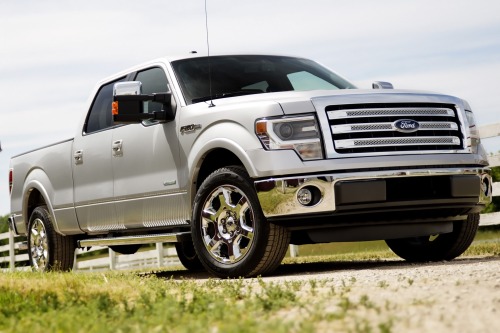
This guide focuses primarily on Ford trucks that are approximately 10 years old or older, where buyers can often find the best combination of affordability, reliability, and value.
Ford has built some of America's most popular pickup trucks for decades, and many older models continue to offer excellent value for used truck buyers. While today's new trucks can easily exceed $60,000, a well-maintained Ford truck that's 10 to 15 years old can often provide years of dependable service for a fraction of that cost.
Of course, not every Ford truck has the same reputation for reliability. Some engines have proven exceptionally durable, while others developed expensive timing chain, transmission, or electrical problems that buyers should understand before making a purchase.
This guide highlights three of Ford's most popular older trucks—the F-150, Ranger, and Explorer Sport Trac—to help you identify the best years, understand the most common mechanical issues, and decide which model best fits your needs today.
What You'll Learn
- Which older Ford trucks have the strongest reliability records
- The best model years and engines to look for
- The most common mechanical problems to inspect before buying
- Typical lifespan expectations
- Which Ford truck we'd recommend for most used buyers today
Possibly Buying Soon? Avoid These Dealer Traps
Before you sign, learn:
- What you don't know about dealer trade-in offers could cost you - Which dealer fees you must pay, can negotiate, or should avoid - How to avoid giving the dealer the upper hand on a used car price - How to avoid overpaying for a new car
Relative Reliability
Also, if you'd like to learn if any Ford trucks rank among the top used trucks for reliability, and see how other trucks rank, be sure to read our Most Reliable Vehicles Guide: Best Models & Years. This comprehensive guide on cars, trucks, and SUVs, highlights the best years to buy or avoid, common problems, potential maintenance costs, and more, and will likely help you make the right choice to meet your needs.
Best Used Ford F-150 Model Years
| Model Years | Why We Recommend Them |
|---|---|
| 2006–2008 (4.6-liter V8) | Excellent budget choice with a proven V8, straightforward mechanical design, and relatively low ownership costs. |
| 2011–2014 | Our favorite value pick, offering strong reliability, modern features, and several excellent engine options. |
| 2015–2017 (5.0-liter V8) | Best choice for buyers wanting a newer truck with an aluminum body, updated technology, and outstanding long-term durability. |
As with virtually any older truck, maintenance history is usually more important than mileage alone. A truck with 180,000 highway miles and documented servicing is often a safer purchase than a neglected example showing only 110,000 miles.
Ford F-150
The Ford F-150 has been America's best-selling vehicle for decades, earning its reputation by combining work capability, everyday comfort, and an enormous selection of engines and trim levels. Whether used as a contractor's work truck, weekend tow vehicle, or daily commuter, the F-150 remains one of the easiest full-size pickups to recommend on the used market.
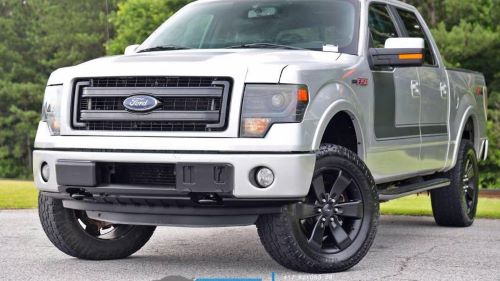
Because Ford has continually refined the F-150, buyers today have several excellent generations to choose from. Some are remarkably dependable, while others require more careful engine selection.
2004–2008 (Eleventh Generation)
The eleventh-generation Ford F-150 represented a major step forward over earlier models, introducing a fully boxed frame, improved crash protection, and a noticeably more refined ride. Available in Regular Cab, SuperCab, and SuperCrew configurations, it quickly became one of the most popular full-size pickups in America.
Engine choices included the dependable 4.2-liter V6, a pair of 4.6-liter V8s, and the popular 5.4-liter Triton V8. Trim levels ranged from the basic XL and STX to the XLT, FX4, Lariat, King Ranch, Harley-Davidson, and Limited models.
Today, these trucks can represent excellent value because purchase prices are often significantly lower than newer generations. However, buyers should be selective, as age, maintenance history, and engine choice now play a much larger role than when these trucks were newer.
Many owners have accumulated well over 200,000 miles with routine maintenance, particularly on trucks equipped with the 4.6-liter V8. The 5.4-liter Triton V8 can also provide long service life, but only when it has been properly maintained and common issues have been addressed.
2009–2014 (Twelfth Generation)
The 2009 redesign represented one of Ford's biggest improvements in years. Ride quality, interior refinement, towing capability, and overall build quality all moved noticeably forward.
This generation introduced buyers to a broad lineup that included the XL, STX, XLT, FX4, Lariat, King Ranch, Platinum, Harley-Davidson edition, and eventually the legendary SVT Raptor.
Engine choices included:
- 4.6-liter V8
- 5.4-liter V8
- 3.5-liter EcoBoost V6 (2011+)
- 6.2-liter V8 (Raptor and selected heavy-duty models)
While all are capable, today's buyers generally favor the naturally aspirated V8s or the later, well-maintained EcoBoost models with documented service history.
2015–2020 (Thirteenth Generation)
Ford completely redesigned the F-150 for 2015, introducing the industry's first high-volume aluminum body. Although some buyers initially questioned its long-term durability, the lighter body improved fuel economy while reducing corrosion concerns.
Engine choices expanded considerably, including several EcoBoost turbocharged V6 engines and the highly regarded 5.0-liter "Coyote" V8. This generation offers one of the best combinations of modern technology, capability, and long-term reliability, particularly when equipped with the 5.0-liter V8 or a properly maintained 2.7-liter EcoBoost.
2021–Present (Fourteenth Generation)
The current generation builds upon the successful aluminum-body platform while adding updated electronics, hybrid powertrains, improved towing technology, and a significantly more refined interior.
Although these trucks are generally proving dependable so far, they remain newer and considerably more expensive than earlier generations. For buyers seeking maximum value, many well-maintained 2015–2020 trucks often represent a better balance between price and reliability.
Best Engines
- 5.0-liter V8: One of Ford's most dependable modern truck engines with an excellent reputation for longevity.
- 2.7-liter EcoBoost V6: Surprisingly durable when serviced regularly.
- 6.2-liter V8: Extremely robust, although fuel economy is poor.
Engines To Approach More Carefully
- 5.4-liter Triton V8 (cam phaser and spark plug concerns)
- Early 3.5-liter EcoBoost engines that lack documented maintenance
Common Problems To Check Before Buying
- Transmission operation: Confirm smooth shifting with no harsh engagement, slipping, hesitation, or delayed shifts.
- Cam phaser noise: Listen carefully during a cold start on 5.4-liter engines for rattling from the front of the engine.
- Timing chain wear: Early EcoBoost engines can develop chain stretch if oil changes have been neglected.
- Turbocharger condition: Inspect EcoBoost models for excessive smoke, oil leaks, or boost-related trouble codes.
- Front suspension wear: Ball joints, tie rods, and control arm bushings commonly wear on higher-mileage trucks.
- Brake system: Check for pulsation, leaks, or soft pedal feel.
- Electrical accessories: Verify that power windows, locks, infotainment systems, and four-wheel-drive controls all operate correctly.
- Rust: Inspect the frame, cab corners, rocker panels, and bed supports, especially on trucks from northern climates.
Expected Lifespan
A properly maintained Ford F-150 commonly reaches 250,000 miles, and many owners report surpassing 300,000 miles with only routine repairs and preventative maintenance. Regular oil changes, transmission servicing, cooling system maintenance, and prompt repair of small problems play a major role in achieving this kind of longevity.
Is A Used Ford F-150 Worth Buying?
Absolutely. The F-150 remains one of the strongest choices in the used full-size truck market thanks to its enormous parts availability, excellent resale value, broad engine selection, and proven durability.
If we were shopping today, we'd concentrate primarily on well-maintained 2011–2014 trucks or 2015–2020 models equipped with the 5.0-liter V8. Buyers willing to spend a little more should also consider clean examples powered by the 2.7-liter EcoBoost, which has quietly developed one of the better reliability records in Ford's recent engine lineup.
Buyer Tip: Service records matter far more than trim level. A base-model XLT with complete maintenance documentation is almost always a better purchase than a fully loaded Platinum with an uncertain history.
Also, Considering a New F-150?
See our 2026 Ford F-150 pricing and negotiation guide to learn what buyers are paying, how much they're getting off MSRP, and what discount you may want to target.
Ford Ranger
The Ford Ranger has earned a reputation as one of Ford's most dependable trucks. Smaller than the F-150 but still highly capable, the Ranger appeals to buyers looking for a practical daily driver that can also handle light towing, off-road adventures, or weekend home improvement projects.
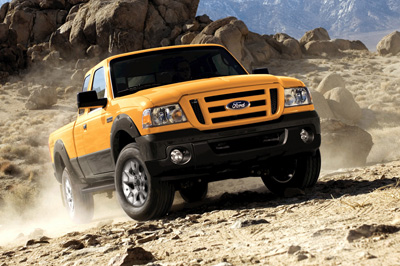
One reason the Ranger has remained popular is its mechanical simplicity. The older trucks were designed before modern pickups became loaded with electronic features, making many repairs less complicated and less expensive. Ford also reintroduced the Ranger for the 2019 model year after an eight-year absence, giving buyers a modern midsize alternative with significantly improved performance and fuel economy.
1998–2011 (Third Generation)
The third-generation Ranger is still considered by many enthusiasts to be one of the best compact pickup trucks ever built. Production ran through the 2011 model year in North America, with buyers choosing from regular cab, extended cab, and four-door SuperCab models.
Trim levels included XL, XLT, Sport, Edge, and the off-road-oriented FX4, while engines ranged from economical four-cylinders to the well-known 4.0-liter V6.
Although these trucks are now well over a decade old, many continue to serve as dependable work vehicles thanks to their straightforward engineering and relatively inexpensive replacement parts.
2019–2023 (Fourth Generation)
Ford revived the Ranger for 2019 after discontinuing it in North America for several years. The new truck was considerably larger, more refined, and far more powerful than its predecessor.
Every Ranger was powered by Ford's 2.3-liter EcoBoost turbocharged four-cylinder engine paired with a 10-speed automatic transmission. This combination delivers strong performance while maintaining respectable fuel economy.
Reliability has generally been very good, although some owners have reported occasional transmission calibration issues and minor electronic glitches.
2024–Present (Fifth Generation)
The newest Ranger builds upon the successful 2019 redesign with updated styling, improved interior technology, revised suspension tuning, and the return of the high-performance Ranger Raptor.
Because these trucks are still relatively new, long-term reliability data continues to develop. Early owner reports have generally been encouraging, although they remain significantly more expensive than earlier used Rangers.
Best Engines
- 2.3-liter Duratec inline-four (2009–2011): Simple, economical, and capable of extremely high mileage with routine maintenance.
- 2.3-liter EcoBoost turbocharged inline-four (2019–Present): Strong performance with an increasingly solid reliability reputation.
Engines To Approach More Carefully
- 4.0-liter SOHC V6 with timing chain noise or incomplete service records.
Common Problems To Check Before Buying
- Timing chain tensioners: The 4.0-liter SOHC V6 can develop timing chain guide and tensioner wear that becomes expensive if ignored.
- Automatic transmission: Verify smooth shifting with no slipping or delayed engagement.
- Cooling system: Inspect the radiator, thermostat housing, and coolant hoses for leaks.
- Front suspension: Ball joints, tie rods, and control arm bushings commonly wear on higher-mileage trucks.
- Differential noise: Listen for whining or clunking from the rear axle during acceleration and deceleration.
- ABS warning lights: Wheel speed sensors occasionally fail and are generally inexpensive to replace.
- Rust: Carefully inspect the frame, spring mounts, cab corners, rocker panels, and rear leaf spring hangers.
- Electrical accessories: Confirm operation of windows, locks, gauges, lighting, and four-wheel-drive engagement.
Fortunately, most of these problems are well understood today. Replacement parts remain widely available, and many repairs are considerably less expensive than on today's more technologically complex pickup trucks.
Expected Lifespan
The Ranger has earned one of the strongest longevity records among midsize pickups. Well-maintained examples frequently exceed 250,000 miles, while many older trucks continue working reliably well beyond that milestone. The naturally aspirated four-cylinder models have developed an especially strong reputation for durability.
Is A Used Ford Ranger Worth Buying?
For many buyers, yes. If you don't need the towing capacity or interior space of an F-150, the Ranger offers an excellent combination of reliability, affordability, and relatively low ownership costs.
Older 2009–2011 Rangers remain some of the best bargains in today's used truck market, while the 2019-and-newer models provide modern safety technology and much stronger performance without sacrificing the Ranger's traditional reputation for durability.
Buyer Tip: Don't let higher mileage automatically discourage you. Many Rangers have spent their lives as highway commuter trucks rather than heavy work vehicles. Overall condition and maintenance history remain far better indicators of future reliability than the odometer reading alone.
Ford Explorer Sport Trac
The Ford Explorer Sport Trac occupied a unique place in Ford's lineup by combining the comfort of an SUV with the versatility of a pickup truck. Built from 2001 through 2010, it offered four real doors, comfortable seating for five, and a practical composite cargo bed that appealed to buyers who needed occasional hauling capability without moving up to a full-size pickup.
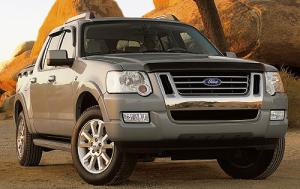
Although production ended in 2010, the Sport Trac still enjoys a loyal following. Clean, well-maintained examples remain surprisingly practical daily drivers and continue to attract buyers looking for something different from the traditional pickup truck.
2001–2005 (First Generation)
The original Sport Trac was based largely on the Ford Explorer but featured a longer wheelbase and a four-foot pickup bed. It came exclusively with the familiar 4.0-liter SOHC V6 engine paired with an automatic transmission.
While generally dependable, these early models developed several known issues that buyers should inspect carefully today, particularly timing chain components and transmission operation.
2007–2010 (Second Generation)
After skipping the 2006 model year, Ford introduced a completely redesigned Sport Trac for 2007. This second generation represented a significant improvement in nearly every area, including ride quality, handling, safety, towing capability, and interior refinement.
Buyers could choose between the proven 4.0-liter SOHC V6 or the much stronger 4.6-liter three-valve V8. The V8, paired with a six-speed automatic transmission, remains the most desirable combination on today's used market.
Although sales never approached those of the F-150 or Ranger, many owners consider the second-generation Sport Trac one of Ford's best-kept secrets.
Best Engine
- 4.6-liter V8: Offers excellent performance, good towing capability, and generally fewer expensive long-term concerns than the 4.0-liter V6.
Engine To Approach More Carefully
- 4.0-liter SOHC V6: Listen carefully for timing chain rattles during a cold start and verify maintenance history.
Common Problems To Check Before Buying
- Timing chain tensioners: A cold-start rattle on the 4.0-liter V6 may indicate expensive timing chain guide wear.
- Transmission operation: Verify smooth shifting with no slipping, delayed engagement, or harsh gear changes.
- Rear differential: Listen for whining noises or vibration under acceleration.
- Cooling system: Inspect the radiator, thermostat housing, and hoses for leaks.
- Suspension wear: Ball joints, control arms, and sway bar links commonly require replacement on higher-mileage vehicles.
- HVAC blend door actuator: Verify that both heating and air conditioning operate properly through all vent settings.
- Electrical accessories: Test all power windows, locks, lighting, and dashboard electronics.
- Rust: Carefully inspect the frame, rear suspension mounting points, rocker panels, and bed supports.
Expected Lifespan
A properly maintained Explorer Sport Trac commonly reaches 200,000 miles, with many V8-equipped examples exceeding 250,000 miles. Routine servicing of the cooling system, drivetrain, suspension, and four-wheel-drive components plays an important role in long-term durability.
Is A Used Explorer Sport Trac Worth Buying?
Yes, particularly the redesigned 2007–2010 models. While they lack the aftermarket support and resale demand of the F-150 and Ranger, they offer an attractive combination of SUV comfort and pickup utility that's difficult to find elsewhere.
If shopping today, we'd focus primarily on V8-powered examples with documented maintenance and minimal rust.
Buyer Tip: Don't buy the first Sport Trac you find. Production numbers were relatively low, making clean examples more difficult to locate, but patience often rewards buyers with exceptionally well-maintained trucks owned by long-term enthusiasts.
Which Older Ford Truck Should You Buy?
The answer depends largely on how you'll use it.
| If You Want... | Our Recommendation |
|---|---|
| Maximum towing and hauling capability | Ford F-150 |
| Lowest ownership costs | Ford Ranger |
| Best daily driver | Ford Ranger (2019+) |
| Most interior versatility | Explorer Sport Trac |
| Highest long-term durability | F-150 5.0-liter V8 or Ranger |
| Best overall value | 2011–2014 Ford F-150 |
All three trucks have earned solid reputations when properly maintained. The biggest difference isn't necessarily reliability—it's choosing the truck that best matches your intended use.
Buying A Used Ford Truck: What Matters Most
Regardless of which Ford truck you're considering, maintenance history should carry far more weight than mileage alone. A truck that has received consistent oil changes, cooling system service, transmission maintenance, and prompt repairs will almost always prove to be a better long-term purchase than one with lower mileage but an uncertain history.
We also recommend spending time comparing several trucks before making a decision. Small differences in condition, maintenance records, accident history, and previous ownership often matter much more than trim level or optional equipment.
Before committing to any purchase, always:
- Review maintenance records whenever possible.
- Inspect the frame and body carefully for rust.
- Listen for unusual engine or drivetrain noises during a cold start.
- Test four-wheel drive, if equipped.
- Drive the truck long enough for the transmission to reach full operating temperature.
- Have the vehicle inspected by an independent mechanic before completing the purchase.
Finally, remember that negotiating usually begins long before you arrive at a dealership. Shopping multiple trucks and obtaining competing price quotes often provides significantly more leverage than negotiating over a single vehicle.
Final Verdict
Ford has built some exceptionally durable trucks over the years, and many continue to serve owners faithfully decades after leaving the factory. While every used truck should be evaluated individually, certain models have clearly established stronger long-term reliability records than others.
If we were shopping today, our choices would be, in order:
- 2011–2014 Ford F-150 — The best balance of durability, capability, parts availability, and value.
- 2009–2011 Ford Ranger — Simple, dependable, and one of the best bargains on today's used truck market.
- 2019–Present Ford Ranger — Modern technology with a growing reputation for reliability.
- 2007–2010 Explorer Sport Trac V8 — An underrated truck that offers a unique blend of SUV comfort and pickup practicality.
No matter which model you choose, buying the best-maintained example you can find will almost always be more important than finding the newest truck or the one with the lowest mileage.
Also, More On Ford Reliability
If you'd like to compare different Ford models, or years, be sure to read our Ford Reliability & Problems: Best Used Fords & Years Guide. It highlights the models, best years to buy, common problems, and helps you choose the right vehicle.
Before Selling Or Trading Your Current Car
Dealers Are Buying Used Cars
Strong demand for used vehicles means many dealers are actively buying cars directly from consumers, often paying more than buyers expect.
- You may receive a better offer than you think.
- A private sale means advertising, meeting strangers, test drives, paperwork, and negotiating.
- Many owners also prefer to avoid the stress of negotiating a trade-in at the dealership.
If a fast, hassle-free sale sounds appealing, or you simply want to see a no-obligation offer, you can get an instant online offer here.