

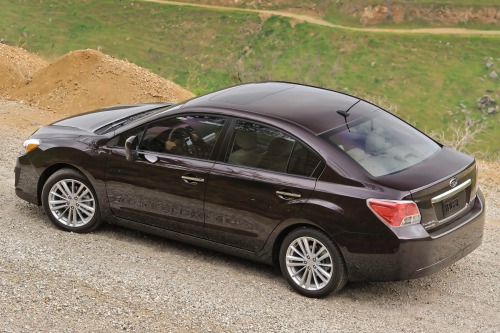
The 2013 Impreza remains one of the most appealing used compact cars for buyers who want standard all-wheel drive, excellent safety ratings, and impressive fuel economy without spending luxury-car money. More than a decade after it was introduced, it continues to attract commuters, first-time buyers, students, and anyone living in areas where snow or heavy rain make all-wheel drive a real advantage.
But is the 2013 model actually a good year to buy? Like any used vehicle, the answer depends on more than its reputation. Some examples have accumulated hundreds of thousands of dependable miles with only routine maintenance, while others have developed oil consumption issues or expensive repairs that could have been avoided with proper servicing.
In this guide, you'll learn:
- How reliable the 2013 Subaru Impreza really is
- Whether it's a good year to buy or one to avoid
- The most common problems and repair costs
- Typical maintenance costs and expected lifespan
- What to inspect before buying one
- How much negotiating room you should expect
- Whether the WRX or WRX STI is a better choice for your needs
Whether you're considering a base Impreza for dependable daily transportation or wondering if a WRX is worth the extra cost, this guide will help you make a more informed buying decision and avoid some of the expensive surprises that can come with purchasing an older used vehicle.
If you'd like to compare this Impreza to the reliability of other model years, be sure to read Subaru Impreza Reliability & Problems: Best Used Models & Years. This comprehensive guide highlights the best years to buy or avoid, common problems, potential maintenance costs, helps you choose the right Escape for your needs, and more.
2013 Subaru Impreza Reliability
The 2013 Impreza is one of the better model years of the fourth-generation Impreza and is generally considered a smart buy on the used market. Subaru had worked through many of the first-year production issues introduced with the redesigned 2012 model, while retaining the excellent fuel economy, standard all-wheel drive, and strong safety ratings that helped make this generation so popular.
Power comes from Subaru's 2.0-liter naturally aspirated boxer four-cylinder (FB20). This engine represented a significant improvement over many earlier Subaru engines by largely eliminating the widespread external head gasket failures that had affected previous generations. While no used vehicle is completely trouble-free, the FB20 has proven capable of delivering well over 200,000 miles when serviced properly.
The biggest concern involves oil consumption on some engines. Not every vehicle experiences the problem, but buyers should verify that the oil level has been checked regularly and that maintenance has been performed on schedule. Vehicles with complete service records are generally much safer purchases than lower-mileage examples with an unknown history.
Overall, the 2013 Impreza earns high marks for long-term durability, especially when compared with many other compact all-wheel-drive vehicles from the same era.
- Overall Reliability: ★★★★☆
- Expected Lifespan: 200,000–250,000+ miles with proper maintenance
- Engine: 2.0-liter naturally aspirated boxer four-cylinder (FB20)
- Transmission: Five-speed manual or Lineartronic CVT
- Best Choice: One-owner vehicle with complete maintenance records and documented oil changes.
- Watch For: Oil consumption, CVT maintenance history, wheel bearings, suspension wear, and rust in northern climates.
Reliability Scorecard
| Category | Rating |
|---|---|
| Overall Reliability | ★★★★☆ |
| Engine | ★★★★☆ |
| Transmission | ★★★★☆ |
| Maintenance Costs | ★★★★☆ |
| Fuel Economy | ★★★★★ |
| Value Today | ★★★★★ |
Bottom Line: The 2013 model is one of the better compact all-wheel-drive cars available for the money. It combines excellent safety, impressive fuel economy, and good long-term durability. A documented maintenance history remains far more important than simply finding the lowest-mileage example.
Is the 2013 Subaru Impreza a Good Year or One to Avoid?
Overall, the 2013 model is a year we would recommend. Subaru had refined the redesigned platform introduced the previous year, resulting in a vehicle that remains competitive even by today's standards. It offers confident winter traction, excellent crash-test performance, comfortable road manners, and relatively modest ownership costs compared with many other AWD vehicles.
Unlike some earlier Subaru generations, buyers generally do not need to worry about widespread head gasket failures. Instead, attention should focus on routine maintenance and whether the engine has exhibited excessive oil consumption. Neither issue is necessarily a deal breaker, but both deserve careful evaluation before purchase.
The continuously variable transmission (CVT) has also proven more reliable than many people assume, particularly when serviced periodically. Although Subaru originally described the fluid as "lifetime," many independent Subaru specialists recommend replacing it approximately every 60,000 to 100,000 miles to maximize longevity.
- Consider It If: You want an affordable compact car with standard all-wheel drive, excellent crash protection, and strong resale value.
- Use Extra Caution If: The seller cannot document regular oil changes or the vehicle has a history of excessive oil consumption.
- Best Examples: One-owner cars with documented maintenance and either transmission choice.
- Overall Value: Excellent. The 2013 Impreza remains one of the strongest values among compact AWD vehicles.
Common Problems to Watch For
No thirteen-year-old vehicle is completely free of maintenance needs. Fortunately, the 2013 Impreza avoids most catastrophic mechanical failures. Instead, buyers should focus on several common wear items that become more likely as mileage increases.
Oil Consumption
Some examples equipped with the 2.0-liter naturally aspirated boxer four-cylinder (FB20) consume oil between scheduled oil changes. Subaru addressed this concern through technical service information during production, but buyers should still ask how frequently the owner checks the oil level. Running low on oil can shorten engine life considerably.
CVT Maintenance
The Lineartronic CVT has developed a better long-term reputation than many competing continuously variable transmissions. However, clean transmission fluid is important. Ask whether the fluid has ever been replaced, especially on vehicles exceeding 80,000 to 100,000 miles.
Wheel Bearings
Wheel bearings commonly begin producing a humming or growling sound after higher mileage. The repair is straightforward but should be factored into your purchase price if replacement is needed.
Suspension Components
Control arm bushings, sway bar links, and struts gradually wear as mileage accumulates. None are unusual repairs, but replacing several components together can become expensive.
Air Conditioning Compressor
Some higher-mileage vehicles experience air conditioning compressor failures. Confirm the system blows cold during a thorough test drive.
Rust
If the vehicle has spent time in snow-belt states, inspect the underbody carefully for corrosion, paying particular attention to suspension mounting points, brake lines, and exhaust components.
Buyer Tip: None of these issues should automatically eliminate a vehicle from consideration. Instead, use them as negotiating leverage. A well-maintained Impreza with one or two normal age-related repairs is usually a far better purchase than a neglected example that appears cosmetically cleaner.
Maintenance Cost Outlook
One of the reasons the 2013 Subaru Impreza remains popular on the used market is that ownership costs are generally reasonable. Routine maintenance is comparable to most compact cars, while repairs tend to be less expensive than those for luxury brands. Genuine Subaru parts are widely available, and independent repair shops are familiar with the FB20 engine and drivetrain.
Owners who keep up with oil changes, fluid services, and scheduled maintenance can often avoid the major repair bills that result from neglect. Even higher-mileage examples can remain dependable if preventative maintenance has been performed consistently.
| Expense | Typical Cost |
|---|---|
| Routine annual maintenance | $500–$800 |
| Annual maintenance & repairs (150,000+ miles) | $900–$1,500 |
| Independent repair shop | Usually 20–35% less than a Subaru dealer |
| Parts availability | Excellent |
Buyer Budget Recommendation: If you're purchasing a higher-mileage 2013 Impreza, plan on setting aside approximately $1,000 per year for maintenance and occasional repairs. Most years you'll spend less, but having a repair budget makes ownership far less stressful.
In addition, your trade-in allowance, if you are doing that, will also affect the overall potential cost analysis of moving into an Impreza (KBB versus Edmunds Appraisals - Which Is Better).
What to Expect After 100,000 Miles
Reaching 100,000 miles is not a major concern for a well-maintained 2013 Impreza. In fact, many examples continue to provide dependable transportation for another 100,000 miles or more.
By this point, however, buyers should expect normal wear items rather than assuming the vehicle will require nothing beyond oil changes.
Common maintenance after 100,000 miles includes:
- Wheel bearings
- Front and rear brakes
- Struts or shocks
- Control arm bushings and sway bar links
- Spark plugs
- Battery
- Cooling system hoses and belts
Higher mileage should not automatically discourage buyers. We'd rather purchase a 150,000-mile Impreza with excellent maintenance records than an 85,000-mile example that has been neglected.
Buyer Tip: Maintenance history almost always predicts future reliability better than the odometer.
Pre-Purchase Inspection Checklist
Before purchasing a 2013 Subaru Impreza, inspect the following items carefully or have the vehicle evaluated by an independent mechanic.
- Confirm the engine oil level is full and ask whether the vehicle consumes oil between changes.
- Review maintenance records for regular oil changes and scheduled services.
- Test drive the vehicle long enough for the CVT to reach operating temperature and verify smooth acceleration.
- Listen for humming noises that may indicate worn wheel bearings.
- Inspect the suspension for clunks, excessive bouncing, or uneven tire wear.
- Check tire tread depth and look for uneven wear that could indicate alignment or suspension issues.
- Verify the air conditioning blows cold.
- Inspect underneath for rust, particularly if the vehicle has spent winters in northern climates.
- Scan the vehicle for stored diagnostic trouble codes before purchase.
Inspection Tip: Spending $150–250 on a professional pre-purchase inspection can save thousands of dollars by identifying hidden problems before you buy.
How Much Can You Negotiate on a 2013 Subaru Impreza?
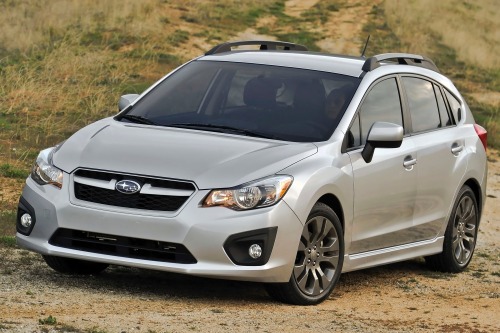
Because the Impreza has an excellent reputation for reliability, standard all-wheel drive, and strong resale value, dealers generally have less negotiating room than they do on many competing compact cars. Even so, buyers who shop carefully and compare several similar vehicles can often negotiate meaningful savings.
| Seller | Typical Negotiating Room |
|---|---|
| Subaru Dealer | 3–6% |
| Independent Dealer | 5–8% |
| Private Seller | 5–10% |
If a dealer is asking $12,995:
- Excellent deal: $11,900–$12,200
- Typical purchase price: $12,200–$12,700
- Paying full asking price: Only if the car has below-average mileage, complete maintenance records, excellent tires and brakes, no history of excessive oil consumption, and passes a comprehensive pre-purchase inspection.
If you follow my preferred negotiating method, detailed in my Used Car Negotiation Price Guide, you'll often do better.
(For "new" cars, see my "New" Car Negotiation Price Guide.)
Additional negotiating leverage could also come from documented maintenance needs such as:
- Older tires or brakes ($800–$1,600)
- Wheel bearing replacement needed ($350–$700 per wheel)
- Suspension wear (struts, bushings, sway bar links: $500–$1,500)
- Oil consumption concerns (should justify a lower purchase price because future engine repairs could become necessary)
- Missing service records (adds uncertainty and should reduce the purchase price)
- Upcoming major maintenance (spark plugs, CVT fluid service, differential fluids, coolant service and drive belts: $500–$1,200)
Pros and Cons
Pros
- Standard all-wheel drive on every model
- Excellent crash-test ratings
- Very good fuel economy for an AWD vehicle
- Comfortable ride and predictable handling
- Generally capable of exceeding 200,000 miles
- Avoids the widespread head gasket failures common on older Subaru engines
- Strong resale value
Cons
- Some FB20 engines consume oil between oil changes
- CVT repairs can be expensive if maintenance has been neglected
- Acceleration is modest
- Road noise is higher than some competitors
- Wheel bearings and suspension components commonly wear with age
What About The WRX and WRX STI Models?
Although they share the Impreza name, the 2013 Subaru WRX and WRX STI are mechanically very different animals. In fact, they continued using the previous-generation platform while the standard 2013 Impreza received Subaru's newer fourth-generation redesign.
If your primary goal is dependable, affordable transportation with excellent all-weather capability, the standard Impreza is the better choice. If you're shopping for performance, however, the WRX and WRX STI deliver a completely different driving experience—but with noticeably higher maintenance and repair costs.
| Model | Overall Reliability | Ownership Costs | Best For |
|---|---|---|---|
| 2013 Impreza | ★★★★☆ | Low to Moderate | Daily commuting and year-round driving |
| 2013 WRX | ★★★☆☆ | Moderate | Performance enthusiasts seeking a practical daily driver |
| 2013 WRX STI | ★★★☆☆ | High | Drivers wanting maximum performance and willing to accept higher ownership costs |
2013 Subaru WRX
The 2013 WRX is powered by Subaru's 2.5-liter turbocharged boxer four-cylinder (EJ255), producing 265 horsepower. It offers dramatically quicker acceleration than the standard Impreza while retaining Subaru's excellent all-wheel-drive system.
Many WRXs have been modified for additional performance, making maintenance history even more important than mileage. An unmodified, well-maintained example is almost always worth paying more for.
Common Problems
- Oil consumption on some engines
- Turbocharger wear on poorly maintained vehicles ($1,500–$2,500)
- Clutch replacement on manual-transmission cars ($1,200–$2,000)
- Timing belt service every 105,000 miles ($900–$1,500)
- Ringland failures, particularly on heavily modified or aggressively tuned engines (engine rebuild: $5,000–$9,000+)
Typical Annual Maintenance Budget: $700–$1,000 for routine maintenance, with a recommended repair reserve of $1,200–$2,000 per year on higher-mileage vehicles.
Buyer Tip: Stock, unmodified WRXs with documented maintenance records command higher prices for good reason. They are generally far less risky than modified examples.
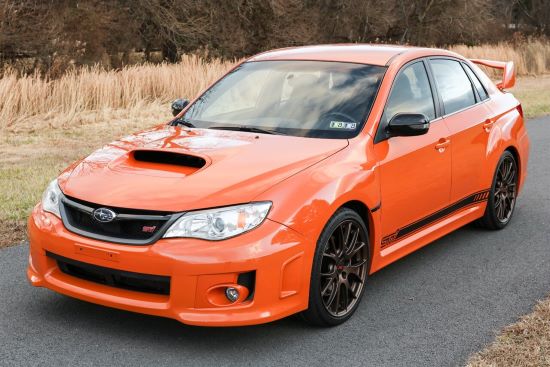
2013 Subaru WRX STI
The WRX STI uses Subaru's 2.5-liter turbocharged boxer four-cylinder (EJ257), producing 305 horsepower. It also features a six-speed manual transmission, Brembo brakes, Driver Controlled Center Differential (DCCD), upgraded suspension, and numerous performance-focused components.
The STI is one of the most capable all-wheel-drive performance cars of its era, but it is also the most expensive of the three models to own and maintain.
Common Problems
- Ringland failures on modified engines (engine rebuild: $5,000–$9,000+)
- Turbocharger wear ($1,500–$2,500)
- Clutch replacement ($1,500–$2,500)
- Timing belt replacement every 105,000 miles ($900–$1,500)
- Wheel bearing wear ($350–$700 per wheel)
- Brembo brake replacement costs are significantly higher than the standard Impreza ($900–$2,000 for pads and rotors, depending on parts used)
Typical Annual Maintenance Budget: $900–$1,300 for routine maintenance, with a recommended repair reserve of $1,500–$2,500+ annually on higher-mileage vehicles.
Buyer Tip: Avoid heavily modified STIs unless you know exactly who performed the work and have complete documentation. Factory-original examples are becoming increasingly desirable and generally hold their value better.
Which One To Buy?
- Choose the 2013 Impreza if your priorities are reliability, fuel economy, lower ownership costs, and dependable year-round transportation.
- Choose the WRX if you want a genuine performance car that can still serve as a practical daily driver. For most enthusiasts, it offers the best balance of performance, reliability, and ownership costs.
- Choose the STI if maximum performance is your priority and you're comfortable budgeting more for maintenance, repairs, insurance, and fuel.
Bottom Line: The standard Impreza is the clear winner for buyers seeking long-term dependability and low ownership costs. The WRX delivers the best balance of performance and practicality, while the STI is best reserved for enthusiasts who fully understand the higher costs that come with owning Subaru's flagship performance model.
Rivals
Other top small sedan or hatchback competitors may not offer all-wheel drive, but instead may feature a sportier ride, a nicer interior, additional high-tech features or better fuel economy, including the Ford Focus, the Mazda3 and the Hyundai Elantra and Elantra GT hatchback.
Alternatives to the Impreza WRX would include the Ford Focus ST as well as the Volkswagen GTI that are stylish, fun-to-drive and have more features, but neither can live up to the same performance level. And the WRX STI is on a different level all together. Another worthy competitor would be its archrival, the Mitsubishi Lancer Evolution.
Also, if you'd like to see the most historically reliable cars, trucks, and SUVs, be sure to read our Most Reliable Vehicles Guide: Best Used Models & Years. This comprehensive guide highlights the top-rated models, best years to buy or avoid, common problems, potential maintenance costs, and more, and may help you make the right choice to meet your needs.
Your Trade-In
Also, it's good to always know the value of your trade-in while you're evaluating your next possible purchase. Here's a good source for a quick and accurate appraisal: free trade-in appraisal.