

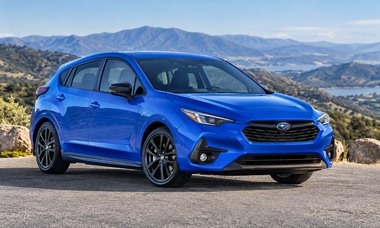
The Subaru Impreza offers something relatively uncommon in a compact car: standard all-wheel drive. It has been sold as a practical sedan or hatchback, an inexpensive older wagon and, in its earlier years, the basis for the considerably more powerful WRX and STI. Those different versions do not all have the same reliability risks.
A well-maintained Impreza can be a durable used car, but choosing the right one requires more than picking a model year. Older 2.5-liter engines raise head-gasket and timing-belt questions. Some early 2012–2015 2.0-liter cars warrant careful oil-consumption screening. Automatic Imprezas from 2012 onward use a continuously variable transmission, or CVT, whose condition deserves a thorough test drive.
This guide covers 2002–2024 U.S.-market Subaru Imprezas. It focuses primarily on the regular Impreza sedan, wagon and hatchback. The WRX and STI are identified where relevant, but their turbocharged engines and performance-car ownership histories should not be confused with those of an ordinary Impreza.
In This Guide You'll Learn
- Which Impreza years make the strongest used-car candidates
- Which older Imprezas are associated with head-gasket leaks
- Which 2.0-liter cars were included in Subaru's oil-consumption program
- What Impreza CVT shudder and valve-body problems can mean
- Which years were included in the brake-light-switch recall
- How long an Impreza can last and what to check at high mileage
- How the regular Impreza differs from the WRX and STI
Subaru Impreza Reliability Overview
The Subaru Impreza has a mixed-to-good reliability history, with substantial differences by age, engine and transmission. Many have provided long service, but an older Impreza with deferred maintenance can become expensive despite a reputation for durability.
The regular 2002–2011 2.5-liter Imprezas use an older engine design and a timing belt. Head-gasket seepage, cooling-system condition, belt replacement and rust are major considerations today. Their conventional automatic transmissions avoid the later CVT question, although any aging transmission still needs inspection.
The 2012 redesign brought the FB20 2.0-liter naturally aspirated four-cylinder boxer engine—a non-turbo engine with horizontally opposed pistons—and a timing chain in place of the older regular Impreza's timing belt. It also introduced a CVT automatic. Subaru documented excessive oil consumption in certain early 2.0-liter cars; that history should be researched by year, transmission and vehicle identification number rather than assigned to every later 2.0-liter Impreza.
The 2017–2023 Impreza offers a newer platform and an improved overall vehicle, but a used example still needs checks for oil leaks, wheel-bearing noise, CVT operation and maintenance. The redesigned 2024 hatchback is a different proposition again: it has appealing features, but it is too recent to claim a proven 200,000-mile record for that specific generation.
Finally, the WRX and STI require separate judgment. Their turbocharged engines, performance components, possible modifications and different generation schedule mean that a reliability conclusion about a regular 2013 Impreza, for example, does not automatically describe a 2013 WRX or STI.
Subaru Impreza Reliability at a Glance
| Model Years | General Buyer Outlook | Main Things to Check |
|---|---|---|
| 2002–2007 | Can be durable, but now heavily condition-dependent | 2.5-liter head gaskets, timing-belt records, rust, cooling system |
| 2008–2011 | Worth considering with strong maintenance records | Head-gasket leaks, timing belt, brake-switch recall, age-related wear |
| 2012–2016 | More efficient, but early years require careful screening | Oil use on applicable early cars, CVT operation, wheel bearings, brake-switch recall |
| 2017–2023 | Among the more appealing modern used choices | CVT behavior, oil seepage, wheel-bearing noise, maintenance history |
| 2024 | Promising redesign; long-term record still developing | Current condition, software operation, warranty and price |
How Many Miles Can a Subaru Impreza Last?
A well-maintained Subaru Impreza can reach 200,000 miles, and some reach 250,000 miles or more. That is a realistic possibility, not a promise about every engine or transmission. The cost of getting there depends greatly on previous maintenance, oil level, corrosion and whether major repairs have already been performed.
At 100,000 miles, an older 2.5-liter car should have a documented timing-belt history. On a newer car, review oil-change records and investigate any CVT symptoms rather than assuming a lack of warning lights proves the transmission is healthy.
At 150,000 miles, examine the whole vehicle: engine leaks or oil use, wheel bearings, suspension, cooling system, exhaust, rust and transmission operation. An Impreza with 150,000 documented miles may be a better purchase than one with 90,000 miles and little evidence of care.
At 200,000 miles, maintenance records and current mechanical condition should determine whether buying or keeping the car makes financial sense. The drivetrain may remain healthy while age-related repairs accumulate elsewhere.
250,000 miles is possible, but I would treat it as the result of a particularly well-kept vehicle, with repairs along the way, rather than the mileage a buyer should automatically expect from an unknown used Impreza.
Subaru Impreza Reliability by Generation
Second Generation: 2002–2007 Subaru Impreza
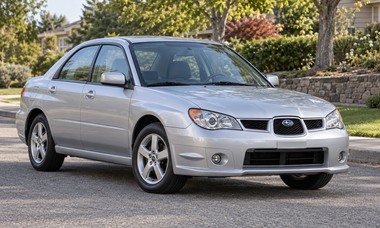
The 2002–2007 Impreza was sold as a sedan and wagon, including the outdoors-styled Outback Sport. Regular models primarily used a naturally aspirated 2.5-liter boxer four-cylinder engine, with a manual or conventional automatic transmission. The WRX and STI were considerably different turbocharged performance versions.
A properly maintained regular Impreza from this generation can still be durable, and its standard all-wheel drive remains useful. But these cars are now approaching or exceeding 20 years old. Their reliability as used cars depends less on how they performed when new and more on whether expensive maintenance was completed and whether rust has damaged the vehicle underneath.
The regular 2.5-liter engine is the main mechanical concern. Head-gasket leakage can develop, and the engine uses a timing belt that needs documented replacement. On an otherwise appealing example, those two items can make the difference between an affordable older Subaru and a car that immediately needs repairs worth a large portion of its purchase price.
Common Problems on 2002–2007 Subaru Imprezas
- Head-gasket leakage on regular 2.5-liter models: Look for oil or coolant seepage at the engine's head-to-block seams, coolant loss and evidence of overheating.
- Overdue timing-belt service: A missing service record leaves an important maintenance expense—and potential engine-damage risk—unresolved.
- Rust and corrosion: Inspect structural underbody areas, suspension mounting points and brake and fuel lines, especially on cars from regions that salt roads.
- Wheel-bearing and suspension wear: Listen for a speed-related hum and clunks over bumps; inspect uneven tire wear.
- Manual clutch wear: Check for slipping under acceleration and difficulty selecting gears.
- Neglected all-wheel-drive components: Check that all four tires match in size and comparable wear, and investigate binding or vibration.
Which 2002–2007 Imprezas Have Head-Gasket Problems?
The regular naturally aspirated 2.5-liter models are the ones I would inspect most carefully for the familiar external head-gasket leaks. A head gasket seals the joint between the engine block and cylinder head. Leakage can leave oil or coolant on the outside of the engine without initially causing obvious trouble during a short test drive.
Have a mechanic identify the source of any wet area; other engine seals can leak too. Ask for documentation if the head gaskets were replaced. A properly repaired car can be more attractive than one with an unresolved leak, but a seller's vague claim that “Subarus all leak a little” is not a substitute for diagnosis.
Does a 2002–2007 Subaru Impreza Have a Timing Belt?
Yes, not a chain. The regular 2.5-liter engine uses a timing belt, and I would want an invoice showing when it was replaced. Find out whether related components were addressed at the same time. If the seller cannot establish the service history, budget for the work when deciding what the car is worth.
This question changes for the regular Impreza beginning in 2012, when Subaru introduced a different 2.0-liter engine with a timing chain. It is another reason not to apply one maintenance rule to every Impreza year.
Are Older Impreza WRX and STI Models as Reliable as the Regular Impreza?
A WRX or STI needs a separate reliability assessment because its turbocharged engine and performance components are different from those of a regular Impreza. The earlier WRX used a turbocharged 2.0-liter engine before moving to a turbocharged 2.5-liter; the STI used its own higher-output turbocharged 2.5-liter setup.
Previous modifications, engine tuning, oil-change history, clutch condition and evidence of hard driving are especially important. I would not use the reputation of a stock 2.5i sedan to justify buying a modified STI without an inspection by someone experienced with performance Subarus.
Buyer Tip: On a regular 2002–2007 car, prioritize timing-belt records, an inspection for head-gasket leakage and a thorough underbody rust check. These are more useful than a seller's general statement that the car has “always been reliable.”
Bottom Line: This generation can still be useful inexpensive transportation, but its condition and completed maintenance now matter far more than its model-year reputation.
Third Generation: 2008–2011 Subaru Impreza
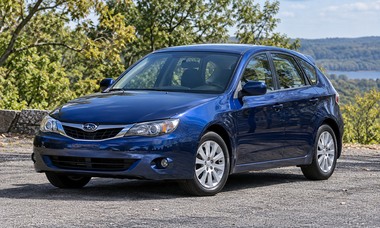
The regular 2008–2011 Impreza came as a sedan or five-door hatchback. It continued to use a naturally aspirated 2.5-liter boxer four-cylinder, paired with a manual or conventional automatic transmission. The Outback Sport offered a distinct hatchback version, while the turbocharged WRX and STI remained performance models with different engines and ownership considerations.
This generation is sometimes mistakenly grouped with 2012–2014 Imprezas. That obscures an important buying distinction: the regular 2008–2011 car still has the older 2.5-liter engine and timing belt. The redesigned regular 2012 car introduced the 2.0-liter engine, timing chain and CVT automatic.
A well-maintained third-generation Impreza can be a reasonable older all-wheel-drive choice, particularly for a buyer who prefers a conventional automatic. But the redesign did not eliminate the need to inspect for head-gasket leakage. At today's ages, suspension condition, corrosion and other accumulated repairs can be just as consequential.
Common Problems on 2008–2011 Subaru Imprezas
- Head-gasket and other engine leaks: Identify any oil or coolant seepage before assuming it is minor or assigning it to a particular gasket.
- Timing-belt maintenance: Obtain proof of replacement on the naturally aspirated 2.5-liter engine.
- Brake-light-switch recall: Applicable 2008–2011 Impreza sedans were included in Subaru's WUE-90 recall; completion should be checked by VIN.
- Wheel-bearing and suspension noise: Listen for humming at road speed and clunks over uneven pavement.
- Rust: Inspect the underbody and suspension attachment areas carefully in snow-belt cars.
- Clutch or automatic-transmission wear: Test the particular transmission rather than assuming that a conventional automatic or manual is trouble-free.
Did the 2008–2011 Impreza Fix the Head-Gasket Problem?
No. A buyer should still inspect the regular naturally aspirated 2.5-liter engine for head-gasket leakage. The condition may appear as external oil or coolant seepage, and a history of overheating raises the stakes considerably.
Do not mistake every wet engine for a failed head gasket. Have the leak traced and priced. Conversely, do not assume a clean-looking engine has had its head gaskets repaired; ask for the invoice if the seller makes that claim.
Why Won't Some Imprezas Shift Out of Park or Show Brake Lights?
A failed brake-light switch can cause those symptoms on an affected Impreza. Subaru's WUE-90 recall included certain 2008–2016 Impreza sedans and 2012–2016 Impreza five-doors. Depending on the vehicle's equipment, the fault could also interfere with push-button starting and systems such as anti-lock brakes, stability control and EyeSight driver assistance.
That means the issue applies to vehicles in this generation and the following one, but the applicable body styles and years differ. Check recall completion using the specific car's VIN. A 2017 Impreza was not included in this particular campaign.
Buyer Tip: Look for timing-belt and cooling-system records, inspect the 2.5-liter engine for leaks and confirm recall completion by VIN. Include a road-speed drive to uncover wheel-bearing or tire noise.
Bottom Line: A cared-for 2008–2011 Impreza can offer a conventional automatic and useful all-wheel drive at a modest price. Head-gasket history, timing-belt service and overall age still determine whether a particular car is a good buy.
Fourth Generation: 2012–2016 Subaru Impreza
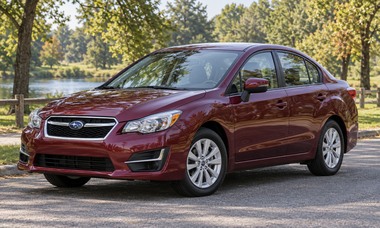
The regular 2012–2016 Impreza represented a major mechanical change. Subaru replaced the older regular 2.5-liter engine with the FB20 2.0-liter naturally aspirated boxer four-cylinder—a non-turbo engine whose pistons move horizontally in opposing pairs. It has a timing chain rather than a scheduled-replacement timing belt. Buyers could choose a manual transmission or Subaru's Lineartronic continuously variable automatic transmission, commonly called a CVT.
Fuel economy improved, and shoppers no longer need to approach a regular 2012 car as though it has the previous generation's 2.5-liter head-gasket and timing-belt combination. However, some early 2.0-liter cars have a documented oil-consumption history, and CVT operation deserves closer attention than the conventional automatic used in earlier regular Imprezas.
There is another important distinction within these years: the 2012–2014 WRX and STI continued on the earlier performance-car design. Their turbocharged powertrains should not be described as though they have the regular 2012–2014 Impreza's new 2.0-liter engine or CVT.
Common Problems on 2012–2016 Subaru Imprezas
- Excessive oil consumption on applicable early 2.0-liter cars: Subaru identified 2012–2013 Imprezas and certain 2014–2015 manual cars in its oil-consumption program. Check records and actual oil use.
- CVT shudder or warning lights: Hesitation, pronounced shudder and stored transmission codes require diagnosis; a valve-body concern does not automatically mean complete CVT failure.
- External oil seepage: Oil from areas such as the timing-chain cover or camshaft carrier is a separate issue from oil being burned inside the engine.
- Rear wheel-bearing howl: Investigate a speed-related noise rather than assuming it comes from tires or the transmission.
- Brake-light-switch recall: Applicable sedans and five-doors fall within WUE-90; check the VIN for completion.
- Manual clutch wear: On a manual car, assess clutch engagement and slipping, particularly at higher mileage.
Which Subaru Impreza Years Have the Oil-Consumption Problem?
Subaru's documented program covered 2012–2013 Imprezas with the 2.0-liter engine and certain 2014–2015 manual-transmission cars. Eligibility could depend on production details and VIN. It is inaccurate to assign that program indiscriminately to every 2012–2019 2.0-liter Impreza.
An engine that consumes excessive oil can run normally during a short test drive. Ask the owner how much oil is added between changes, check the dipstick yourself and request paperwork for any formal oil-consumption test or engine repair. Qualifying repairs under Subaru's program could include replacement of the engine short block—the main assembly containing the cylinders and rotating parts.
What Causes a Subaru Impreza CVT to Shudder or Jerk?
One possible cause is a fault involving the CVT control valve body or torque-converter lockup operation, but the symptom must be diagnosed on the particular car. Subaru issued service information applicable to 2012–2023 Imprezas describing shudder when accelerating from a stop or slowing to a stop, along with specific diagnostic trouble codes.
A CVT operates differently from an automatic with fixed gears, so a different engine sound during acceleration is not itself a failure. Repeated strong shudder, abnormal whining, delayed response or warning lights deserve investigation. Drive the car from cold, in ordinary traffic and at road speed.
Does a Subaru Impreza CVT Valve-Body Failure Mean the Whole Transmission Is Bad?
No. A diagnosed valve-body or solenoid fault does not automatically require replacement of the entire CVT. The valve body controls hydraulic functions within the transmission. A fault there can cause warning lights and shudder, while other possible faults can require different repairs.
Ask for the actual codes and the technician's findings before accepting an estimate for a complete transmission. The general P0700 code tells you that the transmission control system requested a warning light; it does not, on its own, identify the failed part.
Which Subaru Impreza CVTs Received Extended Warranty Coverage?
Subaru issued separate CVT warranty extensions covering eligible 2012–2015, 2016–2017, 2018 and 2019–2020 Imprezas. Each program extended applicable CVT coverage from the original 5 years or 60,000 miles to 10 years or 100,000 miles, whichever came first. These were warranty extensions, not safety recalls.
The programs were announced at different times, so it would be misleading to describe them as one blanket extension for every Impreza CVT. Coverage depends on the specific vehicle, its original warranty start date, mileage and Subaru's eligibility records. It also does not mean that a CVT will fail at 100,000 miles—or that Subaru guarantees it will last beyond that point.
If you're considering an Impreza from these years, ask a Subaru retailer to check its VIN for applicable coverage and obtain documentation of any previous CVT diagnosis or repair. Regardless of warranty status, investigate shudder, warning lights, unusual noise or delayed response before buying.
Buyer Tip: On a 2012–2015 Impreza, check the oil level and ask about oil use between changes, even if the engine sounds healthy. On any CVT-equipped car in this generation, take a substantial test drive and obtain a written diagnosis of any shudder. Check WUE-90 recall completion by VIN on applicable cars.
Bottom Line: This generation brought a more efficient regular Impreza, but its first years need particularly careful oil-consumption screening. CVT condition and maintenance records can materially change the value of an otherwise attractive car.
Fifth Generation: 2017–2023 Subaru Impreza
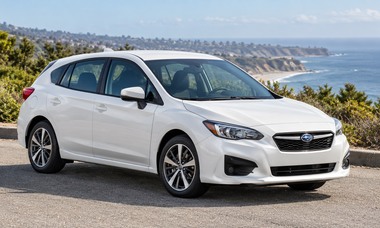
The 2017–2023 Impreza moved to a newer platform and used a revised naturally aspirated 2.0-liter boxer four-cylinder. Buyers could choose a sedan or hatchback, while manual and CVT availability varied by year and trim. These cars offer a more modern interior, safety equipment and driving experience than the older generations.
For many used buyers, this is one of the most appealing portions of the Impreza lineup. It avoids the older regular 2.5-liter timing-belt question, and the particular oil-consumption warranty program discussed above centered on earlier cars. That does not mean the fifth generation should be purchased without inspection or that every later CVT is trouble-free.
As the earlier fifth-generation cars accumulate mileage, wheel bearings, external oil seepage, tires and suspension condition become increasingly relevant. The distinction between an engine leaking oil and one consuming it remains important. Subaru's service information about possible seepage from several engine sealing areas applies to vehicles spanning this generation, but an individual leak still needs to be located and assessed.
Common Problems on 2017–2023 Subaru Imprezas
- CVT shudder or control faults: Subaru's applicable valve-body service information extends through 2023; test the individual transmission and investigate any symptoms.
- Rear wheel-bearing howl: Subaru issued information applicable through 2019 concerning a howling noise associated with the rear hub and backing-plate mounting surface.
- External oil seepage: Trace oil around the timing-chain cover, camshaft carrier or other sealing surfaces before agreeing to a repair estimate.
- Infotainment problems: Test the screen, phone connection, audio and camera; Subaru issued software service information applicable to certain 2019–2023 cars.
- Manual clutch wear: Where a manual was offered, check for slipping, poor engagement or gear-selection problems.
- All-wheel-drive tire condition: Check that tire sizes match and wear is comparable across all four wheels.
Why Does a 2017–2019 Impreza Make a Howling Noise from the Rear?
A rear wheel hub or bearing may be the source, although tires can produce a similar sound. Subaru service information covering 2012–2019 Imprezas describes a rear howl that can be associated with hub and bearing condition and the backing plate's mounting surface.
The documented applicability overlaps the 2017–2019 portion of this generation. I would not extend that bulletin's stated years to every 2020–2023 car. On any Impreza with a road-speed howl, have the source diagnosed; if a bearing was recently replaced and the noise returned, ask what else was inspected.
Are 2017–2023 Subaru Impreza CVTs Reliable?
Many work normally, but a later model year does not eliminate the need to test the specific transmission. Subaru's valve-body service information includes Imprezas through 2023. A bulletin's range identifies cars to which a diagnostic procedure may apply; it does not mean every car in that range will develop the problem.
Include acceleration from a stop, gentle slowing, steady cruising and reverse engagement in the drive. Ask about prior warning lights or repairs. An unresolved shudder or abnormal noise warrants diagnosis before purchase.
Is a Manual Impreza More Reliable Than a CVT Impreza?
Neither is automatically the safer purchase. A manual avoids CVT-specific faults, but its clutch and gearbox can be worn or damaged. A sound CVT can provide good service, while a car with existing shudder or warning lights may become expensive.
On a manual, check for clutch slip and smooth gear engagement. On a CVT, assess behavior during an extended drive and review repair history. The condition and price of the two actual cars matter more than a blanket transmission preference.
Buyer Tip: Give a 2017–2023 candidate a proper road-speed drive, check for rear howling and test its transmission and electronic features. Identify an external oil leak by location rather than treating it as proof of the early 2.0-liter oil-consumption issue.
Bottom Line: A well-maintained fifth-generation Impreza is a strong place to start shopping for a modern used all-wheel-drive compact car. Its reputation should still be tested against the condition and records of the specific vehicle.
Sixth Generation: 2024 Subaru Impreza
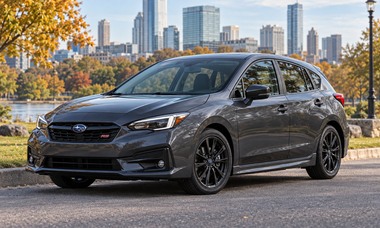
The redesigned 2024 Impreza became hatchback-only in the United States. Base and Sport models use a naturally aspirated 2.0-liter boxer four-cylinder; the RS uses a stronger naturally aspirated 2.5-liter boxer four-cylinder. All have a CVT automatic. Unlike some earlier Imprezas, this generation does not offer a manual transmission.
The RS deserves a clear distinction from both older regular 2.5-liter Imprezas and the WRX. It is a more powerful version of the ordinary hatchback, not a turbocharged performance model, and an older engine's problems should not be assigned to it merely because the displacement is also 2.5 liters.
This generation remains too young for a confident high-mileage reliability verdict. Its assessment should focus on present condition, documented maintenance, warranty coverage, price and the operation of its electronic equipment. A 2024 Impreza may still be priced close to a new one, making the complete purchase cost particularly relevant.
Things to Check on a Used 2024 Subaru Impreza
- CVT operation: Test low-speed response, acceleration, slowing to a stop and reverse engagement.
- Infotainment equipment: Check touchscreen controls, phone connection, audio and camera functions on the particular trim.
- Warranty start date: Determine what original coverage remains rather than assuming it begins when you purchase the car used.
- Recall status: Check the VIN for any open safety campaigns.
- Price against a new car: Compare actual out-the-door figures, not just advertised prices.
Is the 2024 Subaru Impreza RS More Reliable Than the 2.0-Liter?
There is not yet enough long-term evidence to declare the 2024 RS 2.5-liter more or less reliable than the Base and Sport 2.0-liter. The RS's established advantage is stronger performance. Choose between them using condition, driving preference, equipment and total purchase cost—not a prediction of which will reach 200,000 miles first.
Buyer Tip: Confirm whether the car is a 2.0-liter Base or Sport or a 2.5-liter RS. Check remaining warranty, electronic functions and its price relative to a new Impreza.
Bottom Line: The 2024 redesign is an appealing all-wheel-drive hatchback, but its long-term durability is still developing. Evaluate the specific vehicle and deal rather than transferring older Impreza problems—or older Impreza successes—to it.
What Are the Best Subaru Impreza Years to Buy?
For a newer used Impreza, I would begin with well-maintained examples from roughly 2018–2023, then compare their mileage, condition and price. These cars offer a more modern platform and substantial used-car availability without requiring a buyer to accept the particular oil-consumption history associated with some early 2012–2015 cars.
A clean 2015–2016 regular Impreza can also be worth considering when the oil-use and CVT histories are reassuring. It may provide a useful price advantage over the 2017 redesign. An older 2008–2011 2.5-liter car can work for a smaller budget, but I would want convincing head-gasket, timing-belt, rust and maintenance information.
I would not declare one single Impreza year the universal winner. A cared-for 2018 with excellent records can be a better purchase than a neglected 2021. The point of starting with a preferred year group is to narrow the search, not to waive the inspection.
Which Subaru Impreza Years Should You Avoid or Inspect Most Carefully?
I would give 2012–2014 regular Imprezas particularly careful oil-consumption and CVT screening, rather than labeling every car from those years an automatic avoid. Subaru's documented oil-consumption program makes an unexplained low oil level or history of frequent topping-off especially important on an applicable vehicle. Some 2015 manual cars also fall within the program's stated coverage, so 2015 should not be treated as an absolute dividing line.
On any CVT-equipped Impreza, learn whether previous transmission concerns were diagnosed or repaired. Subaru issued separate CVT warranty extensions for eligible 2012–2020 cars, but coverage depends on the individual vehicle's warranty start date and mileage. A program that has expired for that vehicle will not pay for a new failure today.
For 2002–2011 naturally aspirated 2.5-liter cars, an unresolved head-gasket leak, missing timing-belt history, overheating evidence or serious structural rust would make me reconsider the purchase regardless of the asking price.
I would also be cautious about an extensively modified WRX or STI without specialist records. These are different cars mechanically and are often driven differently from a regular Impreza.
Finally, don't label the 2024 redesign a year to avoid simply because it is the first year of a generation. It is still too young to make a confident long-term judgment either way.
Which Subaru Impreza Powertrain Would I Choose for a High-Mileage Used Car?
For an ordinary used Impreza, I would first investigate a well-maintained later 2.0-liter regular model with documented oil changes and a transmission that behaves normally. I would rather have that than select an older or lower-mileage car solely because its engine or transmission sounds simpler on paper.
If comparing 2008–2011 cars, a naturally aspirated 2.5-liter with a conventional automatic can be attractive to someone avoiding a CVT—but only if the timing belt, head gaskets, cooling system and rust situation are sound. The savings from buying an older car disappear quickly if several overdue jobs arrive together.
For 2012–2016, the key is separating early 2.0-liter oil-consumption history from the condition of the particular engine. On a CVT car, investigate any shudder or warning light before purchase. A manual car trades CVT concerns for clutch and manual-gearbox inspection; it isn't automatically immune to expensive repairs.
At high mileage, maintenance and current condition beat a blanket engine ranking. A repair invoice, stable oil level and convincing test drive tell you more than a seller saying that a particular Subaru engine is “bulletproof.”
How Long Does a Subaru Impreza CVT Last?
An Impreza CVT can last beyond 150,000 miles, and some original units reach 200,000 miles or more, but neither mileage is guaranteed for a particular transmission. The 200,000–250,000-mile potential lifespan discussed earlier applies to a well-maintained vehicle; it is not a promised lifespan for its original transmission.
At 100,000 miles, a CVT that operates smoothly may still have substantial life left. Review its service and repair history, and investigate any previous warning lights. At 150,000 miles, I would put considerably more weight on how it behaves during a thorough test drive and whether any prior CVT work is documented. Reaching 200,000 miles on the original CVT is possible, but it should be treated as a favorable outcome rather than a mileage every Impreza buyer can expect.
Test the transmission from a cold start through ordinary traffic and a road-speed drive. Repeated shudder, unusual whining, delayed response, warning lights or unresolved diagnostic codes warrant investigation. Ask whether earlier work involved software, the valve body, torque converter or the complete CVT; those repairs have very different implications.
Subaru issued separate CVT warranty extensions for eligible 2012–2020 Imprezas, each with a 10-year/100,000-mile limit. That limit describes warranty coverage, not how long the transmission is expected to last. Check the particular car's VIN, original warranty start date and mileage rather than assuming coverage remains available.
What Are the Most Expensive Subaru Impreza Problems?
Major engine and transmission repairs carry the greatest financial risk. On older 2.5-liter cars, head-gasket work can be substantial, especially if overheating caused further damage. On an early 2.0-liter car with severe oil consumption, internal engine work can exceed the value of an inexpensive vehicle.
A CVT concern has a wide range of possible outcomes. A diagnosed valve-body repair is different from replacing the complete transmission. This is why an estimate based only on a warning light or a seller's description is not enough.
Other repairs—including wheel bearings, air conditioning, suspension, clutch work and extensive corrosion—may be less dramatic individually but can add up on a low-priced older Impreza.
Typical Subaru Impreza Maintenance and Repair Costs
These are broad budgeting ranges, not quotes for a particular Impreza. Year, labor rate, parts choice and the actual diagnosis can change the bill substantially.
| Service or Repair | Approximate Cost |
|---|---|
| Oil and filter change | $60–$120 |
| Four matching tires | $500–$1,000+ |
| Spark plugs | $200–$500+ |
| Brake pads and rotors | $400–$850 per axle |
| Wheel hub and bearing | $350–$800+ each |
| Older 2.5-liter timing-belt service | $700–$1,500+ |
| Manual-transmission clutch replacement | $1,200–$2,500+ |
| Head-gasket repair on an older 2.5-liter | $1,800–$4,000+ |
| CVT valve-body-related repair | $1,200–$2,500+ |
| Major engine repair or replacement | $3,500–$8,000+ |
| Complete CVT replacement | $4,000–$8,000+ |
Get a vehicle-specific estimate before using any of these figures to negotiate. For example, replacing a wheel bearing is very different from correcting a damaged mounting surface as well; a small oil seep is very different from repairing severe oil consumption.
What Maintenance Does a Subaru Impreza Need After 100,000 Miles?
After 100,000 miles, confirm the work required by that Impreza's actual year, engine and transmission. The older 2.5-liter timing-belt cars and newer 2.0-liter timing-chain cars do not have identical needs.
- Older 2.5-liter timing belt: Obtain proof of replacement and check what related components were serviced.
- Engine oil: Review change intervals, check the level and ask about any additions between changes, particularly on early 2.0-liter cars.
- Cooling system and leaks: Older head-gasket cars deserve particular attention, but every high-mileage engine should be checked for overheating evidence and fluid loss.
- Transmission or clutch: Investigate CVT shudder, warning lights or previous repairs; on a manual, assess clutch slip and gear engagement.
- Wheel bearings and suspension: Road-speed howling, uneven tire wear and suspension noise become more consequential as mileage climbs.
- All-wheel-drive tires: Verify that the tires are the correct size and comparable in wear, and investigate any binding or drivetrain vibration.
Is a Subaru Impreza With 100,000 Miles a Good Buy?
Yes, a 100,000-mile Impreza can be a good buy if its maintenance history and mechanical condition support the price. It is not automatically near the end of its life. Conversely, reaching only 70,000 miles does not excuse low oil, a shuddering CVT, serious rust or missing service records.
For an older 2.5-liter car, timing-belt and head-gasket history loom large. For an early 2.0-liter car, establish whether it consumes oil. For any CVT car, drive it long enough to discover symptoms that a short trip might miss.
Is 150,000 Miles Too Much for a Subaru Impreza?
Not necessarily, but at 150,000 miles I would buy the individual car rather than the model's reputation. A documented, rust-free vehicle with a healthy engine and transmission may still have considerable useful life. An inexpensive car facing several major repairs may not be a bargain.
At this point, assess the accumulated cost of any needed work: tires, suspension, bearings, leaks, air conditioning and transmission or clutch issues. A pre-purchase inspection is especially valuable because even moderate repairs can represent a large portion of the vehicle's price.
What Should You Check Before Buying a Used Subaru Impreza?
These checks are particularly important to an Impreza, beyond an ordinary used-car inspection:
- Identify the engine and version: Confirm whether it is a regular 2.5-liter, regular 2.0-liter, 2024 RS 2.5-liter, WRX or STI. The same nameplate does not mean the same mechanical risks.
- Establish oil use and leak history: Check the dipstick and ask how much oil is added between changes; have external leaks identified separately.
- Check older 2.5-liter records: Obtain timing-belt documentation and inspect for head-gasket seepage or overheating evidence.
- Drive the transmission thoroughly: Check a CVT for shudder and warnings, or a manual for clutch slip and difficult shifts.
- Inspect tires and listen for bearings: Check matching tire sizes and wear across all four wheels, and listen for speed-related howling.
- Check the VIN: Verify open recalls, including the brake-switch recall on applicable older cars, and obtain paperwork for completed engine or transmission work.
Subaru Impreza Pros and Cons
Pros
- Standard all-wheel drive across regular U.S.-market Imprezas
- Practical sedan and hatchback choices across much of the model's history
- Good potential lifespan when maintained properly
- Compact size and useful all-weather traction
- Later models offer more modern safety and convenience features
- Some older cars can offer inexpensive transportation when carefully selected
Cons
- Older naturally aspirated 2.5-liter engines require head-gasket and timing-belt scrutiny
- Some early 2.0-liter cars have documented oil-consumption history
- CVT symptoms can make a cheap used car financially risky
- All-wheel drive makes tire condition and matching important
- Rust can outweigh mechanical strengths on older snow-belt cars
- WRX and STI maintenance and repair costs can be substantially higher
Buyer Takeaway: The best Impreza purchase is usually the one whose particular engine and transmission have been maintained well, not simply the newest or lowest-mileage one you can find. I would start with a documented later regular Impreza, then compare condition and price against carefully inspected older examples.
Subaru Impreza vs. Other Used Compact Cars
Honda Civic: The Honda Civic is a natural comparison for shoppers prioritizing fuel economy and long-term compact-car ownership. The Impreza's standard all-wheel drive is its clearest distinction, while the best Civic choice also depends on year and engine.
Toyota Corolla: The Toyota Corolla is a strong alternative when low ownership drama is the priority. A comparable Impreza may offer more all-weather traction, but it deserves the additional engine, CVT and tire checks described here.
Mazda3: The Mazda3 can offer a more engaging drive and upscale feel, depending on year. Compare actual condition and available drivetrain rather than assuming either compact is automatically the better value.
Subaru Legacy: If you like Subaru all-wheel drive but want a larger sedan, the Subaru Legacy is worth considering. Its engine and transmission history also varies by year, so it needs its own model-specific research.
Final Subaru Impreza Reliability and Buyer Summary
The Subaru Impreza can be a good used car, but its best years and biggest problems cannot be reduced to one rule covering 2002–2024. The older naturally aspirated 2.5-liter cars require head-gasket, timing-belt and rust scrutiny. The earliest regular 2.0-liter cars deserve careful oil-use screening. CVT-equipped examples should be judged by their actual operation and diagnostic history.
For most buyers seeking a modern daily driver, I would begin with a well-maintained 2018–2023 regular Impreza. A sound 2015–2016 car can provide value if its history is reassuring, while older cars can work on a tighter budget when major maintenance and corrosion have been properly evaluated.
The 2024 hatchback offers a newer design and a choice between 2.0-liter models and the stronger 2.5-liter RS. It is too new for a definitive long-term reliability judgment, so evaluate its present condition, warranty and price on their own merits.
Whichever year you consider, take an extended drive, check the oil and tires, review records and have the vehicle inspected. A specific Impreza with evidence of good care is a better bet than one chosen only because an online list calls its model year reliable.
Your Trade-In
Also, it's good to always know the value of your trade-in while you're evaluating your next possible purchase. Here's a good source for a quick and accurate appraisal: free trade-in appraisal.
What's Next?
Buying Used?
If you may be buying a used car soon, see how to identify the dealerships most motivated to get your sale, and therefore most ready to lower their price more than the rest. This is often the difference between getting a good price and getting a great one.
You'd Consider New If?
Would "new" be worth a look if you could buy close to or even below invoice, or at least at the best possible price when demand is high?
Which Dealer Fees Are Actually Required?
Beware of "dealer fees". Before agreeing to a dealer's numbers, see which dealer fees are legitimate, which can be negotiated, and which can be avoided.