

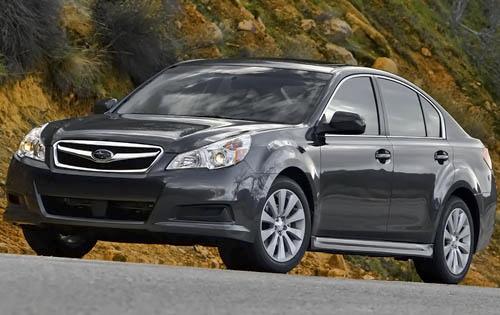
The Subaru Legacy has long occupied a unique place in the midsize sedan market. While competitors such as the Toyota Camry and Honda Accord focused primarily on front-wheel drive, Subaru built its reputation around standard all-wheel drive, excellent traction in poor weather, and durable horizontally opposed "boxer" engines.
That combination has earned the Legacy an exceptionally loyal owner base, particularly in northern states where snow and ice are common. Many owners keep their Legacys for well over a decade, and it's not unusual to find examples with 250,000 miles or more still serving as dependable daily drivers.
However, not every Legacy generation has been equally reliable. Earlier four-cylinder engines became known for head gasket failures, some turbocharged models require significantly more maintenance, and Subaru's transition to continuously variable transmissions (CVTs) introduced new buying considerations.
The good news is that Subaru steadily improved the Legacy over the past two decades. By understanding which engines and model years perform best, buyers can find a Legacy that offers years of dependable service while avoiding the most expensive repair risks.
This guide covers every Subaru Legacy sold from 2000 through 2023, including generation-by-generation reliability, common problems, engine comparisons, maintenance costs, expected lifespan, and the best model years to buy.
What You'll Learn
- Which Subaru Legacy years are the most reliable
- The generations that deserve additional inspection
- How each Legacy generation compares for long-term durability
- Which Subaru engines have the strongest reliability records
- The most common problems owners experience
- Typical maintenance and repair costs
- How long a Subaru Legacy can realistically last
- Which Legacy offers the best value for your budget
Relative Reliability: See the top rated sedans for reliability: Most Reliable Vehicles Guide: Best Models & Years. This comprehensive guide on cars, trucks, and SUVs, highlights the best years to buy or avoid, common problems, potential maintenance costs, and more, and will likely help you make the right choice to meet your needs.
Subaru Legacy Reliability at a Glance
- Overall Reliability: Very Good. Most generations provide excellent long-term durability when properly maintained.
- Best Used Years: 2005–2009, 2015–2019, and 2020–2023.
- Years Requiring Extra Inspection: 2000–2004 and some 2010–2014 models.
- Most Reliable Engine: 3.6-liter flat-six (EZ36).
- Best Balance of Performance and Reliability: 2020–2023 2.4-liter turbocharged flat-four.
- Typical Lifespan: 200,000–300,000 miles.
- Ownership Costs: Slightly higher than a Toyota Camry or Honda Accord but generally lower than most European competitors.
- Overall Buying Recommendation: Strongly recommended when the correct engine and model year are selected.
Buyer Tip: Maintenance history is especially important on any used Subaru. Oil changes, cooling-system service, transmission maintenance, and documented repairs are far more important than simply finding the lowest-mileage Legacy.
Subaru Legacy Generations at a Glance
Third Generation (2000–2004)
- Simple, durable design.
- Excellent all-weather capability.
- Known for head gasket issues on four-cylinder models.
- H6 models are especially desirable.
Fourth Generation (2005–2009)
- Improved refinement and crash safety.
- Outstanding handling for a family sedan.
- Available turbocharged GT models.
- One of the most popular Legacy generations.
Fifth Generation (2010–2014)
- Larger interior and smoother ride.
- Introduction of the CVT on many models.
- Early FB engines experienced oil consumption on some vehicles.
- Excellent 3.6R models.
Sixth Generation (2015–2019)
- Improved reliability across the lineup.
- Refined CVT operation.
- Excellent safety ratings.
- Comfortable long-distance cruiser.
Seventh Generation (2020–2023)
- Powered by Subaru Global Platform.
- Improved ride quality and handling.
- New turbocharged XT models.
- One of Subaru's most refined sedans.
Bottom Line: Subaru steadily improved the Legacy throughout this period. While earlier generations require more careful shopping, later models have become increasingly dependable without sacrificing the all-weather capability that defines the Legacy.
Third Generation Subaru Legacy Reliability (2000–2004)
The third-generation Legacy represented Subaru at its mechanical best. It remained relatively simple, easy to maintain, and exceptionally capable in poor weather thanks to Subaru's symmetrical all-wheel-drive system.
Many examples remain on the road today despite being more than twenty years old. Their continued survival says a great deal about the durability of the basic platform.
Unfortunately, this generation also became known for one of Subaru's most famous reliability concerns: external head gasket leaks on naturally aspirated four-cylinder engines.
Reliability Overview
Overall reliability is very good, but engine choice matters considerably. The naturally aspirated 2.5-liter flat-four can provide excellent longevity if the head gaskets have already been replaced with updated components. Buyers who find documented head gasket repairs often end up with an extremely dependable vehicle.
The optional 3.0-liter flat-six (EZ30) largely avoids this issue and is widely regarded as one of Subaru's most durable engines.
Generation at a Glance
- Overall Reliability: Very Good
- Best Years: 2003–2004
- Engine to Buy: 3.0-liter flat-six (EZ30)
- Best Four-Cylinder: 2.5-liter flat-four (EJ251/EJ253) with documented head gasket replacement.
- Watch For: Head gasket leaks, rust, suspension wear, aging rubber components.
- Expected Lifespan: 250,000–300,000 miles.
2000–2002 Models
The early years of the third generation offer exceptional value for buyers willing to perform careful inspections. Their drivetrains are generally robust, and both the automatic and manual transmissions have earned strong reputations for longevity.
The primary concern is the original head gasket design used on naturally aspirated 2.5-liter engines. External coolant or oil leaks often develop as mileage increases, typically between 100,000 and 150,000 miles.
Fortunately, once repaired using Subaru's updated gaskets, the problem rarely returns.
Buyer Tip: Ask for receipts showing head gasket replacement. This single repair can dramatically increase the value of an older Legacy.
2003–2004 Models
These later third-generation models benefited from ongoing refinements and remain among the most desirable older Legacys. Interior quality improved slightly, and Subaru continued addressing minor durability issues throughout production.
The H6-powered models are especially attractive today because they avoid the four-cylinder's head gasket concerns while delivering smooth performance and impressive longevity.
Although age-related maintenance becomes inevitable after two decades, major drivetrain failures remain uncommon.
Bottom Line: A well-maintained 2003–2004 Legacy, particularly one equipped with the EZ30 flat-six, remains one of the best values in the used AWD market.
Common Problems (2000–2004)
Head Gasket Leaks
This is the defining issue of the third-generation Legacy. Most leaks begin externally, allowing coolant or oil to seep from the cylinder heads rather than immediately causing internal engine damage.
Many vehicles continue operating for years after repair using Subaru's updated gasket design.
Rust
Vehicles operated in northern climates often develop rust around the rear subframe, suspension mounting points, rocker panels, and wheel arches.
Wheel Bearings
Some higher-mileage Legacys require front or rear wheel bearing replacement, especially if driven extensively on rough roads.
Suspension Wear
After twenty years, expect replacement of struts, bushings, sway bar links, and other suspension components as normal maintenance.
Buyer Tip: Rust is often a bigger concern than mechanical reliability on today's surviving third-generation Legacys. A rust-free example is usually worth paying extra for.
Fourth Generation Subaru Legacy Reliability (2005–2009)
The fourth-generation Legacy is considered by many Subaru enthusiasts to be the company's high point. It combined significantly improved refinement with excellent driving dynamics, strong safety performance, and continued all-weather capability.
This generation also introduced the highly regarded Legacy GT, giving buyers a legitimate sports sedan while maintaining the practicality that had always defined the Legacy.
Reliability Overview
Overall reliability remained very good, although engine selection once again plays an important role. Naturally aspirated models generally provide lower ownership costs, while turbocharged GT models require more attentive maintenance and higher repair budgets.
Generation at a Glance
- Overall Reliability: Very Good to Excellent
- Best Years: 2007–2009
- Best Engine: 3.0-liter flat-six (EZ30)
- Best Four-Cylinder: 2.5-liter flat-four (EJ253)
- Performance Choice: 2.5-liter turbocharged flat-four (EJ255) Legacy GT
- Watch For: Turbo maintenance history, head gaskets on naturally aspirated models, suspension wear.
- Expected Lifespan: 250,000–300,000 miles.
2005–2006 Models
The fourth-generation Legacy represented a major step forward for Subaru. The chassis became noticeably stiffer, ride quality improved, and the Legacy developed a reputation as one of the best-handling family sedans available with all-wheel drive.
Naturally aspirated models remained dependable daily drivers, while the Legacy GT introduced impressive turbocharged performance that appealed to driving enthusiasts.
As with the previous generation, buyers considering four-cylinder models should verify whether the head gaskets have been replaced. Although improvements were made, the naturally aspirated EJ engines can still develop external leaks as mileage increases.
Buyer Tip: Don't buy a Legacy GT solely because it's inexpensive. Turbocharged models reward attentive owners but can become expensive if previous maintenance was neglected.
2007–2009 Models
These are widely considered the best years of the fourth generation. Subaru refined numerous mechanical and interior details while maintaining the excellent driving characteristics that made this generation so popular.
The naturally aspirated 2.5-liter flat-four continued offering dependable service with reasonable operating costs, while the 3.0-liter flat-six remained one of Subaru's finest engines.
The Legacy GT also matured into an outstanding performance sedan, although buyers should expect higher maintenance costs than non-turbo models.
Bottom Line: For many buyers, the 2007–2009 Legacy offers the best balance of reliability, driving enjoyment, affordability, and long-term ownership satisfaction.
Common Problems (2005–2009)
Head Gasket Leaks (Naturally Aspirated Models)
External head gasket seepage remains possible on four-cylinder EJ engines, although later vehicles generally fare better than earlier generations.
Turbocharger Maintenance (Legacy GT)
The turbocharged EJ255 can provide excellent longevity when oil changes are performed consistently using high-quality oil. Neglected maintenance can shorten turbocharger life considerably.
Wheel Bearings
Some owners report wheel bearing replacement after higher mileage. Replacement bearings typically provide many additional years of service.
Suspension Components
Struts, control arm bushings, sway bar links, and ball joints eventually wear after extended use but are considered normal maintenance items.
Buyer Tip: Request service records showing frequent oil changes on turbocharged models. Fresh oil is one of the most important factors affecting EJ255 longevity.
Fifth Generation Subaru Legacy Reliability (2010–2014)
The fifth-generation Legacy represented Subaru's shift toward a more mainstream midsize sedan. Interior space increased substantially, ride quality became softer, and the cabin grew quieter, making the Legacy a more comfortable family car.
Mechanically, this generation introduced one of Subaru's most significant engineering transitions. The long-running EJ-series engine gradually gave way to the newer FB-series engine, while continuously variable transmissions (CVTs) became increasingly common.
Although this generation offers many strengths, buyers should understand a few reliability concerns before purchasing.
Reliability Overview
Overall reliability remains good, but this generation deserves more careful shopping than either the fourth or sixth generation. Early FB engines developed oil consumption complaints on some vehicles, while the first-generation Lineartronic CVT benefited from regular fluid maintenance despite Subaru originally describing it as "lifetime" fluid.
The optional 3.6-liter flat-six (EZ36) largely avoids the oil consumption concerns affecting some four-cylinder models and is widely regarded as the most dependable powertrain available during these years.
Generation at a Glance
- Overall Reliability: Good to Very Good
- Best Years: 2013–2014
- Best Engine: 3.6-liter flat-six (EZ36)
- Best Four-Cylinder: Updated 2.5-liter flat-four (FB25)
- Watch For: Oil consumption, CVT service history, wheel bearings.
- Expected Lifespan: 200,000–275,000 miles.
2010–2012 Models
Early fifth-generation Legacys provide excellent comfort and year-round capability, but buyers should pay close attention to maintenance history.
Some 2.5-liter flat-four (FB25) engines experienced excessive oil consumption because of piston ring issues. Not every engine was affected, but enough owners reported the problem that these years deserve additional inspection.
The first-generation CVT also receives considerable attention from shoppers. In practice, most units prove durable when serviced regularly, but vehicles with unknown maintenance histories deserve closer scrutiny.
Buyer Tip: Ask whether the owner has ever needed to add oil between oil changes. Also request documentation of CVT fluid service, even if Subaru originally described the fluid as lifetime.
2013–2014 Models
By the final years of the generation, Subaru had addressed many early production concerns. Oil consumption complaints became less common, software updates improved CVT operation, and overall quality continued improving.
The 3.6R models stand out as particularly desirable. The naturally aspirated six-cylinder delivers smooth power, avoids turbocharger complexity, and has established an excellent long-term reliability record.
Many enthusiasts specifically seek out the 3.6R because it combines Subaru's dependable all-wheel-drive system with one of the company's strongest naturally aspirated engines.
Bottom Line: Buyers interested in this generation should focus on 2013–2014 models whenever possible, particularly those equipped with the EZ36 flat-six.
Common Problems (2010–2014)
Oil Consumption
Some early FB25 engines consumed oil between scheduled oil changes. Many owners experienced no issues, but buyers should verify oil usage before purchasing.
CVT Maintenance
The Lineartronic CVT generally proves dependable, but regular fluid changes appear to improve long-term durability. A smooth, quiet test drive is essential.
Wheel Bearings
As with earlier generations, some owners eventually replace wheel bearings after higher mileage.
Suspension Wear
Control arm bushings, sway bar links, and struts become common maintenance items after approximately 150,000 miles.
Buyer Tip: Don't automatically dismiss a CVT-equipped Legacy. A properly maintained transmission with documented service history is usually a far safer purchase than one with unknown maintenance.
Sixth Generation Subaru Legacy Reliability (2015–2019)
The sixth-generation Legacy marked another significant improvement in Subaru quality. Interior materials became noticeably more upscale, road noise decreased, and Subaru refined nearly every aspect of the driving experience.
By this point, Subaru had accumulated years of experience with both the FB engine family and the Lineartronic CVT, leading to better overall reliability than many buyers expected.
Reliability Overview
Overall reliability is excellent. Serious engine failures remain uncommon, CVT performance improved considerably, and routine maintenance requirements remain reasonable for an all-wheel-drive sedan.
The available 3.6R continued offering exceptional durability until it was discontinued after the 2019 model year.
Generation at a Glance
- Overall Reliability: Excellent
- Best Years: 2017–2019
- Best Engine: 3.6-liter flat-six (EZ36)
- Best Four-Cylinder: 2.5-liter flat-four (FB25)
- Watch For: Routine maintenance, wheel bearings, battery replacement.
- Expected Lifespan: 250,000–300,000 miles.
2015–2016 Models
The redesigned Legacy immediately impressed buyers with its quiet ride, comfortable interior, and improved refinement. Subaru also made meaningful improvements to the CVT, reducing many of the concerns associated with earlier versions.
Routine maintenance became the primary ownership expense, and widespread catastrophic failures remained uncommon.
2017–2019 Models
These later sixth-generation models represent some of the best used Legacys currently available. Subaru continued refining build quality while maintaining strong drivetrain durability.
The 3.6R remains especially desirable because it combines smooth performance with one of Subaru's most dependable engines. Four-cylinder models also provide excellent long-term value when properly maintained.
Bottom Line: The 2017–2019 Legacy is among the strongest recommendations in this guide, offering an excellent balance of reliability, comfort, safety, and value.
Common Problems (2015–2019)
Wheel Bearings
Some higher-mileage vehicles eventually require wheel bearing replacement, although failures are generally less common than on earlier generations.
Battery Replacement
Most original batteries require replacement after five to seven years depending on climate and driving habits.
Routine Suspension Wear
Struts, sway bar links, and bushings eventually wear like any midsize sedan but are not considered design flaws.
Buyer Tip: A 2017–2019 Legacy with complete service records is one of the best values in the used AWD sedan market today.
Seventh Generation Subaru Legacy Reliability (2020–2023)
The seventh-generation Legacy is Subaru's most refined midsize sedan to date. Built on the Subaru Global Platform, it offers a quieter cabin, improved crash protection, sharper handling, and better ride quality than any previous Legacy.
Just as importantly, Subaru introduced an entirely new turbocharged engine while continuing to improve the reliability of its naturally aspirated models and CVT transmission.
Although production numbers have declined as buyers increasingly choose SUVs, the Legacy remains one of the most dependable all-wheel-drive sedans available.
Reliability Overview
Overall reliability is excellent. By this point Subaru had years of experience refining both the FB-series engine family and the Lineartronic CVT, resulting in fewer owner complaints than earlier generations.
The optional turbocharged XT models also introduced the new 2.4-liter turbocharged flat-four, which has quickly earned a strong reputation for combining impressive performance with excellent durability.
Generation at a Glance
- Overall Reliability: Excellent
- Best Years: 2022–2023
- Best Engine: 2.4-liter turbocharged flat-four (FA24F)
- Best Value: 2.5-liter flat-four (FB25)
- Watch For: Routine maintenance and software updates.
- Expected Lifespan: 250,000–300,000 miles.
2020–2021 Models
The redesigned Legacy immediately became quieter, smoother, and more comfortable than its predecessor. Interior quality improved substantially, and Subaru's EyeSight safety technology continued earning excellent safety ratings.
Both available engines have established encouraging reliability records, with no widespread mechanical defects emerging during the early years of production.
Buyer Tip: Verify that all factory software updates have been completed during routine dealership service, particularly on vehicles equipped with the large infotainment display.
2022–2023 Models
By the final years of the generation, Subaru had refined nearly every aspect of the Legacy. Build quality remained excellent, and owner satisfaction continued improving.
The 2.4-liter turbocharged XT models provide acceleration that rivals many entry-level luxury sedans while maintaining Subaru's reputation for dependable all-weather transportation.
Bottom Line: The 2022–2023 Legacy ranks among the best used all-wheel-drive family sedans currently available.
Common Problems (2020–2023)
Infotainment Software
Some owners have required software updates for the touchscreen infotainment system. These concerns are generally minor and do not affect mechanical reliability.
Battery Replacement
As with most modern vehicles, battery replacement is typically required after several years of service.
Routine Maintenance
Oil changes, brakes, tires, filters, and fluid services remain the primary ownership expenses.
Buyer Tip: Most issues reported on this generation involve electronics rather than expensive mechanical failures, making it one of Subaru's strongest reliability performers.
Subaru Legacy Reliability by Engine
Engine selection has a greater impact on Legacy reliability than model year alone. Subaru has produced several outstanding engines over the past two decades, but a few require more careful shopping than others.
2.5-Liter Flat-Four (EJ251 / EJ253)
Used In: 2000–2009 naturally aspirated Legacy models
The EJ-series engine helped establish Subaru's reputation for dependable all-wheel-drive vehicles. It is mechanically simple, uses a timing belt, and routinely exceeds 250,000 miles when properly maintained.
Its primary weakness is external head gasket leakage. Fortunately, engines repaired using Subaru's updated gasket design generally provide many additional years of reliable service.
| Category | Assessment |
|---|---|
| Reliability | Very Good |
| Typical Lifespan | 250,000–300,000 miles |
| Watch For | Head gasket leaks, timing belt service, oil leaks |
Buyer Tip: Documentation showing professional head gasket replacement significantly increases the value of these vehicles.
2.5-Liter Turbocharged Flat-Four (EJ255)
Used In: 2005–2009 Legacy GT
The EJ255 transformed the Legacy GT into one of the quickest family sedans of its era. However, turbocharging also increased maintenance requirements.
Frequent oil changes, quality synthetic oil, and allowing the turbocharger to cool after spirited driving all contribute to excellent longevity.
| Category | Assessment |
|---|---|
| Reliability | Good to Very Good |
| Typical Lifespan | 200,000+ miles |
| Watch For | Turbocharger maintenance, oil changes, modified vehicles |
Bottom Line: Outstanding performance, but maintenance history is critical.
3.0-Liter Flat-Six (EZ30)
Used In: 2001–2009 Legacy H6 models
The EZ30 is widely considered one of Subaru's finest engines. Smooth, refined, and exceptionally durable, it largely avoids the head gasket concerns affecting four-cylinder EJ engines.
Although fuel economy is lower, long-term dependability is outstanding.
| Category | Assessment |
|---|---|
| Reliability | Excellent |
| Typical Lifespan | 300,000+ miles |
| Watch For | Cooling system maintenance and normal aging |
Bottom Line: One of the best engines Subaru has ever produced.
2.5-Liter Flat-Four (FB25)
Used In: 2010–2023 naturally aspirated Legacy models
The FB25 replaced the EJ engine family with improved efficiency, a timing chain, and lower maintenance requirements. Early engines experienced oil consumption on some vehicles, but later versions proved considerably more dependable.
Today, the FB25 has established a strong reputation for durability when serviced regularly.
| Category | Assessment |
|---|---|
| Reliability | Very Good to Excellent |
| Typical Lifespan | 250,000–300,000 miles |
| Watch For | Oil consumption on early models, routine maintenance |
Buyer Tip: Later FB25-powered Legacys are among Subaru's best values.
3.6-Liter Flat-Six (EZ36)
Used In: 2010–2019 Legacy 3.6R
The EZ36 built upon the excellent reputation of the earlier EZ30 while delivering additional torque and refinement.
It avoids both the head gasket concerns of the EJ engines and the oil consumption reported on some early FB engines, making it arguably Subaru's most dependable Legacy powertrain.
| Category | Assessment |
|---|---|
| Reliability | Excellent |
| Typical Lifespan | 300,000+ miles |
| Watch For | Routine maintenance only |
Bottom Line: Our favorite Legacy engine for buyers prioritizing long-term reliability.
2.4-Liter Turbocharged Flat-Four (FA24F)
Used In: 2020–2023 Legacy XT
The FA24F combines strong acceleration with modern efficiency and has quickly established an excellent reliability record.
Unlike many small turbocharged engines, the FA24F has not developed widespread major mechanical problems during its first several years in service.
| Category | Assessment |
|---|---|
| Reliability | Excellent |
| Typical Lifespan | Expected 250,000–300,000 miles |
| Watch For | Routine maintenance and quality oil changes |
Bottom Line: Buyers wanting both performance and dependability should strongly consider the Legacy XT.
Subaru Symmetrical All-Wheel Drive Reliability
One of the biggest reasons buyers choose a Subaru Legacy over competitors like the Toyota Camry or Honda Accord is Subaru's standard Symmetrical All-Wheel Drive system. For drivers who regularly encounter snow, heavy rain, gravel roads, or steep mountain terrain, it provides a level of confidence that few midsize sedans can match.
The good news is that Subaru's AWD system has also proven to be remarkably dependable. Unlike some part-time all-wheel-drive systems that engage only when wheel slip is detected, Subaru's system is designed to operate continuously. The result is excellent traction with relatively few major mechanical problems when the vehicle is properly maintained.
Overall Reliability
Overall, Subaru's Symmetrical All-Wheel Drive system earns an Excellent reliability rating. Differentials, transfer components, driveshafts, and axle assemblies routinely last well beyond 200,000 miles. Catastrophic AWD failures are uncommon and usually result from neglected maintenance, mismatched tires, or damage caused by other drivetrain problems rather than weaknesses in the system itself.
The AWD system itself is generally more durable than many owners expect. In fact, engines, wheel bearings, suspension components, and normal wear items are far more likely to require repairs before the AWD system does.
Maintenance Requirements
Like any drivetrain, Subaru's AWD system benefits from routine maintenance even though many owners never experience problems.
- Replace front and rear differential fluid at the recommended intervals.
- Service the CVT or automatic transmission regularly rather than relying on "lifetime" fluid claims.
- Rotate tires regularly to maintain equal tread depth.
- Replace all four tires as a complete set whenever possible.
- Maintain proper tire pressures year-round.
Buyer Tip: Uneven tire sizes or significantly different tread depths force the AWD system to work continuously, increasing wear on differentials and the center coupling. Replacing only one worn tire can become an expensive mistake.
Common Problems
The AWD system itself rarely develops serious failures. Instead, most drivetrain issues involve components connected to the system rather than the AWD hardware.
- Wheel bearings on higher-mileage vehicles.
- CV axle wear after many years of service.
- Occasional driveshaft or universal joint wear.
- Neglected differential fluid.
- Transmission problems caused by skipped maintenance rather than AWD failure.
None of these issues are unique to Subaru, and most occur only after many years and high mileage.
Buying a Used AWD Legacy
During a test drive, listen for humming wheel bearings, clicking CV joints during tight turns, vibration at highway speeds, or binding while making slow, full-lock turns in a parking lot. These symptoms usually point to maintenance issues rather than a defective AWD system, but they should be evaluated before purchasing.
Also inspect all four tires carefully. They should be the same brand, size, and have similar tread depth. Uneven tire wear may indicate poor maintenance or suspension problems.
Bottom Line: Subaru's Symmetrical All-Wheel Drive system is one of the most dependable features of the Legacy. With regular differential and transmission service—and four properly matched tires—it commonly provides hundreds of thousands of miles of reliable operation, making it one of the strongest reasons to choose a Legacy over many competing midsize sedans.
Maintenance & Repair Cost Outlook
Although the Legacy generally costs slightly more to maintain than a comparable front-wheel-drive family sedan, ownership costs remain very reasonable considering the standard all-wheel-drive system.
| Maintenance Item | Typical Cost |
|---|---|
| Oil change | $70–$120 |
| Brake pads and rotors | $400–$800 per axle |
| Struts (pair) | $800–$1,500 |
| Wheel bearing | $400–$700 each |
| Head gasket repair (EJ engines) | $2,000–$3,500 |
| CVT fluid service | $300–$500 |
Buyer Tip: The possibility of a head gasket repair on older EJ-powered cars makes documented service history especially valuable.
How Long Does a Subaru Legacy Last?
A properly maintained Legacy commonly reaches 200,000 to 300,000 miles. Six-cylinder models and later naturally aspirated FB engines frequently exceed these figures with only routine maintenance.
| Mileage | Typical Condition |
|---|---|
| 100,000 miles | Usually just reaching midlife. |
| 200,000 miles | Common with consistent maintenance. |
| 300,000 miles | Frequently achieved by well-maintained examples. |
Typical Maintenance After 100,000 Miles
Most Legacy owners reaching six-figure mileage should expect the following maintenance:
- Shock absorbers and struts.
- Wheel bearings.
- Brake pads and rotors.
- Cooling system service.
- Spark plugs.
- Battery replacement.
- CVT or automatic transmission fluid service.
- Differential fluid replacement.
- Timing belt service on EJ engines.
Bottom Line: Most repairs beyond 100,000 miles are predictable wear items rather than catastrophic failures, particularly on later-generation Legacy models.
Subaru Legacy Years to Avoid
Unlike some midsize sedans that have one or two clearly problematic model years, the Legacy's reliability depends more on engine selection and maintenance history than the calendar year. Even so, some years deserve closer inspection than others.
| Model Years | Recommendation |
|---|---|
| 2000–2002 | Inspect carefully for documented head gasket replacement and rust. |
| 2003–2009 | Recommended. Verify maintenance history and timing belt service on EJ engines. |
| 2010–2012 | Inspect for oil consumption and confirm CVT maintenance history. |
| 2013–2019 | Highly recommended, especially 3.6R models. |
| 2020–2023 | Excellent. Our top recommendation for most buyers. |
Buyer Tip: Don't reject an older Legacy simply because it once had head gasket issues. A professionally repaired EJ engine is often a better purchase than an unrepaired lower-mileage example.
Best Subaru Legacy Years to Buy
The ideal Legacy depends on your budget and priorities. Fortunately, Subaru has produced several outstanding generations that continue to provide excellent long-term value.
| If You Want... | Our Recommendation |
|---|---|
| Lowest purchase price | 2003–2004 with documented head gasket replacement |
| Best overall value | 2017–2019 |
| Best long-term reliability | 2020–2023 |
| Best naturally aspirated engine | 2010–2019 3.6R (EZ36) |
| Best performance | 2020–2023 XT (2.4-liter turbocharged flat-four) |
| Best all-weather commuter | 2015–2023 |
Bottom Line: Most buyers will be happiest with a 2017–2023 Legacy, while enthusiasts should seriously consider a well-maintained 2007–2009 GT or a 2010–2019 3.6R.
Buying a Used Subaru Legacy: What Matters Most
The Legacy rewards buyers who shop carefully. Unlike some competitors where mileage alone predicts future reliability, a Subaru's maintenance history is often the single most important factor determining long-term ownership costs.
Documented oil changes, cooling-system service, transmission maintenance, and repair records usually tell you far more about a Legacy's future reliability than its odometer reading.
Before purchasing any used Legacy, keep these priorities in mind:
- Choose maintenance records over the lowest mileage.
- Confirm head gasket repairs on older EJ-powered models.
- Verify timing belt replacement on EJ engines.
- Ask about oil consumption on early FB25 engines.
- Request documentation of CVT fluid service.
- Avoid heavily modified turbocharged models unless complete service records are available.
- Inspect carefully for rust in northern climates.
- Always obtain an independent pre-purchase inspection.
Buyer Tip: Many Legacy owners are exceptionally loyal to the brand and maintain their vehicles meticulously. Buying from one of these owners can be far more valuable than purchasing from a dealer with little knowledge of the car's history.
Pre-Purchase Inspection Checklist
Before purchasing a used Subaru Legacy, inspect the following items or have them evaluated by a qualified mechanic:
- Inspect for coolant or oil leaks around the cylinder heads.
- Verify timing belt replacement on EJ engines.
- Check engine oil level and condition.
- Confirm smooth CVT or automatic transmission operation.
- Inspect wheel bearings for noise.
- Check suspension bushings, struts, and sway bar links.
- Inspect the underbody carefully for rust.
- Test all-wheel-drive operation during the road test.
- Verify all electronics and climate controls function properly.
- Scan for diagnostic trouble codes before purchasing.
Bottom Line: Spending a few hundred dollars on a professional inspection can prevent thousands of dollars in unexpected repairs.
Overall Pros and Cons
Pros
- Standard all-wheel drive on every model.
- Excellent performance in snow and rain.
- Comfortable highway ride.
- Strong safety record.
- Excellent long-term durability on properly maintained vehicles.
- Outstanding six-cylinder engine reliability.
- High owner satisfaction and loyalty.
Cons
- Head gasket concerns on older EJ four-cylinder engines.
- Higher maintenance costs than some front-wheel-drive competitors.
- CVT remains unpopular with some enthusiasts.
- Turbocharged models require more attentive maintenance.
- Fuel economy trails some front-wheel-drive competitors.
Subaru Legacy vs. the Competition
The Legacy occupies a unique position among midsize sedans. While most competitors prioritize fuel economy and front-wheel-drive simplicity, Subaru offers standard all-wheel drive on every Legacy, making it especially attractive to buyers living in areas with frequent snow or rain.
The trade-off is slightly higher maintenance costs and somewhat lower fuel economy than comparable front-wheel-drive sedans. For many buyers, however, the additional confidence provided by Subaru's all-wheel-drive system is well worth the difference.
| Competitor | How It Compares |
|---|---|
| Toyota Camry | Lower ownership costs and stronger overall reliability, but standard AWD was unavailable for most of this period. |
| Honda Accord | Excellent reliability and driving dynamics, but front-wheel drive only. |
| Mazda6 | Sportier handling, but lacks all-wheel drive and has less interior space. |
| Ford Fusion | Available AWD on some models, but long-term reliability is generally less consistent. |
| Nissan Altima | Lower purchase prices, but older CVT reliability is considerably weaker. |
| Volkswagen Passat | More European driving feel, but typically higher maintenance and repair costs. |
Buyer Tip: If you regularly drive in snow or mountainous areas, the Legacy's standard all-wheel drive may be more valuable than the slightly lower ownership costs offered by some competitors.
Bottom Line: Buyers prioritizing all-weather capability will struggle to find a better long-term value than a well-maintained Subaru Legacy.
Is a Used Subaru Legacy Worth Buying?
Absolutely. While the Legacy doesn't quite match the Toyota Camry or Honda Accord for overall long-term reliability, it comes remarkably close while offering something neither competitor provided for most of this period: standard all-wheel drive.
The key is buying the right Legacy. Older EJ-powered models should have documented head gasket repairs, early FB-powered vehicles should be checked for excessive oil consumption, and any CVT-equipped Legacy should have a documented maintenance history.
Choose carefully, and you'll own one of the most capable, comfortable, and dependable all-weather family sedans available.
Final Verdict
From 2000 through 2023, the Subaru Legacy evolved from a relatively simple all-wheel-drive sedan into one of the most refined family cars in its class. Along the way Subaru solved many of the reliability concerns that affected earlier generations while continuing to improve safety, comfort, and overall durability.
Our favorite choices are the 2020–2023 models for buyers seeking the latest technology, the 2017–2019 models for overall value, and the 3.6R-equipped Legacy for those who prioritize long-term engine reliability. Older third- and fourth-generation cars can also be excellent purchases provided they have complete maintenance records and documented head gasket repairs where appropriate.
Although ownership costs are slightly higher than a comparable Toyota Camry or Honda Accord, the Legacy rewards owners with outstanding all-weather capability, excellent safety, and a level of confidence that few other midsize sedans can match. For buyers who regularly face rain, snow, or rough winter conditions, a well-maintained Subaru Legacy remains one of the smartest used-car purchases available.
Your Trade-In
Also, it's good to always know the value of your trade-in while you're evaluating your next possible purchase. Here's a good source for a quick and accurate appraisal: free trade-in appraisal.
What's Next?
If you may be buying soon, I'd recommend reading my most effective negotiation method for used cars. It explains a quick way to identify the dealerships most motivated to deal, no matter how busy they may seem, and how to follow up once you've found them. That can be the difference between getting a good price and getting a great one.
Or, if you'd consider buying a brand-new vehicle if you could get a lower-than-expected price, learn how to shop the dealer, not just the car.
And beware of "Dealer Fees": Before agreeing to a dealer's numbers, see which dealer fees are legitimate, which can be negotiated, and which can be avoided.