

For nearly two decades, the Audi A4 has been one of the most popular compact luxury sedans on the market. It combines refined road manners, one of the nicest interiors in its class, available quattro all-wheel drive, and a driving experience that strikes an excellent balance between comfort and sportiness. For many buyers, it represents the sweet spot of the Audi lineup.
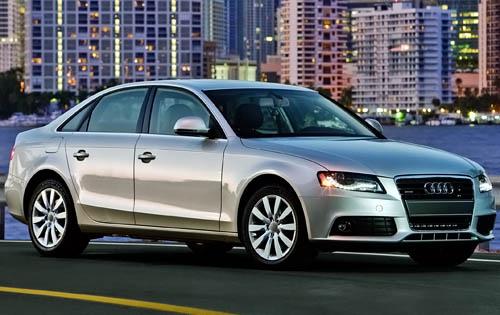
Its reliability reputation, however, isn't quite as straightforward. Some model years have proven capable of exceeding 200,000 miles with relatively few major repairs, while others became known for expensive engine problems that continue to influence buyers today.
The encouraging news is that those concerns are concentrated within a fairly small group of model years. Audi steadily improved the A4 throughout its production, and the newest generations are significantly more dependable than many people realize.
If you're considering a used Audi A4, choosing the right generation is far more important than simply finding the lowest price or the lowest mileage. A carefully maintained A4 with complete service records will almost always prove to be the better purchase.
In this guide, you'll learn:
- Which Audi A4 model years have the best long-term reliability.
- The years that deserve extra caution—and why.
- Which engines and transmissions are the safest choices.
- The most common problems owners report.
- Expected maintenance after 100,000 miles.
- Which A4 offers the best value on today's used market.
Relative Reliability: Also, if you'd like to learn if the A4 ranks among the top used luxury cars for reliability, and how others rank, be sure to read our Most Reliable Vehicles Guide: Best Models & Years. This comprehensive guide on cars, trucks, and SUVs, highlights the best years to buy or avoid, common problems, potential maintenance costs, and more, and will likely help you make the right choice to meet your needs.
Overall Reliability Verdict
Overall, the 2006–2024 Audi A4 earns a reliability rating of 7.8 out of 10.
That score reflects two very different stories. Early 4th generation (B8) (2009–2012) models temporarily damaged the A4's reputation because of well-publicized engine issues, while the facelifted 4th gen (2013-2016) and especially the 5th generation (2017-2024) (B) became some of the strongest luxury sedan choices in their class.
Like most premium German vehicles, the A4 rewards preventative maintenance. Owners who stay on top of routine service often enjoy years of dependable ownership, while neglected examples can quickly become expensive.
Overall Report Card
- Overall Reliability: ★★★★☆ (7.8/10)
- Expected Lifespan: 180,000–250,000+ miles
- Maintenance Costs: Moderate to High
- Parts Availability: Excellent
- Best Overall Value: 2013–2016 (B8.5)
- Most Reliable Generation: 2017–2024 (B9/B9.5)
- Our Verdict: Buy the right generation and maintain it properly, and the Audi A4 can be an outstanding long-term luxury sedan.
Buyer Tip: Don't judge every Audi A4 by stories you've heard about the early B8 models. Later versions are considerably more reliable and deserve to be evaluated on their own merits.
Audi A4 Generations At A Glance
Although this guide covers nineteen model years, buyers are really choosing between three distinct generations. Each introduced meaningful engineering improvements, and each appeals to a slightly different type of buyer.
3rd Generation (B7) (2006–2008)
- Reliability: ★★★★☆
- Best Years: 2007–2008
- Engine To Buy: 2.0T EA113
- Watch For: Cam follower wear, suspension components
- Best For: Buyers wanting a simpler, enthusiast-friendly Audi.
4th Generation (B8 / B8.5) (2009–2016)
- Reliability: ★★★☆☆ to ★★★★☆
- Best Years: 2013–2016
- Engine To Buy: Updated 2.0T Gen 3
- Watch For: Oil consumption on 2009–2012 models
- Best For: Buyers seeking the best balance of price and refinement.
5th Generation (B9 / B9.5) (2017–2024)
- Reliability: ★★★★★
- Best Years: 2018–2022
- Engine To Buy: 2.0T Gen 3
- Watch For: Routine cooling-system maintenance and occasional electronics
- Best For: Buyers wanting the newest, most dependable A4.
Bottom Line: Each generation improved upon the last. While every A4 has strengths, most buyers will find the facelifted B8.5 or the newer B9 provides the best combination of reliability, technology, and long-term ownership costs.
3rd Generation (B7) (2006–2008)
The oldest Audi A4 covered in this guide is also one of its most overlooked. Because it predates the engine issues that affected some later models, the B7 has quietly developed a reputation as one of the safer older A4s to buy.
Rather than introducing radical new technology, Audi refined an already successful platform. The result was a sedan with solid build quality, excellent road manners, and comparatively straightforward mechanical systems by modern luxury-car standards.
Today, many well-maintained B7s continue to serve as dependable daily drivers, and enthusiast support remains excellent.
3rd Generation Report Card
- Overall Reliability: ★★★★☆
- Best Years: 2007–2008
- Engine To Buy: 2.0-liter turbocharged EA113
- Transmission To Buy: Manual or Tiptronic automatic
- Biggest Weakness: Cam follower maintenance
- Ownership Costs: Moderate
- Our Verdict: One of the best older Audi A4 generations.
Most buyers will encounter either the turbocharged 2.0-liter four-cylinder or the naturally aspirated 3.2-liter V6. Both are capable of long service lives, but they appeal to different buyers.
The 2.0T is generally the better all-around choice. It offers strong performance, responds well to regular maintenance, and is less expensive to own than the V6. The 3.2-liter delivers smooth, effortless power but carries higher repair costs simply because it's a more complex engine to service.
Why The 3rd Gen Has A Better Reputation Today
- Avoids the piston-ring problems associated with early B8 models.
- Excellent availability of OEM and aftermarket parts.
- Simpler electronics than later generations.
- Durable quattro all-wheel-drive system.
- Strong enthusiast community and independent repair support.
The most important maintenance item is the cam follower used by the high-pressure fuel pump on the 2.0T engine. Fortunately, this isn't an expensive repair when caught early, and most knowledgeable owners inspect it as preventative maintenance.
Like virtually every older European sedan, suspension wear becomes common as mileage climbs. Control arms, bushings, ball joints, and tie rods are all normal wear items, and many cars have already received these repairs by the time they reach 120,000 miles.
Buyer Tip: We'd rather buy a 150,000-mile B7 with complete maintenance records than an 80,000-mile example that has spent years skipping oil changes and preventative service.
While the B7 lacks some of the technology found in later A4s, it remains one of the most satisfying older Audis to own. Buyers looking for a well-built luxury sedan with proven mechanicals should not overlook this generation simply because of its age.
4th Generation (2009–2016) (B8 / B8.5)
If the B7 quietly built the Audi A4's reputation, the B8 temporarily challenged it.
This generation introduced a completely new platform, a roomier interior, improved ride quality, and a more modern driving experience. It also introduced the 2.0 turbocharged four-cylinder engine EA888), which delivered better performance and fuel economy—but unfortunately became the source of the A4's best-known reliability problems during its early years.
Fortunately, that's only half the story. Audi spent the remainder of the generation refining the engine and addressing many of its weaknesses. By the facelifted B8.5 models, the A4 had become a far more dependable luxury sedan and remains one of the best values on today's used market.
4th Generation Report Card
- Overall Reliability: ★★★☆☆ (2009–2012)
★★★★☆ (2013–2016) - Best Years: 2015–2016
- Engine To Buy: 2.0T Gen 3 (2013+)
- Transmission To Buy: 8-speed Tiptronic or Manual
- Biggest Weakness: Oil consumption on early 2.0T engines
- Ownership Costs: Moderate to High
- Our Verdict: Buy the facelift. Approach early models carefully.
Buyer Tip: Don't treat every B8 the same. The differences between a 2010 and a 2015 are much greater than their similar appearance would suggest.
Early 4th Gen Models (2009–2012)
These are the model years responsible for most of the Audi A4's reliability reputation. While thousands of owners have enjoyed trouble-free ownership, these cars experienced enough engine problems that buyers should investigate their service history very carefully.
The primary concern is excessive oil consumption. Certain 2.0T engines were built with piston rings that allowed engine oil to enter the combustion chamber. Some owners added a quart of oil every few hundred miles, while others experienced no problems at all.
Audi eventually acknowledged the issue through warranty extensions and repair campaigns that included updated pistons and piston rings for many affected vehicles.
What To Watch For
- Documented oil consumption repairs.
- Updated timing chain tensioner.
- Water pump replacement.
- Thermostat replacement.
- Regular oil changes using the correct specification oil.
- Complete maintenance records.
The timing chain tensioner deserves particular attention. Although failures were nowhere near as common as internet forums sometimes suggest, the consequences can be severe if the original component fails. Fortunately, many surviving cars have already received the updated design.
Cooling-system repairs are also common. Water pumps and thermostat housings often require replacement long before the rest of the engine reaches the end of its life. Fortunately, these are predictable repairs rather than signs of catastrophic engine failure.
Bottom Line: A documented early B8 can be a very good buy. An undocumented one can become a very expensive one.
Should You Automatically Avoid 2009–2012 Models?
Not necessarily.
Because these cars have now been on the road for well over a decade, many have already received Audi's updated pistons, piston rings, timing components, and cooling-system repairs. In many cases, today's buyer benefits from repairs completed years ago.
Ironically, an early B8 with comprehensive maintenance records may actually be a safer purchase than one that never exhibited enough symptoms to receive the factory updates.
Buyer Tip: Ask for receipts—not promises. A seller who can document major engine repairs adds real value to the car.
4th Gen Facelift (2013–2016)
The 2013 facelift is where the story changes dramatically.
Although the exterior styling received only modest revisions, Audi quietly incorporated numerous engineering improvements that transformed the ownership experience. Updated engine components, revised manufacturing, and several years of continuous refinement produced an A4 that is noticeably more dependable than the earlier B8.
For many shoppers, these model years represent the sweet spot of the entire Audi A4 lineup.
2013-2016 (B8.5) Report Card
- Overall Reliability: ★★★★☆
- Best Years: 2015–2016
- Engine To Buy: 2.0T Gen 3
- Biggest Weakness: Water pump and thermostat repairs
- Ownership Costs: Moderate
- Our Verdict: One of the best used luxury sedan values available.
The updated 2.0T engine largely eliminated the widespread oil consumption complaints that plagued earlier cars. While no engine is maintenance-free, these later versions established a much stronger long-term reliability record.
Owners are still likely to encounter normal European-car maintenance—water pumps, thermostat housings, carbon buildup, suspension components—but those repairs are far easier to budget for than rebuilding an engine suffering from excessive oil consumption.
Why Buyers Like The Facelift Models
- Much improved engine reliability.
- Excellent ride quality.
- Premium interior that still feels modern.
- Outstanding highway comfort.
- Strong quattro performance in all weather.
- Excellent value compared with newer B9 models.
The interior deserves special mention. Audi was widely regarded as the class leader in cabin quality during this period, and many B8.5 interiors still look remarkably contemporary. Materials wear well, switchgear feels solid, and the overall design has aged gracefully.
Electronics have also proven better than many buyers expect. As always, every feature should be tested during a pre-purchase inspection, but widespread electronic failures have not become a defining weakness of this generation.
Buyer Tip: If your budget falls between $12,000 and $18,000, we'd spend a little more for a clean 2015 or 2016 rather than buying the cheapest 2010 or 2011 available. The extra purchase price is often recovered through lower repair costs.
Our Take On The 4th Generation
This generation perfectly illustrates why shopping by model year matters more than shopping by appearance. Early and late cars may look nearly identical, yet their ownership experiences can be quite different.
That's why we hesitate to label the entire generation as either "good" or "bad." The early years require careful homework. The facelifted models, on the other hand, are among the strongest recommendations in this guide.
Bottom Line: If you're looking for the best combination of affordability, luxury, and reliability, the 2013–2016 models are one of the smartest A4 purchases you can make.
5th Generation (2017–2024) (B9 / B9.5)
By the time the 5th generation arrived for the 2017 model year, Audi had learned many of the lessons from the previous generation. The goal wasn't to reinvent the A4—it was to refine it.
The result is widely regarded as the best all-around Audi A4 ever built. It's lighter, quieter, more fuel efficient, more technologically advanced, and, perhaps most importantly for used-car buyers, considerably more reliable than the early B8 models that preceded it.
If you're shopping for an A4 today and your budget allows it, this is the generation we'd recommend first.
5th Generation Report Card
- Overall Reliability: ★★★★★
- Best Years: 2018–2022
- Engine To Buy: 2.0-liter turbocharged EA888 Gen 3
- Transmission To Buy: 7-speed S tronic
- Biggest Weakness: Cooling-system components and occasional electronic glitches
- Ownership Costs: Moderate
- Our Verdict: The strongest Audi A4 generation overall.
Buyer Tip: Unlike earlier generations, there's no single major mechanical issue that should automatically eliminate a B9 from consideration. Overall condition and maintenance history matter far more than the model year.
Early Models (2017–2019)
First-year redesigns often make experienced buyers nervous, but the B9 largely avoided the serious teething problems that affected some earlier Audi models.
Instead of widespread engine concerns, most owner complaints involve relatively minor electronic issues such as infotainment software, parking sensors, backup cameras, or other convenience features. While occasionally frustrating, these problems are generally far less expensive than major engine repairs.
Mechanically, the revised 2.0T engine has proven to be one of Audi's best modern powerplants. Oil consumption complaints became uncommon, timing chain concerns largely disappeared, and overall engine durability improved significantly.
What To Watch For
- Water pump seepage.
- Thermostat housing leaks.
- Software updates for the MMI infotainment system.
- Parking sensors and backup camera operation.
- Complete maintenance history.
Cooling-system repairs remain the most common mechanical expense, but they should be viewed as routine ownership items rather than evidence of poor engineering. Many owners replace these components once and enjoy years of trouble-free driving afterward.
Bottom Line: The early B9 is a remarkably solid luxury sedan that avoids nearly all of the reputation-damaging engine issues associated with the previous generation.
5th Gen Facelift (2020–2024) (B9.5)
The 2020 facelift brought updated styling, a redesigned front end, improved technology, and additional driver-assistance features. Underneath, however, Audi wisely chose evolution over revolution.
Rather than introducing an entirely new powertrain, Audi continued refining an already successful platform. That means buyers benefit from years of engineering improvements without having to worry about learning the quirks of an all-new design.
From a reliability standpoint, that's exactly what you want to see.
5th Generation Report Card
- Overall Reliability: ★★★★★
- Best Years: 2021–2023
- Engine To Buy: 2.0-liter turbocharged EA888
- Biggest Weakness: Increasing electronic complexity
- Ownership Costs: Moderate
- Our Verdict: The easiest A4 generation to recommend.
The greatest challenge facing future owners probably won't be the engine or transmission. Instead, it will be the increasing amount of technology packed into modern luxury vehicles.
Digital instrument clusters, adaptive cruise control, lane-keeping assistance, multiple cameras, and numerous electronic control modules all make the car more enjoyable to own—but they also create more potential diagnostic work as the vehicle ages.
Fortunately, outright failures remain relatively uncommon, and the underlying mechanical components continue to demonstrate excellent durability.
Why The 5th Gen Stands Out
- Excellent long-term engine reliability.
- Premium interior with outstanding build quality.
- Refined ride without sacrificing handling.
- Confident quattro all-wheel drive.
- Few widespread mechanical weaknesses.
- Excellent resale value.
Independent Audi specialists generally speak highly of this generation. Most routine repairs are well understood, replacement parts are widely available, and the platform has avoided developing the kind of recurring major failures that often define less successful luxury cars.
Buyer Tip: We'd have no hesitation recommending a well-maintained 5th gen with 100,000 miles over a neglected low-mileage example. Service history continues to be the single best predictor of future reliability.
Also, late-model A4s tend to retain their value well. A lightly used example can sometimes cost surprisingly close to a properly negotiated new A4 purchase, so it's often a good idea to compare both alternatives rather than assume the used vehicle automatically represents the better value.
If you're serious about buying soon, I'd recommend reading my most effective negotiation methods for either new cars or used cars. Each explains a quick way to identify the dealerships most motivated to "deal", no matter how busy they may seem, and how to follow up once you've found them. That can be the difference between getting a good price and getting a great one.
Generation Comparison
Looking back across all three generations, Audi's steady engineering improvements become easy to see.
- B7 (2006–2008): Simple, durable, enthusiast-friendly.
- B8 (2009–2012): Excellent car, but requires careful research.
- B8.5 (2013–2016): Outstanding value and a major reliability improvement.
- B9 / B9.5 (2017–2024): The most complete package for today's used-car buyer.
The encouraging takeaway is that the Audi A4 didn't become less reliable as it became more sophisticated. In many ways, the opposite happened. Audi corrected many of the weaknesses that hurt earlier models while continuing to improve refinement, safety, fuel economy, and everyday usability.
Bottom Line: If your budget allows, the B9 is the Audi A4 we'd buy ourselves. It delivers the strongest combination of reliability, technology, driving enjoyment, and long-term ownership confidence of any generation covered in this guide.
Common Problems Across All Model Years
No vehicle is completely trouble-free, and the Audi A4 is no exception. The good news is that most recurring issues are now well understood by Audi specialists and experienced owners. In many cases, today's buyers benefit from years of accumulated repair knowledge and improved replacement parts.
More importantly, not every common problem is a reason to avoid the car. Some are simply normal wear items that should be expected on any premium European sedan as mileage climbs.
Most Common Reliability Issues
| Problem | Most Common Years | Severity |
|---|---|---|
| Oil consumption | 2009–2012 | High |
| Timing chain tensioner | 2009–2012 | High |
| Water pump leaks | 2008–2022 | Moderate |
| Thermostat housing | 2009–2022 | Moderate |
| Carbon buildup | All direct-injection engines | Moderate |
| PCV system | 2006–2016 | Low–Moderate |
| Ignition coils | 2006–2015 | Low |
| Suspension wear | High-mileage vehicles | Moderate |
Oil Consumption
Without question, this is the issue that shaped the Audi A4's modern reputation.
Some 2009–2012 models developed excessive oil consumption due to piston ring problems. While the issue was serious for affected vehicles, it is important to remember that many examples have already been repaired with updated components.
Today, the biggest question isn't whether an early B8 could develop oil consumption—it's whether the vehicle you're considering already received Audi's repair updates.
Buyer Tip: Documentation showing piston or piston ring replacement is a major selling point, not something to be concerned about.
Timing Chain Tensioner
Early 2.0T engines also experienced failures involving the original timing chain tensioner. Although not every vehicle was affected, failure could result in severe engine damage.
Fortunately, updated tensioners have been available for years, and many surviving cars have already been repaired.
Cooling System Components
Water pumps and thermostat housings appear regularly in Audi A4 service records regardless of generation.
Unlike the oil consumption issue, however, these repairs are generally viewed as routine ownership expenses. Many owners replace both components together, significantly reducing the likelihood of future cooling-system problems.
Bottom Line: A recently replaced water pump is actually a positive when shopping for a used Audi.
Carbon Buildup
Every engine covered in this guide uses direct fuel injection, which means carbon deposits gradually accumulate on the intake valves over time.
Symptoms may include rough idle, hesitation, or reduced performance, particularly after 80,000 to 120,000 miles. Walnut blasting has become the preferred cleaning method and is considered normal maintenance by many European repair specialists.
Suspension Components
The Audi A4's sophisticated multi-link suspension is one of the reasons it rides and handles so well. The trade-off is that it contains more wear components than a typical family sedan.
Control arms, bushings, tie rods, and ball joints commonly require replacement after higher mileage. While these repairs can seem expensive, they often restore the car to nearly new driving manners.
Buyer Tip: Suspension repairs are rarely a reason to walk away from an otherwise excellent car. Instead, use them as negotiating leverage during the purchase.
Reliability By Engine
Engine choice has the single biggest impact on long-term ownership satisfaction. Fortunately, Audi offered only a handful of engines in North America, making the decision much simpler than it first appears.
| Engine | Our Verdict |
|---|---|
| 2.0T EA113 (2006–2008) | ★★★★☆ Recommended |
| 3.2L V6 (2006–2009) | ★★★★☆ Reliable but costly |
| 2.0T EA888 Gen 1/2 (2009–2012) | ★★★☆☆ Verify repairs |
| 2.0T EA888 Gen 3 (2013–2024) | ★★★★★ Best Choice |
2.0T EA113 (2006–2008)
The EA113 remains one of Audi's better turbocharged four-cylinder engines. It avoids the piston-ring issues that affected its successor while delivering strong performance and reasonable ownership costs.
Bottom Line: A dependable engine that rewards preventative maintenance.
3.2-Liter V6
The naturally aspirated V6 is smooth, refined, and generally durable. However, increased complexity and higher repair costs make it difficult to recommend over the 2.0T unless you specifically prefer six-cylinder performance.
Bottom Line: Reliable, but usually not the most economical choice.
Early 2.0T EA888 (2009–2012)
This engine deserves careful research rather than automatic avoidance.
Examples with documented piston-ring repairs and updated timing components can provide years of dependable service. Cars lacking that documentation deserve a much more cautious approach.
Buyer Tip: Judge the individual vehicle—not the internet reputation.
2.0T EA888 Gen 3 (2013–2024)
The third-generation EA888 corrected many of the weaknesses that affected earlier engines and established itself as one of Audi's strongest modern powerplants.
Regular oil changes, quality fuel, and timely maintenance are usually all that's required for excellent long-term reliability.
Bottom Line: This is the engine we'd recommend to almost every buyer.
Reliability By Transmission
Unlike some luxury manufacturers that experimented with numerous transmission designs, Audi's choices are fairly easy to evaluate today.
- 6-Speed Manual: ★★★★★ – The most durable long-term choice.
- 6-Speed Tiptronic Automatic: ★★★★☆ – Proven and dependable with regular fluid changes.
- Multitronic CVT: ★★☆☆☆ – The only transmission we'd generally avoid.
- 8-Speed Tiptronic: ★★★★★ – Excellent reliability and smooth operation.
- 7-Speed S tronic: ★★★★☆ – Fast, enjoyable, and reliable when serviced properly.
The Multitronic CVT deserves special mention because it represents the weakest transmission offered during this period. While not every unit fails, repair costs can easily exceed the value of older vehicles.
Fortunately, quattro-equipped A4s generally avoided the CVT altogether, making them the safer long-term choice.
Buyer Tip: Don't skip transmission fluid service simply because it's described as "lifetime." Fresh fluid remains one of the best investments you can make.
Maintenance & Repair Cost Outlook
The Audi A4 costs more to maintain than a typical family sedan, but it's far from the maintenance nightmare it's sometimes made out to be. The key is staying ahead of preventative maintenance. Owners who fix small problems early generally spend much less over the life of the car than those who postpone repairs.
Another important point is that maintenance costs are rarely the same every year. You may spend only a few hundred dollars one year on routine servicing, then have a year where a water pump, suspension components, or brakes require significantly more investment.
Typical Repair Costs
| Repair or Service | Typical Cost |
|---|---|
| Oil service | $100–$180 |
| Spark plug replacement | $250–$500 |
| Front brake pads and rotors | $500–$900 |
| Water pump and thermostat replacement | $800–$1,400 |
| Carbon cleaning (when needed) | $600–$1,000 |
| Front suspension refresh | $900–$1,800 |
| Timing chain repair (if required) | $2,000–$4,000+ |
What Should You Budget?
| Ownership Scenario | Average Annual Maintenance & Repairs |
|---|---|
| Well-maintained vehicle with good service history | $800–$1,500 |
| Higher-mileage vehicle needing occasional repairs | $1,500–$2,500 |
| Poorly maintained or neglected example | $2,500+ |
Buyer Tip: A higher-mileage A4 that has recently received major maintenance—such as a water pump, suspension work, brakes, or transmission service—can actually cost less to own than a lower-mileage car that still needs all of those repairs.
Labor costs vary considerably depending on where the work is performed. Independent European repair specialists often charge 25–40% less than dealerships while providing the same quality of workmanship, making them an excellent option once the vehicle is out of warranty.
Bottom Line: Most owners of a well-maintained Audi A4 should expect to average about $800–$1,500 per year in maintenance and repairs over the long term. Some years may require little more than routine servicing, while others may include a major repair that temporarily increases ownership costs. Planning for those occasional larger expenses is the key to enjoyable long-term ownership.
How Long Does An Audi A4 Last?
With proper maintenance, the Audi A4 is fully capable of reaching 200,000 miles or more. Many well-maintained examples have surpassed 250,000 miles, particularly later 4th and 5th gen models that benefited from Audi's ongoing engineering improvements.
The biggest factor isn't mileage—it's maintenance history. Regular oil changes, timely cooling-system repairs, transmission servicing, and addressing small issues before they become major repairs all have a significant impact on long-term durability.
Expected Lifespan
- Excellent maintenance: 220,000–250,000+ miles
- Average maintenance: 180,000–220,000 miles
- Poor maintenance: Major repairs often begin well before 150,000 miles
Buyer Tip: We'd much rather buy an A4 with 140,000 miles and complete maintenance records than one with 90,000 miles that has missed routine servicing. Service history remains the best predictor of how long any used Audi will last.
Bottom Line: The Audi A4 is capable of a very long service life, but it rewards owners who invest in preventative maintenance. Treat it well, and there's every reason to expect well over 200,000 miles from the right model years.
Expected Maintenance After 100,000 Miles
Reaching 100,000 miles should not discourage anyone from buying an Audi A4. Many examples comfortably exceed 200,000 miles when maintenance has been consistent.
However, buyers should expect that some major wear items have either already been replaced—or soon will be.
What To Expect
- Water pump and thermostat replacement.
- Suspension control arms and bushings.
- Engine mounts.
- Carbon cleaning if necessary.
- Transmission fluid service.
- Battery and charging-system components.
- Brake and wheel bearing maintenance.
None of these repairs should be viewed as unusual. In fact, seeing documented evidence that they've already been completed often makes a high-mileage A4 a more attractive purchase.
Buyer Tip: We'd confidently choose a 130,000-mile A4 with excellent maintenance records over a neglected 75,000-mile example every time.
Model Years To Avoid
One of the most common questions we receive is, "Which Audi A4 years should I avoid?" The answer is simpler than many buyers expect.
There really aren't entire generations to avoid—just a handful of model years that deserve closer scrutiny. Most of the A4's reliability concerns are concentrated in the early B8 generation, and even then, many examples have already received the necessary repairs.
Years That Deserve An Extra Look
- 2009: First year of the 4th generation. Verify oil consumption repairs and timing chain tensioner updates.
- 2010: Similar concerns as 2009. Documentation is extremely important.
- 2011: One of the years most commonly associated with excessive oil consumption.
- 2012: Improved, but still verify that any factory updates have been completed.
Notice that we say "research" rather than "avoid." A well-maintained 2010 A4 with documented engine repairs may prove to be a far better purchase than a neglected newer model.
Buyer Tip: Never eliminate a car based solely on model year. Condition, maintenance history, and inspection results should always carry more weight.
Best Model Years To Buy
If your goal is dependable long-term ownership, several model years consistently stand above the rest.
Our Top Recommendations
- 2007–2008: The best of the 3rd generation.
- 2013–2016: The facelifted 4th gen offers excellent value and much stronger reliability.
- 2018–2022: Our favorite overall balance of reliability, refinement, technology, and value.
- 2023–2024: The newest cars with the fewest age-related concerns, although purchase prices remain significantly higher.
If we had to recommend only one range for the average used-car buyer, it would be the 2015–2016. These cars have already absorbed much of their depreciation, avoid the early engine concerns, and deliver a driving experience that still feels thoroughly modern.
Bottom Line: Spend your money on the newest, best-maintained example your budget comfortably allows—not necessarily the lowest-mileage one.
Pre-Purchase Inspection Checklist
Even the most reliable Audi A4 deserves a professional pre-purchase inspection. Spending a few hundred dollars before you buy can easily prevent thousands of dollars in unexpected repairs later.
Before You Buy, Check The Following:
- Review complete maintenance records.
- Verify oil consumption repairs on early 4th gen models.
- Confirm timing chain tensioner updates where applicable.
- Inspect for coolant leaks around the water pump and thermostat.
- Scan all electronic control modules for stored fault codes.
- Test every infotainment and convenience feature.
- Listen for suspension noises during the road test.
- Inspect tires for uneven wear.
- Check underneath for oil leaks or previous collision damage.
- Confirm smooth transmission operation.
Buyer Tip: A seller who welcomes an independent inspection is usually far more confidence-inspiring than one who refuses it.
Pros And Cons
What We Like
- One of the nicest interiors in its class.
- Excellent ride and handling balance.
- Confidence-inspiring quattro all-wheel drive.
- Strong highway comfort.
- Excellent parts availability.
- Later generations have become genuinely dependable.
- A premium feel that continues to age well.
Things To Consider
- Maintenance costs remain higher than mainstream sedans.
- Early 4th gen models require careful research.
- Premium fuel is recommended.
- Modern electronics increase diagnostic complexity.
- Neglected maintenance can become expensive quickly.
And another con ...
There are other numbers besides price that can significantly affect the final out-the-door cost. A well-negotiated selling price can quickly lose its advantage if the dealer makes up for the concession with a below-market trade-in offer. Also, dealer fees and add-ons can further increase the final cost, making it important to learn which fees you must pay, can negotiate, or should avoid.
To become better informed about these important but often-confusing parts of the deal, be sure to see my articles on trade-ins and dealer fees.
Bottom Line: The A4 asks more from its owner than a Toyota Camry, but it also gives considerably more back in refinement, comfort, and driving enjoyment.
Audi A4 vs. The Competition
Every compact luxury sedan has its own personality, and choosing between them often comes down to what you value most as an owner.
| Vehicle | Biggest Strength | Best For |
|---|---|---|
| BMW 3 Series | Sportiest driving experience | Driving enthusiasts |
| Audi A4 | Best all-around balance | Daily luxury driving |
| Mercedes-Benz C-Class | Luxury and comfort | Comfort-oriented buyers |
| Lexus IS | Outstanding reliability | Lowest ownership costs |
| Acura TLX | Value and dependability | Long-term ownership |
The Audi A4 occupies the middle ground of this group. It isn't quite as aggressively sporty as the BMW, nor quite as comfort-focused as the Mercedes. Instead, it combines confident handling, excellent ride quality, premium interior materials, and outstanding all-weather capability into one exceptionally balanced package.
Buyers seeking the absolute lowest maintenance costs will still find the Lexus IS difficult to beat. However, for those who appreciate European engineering without sacrificing everyday usability, the Audi A4 remains one of the strongest choices in the segment.
Who Should Buy An Audi A4?
The A4 isn't the ideal luxury sedan for everyone, but for the right owner it's easy to understand why so many people remain loyal to the model.
The Audi A4 Is A Great Choice If You:
- Appreciate refined European driving dynamics.
- Want the security of quattro all-wheel drive.
- Plan to keep up with preventative maintenance.
- Expect to own the vehicle for several years.
- Prefer understated luxury over flashy styling.
You May Want To Consider Something Else If You:
- Want the absolute lowest ownership costs.
- Rarely perform preventative maintenance.
- Are shopping strictly by purchase price.
- Expect economy-car maintenance expenses.
Buyer Tip: The Audi A4 rewards owners who buy carefully and maintain proactively. Buyers looking only for the cheapest luxury sedan often end up disappointed.
Final Verdict
Looking back over nearly twenty years of production, one thing becomes clear: the Audi A4 is a much better used car than its reputation sometimes suggests.
Yes, the early B8 generation experienced legitimate engine problems that deserved the attention they received. But it's equally important to recognize how thoroughly Audi corrected those issues. The later 4th and 5th generations are fundamentally different ownership experiences, offering the refinement buyers expect from a luxury sedan with reliability that is far stronger than many people realize.
That's why we don't recommend judging every Audi A4 by stories you've heard online. Instead, judge each car on its own condition, maintenance history, and inspection results.
For most buyers, the smartest purchases are the 2013–2016 and the 2018–2022. They offer the best balance of reliability, value, technology, and driving enjoyment, making them excellent long-term ownership candidates.
Even older B7 models still deserve consideration if they've been properly maintained, while early B8 models can represent genuine bargains when documentation confirms that the known engine issues have already been addressed.
Ultimately, the Audi A4 remains one of the most complete luxury sedans in its class. It offers premium comfort, confident all-weather performance, excellent interior quality, and an engaging driving experience that continues to hold up remarkably well.
Final Verdict: Buy the right generation, insist on complete maintenance records, and invest in a professional pre-purchase inspection. Do that, and the Audi A4 can easily reward you with 200,000 miles or more of enjoyable ownership while standing as one of the smartest used luxury sedan purchases available today.