
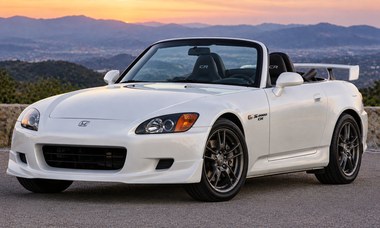
The Honda S2000 earned an exceptional reputation for combining sports-car performance with Honda durability. Sold in the United States from 2000 through 2009, it used a naturally aspirated four-cylinder engine, a six-speed manual transmission, rear-wheel drive, and a relatively simple mechanical layout compared with many modern performance cars.
But buying an S2000 today requires more than knowing that Hondas are generally reliable. These cars were designed to be driven hard, many have been modified or tracked, and even the newest examples are now well over 15 years old. Previous use, maintenance history, accident repairs, and modifications can therefore matter as much as the model year.
There are also meaningful differences between the two generations. The first-generation (AP1) 2000-2003 S2000 has the famous 2.0-liter engine with a 9,000-rpm redline, while the second-generation 2004-2009 car uses a 2.2-liter engine with more low-rpm torque and incorporates a number of mechanical and chassis revisions.
Overall, though, the S2000 remains one of the more durable serious sports cars of its era. A carefully maintained, mostly stock example can still be a very good long-term purchase, even with substantial mileage.
In This Guide You'll Learn
- Which Honda S2000 years are generally the best to buy
- Which S2000 years deserve more caution
- How many miles a Honda S2000 can realistically last
- The important reliability differences between the two generations
- Which S2000 engine is the better long-term choice
- The most important engine and transmission problems to watch for
- How modifications, track use, and previous over-revs can affect reliability
Honda S2000 Reliability Overview
The Honda S2000 has above-average reliability for a high-performance sports car. Its engines are exceptionally strong when properly maintained, and Honda avoided much of the complexity found in many competing performance cars. There is no turbocharger, automatic transmission, all-wheel-drive system, or elaborate adaptive suspension to create additional repair risks.
That doesn't mean an S2000 is simply a Civic with a convertible top. The engines were designed to operate at extremely high rpm, particularly the 2.0-liter engine in 2000-2003 cars. Oil level, proper maintenance, and previous driver behavior are unusually important.
A mechanical over-rev caused by selecting too low a gear can be especially damaging. Unlike hitting the electronic rev limiter under acceleration, a missed downshift can mechanically force the engine beyond its intended speed. On early cars, this can contribute to cracked valve retainers and potentially catastrophic engine damage.
Timing-chain-tensioner wear, transmission synchro problems, wheel-bearing wear, convertible-top deterioration, and age-related issues also deserve attention. But the S2000 doesn't suffer from a long list of chronic major failures across every model year.
For today's buyer, one of the biggest risks is simply buying the wrong individual car. I'd rather own a stock 100,000-mile S2000 with excellent records than a 55,000-mile example with extensive modifications, questionable accident repairs, and no clear history of how it was driven.
Honda S2000 Reliability at a Glance
| Category | Assessment |
|---|---|
| Overall Reliability | Above average for a high-performance sports car |
| Expected Lifespan | About 200,000 miles; 250,000+ possible with excellent care |
| First Generation | 2000-2003; more raw and higher-revving, but requires additional engine scrutiny |
| Second Generation | 2004-2009; more refined with several worthwhile mechanical improvements |
| Best All-Around Years | Later 2004-2009 models, particularly well-maintained stock examples |
| Major Early-Car Concern | Valve retainers, over-rev history, oil consumption, and timing-chain tensioner |
| Transmission Concern | Synchro wear, difficult shifts, grinding, or popping out of gear on some cars |
| Biggest Used-Car Variable | Previous modifications, hard driving, track use, and maintenance history |
If you may be buying soon, I'd also recommend reading my most effective negotiation methods for either new cars or used cars. Each explains a quick way to identify the dealerships most motivated to deal, no matter how busy they may seem, and how to follow up once you've found them. That can be the difference between getting a good price and getting a great one.
How Many Miles Can a Honda S2000 Last?
A properly maintained Honda S2000 can realistically last around 200,000 miles, and exceptionally well-maintained cars can exceed 250,000 miles. The engine's high specific output doesn't automatically make it short-lived, but neglect and previous abuse can dramatically shorten its life.
An S2000 with 100,000 miles isn't necessarily approaching the end of its useful life. A car that has received regular oil changes, maintained the proper oil level, had its valve clearances checked, and hasn't been repeatedly abused can still have many good years remaining.
By roughly 150,000 miles, I'd expect age and normal wear to become increasingly important. Clutch components, engine and transmission mounts, wheel bearings, suspension bushings, shocks, cooling-system parts, seals, convertible-top components, and other wear items may need attention even if the engine itself remains healthy.
Beyond 200,000 miles, the difference between individual cars becomes enormous. Maintenance history, oil consumption, compression, transmission condition, accident history, modifications, and evidence of previous track use become more useful than the odometer alone.
Would I buy a 120,000-mile S2000? Absolutely, if it were largely stock, properly maintained, structurally sound, and mechanically healthy. I'd choose that car over an undocumented 70,000-mile example that had been heavily modified or showed evidence of repeated hard use.
Honda S2000 Reliability by Generation
2000-2003 Honda S2000: First Generation
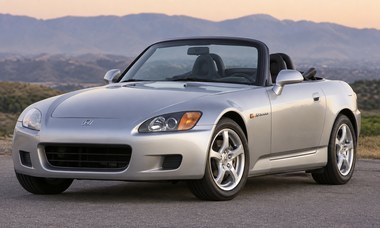
The 2000-2003 first-generation S2000 is the purest and most aggressive version of Honda's roadster. Its 2.0-liter four-cylinder engine produces its power at extremely high rpm and has a 9,000-rpm redline, giving the car much of the character that made the S2000 famous.
The engine itself can be remarkably durable, but these early cars require more careful inspection than later S2000s. Maintaining the correct oil level is important because some engines consume oil, particularly when regularly operated at high rpm.
Valve retainers are another important concern. A mechanical over-rev from a missed shift can crack the original retainers, and the engine may continue running normally until a later failure allows a valve to drop into the cylinder. That can turn an otherwise healthy engine into a very expensive repair.
The timing-chain tensioner is another known S2000 trouble spot. A worn tensioner can produce a characteristic rattle, and it shouldn't simply be dismissed as normal noise from an older high-performance engine.
Early cars also have some age-specific concerns. The 2000-2001 models originally used a plastic rear window in the convertible top, while later cars received a glass rear window. Transmission synchro wear and difficult shifting can also appear, particularly on cars that have been shifted aggressively for years.
Common 2000-2003 Honda S2000 Problems
- Valve-retainer damage: Mechanical over-revs can crack the original retainers and potentially lead to catastrophic valve and engine damage.
- Timing-chain-tensioner wear: Rattling from the timing-chain area deserves investigation rather than being dismissed as normal engine noise.
- Oil consumption: Some 2.0-liter engines consume noticeable oil, making regular oil-level checks particularly important.
- Transmission synchro wear: Grinding or resistance during shifts can indicate worn synchros, especially on hard-driven cars.
- Convertible-top deterioration: Check the fabric, seals, operation, and rear window, particularly on the earliest cars.
- Modifications and over-rev history: Track use, forced-induction conversions, aggressive suspension setups, and previous missed shifts can matter more than mileage.
Buyer Tip: On a 2000-2003 S2000, I'd want particularly good evidence of engine health. Maintenance records are valuable, but a compression/leak-down evaluation and knowledgeable inspection can be worthwhile when the car's previous use is uncertain.
Bottom Line: The first generation delivers the most distinctive high-rpm S2000 experience and can be very reliable, but it also demands the most careful buying process. Condition and previous driver behavior matter enormously.
2004-2009 Honda S2000: Second Generation

The 2004-2009 second-generation S2000 retained the basic formula but received substantial revisions intended to make the car more usable and predictable. U.S. models switched to a 2.2-liter four-cylinder that produces more torque at lower engine speeds while retaining the naturally aspirated character of the original.
Honda also revised the suspension geometry and other chassis details. The result is generally less edgy at the limit than the earlier car, which can make the second generation a better choice for someone who wants an S2000 primarily for regular street driving.
The later engine also received revised valve-retainer hardware, removing one of the significant concerns associated with the 2000-2003 engine. That doesn't make the later engine immune to abuse, but it does eliminate one reason I would inspect an early S2000 more aggressively.
Transmission condition still deserves attention. Some later cars can develop synchro-related shifting problems or a tendency to pop out of gear. As with the earlier cars, how the previous owner shifted and drove the car can have a large effect on transmission condition.
Beginning in 2006, the S2000 received additional updates including electronic throttle control and Vehicle Stability Assist. These 2006-2009 cars are particularly interesting for someone who values a little more modern drivability and stability assistance without sacrificing the S2000's basic simplicity.
The rare 2008-2009 S2000 CR, or Club Racer, also belongs to this generation. Because CR models are now highly collectible, originality, documentation, accident history, and correct factory equipment become especially important. I would evaluate one partly as a collectible rather than simply as another used S2000.
Common 2004-2009 Honda S2000 Problems
- Timing-chain-tensioner wear: The tensioner remains an inspection item on later S2000s and should be investigated if it becomes noisy.
- Transmission shifting problems: Check carefully for grinding, reluctance to engage a gear, or a transmission that pops out of gear.
- Wheel-bearing wear: Listen for humming, rumbling, or other bearing noise that changes with road speed or cornering load.
- Convertible-top wear: Inspect the fabric, seals, latches, drainage, and operation even on otherwise low-mileage cars.
- Interior aging: Later cars can develop age-related dashboard and interior deterioration that is cosmetic rather than a major mechanical concern.
- Modifications and hard use: Suspension, wheel, exhaust, engine, and forced-induction modifications should be evaluated for both workmanship and clues about the car's previous life.
Buyer Tip: If I were buying an S2000 primarily to drive rather than collect, I'd generally favor a well-maintained 2004-2009 car over an equally good earlier example. The additional torque and mechanical revisions make the later car easier to live with without sacrificing much of what makes an S2000 special.
Bottom Line: The second generation is the easier S2000 to recommend to most used-car buyers. It retains the high-revving, lightweight character of the original while addressing several of the concerns associated with the earliest cars.
Which Honda S2000 Engine Is Most Reliable?
The S2000 used two closely related engines in the U.S. market. The 2000-2003 cars use the 2.0-liter F20C, while the 2004-2009 cars use the 2.2-liter F22C1. Those technical engine codes are useful for identifying the two engines, but for most buyers the important distinction is simply early 2.0-liter versus later 2.2-liter.
The early 2.0-liter is an extraordinary engine. Its 9,000-rpm redline is central to the first generation's personality, and a properly maintained example can accumulate very high mileage. However, its valve-retainer concern, tendency toward oil consumption on some cars, and vulnerability to damage from mechanical over-revs give the buyer more to investigate.
The 2004-2009 2.2-liter engine is the one I'd choose if long-term reliability and lower risk were my priorities. It uses stronger valve-retainer hardware and provides more torque at lower rpm, so normal street driving doesn't require working the engine quite as hard.
That doesn't mean the 2.0-liter is unreliable. A carefully maintained early car with a known history can be an excellent purchase. But when comparing two otherwise equivalent cars, the later 2.2-liter gives me fewer reasons for concern.
Which would I buy? If I wanted the most intense, original S2000 experience, I'd choose a well-documented 2000-2003 car after a thorough inspection. If I wanted an S2000 to drive frequently and keep for many years, I'd favor the 2004-2009 2.2-liter.
How Reliable Is the Honda S2000 Transmission?
Every U.S.-market Honda S2000 came with a six-speed manual transmission, and overall it is a strong unit. But because virtually every S2000 has been driven as a sports car, transmission condition depends heavily on the previous drivers.
Synchro wear can produce grinding or resistance when shifting, and a transmission that doesn't stay securely in gear deserves further investigation. A hurried test drive isn't enough; shift through every gear both gently and more deliberately once the car is fully warmed up.
Clutch condition also varies enormously. A clutch can last well beyond 100,000 miles with sympathetic street use or wear much sooner after repeated hard launches, track driving, or poor technique.
Would I reject an S2000 because the clutch had already been replaced? No. On an older sports car, a properly documented clutch replacement can actually be a positive. I'd be more concerned about why it needed replacement, who performed the work, and whether the transmission now shifts cleanly.
The larger point is that the S2000's transmission is fundamentally durable, but buying one requires evaluating the individual car rather than relying on Honda's reputation. A clean-shifting 100,000-mile transmission can be a better bet than a 50,000-mile unit that has spent much of its life being aggressively shifted at high rpm.
Best Honda S2000 Years to Buy
There really aren't many bad S2000 years. The better question is which version best matches what you want from the car. Earlier models deliver the most intense high-rpm experience, while later cars are somewhat easier to live with and eliminate some of the concerns associated with the earliest engine.
2002-2003 S2000: Strong Early Choices
For buyers who specifically want a first-generation S2000, the 2002-2003 models are particularly appealing. They retain the 2.0-liter engine and 9,000-rpm redline while benefiting from several updates made after the first two model years.
They still require the same careful investigation of valve retainers, oil consumption, timing-chain-tensioner condition, and previous over-revs discussed earlier. But a well-preserved 2002 or 2003 can be an excellent choice for someone who wants the raw character of the original S2000.
2004-2005 S2000: Excellent Balance of Simplicity and Usability
The 2004-2005 models introduced the 2.2-liter engine along with significant chassis revisions. They provide more usable low-rpm torque while retaining a very direct, relatively simple driving experience.
These years are especially attractive if you prefer the later engine but don't particularly care about the additional electronic features introduced afterward. For long-term ownership, a stock, well-maintained 2004 or 2005 would rank high on my list.
2006-2009 S2000: Best Later-Year Choices
The 2006-2009 S2000 added electronic throttle control and Vehicle Stability Assist while retaining the 2.2-liter engine. These later cars are among the easiest S2000s to recommend to someone who intends to drive the car regularly rather than pursue the purest version of the original design.
They're also newer, although age differences matter less now than individual condition and maintenance history. Given two similarly maintained cars, I'd generally pay more for an excellent later S2000 rather than choose an earlier one solely because it had fewer miles.
Honda S2000 Years to Approach With More Caution
No S2000 model year deserves an automatic "avoid" label. The cautions are better understood as reasons to inspect particular versions more carefully.
2000-2001 S2000
The first two model years deserve the most scrutiny because they combine the earliest version of the 2.0-liter engine with cars that are now more than two decades old. Valve-retainer condition, evidence of previous mechanical over-revs, oil consumption, timing-chain-tensioner noise, and transmission condition all deserve attention.
The original convertible tops also used a plastic rear window rather than the later glass design. That's hardly a reason to reject the car, but it adds another age-related item to inspect.
I wouldn't avoid a 2000 or 2001 S2000 in excellent condition. At this point, a documented and carefully maintained early car can be a much better purchase than a neglected example from one of the supposedly better years.
What Is the Most Reliable Honda S2000 Generation?
For a buyer primarily concerned with dependable long-term ownership, I would give the advantage to the 2004-2009 second-generation S2000. The later 2.2-liter engine eliminates the early valve-retainer concern, provides more low-rpm torque, and is paired with several other mechanical and chassis refinements.
The 2000-2003 first generation isn't unreliable. In fact, a properly maintained example can be exceptionally durable. But the combination of valve-retainer concerns, the consequences of a previous mechanical over-rev, and the age of these cars gives the buyer a few more things to investigate.
Would I buy a 120,000-mile second-generation S2000 or an 80,000-mile first-generation car? If both were similarly priced, I'd choose based on condition and history before mileage. But if everything else were genuinely equal and reliability were my priority, I'd take the later 2.2-liter car.
If driving character were my priority instead, the answer might change. The 9,000-rpm 2.0-liter engine is one of the defining features of the original S2000, and some buyers will reasonably accept the additional inspection requirements to get it.
Major Honda S2000 Problems and Expensive Repairs
The S2000 doesn't have a long list of widespread catastrophic defects, but several problems can become expensive enough that they're worth understanding before you buy.
Valve-Retainer Damage on 2000-2003 S2000s
The 2000-2003 S2000's 2.0-liter engine can suffer cracked valve retainers, particularly following a mechanical over-rev caused by an incorrect downshift. This is different from simply accelerating to the electronic rev limiter.
A damaged retainer can potentially allow a valve to drop into the cylinder, resulting in severe engine damage. That's why an early S2000 with uncertain history deserves more than a casual test drive.
Timing-Chain-Tensioner Problems
Timing-chain-tensioner wear can occur on both generations of the 2000-2009 S2000. A failing tensioner may produce an abnormal rattle from the timing-chain area.
The tensioner itself isn't necessarily a devastating repair when caught promptly. The reason to take the noise seriously is the potential consequence of allowing a timing-related problem to progress.
Oil Consumption
Oil consumption deserves particular attention on the high-revving 2000-2003 2.0-liter engine, although any S2000 should have its oil level checked regularly. An engine that consumes some oil isn't automatically worn out, but allowing the level to become too low can have serious consequences.
When evaluating a used car, ask the owner how often the oil level is checked and whether oil needs to be added between changes. A knowledgeable owner who can answer those questions precisely is usually more reassuring than someone who has never looked at the dipstick.
Transmission Synchros and Gear Engagement
Transmission wear can affect S2000s from either the 2000-2003 or 2004-2009 generation, particularly cars that have spent years being shifted aggressively. Grinding, difficult engagement, or a tendency to pop out of gear shouldn't be dismissed as normal sports-car behavior.
A clutch replacement is ordinary maintenance eventually. Internal transmission repairs are a different matter and can become considerably more expensive.
Wheel Bearings and Suspension Wear
Wheel bearings, bushings, shocks, and other suspension components can wear as mileage accumulates. Track use, aggressive tires, altered suspension geometry, and aftermarket wheels can accelerate that wear.
This is another area where a heavily modified 60,000-mile car isn't automatically preferable to a stock 110,000-mile example.
Modified or Track-Driven Cars
The S2000's greatest used-car reliability variable may not be a Honda design problem at all. These cars attract enthusiastic drivers, and many have been lowered, turbocharged, supercharged, tracked, autocrossed, or otherwise modified.
A properly engineered modification isn't automatically harmful. But once an engine has been turbocharged or supercharged, for example, its reliability history is no longer representative of a stock S2000.
If dependable ownership were my priority, I'd pay a meaningful premium for an original or lightly modified car with excellent documentation.
Honda S2000 Maintenance and Repair Costs
The S2000 can be relatively economical to maintain for a serious sports car, but it is no longer an inexpensive ordinary Honda. Some S2000-specific components are costly, and the cars' increasing age and value can make proper repairs more expensive than buyers expect.
Actual prices vary substantially by location, parts choice, and labor rates, but approximate repair ranges can include:
| Service or Repair | Approximate Cost |
|---|---|
| Oil and Filter Change | $70-$140+ |
| Brake Pads and Rotors | $400-$900+ per axle |
| Battery Replacement | $150-$300+ |
| Wheel Bearing/Hub Repair | $350-$800+ |
| Timing-Chain-Tensioner Repair | $400-$1,000+ depending on parts and labor |
| Suspension/Shock Repairs | $600-$1,800+ depending on extent |
| Convertible-Top Replacement | $1,000-$2,500+ depending on top and labor |
| Clutch Replacement | $1,200-$2,000+ |
| Major Transmission Repair | $2,000-$5,000+ depending on damage and parts availability |
| Major Engine Repair | Potentially several thousand dollars or more |
The potentially expensive part of S2000 ownership isn't routine oil changes and brake service. It's buying a neglected car and then discovering that it needs a clutch, transmission work, suspension repairs, a convertible top, and correction of poorly installed modifications at the same time.
Honda S2000 Maintenance After 100,000 Miles
A 100,000-mile S2000 can still have a substantial useful life ahead of it, but maintenance becomes increasingly important. I'd pay particular attention to:
- Engine oil level and consumption: Check the oil regularly rather than relying solely on normal oil-change intervals.
- Valve clearance: Proper valve adjustment is particularly important on these high-revving engines.
- Timing-chain tensioner: Investigate abnormal rattling and review any previous replacement history.
- Transmission and differential fluids: Proper fluid service is worthwhile, especially on a car that may have been driven aggressively.
- Clutch: Check for slipping, chatter, unusual engagement, and documentation of any previous replacement.
- Cooling system: Inspect hoses, radiator condition, coolant, and other aging components.
- Suspension and wheel bearings: Bushings, shocks, bearings, and related components become increasingly relevant with both age and mileage.
On an S2000, I'd rather see evidence of consistent maintenance throughout the car's life than a sudden burst of expensive servicing immediately before it was listed for sale.
What to Check Before Buying a Used Honda S2000
Because the S2000 has several risks that are unusually dependent on previous ownership, I'd concentrate on these model-specific checks:
- Investigate over-rev history on 2000-2003 cars: Valve-retainer condition and engine health deserve particular attention when the car's driving history is uncertain.
- Test every transmission gear: Look for grinding, resistance, unusual noise, or a tendency to pop out of gear.
- Check for modifications: Identify suspension, engine, exhaust, wheel, brake, and forced-induction changes and determine whether they were professionally installed.
- Look for evidence of track use or accident repair: Inspect underneath the car, tire wear, body-panel alignment, paintwork, suspension components, and structural areas.
- Check the convertible top: Verify smooth operation and inspect the fabric, seals, rear window, drainage, and interior for evidence of water intrusion.
- Consider compression or leak-down testing: This can be especially worthwhile on an expensive early S2000 with uncertain history or signs of substantial modification or hard use.
Honda S2000 Pros and Cons
Pros
- Excellent reliability for a serious performance car
- Exceptionally durable naturally aspirated engines when properly maintained
- Outstanding six-speed manual transmission
- No turbocharger or complicated automatic transmission
- Rear-wheel-drive chassis with excellent handling
- Strong resale and collector interest
- 200,000-mile lifespan is realistic with proper care
- Honda parts and enthusiast knowledge remain widely available
Cons
- Clean examples have become expensive
- Many cars have been modified or driven very hard
- 2000-2003 engines require additional attention to valve-retainer and over-rev history
- Transmission repairs can be expensive
- Very limited interior and cargo space
- Age-related top, suspension, seal, and rubber-component repairs are increasingly common
- Some S2000-specific parts can be expensive or difficult to find
And another con ... even a good price on the vehicle doesn't necessarily mean you're getting a good deal.
There are other numbers besides price that can significantly affect the final out-the-door cost. A well-negotiated selling price can quickly lose its advantage if the dealer makes up for the concession with a below-market trade-in offer. Also, dealer fees and add-ons can further increase the final cost, making it important to learn which fees you must pay, can negotiate, or should avoid.
To become better informed about these important but often-confusing parts of the deal, be sure to see my articles on trade-ins and dealer fees.
Honda S2000 vs. Its Main Rivals
The S2000 occupies an unusual position because few affordable sports cars combine its high-revving engine, manual transmission, rear-wheel drive, convertible body, and Honda reliability.
- Mazda MX-5 Miata: The closest philosophical rival and usually the more sensible choice if affordability and inexpensive long-term ownership are the priorities. The S2000 is faster, more intense, and more exotic mechanically, while the Miata is easier and generally cheaper to own.
- Toyota 86/Subaru BRZ: Newer and more practical coupes with additional cargo space and excellent handling. They don't duplicate the S2000's convertible experience or remarkable high-rpm engine character.
- BMW Z4: Offers greater luxury, refinement, and available power, but with more mechanical complexity and potentially higher long-term repair costs. I'd favor the Honda if reliability and driving involvement were the priorities.
- Porsche Boxster: A more sophisticated mid-engine sports car with excellent handling and a more premium feel. It can also expose an older-car buyer to substantially greater repair expense than the S2000.
Which would I buy? If I wanted the lowest-cost sports car to own and drive regularly, I'd choose the Miata. If I were willing to spend more because I specifically wanted a more intense engine, greater performance, and something increasingly special, I'd choose the S2000. Its combination of reliability and character is difficult to replace with anything newer.
Is a High-Mileage Honda S2000 a Good Buy?
Yes, a high-mileage S2000 can be a very good purchase, but this is one car where I would put maintenance and previous use well ahead of mileage. A properly maintained 120,000-mile car doesn't concern me simply because it has crossed six figures.
The greater concern is what happened during those miles. An S2000 that accumulated 120,000 mostly street miles with regular maintenance can be a much safer purchase than a 65,000-mile example that was repeatedly tracked, mechanically over-revved, heavily modified, or operated with a low oil level.
Low-mileage cars aren't immune to age either. Every 2000-2009 S2000 is now an older vehicle, so seals, rubber components, suspension parts, convertible tops, fluids, tires, batteries, and other components can deteriorate even when the car isn't driven much.
I'd therefore rank a used S2000's mechanical condition, maintenance records, originality or quality of modifications, accident history, and previous use ahead of the odometer reading alone.
Final Honda S2000 Reliability Verdict
The Honda S2000 is one of the more reliable high-performance sports cars of its era. Its engines can last around 200,000 miles or more with proper care, its six-speed manual transmission is fundamentally strong, and Honda achieved impressive performance without relying on turbochargers or an excessively complicated drivetrain.
The 2000-2003 first-generation S2000 offers the most dramatic version of the experience, particularly because of its 9,000-rpm 2.0-liter engine. But those cars deserve additional scrutiny for valve-retainer condition, mechanical over-rev history, oil consumption, and age-related deterioration.
For most used-car buyers, I would give the advantage to the 2004-2009 second-generation S2000. Its 2.2-liter engine provides more usable torque, incorporates important revisions, and reduces some of the concerns associated with the earliest cars.
I'd still choose the individual car before choosing the model year. A stock, carefully maintained 2001 with excellent documentation would be preferable to an abused 2007 with questionable modifications and no maintenance history.
That's ultimately the key to buying an S2000. Don't let its reputation for Honda reliability convince you that condition doesn't matter. Find one that has been maintained and treated properly, and the S2000 can deliver something increasingly rare: genuinely exciting sports-car performance without automatically bringing exotic-car reliability or repair costs with it.