

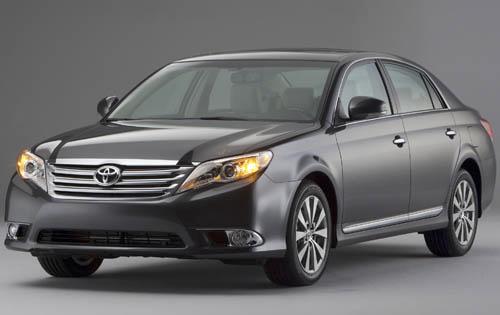
Which Toyota Avalon years are the most reliable? Which years should you avoid? And if you're shopping for a used Avalon, should you choose the traditional V6 or one of the later Avalon Hybrids?
The Toyota Avalon has long been one of the more dependable large sedans. Much of its appeal comes from proven Toyota powertrains, particularly the naturally aspirated V6 engines that powered most Avalons through the years. Later models added an efficient four-cylinder hybrid that can also be an excellent long-term choice.
But not every Avalon year is equally attractive. Older 3.0-liter V6 models require timing-belt maintenance and deserve careful inspection for oil-maintenance history. Early examples of the 3.5-liter V6 can develop oil leaks and other age-related problems, while Avalon Hybrid buyers need to consider the condition and eventual replacement cost of the high-voltage battery.
This guide covers Toyota Avalon model years from 2000 through 2022, including reliability by generation, engine and hybrid differences, common problems, years requiring extra inspection, repair costs, expected lifespan, and the best years to buy.
Why does this guide begin with 2000? The Avalon originally arrived for the 1995 model year, but first-generation 1995-1999 cars are now old enough that individual condition, maintenance history, corrosion, and age-related deterioration matter far more than their original reliability record. This guide begins with the redesigned 2000 Avalon to focus on the model years most relevant to today's used-car shopper.
Why does this guide stop at 2022? The answer is simple: 2022 was the Avalon's final model year in the United States. Toyota discontinued the Avalon after nearly three decades, making the 2019-2022 generation the final chapter of the model's U.S. production run.
In This Guide You'll Learn
- How reliable the Toyota Avalon is over the long term
- Which Toyota Avalon years are the best choices
- Which Avalon years require extra inspection
- The most common problems by generation
- Which Toyota Avalon engine is the most reliable
- How reliable the 3.0-liter and 3.5-liter V6 engines are
- Whether the Toyota Avalon Hybrid is reliable
- How long an Avalon Hybrid battery can last
- What to know about timing-belt maintenance on older Avalons
- What transmission problems buyers should watch for
- How much common Avalon repairs can cost
- How long a Toyota Avalon can realistically last
Is the Toyota Avalon Reliable?
Overall, the 2000-2022 Toyota Avalon has a very good to excellent long-term reliability record.
The Avalon was positioned above the Camry in Toyota's lineup, but it generally avoided the complicated powertrains and expensive technology that can make some older luxury sedans costly to own.
For much of its life, the formula was straightforward: a naturally aspirated V6, conventional automatic transmission, front-wheel drive, comfortable suspension, and a roomy, well-equipped interior.
That combination has produced many Avalons capable of accumulating 200,000 miles or more.
The naturally aspirated 3.5-liter V6 used extensively from 2005 through the end of V6 Avalon production is particularly impressive. It provides strong acceleration while maintaining the durability expected from Toyota.
The Avalon Hybrid, introduced for 2013, adds another attractive option. Its gasoline-electric powertrain is related to Toyota hybrid technology used across millions of vehicles, and the basic hybrid system can be remarkably durable.
Hybrid buyers do, however, need to consider the age and condition of the high-voltage battery. Battery deterioration isn't inevitable at a particular mileage, but it becomes increasingly relevant as a hybrid ages.
As with any older vehicle, an Avalon can also require suspension, steering, cooling-system, air-conditioning, electrical, and other repairs even when its engine remains healthy.
Bottom Line: The Avalon is one of the stronger used large-sedan choices for long-term reliability. We'd give particular consideration to well-maintained later 3.5-liter V6 models, while the Avalon Hybrid can be an excellent choice for buyers willing to evaluate battery condition as part of the purchase.
Reliability at a Glance
| Category | Our Assessment |
|---|---|
| Overall Reliability | Very Good to Excellent |
| Strong Older Years | 2003-2004 |
| Strong Third-Generation Years | 2009-2012 |
| Strong Fourth-Generation Years | 2015-2018 |
| Strong Final-Generation Years | 2020-2022 |
| Years Requiring Extra Inspection | 2000-2002 due largely to age and maintenance history; 2005-2008 as earlier 3.5-liter models; 2013-2014 as early fourth-generation models |
| Most Proven Gasoline Engine | 3.5-liter naturally aspirated V6 |
| Hybrid Reliability | Very Good to Excellent |
| Expected Lifespan | 200,000-250,000+ miles with good maintenance |
Buyer Tip: Avalons frequently attract owners who keep their cars for many years, which can work in your favor. A one- or two-owner Avalon with extensive maintenance records may be a much better purchase than a newer example with an uncertain history.
Possibly Buying Soon? Know What the Dealer Knows
Before you sign, learn:
- What you don't know about dealer trade-in offers could cost you - Which dealer fees you must pay, can negotiate, or should avoid - How to avoid giving the dealer the upper hand on a used car price - How to avoid overpaying for a new car
Reliability by Generation
2000-2004: Second-Generation Toyota Avalon
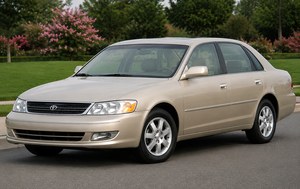
Toyota completely redesigned the Avalon for 2000, creating a larger and more refined sedan while retaining a relatively simple mechanical layout.
Every 2000-2004 Avalon uses a naturally aspirated 3.0-liter V6 paired with an automatic transmission and front-wheel drive.
These cars can be remarkably durable, but they're now old enough that maintenance history and overall condition matter much more than their original reliability reputation.
3.0-Liter V6 Reliability
The naturally aspirated 3.0-liter V6 can provide very high mileage when properly maintained.
Two issues deserve particular attention today: oil-change history and timing-belt maintenance.
Toyota V6 engines from this general era developed a reputation for oil-sludge formation when oil changes were neglected or operating conditions were severe.
That doesn't mean every 2000-2004 Avalon is destined to develop sludge. A properly maintained engine with consistent oil changes can have a very different history.
For that reason, we'd place considerable value on service records.
Check the oil level and condition, listen for abnormal engine noise, look for warning lights, and inspect for evidence of excessive deposits or neglected maintenance.
Buyer Tip: On a 20-plus-year-old Avalon, a documented history of regular oil changes is more valuable than simply finding the lowest odometer reading.
Timing-Belt Maintenance
The 3.0-liter V6 uses a timing belt rather than the timing-chain design found on the later 3.5-liter V6.
A timing belt is a normal scheduled-maintenance item, not a reliability defect. The concern arises when an owner postpones replacement or can't provide documentation showing when the work was performed.
Because replacing the water pump and related components can make sense while the timing-belt area is already accessible, records showing comprehensive timing-belt service are particularly valuable.
If the seller can't document the service, we'd assume it may need to be done and account for that expense when negotiating the purchase price.
Oil Leaks and Age-Related Repairs
Even a mechanically healthy 2000-2004 Avalon can develop oil seepage or leaks as seals and gaskets age.
Valve-cover gasket leakage is one possibility, while cooling-system components, motor mounts, suspension bushings, struts, wheel bearings, starters, alternators, and air-conditioning components can also require attention simply because of age and mileage.
This is why an inexpensive older Avalon isn't necessarily an inexpensive car to put back into excellent condition.
Common 2000-2004 Avalon Problems
- Oil sludge concerns when oil changes were neglected
- Timing-belt replacement requirements
- Valve-cover and other oil leaks
- Water pump and cooling-system deterioration
- Motor mount wear
- Strut and suspension bushing wear
- Wheel bearing problems
- Power steering leaks and age-related steering repairs
- Starter and alternator replacement
- Air-conditioning problems
- Electrical accessory and interior component failures
Bottom Line: The 2000-2004 Avalon can still be a dependable inexpensive sedan, but we'd buy almost entirely on condition and maintenance history. Oil-change records and documented timing-belt service are especially important.
2000-2002: Earlier Second-Generation Avalons
We wouldn't automatically avoid the 2000-2002 Avalon, but these cars are now extremely old by used-car standards.
A low odometer reading doesn't reverse the effects of time. Rubber seals, hoses, suspension bushings, wiring, cooling-system components, air-conditioning equipment, and interior materials can deteriorate even when a vehicle isn't driven extensively.
We'd consider one if it had excellent records, little corrosion, a healthy drivetrain, and a price appropriate for its age.
2003-2004: Our Preferred Second-Generation Years
If you're specifically looking for an inexpensive second-generation Avalon, we'd start with 2003-2004.
They're the final years of the generation and retain the mechanically straightforward 3.0-liter V6 drivetrain.
But model year is secondary at this age. A meticulously maintained 2002 can easily be a better purchase than a neglected 2004.
Bottom Line: We'd favor 2003-2004 within this generation, but maintenance history, timing-belt documentation, corrosion, and overall condition should determine the purchase.
2005-2012: Third-Generation Toyota Avalon
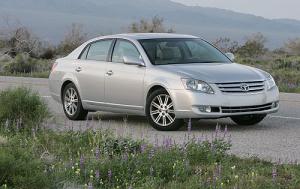
The Avalon was completely redesigned again for 2005, and this generation introduced one of the most important engines in the model's history: Toyota's naturally aspirated 3.5-liter V6.
The new engine transformed the Avalon into a surprisingly quick large sedan while retaining excellent long-term durability.
For today's used buyer, the 2005-2012 generation can offer tremendous value. These cars are old enough to be relatively affordable but still provide impressive comfort, interior space, performance, and highway refinement.
3.5-Liter V6 Reliability
The naturally aspirated 3.5-liter V6 is our preferred gasoline Avalon engine.
It produces considerably more power than the older 3.0-liter while establishing an excellent reliability record across a wide range of Toyota and Lexus vehicles.
It also uses timing chains rather than a regularly scheduled timing belt, eliminating one of the major maintenance requirements associated with the older engine.
A properly maintained 3.5-liter Avalon can realistically exceed 200,000 miles, and substantially higher mileage is possible.
That doesn't mean the engine never needs repairs. Water pumps, ignition coils, sensors, seals, accessory components, and other parts can require replacement as mileage increases.
Some engines can also develop oil leakage or seepage that deserves evaluation before purchase.
But the fundamental engine design is one of the Avalon's greatest strengths.
Oil Line and Oil Leak Concerns
Earlier versions of Toyota's 3.5-liter V6 deserve inspection for oil leakage, including around external oil-line components used on some applications.
A substantial oil leak should never be dismissed simply because the engine has a strong reputation.
Loss of engine oil can become serious if ignored, so we'd inspect the engine carefully and review service history for previous oil-line updates or repairs where applicable.
Also look for valve-cover leakage and other age-related seepage.
Buyer Tip: After a test drive, look underneath the car and inspect the engine compartment for fresh oil. A clean driveway where the car was parked doesn't necessarily prove there isn't a leak.
Water Pump Repairs
Water pumps can require replacement on higher-mileage 3.5-liter V6 engines.
Watch for coolant residue, active leakage, coolant odor, unexplained coolant loss, or abnormal operating temperatures.
A water-pump replacement doesn't make the 3.5-liter V6 an unreliable engine. It's better viewed as a potentially significant repair during the life of an engine capable of accumulating very high mileage.
Transmission Reliability
The automatic transmissions used in the third-generation Avalon are generally durable, but we'd still evaluate transmission behavior carefully on any 15- to 20-year-old example.
Look for delayed engagement, slipping, shuddering, abrupt shifts, unusual noises, or hesitation during acceleration.
Service history can also be useful. A vehicle that has received reasonable drivetrain maintenance throughout its life is more reassuring than one whose owner insists the transmission fluid should never be touched because it's "lifetime" fluid.
By this age, how an individual transmission was driven and maintained matters more than broad assumptions about the model.
Dashboard and Interior Deterioration
Some Avalons from this period can develop deterioration of dashboard or interior surfaces, particularly after years of exposure to intense heat and sunlight.
This is primarily a cosmetic and ownership-quality issue rather than a drivetrain concern, but replacing damaged interior components can be expensive relative to the value of an older car.
Inspect the dashboard, door panels, seat surfaces, controls, trim pieces, and headliner carefully.
Common 2005-2012 Avalon Problems
- Oil leaks or seepage on some 3.5-liter V6 engines
- Oil-line concerns on certain earlier 3.5-liter applications
- Water pump and cooling-system repairs
- Ignition coil and sensor failures at higher mileage
- Motor mount deterioration
- Strut and suspension bushing wear
- Wheel bearing problems
- Brake and rotor wear
- Dashboard and interior material deterioration
- Air-conditioning problems
- Electrical accessory issues
- Normal automatic-transmission wear on high-mileage examples
Bottom Line: The third-generation Avalon is one of the better values in an older used sedan. The 3.5-liter V6 is powerful and highly durable, but age, oil leaks, cooling-system condition, suspension wear, and maintenance history deserve careful inspection.
2005-2008: Good Cars, But We'd Be More Selective
The 2005-2008 Avalons aren't poor vehicles. In fact, many have accumulated impressive mileage.
Our preference for later third-generation years comes primarily from their additional production maturity and younger age.
When considering a 2005-2008 Avalon, we'd pay particular attention to oil leaks, cooling-system condition, transmission behavior, dashboard condition, suspension wear, and evidence that previous owners kept up with maintenance.
A well-maintained early third-generation Avalon can still be an excellent inexpensive car.
2009-2012: Our Preferred Third-Generation Years
For buyers looking for an older Avalon at a relatively modest price, we'd give 2009-2012 serious consideration.
These cars retain the excellent naturally aspirated 3.5-liter V6 while benefiting from several years of production experience with the third-generation platform.
The 2011 model year also brought a significant styling and equipment refresh, making 2011-2012 especially appealing for buyers who want the newest version of this generation.
By now, however, even these cars are old enough that individual condition can easily outweigh a two- or three-year model-year advantage.
Buyer Tip: A clean 2009-2012 Avalon with 120,000-150,000 miles and excellent service records can still be a very attractive purchase. Don't reject it simply because the odometer has crossed 100,000 miles.
2013-2018: Fourth-Generation Toyota Avalon

Toyota redesigned the Avalon for 2013, giving it more contemporary styling, a more modern interior, and an important new powertrain choice.
The familiar naturally aspirated 3.5-liter V6 continued, but Toyota also introduced the Avalon Hybrid.
That makes this generation particularly interesting to used buyers. Someone prioritizing strong acceleration and traditional mechanical simplicity can choose the V6, while someone prioritizing fuel economy can consider the hybrid.
2013-2018 3.5-Liter V6
The 3.5-liter V6 remained one of the strongest aspects of the Avalon.
By this point Toyota had extensive experience with the engine, and its combination of smoothness, power, and long-term durability makes the V6 Avalon an appealing alternative to more complicated turbocharged luxury sedans.
Regular maintenance remains essential, but a properly maintained engine can provide well over 200,000 miles of service.
At higher mileage, we'd inspect for cooling-system problems, oil leaks, motor mount deterioration, ignition components, and normal age-related wear.
Is the Toyota Avalon Hybrid Reliable?
Yes. The Avalon Hybrid is generally a very reliable vehicle and shouldn't automatically be considered riskier than the V6 simply because it has a gasoline-electric drivetrain.
Toyota had already accumulated extensive hybrid experience before introducing the Avalon Hybrid for 2013.
The hybrid combines a naturally aspirated four-cylinder gasoline engine with electric motors, a high-voltage battery, and an electronically controlled continuously variable transmission.
One advantage of Toyota's hybrid design is that the transmission doesn't operate like a conventional belt-and-pulley CVT. The hybrid transaxle uses a power-split arrangement and has developed a strong durability record in Toyota applications.
The major long-term question is the high-voltage battery.
Avalon Hybrid Battery Lifespan
There is no single mileage at which an Avalon Hybrid battery automatically fails.
Battery life depends on age, climate, usage patterns, temperature exposure, state of charge, and the condition of the individual battery.
Many Toyota hybrid batteries can provide well over 100,000 miles of service, and 150,000-200,000 miles or more is possible.
But age matters independently of mileage. A low-mileage 2013 hybrid still has an old battery in 2026.
That's why we'd evaluate the hybrid battery rather than assuming that low mileage guarantees excellent battery health.
Possible Signs of Hybrid Battery Deterioration
- Noticeably reduced fuel economy
- Rapid changes in the battery state-of-charge display
- Gasoline engine running more frequently than expected
- Reduced hybrid performance
- Hybrid-system warning messages
- Stored battery-related diagnostic trouble codes
- Large differences between individual battery-block readings during professional testing
Buyer Tip: Before buying an older Avalon Hybrid, have the hybrid system scanned and battery condition evaluated. The absence of a dashboard warning light doesn't provide the same information as an actual battery-health assessment.
2013-2014: Early Fourth-Generation Years
We wouldn't automatically avoid the 2013 or 2014 Avalon.
Both the V6 and hybrid powertrains can be very durable.
But these were the first years of a complete redesign, so if two otherwise comparable cars are available, we'd generally lean toward a later fourth-generation example.
On a 2013-2014 Hybrid, battery age also deserves increasing consideration today simply because these cars are now more than a decade old.
2015-2018: Our Preferred Fourth-Generation Years
The 2015-2018 Avalons are among our favorite years in the entire 2000-2022 range.
They combine a mature platform with proven powertrains while remaining modern enough to provide the comfort, safety, and convenience features many buyers expect today.
The V6 is an excellent choice for buyers prioritizing strong performance and an established conventional gasoline drivetrain.
The hybrid is particularly appealing for drivers who cover substantial mileage and value fuel economy, provided the battery and hybrid system test well.
The 2016 model year brought additional styling and suspension updates, making 2016-2018 especially attractive.
Common 2013-2018 Avalon Problems and Concerns
- Water pump and cooling-system repairs at higher mileage
- Oil seepage or leaks as V6 engines age
- Motor mount deterioration
- Wheel bearing wear
- Strut and suspension component wear
- Brake and rotor wear
- Infotainment and electrical accessory problems
- Air-conditioning repairs
- Hybrid battery aging on older Avalon Hybrids
- Normal interior wear and deterioration
Bottom Line: The fourth-generation Avalon is generally an excellent used-car choice. We'd give 2015-2018 particular consideration, with the 3.5-liter V6 offering excellent traditional drivetrain durability and the Avalon Hybrid providing outstanding fuel economy with a generally strong reliability record.
2019-2022: Fifth-Generation Toyota Avalon
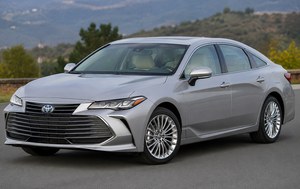
The Avalon received its final complete redesign for 2019.
The fifth generation became more distinctive in appearance and more technologically sophisticated while continuing to offer both gasoline V6 and hybrid powertrains.
These are the newest Avalons available, and they can make excellent used cars for someone who wants Toyota durability with more modern safety, comfort, and infotainment features.
The naturally aspirated 3.5-liter V6 remained available, while the hybrid continued to combine a four-cylinder gasoline engine with Toyota's proven hybrid architecture.
The final generation also introduced more variation within the lineup, including sport-oriented trims and, for a limited period, available all-wheel drive with a four-cylinder gasoline engine.
3.5-Liter V6 in the Final Avalon
The 3.5-liter V6 continued to deliver strong performance and generally excellent basic durability.
For buyers who specifically want a naturally aspirated six-cylinder sedan without turbochargers or a hybrid battery, the 2019-2022 V6 Avalon is particularly interesting because vehicles of this type have become increasingly uncommon.
The engine is paired with an eight-speed automatic transmission rather than the older six-speed automatic.
During a test drive, we'd check carefully for smooth engagement and consistent shifting, particularly at low speeds and during light-throttle driving.
Some shift behavior can reflect transmission programming rather than an impending mechanical failure, but abrupt, delayed, or inconsistent operation deserves investigation.
Final-Generation Avalon Hybrid
The final-generation Avalon Hybrid continued to be one of the more fuel-efficient large sedans available.
Its basic Toyota hybrid architecture is well established, and the hybrid can be an excellent long-term choice.
Because these cars are considerably newer than the first 2013 Avalon Hybrids, battery age is generally less concerning today, although we'd still evaluate the hybrid system on any used vehicle.
For a buyer who drives substantial annual mileage, the hybrid's fuel savings can be significant compared with the V6.
2020-2022: Our Preferred Final-Generation Years
The 2019 Avalon was the first year of the complete redesign, so we'd give 2020-2022 a slight preference when condition and price are comparable.
These final years combine relatively recent safety and convenience technology with powertrains that draw on Toyota's extensive experience with naturally aspirated engines and hybrid systems.
The 2022 Avalon is especially interesting because it represents the final model year of a nameplate that had been sold in the United States since 1995.
Buyer Tip: Don't assume the V6 is automatically the more reliable choice simply because the hybrid has a battery. Both powertrains can be excellent. Your driving habits, fuel costs, battery condition, maintenance history, and intended ownership period should determine which makes more sense.
Common 2019-2022 Avalon Problems and Concerns
- Infotainment and electronic accessory issues
- Eight-speed automatic shift-quality concerns on some V6 cars
- Normal brake and tire wear
- Suspension noise or wear as mileage accumulates
- Cooling-system and water-pump repairs as vehicles age
- Hybrid battery condition on hybrid models
- Sensor and driver-assistance system issues
- Higher replacement costs for some newer electronic components
Bottom Line: The 2019-2022 Avalon is generally a strong final generation. We'd give 2020-2022 a slight preference over the first-year 2019 model, but condition and maintenance history remain more important than that small model-year distinction. Both the V6 and hybrid can be excellent long-term choices.
Best Toyota Avalon Years to Buy
The best Toyota Avalon years depend partly on your budget and whether you prefer the traditional V6 or the fuel-efficient Avalon Hybrid.
For an inexpensive older Avalon, we'd concentrate on the later years of the second and third generations. Buyers with a larger budget have particularly strong choices among the 2015-2018 and 2020-2022 models.
| Model Years | Why We Recommend Them |
|---|---|
| 2003-2004 | Our preferred years from the older 3.0-liter V6 generation. They can be extremely durable when properly maintained, but timing-belt history and overall condition are critical. |
| 2009-2012 | Excellent older used-car values with the proven 3.5-liter V6. The 2011-2012 refresh makes the final two years particularly attractive. |
| 2015-2018 | Among our favorite Avalons overall. These mature fourth-generation cars offer excellent V6 reliability, an available proven Toyota hybrid system, good comfort, and relatively modern features. |
| 2020-2022 | Our preferred years from the final generation. Buyers can choose between the powerful 3.5-liter V6 and highly efficient hybrid while getting newer safety and convenience technology. |
Buyer Tip: Don't automatically pay substantially more for a low-mileage Avalon. A well-maintained 120,000-mile car with extensive service records may be a better purchase than a 70,000-mile example that received irregular maintenance or spent years making short trips with little attention beyond oil changes.
Bottom Line: We'd put 2015-2018 near the top of the list for overall value and 2020-2022 at the top for buyers wanting a newer Avalon. Budget shoppers should give well-maintained 2009-2012 cars serious consideration.
Toyota Avalon Years to Avoid or Inspect Carefully
There are relatively few Avalon years we'd automatically tell every buyer to avoid. The more useful approach is identifying the years that deserve additional inspection because of age, particular mechanical concerns, or first-year redesign issues.
| Model Years | Why Extra Inspection Is Important |
|---|---|
| 2000-2002 | These can still be durable cars, but their age makes oil-maintenance history, timing-belt service, cooling-system condition, suspension wear, oil leaks, and deterioration of rubber and electrical components particularly important. |
| 2005-2008 | Early third-generation models introduced the 3.5-liter V6. Inspect carefully for oil leaks, oil-line history where applicable, water-pump problems, transmission behavior, dashboard deterioration, and age-related suspension repairs. |
| 2013-2014 | First years of the fourth-generation redesign. Not inherently unreliable, but we'd generally favor later 2015-2018 examples when price and condition are comparable. Hybrid battery age deserves consideration today. |
| 2019 | First year of the final redesign. Generally a good car, but we'd give 2020-2022 a slight preference when otherwise comparable. |
It's important not to interpret this table as meaning every 2005 or 2013 Avalon is a bad car. Many have provided excellent service.
A meticulously maintained 2007 Avalon with a healthy drivetrain can easily be a better purchase than a neglected 2012. Similarly, a properly maintained 2013 Avalon Hybrid with a healthy battery can be an excellent used car.
Buyer Tip: Use "years to avoid" lists to identify what needs additional investigation, not as a substitute for inspecting the individual car. Maintenance history and present condition become increasingly important as an Avalon ages.
Which Toyota Avalon Engine Is Most Reliable?
Toyota used several powertrains during the 2000-2022 period, but the naturally aspirated 3.5-liter V6 stands out as our preferred gasoline engine.
That doesn't mean the older 3.0-liter V6 or later hybrid powertrain should be avoided. Each has advantages and maintenance considerations.
3.0-Liter V6
The naturally aspirated 3.0-liter V6 used in the 2000-2004 Avalon can be extremely durable when properly maintained.
Its biggest disadvantages today are age and maintenance requirements rather than poor fundamental engineering.
Oil-change history matters because neglected engines from this era can develop sludge and deposit problems. The engine also uses a timing belt requiring periodic replacement.
With good records and proper maintenance, however, a 3.0-liter Avalon can exceed 200,000 miles.
3.5-Liter V6
The naturally aspirated 3.5-liter V6 is our favorite conventional Avalon engine.
It combines strong acceleration with excellent durability and uses timing chains rather than a scheduled-replacement timing belt.
Depending on year and mileage, buyers should inspect for oil leakage, water-pump problems, ignition-component wear, motor mounts, and cooling-system condition.
But these are concerns surrounding an engine with an excellent fundamental longevity record.
For a buyer who wants a conventional gasoline Avalon and plans to keep it for many years, we'd be very comfortable with a well-maintained 3.5-liter V6.
2.5-Liter Avalon Hybrid
The four-cylinder hybrid powertrain deserves to be considered separately from the conventional V6 engines.
Its gasoline engine operates as part of Toyota's hybrid system and is paired with an electronically controlled power-split transaxle rather than a conventional automatic transmission.
The basic architecture has a very good reliability record.
Its biggest long-term variable is the high-voltage battery. As the vehicle ages, we'd increasingly want battery-health information before purchasing.
A healthy Avalon Hybrid can nevertheless be an exceptionally durable car and may have lower fuel and brake costs than the V6.
Bottom Line: For conventional gasoline Avalons, the 3.5-liter V6 is our preferred engine. The Avalon Hybrid is also an excellent long-term choice, but an older hybrid should include battery-health testing as part of the pre-purchase inspection.
How Long Does an Avalon Hybrid Battery Last?
There is no fixed expiration mileage for an Avalon Hybrid battery.
A battery may remain healthy well beyond 150,000 miles, and some can provide 200,000 miles or more of service. Other batteries may deteriorate sooner because of age, climate, heat exposure, or individual usage patterns.
For today's used buyer, calendar age can be as important as mileage.
A 2013 Avalon Hybrid with only 70,000 miles may sound particularly attractive, but its battery is still more than a decade old. Conversely, a newer high-mileage hybrid that accumulated most of its mileage through regular highway use may still have a healthy battery.
That's why we'd rather see actual battery-health information than make a purchasing decision based solely on the odometer.
If the Hybrid Battery Eventually Fails
Battery replacement doesn't necessarily mean the car is finished.
Depending on the vehicle's age and condition, replacing the battery may make financial sense, particularly if the engine, hybrid transaxle, body, interior, and other major components remain in excellent condition.
Replacement choices can include a new battery, remanufactured or refurbished units, or specialized hybrid repair options. Prices and warranties vary considerably.
We'd generally place greater value on a quality replacement with a meaningful warranty than simply choosing the least expensive battery available.
Buyer Tip: If you're considering an older Avalon Hybrid, don't automatically reject it because the original battery is aging. Determine its actual condition and compare any potential replacement cost with the purchase price and condition of the rest of the car.
Toyota Avalon Repair & Maintenance Costs
The Avalon is generally less expensive to keep on the road than many similarly comfortable luxury-brand sedans, but that doesn't make every repair inexpensive.
As mileage accumulates, suspension components, wheel bearings, cooling-system parts, air-conditioning equipment, motor mounts, and electrical components can require attention even when the engine and transmission remain healthy.
| Maintenance or Repair | Typical Cost |
|---|---|
| Oil change | $60-$120 |
| Brake pads and rotors | $400-$900+ |
| Wheel bearing replacement | $400-$800+ |
| 3.0-liter V6 timing belt and water pump | $800-$1,400+ |
| Water pump replacement | $600-$1,300+ |
| Struts and significant suspension work | $800-$2,000+ |
| Motor mount replacement | $400-$1,200+ depending on mounts |
| Hybrid battery replacement | $2,000-$5,000+ depending on battery and repair option |
| Major automatic transmission repair or replacement | $3,500-$6,500+ |
These are general budgeting ranges rather than repair quotes. Actual prices vary substantially according to model year, location, labor rates, parts selection, and whether repairs are performed by a Toyota dealer, independent shop, or hybrid specialist.
Buyer Tip: When comparing two used Avalons, consider recently completed maintenance as part of the car's value. New tires, brakes, struts, a water pump, or documented timing-belt service can represent substantial money you may not have to spend shortly after purchase.
How Long Does a Toyota Avalon Last?
A properly maintained Toyota Avalon can realistically last 200,000-250,000 miles, and exceptionally well-maintained examples can reach 300,000 miles or more.
The Avalon is one of those cars where 100,000 miles shouldn't automatically be considered high mileage.
A well-maintained 120,000-mile Avalon may have many years of useful life remaining.
Even 150,000-mile examples can be reasonable purchases when the drivetrain is healthy, maintenance records are strong, corrosion is limited, and the price reflects the mileage.
Typical Avalon Lifespan
- 100,000 miles: Routine for a properly maintained Avalon.
- 150,000 miles: Still a reasonable used purchase with good maintenance history.
- 200,000 miles: A realistic lifespan expectation rather than an exceptional achievement.
- 250,000 miles: Very achievable for a well-maintained example.
- 300,000+ miles: Possible for particularly well-maintained Avalons.
Reaching very high mileage doesn't mean the car will require nothing but oil changes.
Struts, wheel bearings, motor mounts, water pumps, starters, alternators, air-conditioning components, sensors, seals, brakes, and other parts may need replacement along the way.
The distinction is that the Avalon's core drivetrain can often remain viable long enough to make those repairs worthwhile.
Bottom Line: We'd consider 200,000-250,000 miles a realistic lifespan for a properly maintained Avalon, while 300,000 miles is possible. How the car was maintained during its first 100,000 miles often matters more than the number currently showing on its odometer.
What Usually Needs Attention After 100,000 Miles?
Once an Avalon passes 100,000 miles, maintenance records become increasingly useful because they tell you which major wear items have already been addressed.
- Review engine oil-change history.
- Check transmission fluid service history.
- Inspect coolant and cooling-system condition.
- Check spark-plug replacement history.
- Verify timing-belt history on 2000-2004 models.
- Inspect the water pump for leakage.
- Check valve covers and other areas for oil leaks.
- Inspect motor mounts.
- Check struts, bushings, ball joints, and other suspension components.
- Listen for wheel bearing noise.
- Inspect brakes and tires.
- Test the air-conditioning system.
- Test power seats, windows, locks, and other electrical accessories.
- Evaluate automatic-transmission operation.
- On hybrids, scan the hybrid system and evaluate battery health.
- Inspect the underside for corrosion, fluid leaks, and previous damage.
Buyer Tip: Don't be frightened by a maintenance history showing that numerous components have already been replaced. On a high-mileage Avalon, documented repairs can be an advantage because someone else has already paid for work you might otherwise have needed soon after buying the car.
Buying a Used Toyota Avalon: What Matters Most?
The Avalon's strong reputation can make buyers overly confident.
A Toyota badge doesn't compensate for years of neglected oil changes, overheating, ignored warning lights, accident damage, flood exposure, severe corrosion, or poor repairs.
Inspect the individual car rather than buying the reputation.
Before You Buy
- Review maintenance and repair records.
- Check engine oil level and condition.
- Look for oil and coolant leaks.
- Verify timing-belt history on 2000-2004 Avalons.
- Inspect earlier 3.5-liter V6 models carefully for oil leakage.
- Check cooling-system and water-pump condition.
- Start the engine cold and listen for abnormal noises.
- Test the automatic transmission through a variety of speeds.
- Check for delayed engagement, slipping, shuddering, or harsh shifts.
- Inspect motor mounts and suspension components.
- Listen for wheel bearing noise.
- Check tire wear for signs of alignment or suspension problems.
- Test the air conditioning thoroughly.
- Test power seats, windows, locks, mirrors, and infotainment equipment.
- Inspect the dashboard and interior for heat-related deterioration.
- On hybrids, obtain a hybrid-system diagnostic scan.
- On hybrids, evaluate high-voltage battery condition.
- Check accident and ownership history.
- Check the VIN for outstanding recalls.
- Have an independent mechanic perform a pre-purchase inspection.
Buyer Tip: We'd rather buy an Avalon with somewhat higher mileage and excellent service records than a suspiciously cheap low-mileage example with little evidence of maintenance.
Pros & Cons of Buying a Used Toyota Avalon
Pros
- Very good to excellent overall reliability
- 200,000-250,000+ miles is realistic with proper maintenance
- Excellent 3.5-liter V6 durability
- Strong performance from V6 models
- Reliable and fuel-efficient hybrid models available from 2013
- Comfortable ride
- Spacious passenger compartment
- Excellent highway car
- Generally durable automatic transmissions
- Often less expensive to own than comparable luxury-brand sedans
- Many examples were owned by mature long-term owners
- Strong availability of Toyota parts and service expertise
- Later models offer modern comfort and safety equipment
Cons
- Older 3.0-liter V6 requires timing-belt maintenance
- Neglected early engines can have oil-sludge concerns
- Oil leaks can develop on higher-mileage V6 engines
- Water-pump repairs can be relatively expensive
- Older cars may require substantial suspension and motor-mount work
- Hybrid battery age should be evaluated on older Avalon Hybrids
- Some older interiors can suffer heat and sun deterioration
- Fuel economy of the V6 is much lower than the hybrid
- Large-sedan dimensions may be less convenient in tight urban environments
- The Avalon was discontinued after 2022
Comparing Toyota models? See our Toyota reliability guide for the best used Toyota models and years, common problems to watch for, and how the major Toyota models compare.
Final Verdict
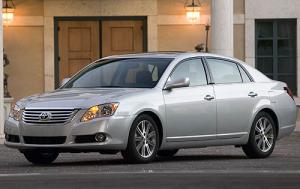
The 2000-2022 Toyota Avalon is one of the better used-car choices for buyers who value comfort, durability, interior space, and long-term ownership more than sporty handling or a luxury-brand badge.
The oldest 2000-2004 cars can still provide dependable transportation, but we'd buy them primarily on condition. Regular oil-change history and documented timing-belt maintenance are particularly important. Within this generation, we'd give 2003-2004 a slight preference.
The 2005-2012 generation is where the Avalon becomes especially interesting to today's budget-conscious buyer. Toyota's naturally aspirated 3.5-liter V6 provides strong performance and excellent basic durability, while the Avalon's age can keep purchase prices relatively reasonable.
We'd be somewhat more selective with 2005-2008 models and put greater emphasis on 2009-2012, particularly the refreshed 2011-2012 cars.
The 2013-2018 generation adds another compelling choice: the Avalon Hybrid. Buyers no longer have to choose between a large comfortable sedan and good fuel economy.
We'd give 2015-2018 particular consideration. The V6 remains an excellent choice for someone who wants strong acceleration and a conventional gasoline drivetrain, while the hybrid can be an outstanding high-mileage commuter if its battery and hybrid system are healthy.
The 2019-2022 final generation is the logical choice for buyers who want a newer Avalon with more contemporary safety, technology, and convenience features. We'd give 2020-2022 a slight preference over the first-year 2019 model when condition and price are otherwise similar.
Across all generations, the naturally aspirated 3.5-liter V6 is our favorite conventional Avalon engine. It's powerful, well proven, and capable of very high mileage with proper maintenance.
But we wouldn't automatically choose the V6 over an Avalon Hybrid. Toyota's hybrid system has an excellent durability record, and a healthy hybrid can dramatically reduce fuel consumption. On older hybrids, battery condition simply becomes another important part of the pre-purchase inspection.
Most importantly, don't buy an Avalon solely because of its reputation. Look for maintenance records, inspect the drivetrain and cooling system, evaluate the transmission, check suspension and electrical equipment, and have an independent mechanic inspect the car before purchase.
Choose carefully, and a Toyota Avalon can realistically provide 200,000-250,000 miles or more of service. That's a major reason the Avalon remains one of the more appealing used large sedans even though Toyota stopped building it after 2022.