

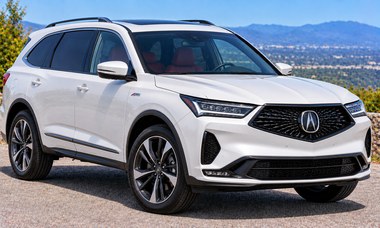
The Acura MDX has been one of the most popular three-row luxury SUVs for more than two decades, and a well-maintained one can realistically reach 200,000 miles or more. Its naturally aspirated V6 engines are generally durable, parts and service are widely available, and ownership costs can be considerably more manageable than those of many European luxury SUVs.
But the MDX reliability story varies substantially by generation. Early models developed a reputation for expensive automatic-transmission problems, later versions introduced more complicated transmissions and electronics, and timing-belt maintenance remains important on the V6 engines. Some model years are much more attractive used purchases than others.
This guide covers the 2001-2024 Acura MDX sold in the U.S., including the 3.5-liter and 3.7-liter V6 engines, conventional AWD and SH-AWD systems, six-speed, nine-speed and 10-speed automatic transmissions, and the Sport Hybrid. There was no 2021 MDX model year between the third and fourth generations.
In This Guide You'll Learn
- Which Acura MDX years are generally the best to buy
- Which MDX years deserve more caution
- How many miles an Acura MDX can last
- Which Acura MDX generation is most reliable
- How reliable the 3.5-liter and 3.7-liter V6 engines are
- Which MDX years have the greatest transmission concerns
- Whether the nine-speed automatic is reliable
- How reliable Acura SH-AWD is at high mileage
- Why timing-belt maintenance is so important
- Which MDX powertrain I'd choose for long-term ownership
Acura MDX Reliability Overview
Overall, the Acura MDX has above-average long-term reliability for a luxury SUV, but the individual powertrain matters. The basic V6 engines are capable of substantial mileage, and it's not unusual for a properly maintained MDX to remain useful well beyond 150,000 miles.
The most important exception is the early automatic transmission. First-generation MDX models, particularly earlier years, deserve careful evaluation because transmission failure can easily cost enough to overwhelm the economics of buying an inexpensive older vehicle.
Later generations improved considerably, but they brought different concerns. The second generation uses a 3.7-liter V6 and SH-AWD and can be very durable, although oil consumption and age-related drivetrain repairs deserve attention on some examples.
The third-generation MDX returned to a 3.5-liter V6. Earlier versions used a six-speed automatic, while later models switched to a nine-speed automatic that generated complaints about shift quality and behavior. These vehicles can still be good long-term purchases, but I'd evaluate transmission operation carefully.
The fourth generation introduced a 10-speed automatic and substantially more technology. Early reliability is generally encouraging, but 2022-2024 models simply haven't accumulated the long-term mileage history available for the older generations.
One characteristic spans most of the lineup: timing-belt maintenance matters. The MDX's V6 engines use timing belts, so documented replacement at the appropriate interval is an important part of evaluating a high-mileage used MDX.
Acura MDX Reliability at a Glance
| Category | Assessment |
|---|---|
| Overall Reliability | Above average for a luxury SUV |
| Expected Lifespan | About 200,000-250,000+ miles with excellent maintenance |
| Strong Used-Car Years | Later second-generation and selected third-generation models |
| Best Proven Engine | Naturally aspirated 3.5-liter V6 |
| Major Early-MDX Concern | Automatic transmission failure |
| Major Maintenance Item | Timing belt and related service |
| Later Transmission Concern | Nine-speed automatic shift quality and behavior |
| High-Mileage Potential | Excellent with documented maintenance |
If you may be buying soon, I'd recommend reading my most effective negotiation methods for either new cars or used cars. Each explains a quick way to identify the dealerships most motivated to deal, no matter how busy they may seem, and how to follow up once you've found them. That can be the difference between getting a good price and getting a great one.
How Many Miles Can an Acura MDX Last?
A well-maintained Acura MDX can realistically last 200,000 to 250,000 miles or more. The V6 engine itself is often capable of very high mileage, although transmission condition, timing-belt maintenance and the growing number of age-related repairs ultimately determine whether keeping an older MDX remains economical.
At 100,000 miles, I wouldn't consider a properly maintained MDX particularly high mileage. This is an important maintenance point, however, because timing-belt service becomes critical and other wear items may begin appearing.
At 150,000 miles, maintenance history becomes far more important than the number on the odometer. I'd want to know whether timing-belt service was completed, whether transmission and AWD fluids were maintained, and what suspension and cooling-system components have already been replaced.
At 200,000 miles, a healthy V6 may still have plenty of life remaining. The larger question is the condition of the transmission, SH-AWD system, suspension, wheel bearings, engine mounts, air conditioning and electronics.
Reaching 250,000 miles or more is possible, particularly for an MDX that received consistent maintenance throughout its life. But high mileage should never be confused with maintenance-free ownership. By this point, a vehicle will usually have required substantial work beyond routine oil changes.
Buyer comparison: I'd rather buy a 140,000-mile MDX with documented timing-belt service, regular transmission-fluid maintenance and extensive records than a 90,000-mile example with an uncertain history and years of deferred maintenance.
Acura MDX Reliability by Generation
2001-2006: First-Generation Acura MDX

The first-generation Acura MDX, sold for 2001-2006, established Acura's three-row luxury SUV formula. It combined a naturally aspirated 3.5-liter V6 with standard four-wheel drive, a comfortable interior and considerably more car-like road manners than many SUVs of the period.
The V6 itself can be durable, but the automatic transmission is the issue that dominates the used-car discussion. Honda and Acura automatic-transmission problems from this era are well known, and the MDX was not immune.
Later first-generation models benefited from improvements, but any surviving example is now old enough that I'd judge transmission behavior and maintenance history very carefully.
Common First-Generation Acura MDX Problems
- Automatic transmission failure: The most important expensive mechanical concern, particularly on earlier examples.
- Torque-converter and shifting problems: Shuddering, slipping, delayed engagement or abnormal shifts deserve investigation.
- Timing-belt maintenance: Replacement history is essential on an older high-mileage V6.
- Engine and transmission mounts: Deteriorated mounts can cause excessive vibration.
- Suspension wear: Struts, bushings, control-arm components and wheel bearings may require replacement.
- Age-related electrical problems: Navigation, accessories, switches and other electronics can develop problems as these vehicles age.
Buyer Tip: Transmission condition would be my first concern on a first-generation MDX. A low purchase price isn't enough to compensate for a transmission showing signs of failure. I'd also want documentation of timing-belt service and regular drivetrain-fluid maintenance.
Bottom Line: A good first-generation MDX can still provide useful transportation, but transmission risk and extreme age make this the generation I'd approach most cautiously.
2007-2013: Second-Generation Acura MDX
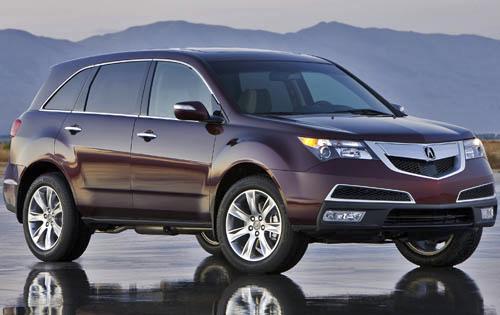
The second-generation Acura MDX, sold for 2007-2013, was a more sophisticated and performance-oriented SUV. Acura increased displacement to a 3.7-liter V6 and paired it with the company's SH-AWD system.
The result is one of the more enjoyable MDX generations to drive. The 3.7-liter V6 provides strong performance and can accumulate substantial mileage, while SH-AWD improves handling as well as traction.
Early second-generation models use a five-speed automatic, while later versions received a six-speed. Transmission reliability is improved compared with the earliest MDX years, although smooth operation and evidence of proper fluid maintenance still matter.
Some 3.7-liter engines can consume oil as mileage accumulates, so I'd ask about oil usage rather than relying only on whether the engine appears dry during an inspection.
Common Second-Generation Acura MDX Problems
- Oil consumption: Some 3.7-liter V6 engines can use increasing amounts of oil as mileage accumulates.
- Timing-belt maintenance: Documentation remains important, particularly around major mileage intervals.
- Automatic-transmission behavior: Check carefully for shuddering, delayed shifts or other abnormalities.
- SH-AWD maintenance: Differential-fluid service shouldn't be ignored.
- Suspension wear: Struts, bushings and other components can become expensive when several need attention simultaneously.
- Engine mounts: Worn mounts can produce noticeable vibration.
Buyer Tip: Check the engine-oil level before the test drive and ask whether the owner adds oil between changes. I'd also look for records showing timing-belt and SH-AWD fluid service.
Bottom Line: The second-generation MDX is a substantial improvement over the earliest models and can be an excellent high-mileage luxury SUV. Later examples with good records are particularly attractive.
2014-2020: Third-Generation Acura MDX
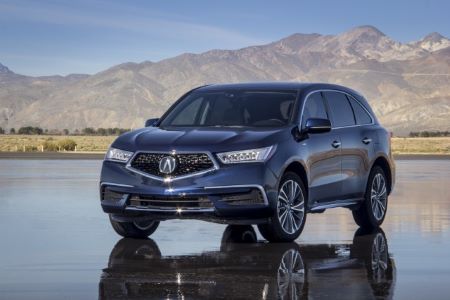
The third-generation Acura MDX, sold for 2014-2020, returned to a 3.5-liter V6 and became lighter and more fuel efficient than its predecessor. Front-wheel drive became available in addition to SH-AWD, giving buyers the option of a simpler drivetrain.
The 3.5-liter V6 provides a strong combination of performance and longevity, but transmission choice divides this generation. The 2014-2015 models use a conventional six-speed automatic, while 2016 and later conventional MDX models use a nine-speed automatic.
The nine-speed can produce shift behavior some drivers find unusual, including hesitation, abruptness or frequent gear changes. Not every transmission displaying unfamiliar behavior is failing, but I'd want any used example to shift consistently and have no unresolved warning lights or obvious drivability problems.
The MDX Sport Hybrid, introduced during this generation, uses a different drivetrain combining a 3.0-liter V6 with electric motors and a dual-clutch transmission. It provides impressive performance and efficiency but is mechanically more complex than a conventional MDX.
Common Third-Generation Acura MDX Problems
- Nine-speed transmission complaints: Hesitation, rough or unexpected shifts are worth evaluating carefully on 2016 and later conventional models.
- Timing-belt maintenance: Still a major scheduled service on the V6.
- Engine-related concerns: Service history and any applicable manufacturer campaigns or recalls should be checked by VIN.
- Infotainment problems: Screens, controls and electronic systems can occasionally malfunction or become frustrating as they age.
- Suspension and wheel-bearing wear: Increasingly relevant on higher-mileage examples.
- SH-AWD maintenance: Proper fluid servicing remains important for long-term drivetrain health.
Buyer Tip: If transmission simplicity is a priority, the 2014-2015 six-speed models are worth particular attention. On a 2016-2020 MDX, spend enough time driving the vehicle to evaluate the nine-speed under low-speed, moderate and highway acceleration.
Bottom Line: The third-generation MDX can be a very good used luxury SUV, particularly with a strong maintenance history. I'd distinguish carefully between the earlier six-speed and later nine-speed models rather than treating the entire generation as mechanically identical.
2022-2024: Fourth-Generation Acura MDX
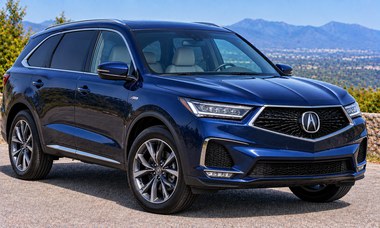
The fourth-generation Acura MDX began with the 2022 model year after Acura skipped the 2021 model year. It brought a redesigned platform, significantly updated interior technology and a new 10-speed automatic transmission.
The standard MDX continues to use a naturally aspirated 3.5-liter V6, which is encouraging for buyers who prefer a proven engine configuration rather than a smaller turbocharged replacement.
The performance-oriented Type S adds a turbocharged 3.0-liter V6. It's substantially more powerful but also adds complexity, so I'd treat its long-term ownership equation separately from the standard naturally aspirated MDX.
As with the newest Lexus RX generation, the biggest limitation in assessing these MDXs is simply time. A 2022-2024 vehicle hasn't had the opportunity to demonstrate what commonly happens at 150,000 or 200,000 miles.
Common Fourth-Generation Acura MDX Concerns
- Limited long-term history: These vehicles haven't accumulated enough age and mileage to match the evidence available for older generations.
- Electronic complexity: More driver-assistance, infotainment and convenience systems create additional potential repair points.
- 10-speed transmission: Long-term durability at very high mileage is still developing compared with older MDX transmissions.
- Type S complexity: The turbocharged engine and performance hardware add components not found on the standard MDX.
Buyer Tip: For long-term ownership, I'd distinguish between the standard naturally aspirated 3.5-liter MDX and the turbocharged Type S. The Type S is the performance choice; the standard V6 is the configuration I'd favor if simplicity and proven engine architecture were higher priorities.
Bottom Line: The fourth-generation MDX is promising and retains a naturally aspirated V6 in standard models, but 2022-2024 examples are still too new to have the high-mileage history of the best older MDX generations.
Which Acura MDX Generation Is Most Reliable?
For a combination of proven durability, age and used-car value, I'd concentrate on the later second-generation and third-generation MDX.
The second generation has accumulated extensive high-mileage history, and later examples avoid much of the transmission concern associated with the earliest MDX models. The 3.7-liter V6 can be very durable, although oil consumption should be checked.
The third generation gives buyers a newer vehicle and the 3.5-liter V6. Within that generation, I'd give particular consideration to the 2014-2015 models with the six-speed automatic if long-term mechanical simplicity were my priority.
Which would I buy? For maximum value, I'd look closely at a well-maintained later second-generation MDX. If I wanted something newer while still emphasizing a relatively straightforward drivetrain, a 2014-2015 third-generation MDX would be especially interesting.
Acura MDX 3.5 vs. 3.7 V6 Reliability
Both engines can provide excellent longevity, but if reliability were my overriding priority, I'd give the edge to the naturally aspirated 3.5-liter V6. Acura's J-series V6 family includes numerous individual engine codes, but buyers don't need to memorize them; the important distinction here is between the MDX's 3.5-liter and 3.7-liter naturally aspirated V6 engines.
The 3.5-liter has been used in multiple MDX generations and has an extensive durability record. With proper maintenance, 200,000 miles is a realistic expectation, and considerably higher mileage is possible.
The 3.7-liter provides strong performance and can also last a long time, but oil consumption on some higher-mileage engines makes checking the oil level and asking about consumption particularly important.
Both use timing belts, so neither eliminates that major maintenance requirement.
Buyer comparison: Given two equally well-maintained MDXs, I'd favor the 3.5-liter V6 for maximum long-term ownership confidence. I wouldn't reject a good 3.7-liter, but I'd investigate its oil-consumption history carefully.
Acura MDX Transmission Reliability
Transmission reliability varies enough by generation that it should be one of the first things a used MDX buyer considers.
The early first-generation automatic transmission carries the greatest risk. A first-generation MDX with abnormal shifting, slipping or delayed engagement isn't a vehicle I'd buy simply because the price appears attractive.
The later five-speed and six-speed transmissions represent a better ownership proposition, particularly when fluid maintenance has been consistent.
The nine-speed automatic introduced for 2016 is more complicated. Some characteristics that drivers interpret as problems can result from its shift programming, but hesitation, harshness or inconsistent behavior still deserves careful evaluation.
The fourth-generation 10-speed provides smoother performance and more ratios, but it hasn't yet accumulated the same long-term history as the older transmissions.
Buyer comparison: If my objective were to own an MDX from roughly 100,000 through 200,000 miles with the simplest transmission equation, I'd be particularly interested in a well-maintained six-speed model rather than an early first-generation automatic or an unknown-history nine-speed.
Is the Acura MDX Nine-Speed Transmission Reliable?
The nine-speed automatic used in later third-generation MDX models isn't a transmission I'd automatically avoid, but I'd evaluate it more carefully than the earlier six-speed.
Its programming and wide ratio spread can create shift behavior that feels different from a conventional six-speed. Owners have reported hesitation, abrupt shifts and other drivability complaints, and software updates or service procedures have addressed some concerns.
During a used-car test drive, don't simply accelerate once onto the highway. Drive in stop-and-go traffic, accelerate moderately from low speeds, coast and reapply the throttle, and observe downshifts as well as upshifts.
A smooth, well-maintained nine-speed shouldn't be rejected solely because of the transmission's reputation. But if two otherwise comparable MDXs were available and mechanical simplicity were my priority, I'd favor the six-speed.
Is Acura SH-AWD Reliable?
Yes. Acura's SH-AWD system can remain reliable at high mileage, and I wouldn't avoid an MDX equipped with it simply because of the additional drivetrain components.
The system improves traction and can distribute torque in ways that also help the MDX handle more responsively. The tradeoff is additional mechanical complexity compared with a front-wheel-drive MDX.
Fluid maintenance matters. On a used SH-AWD model, I'd want evidence that differential and other drivetrain fluids weren't ignored for years.
Listen for abnormal whining, grinding or bearing noises and make sure all four tires are appropriately matched in size and wear.
Buyer comparison: If I lived where snow, steep terrain or poor-weather traction mattered, I'd choose SH-AWD without much hesitation. If I lived in a warm, flat climate and wanted the simplest possible high-mileage MDX, a front-wheel-drive third-generation model would eliminate some drivetrain components I didn't really need.
Best Acura MDX Years to Buy
For most used buyers, I'd concentrate on the 2010-2015 Acura MDX. This range includes the later years of the second generation and the first two years of the third generation, giving buyers several strong choices before the nine-speed automatic arrived for 2016.
That doesn't mean later MDXs are poor choices. Many 2016-2020 models have provided excellent service. But if I'm specifically trying to reduce powertrain uncertainty on an older used MDX, the later second-generation models and 2014-2015 six-speed models are particularly appealing.
2010-2013 Acura MDX: Strong Used-Car Value
The later second-generation MDX combines the 3.7-liter V6, SH-AWD and a well-established platform. These models are old enough to be relatively inexpensive but still modern enough to make comfortable everyday family vehicles.
I'd check carefully for oil consumption, verify timing-belt service and review transmission and SH-AWD fluid maintenance. A well-maintained example can still have substantial useful life remaining at 120,000 or 150,000 miles.
2014-2015 Acura MDX: One of the Best Combinations
The 2014-2015 MDX is especially attractive because it combines the third-generation platform and 3.5-liter V6 with a conventional six-speed automatic. For buyers who want to avoid the nine-speed introduced for 2016, these two years deserve particular attention.
Front-wheel drive also became available, giving buyers in climates where AWD isn't necessary an even simpler drivetrain option.
2018-2020 Acura MDX: Good Later Third-Generation Choices
If you want a newer third-generation MDX, the later years are worth considering. The nine-speed automatic remains part of the equation, so I'd still evaluate shift quality carefully, but these vehicles benefit from several years of production refinement.
Condition, service history and transmission behavior would matter more to me than choosing one particular year within this later group.
Acura MDX Years to Approach With More Caution
There isn't a single group of MDX years that every buyer should automatically reject, but several periods deserve additional investigation because of known mechanical concerns.
2001-2005 Acura MDX
The earlier first-generation MDX models deserve the most caution because of their automatic-transmission history. The V6 itself can be extremely durable, but that doesn't make an expensive transmission problem easier to absorb on an older SUV with relatively little market value.
A particularly well-maintained example with a strong transmission may still be worthwhile, but I wouldn't buy one without a thorough test drive and inspection.
2007-2009 Acura MDX
These early second-generation models are substantially more appealing than the earliest MDXs, but today they combine considerable age with the possibility of oil consumption, overdue timing-belt service and accumulated suspension or drivetrain repairs.
I'd buy one based on condition and records rather than assuming that a low odometer reading makes it automatically preferable to a later, higher-mileage MDX.
2016-2017 Acura MDX
These years deserve additional attention because they combine the relatively new third-generation platform with the nine-speed automatic introduced for 2016. Complaints about hesitation, harsh or unexpected shifting and transmission programming make a thorough test drive particularly important.
I wouldn't automatically avoid a smooth-shifting, well-maintained 2016 or 2017 MDX, but given otherwise comparable choices, I'd generally prefer a 2014-2015 six-speed or a well-sorted later third-generation model.
And I can't stress this enough:
Multiple dealers → compete for your business → you save
Most Reliable Acura MDX Engine
The naturally aspirated 3.5-liter V6 is the MDX engine I'd choose for the strongest combination of proven longevity, performance and widespread service experience.
These engines can realistically reach 200,000 miles and beyond when properly maintained. Their biggest ownership requirement is the timing belt, which needs to be treated as essential scheduled maintenance rather than something to postpone indefinitely.
The 3.7-liter V6 used in the second generation can also be very durable, but its potential for oil consumption gives the 3.5-liter an advantage for me as a high-mileage used purchase.
The turbocharged 3.0-liter V6 in the Type S provides substantially more performance but is a different proposition. It adds turbocharging and associated hardware and doesn't yet have the decades of high-mileage evidence available for Acura's naturally aspirated V6 engines.
Acura MDX Timing Belt: Why Maintenance History Matters
Timing-belt history is one of the first things I'd investigate when buying a higher-mileage Acura MDX. Unlike a timing chain designed to remain in service indefinitely under normal conditions, a timing belt is a scheduled maintenance item.
The service is often performed along with the water pump and related components because much of the labor overlaps. A seller with documentation showing that this work was completed has eliminated a significant near-term expense for the next owner.
If an older MDX is near or beyond the appropriate service interval and there is no documentation, I'd assume the work needs to be done rather than accepting a seller's recollection that the previous owner "probably changed it."
A recently completed timing-belt and water-pump service can actually make a higher-mileage MDX more attractive than a lower-mileage one approaching the same major maintenance expense.
Common Acura MDX Problems and Expensive Repairs
The MDX's underlying V6 engines can be long-lived, but several problems can become expensive enough to change whether a particular used MDX represents a good purchase.
Automatic Transmission Problems
The greatest transmission concern is with the earlier first-generation MDX. Symptoms can include slipping, delayed engagement, harsh shifting, abnormal noises or other changes in transmission behavior.
Later transmissions generally present a better ownership proposition, although the nine-speed used beginning in 2016 has its own history of drivability complaints.
On any high-mileage MDX, I'd pay close attention to transmission-fluid history. A durable engine doesn't help much if the transmission has been neglected for 150,000 miles.
3.7-Liter V6 Oil Consumption
Some second-generation MDX models with the 3.7-liter V6 can consume significant oil between changes. This isn't something I'd evaluate solely by looking for an external leak.
Check the dipstick before driving and ask the owner directly how frequently oil needs to be added. A vehicle that has consumed oil but has always been kept properly filled is a different risk from one repeatedly driven with the oil level dangerously low.
Timing-Belt and Water-Pump Service
This is scheduled maintenance rather than a design defect, but it's expensive enough to matter when comparing used MDXs.
I'd much rather pay somewhat more for a vehicle with documented recent timing-belt and water-pump service than save money on the purchase price and immediately inherit the job.
Engine Mounts
Engine and transmission mounts can deteriorate as mileage accumulates. Excessive vibration at idle or when shifting between drive and reverse can indicate worn mounts.
One mount may be manageable, but replacing several mounts can become a meaningful repair expense.
Suspension and Wheel-Bearing Wear
The MDX is a relatively heavy SUV, and struts, control-arm bushings, links and wheel bearings eventually wear. High-mileage examples can require several suspension repairs within a relatively short period.
Listen for clunks and humming or grinding noises, and inspect the tires for unusual wear that could indicate alignment or suspension problems.
SH-AWD Problems
SH-AWD itself can be durable, but neglecting drivetrain-fluid service can increase the likelihood of problems. Abnormal noises, warning lights or binding shouldn't be dismissed.
I'd also make sure the tires are properly matched. AWD vehicles generally benefit from having four tires of the same size and similar wear rather than a mismatched collection installed at different times.
Acura MDX Maintenance and Repair Costs
The MDX can be less expensive to maintain than many European luxury SUVs, but it's still a three-row luxury vehicle with a V6 engine and, on many models, a sophisticated AWD system. High-mileage ownership can involve some substantial repairs.
| Service or Repair | Approximate Cost |
|---|---|
| Oil and Filter Change | $70-$140+ |
| Timing Belt and Water Pump Service | $1,000-$1,700+ |
| Engine Mount Replacement | $500-$1,500+ depending on mounts |
| Brake Pads and Rotors | $500-$1,100+ per axle |
| Wheel Bearing | $400-$800+ each |
| Suspension Repairs | $600-$2,000+ depending on components |
| SH-AWD/Differential Service | $150-$350+ |
| Major Automatic Transmission Repair | $3,000-$6,000+ depending on model and repair |
Actual prices vary substantially by location, model year, labor rate and parts used. A good independent Honda/Acura specialist can often reduce ownership costs compared with relying exclusively on an Acura dealership.
Acura MDX Maintenance After 100,000 Miles
A properly maintained MDX with 100,000 miles may still have another 100,000 miles or more of useful life ahead, but this is where maintenance history becomes especially important.
- Verify timing-belt service: This is one of the most important records to have on a high-mileage MDX.
- Review transmission-fluid history: Particularly important on early transmissions and the later nine-speed.
- Service SH-AWD fluids: Don't ignore the rear differential and other drivetrain maintenance.
- Check for oil consumption: Particularly on the second-generation 3.7-liter V6.
- Inspect suspension and wheel bearings: Wear becomes increasingly common as mileage climbs.
- Inspect engine mounts: Excessive vibration can indicate deterioration.
What to Check Before Buying a Used Acura MDX
- Transmission operation: Test from cold if possible and check low-speed shifts, moderate acceleration, highway operation and downshifts.
- Timing-belt documentation: Verify when the belt and preferably the water pump were last replaced.
- Oil level and consumption: Especially important with the 3.7-liter V6.
- SH-AWD operation: Look for warning lights, abnormal noises and evidence of proper fluid service.
- Engine vibration: Excessive vibration can point toward worn mounts.
- VIN history: Check that applicable recalls and manufacturer campaigns have been completed, particularly on later V6 models.
Acura MDX Pros and Cons
Pros
- Strong 200,000-250,000+ mile potential with proper maintenance
- Durable naturally aspirated V6 engines
- Three-row seating
- Generally manageable ownership costs for a luxury SUV
- SH-AWD provides excellent traction and handling
- Good parts and independent-service availability
- Later models combine luxury features with strong everyday practicality
- Many high-mileage examples demonstrate long-term durability
Cons
- Early automatic-transmission problems can be expensive
- Timing-belt replacement is a significant scheduled expense
- Some 3.7-liter V6 engines can consume oil
- Nine-speed transmission behavior can be frustrating on some later models
- SH-AWD adds drivetrain complexity and maintenance
- Suspension and engine-mount repairs can accumulate at high mileage
- Older examples may have substantial deferred maintenance
And another con ... even a good price on the vehicle doesn't necessarily mean you're getting a good deal.
There are other numbers besides price that can significantly affect the final out-the-door cost. A well-negotiated selling price can quickly lose its advantage if the dealer makes up for the concession with a below-market trade-in offer. Also, dealer fees and add-ons can further increase the final cost, making it important to learn which fees you must pay, can negotiate, or should avoid.
To become better informed about these important but often-confusing parts of the deal, be sure to see my articles on trade-ins and dealer fees.
Acura MDX vs. Other Used Luxury SUVs
The MDX sits in a particularly useful part of the used luxury-SUV market because it combines three-row practicality with relatively strong long-term durability and more engaging driving characteristics than many comfort-focused competitors.
- Lexus RX: The RX emphasizes comfort and has an excellent long-term reliability record. The MDX provides three-row seating and generally feels more athletic, while the V6 RX 350 has the advantage of a timing chain rather than the MDX's scheduled timing-belt replacement.
- Acura RDX: Smaller and generally better suited to buyers who don't need three rows. The MDX provides substantially more passenger and cargo flexibility.
- BMW X5: More performance-oriented and available with significantly more powerful engines, but generally more mechanically complex and potentially more expensive to repair as mileage increases.
Buyer comparison: If long-term comfort and mechanical simplicity were my main priorities, I'd look particularly hard at the RX. If I needed three rows and wanted a more responsive driving experience without moving to the ownership costs of a European performance SUV, the MDX would be especially attractive.
Is a High-Mileage Acura MDX a Good Buy?
Yes. A properly maintained Acura MDX can be one of the more reasonable luxury SUVs to consider with 125,000 to 175,000 miles, but I'd never judge one by mileage alone.
At this point, documentation of timing-belt replacement can be more important than a difference of 20,000 or 30,000 miles between two vehicles. Transmission-fluid history, SH-AWD maintenance, oil consumption and suspension condition also become increasingly important.
A 160,000-mile MDX that has already received its timing-belt service, suspension work, brakes, tires and other major maintenance may be a much better purchase than a 110,000-mile example approaching all of those expenses.
Buyer comparison: Given a 150,000-mile MDX with extensive service records and a 100,000-mile MDX with little documentation, I'd investigate the higher-mileage vehicle very seriously rather than automatically paying more for the lower odometer reading.
Is an Acura MDX Reliable After 200,000 Miles?
An Acura MDX can remain reliable after 200,000 miles, particularly when the V6 has received consistent oil changes and scheduled timing-belt service. But at this mileage, the condition of the entire vehicle matters more than engine durability alone.
The transmission, SH-AWD system, suspension, wheel bearings, air conditioning, engine mounts, cooling system and electronics may all have accumulated substantial wear.
A 200,000-mile MDX with records showing that many of these components have already been serviced or replaced can remain useful. A neglected example that has reached 200,000 miles while accumulating years of deferred maintenance can become expensive very quickly.
The MDX's ability to reach 200,000 miles is a strength. It isn't a reason to ignore the normal realities of owning a vehicle that has traveled that far.
Is an Acura MDX a Good Used Luxury SUV?
For buyers who need three rows and want a luxury SUV with strong high-mileage potential, the MDX deserves serious consideration. Its naturally aspirated V6 engines are generally durable, Acura specialists are widely available, and many repairs remain more manageable than those associated with more complicated European competitors.
The key is choosing the right example. I'd be cautious about an early first-generation MDX with uncertain transmission history and much more comfortable with a later second-generation or well-maintained third-generation model.
If mechanical simplicity were particularly important, the 2014-2015 MDX with the six-speed automatic would be one of the combinations I'd investigate first.
Final Acura MDX Reliability Verdict
The Acura MDX has above-average reliability for a three-row luxury SUV and can realistically reach 200,000 to 250,000 miles or more with excellent maintenance.
The biggest exception is the early first-generation MDX, where automatic-transmission problems make an apparently inexpensive vehicle potentially risky. The second generation improved the overall package substantially, although buyers should check the 3.7-liter V6 for oil consumption.
The third generation is particularly attractive as a used vehicle. The 2014-2015 models with the 3.5-liter V6 and six-speed automatic provide an appealing combination of age, reliability and relative mechanical simplicity. Later third-generation models can also be excellent purchases, although I'd evaluate the nine-speed transmission carefully.
The 2022-2024 fourth generation looks promising and retains the naturally aspirated 3.5-liter V6 in standard models, but it hasn't yet accumulated enough years and miles to match the long-term evidence available for older MDXs.
If I were buying an MDX for long-term ownership, I'd prioritize a complete maintenance history, documented timing-belt service and a healthy transmission over simply finding the lowest-mileage example. A well-maintained MDX can still have a great deal of useful life remaining after 100,000 or even 150,000 miles.
Some Insider Insights: