

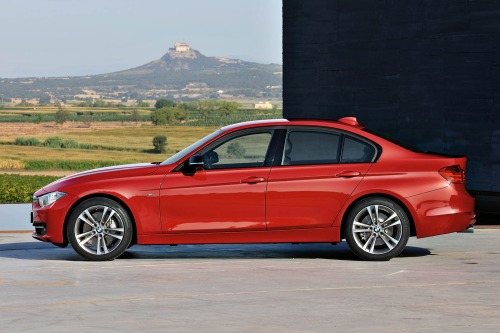
Due to extremely high new and used car prices, as well as high loan interest rates, many shoppers are now looking for "older" models to better fit their budgets.
However, this does add some additional risk in terms of reliability and maintenance issues for people considering an "older" 2013 3 Series, or any other older vehicle.
The 2013 3 Series is impressive on a number of different levels, including performance, features, build quality and fuel economy. And while it may have stood at the top of its class years ago, it's best to learn how it stands today.
So here, we'll look at its ...
- Reliability
- Common problems
- Price negotiation
- Pros and cons
More On Reliability: Also, if you'd like to compare this 3 Series model year to the reliability of other model years, be sure to read BMW 3 Series Reliability & Problems: Best Used Models & Years. This comprehensive guide highlights the best years to buy or avoid, common problems, potential maintenance costs, and more, and will likely help you make the right choice for your needs.
Other BMWs: Also, if you may be looking at other BMW models, visit our BMW Reliability Hub to compare reliability, common problems, and the best years to buy across BMW's most popular cars and SUVs.
2013 BMW 3 Series Reliability
The 2013 BMW 3 Series is generally considered a good used luxury car, but reliability depends heavily on which engine you choose. It was the second model year of the sixth-generation F30 sedan, and while BMW had worked out many of the first-year production issues, some important mechanical concerns remained.
The 335i, powered by BMW's 3.0-liter turbocharged inline-six (N55), is widely regarded as the most dependable choice for 2013. The 328i uses the newer 2.0-liter turbocharged four-cylinder (N20), which delivers excellent fuel economy and performance but is known for timing chain guide failures that can become extremely expensive if neglected.
A well-maintained 2013 3 Series can easily exceed 200,000 miles. But a prospective buyer needs to bear in mind that complete maintenance records are far more important than low mileage alone.
- Overall Reliability: ★★★★☆ (335i) / ★★★☆☆ (328i)
- Expected Lifespan: 200,000+ miles with proper maintenance
- Best Choice: 335i with documented service history
- Watch For: Timing chain issues (328i), oil leaks, electric water pump, suspension wear
Bottom Line: The 2013 BMW 3 Series remains one of the better-driving luxury sedans of its era. Buyers willing to pay for proper maintenance can end up with an excellent long-term car, but engine choice makes a significant difference in ownership costs.
Is the 2013 BMW 3 Series a Good Year or One to Avoid?
Overall, the 2013 model is a good year to buy, especially if you're shopping for a 335i. The chassis is refined, interior quality is excellent, and driving dynamics remain among the best in the segment.
The biggest caution involves the 328i's N20 engine. Timing chain guide failures have affected enough vehicles that buyers should verify whether the updated components have been installed or inspect the engine carefully before purchase.
- Consider It If: You want one of the best-driving compact luxury sedans available for the money.
- Use Extra Caution If: Buying a high-mileage 328i with little or no maintenance history.
- Better Choice: A well-maintained 335i generally carries less long-term engine risk.
- Overall Value: Excellent, provided maintenance history is strong.
Common Problems to Watch For
- Timing Chain (328i): Again, this is the most significant issue on the 2.0-liter turbocharged four-cylinder. Worn timing chain guides can lead to catastrophic engine damage if ignored. Many specialists recommend replacing the components preventively on higher-mileage vehicles.
- Electric Water Pump: Both engines use an electric water pump that commonly fails between 70,000 and 120,000 miles. Replacement typically costs $900–$1,600.
- Oil Filter Housing Gasket: A common oil leak that should be repaired promptly because leaking oil can contaminate the drive belt.
- Valve Cover Gasket: Another frequent oil leak as mileage increases.
- Suspension Components: Front control arm bushings and other suspension parts often require replacement after 80,000–120,000 miles.
- Cooling System: Thermostats and expansion tanks can also require replacement as the vehicle ages.
Buyer Tip: Service records are worth paying extra for. A slightly more expensive BMW with documented maintenance will almost always cost less to own than a cheaper example with an unknown history.
How Much Can You Negotiate on a 2013 BMW 3 Series?
Luxury vehicles typically offer more negotiating room than economy cars because repair costs, maintenance history, and buyer demand vary considerably between examples.
| Seller | Typical Negotiating Room |
|---|---|
| BMW Dealer | 3–7% |
| Independent Dealer | 5–10% |
| Private Seller | 5–12% |
For example, if a dealer is asking $14,995:
- Excellent deal: $13,500–$13,900
- Typical purchase price: $13,900–$14,500
- Paying full asking price: Only for an exceptional one-owner example with low mileage, complete service records, and recent major maintenance.
If you follow my preferred negotiating method, detailed in my Used Car Negotiation Price Guide, you'll often do better.
(For "new" cars, see my "New" Car Negotiation Price Guide.)
What Creates Negotiating Room?
You should negotiate further if the vehicle needs:
- Original electric water pump ($900–$1,600)
- Original suspension components (control arms, bushings, shocks or struts: $800–$2,000 depending on what's needed)
- Older tires or brakes (typically $800–$2,000 to replace all four tires and brakes)
- Oil leaks (valve cover gasket or oil filter housing gasket: $400–$1,200 depending on the source of the leak)
- Missing service records (adds uncertainty and should justify a lower offer, even if no repairs are immediately needed)
- Upcoming major maintenance (spark plugs, ignition coils, transmission service, coolant service, serpentine belt, etc.: $500–$1,500 depending on mileage and maintenance history)
Overall Pros and Cons
Pros
- Outstanding driving dynamics
- Excellent steering and chassis balance
- Comfortable highway cruiser
- Strong turbocharged engine options
- High-quality interior that still feels modern
- 335i offers excellent long-term reliability when maintained
Cons
- Timing chain concerns on 328i models
- Maintenance costs are higher than mainstream sedans
- Electric water pump replacement is expensive
- Oil leaks become common with age
- Repairs often require BMW-specific diagnostic equipment
Rivals
Competitors perhaps also worthy of consideration might include the Acura TL, the Audi A4, the Cadillac ATS, the Infiniti G37 and the Mercedes-Benz C-Class.
Your Trade-In
Also, it's good to always know the value of your trade-in while you're evaluating your next possible purchase. Here's a good source for a quick and accurate appraisal: free trade-in appraisal.
What's Next?
If you may be buying soon, I'd recommend reading my most effective negotiation method for used cars. It explains a quick way to identify the dealerships most motivated to deal, no matter how busy they may seem, and how to follow up once you've found them. That can be the difference between getting a good price and getting a great one.
Or, if you'd consider buying a brand-new vehicle if you could get a lower-than-expected price, learn how to shop the dealer, not just the car.
And beware of "Dealer Fees": Before agreeing to a dealer's numbers, see which dealer fees are legitimate, which can be negotiated, and which can be avoided.