

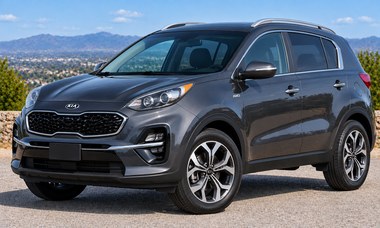
The Kia Sportage can be a reliable compact SUV, but its reliability varies considerably by model year and engine. Some Sportages have proven capable of well over 150,000 miles with relatively ordinary maintenance, while others have experienced serious engine problems that can make an inexpensive used example a costly gamble.
That makes the Sportage a vehicle where choosing the right year and powertrain matters more than simply finding one with low mileage. The simpler early models have fewer sophisticated components but are now quite old, while several later generations offer better safety, comfort and fuel economy but have more complicated reliability histories.
This guide covers U.S.-market Kia Sportage models from 2005 through 2024, with particular attention to engine reliability, transmission durability, major recalls, high-mileage ownership and the model years that generally make the strongest used-car choices.
In This Guide You'll Learn
- Which Kia Sportage years are generally the most reliable
- Which Sportage years deserve extra caution
- How long a Kia Sportage can realistically last
- Which Sportage engines and transmissions are the better choices
- Why engine history is particularly important on certain 2011-2022 models
- What problems to look for before buying a used Sportage
- How the different Sportage generations compare for long-term ownership
Kia Sportage Reliability Overview
Overall, the Kia Sportage has a mixed-to-good reliability record. The model has never been uniformly unreliable, and many owners have accumulated substantial mileage without catastrophic repairs. However, the Sportage has also been involved in some important engine and fire-related recall campaigns, making year-specific research particularly important.
The biggest dividing line is the engine. Certain Sportages from the 2010s were equipped with engines that developed connecting-rod bearing wear, knocking and, in severe cases, complete engine failure. That does not mean every Sportage from this period will fail, but it does mean that maintenance history, recall completion and any previous engine replacement deserve unusual attention.
Transmission reliability is generally less troublesome. Most U.S. Sportages use conventional automatic transmissions rather than the dry dual-clutch transmission that complicates the reliability picture of some related Hyundai and Kia vehicles. A properly maintained conventional Sportage automatic can be a reasonably durable component.
Kia Sportage Reliability at a Glance
| Category | Assessment |
|---|---|
| Overall Reliability | Mixed to Good |
| Better Used Years | 2007-2010, selected later 2010s models, 2020-2022 |
| Years Requiring Extra Caution | 2011-2013 especially; other 2010s models depend heavily on engine and history |
| Best Reliability Strategy | Well-maintained naturally aspirated engine with conventional automatic |
| Biggest Concern | Engine bearing wear and engine failure on affected vehicles |
| Expected Lifespan | About 150,000-200,000 miles; good examples can exceed 200,000 |
How Many Miles Can a Kia Sportage Last?
A well-maintained Kia Sportage can realistically last about 150,000 to 200,000 miles, and carefully maintained examples can exceed 200,000 miles. The important qualification is that engine choice and maintenance history have an unusually large effect on whether a particular Sportage reaches those numbers economically.
At 100,000 miles, a Sportage should not automatically be considered near the end of its useful life. A healthy example with regular oil changes, a smooth transmission and no abnormal engine noise can still have substantial life remaining.
At 150,000 miles, condition becomes more important than the odometer alone. Suspension components, wheel bearings, cooling-system parts, oil leaks and other age-related repairs become increasingly likely, but these are generally more manageable than internal engine or transmission failure.
At 200,000 miles, a Sportage with its original engine and transmission has already demonstrated considerable durability. Buying one at this mileage can still make sense at the right price, but complete maintenance records and a careful inspection become especially important.
Sportages with more than 200,000 miles do exist, particularly among vehicles that received frequent oil changes and were not allowed to run low on oil. At this point, however, the purchase should be evaluated as an individual vehicle rather than relying on the Sportage's general reputation.
For 2010s models in particular, mileage alone can be misleading. A 90,000-mile Sportage with poor oil-change history, oil consumption or developing bearing noise may be a considerably greater risk than a 140,000-mile example with excellent records and documented engine or recall work.
Kia Sportage Reliability by Generation
2005-2010 Kia Sportage: Simple, Aging and Often Underrated
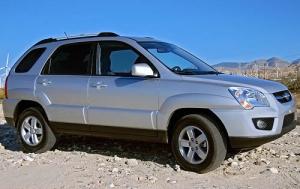
The 2005 redesign brought the Sportage back to the U.S. market as a more conventional compact crossover. Engines included a 2.0-liter four-cylinder and a 2.7-liter V6, with front-wheel drive or available all-wheel drive.
From a modern used-car perspective, the attraction of this generation is simplicity. There is no turbocharger, hybrid system or sophisticated multi-speed transmission. The V6 in particular can be durable when properly maintained, although fuel economy is mediocre by current compact-SUV standards.
At this age, however, the vehicle surrounding the engine becomes increasingly important. Cooling-system deterioration, oil leaks, engine and transmission mounts, suspension wear, wheel bearings, air-conditioning problems and deteriorated rubber components can turn a cheap Sportage into an ongoing repair project.
Certain 2008-2009 Sportages were also subject to an important HECU-related fire recall. A prospective buyer should verify by VIN that all applicable safety recalls have actually been completed rather than assuming an older recall was handled by a previous owner.
Buyer Tip: A clean 2007-2010 Sportage with service records can be an inexpensive and relatively simple used SUV. At this age, however, condition and maintenance history matter far more than finding the lowest-mileage example.
Bottom Line: One of the simpler Sportage generations mechanically, but age-related deterioration is now the primary concern.
2011-2016 Kia Sportage: Better SUV, Greater Engine Risk
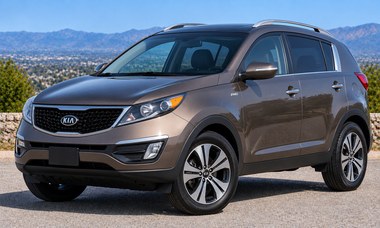
The 2011 redesign transformed the Sportage into a much more modern crossover. It offered substantially improved styling, features and road manners, but this is also where the Sportage reliability story becomes more complicated.
Depending on year and trim, U.S. buyers encountered naturally aspirated four-cylinder engines as well as a considerably more powerful 2.0-liter turbocharged GDI engine. Conventional six-speed automatic transmissions were widely used.
The most serious concern involves engine bearing damage. Certain 2011-2013 Sportage models equipped with the 2.0-liter turbo GDI engine were recalled because manufacturing debris and crankshaft surface conditions could restrict oil flow to the connecting-rod bearings. Premature bearing wear could produce knocking, warning lights, engine damage and eventually an engine stall.
This history makes the early years of this generation some of the Sportages requiring the most caution. An engine that was replaced under a recall or warranty is not automatically a reason to reject the vehicle; in fact, documented replacement can sometimes be preferable to an original engine of uncertain history. What matters is knowing exactly what engine is in the vehicle and what work has been performed.
Fire-related recalls add another consideration. Certain 2014-2016 Sportages were recalled because an electrical short in the hydraulic electronic control unit, or HECU, could increase the risk of an engine-compartment fire.
Buyer Tip: Do not buy a 2011-2016 Sportage based only on appearance, mileage and price. Verify the engine, check the VIN for completed recalls, inspect the oil level and listen carefully for knocking or persistent mechanical ticking during a cold start.
Bottom Line: Much nicer to drive than the previous generation, but engine history can make the difference between a good used SUV and an expensive mistake.
2017-2022 Kia Sportage: Improved, but Engine History Still Matters
The fourth-generation Sportage arrived for 2017 with another substantial improvement in refinement, safety technology and interior quality. U.S. models primarily used a 2.4-liter naturally aspirated four-cylinder, while SX Turbo models used a 2.0-liter turbocharged engine. Both were paired with conventional six-speed automatic transmissions.
This generation can make a better used-car choice than the troublesome early years of the previous generation, but buyers should not assume that the newer body eliminated every engine-related concern. Oil consumption, abnormal engine noise and engine history remain important considerations when evaluating individual vehicles.
There is also an important recall distinction separate from internal engine durability. A large population of 2017-2021 Sportages was recalled because an electrical short within the HECU could create an engine-compartment fire risk. Recall completion should therefore be checked by VIN.
Later examples, particularly 2020-2022 Sportages with strong maintenance histories, are among the more appealing choices for buyers who want the previous-generation Sportage's relatively conventional mechanical layout without buying a much older SUV.
A careful inspection is particularly valuable because two outwardly identical Sportages can have very different ownership histories. Once you've identified the right vehicle, understanding how to negotiate a used car price without giving the dealer the upper hand can also help keep a mechanically good Sportage from becoming a poor financial deal.
Buyer Tip: Favor a Sportage with documented oil changes, a quiet cold start and no unexplained oil loss between services. Do not assume that low mileage eliminates engine risk.
Bottom Line: One of the better combinations of modern features, affordability and established ownership history, particularly in the later years, but still an SUV where engine condition deserves careful scrutiny.
2023-2024 Kia Sportage: Promising New Generation, but Too Young for a Long-Term Verdict
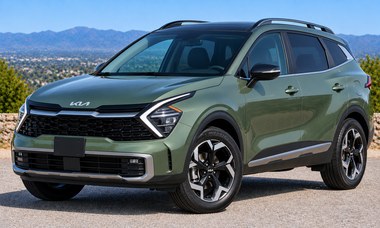
The redesigned 2023 Sportage is considerably different from its predecessor. The standard gasoline model uses a 2.5-liter naturally aspirated four-cylinder with an eight-speed automatic transmission, while Sportage Hybrid and Plug-In Hybrid models use a 1.6-liter turbocharged engine combined with electrification.
For buyers primarily concerned with mechanical simplicity, the naturally aspirated 2.5-liter gasoline engine and conventional automatic are an attractive combination on paper. The hybrid models add complexity but can provide substantially better fuel economy, particularly in urban driving.
The limitation is simply time. A 2023 or 2024 Sportage can be evaluated for early problems and general quality, but there is not yet enough aging and high-mileage history to confidently declare that these models will routinely reach 200,000 miles without major repairs.
The 2023 model also deserves the normal caution given to the first year of a major redesign. That does not make it a year to automatically avoid, but a 2024 model can be preferable when prices are similar because manufacturers often make running production improvements after a new generation launches.
Late-model used Sportages can also command surprisingly strong prices, sometimes not much less than a properly negotiated new Sportage purchase. You may want to compare both alternatives rather than assume used is automatically the better value.
Buyer Tip: Buy these primarily on current condition, warranty coverage and price rather than an assumed reputation for 200,000-mile durability that has not yet been established.
Bottom Line: An appealing redesign with promising powertrain choices, but 2023-2024 models are still too new for a definitive long-term reliability judgment.
Kia Sportage Engine Reliability
The Sportage's engine history is too varied for a single statement such as "Sportage engines are reliable" or "Sportage engines are bad." The engine family, model year, maintenance history and sometimes even previous recall work can substantially change the risk.
2.0-Liter Four-Cylinder
Several different 2.0-liter engines have appeared in the Sportage over the years, so displacement alone does not identify the engine or its reliability record. The naturally aspirated 2.0-liter used in older Sportages is fundamentally different from the later turbocharged GDI engine.
Older naturally aspirated versions can be reasonably durable, with age-related leaks, cooling-system condition and maintenance becoming the larger concerns today.
2.7-Liter V6
The 2.7-liter V6 found in the 2005-2010 generation is not especially fuel efficient or powerful by modern standards, but its relatively straightforward design can make it appealing to buyers who value simplicity.
At this point, maintenance history is critical. Timing-belt service and cooling-system condition deserve particular attention. A properly maintained V6 can accumulate substantial mileage, but neglected examples can quickly erase the savings of buying an inexpensive older SUV.
2.0-Liter Turbo GDI
The turbocharged 2.0-liter gives the Sportage considerably stronger performance, but it deserves more scrutiny than the simpler naturally aspirated engines. Most importantly, certain 2011-2013 Sportages equipped with this engine were included in the connecting-rod-bearing recall described above.
Later turbo Sportages should not automatically be treated as identical to those recalled early models, but buyers should still investigate oil consumption, maintenance history, engine noise and any previous engine replacement. For a buyer whose priority is minimizing long-term repair risk rather than maximizing performance, the turbo is generally not my first choice.
2.4-Liter Four-Cylinder
The naturally aspirated 2.4-liter was widely used in Sportage models during the 2010s. Its lack of a turbocharger is an advantage in terms of mechanical simplicity, but that does not mean every 2.4-liter Sportage is automatically a safe purchase.
Check oil level and service history carefully and investigate unexplained oil consumption, knocking, warning lights or evidence that the engine has previously been replaced. At higher mileage, the condition of the individual engine matters more than its reputation on paper.
2.5-Liter Four-Cylinder
The naturally aspirated 2.5-liter used in the 2023-2024 Sportage is paired with a conventional eight-speed automatic. From a long-term ownership perspective, this is an appealing configuration because it avoids both turbocharging and a dual-clutch transmission.
However, appealing design and proven durability are not the same thing. These Sportages simply have not been on the road long enough to provide the kind of 150,000- and 200,000-mile evidence available for older generations.
1.6-Liter Turbo Hybrid and Plug-In Hybrid
The Sportage Hybrid and Plug-In Hybrid combine a turbocharged 1.6-liter gasoline engine with an electric motor and battery system. They offer an entirely different ownership proposition from older gasoline Sportages.
The hybrid system can reduce fuel consumption substantially, but there are more components involved and these models remain relatively young. Buyers planning extremely long ownership should recognize that their eventual high-mileage repair patterns are still developing.
Which Kia Sportage Engine Is Most Reliable?
There is no single Sportage engine that is unquestionably the reliability champion across all generations. For a used buyer trying to minimize repair risk, the safest general strategy is to favor a well-maintained naturally aspirated gasoline engine paired with a conventional automatic transmission.
The older 2.7-liter V6 can be durable when its timing-belt and cooling-system maintenance has been handled correctly. Among newer vehicles, a carefully maintained naturally aspirated Sportage generally presents fewer powertrain complications than a turbocharged alternative, although specific engine history still matters.
The 2023-2024 2.5-liter and eight-speed combination may eventually prove to be one of the better Sportage powertrains, but there is not enough high-mileage evidence yet to place it ahead of engines that have already accumulated many years of real-world use.
And please bear in mind that the purchase price is only part of the equation when comparing two used Sportages. If you'll also be trading a vehicle, understand what your trade-in is really worth and how dealers determine trade-in offers. Keeping the Sportage price and your trade value separate makes it much easier to judge the actual deal.
Best Kia Sportage Years to Buy
The best Sportage years depend partly on how much age, technology and repair risk you're willing to accept. There is no single perfect year, but several groups stand out as stronger used-car candidates.
2007-2010 Kia Sportage
These later second-generation Sportages are worth considering for buyers who want a simple, inexpensive compact SUV. The 2.7-liter V6 is relatively straightforward mechanically, while four-cylinder models can also provide economical transportation when properly maintained.
The disadvantage is age. Even a mechanically sound 2009 Sportage is now old enough that rubber components, suspension parts, cooling-system components, seals and electrical accessories can require attention.
2014-2016 Kia Sportage: Choose Carefully
These years can be preferable to the more troublesome 2011-2013 period, but they should not be purchased casually. Engine condition, oil-change history, recall completion and the exact powertrain remain important.
A well-maintained example with a quiet engine can be a reasonable value, but this is not a year range where I'd recommend buying solely because the mileage is low.
2020-2022 Kia Sportage
For many used buyers, 2020-2022 represents one of the most attractive Sportage year groups. These are late examples of an established generation, have modern safety and convenience features, and retain conventional automatic transmissions.
They still deserve careful engine inspection and recall verification, but they avoid the first-year uncertainty of the 2023 redesign while being considerably newer than earlier Sportages.
2024 Kia Sportage
The 2024 Sportage benefits from being beyond the first year of the latest redesign. The naturally aspirated 2.5-liter engine and conventional eight-speed automatic are particularly interesting for buyers who prefer a straightforward gasoline powertrain.
I'd classify 2024 as promising rather than proven. There simply are not enough high-mileage examples yet to know how this generation will behave at 150,000 or 200,000 miles.
Kia Sportage Years to Avoid or Approach With Extra Caution
"Years to avoid" should not be interpreted to mean that every Sportage from these years is defective. It means the potential problems are significant enough that I'd require stronger evidence of maintenance, recall completion and mechanical condition before buying one.
2011-2013 Kia Sportage
The 2011-2013 period deserves the greatest caution. Certain Sportages equipped with the 2.0-liter turbo GDI engine were recalled because connecting-rod bearing wear could lead to engine damage and stalling.
A vehicle with a documented replacement engine may actually be more attractive than an apparently untouched original engine, depending on when and why the replacement occurred. The important thing is to establish the vehicle's actual history rather than guessing from mileage.
2014-2016 Kia Sportage
These years are not automatic rejects, but they remain vehicles I'd investigate carefully for engine noise, oil consumption, maintenance history and outstanding recall work. Certain vehicles were also involved in the HECU fire-risk recall.
2017-2019 Kia Sportage
These early fourth-generation models can be perfectly satisfactory vehicles, but I would still be more selective than with a typical used compact SUV. Engine condition and oil-change history should carry considerable weight in the purchase decision.
If two otherwise similar Sportages are available, paying somewhat more for a later, exceptionally well-maintained example can be cheaper than gambling on an earlier vehicle with incomplete records.
2023 Kia Sportage
The 2023 Sportage is here for a different reason. It was the first year of an extensive redesign, not because it has established the same type of long-term engine history as some older Sportages.
A good 2023 should not automatically be avoided. However, when a comparable 2024 costs little more, I'd generally prefer the later vehicle unless the 2023 represents a particularly good value.
Kia Sportage vs. Hyundai Tucson Reliability
If you're considering a used Sportage, the Hyundai Tucson is also worth comparing because the two SUVs have shared considerable engineering and powertrain technology over the years. Their reliability records aren't identical, however, and some model years and engine combinations are better choices than others. See our Hyundai Tucson reliability, best years and common problems guide for a year-by-year comparison before deciding between them.
What Is the Most Reliable Kia Sportage Generation?
There isn't one generation that wins every reliability comparison. Each has a different advantage.
The 2005-2010 generation is mechanically simple, but age is now working against it. The 2011-2016 generation brought major improvements to the vehicle itself but also includes some of the Sportage's most important engine concerns.
For many used buyers, the later years of the 2017-2022 generation offer the best overall balance. A well-maintained 2020-2022 Sportage provides modern equipment and an established platform without the uncertainty that naturally accompanies a recently redesigned model.
The 2023-and-newer generation may ultimately become one of the better Sportage generations, particularly with the naturally aspirated 2.5-liter engine and conventional automatic, but it is still too early to make that conclusion based on long-term durability.
Kia Sportage Transmission Reliability
Transmission reliability is generally not the Sportage's defining weakness. That's important because serious engine problems can sometimes cause buyers to assume the transmissions are equally troublesome.
Many Sportages use conventional automatic transmissions, including six-speed automatics in much of the 2010s and an eight-speed automatic with the current 2.5-liter gasoline engine. For a long-term used-car buyer, that's generally preferable to a complicated or problematic transmission design.
At higher mileage, watch for delayed engagement when shifting from Park into Drive or Reverse, harsh shifts, slipping under acceleration or transmission-fluid leaks. A smooth test drive from cold is much more informative than simply assuming the transmission is healthy because no warning light is illuminated.
Service history matters as well. Although transmission-fluid service intervals and manufacturer recommendations vary by year and operating conditions, an older Sportage that has spent its life towing, climbing mountains or operating in severe heat deserves especially careful inspection.
Common Kia Sportage Problems
The following problems do not affect every Sportage or every model year. They are the issues most worth understanding because they can materially affect ownership cost or safety.
1. Connecting-Rod Bearing Wear and Engine Failure
This is the most serious Sportage reliability concern. Certain engines have experienced premature connecting-rod bearing wear that can initially produce knocking or other abnormal engine noise and eventually result in major internal engine damage.
Certain 2011-2013 Sportages equipped with the 2.0-liter turbo GDI engine were recalled for this issue. When shopping for one of these vehicles, verify the VIN, recall status and engine history rather than relying on the seller's description.
A low oil-pressure warning, metallic knocking or unexplained engine noise should never be dismissed as normal behavior on a Sportage you're considering buying.
2. Excessive Oil Consumption
Oil consumption deserves attention on higher-mileage Sportages, particularly because allowing an engine to operate with insufficient oil can dramatically increase the risk of internal damage.
Check the dipstick before the vehicle has been driven for your inspection. An unusually low level does not prove the engine is defective, but it raises questions about either oil consumption, leakage or the owner's maintenance habits.
If an owner says the engine "just uses a little oil," find out what that actually means. Adding half a quart between oil changes is very different from routinely adding several quarts.
3. Engine Knocking, Ticking or Other Abnormal Noise
A cold start is particularly valuable when evaluating a used Sportage. Listen for persistent knocking, heavy ticking or other mechanical noise that does not quickly disappear.
Some engine sounds are harmless, including normal fuel-injector noise, but unexplained knocking on a Sportage with a questionable maintenance history deserves professional diagnosis before purchase.
4. HECU Electrical Short and Fire Risk
Several Sportage model years have been involved in recalls related to the hydraulic electronic control unit (HECU). An electrical short within the unit can increase the risk of an engine-compartment fire.
This is a safety issue rather than a conventional wear-and-tear reliability problem. Because recall coverage differs by production period, the correct approach is to check the individual VIN for open recalls and confirm that required repairs have been completed.
5. Cooling-System Problems
Radiators, hoses, thermostats, water pumps and related cooling-system components become more likely to require attention as a Sportage ages.
Cooling-system neglect is particularly dangerous because overheating can damage an otherwise serviceable engine. Look for dried coolant residue, a low reservoir level, temperature fluctuations and evidence of previous overheating.
6. Suspension, Steering and Wheel-Bearing Wear
Older Sportages can develop worn struts, control-arm bushings, stabilizer links and wheel bearings. These problems are generally far less frightening than internal engine failure, but several worn components at once can produce a sizable repair bill.
Listen for clunks over uneven pavement, humming that changes with road speed and looseness or vibration through the steering wheel.
7. Oil and Fluid Leaks
Minor seepage becomes increasingly common as Sportages age. A damp gasket is not necessarily a reason to reject an older vehicle, but active dripping or oil coating a substantial portion of the engine deserves investigation.
Always distinguish an inexpensive gasket leak from a problem that could require substantial labor to repair.
8. Electrical and Infotainment Problems
Newer Sportages contain considerably more electronic equipment than the early models. Cameras, sensors, touchscreens, power accessories and driver-assistance systems create more potential failure points even when the basic powertrain remains healthy.
Before buying, operate every major electrical feature rather than assuming a malfunction is simply a setting that can be corrected later.
Kia Sportage Maintenance and Repair Costs
Routine Sportage maintenance is generally comparable to other mainstream compact SUVs. The financial risk comes from major engine or transmission repairs, which can dwarf years of ordinary maintenance expenses.
| Typical Service or Repair | Approximate Cost |
|---|---|
| Oil and Filter Service | $60-$120+ |
| Brake Pads and Rotors | $400-$900+ per axle |
| Battery | $180-$350+ |
| Wheel Bearing / Hub | $400-$800+ |
| Water Pump / Cooling Repair | $500-$1,100+ |
| Alternator | $500-$900+ |
| Suspension Repairs | $700-$1,500+ |
| Turbocharger-Related Major Repair | $1,500-$3,500+ |
| Automatic Transmission Replacement | $4,000-$7,000+ |
| Engine Replacement | $5,000-$10,000+ |
These figures are broad estimates rather than quotes. Labor rates, parts choices, engine configuration and location can change the actual cost substantially.
This is why a Sportage with excellent service records can be worth paying more for. Saving $1,500 on the purchase price is meaningless if the cheaper SUV soon needs a $6,000 engine.
Kia Sportage Maintenance After 100,000 Miles
A Sportage that reaches 100,000 miles in good mechanical condition can still have substantial useful life remaining, but maintenance becomes increasingly important.
- Continue regular oil and filter changes and check the oil level between services.
- Inspect the cooling system for leaks, aging hoses and deteriorated components.
- Review transmission service history and watch for changes in shift quality.
- Inspect belts and other age-dependent service items applicable to the specific engine.
- Check suspension components, wheel bearings and engine mounts.
- Inspect for oil leaks and determine whether the engine is consuming oil.
- Verify that all applicable recalls and manufacturer campaigns have been completed.
By 150,000 miles, maintenance history becomes more valuable than a small difference in odometer mileage. I'd generally prefer a documented 145,000-mile Sportage that has been carefully maintained to a neglected 105,000-mile example with no records.
What to Check Before Buying a Used Kia Sportage
A general pre-purchase inspection is worthwhile, but these five checks are particularly important on a Sportage:
1. Identify the Exact Engine
Do not shop by model year alone. Determine whether the Sportage has the naturally aspirated or turbocharged engine and research that specific powertrain.
2. Check the Oil Before Starting the Engine
Look at both the oil level and condition. A substantially low oil level should prompt questions about consumption, leakage and maintenance.
3. Insist on a Cold Start
Listen for knocking or persistent mechanical noise before the engine has warmed up. A vehicle that has conveniently been running before you arrive eliminates one of the most useful checks you can perform.
4. Investigate Any Engine Replacement
A replacement engine is not necessarily bad news. Determine why it was replaced, when the work occurred, who performed it and whether documentation exists. A properly documented replacement can materially change the risk assessment.
5. Check the VIN for Recalls
Sportage recall coverage varies by year, engine and production date. Verify the individual VIN rather than assuming a recall applies, or doesn't apply, based only on the model year.
Once you've found the right Sportage and negotiated its selling price, pay attention to what happens before the final paperwork is signed. Documentation charges, dealer-installed accessories and other additions can substantially change what looked like an attractive price. Comparing the complete out-the-door number, and knowing which dealer fees you must pay, can negotiate, or should avoid, makes it much easier to tell whether you're actually getting the deal you negotiated.
Kia Sportage Pros and Cons
Pros
- Generally competitive used prices
- Comfortable and practical compact-SUV design
- Many models use conventional automatic transmissions
- Later generations offer strong safety and convenience features
- Good examples can reach 150,000-200,000 miles or more
- 2020-2022 models provide a useful balance of age, features and established history
- Current generation offers gasoline, hybrid and plug-in hybrid choices
Cons
- Serious engine problems affect the reputation of certain years and powertrains
- Oil consumption deserves attention on some higher-mileage examples
- Several model years have been involved in important fire-risk recalls
- Turbocharged versions add complexity
- Maintenance history can dramatically change the risk of two otherwise similar vehicles
- The newest generation is not old enough to have established long-term durability
Final Buyer Summary: Is the Kia Sportage Reliable?
The Kia Sportage can be a reliable used compact SUV, but it is not a vehicle I'd recommend buying without researching the exact year and engine. Its reliability history contains both genuinely durable vehicles and some serious engine problems, so broad statements about the entire model can be misleading.
For an inexpensive older SUV, a well-maintained 2007-2010 Sportage can still make sense if age-related deterioration has been addressed. Buyers considering the 2010s should be particularly careful about engine history, oil consumption, abnormal engine noise and recall completion.
For many buyers, a clean 2020-2022 Sportage represents one of the better compromises between modern equipment, affordability and an established ownership record. These models still require careful inspection, but they're where I'd concentrate much of my search for a relatively recent used Sportage.
The 2023-2024 generation is promising, particularly with the naturally aspirated 2.5-liter engine and conventional eight-speed automatic. It is simply too early to know whether these vehicles will routinely deliver 200,000-mile durability.
Expect roughly 150,000 to 200,000 miles from a properly maintained Sportage, with well-cared-for examples capable of going farther. More important than the mileage itself is whether the engine has received consistent oil changes, maintained the proper oil level and avoided the warning signs associated with internal engine damage.
Best overall strategy: favor a naturally aspirated gasoline Sportage with a conventional automatic transmission, excellent maintenance records, a quiet cold start and documented recall completion. Be substantially more selective with vehicles that have questionable engine histories or unexplained oil consumption.