

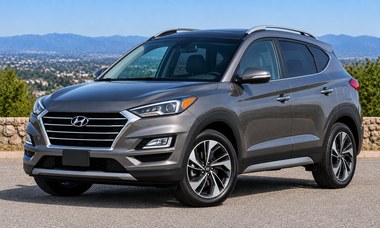
The Hyundai Tucson has evolved from a relatively simple compact SUV into one of Hyundai's most important models. Reliability, however, has varied considerably by generation, engine and transmission. Some Tucsons can be sensible high-mileage used SUVs, while others have engine or transmission histories that deserve much more caution.
For used-car buyers, the biggest mistake is assuming that all Tucson years are mechanically similar. A 2008 Tucson with a conventional V6 and automatic transmission, a 2017 Tucson with a 1.6-liter turbo and dual-clutch transmission, and a 2023 Tucson with a 2.5-liter engine are very different vehicles from a long-term ownership standpoint.
This guide covers U.S.-market Hyundai Tucson models from 2005 through 2024. The newest models have enough history for an early assessment, but not enough to make confident claims about 150,000- or 200,000-mile durability.
In This Guide You'll Learn
- Which Hyundai Tucson years are the most reliable
- Which Tucson years deserve extra caution or may be better avoided
- How long a Hyundai Tucson can realistically last
- Which Tucson engines and transmissions have the best reliability records
- Why the 1.6-liter turbo and dual-clutch transmission require special attention
- Which Tucson engine problems can become expensive
- How the newest 2.5-liter, hybrid and plug-in hybrid models compare
- What to inspect before buying a used Hyundai Tucson
Or, Looking For "New"?
If you're also considering a new Tucson, you may want to come back to this and take a look at a handy technique that locates the dealer in your area most ready to make concessions.
Hyundai Tucson Reliability Overview
Overall, Hyundai Tucson reliability is mixed. There are good years and powertrains in nearly every generation, but the Tucson's history includes enough serious engine and transmission concerns that choosing the right version matters more than it does with some competitors.
The first-generation 2005-2009 Tucson is mechanically straightforward and can be surprisingly durable when maintained, although age is now its biggest enemy. The 2010-2015 generation became more modern and efficient, but certain four-cylinder engines deserve closer scrutiny as mileage rises.
The 2016-2021 Tucson is the generation where powertrain selection becomes especially important. The available 1.6-liter turbocharged engine with a 7-speed dual-clutch transmission can deliver good performance and fuel economy, but the DCT developed a reputation for hesitation, shuddering and awkward low-speed operation. Hyundai issued software updates and later service procedures addressing clutch judder on these vehicles.
Some Tucson four-cylinder engines also have a more serious history. Certain 2017 Tucsons equipped with the 2.0-liter Nu GDI engine were recalled because connecting-rod bearing wear could lead to engine damage, stalling and, in limited circumstances, fire. This makes service history and recall completion particularly important when evaluating affected vehicles.
The redesigned 2022 Tucson brought a substantially different vehicle with a 2.5-liter four-cylinder and conventional 8-speed automatic in the standard gasoline model, along with hybrid and plug-in hybrid versions using a turbocharged 1.6-liter engine. Early reliability is encouraging enough to consider these models, but they simply have not been on the road long enough to judge their true 200,000-mile durability.
Bottom Line: The Tucson can be a good used SUV, but reliability depends heavily on the year and powertrain. Buyers looking for the lowest mechanical risk should generally favor proven naturally aspirated engines with conventional automatic transmissions and complete maintenance histories.
Hyundai Tucson Reliability at a Glance
| Category | Hyundai Tucson Reliability |
|---|---|
| Overall Reliability | Mixed to Good, depending heavily on year and powertrain |
| Best Used Years | Later first-generation models, selected later second-generation models, 2019-2021 with careful engine selection |
| Years Requiring Extra Inspection | Selected 2010-2018 models, especially vehicles with questionable engine history or the 1.6T/DCT combination |
| Most Conservative Powertrain Choice | Naturally aspirated gasoline engine with conventional automatic transmission |
| Powertrain Requiring Extra Caution | 2016-2018 1.6L turbo with 7-speed dual-clutch transmission |
| Expected Lifespan | Approximately 150,000-200,000 miles; well-maintained examples can exceed 200,000 miles |
How Many Miles Can a Hyundai Tucson Last?
A well-maintained Hyundai Tucson can realistically last 150,000 to 200,000 miles, and good examples can exceed 200,000 miles. Reaching those numbers is much more dependent on engine choice, maintenance history and model year than simply having a Hyundai badge on the grille.
At 100,000 miles: A Tucson with documented maintenance and no signs of oil consumption, engine noise, transmission trouble or overheating can still have substantial useful life remaining. At this mileage, condition matters more than the odometer alone.
At 150,000 miles: A well-maintained Tucson can still be a reasonable vehicle, particularly with one of the simpler naturally aspirated powertrains. Buyers should become increasingly selective about oil-change history, cooling-system maintenance and transmission behavior.
At 200,000 miles: Some Tucsons reach this mileage with their original engine and transmission, but this should not be assumed. A 200,000-mile Tucson with extensive maintenance records can actually be a safer purchase than a lower-mileage example with an unknown history, particularly on generations where engine problems have occurred.
Beyond 200,000 miles: It is certainly possible, especially among well-maintained older models, but suspension components, wheel bearings, air-conditioning equipment, sensors, oil leaks and other age-related repairs increasingly become part of ownership.
For a high-mileage Tucson, the engine's actual condition is especially important. Listen for abnormal knocking or ticking, look for evidence of excessive oil consumption, check the oil level before the test drive and investigate any history of engine replacement. A replacement engine is not automatically a reason to reject the vehicle, but you should know why it was replaced, what engine was installed and when the work was performed.
Also, Know Your Potential Trade-In Value
In addition, your trade-in allowance, if you are doing that, will also affect the overall potential cost analysis of moving into a Sienna. So, while you're narrowing down your next vehicle choice, it's also highly recommended that you know the value of your trade-in. Having a realistic appraisal in hand can help you establish your budget and negotiate a better overall deal. Here's a good source for a quick and accurate appraisal: free trade-in appraisal.
Hyundai Tucson Reliability by Generation
2005-2009 Hyundai Tucson: First Generation
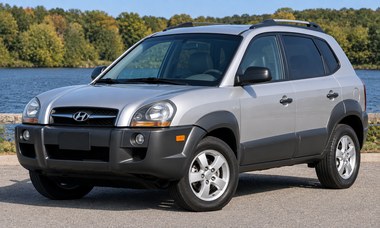
The first-generation Tucson arrived for 2005 as a relatively simple compact SUV. U.S. buyers could choose a 2.0-liter four-cylinder or a 2.7-liter V6, with front-wheel drive or all-wheel drive.
From today's used-car perspective, simplicity is one of this generation's strengths. There was no turbocharger, no dual-clutch transmission and considerably less electronic complexity than in later Tucsons. The 2.7-liter V6 in particular can be a durable engine when properly maintained.
These vehicles are now old enough, however, that age and maintenance history matter more than their original reliability reputation. Cooling-system neglect, oil leaks, worn engine mounts, suspension wear, wheel bearings, air-conditioning problems and deteriorated rubber components are increasingly common.
The 2.7-liter V6 also uses a timing belt, making documented replacement important. An older Tucson with no evidence that age- and mileage-related maintenance was performed can quickly erase the savings of a low purchase price.
Rust should also be inspected carefully in vehicles that spent years in northern climates. Look underneath rather than judging the SUV solely by clean body panels.
Buyer Tip: A clean 2007-2009 Tucson with maintenance records can still make an inexpensive used SUV. At this age, buy condition and service history rather than searching for the lowest mileage.
Bottom Line: The first-generation Tucson is one of the simpler versions mechanically. Its main disadvantage today is age rather than an inherently troublesome design.
2010-2015 Hyundai Tucson: Second Generation
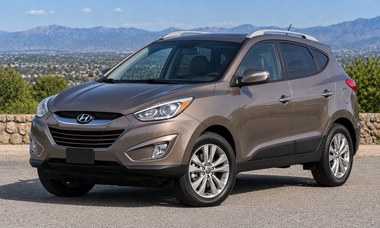
The redesigned 2010 Tucson became more carlike, efficient and modern. Early U.S. models were offered with naturally aspirated four-cylinder engines, including a 2.0-liter and 2.4-liter, paired primarily with conventional automatic transmissions.
From a transmission standpoint, this generation has an advantage over the later 1.6T Tucson because it does not depend on Hyundai's 7-speed dry dual-clutch transmission. A conventional automatic generally provides smoother low-speed operation and eliminates the clutch-judder concerns associated with the later DCT.
Engine condition deserves more attention. Hyundai four-cylinder engines from this broader period developed a complicated history of bearing wear, oil consumption and engine failures across several Hyundai and Kia models. That does not mean every second-generation Tucson is destined for engine trouble, nor were all Tucson engines and years affected identically. It does mean that buyers should take abnormal engine noise, low oil level or a vague maintenance history seriously.
A Tucson that has gone 100,000 miles with regular oil changes, stable oil consumption and a quiet engine is considerably more attractive than one whose seller cannot explain how frequently the oil was changed.
Other age-related concerns can include suspension wear, steering components, wheel bearings, air-conditioning problems, sensors and oil leaks. AWD models should be checked for matching tires and evidence that the drivetrain has not been neglected.
Buyer Tip: On a 2010-2015 Tucson, don't evaluate the vehicle only by mileage. Check the engine oil level before starting it, listen carefully during a cold start and review maintenance records for consistent oil changes.
Bottom Line: The second generation can provide good value, and its conventional automatic transmission is a plus. Engine history is the key factor separating a good used Tucson from one that could become expensive.
2016-2021 Hyundai Tucson: Third Generation
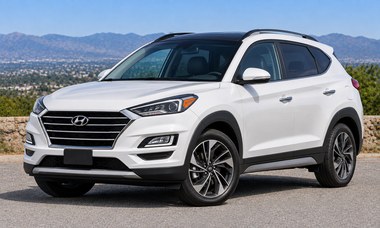
The 2016 redesign brought better refinement and safety technology, but it also created one of the most important powertrain distinctions in the Tucson's history.
The early third-generation lineup included a 2.0-liter naturally aspirated four-cylinder with a conventional 6-speed automatic and a 1.6-liter turbocharged four-cylinder paired with a 7-speed dual-clutch transmission. Later models moved away from the 1.6T/DCT combination and offered naturally aspirated engines with conventional automatics, including a 2.4-liter engine on some trims.
2016-2018 Tucson 1.6 Turbo and 7-Speed DCT
The 1.6T/DCT combination is the powertrain that deserves the most caution in this generation. The transmission can exhibit hesitation, shuddering, clutch judder and awkward behavior in slow traffic. A dual-clutch transmission naturally feels different from a conventional automatic, but pronounced vibration, delayed engagement or difficulty moving smoothly from a stop should not simply be dismissed as normal.
Hyundai issued a recall involving control-logic updates for certain 2016 Tucson 1.6T models, and later service procedures addressed abnormal clutch judder on 2016-2018 Tucsons equipped with the 7-speed DCT.
If considering one, drive it in the conditions most likely to expose trouble: start from a stop repeatedly, creep through slow traffic, reverse, climb an incline and drive long enough for the transmission to become fully warm.
2.0-Liter Tucson Engine Concerns
The naturally aspirated 2.0-liter Tucson avoids the DCT, but that does not make every example automatically preferable. Certain 2017 Tucson 2.0-liter Nu GDI engines were subject to an engine recall involving connecting-rod bearing wear. Continued operation with a damaged bearing could result in severe engine damage or stalling.
For this reason, a VIN-specific recall check and service-history review are particularly important on a 2017 Tucson. An engine that knocks, has an oil-pressure warning, consumes significant oil or has an unexplained replacement history deserves investigation before purchase.
The broader 2016-2021 Tucson population was also involved in a major ABS-module fire-risk recall. Recall completion should therefore be verified by VIN rather than assuming that previous owners handled every campaign.
2019-2021 Tucson
For many used buyers, the later third-generation Tucsons are more appealing than the early 1.6T/DCT models. Hyundai had moved away from that transmission combination, and the later years benefit from several years of development within the same basic generation.
That does not eliminate the need to evaluate engine condition carefully. Check oil level, ask about oil consumption, listen to the engine cold and warm, and investigate any warning lights or replacement-engine history.
Buyer Tip: Don't treat a 2016 Tucson Eco with the 1.6T/DCT, a 2017 Tucson with the 2.0-liter engine and a 2020 Tucson as equivalent used vehicles. Powertrain and year matter enormously in this generation.
Bottom Line: The third generation requires selective shopping. The 2016-2018 1.6T/DCT deserves additional caution, while later conventional-automatic versions can be more attractive when their engine and maintenance histories check out.
2022-2024 Hyundai Tucson: Fourth Generation
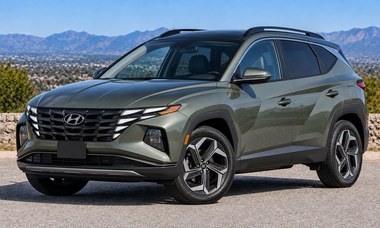
The 2022 redesign transformed the Tucson again, adding much more interior space, technology and distinctive styling. It also introduced a substantially different powertrain lineup.
Standard gasoline models use a 2.5-liter naturally aspirated four-cylinder with an 8-speed conventional automatic transmission. This is an appealing configuration for buyers who value mechanical simplicity because it avoids both a turbocharger and dual-clutch transmission.
The Tucson Hybrid combines a 1.6-liter turbocharged engine with an electric motor and conventional 6-speed automatic. The Tucson Plug-in Hybrid uses a related turbocharged hybrid powertrain with a larger battery and electric driving capability.
Early experience suggests that these newer Tucsons deserve consideration, but a 2022-2024 model simply has not accumulated the decades or high-mileage fleet needed to say confidently that it will routinely reach 200,000 miles. Claims of proven long-term durability would be premature.
The 2022 model also deserves the normal caution associated with the first year of a complete redesign. Software, electronics, infotainment and smaller quality issues are more likely to appear during the early production years of an all-new platform even when the fundamental powertrain proves sound.
Buyer Tip: For a buyer prioritizing simplicity, the naturally aspirated 2.5-liter gasoline engine and conventional 8-speed automatic are appealing on paper. Hybrid buyers gain excellent fuel economy, but should recognize that the turbocharged hybrid system adds mechanical and electrical complexity.
Bottom Line: The 2022-2024 Tucson appears promising enough to consider, particularly with the standard 2.5-liter powertrain, but it is still too new for a confident long-term durability verdict.
Hyundai Tucson Reliability by Engine and Powertrain
2.0-Liter Four-Cylinder
Several versions of the 2.0-liter four-cylinder appeared during the Tucson's history, so the displacement alone does not identify the engine or its reliability record. Older first-generation 2.0-liter engines are mechanically different from the later Nu-family engines.
For later 2.0-liter models, maintenance history and VIN-specific recall status matter. Certain 2017 Tucson 2.0-liter engines had the serious connecting-rod-bearing recall discussed above, so buyers should not rely on a generic statement that the Tucson 2.0 is either universally reliable or unreliable.
2.7-Liter V6
The first-generation 2.7-liter V6 is an older design but can be durable. Its major consideration today is age-related maintenance, including documented timing-belt service. A well-maintained V6 can be an attractive choice for someone seeking an inexpensive older Tucson without the complexity of later turbocharged or direct-injected powertrains.
2.4-Liter Four-Cylinder
The 2.4-liter engine provides better performance than some smaller naturally aspirated Tucson engines, but used buyers should be attentive to oil level, oil consumption, engine noise and maintenance records. Hyundai's broader history with four-cylinder engine failures makes documented care especially valuable.
1.6-Liter Turbo with 7-Speed DCT
This is the Tucson powertrain combination we would approach most cautiously. The engine itself is only part of the equation; the 7-speed dry dual-clutch transmission is the bigger ownership concern. Shuddering, hesitation and clutch judder can make an otherwise attractive low-mileage Tucson much less desirable.
A smooth test drive does not guarantee future reliability, but a Tucson that already displays pronounced DCT symptoms should not be purchased on the assumption that they are merely normal characteristics.
2.5-Liter Four-Cylinder with 8-Speed Automatic
The standard 2022-2024 gasoline Tucson's 2.5-liter engine and conventional 8-speed automatic provide a relatively straightforward modern powertrain. For buyers who don't need hybrid fuel economy, this combination has an inherent simplicity advantage over a turbocharged hybrid system.
The limitation is time: there is not yet enough high-mileage evidence to place the 2.5-liter Tucson among the model's proven 200,000-mile powertrains.
1.6-Liter Turbo Hybrid and Plug-in Hybrid
The Tucson Hybrid and Plug-in Hybrid combine a turbocharged gasoline engine, electric motor, battery system and conventional automatic transmission. They avoid the old 7-speed dry DCT, which is an important distinction.
These models can make excellent sense for buyers who drive enough to benefit from their efficiency. Long-term repair exposure is harder to judge because the current Tucson hybrid systems remain relatively young compared with older gasoline models.
Which Hyundai Tucson Engine Is Most Reliable?
There is no single Tucson engine that dominates every generation, but for a buyer whose priority is minimizing long-term repair complexity, a well-maintained naturally aspirated gasoline engine paired with a conventional automatic transmission is generally the safest strategy.
Among older Tucsons, the first-generation 2.7-liter V6 can be durable when its timing-belt and cooling-system maintenance are current. Among newer models, the 2.5-liter engine and 8-speed automatic used in 2022-2024 gasoline Tucsons are mechanically appealing, although they do not yet have enough age to be called the most proven high-mileage combination.
We would place the 2016-2018 1.6-liter turbo/7-speed DCT lower on the list for a buyer specifically seeking low-risk long-term ownership, largely because of the transmission's history rather than simply because the engine is turbocharged.
What Are The Best Hyundai Tucson Years to Buy?
The best Hyundai Tucson years depend partly on whether you're shopping for an inexpensive older SUV, a more modern used vehicle, or a nearly new Tucson. Powertrain choice and maintenance history can matter as much as the year itself.
2007-2009 Hyundai Tucson
The later first-generation Tucsons are worth considering for buyers who want a simple, inexpensive compact SUV. These models lack the turbochargers, dual-clutch transmissions and extensive electronics found on newer Tucsons.
The 2.7-liter V6 can be durable, but documented timing-belt replacement is important. At this age, rust, cooling-system condition, oil leaks and previous maintenance matter more than small differences between individual model years.
2013-2015 Hyundai Tucson
The later years of the second generation can be reasonable used choices because they combine a mature platform with a conventional automatic transmission. They are generally preferable to buying an early example solely because it costs less.
Engine condition still deserves careful attention. A quiet engine with a stable oil level and a strong maintenance history is much more important than simply finding the lowest-mileage Tucson advertised.
2019-2021 Hyundai Tucson
These are among the more appealing third-generation years because Hyundai had moved away from the troublesome 1.6-liter turbo/7-speed DCT combination used earlier in the generation.
The 2019-2021 models also benefit from several years of development since the 2016 redesign. They aren't immune to engine-related concerns, so maintenance records, oil level and engine behavior should still be checked carefully.
For many used buyers, a well-maintained 2019-2021 Tucson represents one of the better compromises between purchase price, modern safety equipment, comfort and established ownership history.
2023-2024 Hyundai Tucson
If you're shopping for the newest generation, we would generally favor 2023-2024 over the first-year 2022 model. The standard 2.5-liter engine and conventional 8-speed automatic are attractive for buyers who prefer a relatively straightforward gasoline powertrain.
These years are still too new to call proven 200,000-mile vehicles. They belong on the best-years list because of their early promise and powertrain configuration, not because long-term durability has already been established.
Which Hyundai Tucson Years Should You Avoid or Buy With Extra Caution?
Calling a Tucson year one to "avoid" doesn't mean every vehicle from that year will fail. It means the combination of known problems, powertrain concerns or first-year issues gives a used buyer a reason to be more selective.
2010-2012 Hyundai Tucson
These early second-generation years aren't automatic rejects, but there is usually little reason to choose one over a similarly priced later example unless its condition and maintenance history are clearly superior.
They are now old enough that engine condition, suspension wear, cooling-system maintenance and oil consumption can significantly affect ownership costs.
2016 Hyundai Tucson
The 2016 Tucson was the first year of the third-generation redesign and introduced the 1.6-liter turbo/7-speed dual-clutch combination to the U.S. Tucson lineup.
Complaints about hesitation and poor acceleration led Hyundai to recall certain 2016 Tucson 1.6T models for a transmission control module software update. For a buyer whose main objective is long-term reliability, there are better Tucson combinations to choose from.
2017-2018 Hyundai Tucson
These years require careful powertrain identification rather than a blanket verdict. The 1.6T/DCT combination continued to deserve scrutiny for clutch judder and drivability problems, while certain 2017 Tucsons equipped with the 2.0-liter Nu GDI engine were affected by the connecting-rod-bearing engine recall.
A 2017 or 2018 Tucson with excellent records and the right powertrain can still be a reasonable purchase. The point is that these aren't years we'd buy casually without determining exactly what's under the hood and which transmission is attached to it.
2022 Hyundai Tucson
The 2022 Tucson was an all-new vehicle. Its 2.5-liter/8-speed gasoline powertrain is appealing, but first-year redesigns often experience more software, electronics and production-related issues than later versions.
We wouldn't automatically avoid a well-maintained 2022, especially at an attractive price. Given comparable condition and cost, however, a 2023 or 2024 would generally be our preference.
Also, Know Your Potential Trade-In Value
While you're narrowing down your next vehicle choice, it's also highly recommended that you know the value of your trade-in. Having a realistic appraisal is necessary to establish your budget as well as negotiate a better overall deal. Here's a good source for a quick and accurate appraisal: free trade-in appraisal.
Hyundai Tucson vs Kia Sportage Reliability
If you're considering a used Tucson, the Kia Sportage is also worth comparing because the two SUVs have shared considerable engineering and powertrain technology over the years. Their reliability records aren't identical, however, and some model years and engine combinations are better choices than others. See our Kia Sportage reliability, best years and common problems guide for a year-by-year comparison.
What Is the Most Reliable Hyundai Tucson Generation?
There isn't one Tucson generation that wins in every respect. The answer depends on how much age and technology you're willing to accept.
The 2005-2009 first generation has the advantage of mechanical simplicity, but age now creates its own reliability problems. A 15- to 20-year-old vehicle can need substantial repairs even when its original engine and transmission designs were durable.
The 2019-2021 later third-generation Tucson may provide the best overall balance for many used buyers. These years avoid the early 1.6T/DCT combination, are modern enough to provide contemporary safety and convenience features, and have accumulated enough mileage to give buyers meaningful ownership history.
The 2022-2024 fourth generation may eventually prove to be one of the better Tucson generations, particularly with the naturally aspirated 2.5-liter engine and conventional 8-speed automatic. We simply don't have enough long-term evidence yet to put it ahead of older proven examples.
Hyundai Tucson Transmission Reliability
Transmission reliability is another area where Tucson powertrains should not be lumped together.
Conventional Automatic Transmissions
The conventional automatics used with many Tucson gasoline engines are generally preferable for a buyer prioritizing simplicity and predictable operation. They can still develop problems with age and mileage, but they don't have the inherent low-speed clutch behavior of the 7-speed dry DCT.
During a test drive, check for delayed engagement when shifting into Drive or Reverse, harsh shifts, slipping, unusual noises and changes in behavior after the transmission becomes fully warm.
7-Speed Dual-Clutch Transmission
The 7-speed DCT used with the 1.6-liter turbo is the Tucson transmission that concerns us most. Some low-speed hesitation is characteristic of a dual-clutch design, but excessive shuddering, clutch judder, delayed acceleration or difficulty moving smoothly from a stop deserves attention.
Don't test one only on a highway. Stop-and-go driving, parking maneuvers and repeated low-speed starts are much better at exposing DCT problems.
8-Speed Automatic
The 8-speed automatic in the 2022-2024 gasoline Tucson avoids the dry-DCT issue and is one reason we find this newer powertrain appealing. Long-term durability beyond very high mileage remains less established simply because these vehicles are newer.
Most Common Hyundai Tucson Problems
The problems most likely to influence a Tucson purchase vary substantially by generation. These are the issues we'd pay the most attention to rather than treating every minor owner complaint as equally important.
1. Engine Bearing Damage and Engine Failure
This is potentially the most expensive Tucson reliability concern. Certain 2017 Tucson models with the 2.0-liter Nu GDI engine were recalled because premature connecting-rod-bearing wear could damage the engine.
Before buying an affected vehicle, verify recall completion by VIN and investigate any history of engine replacement. Knocking noises, an oil-pressure warning or unexplained metal contamination in the oil require immediate attention.
2. Excessive Oil Consumption
Oil consumption can become a concern on higher-mileage Hyundai four-cylinder engines. A vehicle that is allowed to run significantly low on oil can turn a manageable consumption issue into serious internal engine damage.
Check the dipstick yourself before buying. If the oil is unusually low, don't accept "it just needs an oil change" as an adequate explanation.
3. 7-Speed DCT Shudder and Hesitation
Early third-generation 1.6T Tucsons can suffer from clutch judder, hesitation and unpleasant low-speed behavior. Software updates may improve some drivability issues, while worn or problematic clutch components can require more substantial work.
A pronounced shudder during repeated starts is much more important than whether the transmission feels perfect during a five-minute highway test drive.
4. ABS Module Fire-Risk Recall
A large population of 2016-2021 Tucsons was included in a recall involving the anti-lock brake hydraulic electronic control unit. An electrical short could create a fire risk even when the vehicle was parked.
This isn't a reason by itself to reject every Tucson from these years, but it is a good example of why a VIN-specific recall check should be part of the purchase process.
5. Hemi... No, Tucson Engine Noise Matters Too
Unlike some vehicles where a familiar tick can be relatively harmless, unexplained knocking or persistent mechanical noise in a Tucson should be investigated rather than normalized. This is particularly important on models with a history of bearing-related engine problems.
If the seller tells you that "they all sound like that," get an independent diagnosis before buying.
6. Steering, Suspension and Wheel-Bearing Wear
Older Tucsons can develop worn struts, bushings, links, wheel bearings and steering components. These usually aren't catastrophic reliability problems, but several worn components at once can make an inexpensive used Tucson surprisingly costly to bring back into good condition.
7. Cooling-System Problems
Cooling-system condition becomes increasingly important on older first- and second-generation Tucsons. Radiator leaks, aging hoses, thermostats and water pumps can lead to overheating if neglected.
Any evidence that an engine has previously overheated should be investigated carefully because the resulting internal damage can be much more expensive than the failed cooling-system component that caused it.
8. Electrical and Infotainment Problems
Newer Tucsons contain considerably more electronics than the original model. Infotainment glitches, sensors, cameras, driver-assistance warnings and other electronic issues can appear even when the engine and transmission are healthy.
Operate every major electronic feature during a pre-purchase inspection rather than assuming that a warning light or malfunction will be inexpensive to repair.
Hyundai Tucson Maintenance and Repair Costs
Routine Tucson maintenance is generally manageable for a compact SUV. The financial risk comes from buying the wrong used example and inheriting a major engine, transmission or neglected-maintenance problem.
| Service or Repair | Approximate Cost |
|---|---|
| Oil and Filter Change | $60-$120+ |
| Brake Pads and Rotors | $400-$900+ per axle |
| Battery Replacement | $180-$350+ |
| Wheel Bearing / Hub | $400-$800+ |
| Water Pump | $500-$1,000+ |
| Alternator | $500-$900+ |
| Struts / Suspension Work | $700-$1,500+ |
| First-Generation V6 Timing Belt Service | $700-$1,300+ |
| DCT Clutch / Related Repair | $1,500-$3,000+ depending on diagnosis |
| Automatic Transmission Replacement | $4,000-$7,000+ |
| Major Engine Repair or Replacement | $5,000-$10,000+ depending on engine and repair |
These are broad estimates rather than quotes. Labor rates, parts choices, location and the exact Tucson powertrain can change the final cost substantially.
The important lesson is that paying somewhat more for a Tucson with excellent maintenance records can be much cheaper than buying the least expensive example and immediately facing an engine or transmission repair.
How Can You Offset Future Repair Costs?
A strong trade-in allowance can help offset at least some of these future expenses. See KBB versus Edmunds Appraisals - Which Is Better for more on getting accurate and fair trade-in values.
Hyundai Tucson Maintenance After 100,000 Miles
A Tucson crossing 100,000 miles isn't automatically near the end of its life. This is the point where maintenance history and preventive care become increasingly important.
Depending on the year and engine, a higher-mileage Tucson may need attention to:
- Spark plugs and ignition components
- Transmission fluid service according to the applicable schedule and operating conditions
- Coolant and cooling-system components
- Drive belts and tensioners
- Brake fluid and braking components
- Struts, shocks, bushings and other suspension components
- Wheel bearings
- Engine and transmission mounts
- AWD drivetrain fluids where applicable
- Timing-belt service on older engines that use a belt
Oil level becomes particularly important as mileage accumulates. Even if the Tucson receives regular oil changes, check the level between services. An engine that consumes oil can suffer serious damage if the owner assumes the oil level will remain full until the next scheduled change.
What to Check Before Buying a Used Hyundai Tucson
A generic used-car inspection is worthwhile, but several Tucson-specific checks deserve extra attention.
1. Identify the Exact Engine and Transmission
Don't shop by year alone. This is particularly important for 2016-2018 models, where a naturally aspirated engine/conventional automatic and the 1.6T/DCT can present very different ownership considerations.
2. Check Engine Oil Before Starting It
Look at both the oil level and condition before the engine is started. A significantly low level can be evidence of oil consumption, leakage or poor maintenance.
3. Listen to a Cold Engine
Whenever possible, start the Tucson after it has been sitting rather than allowing the seller to warm it before you arrive. Knocking, persistent ticking or other abnormal mechanical noise deserves investigation.
4. Test the 7-Speed DCT at Low Speed
On a 1.6T/DCT Tucson, deliberately include stop-and-go traffic, repeated starts, reversing and parking maneuvers. Watch for excessive clutch judder, shuddering or delayed response.
5. Verify Recalls and Any Engine Replacement
Run the VIN through the applicable recall database and ask specifically whether the original engine has ever been replaced. If it has, obtain documentation showing why, when and what was installed.
Pricing
Knowing which Tucson model years to concentrate on is step 1. Step 2 is knowing how to actually get an excellent used Tucson price.
Hyundai Tucson Pros and Cons
Pros
- Large selection of used vehicles at many price points
- Comfortable ride and practical compact-SUV dimensions
- Later models offer strong safety and convenience technology
- Several naturally aspirated engine/conventional automatic combinations
- 2019-2021 models can offer a good balance of price, features and established history
- Newer hybrid versions provide excellent fuel economy
- Well-maintained examples can exceed 200,000 miles
Cons
- Reliability varies substantially by year and powertrain
- Some four-cylinder engines have serious failure histories
- 2016-2018 1.6T/7-speed DCT models deserve additional caution
- Oil consumption can become important as mileage rises
- Several important recalls make VIN-specific research necessary
- Newest 2.5-liter and hybrid powertrains don't yet have extensive high-mileage histories
- A neglected low-priced Tucson can quickly become expensive
Final Buyer Summary: Is the Hyundai Tucson Reliable?
Yes, the Hyundai Tucson can be reliable, but this is not a model we'd recommend buying solely by year, mileage or price. The Tucson's long history includes some genuinely durable vehicles as well as engine and transmission combinations that require substantially more caution.
For someone shopping at the inexpensive end of the market, a well-maintained 2007-2009 Tucson can still be appealing because of its mechanical simplicity, although age and rust now matter greatly.
Among more modern used Tucsons, the 2019-2021 models are particularly worth considering. They avoid the early third-generation 1.6T/7-speed DCT combination while providing contemporary safety, comfort and technology. Engine condition and maintenance records remain important.
For newer buyers, the 2023-2024 Tucson with the naturally aspirated 2.5-liter engine and conventional 8-speed automatic is an appealing configuration. We simply wouldn't call it a proven 200,000-mile powertrain yet because enough time hasn't passed.
We would be more cautious with 2016-2018 Tucsons equipped with the 1.6-liter turbo and 7-speed DCT, and we'd investigate engine history particularly carefully on affected 2.0-liter models. Neither automatically makes every vehicle a bad purchase, but there are enough alternatives that you don't need to accept questionable symptoms or incomplete records.
A good Tucson can realistically provide 150,000 to 200,000 miles of service, with well-maintained examples capable of going farther. At higher mileage, the individual vehicle's oil-change history, engine condition, transmission behavior and previous repairs become more important than the reputation of the model as a whole.
Buyer Takeaway: If reliability is your first priority, look for a Tucson with a naturally aspirated gasoline engine, conventional automatic transmission, documented maintenance and no unexplained engine noise or oil-consumption history. A carefully selected Tucson can be a good used compact SUV; choosing the wrong powertrain simply increases the risk unnecessarily.
And still comparing Hyunda models? See our Hyundai reliability guide for the best used Hyundai models and years, years to avoid, common problems to watch for, and more.
What's Next?
Understand Dealer Fees
Before agreeing to a dealer's numbers, see which dealer fees are legitimate, which can be negotiated, and which can be avoided.