


Are Volvos reliable used cars? Many are, and a carefully chosen used Volvo can deliver an appealing combination of comfort, safety, performance, and luxury for considerably less than its original price.
But not every Volvo model or model year has the same reliability record. Some of the brand's older five-cylinder engines have proven impressively durable, while certain transmissions, oil-consuming engines, and more complicated newer powertrains deserve closer inspection.
The good news is that there are worthwhile used Volvos across several price ranges, from affordable S60 sedans and XC70 wagons to newer XC60 and XC90 SUVs. The key is knowing which years and engines to consider, which problems to watch for, and what maintenance history should accompany the vehicle.
This guide compares Volvo's major used-car models, including the S40, S60, S80, S90, V60, V70, XC70, V90, XC40, XC60, and XC90. We'll also look at the newer electric models and explain what buyers can reasonably know about their reliability so far.
In This Guide
- Are Volvos reliable used cars?
- Volvo Reliability At A Glance
- Which used Volvo models and years are the best to buy?
- Potential problems by model and generation
- Which Volvo engines and transmissions are most reliable?
- What Volvo years should you avoid or inspect more carefully?
- How many miles can a Volvo last?
Or, Looking For "New"?
If you're also considering a new Volvo, you may want to come back to this and take a look at a handy technique that identifies the dealer in your area most ready to make price concessions.
Are Volvos Reliable Used Cars?
Volvos can be good, long-lasting used cars, but reliability varies considerably by model, generation, and powertrain. The brand's reputation for safety and sturdy construction is well established, although those qualities do not automatically translate into low repair costs.
Several older Volvo engines have strong durability records when properly maintained. The naturally aspirated five-cylinder engines and the 3.2-liter six-cylinder found in certain models are particularly worth considering.
More recent Volvos offer sophisticated safety technology, efficient turbocharged engines, mild-hybrid systems, plug-in hybrids, and fully electric powertrains. These improvements make them appealing vehicles, but they also introduce additional electronics and components that can be expensive to diagnose or repair.
Volvo's biggest disadvantage compared with brands such as Toyota and Honda is generally ownership cost. Even a Volvo purchased at a bargain price may require premium-brand parts and specialized labor.
Still, a well-maintained Volvo with the right engine and transmission can be an excellent used-car value, particularly for buyers who appreciate the brand's comfortable seats, refined driving experience, and distinctive Scandinavian design.
Volvo Reliability At A Glance
Volvo reliability varies by generation, engine, and maintenance history. These general assessments provide a starting point rather than a statistical ranking of every model year. Click any model to jump directly to its reliability section.
| Volvo Model | Overall Reliability |
|---|---|
| S60 | Good to Very Good* |
| S40 | Good to Very Good |
| XC60 | Good to Very Good* |
| XC90 | Fair to Very Good* |
| V70 / XC70 | Good to Very Good |
| S80 | Good to Very Good* |
| XC40 | Good / Newer Years Still Developing |
| S90 | Good / Powertrain Dependent |
| V60 / V90 | Good to Very Good* |
| EX30 / EX40 / C40 / EX90 | Long-Term Record Still Developing |
*Reliability can vary substantially by model year, engine, transmission, and drivetrain. These are broad used-car buying assessments, not measured failure-rate scores. The sections below explain the important differences.
What Are the Best Used Volvo Models to Buy?
For shoppers seeking a dependable used Volvo, the S60, XC60, XC70, and selected XC90 models are natural starting points. However, the best choice depends on whether you want a sedan, wagon, compact SUV, or larger family vehicle.
Newer Volvos may offer more advanced safety features and technology, but they are not necessarily more reliable than every older model. In several cases, engine selection and maintenance history are more important than buying the newest model year available.
Volvo S60 Reliability: Best Years and Problems

The Volvo S60 is one of the brand's most appealing used sedans. It offers excellent front-seat comfort, a quiet highway ride, strong safety engineering, and a choice of engines ranging from economical four-cylinders to powerful turbocharged versions.
There are three important generations to consider.
2001–2009 Volvo S60
The first-generation S60 used Volvo's distinctive five-cylinder engines, including naturally aspirated and turbocharged versions. These engines can provide excellent longevity with proper maintenance.
Well-maintained 2005–2009 models are particularly interesting for buyers seeking an affordable Volvo with relatively straightforward mechanical systems.
Potential problems include timing belt neglect, crankcase ventilation problems, oil leaks, worn suspension bushings, and automatic transmission issues on some higher-mileage examples.
2011–2018 Volvo S60
The second-generation S60 brought more modern styling, additional safety technology, and a wider range of engines. Depending on the year, buyers will encounter turbocharged five-cylinder engines, turbocharged six-cylinders, and newer four-cylinder engines.
Some 2013–2016 five-cylinder engines and certain 2015–2016 four-cylinder engines were included in Volvo oil-consumption warranty extension programs. Buyers should confirm the actual engine, check for excessive oil use, and ask whether qualifying repairs were completed.
Later examples, particularly 2017–2018 models with documented maintenance, are worth considering, although no model year is automatically problem-free.
2019–2025 Volvo S60
The third-generation S60 offers a more upscale interior, modern driver-assistance technology, and turbocharged four-cylinder engines. Later versions include mild-hybrid and plug-in hybrid powertrains.
These are attractive used luxury sedans, especially for buyers who want a newer Volvo. However, inspect the infotainment system, electronic features, cooling system, and hybrid equipment where fitted.
Potential Volvo S60 Problems
- Excessive oil consumption on certain 2013–2016 five-cylinder and 2015–2016 four-cylinder engines.
- Timing belt maintenance and crankcase ventilation problems on older five-cylinder engines.
- Automatic transmission hesitation or harsh shifting on some vehicles.
- Oil leaks, coolant leaks, and worn engine mounts.
- Infotainment, sensor, and electrical issues on newer models.
Buyer Tip: A well-maintained older five-cylinder S60 or a later second-generation model with documented service is a sensible starting point. For newer examples, check the exact powertrain and electronic equipment carefully.
Bottom Line: The S60 can be a very good used luxury sedan, especially when comfort, safety, and value are priorities.
Volvo S40 Reliability: An Affordable Used Sedan

The Volvo S40 is a compact luxury sedan that combines a manageable size with Volvo's traditional emphasis on comfort and safety. Although discontinued after 2011, it remains an appealing lower-priced used-car option.
2000–2004 Volvo S40
The original S40 offered an affordable introduction to Volvo ownership, but these cars are now old enough that age-related repairs and parts availability deserve careful consideration.
Turbocharger condition, transmission operation, cooling system maintenance, and electrical accessories are important inspection areas.
2004.5–2011 Volvo S40
The redesigned second-generation S40 arrived during the 2004 model year and featured improved refinement and handling.
The naturally aspirated 2.4-liter five-cylinder is an attractive option for buyers who want a simpler engine. The turbocharged 2.5-liter five-cylinder T5 offers stronger performance but adds complexity.
Well-maintained 2008–2011 examples are reasonable candidates, particularly when service records document the required maintenance.
Potential Volvo S40 Problems
- Timing belt replacement on five-cylinder engines.
- Oil leaks and crankcase ventilation problems.
- Cooling system leaks and aging hoses.
- Suspension bushings, mounts, and wheel bearings.
- Power window, door lock, and electronic accessory problems.
Buyer Tip: A well-maintained 2.4-liter non-turbo S40 can be a particularly sensible choice for budget-conscious shoppers.
Bottom Line: The S40 offers considerable comfort and character for the money, but its age means maintenance history should take priority over low mileage alone.
Volvo XC60 Reliability: Best Used Years and Engines

The Volvo XC60 is one of the brand's most popular models and an excellent starting point for used luxury SUV shoppers. It offers comfortable seating, practical cargo space, strong safety features, and a refined ride.
2010–2017 Volvo XC60
The first-generation XC60 offers several different engine choices. Earlier versions equipped with the naturally aspirated 3.2-liter six-cylinder are particularly interesting for buyers who prefer a relatively uncomplicated engine.
Turbocharged five-cylinder and six-cylinder engines provide stronger performance, although maintenance history becomes especially important.
Some 2015–2016 XC60 engines were included in Volvo's oil-consumption warranty extension programs. These included certain turbocharged five-cylinder and newer four-cylinder engines.
Well-maintained 2012–2014 models are worth considering, especially when the engine and drivetrain have been carefully inspected.
2018–Present Volvo XC60
The second-generation XC60 offers more modern styling, a refined interior, and advanced safety technology.
Its engine choices have included turbocharged T5 versions, more powerful T6 models with both turbocharging and supercharging, and T8 plug-in hybrids. Later B5 and B6 mild-hybrid versions use electrically assisted gasoline powertrains.
For buyers seeking a newer XC60, a well-maintained 2020–2023 example is a reasonable place to begin comparing vehicles. However, the simpler gasoline versions may be more appealing to shoppers who want to limit long-term repair complexity.
Potential Volvo XC60 Problems
- Excessive oil consumption on certain 2015–2016 engines.
- Automatic transmission shifting complaints.
- All-wheel-drive coupling and related driveline problems.
- Cooling system leaks and engine oil leaks.
- Infotainment, sensors, and electronic system faults on newer models.
- Additional hybrid-system complexity on plug-in hybrid versions.
Buyer Tip: Don't assume that every T5 or T6 has the same engine. Volvo used those designations for different powertrains over the years. Verify the exact engine before buying.
Bottom Line: The XC60 can be an excellent used luxury SUV, especially when you select a well-maintained example with a powertrain suited to your ownership budget.
Volvo XC90 Reliability: Which Years Should You Buy or Avoid?

The Volvo XC90 is the brand's larger family SUV, offering three-row seating, excellent comfort, generous cargo capacity, and a strong emphasis on safety.
Its reliability record varies considerably between generations and engines, making careful selection particularly important.
2003–2014 Volvo XC90
The original XC90 was offered with several engines, including a turbocharged five-cylinder, a twin-turbocharged six-cylinder, a naturally aspirated 3.2-liter six-cylinder, and a 4.4-liter V8.
The most important caution involves the 2003–2005 XC90 T6. Its twin-turbocharged 2.9-liter six-cylinder was paired with a four-speed automatic transmission that developed a reputation for expensive failures.
Later 2007–2014 XC90 models equipped with the naturally aspirated 3.2-liter six-cylinder are generally more appealing candidates for buyers seeking a straightforward older SUV.
The V8 can be enjoyable, but its potential repair costs and specialized maintenance requirements make it better suited to buyers prepared for premium ownership expenses.
2016–Present Volvo XC90
The redesigned XC90 introduced a more luxurious cabin, advanced safety technology, and four-cylinder engines.
The T5 uses turbocharging, while the more powerful T6 combines turbocharging and supercharging. The T8 plug-in hybrid adds an electric motor, high-voltage battery, and charging equipment.
Later mild-hybrid versions use B5 and B6 designations. These newer powertrains can be appealing, but they introduce more systems that may require specialized repairs.
Well-maintained 2019–2023 examples are worth considering, particularly for buyers who want modern safety technology and family practicality. The 2016 model deserves additional scrutiny because it was the first year of a major redesign.
Potential Volvo XC90 Problems
- Premature automatic transmission failure on certain 2003–2005 T6 models.
- Oil consumption concerns on certain early four-cylinder engines.
- All-wheel-drive and driveline repairs.
- Air suspension problems on equipped vehicles.
- Infotainment, electrical, and sensor problems.
- Potentially expensive plug-in hybrid components and charging-system repairs.
Buyer Tip: For an affordable older XC90, a well-maintained 3.2-liter six-cylinder model is a sensible starting point. For newer examples, compare the gasoline, mild-hybrid, and plug-in hybrid powertrains carefully.
Bottom Line: The XC90 can be a rewarding family SUV, but the difference between a well-chosen example and a problematic one can be substantial.
"One of the biggest factors in what you'll ultimately pay for your next car is how much you get for your trade-in."
— Josh Rosenberg, Former Auto Broker
Volvo V70 and XC70 Reliability: Practical Used Wagons

The Volvo V70 and XC70 are among the brand's most distinctive used vehicles. They combine generous cargo space, supportive seating, and excellent highway comfort with the driving characteristics of a passenger car.
The V70 is the conventional wagon, while the XC70 Cross Country offers additional ground clearance and all-wheel-drive capability on most versions.
2001–2007 Volvo V70 and XC70
These wagons were offered with several versions of Volvo's five-cylinder engine. Naturally aspirated and lower-output turbocharged versions are worth considering for buyers who prioritize durability over performance.
The V70 R is an exciting high-performance wagon, but its turbocharged engine, specialized suspension, and all-wheel-drive components can be costly to maintain.
Well-maintained 2005–2007 examples are attractive candidates, provided that timing belt maintenance and transmission operation have been carefully checked.
2008–2016 Volvo V70 and 2008–2016 XC70
The redesigned wagons offered additional refinement, technology, and engine choices.
The naturally aspirated 3.2-liter six-cylinder is a sensible option for buyers seeking a relatively straightforward engine. Turbocharged six-cylinder and later four- or five-cylinder versions provide stronger performance but require additional attention to maintenance history.
Some 2015–2016 four-cylinder engines and certain 2016 XC70 five-cylinder engines were included in Volvo's oil-consumption warranty extension programs.
Potential Volvo V70 and XC70 Problems
- Timing belt neglect on older five-cylinder engines.
- Crankcase ventilation problems and engine oil leaks.
- Automatic transmission hesitation or harsh shifting.
- All-wheel-drive coupling and driveline issues.
- Suspension wear and aging electrical accessories.
- Excessive oil consumption on certain later engines.
Buyer Tip: For more detailed information about these wagons, see our Volvo V70 and XC70 Reliability Guide, which covers both models and their important buying considerations.
Bottom Line: The V70 and XC70 can be excellent alternatives to used SUVs, especially for buyers who value cargo space, comfort, and traditional Volvo engineering.
Volvo S80 Reliability: An Underrated Used Luxury Sedan
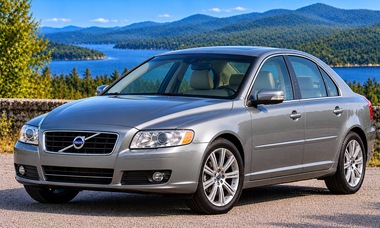
The Volvo S80 is a larger luxury sedan with a comfortable, quiet cabin and excellent long-distance driving manners. Although discontinued after 2016, it remains an attractive option for buyers seeking luxury at a relatively affordable used-car price.
1999–2006 Volvo S80
The original S80 offered five- and six-cylinder engines, including a twin-turbocharged T6 version.
Some early six-cylinder models experienced expensive automatic transmission problems, making careful inspection essential. Given their age, these vehicles are now better suited to buyers familiar with maintaining older European luxury cars.
2007–2016 Volvo S80
The second-generation S80 offered improved refinement and a range of engines, including the naturally aspirated 3.2-liter six-cylinder, turbocharged T6, and 4.4-liter V8.
Well-maintained 2011–2014 examples with the 3.2-liter engine are particularly appealing. The engine offers smooth performance without the additional complexity of turbocharging.
Later 2015–2016 S80 models with certain four-cylinder engines were included in Volvo's oil-consumption warranty extension program, so buyers should verify the engine and repair history.
Potential Volvo S80 Problems
- Transmission problems on certain early models.
- Oil leaks and cooling system repairs.
- Oil consumption on certain 2015–2016 four-cylinder engines.
- Suspension bushings, mounts, and wheel bearings.
- Electrical accessories and climate-control problems.
- Potentially expensive V8-specific maintenance.
Buyer Tip: A well-maintained 3.2-liter six-cylinder S80 is a sensible starting point for buyers seeking a comfortable, relatively uncomplicated used luxury sedan.
Bottom Line: The S80 can offer excellent value, although maintenance and repair expenses remain those of a premium vehicle.
Volvo XC40 Reliability: A Modern Compact SUV
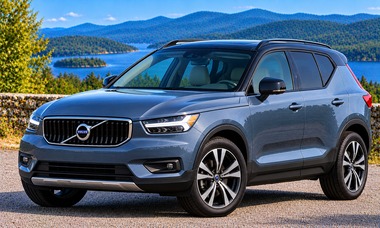
The Volvo XC40 arrived in the United States for the 2019 model year and quickly became an appealing choice for shoppers seeking a smaller luxury SUV.
It offers distinctive styling, comfortable seating, practical interior storage, and modern safety technology.
2019–2022 Volvo XC40
Early XC40 models were offered with turbocharged four-cylinder gasoline engines, generally identified as T4 or T5 depending on configuration.
Well-maintained 2020–2022 models are reasonable candidates for used-car shoppers, although buyers should check electronic features, transmission operation, and the vehicle's service history.
2023–Present Volvo XC40
Later XC40 gasoline models introduced B4 and B5 mild-hybrid powertrains. These use a gasoline engine with electrical assistance rather than the larger high-voltage propulsion battery of a plug-in hybrid.
The updated powertrains and infotainment systems can make these newer XC40s attractive, but they have less long-term mileage history than the older Volvo models discussed in this guide.
Potential Volvo XC40 Problems
- Infotainment freezing, connectivity problems, or software issues.
- Electronic warning messages and driver-assistance sensor faults.
- Occasional rough shifting or hesitation.
- Cooling system and engine oil leaks.
- All-wheel-drive components on equipped models.
Buyer Tip: Test every electronic feature and confirm that applicable software updates and recalls have been addressed.
Bottom Line: The XC40 is a practical, comfortable compact luxury SUV that deserves consideration, especially for buyers seeking a newer used Volvo.
Volvo S90 Reliability: A Modern Luxury Sedan
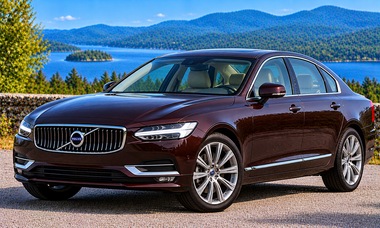
The Volvo S90 replaced the S80 as Volvo's flagship sedan for the 2017 model year in the United States.
It offers elegant styling, a spacious interior, comfortable seating, and an exceptionally refined highway ride.
2017–2021 Volvo S90
Early S90 models used Volvo's newer four-cylinder engines. Depending on the year and trim, buyers may encounter a turbocharged T5, a turbocharged and supercharged T6, or a T8 plug-in hybrid.
The T5 is generally the less mechanically complicated gasoline option, while the T6 and T8 provide stronger performance with additional components.
Well-maintained 2019–2021 examples are worth comparing, especially when accompanied by complete service records.
2022–2025 Volvo S90
Later S90 models feature updated mild-hybrid and plug-in hybrid powertrains, along with newer infotainment technology.
These models can provide an excellent luxury-car experience, but buyers should understand the additional complexity of their electronic and hybrid systems.
Potential Volvo S90 Problems
- Infotainment and software problems.
- Electronic sensor and driver-assistance faults.
- Cooling system and engine oil leaks.
- Air suspension repairs on equipped vehicles.
- Additional hybrid-system maintenance on plug-in hybrid versions.
Buyer Tip: For a used S90, prioritize a well-maintained vehicle with complete electronic and mechanical inspection results. The least complicated powertrain may be preferable if long-term repair costs are a major concern.
Bottom Line: The S90 is an appealing alternative to German luxury sedans, particularly for buyers who value comfort and understated styling over aggressive performance.
Volvo V60 and V90 Reliability: Modern Luxury Wagons
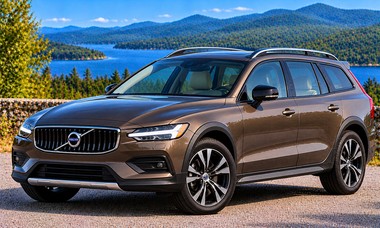
Volvo's V60 and V90 continue the brand's long tradition of practical, comfortable wagons. They offer SUV-like cargo usefulness with a lower driving position and a more car-like feel.
2015–2018 Volvo V60
The first U.S.-market V60 shared much of its mechanical design with the contemporary S60.
Buyers should pay particular attention to engine selection because certain 2015–2016 five-cylinder and four-cylinder V60 engines were included in Volvo's oil-consumption warranty extension programs.
Later 2017–2018 examples are worth considering, provided that maintenance records are complete.
2019–2026 Volvo V60 and V60 Cross Country
The redesigned V60 offers a more spacious cabin, modern technology, and a range of gasoline, mild-hybrid, and plug-in hybrid powertrains.
The V60 Cross Country adds increased ground clearance and all-wheel-drive capability, making it an appealing alternative to a compact SUV.
Well-maintained 2020–2023 models are reasonable used-car candidates. The more complicated performance and plug-in hybrid versions are best suited to buyers prepared for potentially higher repair expenses.
2017–2025 Volvo V90 and V90 Cross Country
The larger V90 provides additional cargo space and a more luxurious long-distance driving experience.
The V90 Cross Country combines wagon practicality with increased ground clearance and all-wheel drive.
Buyers should check the exact engine, transmission, suspension equipment, and electronic features. On vehicles equipped with air suspension, inspect the system carefully because repairs can be expensive.
Potential Volvo V60 and V90 Problems
- Oil consumption on certain early V60 engines.
- Cooling system and engine oil leaks.
- Infotainment and electrical faults.
- All-wheel-drive and suspension repairs.
- Additional complexity on plug-in hybrid versions.
Buyer Tip: The V60 Cross Country and V90 Cross Country are especially appealing for buyers who want SUV practicality without necessarily purchasing an SUV.
Bottom Line: Volvo's modern wagons are distinctive, comfortable, and practical, although their relatively specialized market position can make maintenance history and access to qualified service particularly important.
Volvo Electric Car Reliability: EX30, EX40, C40 and EX90
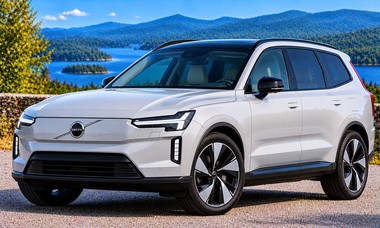
Volvo's growing electric vehicle lineup introduces another set of choices for used-car shoppers. These vehicles have fewer conventional engine and transmission components, but they rely heavily on high-voltage batteries, power electronics, software, and sophisticated electrical systems.
Volvo XC40 Recharge / EX40
The fully electric XC40 Recharge, subsequently renamed EX40, combines the practical XC40 body style with battery-electric propulsion.
Used examples can offer strong acceleration and convenient daily transportation, but buyers should check battery health, charging performance, software updates, and the remaining high-voltage battery warranty.
Volvo C40 Recharge / EC40
The C40 Recharge, later called EC40, uses a coupe-like crossover body style and shares important electrical technology with the electric XC40.
Its reliability considerations are similar, including charging equipment, electronic controls, battery condition, and software functionality.
Volvo EX30
The smaller EX30 entered the U.S. market for the 2025 model year. It offers modern electric vehicle technology in a compact package.
Because it is relatively new, long-term battery and electrical reliability are still developing. Buyers should check for software updates, recalls, and any persistent electronic problems.
Volvo EX90
The EX90 is Volvo's larger electric luxury SUV, with advanced driver-assistance systems and extensive electronic equipment.
As a recent introduction, it does not yet have the long-term ownership record needed for a confident durability assessment. Buyers should pay particular attention to software performance, charging, battery health, and warranty coverage.
Potential Volvo Electric Vehicle Problems
- Software and infotainment problems.
- Charging interruptions or charging-equipment faults.
- Electronic warning messages and driver-assistance system issues.
- Battery degradation and high-voltage component repairs.
- Potentially expensive out-of-warranty electronic repairs.
Buyer Tip: Before buying a used electric Volvo, confirm the battery warranty, obtain a battery health assessment where available, and make sure all applicable recalls and software updates have been completed.
Bottom Line: Volvo's electric vehicles are promising used-car choices, but their long-term reliability records are still developing. They should not yet be rated alongside models with fifteen or twenty years of ownership history.
Which Volvo Engines Are the Most Reliable?
Volvo has used several very different engine families over the years. Understanding those differences is often more important than choosing between two model names.
Volvo 2.4-Liter Naturally Aspirated Five-Cylinder
Found in several older Volvo sedans and wagons, this engine has developed a favorable reputation for longevity.
Its relatively straightforward design is appealing, although timing belt maintenance, crankcase ventilation, oil leaks, and cooling system repairs remain important.
Volvo 2.5-Liter Turbocharged Five-Cylinder
This engine offers stronger performance and can also be durable when properly maintained.
However, certain later versions were included in Volvo's oil-consumption warranty extension programs. Buyers should check the exact model year and engine before assuming that all 2.5-liter turbocharged Volvos have the same reliability record.
Volvo 3.2-Liter Naturally Aspirated Six-Cylinder
The 3.2-liter six-cylinder is one of the more attractive choices for buyers seeking a used Volvo without a turbocharger.
It was used in vehicles such as the S80, XC60, XC70, and XC90. While not immune to oil leaks, cooling system problems, or age-related repairs, it can be a sensible choice for long-term ownership.
Volvo 2.0-Liter Four-Cylinder Engines
Volvo's newer 2.0-liter four-cylinder engines have appeared in turbocharged, turbocharged-and-supercharged, mild-hybrid, and plug-in hybrid configurations.
These engines offer strong performance and improved efficiency, but complexity varies considerably. Certain 2015–2016 versions were covered by oil-consumption warranty extensions.
Later engines have undergone revisions, so buyers should not assume that a problem associated with one early version applies equally to every subsequent Volvo four-cylinder.
Volvo Plug-In Hybrid Powertrains
Volvo's T8 and later Recharge plug-in hybrid models combine a gasoline engine with electric propulsion and a rechargeable high-voltage battery.
They can provide impressive performance and fuel savings, but the additional components create more potential repair expenses as vehicles age.
For buyers seeking the simplest possible long-term ownership experience, a conventional gasoline model may be preferable.
What Volvo Model Years Should You Avoid or Inspect More Carefully?
There are no universal rules that make every Volvo from a particular year unreliable. However, several model and powertrain combinations deserve additional attention.
- 2003–2005 XC90 T6: The twin-turbocharged six-cylinder and four-speed automatic transmission combination is a particularly important caution because of its history of transmission problems.
- Early S80 T6 models: Certain older twin-turbocharged six-cylinder versions have a history of costly transmission concerns.
- 2013–2016 S60 five-cylinder engines: Certain engines were covered by Volvo's excessive oil consumption warranty extension.
- 2015–2016 S60, S80, XC60, V60 and related four-cylinder models: Certain engines were included in a separate Volvo oil-consumption warranty extension program.
- 2015–2016 XC60 and V60 five-cylinder engines: Check for oil consumption history and qualifying repairs.
- 2016 XC90: The first year of the major redesign deserves additional attention to engine, electronics, and optional suspension systems.
- Older high-performance and plug-in hybrid models: These can be enjoyable vehicles but may require a larger maintenance and repair budget.
These are reasons to investigate a vehicle more carefully, not proof that every example will develop the problem.
Before ruling out a particular Volvo, verify the engine, maintenance records, completed repairs, and condition of the actual vehicle.
How Many Miles Can a Volvo Last?
A well-maintained Volvo can often reach 150,000–200,000 miles, and some examples exceed 250,000 miles. However, there is a difference between how long a vehicle can continue operating and how long it remains economical to maintain.
Engine durability, transmission condition, electronic systems, and previous maintenance all influence the answer.
- Under 100,000 miles: Often an appealing used-car buying range, but verify that all scheduled maintenance has been completed.
- 100,000–150,000 miles: A well-maintained Volvo may still have many useful miles remaining. Suspension, cooling system, and other wear-related repairs become more likely.
- 150,000–200,000 miles: Long service life is possible, but the condition of the transmission, engine, electronics, and drivetrain becomes especially important.
- Over 200,000 miles: Some Volvos continue operating reliably, although major repairs may cost more than the vehicle's market value.
For newer plug-in hybrids and fully electric Volvos, high-mileage durability also depends on battery condition, power electronics, and the availability and cost of specialized repairs.
A Volvo with 130,000 miles and a complete maintenance history may be a better purchase than one with 80,000 miles and evidence of neglected service.
Pricing
Knowing which Volvo model or years to concentrate on is step 1. Step 2 is knowing how to actually get an excellent Volvo.
Also, it's good to always know the value of your trade-in while you're evaluating your next possible purchase, since what you receive can significantly offset the amount you'll ultimately pay. See KBB vs. Edmunds Appraisals: Which Is Better? to learn how the two services compare and how to use them to eventually get an accurate and fair trade-in offer from a dealer.
Final Verdict: Is a Used Volvo a Good Car to Buy?
Yes, a carefully selected used Volvo can be an excellent car to buy. Volvo's comfortable interiors, safety engineering, refined road manners, and distinctive styling make many of its models attractive alternatives to more expensive luxury vehicles.
For buyers seeking an affordable sedan, the S60 and S80 deserve consideration. The XC60 is an appealing compact luxury SUV, while the XC90 provides family-friendly space and three-row practicality. Volvo's V60, V70, XC70, and V90 wagons are especially attractive for shoppers who want cargo versatility without necessarily buying an SUV.
The biggest caution is that Volvo ownership costs can be higher than those of mainstream brands. Certain engines, transmissions, and electronic systems have documented problems, so choosing the right year and powertrain is important.
Ultimately, the best used Volvo isn't necessarily the newest or lowest-mileage one. It's the model with a suitable engine, documented maintenance, a reasonable repair history, and a clean professional inspection. Find that combination, and a used Volvo can provide many years of comfortable, satisfying transportation.
Some Insider Insights: