

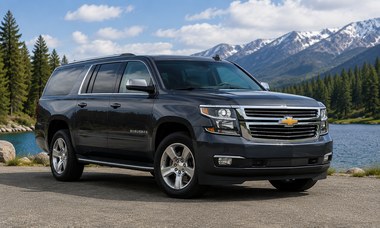
Which Chevy Suburban years are the most reliable? Which years should you avoid? And if you're shopping for a used Suburban, which engines and transmissions offer the best chance of dependable long-term ownership?
The Chevrolet Suburban has an unusually long history, but the 2000-2024 models are particularly useful to compare because they span four modern generations and several very different approaches to engine, transmission, and fuel-management technology.
Some of the oldest Suburbans in this guide are also among the most mechanically straightforward.
The 2000-2006 models use traditional V8 engines without Active Fuel Management. The 2007-2014 generation introduced AFM on many 5.3-liter engines, creating additional concerns involving lifters and oil consumption. The 2015-2020 generation added direct injection and more sophisticated transmissions, while the completely redesigned 2021-2024 Suburban introduced Dynamic Fuel Management, independent rear suspension, the 3.0-liter Duramax diesel, and much more electronic complexity.
That makes the Suburban an excellent example of why newer doesn't automatically mean simpler or more durable.
A properly maintained Suburban can also last an exceptionally long time. Many have surpassed 200,000 miles, and 250,000 miles is realistic for good examples. Some reach 300,000 miles or more, although by that point overall vehicle condition and the number of major components already replaced become more important than engine durability alone.
This guide covers Chevy Suburban model years from 2000 through 2024, including reliability by generation, V8 and diesel engine differences, AFM and DFM problems, transmission reliability, common mechanical failures, high-mileage ownership, the best Suburban years to buy, years requiring extra caution, repair costs, and expected lifespan.
In This Guide You'll Learn
- How reliable the Chevy Suburban is overall
- Which Chevy Suburban years are the best to buy
- Which Suburban years require extra inspection
- Which Suburban generation is the most reliable
- How reliable the 5.3L V8 is
- How reliable the 6.0L V8 is
- How reliable the 6.2L V8 is
- What to know about the 3.0L Duramax diesel
- Which Suburbans have AFM
- Which Suburbans have DFM
- What causes Suburban lifter problems
- Which years are vulnerable to oil consumption
- How reliable the four-speed, six-speed, eight-speed and 10-speed automatics are
- Whether a Suburban with 150,000 or 200,000 miles is worth buying
- Whether a Chevy Suburban can last 300,000 miles
- What commonly needs attention after 100,000 miles
- How much major Suburban repairs can cost
Also, More On Chevrolet Reliability
If you'd like to compare different Chevy models, be sure to read our Chevrolet Reliability & Problems: Best Used Chevys & Years Guide. It highlights the models, best years to buy or those to avoid, common problems, and helps you identify the better choices.
Is the Chevy Suburban Reliable?
Overall, the Chevy Suburban can be a very durable full-size SUV, but reliability varies significantly by generation, powertrain, maintenance history, and mileage.
It also helps to separate engine durability from total vehicle durability.
A Suburban's V8 may still be capable of running well beyond 200,000 miles while its transmission, air-conditioning system, suspension, electronic components, fuel pump, differential, or four-wheel-drive system begins requiring substantial repairs.
That distinction becomes especially important when shopping older examples.
The 2000-2006 generation has one of the strongest mechanical reputations. Its 4.8L, 5.3L, and 6.0L V8 engines are relatively simple by modern standards, and the absence of Active Fuel Management removes one major source of later GM V8 problems.
The tradeoff is age. Even the newest 2006 examples are now old enough that rust, deteriorated rubber components, cooling-system parts, brake lines, fuel lines, steering components, suspension wear, and transmission condition can matter more than the original engine design.
The 2007-2014 generation remains capable of high mileage but introduces one of the most important reliability subjects in modern Suburban ownership: Active Fuel Management, or AFM.
AFM allows certain cylinders to deactivate under light loads to improve fuel economy. Unfortunately, specialized lifters and related hardware can fail. Some engines also develop increased oil consumption, and operating an engine low on oil can compound the damage.
The 2015-2020 Suburban is more refined and technologically advanced. The 5.3L EcoTec3 V8 remained the mainstream engine, while a 6.2L became available in later higher-end configurations. These engines use direct injection and cylinder-deactivation technology, so maintenance history remains important.
The 2021-2024 generation brings another major redesign. Buyers can choose 5.3L or 6.2L gasoline V8s or a 3.0L Duramax turbo-diesel. Most use Dynamic Fuel Management rather than the earlier AFM system, but lifter-related concerns haven't disappeared completely.
Bottom Line: A well-negotiated Suburban is capable of exceptional mileage, but we'd shop by generation and powertrain rather than assuming every Suburban has the same reliability. The mechanically simpler 2000-2006 models have a particularly strong durability reputation, while later models offer much more refinement but also more systems that can become expensive as they age.
Chevy Suburban Reliability at a Glance
| Category | Our Assessment |
|---|---|
| Overall Reliability | Good when carefully selected and well maintained |
| Most Mechanically Simple Generation | 2000-2006 GMT800 |
| Major Later V8 Concern | AFM/DFM lifter problems and oil consumption |
| Best-Known Engine | 5.3L V8 |
| Heavy-Duty Older Engine | 6.0L V8 |
| Higher-Performance Engine | 6.2L V8 |
| Diesel Option | 3.0L Duramax beginning with 2021 generation |
| Typical Lifespan | 200,000-250,000 miles is realistic with good maintenance |
| Exceptional Lifespan | 300,000+ miles is possible |
Buyer Tip: On a high-mileage Suburban, don't focus only on whether the engine starts quietly. Transmission condition, rust, cooling-system history, suspension wear, four-wheel-drive operation, and evidence of regular maintenance can be just as important.
Chevy Suburban Reliability by Generation
2000-2006 Chevy Suburban: GMT800 Generation
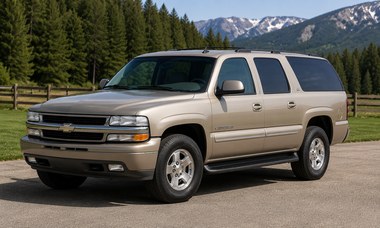
The 2000-2006 Suburban is one of the most interesting generations for buyers who value mechanical simplicity and proven high-mileage durability.
These Suburbans belong to GM's GMT800 truck family and share much of their engineering with the Chevrolet Silverado, Tahoe, GMC Sierra, and Yukon.
The engine lineup includes versions of GM's LS-based small-block V8 family, most commonly the 5.3-liter V8, along with a 4.8-liter V8 in certain configurations and larger 6.0-liter engines in heavier-duty models.
Most importantly from a reliability standpoint, these engines predate widespread Active Fuel Management.
That means there are no AFM lifters or cylinder-deactivation hardware to worry about.
2000-2006 Suburban 5.3L V8 Reliability
The 5.3-liter V8 is one of the strongest reasons these Suburbans remain popular.
When maintained properly, the engine can routinely exceed 200,000 miles, and substantially higher mileage isn't unusual.
The basic architecture is durable, parts availability is excellent, and independent shops are extremely familiar with the engine.
That doesn't mean a 20-year-old 5.3L is automatically trouble-free.
Potential age- and mileage-related problems include oil leaks, intake-manifold gasket issues, knock sensors, ignition coils, fuel pumps, water pumps, accessory-drive components, exhaust-manifold bolts, and various sensors.
But those problems are generally very different from catastrophic internal engine failure.
A well-maintained 5.3L can often remain mechanically healthy long after other parts of the vehicle need rebuilding.
2000-2006 Suburban 4.8L V8 Reliability
The 4.8-liter V8 is less common in the Suburban than the 5.3L but shares much of the same robust engine architecture.
It doesn't provide the same low-end torque for towing or heavily loaded operation, but from a durability standpoint it can be excellent.
For buyers who don't tow heavily, a clean 4.8L example shouldn't automatically be dismissed.
2000-2006 Suburban 6.0L V8 Reliability
The 6.0-liter V8 found in heavier-duty Suburban configurations is another very durable engine.
It provides additional torque and is especially attractive for towing, heavy loads, or buyers specifically searching for a Suburban 2500.
Fuel economy is poor, but durability can be excellent.
As with the smaller V8s, we'd inspect for oil leakage, cooling-system maintenance, exhaust-manifold problems, misfires, and evidence of overheating.
2000-2006 Suburban Transmission Reliability
Many 1500-series Suburbans use the 4L60E four-speed automatic.
The 4L60E can last a long time when properly maintained, but it isn't indestructible.
Heavy towing, overheating, neglected fluid, and repeated high-load use can shorten its life considerably.
High-mileage examples may develop slipping, delayed engagement, harsh shifts, loss of individual gears, or complete failure.
Heavier-duty Suburban configurations may use stronger transmissions better suited to towing.
When shopping any 2000-2006 Suburban, we'd drive it long enough for the transmission to reach full operating temperature.
A transmission that shifts well cold may begin slipping or behaving differently once hot.
2000-2006 Suburban Rust and Age-Related Problems
At this point, vehicle age deserves at least as much attention as mileage.
Suburbans from northern climates can develop substantial frame and body corrosion.
Brake lines and fuel lines are especially important to inspect.
Rubber bushings, hoses, seals, weatherstripping, motor mounts, suspension components, steering components, and electrical connectors also deteriorate simply with time.
A rust-free 180,000-mile southern or western Suburban can be a much more attractive purchase than a 120,000-mile northern vehicle with extensive corrosion.
Common 2000-2006 Chevy Suburban Problems
- 4L60E transmission wear or failure
- Fuel-pump failures
- Water-pump and cooling-system problems
- Intake and other engine oil leaks
- Knock-sensor problems
- Ignition coil and misfire issues
- Broken exhaust-manifold bolts
- Instrument-cluster failures
- ABS module problems
- Wheel bearing wear
- Steering and suspension wear
- Air-conditioning problems
- Transfer-case and four-wheel-drive issues
- Rust and brake-line corrosion
Buyer Tip: Don't be frightened by mileage alone on a 2000-2006 Suburban. A well-maintained 200,000-mile example with a healthy drivetrain and rust-free chassis can be a better buy than a lower-mileage vehicle that has spent years neglected.
Bottom Line: The 2000-2006 generation is arguably the Suburban's mechanical-simplicity champion. The 5.3L and 6.0L V8s can be exceptionally durable, but transmission condition, rust, and two decades of general wear must be evaluated carefully.
2007-2014 Chevy Suburban: GMT900 Generation
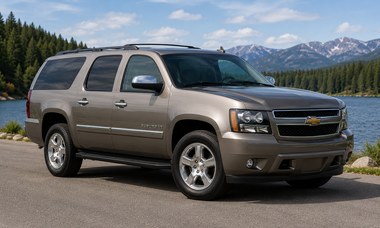
The redesigned 2007 Suburban brought a more refined interior, improved ride quality, updated styling, more sophisticated electronics, and newer versions of GM's V8 engines.
It also introduced a reliability issue that became extremely important to used Suburban buyers: Active Fuel Management.
2007-2014 Suburban 5.3L V8 Reliability
The 5.3-liter V8 remained the most common engine.
The basic engine architecture is still fundamentally strong, and many examples reach 200,000 miles or more.
However, the introduction of AFM changes the reliability equation.
AFM shuts down selected cylinders under light-load driving to improve fuel economy.
To accomplish that, GM uses special lifters and associated hardware that can deactivate individual cylinders.
When those components work correctly, the transition is largely transparent to the driver.
When a lifter fails, the repair can become expensive.
Chevy Suburban AFM Lifter Problems
A failed AFM lifter can cause ticking, misfires, rough running, reduced power, a check-engine light, or cylinder-specific fault codes.
If addressed early, repairs may be limited to the affected lifters and related components.
If the problem is ignored, additional camshaft or internal engine damage can occur.
Oil condition is important because the AFM system depends on engine oil pressure and clean lubrication passages.
Regular oil changes don't guarantee that an AFM lifter will never fail, but neglected oil certainly doesn't help.
2007-2014 Suburban Oil Consumption
Some AFM-equipped 5.3L engines can consume significant amounts of oil between changes.
This creates a second problem when owners assume the oil level will remain full until the next scheduled service.
If the engine consumes oil and isn't checked periodically, it may operate low on oil.
That can accelerate internal wear and contribute to lifter and valvetrain problems.
When considering one of these Suburbans, we'd ask specifically whether the owner adds oil between changes.
We'd also check the dipstick ourselves before the engine is started.
2007-2014 Suburban 6.0L V8 Reliability
Heavy-duty Suburban 2500 models may use the 6.0-liter V8.
For buyers who need serious towing capability or want to avoid some of the fuel-economy-oriented technology used on lighter-duty versions, the 6.0L can be particularly attractive.
It's a proven engine with excellent parts support and strong high-mileage potential.
The major disadvantages are fuel consumption and the increasingly limited supply of clean Suburban 2500 examples.
2007-2014 Suburban Transmission Reliability
Early GMT900 Suburbans continued using four-speed automatics in many configurations, while later models transitioned to six-speed units.
The six-speed provides better gearing and highway performance, but any high-mileage transmission deserves careful evaluation.
Look for:
- Delayed engagement when shifted into Drive or Reverse
- Slipping under acceleration
- Flare between gears
- Harsh shifts
- Torque-converter shudder
- Unusual noises
- Transmission warning messages
Towing history matters considerably on a Suburban.
A vehicle that spent years pulling a large boat or travel trailer may have experienced substantially more transmission heat and stress than an identical Suburban used primarily for highway commuting.
Common 2007-2014 Chevy Suburban Problems
- AFM lifter failures
- Oil consumption
- Camshaft damage following lifter failure
- Four-speed and six-speed transmission problems
- Motor mount deterioration
- Water-pump and cooling-system repairs
- Oil leaks
- Wheel bearing failures
- Suspension and steering wear
- Dashboard cracking
- Door lock actuator failures
- Air-conditioning problems
- Electrical and instrument-cluster issues
- Transfer-case and four-wheel-drive problems
Buyer Tip: Ask whether a 5.3L Suburban consumes oil and whether any AFM lifter work has already been performed. A documented professional repair can be more reassuring than a seller simply saying the vehicle has "never had a problem."
Bottom Line: The 2007-2014 Suburban can still be a durable 200,000-mile SUV, but we'd inspect AFM-equipped 5.3L engines carefully. Later examples can be excellent purchases when oil consumption is controlled, lifters are healthy, and the transmission has been properly maintained.
2015-2020 Chevy Suburban: K2XX Generation
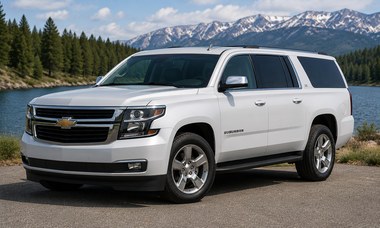
The 2015 redesign brought the Suburban into a much more modern era.
The cabin became quieter and more sophisticated, safety technology improved, electronics became more extensive, and GM introduced its EcoTec3 V8 engine family.
The 5.3-liter remained the mainstream engine, while the 6.2-liter V8 became available in certain later high-end configurations.
2015-2020 Suburban 5.3L EcoTec3 Reliability
The 5.3L EcoTec3 V8 combines traditional pushrod V8 architecture with direct fuel injection, variable valve timing, and Active Fuel Management.
It provides good torque and reasonable fuel economy for such a large SUV.
Many engines provide long service lives.
However, AFM lifter failure remains a concern.
Symptoms can include ticking, rough running, misfires, reduced power, or a check-engine light.
Direct injection also adds high-pressure fuel-system components that aren't present on earlier Suburbans.
Regular oil changes with the correct oil specification remain extremely important.
2015-2020 Suburban 6.2L V8 Reliability
The 6.2-liter V8 offers substantially stronger acceleration and towing performance.
For drivers who regularly tow heavy loads, the additional torque can be worthwhile.
But the 6.2L isn't necessarily the engine we'd choose purely for lowest long-term ownership cost.
It shares much of the same cylinder-deactivation and direct-injection complexity as the 5.3L, consumes more fuel, and can make expensive problems even more costly.
We'd buy a 6.2L because we wanted its performance, not because we expected it to be cheaper to maintain.
2015-2020 Suburban Six-Speed Transmission Reliability
Many Suburbans from this generation use GM's six-speed automatic.
A healthy transmission should shift smoothly without flare, shuddering, slipping, or delayed engagement.
Torque-converter problems can become particularly important as mileage increases.
Because torque-converter deterioration can contaminate transmission fluid and eventually damage other internal components, persistent shudder should never simply be ignored.
Later Suburban 10-Speed Automatic
Certain later 6.2L Suburbans use GM's 10-speed automatic.
The transmission provides closer gearing and improved performance compared with older four- and six-speed designs.
As with any complex modern automatic, software calibration can affect shift feel.
We'd still investigate persistent harsh shifts, slipping, hesitation, shuddering, or repeated gear hunting rather than assuming all unusual behavior is normal.
2015 Suburban Reliability
The 2015 model deserves somewhat more scrutiny because it was the first year of a complete redesign.
First-year vehicles combine new body structures, electronics, interior systems, and drivetrain calibrations all at once.
We wouldn't automatically avoid a clean 2015, but when condition and price are otherwise equal, we'd generally prefer a later-production example.
2018-2020 Suburban Reliability
The later years of this generation are generally among the more appealing K2XX Suburbans.
They benefit from several years of production maturity and are new enough that age-related deterioration isn't as dominant as it is on GMT800 and GMT900 models.
We'd still inspect the 5.3L or 6.2L for lifter symptoms, evaluate transmission behavior carefully, verify that the air-conditioning system works properly, and test every electronic feature.
Common 2015-2020 Chevy Suburban Problems
- AFM lifter problems
- Camshaft damage associated with failed lifters
- Oil consumption on some engines
- Direct-injection fuel-system issues
- Six-speed transmission and torque-converter problems
- Transmission shudder
- Air-conditioning condenser and refrigerant leaks
- Motor mount wear
- Electrical and infotainment problems
- Battery and charging-system issues
- Wheel bearing and suspension wear
- Magnetic Ride Control repair costs on equipped models
- Four-wheel-drive and transfer-case problems
Buyer Tip: A later 2018-2020 Suburban can be an excellent family and towing vehicle, but don't let its newer appearance discourage a thorough mechanical inspection. A failed lifter or damaged transmission can still turn a seemingly attractive used SUV into an expensive purchase.
Bottom Line: The 2015-2020 generation delivers a major improvement in refinement, but it trades some of the earlier Suburban's mechanical simplicity for direct injection, cylinder deactivation, more electronics, and increasingly complex transmissions.
2021-2024 Chevy Suburban: Fifth Modern Generation
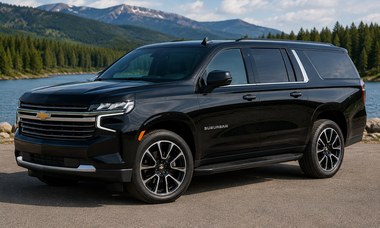
The completely redesigned 2021 Suburban is substantially different from the generation it replaced.
One of the biggest changes is independent rear suspension, which improves passenger space, third-row comfort, and ride quality.
Powertrain choices include the familiar 5.3-liter and 6.2-liter gasoline V8s plus a 3.0-liter Duramax inline-six turbo-diesel.
All are paired with a 10-speed automatic.
2021-2024 Suburban 5.3L V8 Reliability
The 5.3L remains the mainstream engine and continues to offer an appealing balance of performance and fuel economy.
Many newer engines use Dynamic Fuel Management rather than the older AFM system.
DFM is more sophisticated and can deactivate different combinations of cylinders rather than simply switching between eight- and four-cylinder operation.
However, specialized lifters remain part of the system, which means valvetrain reliability is still an important consideration.
2021-2024 Suburban 6.2L V8 Reliability
The 6.2L delivers excellent performance for such a large SUV.
It is especially appealing to buyers who tow or simply want stronger acceleration.
But we'd pay close attention to oil pressure, unusual engine noise, misfires, warning lights, and service history.
As with the 5.3L, sophisticated cylinder-deactivation hardware adds complexity compared with an older non-AFM engine.
2021-2024 Suburban 3.0L Duramax Diesel Reliability
The 3.0-liter Duramax turbo-diesel is one of the most interesting engines ever offered in a Suburban.
It provides strong low-rpm torque, excellent highway range, and significantly better fuel economy than the gasoline V8s.
For drivers who travel long distances or tow regularly, the diesel can be especially attractive.
But diesel ownership brings a different set of maintenance considerations.
Modern diesels use sophisticated emissions equipment including diesel particulate filters, exhaust-gas recirculation systems, sensors, and selective catalytic reduction systems that use diesel exhaust fluid.
These systems generally work best when the vehicle regularly reaches full operating temperature and sees extended highway driving.
A diesel Suburban used almost exclusively for short local trips may not be the ideal application.
We'd also remember that an efficient diesel isn't automatically a cheaper vehicle to own. Diesel-specific repairs can be expensive once warranty coverage ends.
2021 Suburban Reliability
The 2021 Suburban deserves extra attention because it was the first year of a major redesign.
Beyond the drivetrain, Chevrolet introduced a new chassis, independent rear suspension, significantly more electronic systems, revised interior technology, and updated driver-assistance features.
First-year complexity is one reason we'd generally give a comparable 2022-2024 example some preference over a 2021.
2022-2024 Suburban Reliability
The 2022-2024 models benefit from additional production maturity.
They're also young enough that many examples still have relatively modest mileage.
However, these years haven't existed long enough to provide the same 150,000- and 200,000-mile evidence available for older Suburban generations.
We can evaluate known problems and early ownership patterns, but it would be premature to claim that a 2023 or 2024 Suburban has proven itself at extremely high mileage.
2021-2024 Suburban 10-Speed Transmission Reliability
The 10-speed automatic provides a wide spread of gear ratios and helps both the gasoline and diesel engines stay within their most effective operating ranges.
A healthy 10-speed should shift smoothly and unobtrusively.
During a test drive, we'd watch for:
- Delayed engagement
- Harsh upshifts or downshifts
- Transmission shudder
- Gear hunting
- Slipping
- Unusual noises
- Transmission or powertrain warning messages
Software updates can influence shift behavior, so documented dealer service is useful when evaluating a newer used Suburban.
Common 2021-2024 Chevy Suburban Reliability Concerns
- DFM/valvetrain lifter concerns on gasoline V8s
- Engine misfires or abnormal valvetrain noise
- 10-speed transmission shift-quality concerns
- Electrical and infotainment problems
- Camera and driver-assistance sensor faults
- Battery and charging-system problems
- Air-suspension or adaptive-suspension repair costs on equipped trims
- Diesel emissions-system complexity on 3.0 Duramax models
- Turbocharger and diesel fuel-system complexity
- First-year redesign concerns on 2021 models
Buyer Tip: Match the engine to the way you'll actually use the Suburban. The 3.0 Duramax can be excellent for long-distance highway use, while buyers who mostly make short local trips may be better served by a gasoline V8.
Bottom Line: The 2021-2024 Suburban offers the best ride, passenger space, technology, and fuel-economy choices in the model's history. But it is also the most mechanically and electronically complex, and we don't yet have enough long-term evidence to judge its 200,000-mile durability as confidently as the older generations.
What Are The Best Chevy Suburban Years to Buy?
The best Chevy Suburban years depend on whether your priority is mechanical simplicity, newer features, towing ability, fuel economy, or lower purchase price.
For buyers who want the simplest long-term ownership experience, the 2000-2006 generation remains especially attractive. These models avoid AFM and DFM entirely, and the 5.3L and 6.0L V8s have excellent high-mileage reputations.
For buyers who want something newer, later GMT900 models and selected 2018-2020 K2XX Suburbans can also be strong choices when maintenance history is excellent.
The 2022-2024 generation is appealing for comfort, technology, and drivetrain variety, but it doesn't yet have the same long-term track record.
| Model Years | Why We Like Them |
|---|---|
| 2003-2006 | Among the best combinations of mechanical simplicity, durable V8s, no AFM, strong parts availability, and proven high-mileage potential |
| 2011-2014 | Later GMT900 years with six-speed automatics and improved production maturity, though AFM and oil consumption still require inspection |
| 2018-2020 | Later K2XX years with more refinement and fewer first-year concerns than 2015; inspect AFM lifters and transmission behavior carefully |
| 2022-2024 | Later current-generation models with excellent space, ride quality, and powertrain choices; long-term reliability still developing |
Buyer Tip: A well-maintained older Suburban can be a better purchase than a newer one with poor service history. On these vehicles, engine oil history, transmission condition, rust, towing use, and previous repairs matter enormously.
Bottom Line: For maximum mechanical simplicity, we'd look hardest at 2003-2006. For buyers wanting a newer vehicle, later 2018-2020 examples can offer a good balance of refinement and established reliability, while 2022-2024 models are attractive but less proven at very high mileage.
Which Chevy Suburban Years Should You Avoid or Inspect Carefully?
We wouldn't automatically reject every Suburban from a particular year, but some periods deserve more scrutiny than others.
| Model Years | Why Extra Inspection Is Important |
|---|---|
| 2000-2002 | Mechanically durable, but now old enough that rust, brake lines, fuel lines, cooling systems, suspension, and transmission condition can dominate the purchase decision |
| 2007-2010 | Early GMT900 years with AFM-related oil consumption and lifter concerns, plus older four-speed automatic configurations |
| 2015 | First year of the K2XX redesign; more electronics and new-generation issues make careful inspection especially important |
| 2015-2017 | AFM lifter concerns, transmission and torque-converter issues, and A/C problems deserve close attention |
| 2021 | First year of a major redesign with new suspension, electronics, and broader powertrain complexity |
Bottom Line: We'd be most cautious with 2007-2010 if you're specifically trying to minimize AFM-related risk, and we'd scrutinize first-year redesigns such as 2015 and 2021 more closely than comparable later examples.
Which Chevy Suburban Generation Is Most Reliable?
If we're judging primarily by mechanical simplicity and proven durability, we'd give the advantage to the 2000-2006 GMT800 generation.
The main reason is straightforward: these Suburbans use durable LS-based V8 engines without AFM or DFM cylinder-deactivation systems.
That eliminates one of the most expensive and widely discussed problem areas found on later 5.3L and 6.2L engines.
The engines themselves can routinely exceed 200,000 miles with good maintenance, and the parts and repair knowledge surrounding them are extensive.
The biggest caveat is age.
A 2004 Suburban may have a fundamentally excellent engine while simultaneously needing transmission work, suspension components, brake lines, A/C repairs, steering parts, wheel bearings, or rust remediation.
So we'd describe GMT800 as the most reliable design, but not automatically the best purchase in every individual case.
The 2015-2020 generation is more refined and can be very good, especially in later years, but AFM and transmission complexity keep it from taking the mechanical-reliability crown.
Buyer Takeaway: If you want the simplest Suburban with the best-established high-mileage record, look hardest at 2000-2006. If you want modern safety and comfort, later 2018-2020 models are usually the more practical compromise.
Which Chevy Suburban Engine Is Most Reliable?
The Suburban has used several excellent engines, but reliability depends partly on whether you're prioritizing simplicity or capability.
5.3L V8 Reliability
The 5.3-liter V8 is the most important Suburban engine because it appears across multiple generations and is by far the most common.
The earliest 2000-2006 versions are particularly appealing because they avoid AFM.
Those engines have a strong reputation for surviving 200,000 miles and beyond when properly maintained.
Later 5.3L engines remain capable of excellent mileage, but AFM and DFM introduce additional lifter and valvetrain complexity.
That means we'd distinguish sharply between a 2005 5.3L and a 2015 or 2022 5.3L when discussing long-term risk.
Our reliability preference: If simplicity is the goal, the pre-AFM 5.3L V8 is one of the strongest choices in Suburban history.
6.0L V8 Reliability
The 6.0-liter V8 used in heavier-duty Suburban models has an excellent reputation for durability.
It is particularly well suited to towing and heavy-load use.
The tradeoff is fuel economy.
These engines are thirsty, and clean Suburban 2500 examples are becoming harder to find.
But if you locate a well-maintained one with a healthy transmission and chassis, the 6.0L is one of the most robust Suburban powerplants.
6.2L V8 Reliability
The 6.2-liter V8 provides significantly stronger acceleration and towing performance than the 5.3L.
It can also be durable, but it includes more sophisticated cylinder-deactivation and fuel-system technology in later generations.
That means lifter problems, fuel-system issues, and expensive internal repairs remain possible.
We'd choose the 6.2L for its performance rather than assuming it offers a reliability advantage over the 5.3L.
3.0L Duramax Diesel Reliability
The 3.0-liter Duramax inline-six diesel is an appealing engine for drivers who accumulate lots of highway mileage.
It provides excellent torque and noticeably better fuel economy than the gasoline V8s.
However, modern diesel emissions equipment makes ownership more complex.
Diesel particulate filters, DEF systems, sensors, EGR components, turbochargers, and high-pressure fuel systems can all become expensive outside warranty.
For someone who regularly drives long distances, the diesel can make a great deal of sense.
For someone who mostly makes short trips, we'd generally lean toward a gasoline engine.
Bottom Line: For proven simplicity, we'd favor the pre-AFM 5.3L or the older 6.0L. The later 5.3L and 6.2L are powerful and capable but bring more valvetrain complexity, while the 3.0 Duramax is best matched to buyers who will use it for longer highway driving.
Chevy Suburban AFM and DFM Problems
Understanding AFM and DFM is important when shopping most Suburbans built after the GMT800 generation.
What Is AFM?
Active Fuel Management allows a V8 engine to operate on fewer cylinders under light-load conditions.
The goal is improved fuel economy.
To make this possible, certain cylinders use specialized lifters that can collapse and deactivate the corresponding valves.
The system works well when everything functions correctly.
The problem is that those specialized lifters can fail.
What Is DFM?
Dynamic Fuel Management is a more advanced version of cylinder deactivation used on newer GM V8s.
Instead of simply switching between eight-cylinder and four-cylinder operation, DFM can deactivate different combinations of cylinders depending on load and operating conditions.
The system is more flexible but still relies on specialized valvetrain hardware.
What Happens When a Suburban Lifter Fails?
Typical symptoms include:
- Ticking or tapping noises
- Misfires
- Rough idle
- Reduced power
- Check-engine light
- Cylinder-specific fault codes
- Abnormal camshaft or valvetrain wear
If a failed lifter damages the camshaft, repair costs can increase substantially.
Does Disabling AFM Prevent Lifter Problems?
Electronic AFM disabling can prevent the engine from entering cylinder-deactivation mode, but it does not physically remove the specialized AFM lifters or associated hardware.
That means disabling the system electronically doesn't eliminate every possible lifter failure.
A mechanical AFM delete is a much more extensive modification that replaces cylinder-deactivation components with conventional hardware.
Anyone considering that type of modification should also consider emissions rules, warranty implications, tuning requirements, and local regulations.
Chevy Suburban Transmission Reliability
Suburban transmission reliability varies significantly by generation and vehicle use.
Towing history matters more here than it does on many ordinary passenger vehicles.
4L60E Four-Speed Automatic
The 4L60E is widely used in older 1500-series Suburbans.
It can provide long service when maintained properly, but heavy towing and heat can shorten its life.
By 150,000-200,000 miles, transmission condition becomes one of the most important questions on any surviving GMT800 or early GMT900 Suburban.
Watch for slipping, delayed engagement, harsh shifts, missing gears, or excessive transmission temperature.
Six-Speed Automatic
The six-speed used in later GMT900 and many K2XX Suburbans offers better gearing and improved highway efficiency.
However, high-mileage units can develop torque-converter and internal transmission problems.
Shuddering under light acceleration deserves particular attention because it can indicate torque-converter deterioration.
Eight-Speed Automatic
Some related GM full-size vehicles use eight-speed automatics, and buyers sometimes encounter confusion when comparing Suburban powertrains across trims and years.
Always verify the actual transmission installed in the vehicle you're considering rather than assuming based solely on model year.
10-Speed Automatic
The 10-speed automatic appears in later high-output configurations and across the 2021-2024 generation.
It offers excellent gearing and generally smooth operation when functioning properly.
However, any persistent harsh shifting, delayed engagement, shuddering, or gear hunting deserves diagnosis.
Buyer Takeaway: On any used Suburban, especially one that has towed, transmission condition can matter as much as engine condition. A strong engine paired with a failing transmission is not a bargain.
How Long Does a Chevy Suburban Last?
The Suburban is one of the vehicles where 200,000 miles should not automatically be viewed as the end of useful life.
A well-maintained example can realistically reach 200,000-250,000 miles.
Many survive beyond that.
Some reach 300,000 miles or more.
But by extremely high mileage, the question becomes less about whether the engine can still run and more about whether the entire vehicle remains economically sensible to maintain.
Is 100,000 Miles High for a Chevy Suburban?
No. For a well-maintained Suburban, 100,000 miles is not unusually high.
At this mileage we'd begin paying closer attention to transmission service, cooling-system components, suspension wear, wheel bearings, motor mounts, spark plugs, differential fluids, transfer-case service, brakes, and air-conditioning performance.
On AFM-equipped engines, we'd also listen carefully for valvetrain noise and ask about oil consumption.
Should You Buy a Suburban With 150,000 Miles?
A 150,000-mile Suburban can still be a very reasonable purchase.
At that mileage, maintenance records and overall condition matter much more than the odometer by itself.
A rust-free 2005 Suburban with 170,000 miles, documented maintenance, and a rebuilt transmission may be a better purchase than a neglected 2012 with 110,000 miles and serious oil consumption.
Can a Chevy Suburban Last 200,000 Miles?
Yes. A properly maintained Suburban can absolutely reach 200,000 miles.
For the strongest older V8s, we'd consider 200,000 miles a realistic outcome rather than an extraordinary one.
Can a Chevy Suburban Last 300,000 Miles?
Yes, 300,000 miles is possible, particularly with older 5.3L and 6.0L V8s.
But we'd expect significant repairs and component replacement along the way.
- 100,000 miles: Normal territory for a properly maintained Suburban
- 150,000 miles: Still very viable when engine, transmission, and chassis are healthy
- 200,000 miles: Realistic for well-maintained examples
- 250,000 miles: Achievable with continued maintenance and repairs
- 300,000+ miles: Possible, especially with durable older V8s, but overall vehicle condition becomes critical
Bottom Line: The Suburban has genuine high-mileage potential. We'd judge a 150,000- or 200,000-mile example by maintenance history, rust, transmission condition, oil consumption, and prior major repairs rather than mileage alone.
Common Chevy Suburban Problems
The exact problems depend on generation, but several issues repeatedly matter to used Suburban buyers.
1. AFM and DFM Lifter Problems
Later gasoline V8s can develop failed cylinder-deactivation lifters.
Ticking, misfires, rough running, and cylinder-specific fault codes should be investigated immediately.
2. Oil Consumption
Some AFM-equipped 5.3L engines consume oil between changes.
Owners who fail to monitor the dipstick can allow the engine to operate low on oil, increasing valvetrain and internal-engine wear.
3. Transmission Failure
Transmission problems become increasingly important as mileage climbs.
Older four-speed units, six-speed transmissions, torque converters, and newer multi-speed automatics all require careful evaluation.
4. Air-Conditioning Problems
A Suburban has a large cabin and complex front and rear climate-control system.
Compressors, condensers, refrigerant leaks, blend-door actuators, rear A/C components, and lines can all become expensive repairs.
5. Water Pumps and Cooling-System Problems
Water pumps, radiators, thermostats, hoses, coolant fittings, and fans can fail with age and mileage.
Any history of serious overheating deserves caution.
6. Wheel Bearings and Suspension Wear
Suburbans are heavy vehicles.
Wheel bearings, ball joints, control arms, bushings, shocks, struts, steering components, and suspension systems naturally experience substantial loads.
7. Motor Mounts
Worn motor mounts can produce vibration at idle, clunks during gear engagement, and excessive drivetrain movement.
8. Four-Wheel-Drive and Transfer-Case Problems
Four-wheel-drive models add transfer cases, actuators, front differentials, and additional drivetrain components.
Verify that every drive mode engages correctly and listen for unusual noises.
9. Electrical and Infotainment Problems
Newer Suburbans contain substantially more electronic modules, cameras, sensors, driver-assistance features, and infotainment hardware.
Test everything before purchase.
10. Rust and Corrosion
Rust can be one of the most important problems on older Suburbans from northern climates.
Frame corrosion, brake lines, fuel lines, body mounts, rocker panels, and suspension mounting areas deserve careful inspection.
Chevy Suburban Maintenance & Repair Costs
Routine Suburban maintenance is generally straightforward, but the vehicle's size and drivetrain complexity mean major repairs can become expensive.
| Maintenance or Repair | Typical Cost |
|---|---|
| Oil change | $70-$140 |
| Brake pads and rotors | $600-$1,200+ |
| Spark plug replacement | $300-$600+ |
| Wheel bearing replacement | $450-$900+ each |
| Water pump replacement | $700-$1,500+ |
| Motor mount repair | $500-$1,300+ |
| Major suspension work | $1,000-$2,500+ |
| AFM/DFM lifter repair | $2,500-$5,000+ depending on damage |
| Camshaft and lifter repair | $4,000-$7,000+ depending on engine and damage |
| Automatic transmission replacement | $4,500-$8,000+ depending on year and source |
| Diesel emissions-system repair | $1,000-$4,000+ depending on component |
| Major engine replacement | $6,000-$12,000+ depending on engine and parts source |
These are broad budgeting ranges rather than repair quotes. Actual costs vary considerably by model year, labor rates, parts source, location, and whether repairs are performed by a dealer or independent shop.
In addition, any trade-in allowance also affects the overall cost analysis of moving into a Suburban. And the different estimates for that same trade-in are at the heart of the KBB versus Edmunds debate.
Buyer Tip: On an older Suburban, several moderate repairs can matter just as much as one major failure. A vehicle needing tires, brakes, suspension work, A/C repair, and transmission service can quickly erase the advantage of a low purchase price.
What Usually Needs Attention After 100,000 Miles?
A Suburban crossing 100,000 miles can still have a long life ahead of it, but this is where preventive maintenance becomes especially important.
- Review oil-change history
- Check oil level and oil-consumption history
- Listen for AFM or DFM lifter noise on applicable engines
- Scan for stored and pending fault codes
- Review transmission fluid and service history
- Test transmission operation fully warmed
- Inspect water pump and cooling-system components
- Check spark-plug replacement history
- Inspect belts, hoses, and accessory-drive components
- Check engine and transmission mounts
- Inspect wheel bearings
- Inspect ball joints, bushings, shocks, struts, and steering components
- Service differentials and transfer case when appropriate
- Inspect brakes and tires
- Test front and rear air conditioning
- Check four-wheel-drive operation
- Inspect frame and brake lines for corrosion
- On diesel models, review DEF and emissions-system history
What to Look for Before Buying a Used Chevy Suburban
A professional pre-purchase inspection is especially valuable on a Suburban because expensive drivetrain problems can coexist with an otherwise clean-looking vehicle.
Used Chevy Suburban Pre-Purchase Checklist
- Identify the exact engine and transmission
- Check the VIN for outstanding recalls
- Review oil-change and maintenance records
- Ask whether the engine consumes oil
- Check engine oil level before starting
- Start the engine cold whenever possible
- Listen for lifter ticking or abnormal valvetrain noise
- Scan for stored and pending codes
- Check for misfire history
- Inspect for engine oil and coolant leaks
- Check for evidence of overheating
- Test the transmission cold and fully warmed
- Check for slipping, flare, shuddering, or delayed engagement
- Ask about towing history
- Inspect transmission fluid condition where applicable
- Test four-wheel-drive and transfer-case operation
- Inspect front and rear differentials
- Inspect frame, brake lines, fuel lines, and body mounts for rust
- Check wheel bearings and suspension components
- Inspect tires for uneven wear
- Test brakes
- Test front and rear air conditioning
- Test windows, locks, seats, cameras, infotainment, and electrical accessories
- On diesel models, review emissions-system and DEF-related service history
- Have an independent mechanic perform a complete inspection
Buyer Tip: On a 2000-2006 Suburban, we'd focus heavily on rust and transmission condition. On a 2007-2020 5.3L or 6.2L, we'd specifically evaluate oil consumption and lifter health. On a 2021-2024 model, we'd add electronics, suspension systems, and detailed service history to the list.
Among used cars, maintenance and condition can make one example a much better purchase than another, unlike new cars where the differences are more often in the deal itself when shopping the dealers, not just the car.
Pros & Cons of Buying a Used Chevy Suburban
Pros
- Exceptional passenger and cargo space
- Strong towing capability
- Comfortable highway cruiser
- Excellent parts availability
- Large number of independent shops familiar with GM truck platforms
- 5.3L and 6.0L V8s can provide outstanding longevity
- 200,000+ miles is realistic with good maintenance
- Older GMT800 models are mechanically simple
- Later generations offer strong safety and convenience features
- 3.0 Duramax offers excellent highway fuel economy
Cons
- AFM and DFM lifter repairs can be expensive
- Some engines consume oil
- Transmission replacement is costly
- Fuel economy is poor with older gasoline V8s
- Large tires, brakes, and suspension components cost more than those on smaller SUVs
- Rust can destroy otherwise mechanically sound older vehicles
- Air-conditioning repairs can be expensive
- Newer models contain extensive electronic complexity
- Diesel models have costly emissions-system components
- Very high-mileage examples may need multiple major repairs at once
Final Buyer Summary
The Chevy Suburban has one of the strongest high-mileage reputations among full-size SUVs, but the best years depend heavily on what kind of ownership experience you want.
The 2000-2006 GMT800 generation is our favorite for mechanical simplicity.
Its 5.3L and 6.0L V8 engines avoid AFM entirely and have proven capable of exceptionally high mileage.
These are the Suburbans we'd look at first if our goal were a straightforward older truck that an independent mechanic can service easily.
The drawback is age. Rust, transmission wear, steering components, suspension, cooling systems, brake lines, fuel systems, and air conditioning may now matter more than the original engine design.
The 2007-2014 GMT900 generation remains capable of lasting 200,000 miles or more, but AFM changes the risk profile.
Oil consumption and lifter problems deserve close attention, particularly on the 5.3L V8.
We generally prefer the later 2011-2014 examples when condition and maintenance history are comparable.
The 2015-2020 K2XX generation is more refined, quieter, safer, and more comfortable than earlier versions.
The later 2018-2020 years are among the most attractive choices for buyers who want modern features without moving into the newest generation.
But AFM lifters, transmission and torque-converter condition, air-conditioning systems, and electronics all deserve inspection.
The 2021-2024 Suburban offers the most passenger space, the best ride, the broadest engine selection, and the most technology.
The 3.0 Duramax is especially appealing for drivers who spend a lot of time on the highway.
However, the newest generation also brings the greatest mechanical and electronic complexity, and we don't yet have enough long-term evidence to judge 200,000-mile reliability as confidently as we can with older generations.
If you're specifically looking for the most reliable Chevy Suburban generation, we'd give the advantage to 2000-2006 because of its proven V8 engines and lack of cylinder-deactivation hardware.
If you're looking for a newer Suburban that still has a meaningful reliability track record, we'd investigate 2018-2020 carefully.
And if you're considering a high-mileage Suburban, don't let the odometer make the decision by itself.
A 180,000-mile example with excellent maintenance records, a healthy transmission, no rust, and documented major repairs can be a far better purchase than a 100,000-mile Suburban that has been neglected.
Our overall recommendation: For simplicity and proven longevity, look hardest at 2003-2006. For a newer used Suburban with modern comfort and safety features, 2018-2020 deserves serious consideration. We'd be more selective with early AFM years, first-year redesigns, and any vehicle with unexplained lifter noise, oil consumption, transmission shudder, or significant rust.
A properly maintained Chevy Suburban can realistically provide 200,000-250,000 miles of service, and 300,000 miles is possible. The key is buying the right generation, choosing the right powertrain, and paying close attention to maintenance history and overall condition.
Your Trade-In
It's good to always know the value of your trade-in while you're evaluating your next possible purchase. Here's a good source for a quick and accurate appraisal: free trade-in appraisal.