

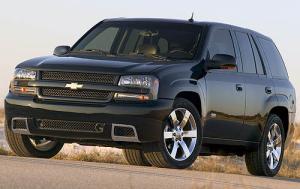
Is the Chevy Trailblazer reliable? Which years are the best to buy, which should you avoid, and can a Trailblazer realistically last 200,000 miles?
Those questions are more complicated than usual because the Chevrolet Trailblazer name has been used for two completely different vehicles. The 2002-2009 TrailBlazer was a traditional body-on-frame SUV available with the durable 4.2L Atlas inline-six and, in some versions, a V8. Chevrolet then discontinued the U.S. TrailBlazer for more than a decade before reviving the name for 2021 on a much smaller crossover powered by turbocharged three-cylinder engines.
The reliability issues are consequently very different. An older TrailBlazer buyer needs to think about the 4L60E transmission, four-wheel-drive system, rust and two decades of aging components. Someone considering a 2021-2024 Trailblazer needs to focus more on its small turbo engines, CVT or nine-speed automatic, electronics and the still-developing long-term reliability record.
This guide covers the 2002-2009 and 2021-2024 U.S. Chevrolet Trailblazer. There were no U.S.-market Trailblazer model years from 2010 through 2020.
In This Guide You'll Learn
- Which Chevy Trailblazer years are generally the best used buys
- Which Trailblazer years deserve extra caution
- How reliable the 4.2L Atlas inline-six engine is
- Whether the 5.3L V8 TrailBlazer is a good used choice
- What commonly goes wrong with the 4L60E automatic transmission
- What to check on a four-wheel-drive TrailBlazer
- Whether an older TrailBlazer can last 200,000 or 250,000 miles
- How the 2021-2024 Trailblazer compares with the original SUV
- How the newer 1.2L and 1.3L turbo engines differ
- What to know about the CVT and nine-speed automatic
- Which Trailblazer generation is more proven for high-mileage use
- What to inspect before buying a used Trailblazer
Chevy Trailblazer Reliability Overview
The original 2002-2009 Chevrolet TrailBlazer can be a surprisingly durable SUV when equipped with the 4.2L Atlas inline-six and properly maintained. The engine itself is often one of the strongest parts of the vehicle, and well-maintained examples can exceed 200,000 miles.
That doesn't make an old TrailBlazer trouble-free. The 4L60E four-speed automatic transmission is usually a greater long-term concern than the 4.2L engine. Four-wheel-drive components, wheel bearings, suspension parts, electrical accessories, cooling-system components and rust also become increasingly important now that every original TrailBlazer is well over a decade old.
Later first-generation examples generally benefit from being newer and from improvements made during the production run. However, condition now matters at least as much as model year. A carefully maintained 2006 with 150,000 miles can easily be a better purchase than a neglected 2009 with 110,000.
The revived 2021-2024 Trailblazer is a completely different proposition. It is a front-wheel-drive-based subcompact crossover rather than a traditional body-on-frame SUV. Depending on configuration, it uses either a 1.2L or 1.3L turbocharged three-cylinder engine, with a CVT on front-wheel-drive versions and a conventional nine-speed automatic on all-wheel-drive models.
Early reliability information on the newer Trailblazer is useful, but these vehicles simply haven't accumulated the 15- to 20-year ownership history available for the original model. It is reasonable to discuss problems that have emerged so far; it is too early to claim confidently that a 2024 Trailblazer will routinely reach 200,000 miles.
Bottom Line: For proven engine durability, the original 4.2L TrailBlazer has an advantage, although age and transmission condition are major concerns. The 2021-2024 Trailblazer is much newer, more efficient and easier to live with as a daily commuter, but its long-term high-mileage durability is not yet as well established.
Chevy Trailblazer Reliability at a Glance
| Trailblazer Years | Reliability Outlook |
|---|---|
| 2002-2003 | Durable 4.2L engine, but earliest production years and age-related problems warrant extra inspection |
| 2004-2005 | Generally reasonable older choices if transmission, 4WD system and rust condition are good |
| 2006-2007 | Strong candidates among older TrailBlazers; condition and 4L60E transmission history remain critical |
| 2008-2009 | Late-production original models and among the years I'd investigate first |
| 2010-2020 | No U.S.-market Chevrolet Trailblazer |
| 2021 | First year of completely redesigned small crossover; deserves more scrutiny than later examples |
| 2022-2024 | Generally preferable among newer Trailblazers, but long-term high-mileage reliability remains developing |
Chevy Trailblazer Reliability by Generation
2002-2009 Chevy TrailBlazer: Original SUV
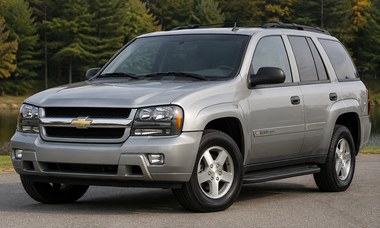
The 2002 TrailBlazer represented a major departure from the earlier Blazer. Built on GM's GMT360 platform, it was a body-on-frame midsize SUV with rear-wheel drive or four-wheel drive.
Most examples use Chevrolet's 4.2L Atlas LL8 inline-six. This engine became one of the defining characteristics of the original TrailBlazer and is a major reason these SUVs can remain viable at high mileage.
Depending on year and version, Chevrolet also offered V8 power. The extended TrailBlazer EXT could be equipped with a 5.3L V8, while the performance-oriented TrailBlazer SS used a 6.0L LS2 V8.
The engine lineup is generally less concerning than the rest of the aging vehicle. Today I'd pay particular attention to transmission operation, four-wheel-drive engagement, rust, suspension wear and evidence of neglected maintenance.
2002-2003 Chevy TrailBlazer Reliability
The 2002 TrailBlazer was the first model year of the new platform, and I'd approach it more cautiously than a later example.
The 4.2L engine can still be extremely durable, but early vehicles can suffer from electrical issues, instrument and accessory problems, four-wheel-drive faults and the usual transmission concerns. At this point, age itself is also a major factor.
The 2003 model benefits from another year of production but is now similarly old. Rubber components, seals, hoses, suspension bushings, brake lines and corrosion can matter more than relatively small differences between 2002 and 2003.
I wouldn't automatically avoid either year if the vehicle is exceptionally well maintained, but there are enough later TrailBlazers available that I'd generally start my search with newer examples.
2004-2005 Chevy TrailBlazer Reliability
The 2004 and 2005 TrailBlazer sit in a useful middle ground. By this point Chevrolet had several years of production experience, while the basic 4.2L drivetrain remained relatively straightforward.
Transmission condition is critical. A TrailBlazer that shifts smoothly at 80,000 miles is one thing; an example approaching 180,000 miles with no transmission history deserves considerably more caution.
Four-wheel-drive models should also be tested in every available mode rather than assuming the system works because no warning light is illuminated.
2006-2007 Chevy TrailBlazer Reliability
The 2006 and 2007 TrailBlazer are among the original-generation years I'd be interested in if condition is good.
By now the platform was mature, and the 4.2L inline-six continued to provide strong durability. These years also included a wider range of versions, including V8 models and the high-performance TrailBlazer SS.
The catch is that a 2006 or 2007 is still an old SUV today. A clean service history, minimal corrosion and evidence that major wear items have already been addressed can matter more than finding the lowest odometer reading.
2008-2009 Chevy TrailBlazer Reliability
The 2008 and 2009 TrailBlazer are the late-production years I'd generally investigate first when shopping for the original SUV.
They combine the mature version of the GMT360 platform with the proven 4.2L engine and are several years newer than the earliest examples.
However, there is no special immunity from 4L60E transmission failure simply because the vehicle is a 2008 or 2009. At high mileage, transmission history and current shift quality remain among the most important buying considerations.
Buyer Tip: With a 15-plus-year-old TrailBlazer, I'd rather buy a 2006 with extensive maintenance records, a healthy transmission and little rust than a poorly maintained 2009 simply because it's the newest model year.
4.2L Atlas Inline-Six Reliability
The 4.2L Atlas LL8 inline-six is one of the strongest arguments for buying an original TrailBlazer.
It's a dual-overhead-cam engine with variable valve timing and considerably more sophistication than some older truck engines, yet the basic engine has developed a strong reputation for high-mileage durability.
With regular oil changes and a functioning cooling system, 150,000 miles should not be considered unusually high for the engine itself. Well-maintained examples can reach 200,000 miles and beyond, and some remain operational at substantially higher mileage.
Problems can still occur. Ignition coils, sensors, cooling-system components, oil leaks and variable-valve-timing-related components can require attention as mileage increases. An old engine can also suffer from neglect regardless of how durable the design is.
The important distinction is that on many high-mileage TrailBlazers, the transmission and surrounding vehicle may become greater concerns before the 4.2L engine does.
Buyer Tip: Don't reject a clean 4.2L TrailBlazer solely because it has 150,000 miles. I'd be more interested in oil-change history, transmission condition, rust and whether the vehicle has been overheated.
5.3L V8 TrailBlazer Reliability
The 5.3L V8 was available in certain TrailBlazer configurations, particularly the extended TrailBlazer EXT.
The 5.3L offers strong torque and is based on GM's widely used small-block V8 family. The basic engine can be durable, but V8 availability and equipment vary by year, and later versions introduce additional considerations such as cylinder-deactivation hardware.
Fuel economy is also noticeably worse than with the 4.2L inline-six, which itself is hardly an economy engine by modern standards.
For most buyers simply looking for a durable original TrailBlazer, I'd favor the more common 4.2L inline-six. The 5.3L makes more sense when towing needs, the specific vehicle configuration or personal preference justify the V8.
TrailBlazer SS and 6.0L LS2 Reliability
The 2006-2009 TrailBlazer SS is a completely different proposition from an ordinary family TrailBlazer.
Its 6.0L LS2 V8 is related to the engine used in performance cars and produces dramatically more power than the standard SUV. The engine itself can be strong, but drivetrain stress and previous-owner behavior matter enormously.
A TrailBlazer SS may have been driven aggressively, modified, tuned or used for repeated hard acceleration. Transmission, differential, transfer-case and suspension condition deserve particular scrutiny.
Because SS models are now enthusiast vehicles, I'd evaluate one more like a used performance car than an ordinary TrailBlazer.
Buyer Tip: A stock, documented TrailBlazer SS is much more attractive than a heavily modified example with an unknown tuning history.
4L60E Transmission Reliability
The 4L60E four-speed automatic transmission is one of the biggest reliability considerations on a high-mileage original TrailBlazer.
Many last a long time, but failures are common enough at higher mileage that I'd never assume the transmission is healthy simply because the engine runs perfectly.
During a test drive, watch for:
- Slipping under acceleration
- Delayed engagement into Drive or Reverse
- Harsh or inconsistent shifts
- Engine-speed flare between gears
- Failure to shift properly into higher gears
- Shuddering under load
- Transmission-fluid leaks
- Burnt-smelling or badly discolored fluid
Test the SUV after it is fully warmed up. A transmission that behaves acceptably during the first five minutes may show problems once operating temperature rises.
On a TrailBlazer approaching or exceeding 150,000 miles, documentation of a previous quality transmission rebuild can actually be a positive rather than an automatic reason to reject the vehicle.
Four-Wheel-Drive and Transfer-Case Problems
Four-wheel-drive TrailBlazers add another group of components that need inspection.
The transfer case, encoder motor, front differential, actuator and electronic controls can all cause problems. A dashboard selector that lights up doesn't prove that the drivetrain actually engaged correctly.
During an inspection, verify that the system shifts through its appropriate modes without abnormal noises, warning lights or binding.
Transfer-case fluid maintenance is also important. An owner who ignored drivetrain fluids for 150,000 miles may have created problems that aren't obvious during a quick parking-lot inspection.
Common 2002-2009 Chevy TrailBlazer Problems
- 4L60E automatic-transmission failure or slipping
- Four-wheel-drive and transfer-case problems
- Encoder motor and 4WD actuator problems
- Wheel-bearing and hub failures
- Front suspension and steering wear
- Cooling-system leaks and water-pump problems
- Ignition coils and engine sensors
- Variable valve timing-related issues on 4.2L engines
- Electrical and instrument-cluster problems
- HVAC blower and climate-control problems
- Fuel-pump and fuel-level-sender problems
- Oil leaks at higher mileage
- Rust and corrosion, particularly in snow-belt vehicles
Buyer Tip: The 4.2L engine's durability can make an old TrailBlazer look deceptively healthy. Don't let a smooth-running engine distract you from inspecting the transmission, four-wheel-drive system, chassis and rust underneath the vehicle.
Why Was There No Chevy Trailblazer From 2010 Through 2020?
Chevrolet ended U.S. production of the original TrailBlazer after the 2009 model year. Although the Trailblazer name continued on vehicles in some international markets, there was no U.S.-market Chevrolet Trailblazer from 2010 through 2020.
Chevrolet revived the name for the 2021 model year, but it did not bring back the old midsize body-on-frame SUV.
The new Trailblazer is a much smaller crossover positioned below the Equinox. The only meaningful connection between the 2009 and 2021 vehicles is the name.
This distinction is important when researching reliability because information about a 2007 TrailBlazer's 4.2L engine or 4L60E transmission has absolutely no relevance to a 2022 Trailblazer.
2021-2024 Chevy Trailblazer: Second U.S. Generation
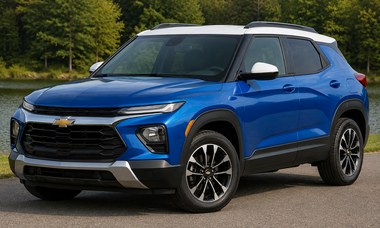
The 2021 Trailblazer revived a familiar Chevrolet name on a very different vehicle. Instead of a body-on-frame midsize SUV, the new model is a small unibody crossover designed primarily for commuting, fuel economy and everyday practicality.
Depending on year and configuration, buyers encounter a 1.2L turbocharged three-cylinder or a 1.3L turbocharged three-cylinder.
Drivetrain choice is especially important. Front-wheel-drive Trailblazers use a continuously variable transmission (CVT), while all-wheel-drive versions with the 1.3L engine use a nine-speed conventional automatic transmission.
That gives used buyers an unusually meaningful choice between powertrain configurations within the same model.
The 2021 Trailblazer deserves the most caution among the revived models simply because it was the first year of an all-new vehicle.
Early production vehicles can experience software, electronic and component issues that manufacturers gradually refine. When comparable later examples are available for a modest price difference, I'd generally prefer the later vehicle.
That doesn't make the 2021 a year I'd automatically avoid. Many have accumulated enough mileage to provide useful ownership history, and a well-maintained example can still be a reasonable purchase.
2022 Chevy Trailblazer Reliability
The 2022 Trailblazer benefits from another year of production experience and is generally a more comfortable place to begin shopping than the introductory 2021 model.
Engine operation, turbo performance, transmission behavior and electronics should still be checked carefully, particularly if the vehicle has accumulated unusually high mileage for its age.
2023-2024 Chevy Trailblazer Reliability
The 2023 and 2024 Trailblazer are among the newer examples and benefit from several years of production experience.
From a used-buying standpoint, that makes them attractive, but I'd be careful about calling either year "proven" for long-term durability. There simply hasn't been enough time for large numbers of these vehicles to accumulate 150,000 or 200,000 miles.
The 2024 model received styling and technology updates, but the underlying reliability questions remain largely centered on the small turbocharged engines, transmission choice and electronic systems.
Buyer Tip: For a newer Trailblazer, I'd generally favor 2022-2024 over the first-year 2021, assuming comparable price, mileage and maintenance history.
1.2L Turbo Trailblazer Reliability
The 1.2L turbocharged three-cylinder is the smaller engine offered in the revived Trailblazer and is paired with front-wheel drive and a CVT.
Its small displacement and turbocharger allow Chevrolet to produce adequate everyday performance while maintaining good fuel economy, but it is a more complex approach than the large naturally aspirated engine used in the original TrailBlazer.
At this stage, I'd judge a used 1.2L primarily on maintenance history, oil-change consistency, smooth cold-start operation, absence of warning lights and proper turbo performance.
For someone intending to keep the vehicle well beyond 150,000 miles, I'd also recognize that the long-term record of this engine and drivetrain combination is still developing.
1.3L Turbo Trailblazer Reliability
The 1.3L turbo three-cylinder provides more power and is the engine I'd generally prefer in the newer Trailblazer.
It was available with front-wheel drive and a CVT, while all-wheel-drive models pair the 1.3L with a nine-speed automatic.
As with the 1.2L, regular oil maintenance is especially important on a small turbocharged engine. Unexplained oil consumption, persistent misfires, abnormal turbo noises or a history of neglected oil changes should make you cautious.
Buyer Tip: If choosing strictly between the two engines, I'd lean toward the 1.3L for its additional performance and broader drivetrain choices rather than because there is enough long-term evidence to declare it dramatically more durable.
Trailblazer CVT vs. Nine-Speed Automatic
Transmission choice is one of the more interesting considerations when buying a 2021-2024 Trailblazer.
2021 Chevy Trailblazer Reliability
Front-wheel-drive models use a CVT. It helps fuel economy and should operate smoothly without conventional gear changes, but CVTs can be expensive if major internal problems develop.
All-wheel-drive 1.3L models use a nine-speed conventional automatic. Buyers who simply prefer a traditional geared transmission may find this configuration more appealing.
Neither transmission should be assumed trouble-free. During a test drive, check for delayed engagement, hesitation, shuddering, warning messages or abnormal noises.
I'd also place considerable value on documented transmission maintenance, particularly when considering a newer Trailblazer that has already accumulated substantial mileage.
Common 2021-2024 Chevy Trailblazer Problems and Concerns
- Electronic and infotainment glitches
- Warning lights and sensor-related issues
- Turbocharger and boost-system concerns
- Oil leaks or oil-consumption concerns on individual vehicles
- CVT hesitation, shuddering or abnormal operation
- Nine-speed automatic shift-quality concerns
- Battery and charging-system issues
- Climate-control and accessory problems
- First-year production concerns on 2021 models
Buyer Tip: The newer Trailblazer has not yet developed the extensive long-term failure history of the original SUV. That's encouraging in one sense, but it also means I'd avoid making assumptions about 200,000-mile durability based on vehicles that are still relatively young.
Original TrailBlazer vs. New Trailblazer Reliability
Comparing the two generations directly can be misleading because they were designed for completely different purposes.
| Original 2002-2009 TrailBlazer | 2021-2024 Trailblazer |
|---|---|
| Body-on-frame midsize SUV | Unibody subcompact crossover |
| 4.2L inline-six most common | 1.2L or 1.3L turbo three-cylinder |
| 4-speed automatic | CVT or 9-speed automatic |
| Rear-wheel drive or 4WD | Front-wheel drive or AWD |
| Proven 200,000-mile engine potential | Long-term 200,000-mile record still developing |
| Transmission, rust and age are major concerns | Turbo, transmission and electronics deserve attention |
The older SUV has the advantage of a well-established high-mileage record, particularly with the 4.2L engine. Its disadvantage is simple age: even a good 2008 or 2009 now contains many components that have endured years of heat, vibration, weather and wear.
The revived Trailblazer is far newer and generally more economical to fuel, but we don't yet have the same depth of long-term ownership evidence.
Bottom Line: If you're shopping for the original TrailBlazer, the 4.2L inline-six is a major strength, while the 4L60E transmission, 4WD system, rust and overall age deserve the closest inspection. For a 2021-2024 Trailblazer, I'd generally favor a later model over the first-year 2021 and pay particular attention to engine maintenance, transmission behavior and electronics.
What Are The Best Chevy Trailblazer Years to Buy?
The best Chevy Trailblazer years depend first on which Trailblazer you're considering. For the original 2002-2009 SUV, I'd generally favor the later 2006-2009 models, particularly a well-maintained 2008 or 2009 with a healthy transmission and minimal rust.
For the revived 2021-2024 crossover, I'd generally look toward 2022-2024 rather than the first-year 2021 model. However, these newer vehicles don't yet have enough age to make confident 200,000-mile durability predictions.
| Trailblazer Years | Why They Stand Out |
|---|---|
| 2006-2007 | Mature original-generation SUVs with the proven 4.2L inline-six; condition and transmission history remain critical |
| 2008-2009 | Late-production original TrailBlazers and generally the years I'd investigate first |
| 2022-2023 | Avoid the first model year of the revived crossover while retaining the established 1.2L/1.3L powertrain choices |
| 2024 | Later production and updated styling/technology; promising used choice but still too new for long-term durability conclusions |
Best Original TrailBlazer: A clean 2008 or 2009 with the 4.2L inline-six would be near the top of my list. But I wouldn't pay a large premium for the model year alone. At this age, a documented 2006 can easily be a better vehicle.
Best Newer Trailblazer: I'd generally start with 2022-2024. If drivetrain choice is important, remember that front-wheel-drive versions use a CVT while all-wheel-drive 1.3L models use a conventional nine-speed automatic.
Which Chevy Trailblazer Years Should You Avoid Or Require Extra Caution?
There aren't many Trailblazer years I'd reject solely because of the date on the title. However, several deserve more scrutiny.
| Trailblazer Years | Why Use More Caution |
|---|---|
| 2002 | First year of the original GMT360 platform and now more than two decades old |
| 2003 | Still an early-production vehicle; age, electrical problems, 4WD condition and transmission history matter greatly |
| 2002-2005 high-mileage examples | Can still be good vehicles, but transmission, suspension, rust and age-related repairs can overwhelm a low purchase price |
| 2006-2009 SS | Not inherently unreliable, but performance use, modifications and drivetrain abuse create additional risk |
| 2021 | First model year of the completely unrelated revived Trailblazer crossover |
Year I'd Approach Most Carefully: The 2002 TrailBlazer combines first-year production with more than two decades of aging. An exceptional example can still be worthwhile, but I'd need a strong reason to choose one over a similarly priced later model.
For the newer generation, I'd give the 2021 Trailblazer somewhat more scrutiny simply because it introduced an entirely new vehicle and powertrain combination.
Which Chevy Trailblazer Generation Is Most Reliable?
This is one case where "most reliable" needs some qualification.
The 2002-2009 TrailBlazer has the more proven engine durability record. Its 4.2L Atlas inline-six has demonstrated that it can survive 200,000 miles and beyond when maintained properly.
But buying one today means buying an old SUV. Transmission wear, rust, suspension components, wheel bearings, 4WD hardware, cooling components and electrical accessories can all require attention even when the engine remains healthy.
The 2021-2024 Trailblazer has the obvious advantage of age. A three- or four-year-old crossover should normally require fewer age-related repairs than a 15- to 20-year-old SUV.
What the newer generation doesn't yet have is proof of exceptional high-mileage durability. There simply aren't enough 200,000-mile examples to make the same claims we can make about the old 4.2L engine.
Bottom Line: For proven engine longevity, the original TrailBlazer wins. For the lower repair risk that normally comes with owning a much newer vehicle, the revived Trailblazer has the advantage. Those aren't quite the same definition of reliability.
Which Chevy Trailblazer Engine Is Most Reliable?
Among all the engines used in U.S. Trailblazers covered here, the 4.2L Atlas inline-six has the strongest established high-mileage reputation.
4.2L Atlas Inline-Six
The 4.2L is the engine I'd choose in an original TrailBlazer if durability and reasonable ownership costs were my priorities.
It has enough real-world history to show that 200,000 miles is attainable without requiring the engine itself to be rebuilt. Some examples travel considerably farther.
That doesn't mean I'd buy one without an inspection. Oil pressure, cooling-system condition, unusual engine noises, oil leaks and evidence of overheating still matter on an engine this old.
5.3L V8
The 5.3L V8 can also be a long-lived engine and offers additional torque, but it doesn't provide enough reliability advantage for me to seek it out over the 4.2L.
I'd buy a V8 TrailBlazer because I wanted the particular configuration, towing capability or V8 characteristics—not because I believed it was necessary to obtain a durable TrailBlazer.
6.0L TrailBlazer SS
The 6.0L LS2 is a strong performance engine, but the SS isn't the version I'd recommend to someone simply seeking the lowest-risk used TrailBlazer.
The issue isn't merely the engine. Performance driving, modifications and additional stress on transmissions, differentials and other drivetrain components change the ownership equation.
1.2L and 1.3L Turbo Three-Cylinders
The newer 1.2L and 1.3L turbo engines haven't been in service long enough to compete with the Atlas engine's high-mileage track record.
Between the two, I'd generally prefer the 1.3L turbo for its stronger performance and greater drivetrain flexibility. All-wheel-drive versions also pair it with the conventional nine-speed automatic rather than the CVT.
That's a preference based on the overall powertrain package, not a claim that the 1.3L has already demonstrated substantially better long-term durability.
Chevy Trailblazer Transmission Reliability
Transmission choice is important in both generations, although for very different reasons.
2002-2009 4L60E Automatic
The 4L60E is arguably the component I'd worry about most on an otherwise healthy high-mileage 4.2L TrailBlazer.
Some transmissions travel well beyond 150,000 miles. Others require major work earlier. Previous towing, fluid maintenance, heat and driving conditions can all affect longevity.
At this age, I'd rather see documentation of a properly rebuilt transmission than assume an original 180,000-mile unit is somehow preferable simply because it has never been opened.
A rebuild isn't automatically evidence of an unreliable vehicle. It may mean one of the largest foreseeable expenses has already been addressed.
2021-2024 CVT
Front-wheel-drive versions of the newer Trailblazer use a CVT.
A healthy CVT should accelerate smoothly without severe shuddering, slipping sensations, delayed response or abnormal whining. Because internal CVT repairs can be expensive, unusual behavior deserves diagnosis before purchase.
If buying a higher-mileage example, I'd also want to know whether transmission-fluid maintenance has been performed rather than assuming the fluid should be ignored indefinitely.
2021-2024 Nine-Speed Automatic
All-wheel-drive 1.3L Trailblazers use a conventional nine-speed automatic.
For buyers uncomfortable with a CVT, this configuration has obvious appeal. However, a conventional automatic can still develop harsh shifts, hesitation or other drivability problems.
Test it both cold and fully warmed up and make sure all nine-speed and AWD-related warning lights remain off.
Most Common Chevy Trailblazer Problems
Because the two Trailblazer generations share little beyond their name, the most likely problems depend heavily on which vehicle you're buying.
1. 4L60E Transmission Problems
On the original TrailBlazer, transmission condition can determine whether a high-mileage example is a bargain or an expensive mistake.
Slipping, delayed engagement, harsh shifts and loss of individual gears should never be dismissed as normal behavior for an old SUV.
2. Four-Wheel-Drive and Transfer-Case Problems
The original TrailBlazer's four-wheel-drive system can develop problems involving the encoder motor, actuator, transfer case, front differential or electronic controls.
Verify actual engagement rather than relying solely on the dashboard selector.
3. Wheel Bearings and Front-End Wear
Wheel hubs, ball joints, tie-rod ends, control-arm bushings and other suspension components are normal areas of concern on an aging TrailBlazer.
Listen for humming or growling that changes with road speed and check for looseness, uneven tire wear and vague steering.
4. Cooling-System Problems
Water pumps, thermostats, hoses, radiators and other cooling-system components eventually require attention.
The 4.2L engine can be extremely durable, but repeated overheating can damage even a strong engine. Evidence of previous overheating should therefore be taken seriously.
5. Electrical and Instrument Problems
Original TrailBlazers can develop instrument-cluster, gauge, switch, lighting, HVAC and other electrical problems as they age.
Individually these may be minor, but several electrical faults can make an otherwise inexpensive SUV frustrating to own.
6. Fuel-Pump and Fuel-Level Problems
Fuel-pump and fuel-level-sender problems can occur on older TrailBlazers.
If the fuel gauge behaves erratically, don't assume the seller simply forgot to fill the tank. Determine whether the sender or related components need repair.
7. Rust and Corrosion
Rust is now one of the most important considerations on any 2002-2009 TrailBlazer from a northern climate.
Surface rust is expected on an old SUV. Structural corrosion, severely rusted brake or fuel lines, weakened mounting points and heavily deteriorated suspension components are different matters.
A southern or otherwise rust-free TrailBlazer can be worth paying more for.
8. Turbo and Engine-Management Problems on Newer Trailblazers
The revived Trailblazer's small turbo engines rely on boost controls, sensors and electronic engine management.
Loss of power, warning lights, persistent misfires or abnormal turbo noises should be diagnosed before purchase.
9. CVT or Nine-Speed Drivability Problems
Hesitation, shuddering, delayed engagement or abnormal noises on a newer Trailblazer deserve attention regardless of which transmission is installed.
A modern transmission can be one of the most expensive components to replace outside the warranty period.
10. Infotainment and Electronic Problems
Newer Trailblazers contain far more electronic systems than the original SUV. Infotainment glitches, warning messages, sensors and connectivity problems may not immobilize the vehicle, but they can still create aggravating repair visits.
How Many Miles Does a Chevy Trailblazer Last?
A well-maintained original Chevy TrailBlazer can realistically reach 200,000 miles, and the 4.2L Atlas engine is capable of going farther.
The challenge is keeping the rest of the SUV economically viable for that long.
A vehicle reaching 200,000 miles may have needed a transmission rebuild, wheel bearings, suspension work, cooling-system components, 4WD repairs, alternator, starter, A/C repairs and various electrical components along the way.
Is 100,000 Miles Too Much for a Chevy TrailBlazer?
For a 2002-2009 TrailBlazer, 100,000 miles isn't particularly high for the 4.2L engine.
In fact, finding an original TrailBlazer with only 100,000 miles today can be less important than finding one with 140,000 miles and excellent maintenance history.
At this age, extremely low mileage can also mean the SUV spent long periods sitting. Seals, tires, fluids, brakes and other components still age when the odometer isn't moving.
Should You Buy a TrailBlazer With 150,000 Miles?
Yes, a 150,000-mile original TrailBlazer can still be a reasonable purchase.
At that mileage I'd want to know:
- Whether the transmission has ever been rebuilt or replaced
- How smoothly the transmission currently operates
- Whether the 4WD system functions correctly
- Whether the engine has ever overheated
- How much rust is underneath the vehicle
- What suspension and wheel-bearing work has been performed
- Whether major cooling-system components have been replaced
- Whether oil changes and other maintenance are documented
A 150,000-mile TrailBlazer with answers to those questions can be a better bet than a 100,000-mile example with no history whatsoever.
Can a Chevy TrailBlazer Last 200,000 Miles?
Yes. 200,000 miles is a realistic target for a properly maintained 4.2L TrailBlazer.
The engine is often capable of the mileage. Whether reaching it makes financial sense depends on transmission longevity, rust and how many other repairs accumulate.
I wouldn't make the same confident prediction yet for a 2021-2024 Trailblazer. Some will undoubtedly reach 200,000 miles, but there isn't enough real-world history to establish how routinely the small turbo engines, CVTs and nine-speed automatics will do so.
Can a Chevy TrailBlazer Last 250,000 Miles?
A 4.2L TrailBlazer can reach 250,000 miles or more, but by that point you're evaluating the durability of the entire vehicle rather than just its engine.
A 250,000-mile example is likely to have needed numerous repairs and may have already received major drivetrain work.
I'd be much more comfortable buying one with 200,000 documented highway miles and extensive service history than an apparently cheaper 150,000-mile vehicle that has been neglected.
Can a Chevy TrailBlazer Last 300,000 Miles?
It's possible for an original 4.2L TrailBlazer to reach 300,000 miles, but I would consider that exceptional whole-vehicle longevity rather than a normal expectation.
At that mileage, the question isn't whether the Atlas engine can survive. It's whether the transmission, chassis, electrical system, 4WD hardware and dozens of aging components have been repaired and maintained well enough to keep the SUV on the road economically.
Chevy Trailblazer Maintenance and Repair Costs
Routine maintenance on the original TrailBlazer is generally straightforward, and parts availability remains good. The danger is buying a very inexpensive SUV that immediately needs several major repairs.
| Repair or Service | Typical Cost Range |
|---|---|
| Oil and filter change | $60-$120 |
| Brake pads and rotors | $500-$1,000+ |
| Spark plugs/ignition service | $250-$600+ |
| Wheel hub/bearing | $350-$750+ |
| Water pump | $500-$1,100+ |
| Front suspension repairs | $600-$1,800+ |
| 4WD actuator/encoder motor repair | $400-$1,200+ |
| Transfer-case or differential repair | $1,000-$3,000+ |
| Turbo-related repair on newer Trailblazer | $800-$2,500+ |
| 4L60E transmission rebuild/replacement | $3,000-$5,500+ |
| Newer CVT or automatic transmission replacement | $4,000-$7,000+ |
| Major engine replacement | $4,500-$8,000+ |
These are broad repair estimates rather than quotes. Labor rates, location, parts choice and the exact repair can change the cost considerably.
With an old TrailBlazer, cumulative repair cost matters more than any single minor problem. A $3,500 SUV that immediately needs a transmission, wheel bearings and front-end work isn't really a $3,500 SUV.
Maintenance to Expect After 100,000 Miles
For an original TrailBlazer over 100,000 miles, I'd review the entire maintenance history rather than concentrating only on oil changes.
- Engine oil and filter changes
- Transmission-fluid condition and service history
- Transfer-case fluid on 4WD models
- Front and rear differential fluids
- Engine coolant and cooling-system condition
- Water pump and thermostat
- Spark plugs and ignition coils
- Serpentine belt and tensioner
- Wheel bearings and hubs
- Ball joints, tie rods and suspension bushings
- Shocks or struts
- Brake pads, rotors and brake fluid
- Rust inspection, including brake and fuel lines
- Battery and charging system
- Engine and transmission mounts
- Oil-leak inspection
For a newer Trailblazer approaching 100,000 miles, I'd pay particular attention to documented oil changes, turbocharger operation, transmission maintenance, coolant condition and any recurring warning lights or electronic faults.
What to Check Before Buying a Used Chevy Trailblazer
A pre-purchase inspection is especially valuable because both Trailblazer generations contain expensive components that aren't adequately evaluated by simply starting the engine in the seller's driveway.
- Start it cold: Listen for abnormal engine noises and watch for warning lights or rough operation.
- Scan for diagnostic codes: Check current and pending codes rather than relying solely on the dashboard.
- Test the transmission thoroughly: Drive until fully warm and check every gear under different loads.
- Test every 4WD mode: On the original SUV, verify that the transfer case and front drivetrain actually engage.
- Inspect underneath for rust: Pay particular attention to structural areas, brake lines, fuel lines and suspension mounting points.
- Listen for wheel-bearing noise: A humming or growling noise that changes with speed can indicate a failing hub.
- Check suspension play: Steering looseness, clunks and uneven tire wear deserve investigation.
- Inspect the cooling system: Look for leaks, coolant residue and evidence of previous overheating.
- Ask about transmission replacement: On a high-mileage original TrailBlazer, a documented quality rebuild can be useful information.
- Check for modifications: This is especially important on a TrailBlazer SS.
- Inspect turbo operation: On a 2021-2024 model, check for abnormal noises, poor acceleration or boost-related codes.
- Evaluate the CVT or nine-speed: Hesitation, shuddering or abnormal noises shouldn't be dismissed.
- Test all electronics: Operate the infotainment system, cameras, climate control, power accessories and driver-assistance features.
- Verify maintenance records: Documentation becomes increasingly valuable as mileage rises.
Chevy Trailblazer Pros and Cons
2002-2009 TrailBlazer Pros
- 4.2L Atlas inline-six has excellent high-mileage potential
- 200,000 miles is realistic with good maintenance
- Traditional body-on-frame SUV construction
- Useful towing and hauling capability
- Available four-wheel drive
- Parts remain widely available
- Independent shops are familiar with the drivetrain
- Purchase prices can be very low
2002-2009 TrailBlazer Cons
- 4L60E transmission can become a major expense
- Every example is now an older vehicle
- Rust can be serious in northern climates
- 4WD and transfer-case problems add complexity
- Suspension and wheel-bearing repairs are common with age
- Electrical accessories can become troublesome
- Fuel economy is poor by modern standards
- A cheap purchase can require several expensive repairs
2021-2024 Trailblazer Pros
- Much newer than the original SUV
- Good fuel economy
- Compact size is easy to maneuver
- Available all-wheel drive
- 1.3L provides adequate everyday performance
- AWD models use a conventional nine-speed automatic
- Modern safety, infotainment and convenience features
- Far fewer age-related concerns than an original TrailBlazer
2021-2024 Trailblazer Cons
- Long-term 150,000-200,000-mile reliability is not yet established
- Small turbocharged three-cylinder engines add complexity
- Front-wheel-drive models use a CVT
- First-year 2021 models deserve additional scrutiny
- Electronic systems create additional potential failure points
- Not remotely equivalent to the original TrailBlazer for towing or traditional SUV capability
Final Buyer Summary: Is the Chevy Trailblazer Reliable?
The Chevy Trailblazer can be reliable, but the answer depends completely on which Trailblazer you're talking about.
For the 2002-2009 Chevrolet TrailBlazer, the 4.2L Atlas inline-six is the standout. It has a well-established reputation for durability, and 200,000 miles is a realistic lifespan when the engine is maintained properly. Reaching 250,000 miles is possible, and exceptional examples can go farther.
The engine, however, isn't the entire vehicle. The 4L60E automatic transmission is a much bigger concern on a high-mileage original TrailBlazer. Four-wheel-drive hardware, wheel bearings, suspension wear, cooling-system components, electrical problems and rust also become increasingly important with age.
Among the original SUVs, I'd generally begin with the 2006-2009 models and give particular consideration to a clean 2008 or 2009 4.2L. But at this age, condition and service history should override a small difference in model year.
The 2021-2024 Trailblazer is a completely different small crossover. It is much newer, more fuel efficient and better suited to buyers who want economical everyday transportation rather than an old-school SUV.
Among these newer models, I'd generally favor 2022-2024 over the first-year 2021. The 1.3L turbo would be my preferred engine, and buyers who prefer a conventional automatic transmission can consider the AWD 1.3L configuration with its nine-speed automatic rather than the CVT used with front-wheel drive.
What I wouldn't do is declare the newer Trailblazer a proven 200,000-mile vehicle yet. There simply isn't enough long-term ownership history. Its ultimate durability will become clearer as more examples accumulate substantial mileage.
Buyer Takeaway: If you want an inexpensive older SUV and find a rust-free 4.2L TrailBlazer with a healthy transmission and good maintenance history, high mileage alone shouldn't scare you away. If you want the revived Trailblazer, concentrate on later years, verify engine and transmission operation carefully, and recognize that its long-term reliability story is still being written.
Your Trade-In
It's good to always know the value of your trade-in while you're evaluating your next possible purchase. Here's a good source for a quick and accurate appraisal: free trade-in appraisal.
What's Next?
If You May Be Buying Soon
If you may be buying a used car soon, see how to identify the dealerships most motivated to get your sale, and therefore most ready to lower their price more than the rest. This is often the difference between getting a good price and getting a great one.
You'd Consider A New Car If ...
Would "new" be worth a look if you could buy close to or even below invoice, or at least at the best possible price even when demand is high?
Understand Questionable Dealer Fees
Beware of "dealer fees". Before agreeing to a dealer's numbers, see which dealer fees are legitimate, which can be negotiated, and which can be avoided.
More On Chevy Reliability
For more Chevrolet model reliability information, see our Chevrolet Reliability and Problems Guide. This comprehensive guide details the best used Chevy models and years, common problems to watch for, the best years to buy or those to avoid, and more.