

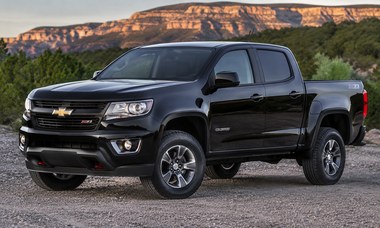
Which Chevy Colorado years are the most reliable? Which years should you be more cautious about, and how long can a well-maintained Colorado realistically last?
The Chevrolet Colorado has been sold in the U.S. since the 2004 model year, with a two-year break for 2013 and 2014. Over that time, it has changed substantially. Early Colorados used four-cylinder and unusual five-cylinder engines, later models offered a 5.3-liter V8, the second generation brought a 3.6-liter V6 and 2.8-liter Duramax diesel, and the newest generation switched entirely to turbocharged four-cylinder power.
That means a statement such as "the Chevy Colorado is reliable" doesn't tell a used-truck buyer very much. Reliability depends heavily on the year, engine, transmission, maintenance history, and how the truck was used.
This guide covers U.S.-market 2004 through 2024 Chevrolet Colorado models. The 2023-2024 trucks are included because enough early ownership history exists to discuss emerging trouble areas, but they have not been on the road long enough to judge long-term durability as confidently as the older generations.
In This Guide You'll Learn
- Which Chevy Colorado years are generally the best used buys
- Which Colorado years deserve extra caution
- How reliability differs between the three generations
- Which Colorado engines have the strongest reliability records
- What to know about the 2.8L Duramax diesel
- Which Colorado transmissions have caused the most trouble
- The most common mechanical and electrical problems
- Whether a Colorado can last 150,000, 200,000 or more miles
- What repairs and maintenance to expect on a high-mileage Colorado
- What to inspect before buying one used
However, if you're also considering a new Colorado, you may want to come back to this and take a look at a handy technique that locates the dealer most ready to make concessions.
Chevy Colorado Reliability Overview
Overall, the Chevrolet Colorado can be a durable midsize pickup, but its reliability record is uneven enough that choosing the right version matters. Some older Colorados are mechanically straightforward and capable of very high mileage, while certain later trucks introduced transmission and electronic issues that can make an otherwise appealing used Colorado considerably more expensive to own.
The 2004-2012 first generation is now old enough that condition often matters more than model year. The basic engines can last a long time, including the 2.9-liter four-cylinder and 3.7-liter five-cylinder used in later examples. The rare 5.3-liter V8 is also a proven engine. However, rust, electrical problems, worn suspension components and neglected transmissions can turn a cheap older Colorado into a poor purchase.
The 2015-2022 second generation is generally more refined and is likely to attract the most used-truck shoppers. It offered several distinctly different powertrains. The 2.5-liter four-cylinder is relatively simple but not especially powerful. The 3.6-liter V6 provides much better performance and towing ability. The 2.8-liter Duramax diesel delivers excellent low-end torque and fuel economy but adds diesel emissions equipment and greater repair complexity.
The biggest reliability concern within the second generation is the automatic transmission. Later trucks equipped with GM's eight-speed automatic developed a reputation for torque-converter shudder, harsh shifts and related drivability complaints. That does not make every eight-speed Colorado a bad truck, but it makes a thorough road test and service-history review particularly important.
The 2023-2024 third generation is substantially different. Chevrolet eliminated the naturally aspirated V6 and diesel and moved the Colorado to a 2.7-liter turbocharged four-cylinder paired with an eight-speed automatic. The powertrain delivers strong torque, but these trucks remain too new for a confident long-term lifespan judgment. Early electrical, software and transmission-related complaints deserve attention when shopping used.
Bottom Line: A good Colorado can be a dependable 150,000- to 200,000-mile truck, and some older examples go considerably farther. But the best used Colorado is not simply the newest one you can afford. Powertrain choice and maintenance history can matter just as much as age.
Chevy Colorado Reliability at a Glance
| Colorado Years | Reliability Outlook |
|---|---|
| 2004-2006 | Durable basic drivetrain, but age and early-model issues require careful inspection |
| 2007-2012 | Generally improved first-generation choices; condition and rust are now major factors |
| 2013-2014 | No U.S.-market Colorado |
| 2015-2016 | Capable trucks, but early second-generation examples deserve extra scrutiny |
| 2017-2022 | Strong engines available, but eight-speed transmission behavior is an important concern |
| 2023-2024 | Promising performance but too new for a complete long-term reliability verdict |
Chevy Colorado Reliability by Generation
2004-2012 Chevy Colorado: First Generation
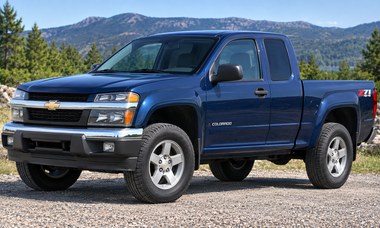
The first-generation Colorado replaced the Chevrolet S-10 and was offered in regular-cab, extended-cab and crew-cab configurations. These trucks are much simpler than today's Colorado, which can be an advantage for someone looking for an inexpensive older pickup.
At this age, however, there can be an enormous difference between two trucks from the same model year. A well-maintained Colorado that spent its life in a dry climate may still have years of service left, while a neglected or heavily rusted example can require repairs worth more than the truck itself.
2004-2006 Colorado Reliability
The earliest Colorados used a 2.8-liter inline-four and 3.5-liter inline-five. These engines belong to GM's Atlas engine family and share much of their basic design.
The unusual five-cylinder engine sometimes worries shoppers simply because it isn't a familiar configuration, but the concept itself isn't the problem. Properly maintained examples can accumulate substantial mileage. The more important issue today is finding one that has not suffered years of neglected maintenance.
Early trucks can develop rough running, check-engine lights, electrical faults, cooling-system problems and various age-related leaks. Some early Atlas engines also developed cylinder-head and valve-seat problems that could produce misfires and compression loss.
Because 2004 was the Colorado's first model year, I'd generally favor a later first-generation truck when prices and condition are comparable.
2007-2012 Colorado Reliability
For 2007, Chevrolet enlarged the engines to a 2.9-liter inline-four and 3.7-liter inline-five. These later Atlas engines are generally appealing choices for someone who wants a relatively simple midsize pickup without turbochargers, direct injection or complicated cylinder-deactivation systems.
The 3.7-liter five-cylinder is particularly interesting for used buyers. It produces more usable power than the four-cylinder while retaining a fairly straightforward design. With good maintenance, high-mileage examples are not unusual.
Beginning with the 2009 model year, Chevrolet also offered the Colorado with GM's 5.3-liter V8. These trucks are relatively uncommon and sought after because they combine the Colorado's smaller dimensions with V8 power.
The 5.3-liter V8 itself has an extensive durability history in GM trucks and SUVs. However, a V8 Colorado should be inspected carefully because some were purchased specifically for towing, performance or other demanding use.
First-Generation Colorado Transmission Reliability
Most automatic first-generation Colorados use GM's 4L60E four-speed automatic transmission. The 4L60E can last a long time when maintained and not abused, but it is also one of the most important components to evaluate on a high-mileage Colorado.
Watch for delayed engagement when shifting into Drive or Reverse, slipping under acceleration, unusually hard shifts, flare between gears or signs that the transmission fluid has been badly neglected.
A truck with 170,000 miles and a documented transmission service history can be a much safer purchase than one with 120,000 miles and no evidence that the transmission was ever maintained.
Common 2004-2012 Colorado Problems
- Check-engine lights and engine misfires
- Early cylinder-head or valve-seat problems on some Atlas engines
- Throttle-body and sensor problems
- Cooling-system leaks and aging hoses
- 4L60E automatic transmission wear at higher mileage
- Front wheel-bearing and hub wear
- Suspension and steering-component wear
- Electrical and instrument-panel problems
- Door, window and power-accessory failures
- Frame and body rust in corrosion-prone regions
Buyer Tip: Don't reject a first-generation Colorado simply because it has high mileage. At this age, maintenance history, frame condition and transmission behavior are often more important than whether the odometer shows 110,000 or 160,000 miles.
2015-2022 Chevy Colorado: Second Generation
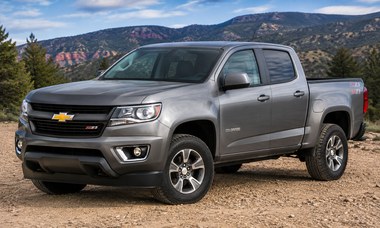
After disappearing from the U.S. market for the 2013 and 2014 model years, the Colorado returned for 2015 as a completely redesigned truck. This generation is larger, more comfortable and substantially more sophisticated than the original Colorado.
It also provides some of the most interesting choices for used buyers because Chevrolet offered three very different engines during the generation: a 2.5-liter four-cylinder, 3.6-liter V6 and 2.8-liter Duramax turbo-diesel.
2.5L Four-Cylinder Reliability
The naturally aspirated 2.5-liter four-cylinder is the least powerful Colorado engine of this generation, but its relative simplicity can be attractive to buyers who don't tow heavily and don't need strong acceleration.
It avoids the diesel emissions equipment of the Duramax and provides fewer cylinders and less performance complexity than the V6. Its biggest disadvantage is simply that the Colorado is a substantial truck, particularly in crew-cab form, and the 2.5 can feel underpowered.
For a lightly used work truck or basic transportation, however, a properly maintained 2.5-liter Colorado can make sense.
3.6L V6 Colorado Reliability
The 3.6-liter V6 is the powertrain most gasoline Colorado shoppers are likely to encounter. It provides much stronger acceleration and towing capability than the base four-cylinder and is generally capable of high mileage when maintained properly.
There is an important distinction within this generation. The 2015-2016 Colorado used the earlier version of the 3.6-liter V6 with a six-speed automatic. For 2017, Chevrolet introduced a newer-generation 3.6-liter V6 along with an eight-speed automatic.
The engine itself is not necessarily the part I'd worry about most on a later V6 Colorado. The eight-speed transmission and torque converter deserve more attention during a pre-purchase inspection.
As mileage rises, buyers should also watch for cooling-system leaks, oil leaks, ignition-related misfires, timing-related trouble codes and evidence of infrequent oil changes. Modern timing-chain engines are particularly dependent on regular oil service.
2.8L Duramax Diesel Reliability
The 2.8-liter Duramax turbo-diesel four-cylinder arrived for the 2016 model year and gave the Colorado something unusual in the midsize-pickup market: a small diesel with excellent low-rpm torque and impressive highway fuel economy.
The core engine can be durable, and the diesel can be an excellent choice for someone who drives substantial highway mileage or values towing range and low-end torque. But diesel ownership needs to be evaluated differently from gasoline-engine reliability.
Modern diesel emissions systems include components such as the diesel particulate filter, exhaust-gas recirculation system and selective catalytic reduction system. Problems involving sensors, emissions equipment or regeneration can be expensive, particularly as mileage increases.
A Duramax Colorado that regularly traveled long highway distances may be a better bet than a low-mileage truck used primarily for short urban trips. Diesels generally benefit from operating long enough to reach full temperature and complete their emissions-system regeneration cycles.
Buyer Tip: Don't buy the Duramax simply because diesel engines have a reputation for lasting forever. Buy it because its torque, fuel economy and driving characteristics fit your use. A gasoline Colorado can be cheaper and simpler to own if you mostly make short trips.
Six-Speed vs. Eight-Speed Colorado Transmissions
Transmission choice is one of the most important reliability distinctions within the second generation.
Earlier trucks generally used a six-speed automatic. Later V6 Colorados received GM's eight-speed automatic, which became associated with the well-known GM transmission-shudder issue.
Affected trucks can feel as though they are driving over rumble strips during light acceleration or steady-speed cruising. Other symptoms can include harsh shifts, hesitation and inconsistent shift quality. Torque-converter operation and transmission-fluid characteristics have both played roles in these complaints.
Many trucks have received updated fluid or other service and operate normally. The existence of the problem does not mean every eight-speed Colorado will fail. But a used Colorado should be driven long enough, and under enough different conditions, to determine whether any shudder or abnormal shifting is present.
2015-2016 Colorado Reliability
The 2015 Colorado was the first year of an all-new generation, and first-year trucks naturally deserve a little more scrutiny. Owners encountered various electrical, infotainment, drivability and mechanical complaints as the new platform accumulated real-world mileage.
The 2016 model added the Duramax diesel. A well-maintained 2015 or 2016 can still be a good used truck, but I would not choose one solely because it costs less than a later example.
2017-2022 Colorado Reliability
The later second-generation years benefit from several years of production experience, but they also bring the eight-speed transmission into the equation on V6 models.
This is why the newest year within a generation isn't automatically the most reliable choice. A later Colorado may have better electronics, features and refinement while simultaneously introducing a drivetrain component that requires additional scrutiny.
ZR2 models also deserve special consideration. The Colorado ZR2 is an extremely capable off-road truck, but used examples may have experienced considerably harder service than a two-wheel-drive Colorado that spent its life commuting.
Inspect the underbody, skid plates, suspension, wheels, tires and alignment carefully. Modifications are another consideration; a stock ZR2 with documented maintenance is generally easier to evaluate than one with extensive aftermarket suspension or drivetrain changes.
Common 2015-2022 Colorado Problems
- Eight-speed automatic transmission shudder
- Harsh or inconsistent automatic transmission shifts
- Torque-converter complaints
- Infotainment and electrical glitches
- Battery and charging-system problems
- Air-conditioning problems
- Cooling-system leaks as mileage increases
- Suspension and wheel-bearing wear
- Diesel emissions-system problems on 2.8L Duramax models
- Sensor and emissions-related warning lights
Buyer Tip: On a 2017-2022 V6 Colorado, make the transmission road test one of your highest priorities. Drive at low and moderate speeds, use light throttle, accelerate onto a highway and cruise steadily. A five-minute trip around the dealership isn't enough.
2023-2024 Chevy Colorado: Third Generation
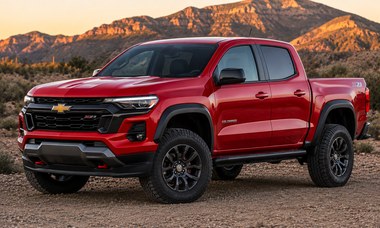
The Colorado was completely redesigned again for 2023. Chevrolet simplified the engine lineup dramatically by eliminating the previous four-cylinder, V6 and diesel choices and building the U.S.-market Colorado around GM's 2.7-liter turbocharged four-cylinder.
The new engine provides unusually strong low-rpm torque for a gasoline four-cylinder and gives the Colorado performance that would have required a much larger engine in earlier generations.
From a reliability standpoint, however, 2023-2024 trucks need to be treated differently from a 10- or 15-year-old Colorado. We can identify problems that have appeared during early ownership, but we cannot yet know with confidence how these trucks will behave at 150,000 or 200,000 miles.
2.7L Turbo Engine Reliability
The 2.7-liter turbo is not simply a small economy-car engine placed into a pickup. GM designed the engine for truck use, with an emphasis on low-speed torque and the ability to work under load.
Its performance is impressive, but it is also substantially more complicated than the naturally aspirated engines found in older Colorados. Turbocharging, direct fuel injection, sophisticated engine controls and other modern systems create additional components that can eventually require attention.
That does not mean the 2.7-liter turbo is unreliable. It means buyers should resist assuming that two years of satisfactory ownership establishes a 200,000-mile reliability record.
2023 Colorado Reliability
The 2023 Colorado was the first year of the complete redesign, so I'd approach it more cautiously than a later truck at a similar price.
Early owners have reported software, infotainment, battery and electrical problems, along with assorted drivability complaints. Some problems can be corrected through software updates or relatively straightforward repairs, but they still matter when evaluating a used truck.
First-year vehicles also tend to receive more running production changes as manufacturers identify issues that weren't apparent before thousands of customers began using them every day.
2024 Colorado Reliability
The 2024 model benefits from being the second year of the redesign, but it remains too new for a definitive long-term verdict.
When shopping for one, verify that software updates, recalls and applicable service campaigns have been completed. Test every electronic feature rather than concentrating only on how the engine and transmission feel.
Pay particular attention to the infotainment system, instrument display, cameras, driver-assistance features, battery behavior and warning messages. Modern trucks can have an excellent-running engine while electronic problems create most of the ownership frustration.
Common 2023-2024 Colorado Concerns
- Infotainment and software glitches
- Battery-drain and electrical complaints
- Warning messages and electronic-system faults
- Automatic transmission shift-quality complaints
- Driver-assistance and camera-system issues
- First-year redesign concerns on 2023 models
Buyer Tip: A 2023 or 2024 Colorado may ultimately prove very durable, but don't pay a premium based on assumptions about long-term reliability that haven't yet been demonstrated. At this age, remaining warranty coverage, service history and evidence that updates and recalls were completed are particularly valuable.
What Are the Biggest Chevy Colorado Reliability Differences?
Across 2004-2024, the Colorado's reliability story can be reduced to several important distinctions:
- Older vs. newer: First-generation trucks are mechanically simpler, but age, rust and accumulated wear now dominate the buying decision.
- Four-cylinder vs. five-cylinder: The later 2.9L and 3.7L Atlas engines can both be durable, with the five-cylinder providing more useful power.
- V8 Colorado: The rare 5.3L combines a proven GM V8 with the smaller Colorado platform, but previous hard use deserves investigation.
- 3.6L V6: A strong all-around gasoline choice, but the transmission paired with it can be as important as the engine itself.
- 2.8L Duramax: Excellent torque and fuel economy with good engine durability potential, offset by modern diesel emissions-system complexity.
- Six-speed vs. eight-speed: Later eight-speed trucks deserve an especially careful road test for shudder and abnormal shifting.
- 2023-2024 2.7L turbo: Strong performance and torque, but insufficient history yet for a confident high-mileage durability verdict.
Bottom Line: There is no single Colorado powertrain that is automatically best for every buyer. Someone seeking an inexpensive, mechanically straightforward truck may prefer a well-preserved first-generation Colorado. A mainstream used-truck buyer may be better served by a carefully inspected second-generation gasoline model, while a highway driver may find the Duramax particularly appealing. The newest turbo Colorados offer the most modern driving experience, but their long-term reliability story is still being written.
What Are The Best Chevy Colorado Years to Buy?
The best Colorado years depend somewhat on what you want from the truck. A first-generation Colorado can be inexpensive and mechanically straightforward, while a later second-generation truck offers much better refinement, safety technology and towing capability.
If reliability and value are the priorities, these are the year groups I'd put near the top of the shopping list.
| Colorado Years | Why They Stand Out |
|---|---|
| 2007-2012 | Improved first-generation trucks with relatively simple engines; condition matters greatly now |
| 2010-2012 | Among the most appealing older Colorados if rust and transmission condition are good |
| 2016 | Second year of the redesign; available V6 or Duramax without the later V6 eight-speed combination |
| 2019-2022 | Later second-generation trucks with mature styling and features, but eight-speed operation must be checked carefully |
| 2024 | Preferable to first-year 2023 if shopping the newest generation, although long-term durability is not yet established |
Best Older Colorado: A well-kept 2007-2012 truck can be a particularly good value. The later 2.9L and 3.7L engines are fairly simple compared with today's turbocharged powertrains, and these trucks can still provide years of service if rust and previous neglect haven't taken over.
Best Second-Generation Choice: There isn't one perfect year because engine and transmission choice matter so much. A well-maintained 2016 can be attractive if you want to avoid the later V6/eight-speed combination. Among later trucks, a properly serviced 2019-2022 Colorado that drives smoothly can also be an excellent buy.
Knowing which Colorado model years to concentrate on is step 1. Step 2 is knowing how to actually get a good used Colorado price.
Which Chevy Colorado Years Should You Avoid Or Require Extra Caution?
I would not automatically reject every Colorado in the following year groups, but I'd inspect them more carefully and demand stronger service history.
| Colorado Years | Why Use More Caution |
|---|---|
| 2004-2006 | Earliest production years plus age-related wear and some early Atlas engine concerns |
| 2015 | First year of the second-generation redesign with more early-production complaints |
| 2017-2018 | Introduction of newer V6/eight-speed combination and transmission-shudder concerns |
| 2023 | First year of the latest redesign with early electrical, software and battery complaints |
Buyer Takeaway: The words "years to avoid" can be misleading with the Colorado. A carefully maintained 2017 with a smooth transmission can be a far better truck than a neglected 2020. Use the year as a screening tool, not as a substitute for inspecting the individual vehicle.
Which Chevy Colorado Generation Is Most Reliable?
If the question is purely about mechanical simplicity and proven long-term durability, the later first-generation trucks from roughly 2007-2012 make a strong case.
They lack turbochargers, complicated diesel emissions systems and most of the sophisticated electronics found in newer trucks. The later 2.9L and 3.7L Atlas engines can accumulate substantial mileage, and the 5.3L V8 has a long durability history elsewhere in GM's truck lineup.
The downside is age. Even the newest first-generation Colorado is now an older truck. Rust, dried seals, brittle plastic, worn suspension parts, deteriorating wiring and neglected fluids can outweigh the simplicity of the original design.
For buyers who want a newer truck, the 2015-2022 second generation offers the best balance of proven history, modern comfort and available powertrains. The key is choosing carefully rather than treating all second-generation Colorados as equivalent.
Which Chevy Colorado Engine Is Most Reliable?
Several Colorado engines can be durable, but each has different strengths.
2.9L and 3.7L Atlas Engines
The later first-generation 2.9-liter four-cylinder and 3.7-liter five-cylinder are among the more straightforward Colorado engines. Neither is particularly sophisticated by modern standards, and that simplicity can be an advantage on a high-mileage used truck.
The 3.7-liter is generally the more desirable of the two because it provides noticeably better performance without dramatically increasing complexity.
5.3L V8
The 5.3-liter V8 offered in later first-generation Colorados is one of the most appealing engines from a durability standpoint. GM used variations of this engine extensively in Silverado, Tahoe, Suburban and other trucks and SUVs.
The bigger issue is finding one. V8 Colorados are uncommon, and some have been modified, driven hard or used for towing. The engine's reputation shouldn't excuse a poor maintenance history.
3.6L V6
The 3.6-liter V6 is probably the best all-around gasoline engine for most second-generation buyers. It delivers substantially better performance than the 2.5-liter four-cylinder and avoids the emissions-system complexity of the diesel.
Regular oil changes matter because the engine uses timing chains and modern variable-valve-timing hardware. On later V6 trucks, however, I'd often be more concerned about the eight-speed transmission than the engine itself.
2.8L Duramax Diesel
The 2.8-liter Duramax has strong durability potential, especially when used for long highway drives and properly maintained. Its excellent torque also makes it attractive for towing.
But it is not automatically the cheapest Colorado to keep for 200,000 miles. Diesel particulate filters, exhaust-gas recirculation components, DEF equipment, sensors and other emissions-system parts can become expensive as the truck ages.
2.7L Turbo
The latest 2.7-liter turbocharged engine produces excellent torque and performance, but the Colorado application does not yet have the decade-plus reliability history available for older engines.
It may eventually prove very durable. For now, I would describe it as promising rather than proven.
Bottom Line: For simplicity, I'd lean toward the later 3.7L five-cylinder or 5.3L V8. For a newer gasoline Colorado, the 3.6L V6 remains a very practical choice. The Duramax can be excellent for the right driver, while the 2.7L turbo needs more time before anyone can make a strong long-term reliability claim.
Chevy Colorado Transmission Reliability
The transmission deserves almost as much attention as the engine when buying a used Colorado.
4L60E Four-Speed Automatic
The first-generation Colorado's 4L60E is a familiar GM transmission. It can last well past 150,000 miles, but high-mileage examples may eventually need rebuilding.
Signs of trouble include slipping, delayed engagement, harsh shifts, flare between gears or transmission fluid that smells burnt.
Six-Speed Automatic
The six-speed transmissions used in earlier second-generation Colorados generally avoid the specific shudder reputation associated with GM's later eight-speed.
That doesn't make them immune from wear, but a smooth-shifting six-speed with documented fluid service can be an attractive choice.
Eight-Speed Automatic
The eight-speed is the transmission I'd inspect most carefully. The well-known shudder complaint can feel like driving across a lightly grooved road or rumble strip at steady speed.
Some trucks improved substantially after receiving updated fluid or other service. Others have required torque-converter or transmission work.
During a road test, pay attention to:
- Shudder during light throttle
- Harsh 1-2 or 2-3 shifts
- Hesitation when accelerating
- Delayed engagement into Drive or Reverse
- Engine speed rising without matching acceleration
- Repeated hunting between gears
Buyer Tip: If a seller tells you that "they all shift like that," don't accept the explanation without further investigation. Drive another Colorado of the same generation for comparison.
Most Common Chevy Colorado Problems
The following problems are among the issues worth checking across different Colorado generations.
1. Transmission Shudder and Harsh Shifting
This is one of the most important second-generation concerns, particularly on trucks equipped with the eight-speed automatic. The problem may involve transmission-fluid characteristics, torque-converter operation or internal transmission wear.
A mild shudder shouldn't automatically be dismissed as a tire or road issue. If you feel repeated vibration at steady speed, have the transmission evaluated before buying.
2. Electrical and Infotainment Problems
Later Colorados contain far more electronics than the first-generation trucks. Infotainment freezes, camera issues, warning messages, battery problems and intermittent electronic faults have all become increasingly relevant.
Test every switch and feature during a pre-purchase inspection.
3. Cooling-System Leaks
Water pumps, hoses, thermostats and radiator connections can become trouble spots as mileage accumulates.
A small coolant leak can eventually lead to overheating, which creates a much more expensive problem. Check the coolant level and inspect for dried residue around fittings and the front of the engine.
4. Wheel Bearings and Front-End Wear
Wheel hubs, ball joints, tie-rod ends and other front-suspension components wear with mileage, particularly on four-wheel-drive trucks or vehicles used frequently on rough roads.
Listen for humming or growling that changes with road speed and watch for uneven tire wear.
5. Diesel Emissions-System Problems
The 2.8L Duramax can experience problems involving the diesel particulate filter, EGR system, DEF components, sensors and related emissions equipment.
Short-trip driving can make the situation worse because the exhaust system may not stay hot long enough for normal regeneration.
6. Engine Misfires and Check-Engine Lights
Older Atlas-engine Colorados may develop ignition, sensor, throttle-body or cylinder-head-related problems. Later gasoline engines can also develop ignition-coil, spark-plug or sensor issues as they age.
A check-engine light should always be scanned before purchase rather than simply cleared.
7. Air-Conditioning Problems
A/C problems appear often enough on later Colorados to justify checking the system carefully. Make sure it cools quickly at idle as well as while driving.
8. Rust
Rust is now one of the biggest threats to first-generation Colorado ownership. Surface corrosion is common on an older truck, but structural frame corrosion is different.
Inspect the frame rails, crossmembers, cab mounts, brake lines, fuel lines and suspension attachment points. A mechanically good truck with serious structural rust is usually not worth saving.
How Long Does a Chevy Colorado Last?
A well-maintained Chevy Colorado can realistically reach 150,000 to 200,000 miles. Well-cared-for examples can go beyond 200,000 miles, particularly older trucks with simpler naturally aspirated engines.
Reaching 250,000 miles is possible, but by that point the question is no longer simply whether the engine will run. Transmission condition, suspension wear, cooling-system repairs, electrical problems, rust and previous maintenance determine whether keeping the truck makes financial sense.
Is 100,000 Miles Too Much for a Used Colorado?
No. A Colorado with 100,000 miles can still have substantial life remaining.
At this mileage, however, maintenance history begins to matter more. The truck should have received regular oil changes and appropriate drivetrain-fluid service. Tires, brakes, shocks, wheel bearings and cooling-system components may also be approaching replacement age.
Should You Buy a Colorado With 150,000 Miles?
A 150,000-mile Colorado can still be a worthwhile purchase if the price reflects the mileage and the truck has been well maintained.
I'd be much more comfortable with a documented 150,000-mile truck than a 90,000-mile example with no service records, obvious transmission problems or severe rust.
Can a Chevy Colorado Last 200,000 Miles?
Yes. Two hundred thousand miles is a realistic target for a well-maintained Colorado.
Older 3.7L, 5.3L and properly cared-for second-generation engines can all reach this territory. The biggest question becomes how much money has to be spent on the rest of the truck to get there.
Can a Colorado Last 250,000 Miles or More?
Some do. At 250,000 miles, however, expect significant wear somewhere in the vehicle. Even if the original engine remains healthy, a transmission rebuild, suspension overhaul, wheel bearings, cooling-system work or electrical repairs may already have occurred.
On an older Colorado, rust can become the ultimate lifespan limiter before the engine does.
Chevy Colorado Maintenance and Repair Costs
The Colorado generally falls into a reasonable maintenance range for a midsize pickup, but individual repairs can become expensive, especially if the truck needs transmission or diesel-emissions work.
| Repair or Service | Typical Cost Range |
|---|---|
| Oil and filter change | $60-$130 |
| Brake pads and rotors | $500-$1,100+ |
| Spark plugs | $250-$550+ |
| Wheel bearing/hub | $400-$850+ each |
| Water pump | $600-$1,300+ |
| Suspension repairs | $700-$2,000+ |
| Torque converter repair | $1,500-$3,500+ |
| Transmission replacement/rebuild | $4,000-$7,000+ |
| Diesel emissions-system repair | $800-$4,000+ |
| Engine replacement | $5,000-$10,000+ |
These are broad independent-shop and dealer-type ranges and can vary considerably by location, engine, drivetrain and the parts used.
The most important financial distinction is between routine wear and a major drivetrain repair. Spending $700 on brakes or suspension parts doesn't necessarily make an otherwise good Colorado a bad truck. A failing transmission or diesel emissions system can change the economics much more quickly.
In addition, your trade-in allowance, if you are doing that, will also affect the overall potential cost analysis of moving into a Colorado (KBB versus Edmunds Appraisals - Which Is Better).
Maintenance to Expect After 100,000 Miles
If you're buying a Colorado with more than 100,000 miles, budget for maintenance even if the truck currently drives perfectly.
- Engine oil and filter service
- Transmission-fluid condition and service history review
- Transfer-case fluid on four-wheel-drive models
- Front and rear differential-fluid service
- Coolant inspection and replacement if overdue
- Spark plugs on gasoline engines
- Serpentine belt and tensioner inspection
- Brake-fluid condition
- Brake pads and rotors
- Wheel bearings and front suspension
- Shocks and struts
- Battery and charging-system test
- Cooling hoses and water pump
- Diesel emissions-system inspection on Duramax models
A truck with documented maintenance at 100,000 miles may actually be a better purchase than a lower-mileage Colorado approaching all of those services at once.
What to Check Before Buying a Used Chevy Colorado
A pre-purchase inspection is particularly worthwhile on a used pickup because trucks are exposed to a much wider range of usage than typical passenger cars.
- Cold-start the engine: Listen for abnormal rattles, knocks or extended cranking.
- Scan for trouble codes: Check for both active and recently cleared codes.
- Road-test the transmission: Look for shudder, hesitation, slipping or harsh shifts.
- Inspect underneath: Look for leaks, damaged skid plates and evidence of off-road impacts.
- Check the frame: Particularly important on 2004-2012 trucks from snow-belt regions.
- Operate four-wheel drive: Make sure the transfer case engages correctly and warning lights stay off.
- Test every electronic feature: Cameras, infotainment, windows, locks and driver-assistance equipment.
- Inspect the tires: Uneven wear can point to alignment, suspension or accident issues.
- Check for modifications: Lift kits, oversized tires and tuning can increase drivetrain and suspension stress.
- Review towing history: Frequent heavy towing places additional stress on the transmission and cooling system.
- Inspect diesel emissions equipment: On a Duramax, make sure there are no emissions warnings or evidence of improper modifications.
- Review maintenance records: Regular fluid service is more valuable than a freshly detailed engine compartment.
Chevy Colorado Pros and Cons
Pros
- More manageable size than a full-size pickup
- Several durable engine choices
- Available 5.3L V8 in the first generation
- Strong 3.6L V6 performance
- Excellent torque and fuel economy from the 2.8L Duramax
- Good towing capability for a midsize truck
- ZR2 offers exceptional off-road capability
- Older trucks can be mechanically straightforward
- 200,000-mile service life is realistic with good maintenance
Cons
- Eight-speed transmission shudder on some second-generation trucks
- Diesel emissions repairs can be expensive
- Older trucks may have serious rust
- First-generation interiors and ride quality feel dated
- Electrical and infotainment problems on newer models
- Used ZR2s may have experienced hard off-road use
- Newest generation does not yet have a proven long-term reliability record
Final Buyer Summary: Is the Chevy Colorado Reliable?
Yes, the Chevy Colorado can be a reliable midsize pickup, but its nearly two decades of U.S. production include very different trucks.
If you value mechanical simplicity, a well-preserved 2007-2012 Colorado can still be an excellent inexpensive truck. The later 3.7L five-cylinder is a particularly useful combination of simplicity and adequate power, while the rare 5.3L V8 adds considerably more performance.
For most buyers seeking something newer, the 2015-2022 second generation offers the broadest selection. The 3.6L V6 is a strong gasoline choice, and the 2.8L Duramax can be excellent for drivers who genuinely benefit from diesel torque and highway efficiency.
The biggest caution is the later eight-speed automatic. A truck that shudders, slips or shifts harshly deserves further diagnosis before you buy it.
The 2023-2024 Colorado delivers impressive power from its 2.7L turbo engine and a far more modern interior, but there simply isn't enough history yet to say how these trucks will perform at 150,000 or 200,000 miles. A 2024 may be preferable to the first-year 2023, but condition, warranty coverage and completed software updates still matter.
Regardless of year, the best Colorado is the one with evidence of regular maintenance, a smooth drivetrain, minimal rust and no signs of abusive towing or off-road use.
Buyer Takeaway: Don't buy a Colorado based only on model year or mileage. Choose the right engine and transmission combination, examine how the truck was used, and have a questionable example inspected before purchase. A carefully selected Colorado can provide 150,000 to 200,000 miles of useful service, while a neglected one can become expensive long before that.
If you'd like to compare different Chevy models, be sure to read our Chevrolet Reliability & Problems: Best Used Chevys & Years Guide. It highlights the models, best years to buy or those to avoid, common problems, and helps you identify the better choices.
Also, Your Trade-In Value?
It's good to always know the value of your trade-in while you're evaluating your next possible purchase. Here's a good source for a quick and accurate appraisal: free trade-in appraisal.